Japan Coffee Market Report by Product Type (Instant Coffee, Ground Coffee, Whole Grain, Others), Distribution Channel (Supermarket/Hypermarket, Convenience Store, Online Platform, Others), Top Cities and Company Analysis 2026-2034
Buy NowJapan Coffee Market Analysis: Sizing, Revenue Forecasts & Competitive Landscape
Japan coffee market is expected to witness consistent growth, driven by rising consumer demand for premium coffee, ready-to-drink (RTD) beverages, and the expanding specialty café culture. The market is forecast to increase from US$ 18.53 billion in 2025 to US$ 28.82 billion by 2034, registering a Compound Annual Growth Rate (CAGR) of 5.03% during the forecast period from 2026 to 2034. Growth is supported by increasing urbanization, fast-paced lifestyles, and a growing preference for high-quality coffee products among consumers. In addition, the popularity of specialty coffee, café chains, and convenient RTD coffee beverages continues to rise, reflecting evolving consumer tastes and demand for premium drinking experiences.
What is Coffee and its Uses & Popularity in Japan
Coffee is one of the world’s most widely consumed beverages, prepared by brewing roasted and ground coffee beans obtained from the seeds of coffee cherries. It is appreciated for its rich aroma, distinctive flavor, and natural caffeine content, which helps improve alertness and reduce fatigue. Coffee is available in various forms, including whole beans, ground coffee, instant coffee, espresso, cold brew, ready-to-drink (RTD) beverages, and specialty coffee. Beyond beverages, coffee is widely used in bakery products, confectionery, desserts, ice creams, flavored beverages, cosmetics, and nutraceutical formulations due to its flavor profile and antioxidant properties.
In Japan, coffee has become an integral part of daily life and is one of the country’s most popular beverages after tea. The country consumes hundreds of thousands of metric tons of coffee annually, with strong demand from households, offices, cafés, restaurants, and convenience stores. Japan is internationally recognized for its thriving specialty coffee culture, premium cafés, and extensive ready-to-drink canned coffee market, which offers both hot and cold coffee options through retail stores and vending machines. Increasing urbanization, busy lifestyles, and growing consumer preference for premium, single-origin, and sustainably sourced coffee are further driving market demand. Product innovation, advanced brewing technologies, and the expansion of artisanal coffee shops continue to strengthen coffee’s popularity across Japan.
Growth Drivers of the Japan Coffee Market
Rising Demand for Premium and Specialty Coffee
The growing preference for premium and specialty coffee is one of the primary growth drivers of the Japan coffee market. Japanese consumers increasingly value high-quality coffee with distinct flavor profiles, ethical sourcing, and artisanal brewing methods. Specialty coffee shops offering single-origin beans, pour-over brewing, and handcrafted espresso beverages have expanded rapidly across major cities such as Tokyo, Osaka, Yokohama, and Kyoto. Japan imports coffee beans from more than 60 coffee-producing countries, ensuring a diverse selection of premium products for consumers. Higher disposable incomes and evolving consumer preferences have encouraged spending on gourmet coffee rather than conventional beverages. Coffee retailers are also introducing organic, Fair Trade, and sustainably sourced coffee to attract environmentally conscious buyers. Premium instant coffee, coffee capsules, and freshly roasted beans are becoming increasingly popular among households. Additionally, collaborations between coffee brands and convenience stores are improving product availability. Continuous innovation in roasting techniques, brewing equipment, and café experiences is expected to sustain strong demand for premium coffee products throughout the forecast period.
Expansion of Ready-to-Drink (RTD) Coffee and Convenience Retail Channels
Japan has one of the world’s most developed ready-to-drink (RTD) coffee markets, making convenience a significant driver of coffee consumption. Consumers with busy lifestyles increasingly prefer canned coffee, bottled coffee, and chilled coffee beverages that can be consumed on the go. Japan has millions of beverage vending machines installed across cities, railway stations, offices, schools, and public spaces, providing easy access to hot and cold coffee throughout the year. In addition to vending machines, convenience store chains, supermarkets, and online retail platforms offer a wide range of RTD coffee products in different flavors, strengths, and package sizes. Manufacturers continue to launch low-sugar, black coffee, functional coffee, and premium canned coffee variants to meet changing consumer preferences. Advanced packaging technology helps maintain freshness and product quality, supporting repeat purchases. Growing urbanization, longer working hours, and increasing demand for convenient beverages continue to strengthen the RTD coffee segment, making it a key contributor to Japan’s coffee market growth.
Growth of Café Culture and Coffee Innovation
The expansion of Japan’s café culture and continuous product innovation are significantly driving the coffee market. Thousands of coffee shops, including international café chains, domestic coffee houses, and independent specialty cafés, serve a broad customer base across the country. Consumers increasingly view cafés not only as places to purchase beverages but also as locations for business meetings, studying, social gatherings, and remote working. Coffee companies are introducing seasonal beverages, limited-edition flavors, premium espresso blends, cold brew coffee, nitrogen-infused coffee, and plant-based coffee drinks to attract younger consumers. Japan’s strong culture of product innovation also encourages manufacturers to develop healthier coffee options with reduced sugar, added protein, collagen, vitamins, and functional ingredients. The growing popularity of home brewing equipment, coffee capsules, and automatic espresso machines further supports household coffee consumption. Rising tourism and international exposure to Japanese café experiences also contribute to market expansion. Continuous investment in product development and customer experience is expected to maintain strong growth in Japan’s coffee industry.
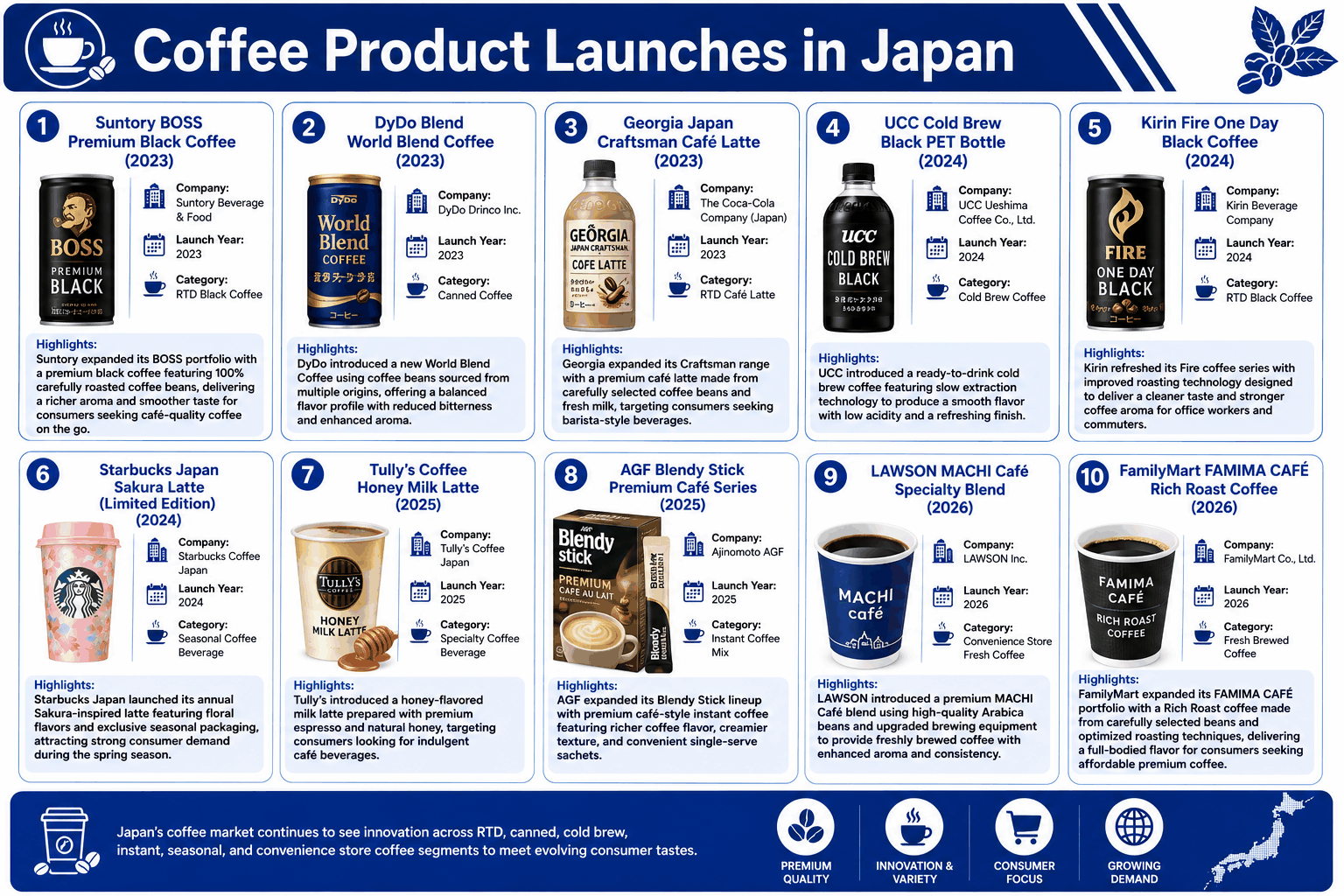
Coffee Product Launches in Japan
- Suntory BOSS Premium Black Coffee (2023)
- Company: Suntory Beverage & Food
- Launch Year: 2023
- Category: Ready-to-Drink (RTD) Black Coffee
- Highlights: Suntory expanded its BOSS portfolio with a premium black coffee featuring 100% carefully roasted coffee beans, delivering a richer aroma and smoother taste for consumers seeking café-quality coffee on the go.
- DyDo Blend World Blend Coffee (2023)
- Company: DyDo Drinco Inc.
- Launch Year: 2023
- Category: Canned Coffee
- Highlights: DyDo introduced a new World Blend Coffee using coffee beans sourced from multiple origins, offering a balanced flavor profile with reduced bitterness and enhanced aroma.
- Georgia Japan Craftsman Café Latte (2023)
- Company: The Coca-Cola Company (Japan)
- Launch Year: 2023
- Category: RTD Café Latte
- Highlights: Georgia expanded its Craftsman range with a premium café latte made from carefully selected coffee beans and fresh milk, targeting consumers seeking barista-style beverages.
- UCC Cold Brew Black PET Bottle (2024)
- Company: UCC Ueshima Coffee Co., Ltd.
- Launch Year: 2024
- Category: Cold Brew Coffee
- Highlights: UCC introduced a ready-to-drink cold brew coffee featuring slow extraction technology to produce a smooth flavor with low acidity and a refreshing finish.
- Kirin Fire One Day Black Coffee (2024)
- Company: Kirin Beverage Company
- Launch Year: 2024
- Category: RTD Black Coffee
- Highlights: Kirin refreshed its Fire coffee series with improved roasting technology designed to deliver a cleaner taste and stronger coffee aroma for office workers and commuters.
- Starbucks Japan Sakura Latte (Limited Edition) (2024)
- Company: Starbucks Coffee Japan
- Launch Year: 2024
- Category: Seasonal Coffee Beverage
- Highlights: Starbucks Japan launched its annual Sakura-inspired latte featuring floral flavors and exclusive seasonal packaging, attracting strong consumer demand during the spring season.
- Tully’s Coffee Honey Milk Latte (2025)
- Company: Tully’s Coffee Japan
- Launch Year: 2025
- Category: Specialty Coffee Beverage
- Highlights: Tully’s introduced a honey-flavored milk latte prepared with premium espresso and natural honey, targeting consumers looking for indulgent café beverages.
- AGF Blendy Stick Premium Café Series (2025)
- Company: Ajinomoto AGF
- Launch Year: 2025
- Category: Instant Coffee Mix
- Highlights: AGF expanded its Blendy Stick lineup with premium café-style instant coffee featuring richer coffee flavor, creamier texture, and convenient single-serve sachets.
- LAWSON MACHI Café Specialty Blend (2026)
- Company: LAWSON Inc.
- Launch Year: 2026
- Category: Convenience Store Fresh Coffee
- Highlights: LAWSON introduced a premium MACHI Café blend using high-quality Arabica beans and upgraded brewing equipment to provide freshly brewed coffee with enhanced aroma and consistency.
- FamilyMart FAMIMA CAFÉ Rich Roast Coffee (2026)
- Company: FamilyMart Co., Ltd.
- Launch Year: 2026
- Category: Fresh Brewed Coffee
- Highlights: FamilyMart expanded its FAMIMA CAFÉ portfolio with a Rich Roast coffee made from carefully selected beans and optimized roasting techniques, delivering a full-bodied flavor for consumers seeking affordable premium coffee.
Challenges of the Japan Coffee Market
Dependence on Imported Coffee Beans and Price Volatility
One of the major challenges facing the Japan coffee market is its heavy dependence on imported coffee beans. Japan has limited domestic coffee cultivation due to unsuitable climatic conditions, making imports essential for nearly all commercial coffee production. Coffee beans are sourced from major producing countries in South America, Southeast Asia, and Africa. This reliance exposes the market to fluctuations in international coffee prices, currency exchange rates, transportation costs, and supply chain disruptions. Climate change has also affected coffee-growing regions through irregular rainfall, droughts, and plant diseases, reducing production and increasing raw material costs. Rising freight expenses and global inflation further increase the cost of imported coffee, placing pressure on manufacturers, cafés, and retailers. Companies often face the challenge of balancing higher production costs while maintaining competitive retail prices. Investment in long-term supplier partnerships, sustainable sourcing programs, and supply chain diversification is becoming increasingly important to reduce procurement risks and maintain stable product availability.
Mature Market and Intensifying Competition
Japan’s coffee market is highly developed and mature, creating challenges related to market saturation and intense competition. The country has a large number of domestic coffee brands, international café chains, specialty coffee shops, convenience store operators, vending machine suppliers, and ready-to-drink beverage manufacturers competing for consumer attention. As a result, companies must continuously invest in product innovation, premium positioning, attractive packaging, and marketing campaigns to maintain market share. Consumer expectations are also evolving, with increasing demand for healthier beverages, sustainable sourcing, and personalized coffee experiences. This requires continuous research and development investments, increasing operational costs for manufacturers. Additionally, rising labor costs and increasing rental expenses for cafés in major metropolitan areas can affect profitability. Although premium coffee demand continues to grow, companies must carefully balance quality improvements with price sensitivity among consumers. Businesses that successfully differentiate through sustainability, digital engagement, innovative flavors, and superior customer experience are more likely to achieve long-term success in Japan’s competitive coffee market.
Growing Preference for Freshly Brewed and Premium Coffee in Japan
Japan Ground Coffee Market is experiencing steady growth due to increasing consumer preference for freshly brewed, high-quality coffee at home and in workplaces. Ground coffee remains one of the most popular formats among households, cafés, hotels, and restaurants because it offers superior aroma and flavor compared to instant coffee. Japan imports coffee beans from more than 60 coffee-producing countries, providing consumers with access to diverse blends and single-origin varieties. The growing popularity of premium coffee culture has encouraged consumers to invest in drip coffee makers, pour-over equipment, and automatic espresso machines, increasing demand for packaged ground coffee. Supermarkets, specialty coffee stores, and online retailers continue expanding their premium ground coffee offerings, including organic, Fair Trade, and sustainably sourced products. Manufacturers are also introducing nitrogen-flushed packaging and resealable packs to preserve freshness and extend shelf life. Rising disposable incomes, home brewing trends, and demand for café-quality beverages are expected to continue supporting the expansion of Japan’s ground coffee market over the forecast period.
Convenience and Innovation Supporting Strong Consumer Demand in Japan
Japan Instant Coffee Market remains a significant segment of the country’s coffee industry due to its convenience, affordability, and long shelf life. Instant coffee is widely consumed by office workers, students, and households seeking quick beverage preparation without specialized brewing equipment. Japan has one of the highest coffee consumption rates in Asia, with millions of consumers regularly purchasing instant coffee for everyday use. Manufacturers continue introducing premium freeze-dried instant coffee, specialty blends, low-caffeine variants, and flavored products to enhance product appeal. Single-serve sachets and convenient refill packs have become increasingly popular among busy urban consumers. The growth of hybrid working arrangements has also encouraged greater home consumption of instant coffee. Additionally, companies are incorporating functional ingredients such as collagen, vitamins, dietary fiber, and reduced sugar formulations to attract health-conscious consumers. Strong distribution through supermarkets, convenience stores, vending machines, and e-commerce platforms ensures nationwide availability. Continuous product innovation and premiumization are expected to sustain steady growth in Japan’s instant coffee market.
Extensive Retail Network Driving Coffee Sales in Japan
Japan Coffee Convenience/Grocery Stores Market is expanding due to the country’s highly developed retail infrastructure and strong consumer preference for convenient purchasing options. Japan has tens of thousands of convenience stores operating under major chains, making freshly brewed coffee, ready-to-drink coffee, coffee beans, ground coffee, and instant coffee easily accessible throughout the day. Convenience stores have become an essential destination for affordable, high-quality takeaway coffee, competing directly with traditional cafés in urban areas. Supermarkets and grocery stores also offer extensive selections of domestic and imported coffee products, premium beans, coffee capsules, RTD beverages, and specialty blends. Manufacturers frequently launch seasonal flavors, limited-edition products, and private-label coffee brands to attract repeat purchases. Modern retail outlets continue investing in automated coffee machines, premium packaging, and expanded shelf space for coffee products. Rising commuter traffic, increasing urbanization, and changing consumer lifestyles continue to drive strong demand through convenience stores and grocery retailers, making this distribution channel one of the largest contributors to Japan’s coffee market.
E-commerce Growth Expanding Consumer Access to Premium Coffee in Japan
Japan Coffee Online Retail Market is witnessing robust growth as consumers increasingly purchase coffee products through digital platforms. Rising internet penetration, widespread smartphone usage, and secure digital payment systems have significantly increased online coffee sales across the country. Consumers are purchasing whole beans, ground coffee, instant coffee, coffee capsules, ready-to-drink beverages, brewing equipment, and subscription coffee services through e-commerce websites and mobile applications. Online platforms provide access to thousands of domestic and international coffee brands, allowing consumers to compare prices, product reviews, roast profiles, and origin information before making purchases. Subscription services delivering freshly roasted coffee on a weekly or monthly basis are becoming increasingly popular among premium coffee enthusiasts. Online retailers also offer exclusive specialty coffee products, limited-edition roasts, and direct-to-consumer sales from independent coffee roasters. The integration of artificial intelligence-based product recommendations, personalized marketing, and fast home delivery has further improved the online shopping experience. Continuous expansion of Japan’s digital retail ecosystem is expected to support sustained growth in the coffee online retail market.
Tokyo Urban Consumer Base and Thriving Specialty Café Culture
Tokyo Coffee Market is the largest regional coffee market in Japan, driven by its dense population, high disposable incomes, and vibrant café culture. Tokyo is home to more than 14 million residents, while the Greater Tokyo metropolitan area exceeds 37 million people, creating one of the world’s largest consumer markets for coffee. Coffee consumption is supported by office workers, students, tourists, and business travelers who purchase beverages from cafés, convenience stores, vending machines, and restaurants. The city has thousands of coffee outlets ranging from international chains and domestic brands to independent specialty cafés offering single-origin beans, pour-over brewing, and premium espresso beverages. Demand for ready-to-drink (RTD) coffee, coffee capsules, cold brew, and artisanal roasted coffee continues to increase as consumers seek premium experiences. Online coffee subscriptions and home brewing equipment are also gaining popularity among urban households. Continuous product innovation, seasonal beverages, and expanding café concepts are expected to maintain Tokyo’s leadership in Japan’s coffee market.
Aichi Expanding Retail Infrastructure and Growing Premium Coffee Consumption
Aichi Coffee Market is experiencing steady growth due to rising urbanization, expanding retail networks, and increasing consumer preference for premium coffee products. Aichi Prefecture has a population of approximately 7.5 million people, with Nagoya serving as one of Japan’s largest commercial and industrial cities. The region has a strong working population, creating consistent demand for coffee in offices, cafés, convenience stores, and quick-service restaurants. Ground coffee, instant coffee, RTD beverages, and specialty coffee are widely consumed by both households and commercial establishments. The growth of modern supermarkets, convenience store chains, and e-commerce platforms has improved access to domestic and imported coffee brands. Consumers are increasingly purchasing premium roasted beans, organic coffee, and specialty blends as disposable incomes and interest in high-quality beverages continue to rise. Independent coffee roasters and boutique cafés are also expanding across Nagoya and surrounding cities, encouraging appreciation for artisanal brewing methods. Continued investment in premium coffee retailing and café experiences is expected to support long-term market growth throughout Aichi Prefecture.
Kanagawa Urban Lifestyle and Café Expansion Driving Coffee Demand
Kanagawa Coffee Market is expanding due to the prefecture’s large urban population, strong commercial activity, and growing café culture. Kanagawa has a population of approximately 9 million residents, making it one of Japan’s most populous prefectures. Major cities including Yokohama, Kawasaki, and Fujisawa contribute significantly to coffee consumption through busy business districts, shopping centers, educational institutions, and tourism. Consumers increasingly prefer premium coffee beverages, freshly roasted beans, specialty cafés, and convenient ready-to-drink coffee products. The presence of international coffee chains, domestic café brands, and independent specialty coffee shops has diversified product offerings and increased consumer choice. Retail channels including supermarkets, convenience stores, vending machines, and online platforms provide extensive availability of coffee products throughout the prefecture. Home brewing is also becoming increasingly popular, driving sales of coffee beans, ground coffee, and brewing accessories. Growing health awareness has encouraged demand for organic, low-sugar, and sustainably sourced coffee products, supporting continued market expansion in Kanagawa.
Shizuoka Tourism, Retail Growth, and Premium Beverage Preferences Supporting Market Expansion
Shizuoka Coffee Market is witnessing stable growth, supported by increasing consumer demand for premium beverages, tourism, and expanding retail distribution. Shizuoka Prefecture has a population of approximately 3.5 million people and is widely recognized for its food and beverage culture. While the prefecture is globally known for tea production, coffee consumption has grown steadily as younger consumers embrace café culture and specialty coffee experiences. Urban centers such as Shizuoka City and Hamamatsu have experienced an increase in coffee shops, independent roasters, bakeries, and restaurants serving premium coffee beverages. Supermarkets, convenience stores, and online retailers offer a wide variety of coffee beans, instant coffee, RTD products, and specialty blends to meet changing consumer preferences. Tourism also contributes to coffee demand, with visitors seeking premium cafés and locally roasted coffee alongside regional cuisine. The increasing adoption of home brewing equipment, sustainable coffee sourcing, and high-quality roasting techniques is further supporting market growth. Continued innovation and premiumization are expected to strengthen the Shizuoka coffee market in the coming years.
Market Segmentation
Product Type
- Instant Coffee
- Ground Coffee
- Whole Grain
- Others
Distribution Channel
- Supermarket/Hypermarket
- Convenience Store
- Online Platform
- Others
Top City
- Tokyo
- Kansai
- Aichi
- Kanagawa
- Saitama
- Hyogo
- Chiba
- Hokkaido
- Fukuoka
- Shizuoka
All the Key players have been covered from 5 Viewpoints:
- Overviews
- Key Person
- Recent Developments
- SWOT Analysis
- Revenue Analysis
Company Analysis
- Starbucks
- Nescafe
- The Kraft Heinz Company
- Lunchin Coffee
- J M Smucker
- Coca Cola
- Dutch Bros
- Keurig Dr Pepper
- JDE PEET'S N.V.
Report Details:
| Report Features | Details |
| Base Year |
2025 |
| Historical Period |
2022 - 2025 |
| Forecast Period |
2026 - 2034 |
| Market |
US$ Billion |
| Segment Covered |
Type, Distribution Channel and City |
| City Covered |
|
| Companies Covered |
|
| Customization Scope |
20% Free Customization |
| Post-Sale Analyst Support |
1 Year (52 Weeks) |
| Delivery Format |
PDF and Excel through Email (We can also provide the editable version of the report in PPT/Word format on request) |
Customization Services available
- Analysis of Market Size and Its Segments
- More Company Profiles (Upto 10 without any additional cost):
- Additional Countries (Other than mentioned Countries):
- Region/Country Specific Reports:
- Market Entry Strategy:
- Region-Specific Market Dynamics:
- Regional Market Share Analysis:
- Trade Analysis:
- Production Insights:
- Others Customized Requests:
For more information contact our analysts.
Need More Assistance?
- Talk to our analysts to get more precious information on the current market trends.
- Include more countries and segments and customize the report based on the final requirement.
- Get a competitive advantage in your industry by knowing the report findings and making a positive impact on your revenues and operations.
- Our analysts are always ready to provide more help and pertinent information if you need any additional assistance.