IV Bags Market Report by Material Type,Capacity, Chamber Type, Countries and Companies Analysis 2026-2034
Buy NowIV Bags Market Size and Forecast
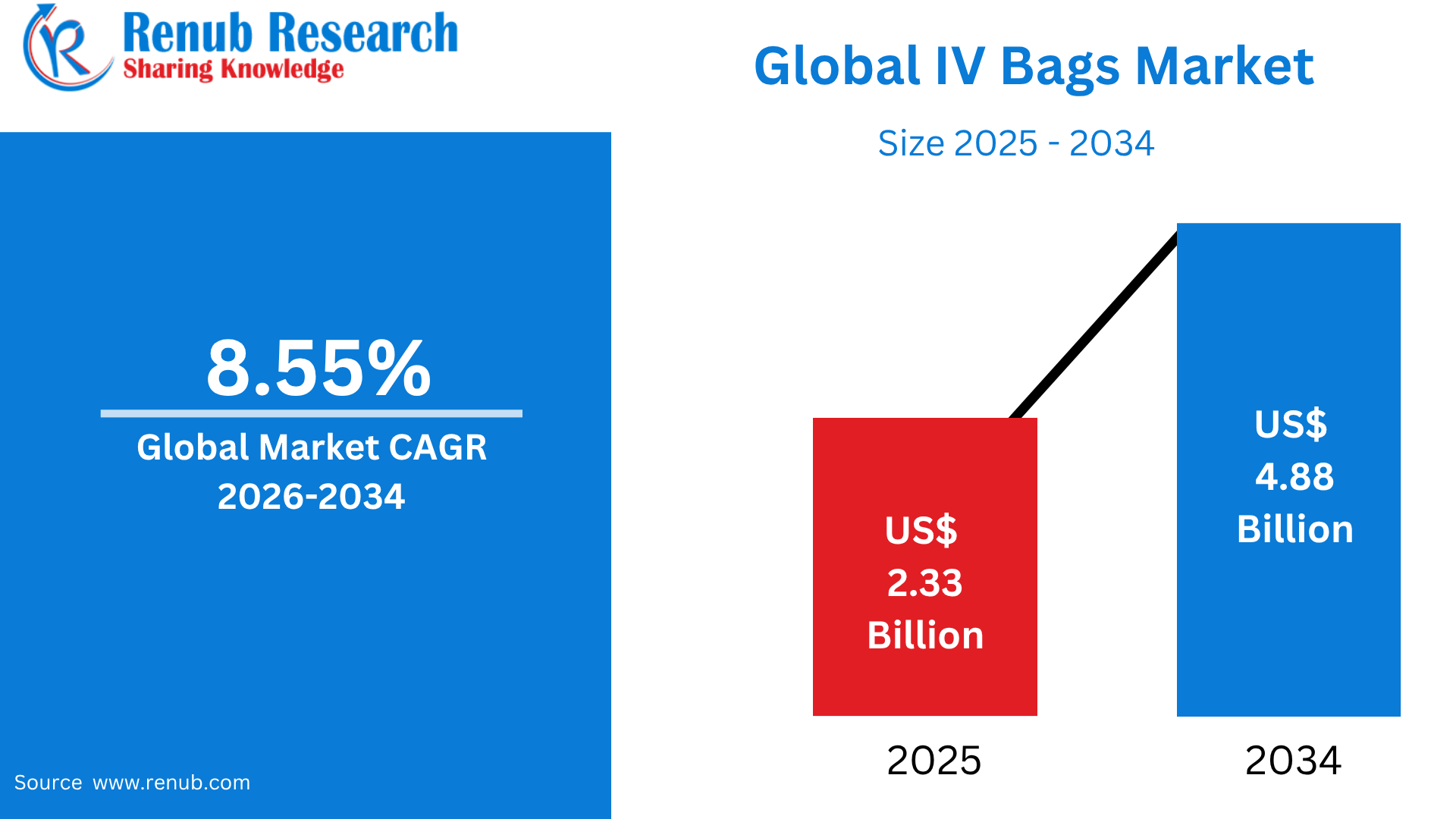
IV Bags Market is projected to expand from US$ 2.33 billion in 2025 to US$ 4.88 billion by 2034, registering a CAGR of 8.55% during 2026–2034. Market growth is expected to be driven by rising hospitalization rates, the increasing prevalence of chronic and acute diseases, and the growing number of surgical procedures requiring intravenous therapy. The expanding need for reliable and safe drug and fluid delivery systems is further supporting demand for IV bags across hospitals and healthcare facilities.
What is IV Bags and Its Uses & Popularity Worldwide
IV bags, or intravenous bags, are sterile medical containers used to deliver fluids, medications, nutrients, electrolytes, blood-related products, and other therapeutic solutions directly into a patient’s bloodstream through an intravenous line. They are commonly manufactured from flexible materials such as PVC, polyolefin, and other medical-grade plastics, offering advantages including lightweight construction, durability, portability, and compatibility with infusion systems. IV bags are widely used in hospitals, clinics, ambulatory surgical centers, emergency departments, intensive care units, and home-care settings. Key applications include hydration therapy, antibiotic administration, chemotherapy, parenteral nutrition, electrolyte replacement, pain management, and perioperative fluid management. The widespread use of intravenous therapy makes IV bags an important component of modern healthcare delivery. WHO guidelines specifically address the safe management of intravenous catheters across acute, long-term, and primary-care settings. The popularity of IV bags is also supported by the extensive use of essential medicines and infusion therapies worldwide. WHO reports that more than 150 countries maintain national essential-medicine lists based on its Model List, reinforcing the importance of reliable medicine-delivery systems.
Number of Worldwide Surgical Procedures Performed by Plastic Surgeons
- Eyelid Surgery: 2,115,360 procedures; 12.1% of total surgical procedures; +13.4% vs. 2023 and +72.6% vs. 2020.
- Liposuction: 2,087,189 procedures; 12.0%; -12.6% vs. 2023 and +36.8% vs. 2020.
- Breast Augmentation: 1,658,615 procedures; 9.5%; -17.5% vs. 2023 and +2.1% vs. 2020.
- Scar Revision: 1,156,446 procedures; 6.6% of total surgical procedures.
- Rhinoplasty: 1,083,631 procedures; 6.2%; -9.8% vs. 2023 and +27.1% vs. 2020.
- Abdominoplasty: 1,036,236 procedures; 6.0%; -15.3% vs. 2023 and +35.4% vs. 2020.
- Fat Grafting – Face: 947,007 procedures; 5.4%; +19.2% vs. 2023 and +83.6% vs. 2020.
- Breast Lift: 772,138 procedures; 4.4%; -19.9% vs. 2023 and +29.8% vs. 2020.
- Face Lift: 737,028 procedures; 4.2%; +7.4% vs. 2023 and +75.9% vs. 2020.
- Lip Enhancement/Perioral Procedure: 730,752 procedures; 4.2%; -23.9% vs. 2023.
- Breast Reduction: 652,676 procedures; 3.7%; -10.4% vs. 2023 and +53.1% vs. 2020.
- Buttock Augmentation: 644,770 procedures; 3.7%; -21.5% vs. 2023 and +62.8% vs. 2020.
- Brow Lift: 524,386 procedures; 3.0%; +27.5% vs. 2023 and +81.9% vs. 2020.
- Neck Lift: 477,624 procedures; 2.7%; -0.8% vs. 2023 and +90.1% vs. 2020.
- Gynecomastia: 383,656 procedures; 2.2%; +1.9% vs. 2023 and +82.1% vs. 2020.
- Ear Surgery: 363,754 procedures; 2.1%; +3.8% vs. 2023 and +42.7% vs. 2020.
- Breast Implant Removal: 341,971 procedures; 2.0%; -4.4% vs. 2023 and +65.3% vs. 2020.
- Facial Bone Contouring: 237,188 procedures; 1.4%; +44.1% vs. 2023 and +123.4% vs. 2020.
- Buccal Fat Removal: 229,688 procedures; 1.3% of total surgical procedures.
- Upper Arm Lift: 212,223 procedures; 1.2%; -19.4% vs. 2023 and +68.4% vs. 2020.
- Labiaplasty: 210,633 procedures; 1.2%; +3.7% vs. 2023 and +48.2% vs. 2020.
- Thigh Lift: 136,522 procedures; 0.8%; -13.6% vs. 2023 and +84.6% vs. 2020.
- Lower Body Lift: 119,706 procedures; 0.7%; -12.7% vs. 2023 and +68.6% vs. 2020.
- Hand Rejuvenation with Fat Grafting: 100,093 procedures; 0.6% of total surgical procedures.
- Inverted Nipple Correction: 98,512 procedures; 0.6% of total surgical procedures.
- Other Outer Genital Surgery: 87,179 procedures; 0.5% of total surgical procedures.
- Buttock Lift: 80,610 procedures; 0.5%; -31.2% vs. 2023 and +51.2% vs. 2020.
- Surgical Vaginal Rejuvenation: 75,719 procedures; 0.4%; -15.8% vs. 2023.
- Upper Body Lift: 63,074 procedures; 0.4%; -15.5% vs. 2023.
- Dimple Creation: 51,291 procedures; 0.3% of total surgical procedures.
- Total Surgical Procedures: 17,415,678 procedures performed worldwide in 2024, compared with 16,827,984 in 2023 and 10,129,528 in 2020.
Growth Drivers of the IV Bags Market
Rising Hospitalization and Intravenous Therapy Demand
Increasing hospitalization rates and the growing requirement for intravenous therapy are major factors supporting the global IV bags market. IV administration is frequently preferred when patients require rapid delivery of fluids, medicines, electrolytes, or nutritional support, particularly when oral administration is unsuitable. IV bags are therefore routinely used in emergency care, intensive care, surgery, oncology, infectious disease treatment, and chronic disease management. WHO’s 2026 World Health Statistics report continues to monitor global disease burden, healthcare access, and health-system indicators, highlighting the continuing need for healthcare delivery capacity worldwide. In addition, WHO’s essential medicines framework identifies availability of medicines in appropriate dosage forms as an important component of functioning health systems. More than 150 countries have national essential-medicine lists based on the WHO Model List. As hospitals expand infusion services and healthcare providers increasingly require dependable fluid and drug-delivery systems, demand for sterile, ready-to-use IV bags is expected to increase. Growing healthcare expenditure and expansion of hospitals in emerging economies further strengthen market opportunities.
Increasing Prevalence of Chronic Diseases and Surgical Procedures
The growing global burden of chronic diseases is generating sustained demand for hospital-based treatment, injectable medicines, and infusion therapies, supporting consumption of IV bags. Patients with cancer, cardiovascular disorders, diabetes-related complications, kidney disease, and severe infections may require intravenous fluids, medications, chemotherapy, nutritional support, or electrolyte replacement during treatment. IV bags are also extensively used before, during, and after surgical procedures to maintain fluid balance and administer medications. WHO’s global health statistics program tracks more than 50 health-related indicators across countries and regions, reflecting the broad and continuing healthcare requirements associated with population health needs. In oncology, for example, intravenous administration remains an important route for delivering many anticancer therapies and supportive treatments. The increasing availability of advanced surgical procedures and hospital-based therapies consequently expands the need for infusion products. In addition, aging populations in many countries are increasing demand for healthcare services, creating additional opportunities for IV bag manufacturers. The combination of chronic disease management, surgical care, emergency treatment, and supportive therapies is therefore expected to sustain global market growth.
Technological Advancements and Adoption of Ready-to-Use IV Solutions
Technological advancements in infusion packaging and growing adoption of ready-to-use solutions are creating new opportunities for the IV bags market. Manufacturers are developing bags with improved material strength, leak resistance, compatibility, sterilization performance, and reduced interaction with drugs. Multilayer films and advanced polymer formulations can improve product stability while supporting the storage and transportation of sensitive infusion solutions. Ready-to-use and premixed IV solutions are also gaining importance because they can reduce preparation requirements and support standardized medication delivery in healthcare facilities. WHO emphasizes that essential medicines should be available in appropriate dosage forms, with assured quality and sufficient quantities to meet patient needs. Infusion systems are increasingly being integrated with pumps and other controlled-delivery technologies. WHO notes that infusion pumps can provide accurate delivery of liquids through intravenous routes, with programmable flow rates supporting controlled administration. These developments are encouraging manufacturers to invest in safer, more compatible, and user-friendly IV bag designs. Growing healthcare infrastructure and modernization of hospitals are further accelerating adoption of advanced infusion products worldwide.
Challenges of the IV Bags Market
Risk of Contamination, Leakage, and Infusion-Related Complications
Maintaining sterility and preventing contamination throughout the manufacturing, transportation, storage, and administration process remains a major challenge for IV bag manufacturers. Because IV bags deliver fluids and medicines directly into the bloodstream, product defects or contamination can create serious patient-safety risks. WHO has issued specific guidance on preventing bloodstream infections associated with intravascular catheters, emphasizing appropriate insertion, maintenance, access, and removal practices. Infusion-related risks can also arise from incorrect flow rates, incompatible medications, damaged containers, or improper handling. WHO’s technical specifications for infusion devices note that errors in setting infusion rates or volumes can harm patients and that infusion devices require close monitoring. Consequently, manufacturers must maintain stringent quality-control systems, sterile production environments, packaging integrity, and regulatory compliance. These requirements increase manufacturing complexity and operating costs. In addition, healthcare providers must follow appropriate storage, handling, and administration procedures. As demand for IV therapy grows, maintaining consistent product quality and minimizing contamination and administration risks will remain critical challenges for the market.
Stringent Regulatory Requirements and Manufacturing Costs
Strict regulatory requirements for medical devices, sterile pharmaceutical products, packaging materials, and infusion systems can increase development time and manufacturing costs for IV bag companies. Manufacturers must demonstrate product safety, sterility, material compatibility, durability, and performance while complying with different regulatory requirements across major markets. The regulatory environment is particularly important because IV bags are used for direct administration into patients and may contain sensitive pharmaceutical formulations. WHO reported in 2026 that approximately 70% of countries have inadequate or weak regulatory systems for effectively overseeing medicines and vaccines, while regulatory capacity for other health products, including medical devices, also remains a concern. At the same time, manufacturers operating in highly regulated markets must maintain sophisticated quality-management, validation, sterilization, testing, and documentation systems. Rising prices for polymers, energy, sterilization, transportation, and specialized manufacturing equipment can further affect production economics. Companies must therefore balance cost efficiency with strict quality and safety requirements. These regulatory and operational pressures can be particularly challenging for smaller manufacturers and companies entering new geographic markets.
IV Bags Launches Worldwide
- Endo – ADRENALIN® Ready-to-Use Premixed IV Bag | December 2024, United States
Endo launched ADRENALIN® (epinephrine in 0.9% sodium chloride injection), described by the company as the first FDA-approved, manufacturer-prepared epinephrine premixed IV bag. The ready-to-use format is designed to eliminate compounding and preparation steps and support faster, more standardized administration in hospitals. - Amneal Pharmaceuticals – Potassium Phosphates IV Bags | July 2024, United States
Amneal received U.S. FDA approval for potassium phosphates in 0.9% sodium chloride injection in ready-to-use IV bags. The single-dose, preservative-free bags are intended for phosphorus replacement in patients with hypophosphatemia and can be stored at room temperature. - Baxter – Norepinephrine Ready-to-Use IV Bag | April 2024, United States
Baxter introduced a new 16 mg/250 mL strength of norepinephrine bitartrate in 5% dextrose injection. The launch expanded Baxter’s ready-to-use norepinephrine portfolio, which also included 4 mg/250 mL and 8 mg/250 mL presentations. - Baxter – Vasopressin Ready-to-Use Flexible Container | April 2024, United States
Baxter launched vasopressin in 0.9% sodium chloride injection in a flexible container. The product uses a sterile closed-system container designed to reduce manual admixture requirements and minimize potential contamination during preparation. It was introduced in 20 units/100 mL and 40 units/100 mL strengths. - Baxter – Ropivacaine Ready-to-Use Single-Dose IV Bag | April 2024, United States
Baxter expanded its injectable portfolio with a ready-to-use, single-dose infusion bag containing ropivacaine hydrochloride. The product is intended for local or regional anesthesia during surgery and acute pain management and was offered in 200 mg/100 mL and 400 mg/200 mL presentations. - Baxter – Vancomycin Frozen Ready-to-Use Bags | April 2024, United States
Baxter introduced new frozen ready-to-use vancomycin presentations in 1.25 g/250 mL and 1.5 g/300 mL strengths. These additions expanded its range of premixed vancomycin products and provided larger-volume ready-to-administer options for treatment of serious bacterial infections. - Amneal – Foscarnet IV Bag | June 2024, United States
Amneal launched foscarnet as an IV bag as part of six injectable products introduced during the second quarter of 2024. The launch expanded the company’s institutional injectable portfolio and contributed to its effort to improve availability of critical injectable medicines. - Amneal – TEPADINA® 200 mg Multichambered Bag | September 2025, United States
Amneal began U.S. commercialization of TEPADINA® (thiotepa) 200 mg in a patented multichambered bag using ADIENNE’s Lyobag technology. The FDA-approved presentation incorporates freeze-drying directly within the flexible container, providing a ready-to-infuse, needle-free format designed to simplify preparation and improve handling of the oncology drug. - Endo – ADRENALIN® 8 mg/250 mL Premixed IV Bag | May 2025, United States
Endo expanded its ADRENALIN® premixed IV bag portfolio with an 8 mg/250 mL concentration, with shipments beginning in May 2025. The addition provided hospitals with another manufacturer-prepared epinephrine concentration in a ready-to-use bag format. - Endo – ADRENALIN® 2 mg, 5 mg and 10 mg/250 mL Bags | September 2025, United States
Endo further expanded its premixed epinephrine portfolio by launching 2 mg/250 mL, 5 mg/250 mL, and 10 mg/250 mL ADRENALIN® IV bags. With these additions, the company offered five concentrations—2 mg, 4 mg, 5 mg, 8 mg, and 10 mg per 250 mL. The 5 mg and 10 mg presentations align with concentrations included in the ASHP Standardize 4 Safety initiative.
Polyethylene IV Bag Market
The polyethylene IV bag segment is witnessing increasing adoption in the global IV bags market because of its flexibility, durability, and suitability for a broad range of intravenous formulations. Polyethylene is used as part of polyolefin-based infusion containers and can provide an alternative to plasticized PVC systems for formulations requiring specific material compatibility. For example, FDA-approved drug labeling identifies polyethylene and polypropylene among compatible polyolefin IV bag materials for certain intravenous products. Polyethylene IV bags are used for intravenous fluids, injectable medications, electrolyte solutions, and nutritional therapies across hospitals, clinics, and other healthcare facilities. Their lightweight construction supports easier transportation and handling, while their flexible design facilitates efficient administration and storage. Demand is also being supported by increasing attention to DEHP-free and non-PVC infusion systems for formulations where compatibility and plasticizer exposure are important considerations. FDA labeling for several IV medicines specifies the use of DEHP-free or non-PVC-compatible bags for particular formulations. Ongoing developments in polymer technology, sterile packaging, and drug-container compatibility are expected to further strengthen the adoption of polyethylene-based IV bags.
250–500 ml IV Bag Market
The 250–500 ml IV bag segment represents an important portion of the global IV bags market due to its broad applicability across medication administration, fluid therapy, electrolyte replacement, and other infusion treatments. Medium-volume bags provide sufficient capacity for numerous hospital-based therapies while offering convenient handling and administration. They are commonly used in hospitals, emergency departments, outpatient facilities, and ambulatory care settings for antibiotics, injectable medications, hydration solutions, and other intravenous formulations. FDA-approved drug labeling demonstrates the clinical use of 250 ml IV bags for certain intravenous medicines, while compatibility requirements can vary according to the formulation and bag material. The segment is supported by increasing demand for premixed and ready-to-administer infusion solutions, which can simplify preparation and support standardized medication delivery. Rising hospitalization, surgical activity, chronic disease treatment, and emergency care requirements are expected to sustain demand for this size category. In addition, manufacturers are developing flexible, lightweight, and compatible bag designs to improve storage, transportation, and administration efficiency, supporting continued adoption of 250–500 ml IV bags worldwide.
Single Chamber IV Bag Market
The single chamber IV bag segment remains a widely used category within the global IV bags market because of its simple design, cost efficiency, and broad suitability for routine infusion therapies. These bags contain a single sterile compartment for holding an intravenous solution and are used for hydration, electrolyte replacement, medication administration, and other fluid-based treatments. Their straightforward construction facilitates manufacturing, filling, sterilization, transportation, storage, and administration across different healthcare environments. FDA classifies IV containers as medical devices under Regulation 880.5025 and identifies ISO 15747 as a recognized consensus standard for plastic containers used for intravenous injections. Demand for single chamber bags is supported by the widespread use of standard infusion solutions and the increasing requirement for ready-to-use products in hospitals and outpatient settings. At the same time, manufacturers are introducing advanced non-PVC and polyolefin materials to address formulation compatibility and reduce reliance on plasticized PVC systems. FDA documentation identifies polyolefin materials, including polyethylene and polypropylene, as compatible with certain intravenous formulations. Continued improvements in sterile packaging, container integrity, and material performance are expected to support segment expansion.
United States IV Bags Market
United States represents a major market for IV bags, supported by its extensive healthcare infrastructure, high utilization of hospital-based treatments, and widespread use of intravenous therapies across acute and chronic care. Demand is supported by surgical procedures, emergency care, oncology treatments, hydration therapy, and the increasing adoption of ready-to-administer injectable medicines. Healthcare providers are also seeking infusion products that can reduce preparation requirements while improving workflow efficiency and medication safety. A notable development occurred in July 2024, when Amneal Pharmaceuticals received U.S. FDA approval for Potassium Phosphates in 0.9% Sodium Chloride Injection in ready-to-use IV bags. The single-dose, preservative-free presentation was designed to reduce the compounding steps typically required by clinicians and can be stored at room temperature. This development reflects broader demand for manufacturer-prepared intravenous products that can simplify pharmacy operations and support standardized medication administration. Continued innovation in ready-to-use formulations, infusion technologies, and sterile packaging is expected to support the expansion of the U.S. IV bags market.
Germany IV Bags Market
Germany’s IV bags market is supported by its extensive hospital network, established healthcare infrastructure, and substantial volume of inpatient treatments requiring intravenous fluids and medications. According to Destatis, Germany recorded 1,874 hospitals and 476,924 hospital beds in 2023, while approximately 17.2 million patients received inpatient hospital treatment during the year. These figures demonstrate the significant scale of Germany’s hospital-based healthcare system and its associated requirement for infusion products. IV bags are widely used for fluid replacement, injectable medicines, electrolyte therapy, parenteral nutrition, and perioperative care. Demand is further supported by Germany’s aging population and continued requirements for chronic disease management and surgical treatment. In 2024, the country recorded 1,841 hospitals, 472,851 beds, and approximately 17.55 million inpatient cases, according to Destatis. The growing emphasis on medication safety, efficient hospital workflows, and ready-to-administer infusion solutions is also encouraging adoption of advanced IV packaging. Improvements in non-PVC materials, sterile manufacturing, and drug-container compatibility are expected to create additional opportunities in the German market.
Australia IV Bags Market
Australia’s IV bags market is supported by substantial demand from hospitals, surgical facilities, emergency care, and other healthcare settings where intravenous fluids are essential. The market has also gained strategic importance because of supply-chain vulnerabilities affecting access to IV fluids. In March 2025, the Australian Government announced a A$20 million investment to expand Baxter Healthcare’s IV fluid manufacturing facility in Western Sydney, with Baxter contributing an additional A$20 million, bringing the total investment to A$40 million. The expansion is expected to increase domestic production by at least 20 million units annually, reaching approximately 80 million IV fluid units per year from 2027. The initiative followed IV fluid shortages that emerged in Australia from early 2023, highlighting the importance of reliable domestic manufacturing and diversified supply chains. The Australian Government noted that more than 22 million IV fluid bags were secured through emergency supply measures during the shortage response. Strengthening local manufacturing capacity, together with continued hospital demand and healthcare utilization, is expected to support the country’s IV bags market.
Saudi Arabia IV Bags Market
Saudi Arabia’s IV bags market is benefiting from continued expansion and modernization of healthcare services under Vision 2030. Increasing healthcare infrastructure, broader access to medical services, and investment in hospital capacity are supporting demand for intravenous fluids, injectable medicines, and infusion products. Saudi Arabia’s Vision 2030 reporting indicates that healthcare-service coverage across population clusters reached 97.4% in 2024, compared with a baseline of 84.13%, while the national target for 2030 is 99.5%. Expansion of healthcare access across remote and underserved areas is increasing the requirement for essential hospital medicines and medical supplies, including IV fluids and infusion bags. The market is also supported by treatment requirements associated with chronic diseases, emergency care, surgery, and inpatient services. Government initiatives aimed at improving healthcare infrastructure and strengthening domestic pharmaceutical and medical-supply capabilities are further contributing to market development. As Saudi Arabia continues to expand healthcare coverage and modernize hospitals and clinical facilities, demand for reliable, sterile, and ready-to-use IV bag products is expected to increase across public and private healthcare institutions.
Global IV Bags Market Segmentation
Material Type
- Polyethylene
- Polyvinyl Chloride
- Polypropylene
- Other Material Types
Capacity
- 0-250 ml
- 250-500 ml
- 500-1000 ml
Chamber Type
- Single Chamber
- Multi Chamber
Countries
North America
- United States
- Canada
Europe
- France
- Germany
- Italy
- Spain
- United Kingdom
- Belgium
- Netherlands
- Turkey
Asia Pacific
- China
- Japan
- India
- Australia
- South Korea
- Thailand
- Malaysia
- Indonesia
- New Zealand
Latin America
- Brazil
- Argentina
- Mexico
Middle East & Africa
- South Africa
- Saudi Arabia
- United Arab Emirates
Companies have been covered from 5 viewpoints
- Overviews
- Key Person
- Recent Developments
- SWOT Analysis
- Revenue Analysis
Key Players Analysis
- Baxter international Inc.
- Kraton Corporation
- Technoflex
- B. Braun Medical Inc.
- Sippex IV bags
- Polycine GmbH
- ICU Medical Inc.
- Fresenius Kabi
- Haemotronic
- MedicoPack
Report Details:
| Report Features | Details |
| Base Year |
2025 |
| Historical Period |
2022 - 2025 |
| Forecast Period |
2026 - 2034 |
| Market |
US$ Billion |
| Segment Covered |
Material Type, Capacity, Chamber Type and Countries |
| Countries Covered |
|
| Companies Covered |
|
| Customization Scope |
20% Free Customization |
| Post-Sale Analyst Support |
1 Year (52 Weeks) |
| Delivery Format |
PDF and Excel through Email (We can also provide the editable version of the report in PPT/Word format on request) |
Customization Services available
- Analysis of Market Size and Its Segments
- More Company Profiles (Upto 10 without any additional cost):
- Additional Countries (Other than mentioned Countries):
- Region/Country Specific Reports:
- Market Entry Strategy:
- Region-Specific Market Dynamics:
- Regional Market Share Analysis:
- Trade Analysis:
- Production Insights:
- Others Customized Requests:
For more information contact our analysts.
Need More Assistance?
- Talk to our analysts to get more precious information on the current market trends.
- Include more countries and segments and customize the report based on the final requirement.
- Get a competitive advantage in your industry by knowing the report findings and making a positive impact on your revenues and operations.
- Our analysts are always ready to provide more help and pertinent information if you need any additional assistance.