Global Soup Market Report by Type, Category, Distribution Channel, Countries, and Company Analysis 2026-2034
Buy NowGlobal Soup Market Size and Forecast 2026–2034
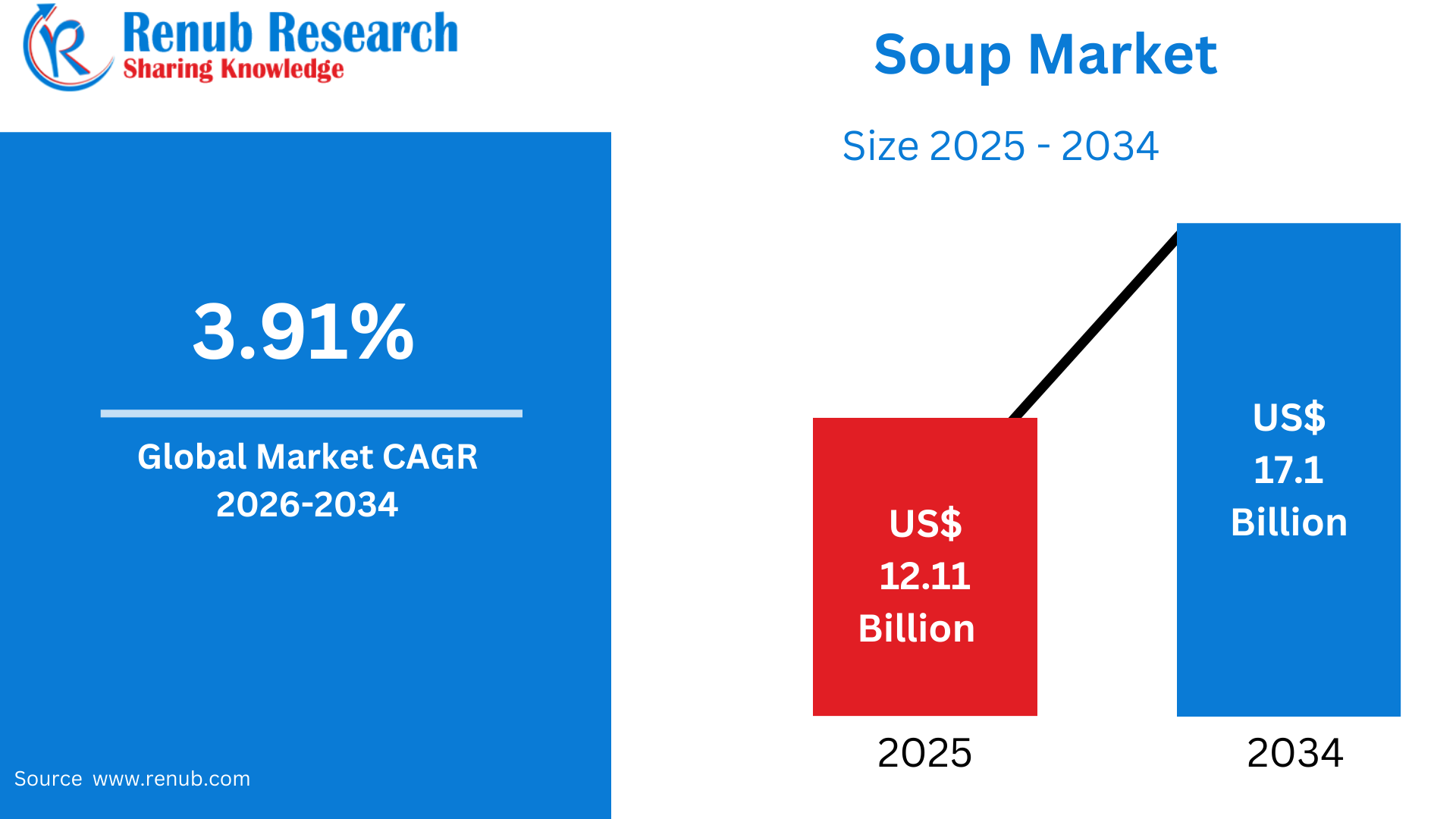
The international soup market is projected to expand steadily over the forecast period, owing to the increasing demand for convenient ready-to-eat food products and the rising preference for healthy meal options. Urbanization, hectic lifestyles, and the development of innovative soup variants like organic, low-sodium, and plant-based soups are fueling the growth of the market. Consequently, the market is projected to expand from US$ 12.11 Billion in 2025 to US$ 17.1 Billion in 2034, registering a Compound Annual Growth Rate (CAGR) of 3.91% from 2026 to 2034.
Soup Industry Overview
Soup is a liquid or semi-liquid food obtained by mixing ingredients like vegetables, meat, seafood, grains, beans, or spices with water or stock. Soup can be served hot or cold and is eaten as a starter, main course, or comfort food according to local customs. Soups vary from clear soups to thick and creamy soups, ranging from different flavors and textures. Soups are preferred for their nutritional value, ease of digestion, and the flexibility to add a variety of ingredients, making them suitable for all age groups.
Soup is a very popular dish globally because of its versatility, convenience, and cultural significance. In most parts of the world, soup is a basic component of meals, especially in countries where the soup is warm and serves as a source of comfort. The increasing trend of people living busy lives has contributed to the rising demand for ready-to-eat and instant soups, while health-conscious people prefer soups that are made from natural ingredients and are low in sodium.
Key Growth Drivers of the Global Soup Market
Increasing Demand for Convenient and Ready-to-Eat Meal Solutions
Among the most significant factors propelling the growth of the soup industry is the increasing demand for convenient and ready-to-eat food. This is because urbanization, busy lifestyles, and changing consumer behaviors have led to a decrease in the time spent by consumers in preparing meals in their homes. Soups, particularly instant, canned, and ready-to-eat soups, are quick to prepare, have a long shelf life, and are convenient to consume. They can be consumed on the go, at offices, or as a quick dinner option. Moreover, their easy accessibility from supermarkets, convenience stores, and online shopping platforms has further increased their appeal. As a result, as long as convenience remains a concern for consumers across the globe, the demand for packaged soup products is likely to continue growing steadily. February 2024, Cigna Healthcare teamed up with HelloFresh to offer HelloFresh meal kits to up to 12 million Cigna customers at reduced rates through their employers, to help them cook healthy meals at home. Flexible options for employees include discounted subscriptions and one-time meal deliveries—all with pre-portioned ingredients for wholesome meals, such as soups.
Rising Health Consciousness and Preference for Nutritious Foods
Rise in health awareness among consumers is a major contributing factor to the growth of the soup market. Soups are generally known to be healthy, light, and easy to digest, making them a favorite among health-conscious consumers, senior citizens, and people recovering from illness. Companies are now focusing on developing soups with natural ingredients, vegetables, beans, and lean proteins. Low-sodium, organic, plant-based, and functional soups fortified with vitamins and minerals are becoming popular. As consumers are looking for healthier meal alternatives that are a combination of taste and health, soups are gaining immense acceptance in the global market. April 2024, Nissin has introduced a limited edition Collagen Hotpot Cup Noodles. This product is available in Don Don Donki stores and leading supermarkets in Singapore. It comes with a rich chicken broth and a smooth and creamy texture of collagen.
Product Innovation and Expansion of Flavor Variety
Innovation in flavors, ingredients, and packaging is another key factor that is driving the soup market. Companies are launching global and ethnic soup options to meet the varied tastes of consumers. Premium, gourmet, and clean-label soups are gaining popularity among consumers who are ready to pay extra for quality and authenticity. Innovations in packaging, such as microwaveable cups, single-serve packaging, and eco-friendly packaging, are increasing convenience and sustainability. As companies differentiate their products through innovation and variety, the soup market is witnessing growth. June 2023, Zoup! Good, Really Good is introducing four inspired recipes to its popular line of premium soups in glass jars: Chicken Potpie, Portabella Mushroom Bisque, Chicken Noodle, and vegan Black Bean Chili. Kettle cooked in small batches to showcase rich, simmered-all-day flavor, each is made without artificial ingredients and preservatives and made with one of Zoup!'s homestyle broths as its foundation.
Challenges of the Global Soup Market
Health Concerns Related to Sodium and Preservatives
One of the biggest challenges in the soup market is the rising health concern among consumers about the high sodium content and preservatives used in soup products. Many ready-to-eat and canned soups contain high amounts of salt to make them more palatable and extend their shelf life. Consuming high amounts of sodium has been associated with various health problems, including high blood pressure and cardiovascular diseases, which have prompted health-conscious consumers to cut down their sodium intake. Governments and health bodies are also promoting the reduction of sodium intake through labeling policies and health recommendations. The soup industry is challenged by the need to develop healthier products with lower sodium content while still being palatable and shelf-stable.
Intense Market Competition and Changing Consumer Preferences
The soup industry is highly competitive due to the availability of a variety of food products, such as fresh meals, homemade soups, and frozen foods. Consumers are increasingly opting for fresh and minimally processed foods, which may impact the demand for packaged soups. Private labels and local manufacturers are also increasing price competition, particularly in price-conscious markets. Moreover, the ever-changing consumer preferences require continuous innovation in products, leading to increased marketing and development costs. Building brand loyalty and catering to the changing consumer preferences is a major challenge for the soup industry in the highly competitive global market.
Instant Soup Market
The market for instant soups is driven by the increasing demand for convenient meal solutions. Instant soups are easy to prepare, require less cooking time, and are perfect for busy consumers such as working professionals, students, and travelers. Instant soups have a long shelf life and come in compact packaging, making them perfect for consumption at home, in the office, or on the go. Innovations in instant soups in terms of flavors, nutritional enhancement, and low-sodium options have widened the appeal among consumers. The convenience-driven lifestyle continues to grow in popularity across the world, and the instant soup market is one of the fastest-growing segments in the overall soup market.
Chilled Soup Market
The chilled soup market is gaining popularity owing to the increasing demand for fresh and natural food products. Chilled soups are generally preserved in refrigerated environments and provide better taste, texture, and nutritional content compared to shelf-stable soups. Chilled soups are in high demand among health-conscious consumers who are looking for clean-label, organic, and gourmet soups. Chilled soups are generally consumed as a high-end meal or appetizer, especially in urban areas. The development of cold chain infrastructure and modern retail channels is fueling the growth of the chilled soup market. With the increasing demand for fresh and quality foods, the chilled soup market is emerging as a promising alternative to traditional packaged soups.
Non-Vegetarian Soup Market
The non-vegetarian soup market comprises soups made from meat, poultry, and seafood, which are rich in flavors and proteins. These soups are in high demand among consumers looking for hearty and filling food. Non-vegetarian soups are largely demanded in households, restaurants, and foodservice establishments. The increasing demand for protein-rich food and traditional meat-based recipes fuels the market growth. Companies are launching ready-to-eat and high-end non-vegetarian soups to meet the evolving demands of consumers. With the increasing global meat consumption, non-vegetarian soups continue to have a substantial market share in the soup market. October 2024, Freja Foods, launched Instant Bone Broth sachets in Beef and Chicken varieties that are nutrient-dense, all-natural alternatives to conventional stock cubes. Each of the sachets, which are high in protein (11g per serving) and collagen, can be used for cooking or mixed with hot water, offering a low-calorie alternative to the broth, 56 kcal for beef and 52 kcal for chicken. The sachets are packed in a pack priced at £5.99 RRP and hold four 15g sachets.
Soup Convenience Stores Market
Convenience stores are also very significant in the distribution of soup products, particularly instant and ready-to-eat soups. Convenience stores target consumers who are looking for convenient purchases and consumption. The high foot traffic and longer operating hours of convenience stores also facilitate the sales of soups. Packets and ready-to-heat soups are in high demand in convenience stores. With the growing urban lifestyle, convenience stores remain an important distribution channel for soups.
Online Soup Market
The online soup market is growing at a fast pace due to the increasing adoption of e-commerce and changing consumer behavior. Online shopping provides consumers with a variety of products, price comparisons, and the convenience of home delivery. The services of subscription and bulk purchases also lure customers. Health-oriented and specialty soup brands find prominence on online platforms. With the increasing trend of online grocery shopping, online platforms are becoming a significant distribution channel for soup products.
United States Soup Market
The soup market in the United States is an established one and is driven by consumer demand for healthy and convenient meal solutions. Soups are a popular food item in the United States as they are consumed as a quick lunch, comfort food, and as a meal starter, especially in the colder months of the year. The high availability of canned, instant, and ready-to-eat soups in the United States is a factor that supports the growth of the soup market. Health trends have led to the development of low-sodium, organic, and plant-based soups by manufacturers. Busy lifestyles, the aging population, and the presence of major soup brands in the United States continue to drive the demand for soups. Innovation in the area of flavors and packaging further enhances the soup market in the United States. In July 2022, Upton's Naturals introduced three new soup flavors in the United States market. The new product offerings include flavors such as Chick & Wild Rice, Crimson Lentil, and Minestrone, which offer plant-based protein and only 180-300 calories per bowl. It has no added colors, preservatives, or flavors and is completely cholesterol and trans-fat free.
United Kingdom Soup Market
The soup market in the United Kingdom is driven by the increasing demand for healthy, convenient, and warming foods. Soups are often eaten as a quick meal or a snack, especially during the winter months. The growing health awareness has led to an increase in the demand for fresh, organic, and low-salt soups. The presence of supermarkets and store brands is a significant factor in the development of the soup market, as they provide affordable and varied soup options. The rising demand for chilled and premium soups is another factor that fuels the growth of the soup market. As convenience and health continue to be important factors, the consumption of soups continues to rise steadily in the United Kingdom. In January 2023, Heinz UK introduced vegan canned lines such as Creamy Tomato Soup and Beanz & Sausages. The vegan creamy tomato soup is prepared using fermented soy instead of dairy, as in the original version. These plant-based alternatives were launched due to the growing demand for more plant-based options from Heinz.
India Soup Market
The soup market in India is a developing market, driven by changing food habits and the need for convenient food products. Instant soups have gained popularity in urban areas, among students, and working professionals because of the convenience of preparation. Increased familiarity with international cuisine has led to acceptance of international soup flavors. Health-conscious vegetable and low-calorie soups have gained popularity among health-conscious consumers. Development of modern retail and e-commerce channels has made the market more accessible. Although penetration is low compared to Western countries, the growing urban population is fueling steady growth. November 2023, The Peninsular Export Company launched SAARRU, which is India's own soup with regional flavors. It offers three types of soup blends according to regional cuisine such as Chicken soup masala, Mutton soup masala, and Chicken coriander rasam masala. It is available in both B2B and B2C markets in the state of Tamil Nadu and also on the e-commerce website of SAARRU and other e-commerce websites like Jiomart and Flipkart.
Saudi Arabia Soup Market
The Saudi Arabian soup market is expanding steadily due to lifestyle changes and the need for convenient food solutions. Soups are being consumed as part of traditional cuisine as well as packaged foods. Urbanization, rising disposable incomes, and familiarity with global food trends are fueling market growth. The demand for instant and ready-to-eat soups is rising, especially among the younger generation. With the increasing consumption of convenience foods, the soup market is also expanding in Saudi Arabia. July 2025: Nestle Middle East introduces the first halal-certified organic instant soup range in Saudi Arabia, investing SAR 80 million in response to growing health-conscious consumer demand.
Market Segmentation
Type
- Instant
- Canned
- Dehydrated
- Chilled
- Others
Category
- Vegetarian
- Non-Vegetarian
Distribution Channel
- Supermarkets & Hypermarkets
- Convenience Stores
- Online
Country
North America
- United States
- Canada
Europe
- France
- Germany
- Italy
- Spain
- United Kingdom
- Belgium
- Netherlands
- Turkey
Asia Pacific
- China
- Japan
- India
- Australia
- South Korea
- Thailand
- Malaysia
- Indonesia
- New Zealand
Latin America
- Brazil
- Mexico
- Argentina
Middle East & Africa
- South Africa
- Saudi Arabia
- United Arab Emirates
All the Key players have been covered from 5 Viewpoints:
- Overviews
- Key Person
- Recent Developments
- SWOT Analysis
- Revenue Analysis
Company Analysis:
- The Campbell Soup Company
- Nestle S.A.
- Baxters Food Group Lmt.
- General Mills Inc.
- Conagra Brands, Inc.
- Premier Foods
- Hindustan Unilever Group
- Associated British Food Inc.
Report Details:
| Report Features | Details |
| Base Year |
2025 |
| Historical Period |
2022 - 2025 |
| Forecast Period |
2026 - 2034 |
| Market |
US$ Billion |
| Segment Covered |
Product, End User, Distribution Channel and Countries |
| Countries Covered |
|
| Companies Covered |
|
| Customization Scope |
20% Free Customization |
| Post-Sale Analyst Support |
1 Year (52 Weeks) |
| Delivery Format |
PDF and Excel through Email (We can also provide the editable version of the report in PPT/Word format on request) |
Customization Services available
- Analysis of Market Size and Its Segments
- More Company Profiles (Upto 10 without any additional cost):
- Additional Countries (Other than mentioned Countries):
- Region/Country Specific Reports:
- Market Entry Strategy:
- Region-Specific Market Dynamics:
- Regional Market Share Analysis:
- Trade Analysis:
- Production Insights:
- Others Customized Requests:
For more information contact our analysts.
Need More Assistance?
- Talk to our analysts to get more precious information on the current market trends.
- Include more countries and segments and customize the report based on the final requirement.
- Get a competitive advantage in your industry by knowing the report findings and making a positive impact on your revenues and operations.
- Our analysts are always ready to provide more help and pertinent information if you need any additional assistance.