GCC Catheter Market Report by Product Type, End Users, Countries and Companies Analysis 2026-2034
Buy NowGCC Catheter Market Size & Forecast
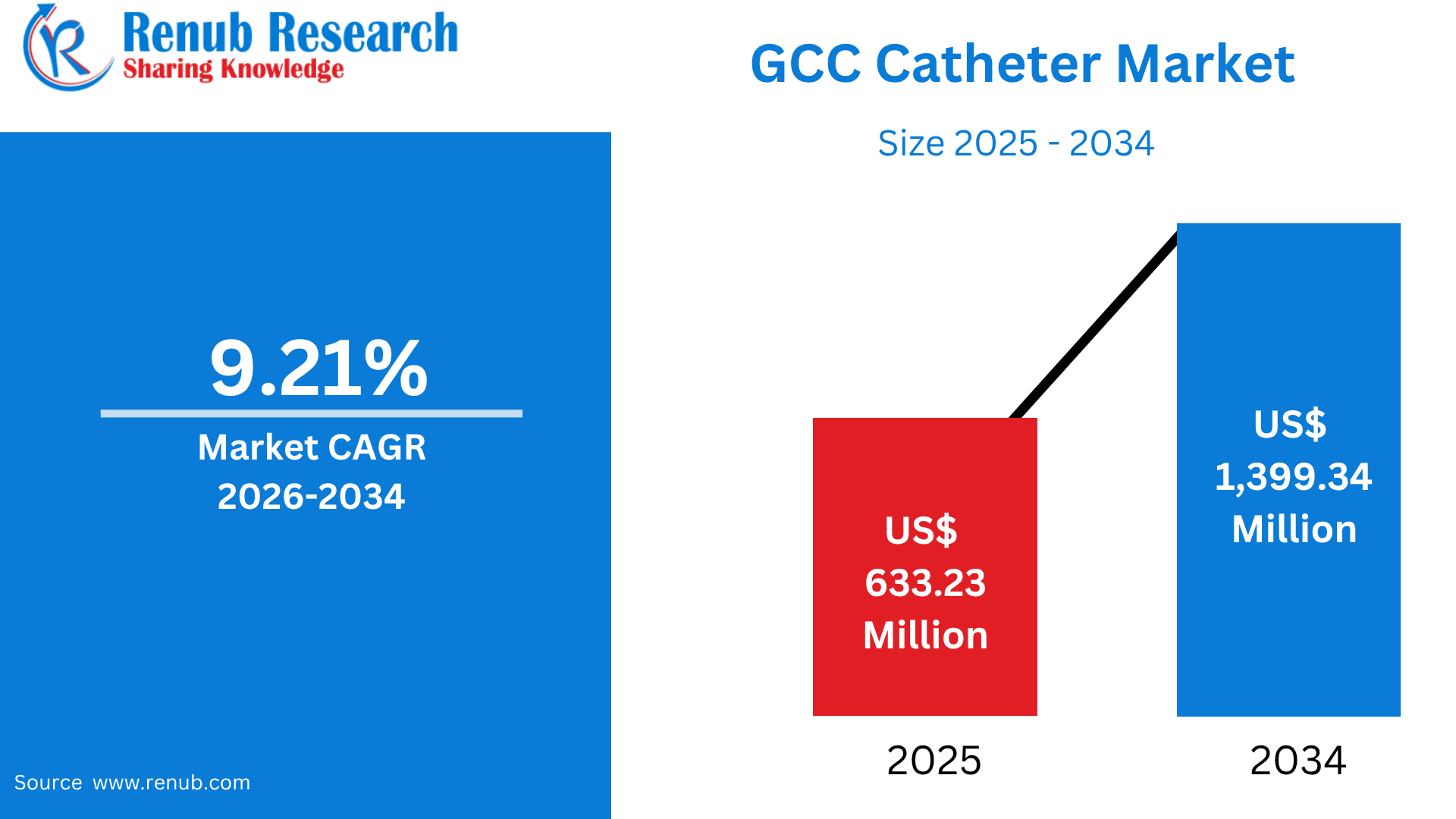
GCC Catheter Market is projected to expand from US$ 633.23 million in 2025 to US$ 1,399.34 million by 2034, registering a Compound Annual Growth Rate (CAGR) of 9.21% during 2026–2034. Market growth is being supported by the increasing burden of cardiovascular diseases, urinary disorders, and other chronic health conditions across the Gulf region, which is driving demand for catheter-based diagnostic and therapeutic procedures. In addition, rising healthcare expenditure and continued investments in hospital infrastructure are strengthening access to advanced medical technologies.
What is Catheter and its Uses & Popularity in GCC
A catheter is a thin, flexible medical tube inserted into the body to deliver medications or fluids, drain bodily fluids, monitor physiological conditions, or support minimally invasive diagnostic and therapeutic procedures. Catheters are available in several forms, including cardiovascular, urinary, intravenous, neurovascular, and specialty catheters. They are widely used for urinary drainage, intravenous therapy, dialysis, angioplasty, cardiac interventions, intensive-care treatment, and postoperative management. In the GCC, catheter utilization is increasing alongside the growing burden of chronic diseases, expanding surgical volumes, and modernization of healthcare facilities. Cardiovascular conditions, diabetes, kidney disorders, and other non-communicable diseases create recurring demand for catheter-based diagnosis and treatment. Across the six GCC countries, major NCDs including cancer, diabetes, cardiovascular and chronic respiratory diseases accounted for nearly 43,000 deaths in 2019, with cardiovascular diseases representing about 32,000 of these deaths. The market is also benefiting from increased adoption of minimally invasive procedures and investments in advanced hospitals and specialized catheterization laboratories.
GCC Diabetes Burden: 2024 vs 2050 Projection (Adults Aged 20–79 Years)
- Saudi Arabia: Diabetes cases are estimated at 4.3 million in 2024 and projected to reach approximately 6.8–7.2 million by 2050, indicating a strong increase.
- UAE: The diabetic population is estimated at 1.0 million in 2024, with projections of approximately 1.6–1.8 million by 2050, representing a moderate-to-high increase.
- Kuwait: Diabetes prevalence is estimated at 0.65 million adults in 2024 and is projected to increase to around 0.95–1.05 million by 2050, reflecting a steady increase.
- Qatar: The number of adults with diabetes is estimated at 0.32 million in 2024 and projected to reach approximately 0.45–0.55 million by 2050, indicating a moderate increase.
- Oman: Diabetes cases are estimated at 0.40 million in 2024 and expected to rise to approximately 0.70–0.85 million by 2050, representing high proportional growth.
- Bahrain: The diabetic population is estimated at 0.18 million in 2024 and projected to reach approximately 0.25–0.30 million by 2050, indicating a moderate increase.
Source: International Diabetes Federation (IDF) Diabetes Atlas, 11th Edition (2025); The Lancet Diabetes & Endocrinology (IDF Atlas 2024–2050 projections study, 2026).
Growth Drivers of the GCC Catheter Market
Rising Burden of Cardiovascular and Chronic Diseases
The increasing prevalence of cardiovascular diseases, diabetes, kidney disorders, and other chronic conditions is a major driver of catheter demand across the GCC. Catheters are essential in cardiovascular interventions, urinary management, dialysis, intravenous treatment, and intensive-care settings. The GCC has a particularly high burden of lifestyle-related diseases. A recent review reported diabetes prevalence of 18.3% in Saudi Arabia, 15.4% in the UAE, 22.0% in Kuwait, 15.7% in Oman, 15.5% in Qatar, and 16.3% in Bahrain, substantially increasing the need for long-term medical management and catheter-based procedures. Cardiovascular disease is also a significant contributor to mortality, with nearly 32,000 cardiovascular deaths recorded across the GCC in 2019. The catheter market is consequently benefiting from growing demand for coronary angiography, angioplasty, vascular access, urinary drainage, and other interventions. In addition, population aging is expected to increase demand because older patients are more likely to require hospitalization, surgery, chronic disease management, and catheterization. These demographic and epidemiological trends are creating sustained demand for both conventional and advanced catheter technologies throughout the GCC.
Expansion of Healthcare Infrastructure and Investment
Increasing investment in healthcare infrastructure is supporting the expansion of the GCC catheter market by improving access to advanced diagnostic and therapeutic procedures. GCC governments and private healthcare organizations are developing specialized hospitals, cardiac centers, catheterization laboratories, and ambulatory facilities equipped with modern medical technologies. Saudi Arabia and the UAE are particularly active in expanding specialized healthcare capacity, while Qatar, Kuwait, Bahrain, and Oman are also investing in healthcare modernization. The development of advanced catheterization laboratories is increasing the availability of interventional cardiology and other minimally invasive procedures. Greater availability of modern healthcare facilities also encourages the adoption of premium catheter products, including coated, multi-lumen, cardiovascular, neurovascular, and sensor-enabled devices. This infrastructure expansion is therefore strengthening both procedure volumes and demand for innovative catheter solutions.
Growing Adoption of Minimally Invasive Procedures
The increasing preference for minimally invasive procedures is creating significant opportunities for catheter manufacturers across the GCC. Catheter-based interventions allow physicians to diagnose and treat various conditions through relatively small access points, supporting shorter recovery periods and reduced tissue trauma compared with many conventional surgical approaches. Cardiovascular catheterization is particularly important, with growing use of angioplasty, vascular interventions, and advanced cardiac diagnostic procedures. Technological advancements in balloon catheters, drug-delivery systems, intravascular ultrasound, coated catheters, and other specialized devices are further supporting adoption. As hospitals expand their minimally invasive capabilities and physicians receive greater access to advanced procedural technologies, catheter-based interventions are expected to become increasingly important across GCC healthcare systems.
Challenges of the GCC Catheter Market
High Cost of Advanced Catheter Technologies
The relatively high cost of advanced catheter products and catheterization procedures can constrain market adoption, particularly among healthcare facilities operating under strict budget requirements. Modern cardiovascular, neurovascular, and specialty catheters often incorporate sophisticated materials, coatings, imaging capabilities, sensors, or drug-delivery technologies, increasing their acquisition and procedural costs. Although GCC countries generally maintain comparatively high healthcare spending and are investing substantially in advanced medical infrastructure, differences in healthcare budgets and facility capabilities can affect access to premium technologies. Industry analysis identifies the high cost of advanced catheterization procedures as a challenge to wider adoption in the GCC. The economic burden associated with chronic diseases also places pressure on healthcare systems. Treatment of diabetes, cardiovascular diseases, and chronic respiratory diseases generated estimated clinical-service costs of approximately US$676 million across the six GCC countries in 2019 at the primary-care level. Consequently, hospitals and healthcare providers must balance investment in technologically advanced catheter products with overall cost-effectiveness. Pricing pressures, procurement requirements, reimbursement considerations, and the need to demonstrate clinical value can therefore influence adoption rates.
Regulatory Complexity and Product Approval Requirements
Regulatory complexity represents another challenge for catheter manufacturers seeking to expand across the GCC. The region consists of six individual healthcare markets—Saudi Arabia, the UAE, Kuwait, Qatar, Bahrain, and Oman—with regulatory requirements, registration procedures, procurement processes, and market-access frameworks that can vary by country. Manufacturers therefore need to satisfy applicable quality, safety, documentation, and product-registration requirements before advanced catheter technologies can be commercialized. Industry research specifically identifies regulatory complexity as a key barrier, noting that different standards and approval mechanisms can increase compliance costs and delay product launches. This challenge can be more pronounced for innovative cardiovascular, neurovascular, and specialty catheters that require extensive technical and clinical documentation. Delays in regulatory approvals may postpone commercialization and limit the availability of newer products in certain GCC markets. Manufacturers may also need local distribution partnerships and country-specific regulatory expertise to navigate procurement and market-access requirements efficiently. As the region continues to introduce advanced medical technologies, maintaining regulatory compliance while accelerating access to innovative catheter products will remain an important consideration for market participants.
GCC Catheters Market News and Key Developments
- February 2024 – Zylox-Tonbridge: Zylox-Tonbridge received marketing approval from the UAE Ministry of Health and Prevention (MOHAP) for a portfolio of peripheral vascular products. The approval covered the ZENFluxion™ Drug-coated PTA Balloon Catheter, ZENFlow™ HP PTA Balloon Catheter, ZENFlow™ PTA Balloon Catheter, ZENFlex™ Peripheral Stent System, and ZENFLEX Pro™ Peripheral Drug-eluting Stent System, expanding the availability of advanced catheter and vascular intervention technologies in the UAE.
- May 2025 – Abbott: Abbott launched the TactiFlex™ Sensor Enabled Ablation Catheter, described by the company as the world’s first ablation catheter combining a flexible tip with contact-force technology. The device is designed to provide physicians with information on contact force during cardiac ablation procedures, supporting the development of advanced electrophysiology capabilities.
- February 2025 – Johnson & Johnson MedTech: Johnson & Johnson MedTech introduced the CEREGLIDE™ 92 Catheter System, a next-generation large-bore catheter designed for acute ischemic stroke interventions. The product strengthens the company’s neurovascular portfolio and represents an advancement in catheter technologies used in complex stroke procedures, with potential relevance to GCC hospitals adopting advanced neurointerventional care.
- September 2025 – Terumo Neuro: Terumo Neuro announced the EMEA commercial availability of the SOFIA™ Flow 88 Neurovascular Aspiration Catheter, expanding access to large-bore aspiration technology for stroke and neurovascular procedures. The catheter incorporates design features intended to support trackability and aspiration performance during neurointerventional procedures. While the announcement covered the broader EMEA region rather than the GCC specifically, the technology can become accessible to GCC healthcare providers through regional distribution networks.
Rising Cardiovascular Disease Burden and Interventional Procedures
GCC cardiovascular catheter market is expanding as the region faces a substantial burden of cardiovascular diseases and increasing demand for minimally invasive cardiac interventions. Cardiovascular diseases accounted for approximately 32,000 deaths across the GCC in 2019, highlighting the significant need for diagnosis, treatment, and long-term disease management. Catheters are extensively used in coronary angiography, angioplasty, electrophysiology, structural-heart procedures, and vascular interventions. Technological developments in drug-eluting systems, balloon catheters, guide catheters, and specialized delivery systems are further improving procedural capabilities. Healthcare providers are increasingly adopting catheter-based interventions because they can reduce surgical trauma and hospital recovery time in appropriate patients. Expansion of specialized cardiac centers and catheterization laboratories in Saudi Arabia, the UAE, Qatar, and other GCC countries is also supporting adoption. Consequently, cardiovascular catheters remain an important component of the region’s growing interventional cardiology market.
Increasing Demand for Precision Neurovascular and Peripheral Interventions
GCC microcatheters market is gaining momentum as healthcare providers increasingly adopt highly precise minimally invasive vascular and neurovascular procedures. Microcatheters are designed to navigate small and complex blood vessels and are used to deliver contrast agents, embolic materials, drugs, and other therapeutic devices. Their applications include treatment of cerebral aneurysms, ischemic stroke, arteriovenous malformations, and peripheral vascular conditions. Stroke and cardiovascular disease represent important healthcare burdens across the GCC, supporting demand for specialized catheter-based interventions. Recent introduction of large-bore neurovascular technologies, including the CEREGLIDE 92 catheter system and SOFIA Flow 88 aspiration catheter, also illustrates increasing availability of advanced neurointerventional devices in regional healthcare markets. Improvements in catheter flexibility, trackability, imaging compatibility, and material technology are further supporting clinical adoption. As specialized stroke centers and interventional radiology capabilities expand, demand for microcatheters is expected to increase.
Growing Preference for Patient-Centered Urinary Management
GCC intermittent catheters market is developing as healthcare systems increasingly emphasize patient-centered urinary management and home-based care. Intermittent catheterization is commonly used for individuals experiencing urinary retention, neurogenic bladder, spinal cord injuries, and certain neurological conditions. Unlike long-term indwelling catheterization, intermittent use can provide patients with greater flexibility and independence when appropriately prescribed and managed. Demand is being supported by the region’s growing chronic disease burden and expanding rehabilitation and long-term care services. Diabetes is particularly relevant because it can contribute to urinary and neurological complications requiring bladder-management interventions. Recent estimates indicate that diabetes affected approximately 4.3 million adults in Saudi Arabia in 2024, with the number projected to reach roughly 6.8–7.2 million by 2050. Similar increases are projected across other GCC countries. Product innovations such as hydrophilic coatings, pre-lubricated designs, and compact packaging are improving ease of use and supporting self-catheterization. Greater awareness of catheter hygiene and infection prevention is also encouraging appropriate intermittent catheter use. These trends are expected to support gradual market expansion across the GCC.
Increasing Hospitalization and Intravenous Therapy Requirements
GCC short Peripheral Intravenous Catheter (PIVC) market is expanding because these devices are fundamental to routine hospital care and intravenous therapy. Short PIVCs are used to administer medications, fluids, blood products, and other treatments across emergency departments, inpatient wards, intensive-care units, outpatient facilities, and surgical centers. Their widespread clinical application creates recurring demand from hospitals and healthcare facilities. The GCC’s expanding healthcare infrastructure and increasing investment in hospital capacity are supporting procedure volumes and vascular-access requirements. Saudi Arabia and the UAE are particularly important markets because of their large healthcare systems and ongoing development of tertiary and specialized facilities. Product innovation is also focused on improving insertion success, patient comfort, catheter stability, and infection prevention. Advanced PIVCs incorporating safety mechanisms can help reduce needlestick injuries and support safer clinical workflows. At the same time, healthcare providers are increasingly emphasizing appropriate catheter selection and management to reduce complications associated with peripheral intravenous access. As GCC healthcare systems continue expanding emergency, surgical, oncology, and outpatient services, demand for short PIVCs is expected to remain substantial.
Hospital Infrastructure Expansion Supporting High-Volume Catheter Use
Hospitals represent a major end-user segment of the GCC catheter market because they perform large volumes of diagnostic, therapeutic, surgical, and emergency procedures requiring different catheter types. Cardiovascular, urinary, intravenous, neurovascular, and specialty catheters are routinely used across cardiology, urology, intensive care, emergency medicine, radiology, and surgery departments. Increasing investment in healthcare infrastructure is expanding the number and capabilities of hospitals throughout the region. The GCC’s healthcare modernization programs are also supporting development of tertiary hospitals, specialty centers, catheterization laboratories, and advanced diagnostic facilities. Cardiovascular disease remains a particularly important source of demand, with approximately 32,000 cardiovascular deaths recorded across the GCC in 2019. Hospitals are consequently increasing their capacity for interventional cardiology and minimally invasive procedures. The development of specialized facilities also creates demand for advanced products such as drug-coated balloons, aspiration catheters, microcatheters, and electrophysiology catheters. As governments and private healthcare operators continue investing in modern medical infrastructure, hospitals are expected to remain a primary distribution and consumption channel for catheter products across the GCC.
Saudi Arabia Vision 2030 and Chronic Disease Burden Driving Catheter Adoption
Saudi Arabia represents a major catheter market within the GCC, supported by its large population, increasing chronic disease burden, and extensive healthcare modernization initiatives. Vision 2030 is driving transformation of the country’s healthcare system through infrastructure development, digitalization, private-sector participation, and expanded access to advanced medical services. The country’s substantial burden of cardiovascular disease and diabetes is generating demand for cardiovascular, urinary, intravenous, and specialty catheter products. Saudi Arabia had approximately 4.3 million adults aged 20–79 years living with diabetes in 2024, with projections indicating approximately 6.8–7.2 million by 2050. The country’s internet penetration also reached 99% in early 2025, illustrating its broader digital development, although digital connectivity itself is not a direct measure of catheter demand. Healthcare providers are expanding specialized cardiac centers, tertiary hospitals, interventional laboratories, and advanced surgical services. The adoption of minimally invasive treatment methods is further encouraging the use of catheter-based technologies. Increasing healthcare expenditure and investments in medical technology are therefore creating opportunities for both established and emerging catheter manufacturers in Saudi Arabia.
UAE Advanced Healthcare Infrastructure and Medical Innovation Supporting Growth
UAE catheter market is benefiting from its advanced healthcare infrastructure, medical tourism industry, and strong adoption of innovative medical technologies. Hospitals and specialty centers increasingly perform minimally invasive cardiovascular, neurovascular, peripheral vascular, urological, and electrophysiological procedures, creating demand for specialized catheter systems. The UAE has also demonstrated increasing access to advanced catheter technologies. In February 2024, Zylox-Tonbridge received UAE Ministry of Health and Prevention marketing approval for several peripheral vascular products, including the ZENFluxion drug-coated PTA balloon catheter and ZENFlow PTA balloon catheter. Such regulatory approvals expand the availability of advanced vascular intervention technologies within the country. The UAE’s highly developed private healthcare sector and concentration of international medical providers further support technology adoption. Medical tourism also encourages hospitals to maintain advanced procedural capabilities and modern equipment. Increasing preference for minimally invasive interventions, combined with investment in specialized cardiac and vascular centers, is expected to strengthen catheter demand. Product innovation in electrophysiology, neurovascular intervention, peripheral vascular treatment, and vascular access is likely to create additional opportunities across the UAE market.
Kuwait Chronic Disease Prevalence and Healthcare Modernization Supporting Demand
Kuwait’s catheter market is witnessing continued development as chronic diseases, hospital modernization, and demand for advanced medical procedures support product adoption. Diabetes and cardiovascular diseases are particularly important contributors to catheter demand because they can require repeated diagnostic, therapeutic, and monitoring procedures. Recent estimates place diabetes prevalence among adults in Kuwait at approximately 22%, one of the highest reported rates among GCC countries. This substantial disease burden creates requirements for long-term healthcare services and specialized interventions. Catheters are used across cardiovascular care, urinary management, intravenous therapy, dialysis, and other hospital procedures. Kuwait is also investing in healthcare infrastructure and modernization, including expansion and upgrading of medical facilities. Increasing availability of specialized diagnostic and interventional services can support the use of advanced catheter technologies. Manufacturers are additionally developing products designed to improve procedural precision, safety, and patient comfort. The broader expansion of minimally invasive medicine across the GCC is creating further opportunities for catheter suppliers in Kuwait. As healthcare providers focus on improving treatment quality and managing the growing burden of chronic conditions, demand for specialized catheter products is expected to continue developing.
GCC Catheter Market Segmentation
Product Type
- Cardiovascular Catheters
- Cardiovascular Therapeutic Catheters
- Cardiovascular Diagnostic Catheters
Neurovascular Catheters
- Microcatheters
- Balloon Catheters
- Access Catheters
- Embolization Catheters
- Others
Urinary Catheters
- Intermittent Catheters
- Foley/Indwelling Catheters
- External Catheters
Intravascular Catheters
- Short PIVC
- Integrated/Closed PIVC
Specialty Catheters
End User
- Hospitals
- Ambulatory Surgical Centers
- Diagnostic Imaging Centers
- Others
Countries
- Saudi Arabia
- UAE
- Kuwait
- Qatar
- Oman
- Bahrain
- Rest of GCC
All companies have been covered with 5 Viewpoints
- Overviews
- Key Person
- Recent Developments
- SWOT Analysis
- Revenue Analysis
Key Players Analysis
- Abbott Laboratories
- Edwards Lifesciences Corp
- Becton Dickinson And Company
- Boston Scientific Corporation
- Medtronic Plc.
- Johnson & Johnson
- Stryker Corporation
- Teleflex Inc.
Report Details:
| Report Features | Details |
| Base Year |
2025 |
| Historical Period |
2022 - 2025 |
| Forecast Period |
2026 - 2034 |
| Market |
US$ Million |
| Segment Covered |
Product Type, End Users and Countries |
| Countries Covered |
|
| Companies Covered |
|
| Customization Scope |
20% Free Customization |
| Post-Sale Analyst Support |
1 Year (52 Weeks) |
| Delivery Format |
PDF and Excel through Email (We can also provide the editable version of the report in PPT/Word format on request) |
Customization Services available
- Analysis of Market Size and Its Segments
- More Company Profiles (Upto 10 without any additional cost):
- Additional Countries (Other than mentioned Countries):
- Region/Country Specific Reports:
- Market Entry Strategy:
- Region-Specific Market Dynamics:
- Regional Market Share Analysis:
- Trade Analysis:
- Production Insights:
- Others Customized Requests:
For more information contact our analysts.
Need More Assistance?
- Talk to our analysts to get more precious information on the current market trends.
- Include more countries and segments and customize the report based on the final requirement.
- Get a competitive advantage in your industry by knowing the report findings and making a positive impact on your revenues and operations.
- Our analysts are always ready to provide more help and pertinent information if you need any additional assistance.