Europe Ice Cream Market Report by Product,Type, Flavors, Distribution Channel, Countries and Company Analysis 2026–2034
Buy NowEuropean Ice Cream Market Analysis: Valuation, Product Segments, and Long-Term Outlook
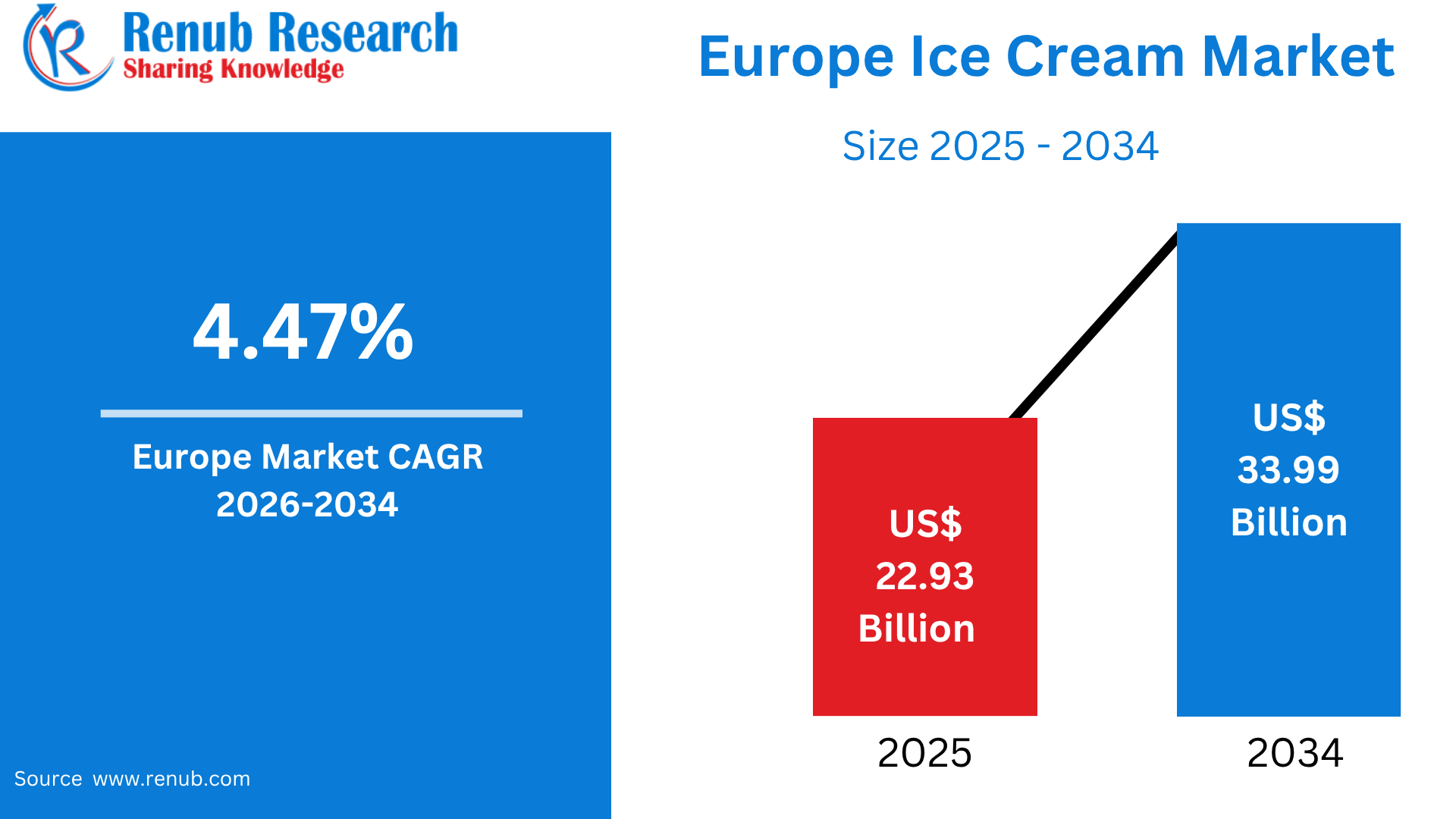
European Ice Cream Market is projected to grow US$ 22.93 Billion in 2025 to US$ 33.99 Billion in 2034, at a compound annual growth rate (CAGR) of 4.47% from 2026 to 2034. Market growth is supported by rising demand for premium and artisanal ice cream, increasing preference for plant-based and low-sugar products, and continuous product innovation. Expanding retail distribution, e-commerce availability, and seasonal tourism across Europe are further contributing to sustained market expansion throughout the forecast period.
European Ice Cream: Its Uses & Popularity Worldwide
Ice cream is a frozen dairy-based or plant-based dessert made by blending ingredients such as milk, cream, sugar, flavorings, stabilizers, and emulsifiers, then churning the mixture to incorporate air and create a smooth, creamy texture. It is available in a wide range of flavors, including vanilla, chocolate, fruit, nut-based, and premium gourmet varieties. Modern innovations have also introduced vegan, lactose-free, high-protein, and reduced-sugar ice creams to meet evolving consumer preferences. Ice cream is widely consumed as a standalone dessert. It is also used in milkshakes, sundaes, cakes, pastries, waffles, crepes, and specialty beverages, making it a versatile ingredient across the foodservice industry.
In Europe, ice cream enjoys immense popularity due to its deep cultural heritage, strong café culture, and high consumer demand for premium desserts. Countries such as Italy, France, Germany, Spain, and the United Kingdom have well-established ice cream traditions, with artisanal gelato and handcrafted frozen desserts attracting both local consumers and international tourists. Rising disposable incomes, increasing demand for indulgent treats, and the expansion of innovative flavors featuring organic, natural, and locally sourced ingredients continue to fuel market growth. Seasonal tourism, supermarket availability, and year-round consumption trends further strengthen ice cream's popularity across the European market.
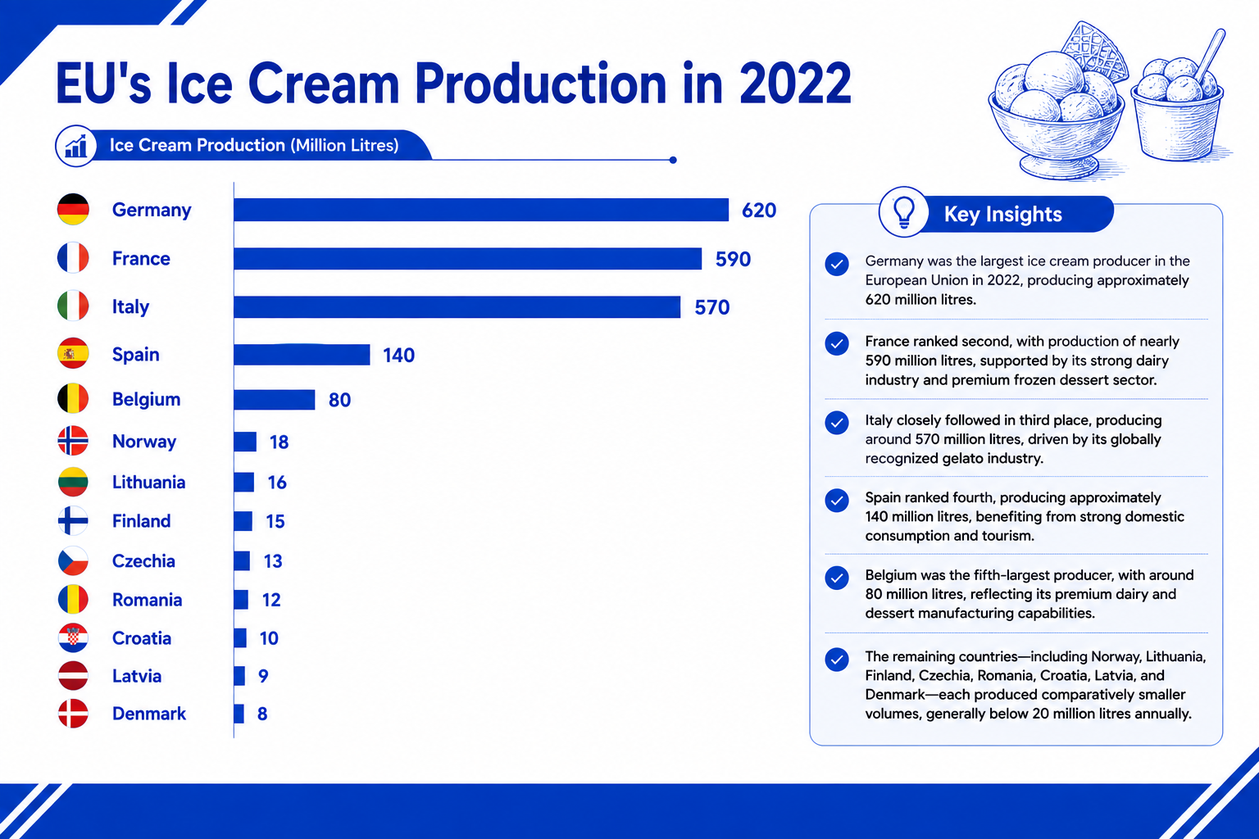
EU's Ice Cream Production in 2022
Key Insights
- Germany was the largest ice cream producer in the European Union in 2022, producing approximately 620 million litres.
- France ranked second, with production of nearly 590 million litres, supported by its strong dairy industry and premium frozen dessert sector.
- Italy closely followed in third place, producing around 570 million litres, driven by its globally recognized gelato industry.
- Spain ranked fourth, producing approximately 140 million litres, benefiting from strong domestic consumption and tourism.
- Belgium was the fifth-largest producer, with around 80 million litres, reflecting its premium dairy and dessert manufacturing capabilities.
- The remaining countries—including Norway, Lithuania, Finland, Czechia, Romania, Croatia, Latvia, and Denmark—each produced comparatively smaller volumes, generally below 20 million litres annually.
Growth Drivers of the European Ice Cream Market
Rising Demand for Premium, Artisanal, and Functional Ice Cream
European consumers are increasingly shifting toward premium and artisanal ice cream products that emphasize high-quality ingredients, authentic flavors, and healthier formulations. Demand for gelato, organic ice cream, low-sugar, high-protein, and lactose-free variants has expanded significantly as consumers prioritize indulgence combined with wellness. According to industry estimates, more than 60% of European consumers are willing to pay a premium for products made with natural ingredients and clean-label formulations. Countries such as Italy, France, and Germany continue to lead premium frozen dessert consumption, while premium private-label products are gaining traction in supermarkets. Functional ice creams enriched with probiotics, vitamins, and plant-based proteins are also attracting health-conscious consumers. Premium offerings generate higher profit margins for manufacturers and encourage continuous product innovation. Seasonal limited-edition flavors, regional specialties, and sustainable ingredient sourcing further strengthen consumer engagement. As disposable incomes rise and premiumization becomes a dominant food trend across Europe, manufacturers are expanding their premium portfolios, making this segment one of the strongest growth drivers for the European ice cream market throughout the forecast period.
Expansion of Plant-Based and Health-Conscious Ice Cream Products
The growing popularity of vegan, dairy-free, and reduced-sugar diets has significantly accelerated the European ice cream market. Europe is among the world's largest markets for plant-based foods, with countries including Germany, the UK, and the Netherlands witnessing rapid adoption of vegan lifestyles. Industry surveys indicate that approximately 8–10% of European consumers regularly purchase plant-based frozen desserts, while flexitarian consumers account for an even larger customer base. Manufacturers are introducing almond, oat, coconut, soy, and cashew-based ice creams to satisfy changing dietary preferences. Reduced-calorie and sugar-free products are also expanding due to rising obesity awareness and diabetes prevention initiatives. Natural sweeteners such as stevia and monk fruit are increasingly replacing refined sugar in premium products. Major multinational brands and regional manufacturers continue investing in research and development to improve taste and texture comparable to traditional dairy ice cream. Continuous innovation in alternative ingredients broadens market reach, attracts younger consumers, and creates substantial growth opportunities across supermarkets, convenience stores, specialty retailers, and online distribution channels.
Strong Retail Expansion, Tourism, and Product Innovation
Europe's well-developed retail infrastructure and thriving tourism industry continue to support strong ice cream sales. Supermarkets and hypermarkets account for a significant share of frozen dessert distribution, while convenience stores, cafés, restaurants, kiosks, and online grocery platforms provide year-round accessibility. Europe receives over 700 million international tourist arrivals annually in normal travel years, creating substantial seasonal demand for frozen desserts, particularly in Italy, Spain, France, Greece, and Portugal. Tourism-driven consumption significantly boosts artisanal gelato shops and premium dessert outlets. Manufacturers also launch hundreds of new ice cream products annually featuring regional fruits, chocolate, nuts, alcohol-infused flavors, and limited-edition seasonal varieties to maintain consumer interest. Sustainable packaging, recyclable materials, and environmentally responsible sourcing further enhance brand competitiveness. Retailers increasingly allocate larger freezer space to premium and innovative frozen desserts due to higher consumer demand. Combined with digital grocery platforms and home delivery services, expanding distribution channels continue driving consistent growth across the European ice cream market.
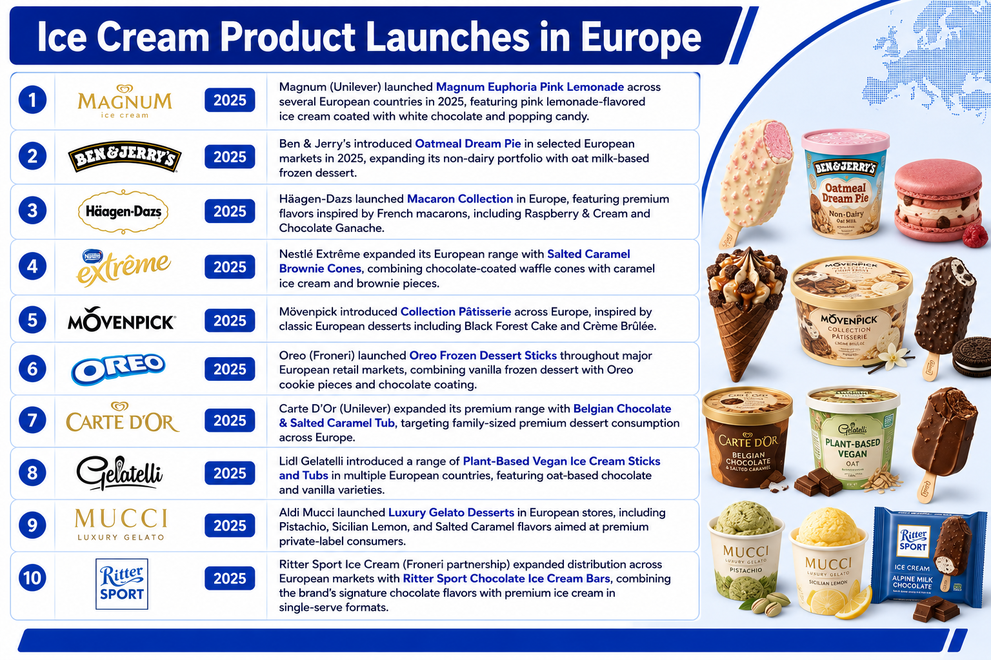
Ice Cream Product Launches in Europe
- Magnum (Unilever) launched Magnum Euphoria Pink Lemonade across several European countries in 2025, featuring pink lemonade-flavored ice cream coated with white chocolate and popping candy.
- Ben & Jerry’s introduced Oatmeal Dream Pie in selected European markets in 2025, expanding its non-dairy portfolio with oat milk-based frozen dessert.
- Häagen-Dazs launched Macaron Collection in Europe, featuring premium flavors inspired by French macarons, including Raspberry & Cream and Chocolate Ganache.
- Nestlé Extrême expanded its European range with Salted Caramel Brownie Cones, combining chocolate-coated waffle cones with caramel ice cream and brownie pieces.
- Mövenpick introduced Collection Pâtisserie across Europe, inspired by classic European desserts including Black Forest Cake and Crème Brûlée.
- Oreo (Froneri) launched Oreo Frozen Dessert Sticks throughout major European retail markets, combining vanilla frozen dessert with Oreo cookie pieces and chocolate coating.
- Carte D’Or (Unilever) expanded its premium range with Belgian Chocolate & Salted Caramel Tub, targeting family-sized premium dessert consumption across Europe.
- Lidl Gelatelli introduced a range of Plant-Based Vegan Ice Cream Sticks and Tubs in multiple European countries, featuring oat-based chocolate and vanilla varieties.
- Aldi Mucci launched Luxury Gelato Desserts in European stores, including Pistachio, Sicilian Lemon, and Salted Caramel flavors aimed at premium private-label consumers.
- Ritter Sport Ice Cream (Froneri partnership) expanded distribution across European markets with Ritter Sport Chocolate Ice Cream Bars, combining the brand’s signature chocolate flavors with premium ice cream in single-serve formats.
Challenges of the European Ice Cream Market
Rising Raw Material, Energy, and Production Costs
One of the major challenges facing the European ice cream market is the continuous increase in production costs. Essential ingredients including milk, cream, cocoa, vanilla, sugar, fruits, and nuts have experienced significant price volatility due to climate change, supply chain disruptions, and agricultural uncertainties. In addition, Europe's food manufacturing sector has faced elevated electricity and natural gas costs in recent years, increasing refrigeration, storage, and transportation expenses. Refrigerated logistics represent a substantial portion of overall operational costs because ice cream requires uninterrupted cold-chain management from production to retail shelves. Packaging costs have also increased due to higher prices for paper, plastics, and aluminum. These rising expenses reduce manufacturer profit margins and often force companies to increase retail prices, potentially affecting consumer demand during periods of economic uncertainty. Smaller artisanal producers are particularly vulnerable because they possess limited purchasing power and lower economies of scale compared with multinational manufacturers, making cost management an ongoing challenge for the industry.
Seasonal Demand Fluctuations and Increasing Health Concerns
Despite growing year-round consumption, ice cream sales across Europe remain heavily influenced by seasonal weather conditions. During warm summer months, sales can increase substantially, whereas colder autumn and winter periods often result in noticeable declines in consumer demand. Unpredictable weather patterns associated with climate change further complicate inventory planning and production forecasting. Retailers frequently face excess stock or reduced sales when temperatures remain below seasonal averages. At the same time, increasing consumer awareness regarding obesity, diabetes, and excessive sugar consumption presents another long-term challenge. According to European public health statistics, more than half of adults in many European countries are overweight, encouraging consumers to reduce consumption of high-calorie desserts. Governments are also promoting healthier diets through nutrition campaigns and clearer food labeling regulations. Manufacturers must therefore continuously reformulate products with reduced sugar, lower fat, and functional ingredients while maintaining desirable taste and texture, increasing research, development, and production costs across the European ice cream industry.
European Cones & Cups Ice Cream Market
European Cones & Cups Ice Cream Market represents one of the fastest-growing product categories due to its convenience, portability, and premium consumer appeal. Cones and cups are widely preferred for single-serve consumption across supermarkets, convenience stores, cafés, tourist attractions, and kiosks. Industry reports indicate that cones are among the fastest-growing product segments in Europe as manufacturers introduce waffle cones, chocolate-coated cones, filled cones, biodegradable cups, and premium toppings to enhance consumer experience. Demand is particularly strong in Italy, France, Germany, Spain, and the UK, where artisanal gelato and premium packaged cones continue to gain popularity. Consumers increasingly seek indulgent products featuring premium chocolate, nuts, cookies, caramel, and seasonal flavors. Sustainable paper cups and recyclable packaging are also becoming standard as environmental regulations tighten across Europe. Manufacturers continue investing in product innovation, premium ingredients, and attractive packaging to differentiate offerings. The expansion of organized retail and foodservice outlets further supports consistent demand, making cones and cups a significant contributor to the long-term growth of the European ice cream market.
European Impulse Ice Cream Market
European Impulse Ice Cream Market is driven by spontaneous purchasing behavior and on-the-go consumption. Industry analysis indicates that impulse ice cream accounted for approximately 45% of the European ice cream market in 2025, making it the largest product category. Single-serve products such as sticks, cones, sandwiches, bars, and cups dominate sales because they are widely available in convenience stores, petrol stations, kiosks, tourist locations, and retail checkout areas. Urban lifestyles, busy work schedules, and increasing tourism continue to encourage immediate consumption. Seasonal demand during summer significantly boosts impulse purchases across Southern Europe, while year-round availability supports stable sales in major cities. Manufacturers continuously introduce limited-edition flavors, premium coatings, and healthier formulations to encourage repeat purchases. Digital promotions and freezer visibility in retail outlets further increase impulse buying behavior. The combination of affordability, convenience, attractive packaging, and continuous innovation ensures that impulse ice cream remains one of Europe’s most dynamic and profitable market segments throughout the forecast period.
European Fruit Ice Cream Market
European Fruit Ice Cream Market is expanding steadily as consumers increasingly seek refreshing, natural, and healthier frozen dessert options. Fruit-based ice creams, sorbets, and frozen yogurt products have gained popularity due to rising demand for clean-label products made with real fruit ingredients and reduced artificial additives. Flavors including strawberry, mango, raspberry, lemon, blueberry, peach, and mixed berries are particularly popular across Western Europe. Consumer surveys indicate that health-conscious purchasing continues to grow as demand rises for products with lower sugar content and natural fruit flavors. Manufacturers are launching dairy-free fruit sorbets and vegan frozen desserts using coconut, oat, and almond bases to attract vegan and lactose-intolerant consumers. Seasonal fruit offerings and locally sourced ingredients further strengthen product differentiation. Premium fruit ice creams containing high fruit content and organic ingredients command higher retail prices while appealing to wellness-focused consumers. Growing retail availability, expanding freezer space, and continuous flavor innovation position fruit ice cream as an increasingly important segment within the European frozen dessert industry.
Growing Preference for Convenient Single-Serve Products in Europe
European Cones & Cups Ice Cream Market continues to expand due to increasing consumer demand for convenient, portable, and premium frozen desserts. Industry estimates suggest that cones and cups account for nearly 40–45% of Europe’s single-serve packaged ice cream sales, making them one of the largest product categories in the region. Consumers increasingly prefer waffle cones, chocolate-coated cones, premium paper cups, and artisan gelato cups because they offer convenience and portion control. Countries such as Italy, Germany, France, Spain, and the UK dominate consumption due to well-established café culture and strong tourism. Manufacturers are introducing biodegradable cups, recyclable packaging, and innovative toppings including caramel, cookies, nuts, and premium chocolate to attract premium consumers. Retailers continue expanding freezer space dedicated to premium single-serve products, while foodservice outlets promote gourmet cone varieties. Growing urbanization, higher disposable income, and continuous flavor innovation are expected to sustain strong demand, positioning cones and cups as one of the most profitable and rapidly evolving segments within the European ice cream market.
Strong Demand Driven by On-the-Go Consumption of Impulse Ice Cream
European Impulse Ice Cream Market represents one of the largest revenue-generating categories within the region’s frozen dessert industry. Market estimates indicate that impulse products contribute approximately 45–50% of total packaged ice cream sales across Europe due to spontaneous purchasing behavior. Single-serve sticks, cones, sandwiches, bars, and cups dominate this category because they are widely available in convenience stores, petrol stations, kiosks, supermarkets, beaches, and tourist destinations. Southern European countries experience particularly strong seasonal demand during warmer months, while urban centers maintain year-round sales. Premium coatings, limited-edition flavors, and affordable pricing encourage repeat purchases across all age groups. Manufacturers frequently launch seasonal products featuring cookies, caramel, fruit fillings, and premium chocolate to stimulate impulse buying. Attractive freezer placement, promotional discounts, and increased tourism further support sales growth. As consumers continue seeking convenient snack options and quick indulgent treats, impulse ice cream is expected to remain a key growth engine for the European ice cream industry.
Rising Consumer Preference for Natural and Healthy Flavors
European Fruit Ice Cream Market is witnessing steady expansion as consumers increasingly demand healthier frozen dessert alternatives made with natural fruit ingredients. Industry estimates indicate that fruit-based frozen desserts account for nearly 20–25% of flavored ice cream consumption across several European countries, supported by growing health awareness. Popular flavors include strawberry, raspberry, mango, blueberry, lemon, peach, cherry, and mixed berries. Consumers are increasingly choosing products containing real fruit puree, reduced sugar, natural colorants, and clean-label ingredients. The market has also benefited from growing demand for vegan sorbets and dairy-free fruit ice creams made using oat, almond, or coconut bases. Premium manufacturers are emphasizing locally sourced fruits and organic ingredients to differentiate their products. Rising consumer awareness regarding nutrition, together with government initiatives encouraging healthier food choices, has accelerated innovation in fruit-based frozen desserts. Continuous product launches featuring seasonal fruits and exotic flavors are expected to strengthen demand, making fruit ice cream an increasingly attractive segment within Europe’s frozen dessert industry.
Premium Chocolate Innovation Drives Market Growth
European Chocolate Ice Cream Market remains one of the strongest flavor segments due to Europe’s global leadership in premium chocolate manufacturing. Industry estimates suggest that chocolate-flavored products represent approximately 30–35% of total flavored ice cream sales across Europe, making chocolate one of the most preferred flavors among consumers of all age groups. Countries such as Belgium, Switzerland, Germany, France, and Italy contribute significantly to product innovation through premium cocoa, Belgian chocolate, dark chocolate, pralines, fudge, brownies, and chocolate chip formulations. Manufacturers are increasingly introducing reduced-sugar, organic, and sustainably sourced cocoa products to address changing consumer preferences. Premium chocolate-coated cones, bars, and artisan gelato continue gaining popularity in supermarkets and specialty stores. Seasonal product launches, luxury packaging, and collaborations with premium chocolate brands further stimulate market growth. As consumers increasingly seek indulgent desserts with high-quality ingredients, chocolate ice cream is expected to maintain its dominant position within the European ice cream market throughout the forecast period.
Expanding Distribution through Quick Retail Channels
European Ice Cream Convenience Stores Market continues to grow as convenience retail becomes an increasingly important distribution channel for frozen desserts. Industry estimates indicate that convenience stores contribute nearly 20–25% of Europe’s impulse ice cream retail sales, supported by extensive urban retail networks and growing demand for immediate consumption. Thousands of convenience outlets located near transport stations, fuel stations, educational institutions, residential areas, and tourist destinations offer consumers easy access to single-serve ice cream products. Freezer cabinets positioned near checkout counters encourage spontaneous purchases, particularly during summer months. Retailers increasingly stock premium, vegan, lactose-free, and reduced-sugar options to meet evolving consumer preferences. Digital payment systems, promotional campaigns, meal-deal offers, and extended operating hours further improve customer convenience. Manufacturers continue partnering with convenience store chains to launch exclusive products and seasonal flavors, increasing product visibility and consumer engagement. Rising urbanization, busy lifestyles, and expanding tourism are expected to strengthen convenience store sales, reinforcing this channel’s importance within the European ice cream market.
Germany Ice Cream Premium Innovation and Strong Retail Consumption
Germany Ice Cream Market is one of the largest in Europe, supported by high disposable income, a mature retail sector, and strong consumer demand for premium frozen desserts. Germans consume an estimated 7–8 kilograms of ice cream per person annually, placing the country among Europe’s leading ice cream consumers. Supermarkets, discount retailers, and convenience stores account for the majority of packaged ice cream sales, while artisanal ice cream parlors remain popular during the summer season. Demand for premium products, including organic, lactose-free, vegan, and high-protein ice cream, has increased significantly as health-conscious consumers seek indulgent yet nutritious alternatives. Chocolate, vanilla, hazelnut, and fruit flavors remain top-selling varieties, while seasonal and limited-edition products continue driving repeat purchases. Sustainability is another key trend, with manufacturers investing in recyclable packaging and responsibly sourced dairy and cocoa. Strong cold-chain infrastructure, expanding e-commerce grocery services, and continuous product innovation ensure steady market growth, making Germany one of the most influential contributors to the European ice cream industry.
France Gelato and Gourmet Dessert Culture
France Ice Cream Market continues to expand due to the country’s strong culinary heritage and growing consumer preference for premium frozen desserts. Industry estimates indicate that more than 60% of French households purchase packaged ice cream annually, while artisanal ice cream and gelato remain highly popular through cafés, bakeries, and specialty dessert shops. Premium ingredients such as fresh cream, Belgian chocolate, vanilla beans, pistachio, salted caramel, and seasonal fruits dominate consumer preferences. Rising demand for organic, clean-label, and reduced-sugar products has encouraged manufacturers to introduce healthier product lines alongside traditional offerings. France also experiences increased ice cream consumption during the tourism season, supported by millions of domestic and international visitors. Supermarkets remain the largest retail channel, while convenience stores and foodservice outlets contribute significantly to impulse purchases. Manufacturers continue introducing gourmet recipes, luxury packaging, and locally sourced ingredients to differentiate products. Continuous innovation, premiumization, and expanding frozen dessert offerings position France as one of Europe’s most dynamic and value-driven ice cream markets.
Spain Tourism and Warm Climate Drive Consumption
Spain Ice Cream Market benefits from the country’s warm Mediterranean climate, strong tourism sector, and expanding demand for premium frozen desserts. Spain records more than 80 million international tourist visits in a typical year, significantly boosting seasonal ice cream consumption across beaches, resorts, restaurants, cafés, and retail outlets. Per capita consumption is estimated at 6–7 kilograms annually, with demand peaking during spring and summer. Traditional flavors such as vanilla, chocolate, strawberry, and lemon remain popular, while Mediterranean-inspired options including citrus, almond, olive oil, and tropical fruits are gaining attention. Consumers are increasingly choosing low-sugar, lactose-free, vegan, and fruit-based frozen desserts as health awareness rises. Supermarkets dominate packaged ice cream sales, while artisanal gelato shops continue expanding in urban and tourist destinations. Premium single-serve products, impulse ice creams, and innovative frozen snacks continue attracting younger consumers. Strong tourism recovery, rising household spending, and ongoing product innovation are expected to sustain long-term growth across the Spanish ice cream market.
Russia Consumer Base and Expanding Domestic Production
Russia Ice Cream Market remains one of Europe’s largest by volume, supported by its sizeable population, well-established domestic dairy industry, and strong consumer preference for traditional frozen desserts. Industry estimates indicate that annual per capita ice cream consumption ranges between 3 and 4 kilograms, with steady growth driven by urbanization and rising disposable incomes. Traditional products such as plombir, milk-based ice cream, chocolate-coated bars, waffle cones, and family packs continue to dominate sales. Domestic manufacturers account for a significant share of market supply, reducing reliance on imported products and strengthening local production capabilities. Modern retail chains, supermarkets, convenience stores, and neighborhood grocery outlets remain the primary distribution channels, while online grocery platforms continue expanding in major cities. Manufacturers are increasingly introducing premium flavors, reduced-sugar recipes, and innovative packaging to attract younger consumers. Investments in cold-chain logistics, automated manufacturing facilities, and product diversification continue supporting market expansion, making Russia an important contributor to the overall European ice cream market despite evolving economic conditions.
Market Segments
Products
- Sticks/Bars
- Cones & Cups
- Tubs & Bricks
- Others
Type
- Impulse
- Take home
- Artisanal
Flavor
- Chocolate
- Vanilla
- Fruit
- Others
Distribution Channel
- Supermarkets and hypermarkets
- Convenience Stores
- Specialty Stores
- Online Sales Channel
By Country
- France
- Germany
- Italy
- Spain
- United Kingdom
- Belgium
- Netherlands
- Russia
- Poland
- Greece
- Norway
- Romania
- Portugal
- Rest of Europe
All the Key players have been covered
- Overviews
- Key Person
- Recent Developments
- SWOT Analysis
- Revenue Analysis
Competitive Landscape
- Froneri International Limited
- General Mills
- Meiji Co. Ltd.
- Unilever Group
- Mondelez International, Inc.
- Nestlé SA
- DMK Group
- Danone S.A.
Report Details:
| Report Features | Details |
| Base Year |
2024 |
| Historical Period |
2020 - 2024 |
| Forecast Period |
2025 - 2033 |
| Market |
US$ Billion |
| Segment Covered |
Product, Type, Flavor, Distribution Channel, and Countries |
| Countries Covered | 1. France 2. Germany 3. Italy 4. Spain 5. United Kingdom 6. Belgium 7. Netherland 8. Turkey 9. Rest of Europe |
| Companies Covered | 1. Froneri International Limited 2. General Mills 3. Meiji Co. Ltd. 4. Unilever Group 5. Mondelez International, Inc. 6. Nestlé SA 7. DMK Group 8. Danone S.A. |
| Customization Scope |
20% Free Customization |
| Post-Sale Analyst Support |
1 Year (52 Weeks) |
| Delivery Format |
PDF and Excel through Email (We can also provide the editable version of the report in PPT/Word format on request) |
Customization Services available
- Analysis of Market Size and Its Segments
- More Company Profiles (Upto 10 without any additional cost):
- Additional Countries (Other than mentioned Countries):
- Region/Country Specific Reports:
- Market Entry Strategy:
- Region-Specific Market Dynamics:
- Regional Market Share Analysis:
- Trade Analysis:
- Production Insights:
- Others Customized Requests:
For more information contact our analysts.
Need More Assistance?
- Talk to our analysts to get more precious information on the current market trends.
- Include more countries and segments and customize the report based on the final requirement.
- Get a competitive advantage in your industry by knowing the report findings and making a positive impact on your revenues and operations.
- Our analysts are always ready to provide more help and pertinent information if you need any additional assistance.