Europe Food Safety Testing Market Report by Contaminant Testing, Technology, Application, Countries and Company Analysis 2026-2034
Buy NowEurope Food Safety Testing Market Size and Forecast
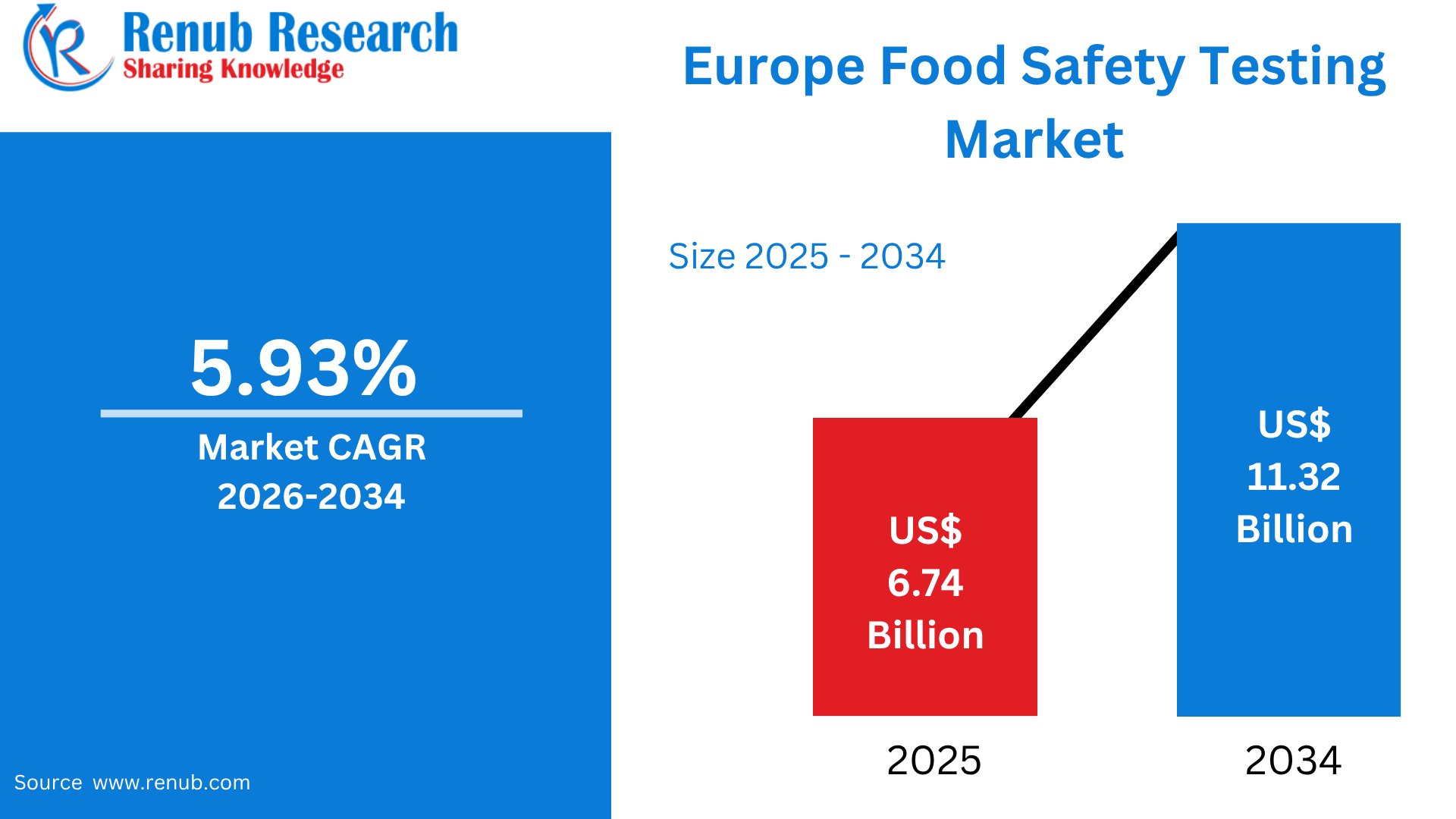
Europe food safety testing market is projected to grow from US$ 6.74 billion in 2025 to US$ 11.32 billion by 2034, registering a CAGR of 5.93% during 2026–2034. Growth is driven by stringent food safety regulations, increasing consumer awareness, rising demand for quality assurance, and rapid advancements in testing technologies across the region.
What is Food Safety Testing and Its Uses & Popularity in Europe
Food safety testing refers to the scientific analysis of food products, ingredients, and beverages to detect harmful contaminants, pathogens, allergens, chemicals, toxins, and other substances that may pose risks to consumers. Testing methods include microbiological, chemical, molecular, and allergen testing, helping manufacturers verify that products comply with established safety and quality standards. In Europe, food safety testing is widely used across meat and poultry, dairy, seafood, processed foods, beverages, bakery products, and ready-to-eat foods. It plays an important role in identifying microorganisms such as Salmonella, Listeria, and E. coli, as well as detecting pesticide residues, heavy metals, mycotoxins, and undeclared allergens.
The popularity of food safety testing in Europe is increasing due to strict regulatory requirements, growing consumer awareness, international food trade, and rising concerns about foodborne diseases. The European Union’s stringent food safety framework requires food businesses to maintain high standards throughout production and distribution. Furthermore, advancements in rapid molecular diagnostics, PCR-based testing, automation, and laboratory technologies are improving testing speed and accuracy. As European consumers increasingly prioritize safe, traceable, and high-quality food, demand for advanced food safety testing solutions continues to expand.
Most Reported Foodborne Diseases in Europe (2024)
Reported cases per 100,000 population:
- Campylobacteriosis – 55.3 cases: Caused by Campylobacter bacteria, it was the most frequently reported foodborne disease in Europe in 2024.
- Salmonellosis – 18.6 cases: Caused by Salmonella bacteria, salmonellosis remained one of Europe’s leading foodborne infections.
- STEC Infection – 3.5 cases: Caused by Shiga toxin-producing Escherichia coli (STEC), this infection can result in serious gastrointestinal illness.
- Listeriosis – 0.7 cases: Caused by Listeria monocytogenes, listeriosis has a lower reported incidence but can cause severe illness, particularly among vulnerable populations.
Growth Drivers
Stringent European Food Safety Regulations
Strict regulatory requirements across Europe are a major growth driver for the food safety testing market. The European Union maintains comprehensive food safety standards covering microbiological contamination, pesticide residues, veterinary drugs, allergens, heavy metals, and food additives. The EU Rapid Alert System for Food and Feed (RASFF) recorded more than 4,500 notifications in 2023, highlighting the continuing need for effective monitoring and testing throughout the food supply chain. Food manufacturers, importers, retailers, and laboratories increasingly conduct routine testing to comply with regulatory requirements and avoid product recalls, financial penalties, and reputational damage. The implementation of the General Food Law Regulation (EC) No. 178/2002 has further strengthened traceability and safety obligations. Moreover, increasingly complex international food supply chains require comprehensive testing at multiple stages, from raw materials to finished products. As European regulators continue strengthening food safety controls and surveillance programs, demand for microbiological, chemical, molecular, and allergen testing services is expected to increase steadily.
Rising Consumer Awareness and Foodborne Disease Concerns
Increasing consumer awareness regarding food quality, contamination, and product safety is encouraging European food manufacturers to invest more heavily in testing and quality-control systems. According to the European Food Safety Authority (EFSA), more than 320,000 cases of zoonotic infections were reported in the European Union in 2022, demonstrating the continuing public health importance of food safety monitoring. Consumers are increasingly concerned about pathogens, allergens, pesticide residues, chemical contaminants, and food fraud, particularly in meat, dairy, seafood, and ready-to-eat products. Growing demand for organic, minimally processed, and clean-label foods is also increasing the need for transparent testing and traceability. Retailers and food brands are responding by implementing stricter supplier verification and laboratory testing programs to protect consumer confidence. In addition, social media and rapid dissemination of food contamination incidents can quickly affect brand reputation, encouraging companies to strengthen preventive testing. As consumers increasingly prioritize safe and high-quality food products, testing is becoming an essential part of European food production and distribution.
Technological Advancements in Rapid and Molecular Testing
Technological innovation is transforming food safety testing across Europe by improving testing speed, sensitivity, accuracy, and automation. Traditional microbiological testing can require several days to confirm contamination, whereas advanced PCR, qPCR, next-generation sequencing (NGS), immunoassay, biosensor, and rapid molecular technologies can deliver results significantly faster. This is particularly valuable for food manufacturers handling perishable products, where rapid identification of pathogens can prevent large-scale recalls and production losses. Automation and laboratory information management systems are also improving sample processing and data management. In addition, multiplex testing allows laboratories to detect multiple pathogens or contaminants from a single sample, increasing efficiency. The growing adoption of rapid testing is supported by Europe’s highly developed food manufacturing and laboratory infrastructure. Technologies capable of detecting Salmonella, Listeria, E. coli, allergens, mycotoxins, pesticide residues, and adulteration are increasingly used across the supply chain. As European food companies seek faster release times, improved traceability, and stronger quality assurance, continued technological innovation is expected to accelerate market expansion.
Challenges
High Testing Costs and Complex Compliance Requirements
High laboratory costs and complex regulatory requirements remain significant challenges for the European food safety testing market, particularly for small and medium-sized food businesses. Comprehensive testing may require multiple analyses for pathogens, allergens, pesticide residues, heavy metals, toxins, and chemical contaminants, increasing operational expenses. The European food industry is also subject to multiple overlapping standards and certification requirements depending on product type and destination market. Laboratories must maintain sophisticated equipment, trained personnel, quality-management systems, and accreditation to provide reliable testing results. Compliance with ISO/IEC 17025 accreditation requirements can further increase laboratory investment and operational costs. For smaller manufacturers, frequent testing can therefore represent a substantial financial burden. In addition, differences in national enforcement practices and evolving regulatory limits can create additional complexity for companies operating across multiple European countries. While stringent standards support market demand, they can also slow adoption among smaller enterprises. Increasing automation, centralized laboratories, and cost-efficient rapid testing technologies will be important for reducing testing expenses while maintaining regulatory compliance.
Complex Food Supply Chains and Emerging Contaminants
The increasing complexity of Europe’s food supply chains presents another major challenge for food safety testing. Food ingredients are frequently sourced from multiple countries before being processed, packaged, and distributed across European markets, creating numerous points where contamination or adulteration can occur. According to the European Commission’s RASFF, thousands of food and feed safety notifications are reported annually, demonstrating the difficulty of maintaining consistent safety controls across international supply networks. Emerging contaminants, new pathogens, antimicrobial resistance, microplastics, and previously unidentified chemical hazards further complicate testing requirements. Laboratories must continuously develop and validate new analytical methods to detect these risks, which requires substantial investment in research, equipment, and technical expertise. Another challenge is the need for highly sensitive testing without generating excessive false-positive results that could trigger unnecessary recalls. Smaller laboratories may also struggle to keep pace with rapidly evolving analytical technologies. As European food supply chains become more interconnected, improving traceability, data sharing, standardized testing protocols, and early-warning systems will be essential to managing emerging food safety risks.
Food Safety Testing Launches in Europe
- 2025 – Eurofins Scientific: Expanded its food testing capabilities in Europe with advanced analytical solutions for pathogens, contaminants, allergens, authenticity, and nutritional analysis, supporting manufacturers and retailers with faster quality-control testing.
- 2025 – SGS: Introduced expanded food safety and laboratory testing services across European markets, covering microbiological, chemical, allergen, pesticide-residue, and authenticity testing.
- 2025 – Bureau Veritas: Strengthened its European food testing portfolio with solutions for food contaminants, microbiological hazards, allergens, and food authenticity, helping companies comply with increasingly stringent EU requirements.
- 2024 – Mérieux NutriSciences: Expanded rapid microbiological and molecular testing solutions for European food manufacturers, focusing on pathogen detection, environmental monitoring, and quality assurance.
- 2024 – Thermo Fisher Scientific: Introduced and expanded advanced LC-MS/MS analytical workflows for detecting pesticide residues, veterinary drugs, mycotoxins, and other contaminants in food products.
- 2024 – bioMérieux: Expanded adoption of its VIDAS® immunoassay platform for rapid detection of foodborne pathogens and contaminants, supporting microbiological testing laboratories and food manufacturers in Europe.
- 2024 – Neogen: Expanded its European food safety testing portfolio with rapid PCR-based pathogen detection and allergen testing solutions, helping food processors improve testing speed and contamination control.
- 2024 – 3M Food Safety: Continued expanding rapid 3M™ Molecular Detection solutions in Europe for identifying pathogens including Salmonella, Listeria, and E. coli in food and environmental samples.
- 2023 – Romer Labs: Introduced advanced testing solutions for mycotoxins, allergens, pathogens, and food authenticity, strengthening rapid screening capabilities for European food and feed producers.
- 2023 – QIAGEN: Expanded molecular testing applications for the food industry, providing PCR-based pathogen and food authenticity testing technologies designed to improve detection accuracy and laboratory efficiency across Europe.
Rising Focus on Microbial Contamination Control
Europe pathogen food safety testing market is expanding as food manufacturers, retailers, and regulatory authorities strengthen measures to prevent microbiological contamination. Pathogens such as Salmonella, Listeria monocytogenes, Escherichia coli, and Campylobacter remain major concerns across meat, dairy, seafood, and ready-to-eat foods. According to European food safety data, more than 320,000 zoonotic infections were reported across the EU in 2022, demonstrating the continuing importance of pathogen surveillance. Campylobacteriosis remains one of the most frequently reported foodborne diseases in Europe, accounting for more than 137,000 confirmed human cases in 2022. Food manufacturers increasingly use PCR, rapid molecular diagnostics, immunoassays, and automated microbiological testing to identify pathogens faster and improve production safety. Growing consumption of minimally processed and ready-to-eat foods is also increasing the need for rapid testing because these products can support microbial growth if improperly handled. In addition, stringent European food safety regulations and retailer quality requirements encourage routine testing throughout the supply chain. Consequently, demand for rapid, sensitive, and automated pathogen detection solutions is expected to remain strong.
Growing Concern Over Contaminated Crops and Food Products
Europe mycotoxin food safety testing market is gaining importance because naturally occurring fungal toxins can contaminate cereals, grains, nuts, dried fruits, spices, animal feed, and processed food products. Major mycotoxins of concern include aflatoxins, deoxynivalenol (DON), ochratoxin A, fumonisins, and zearalenone. Climate change, changing temperature patterns, humidity, and extreme weather conditions can increase the risk of fungal growth and mycotoxin formation in agricultural commodities. Cereals are particularly important because they represent a major component of the European food and animal-feed supply chain. European regulations establish maximum permitted levels for several contaminants, requiring producers and importers to conduct regular testing before products enter the market. Modern analytical technologies such as high-performance liquid chromatography (HPLC), liquid chromatography-mass spectrometry (LC-MS), and immunoassays are increasingly used for accurate detection. Growing imports of agricultural commodities from regions with varying climatic conditions also increase testing requirements at ports and processing facilities. As food manufacturers strengthen preventive quality-control programs, the demand for reliable mycotoxin testing is expected to increase across Europe.
Rapid and Cost-Effective Detection Supporting Market Expansion
Europe immunoassay-based food safety testing market is expanding because immunoassays provide rapid, sensitive, and relatively cost-effective methods for detecting contaminants and biological hazards in food. These techniques use antigen-antibody reactions to identify substances such as food allergens, mycotoxins, veterinary drug residues, pesticides, and certain pathogens. Enzyme-linked immunosorbent assay (ELISA) remains one of the most widely used immunoassay formats because it can process large numbers of samples with comparatively straightforward laboratory procedures. Growing concerns regarding undeclared allergens are particularly supporting demand, as accidental exposure can cause serious health consequences for sensitive consumers. The European food industry handles thousands of processed and packaged products, increasing the importance of routine screening for allergen cross-contamination. Immunoassays are also increasingly used as screening tools before confirmatory analysis using advanced instrumental techniques. Their ability to provide relatively rapid results helps manufacturers make quicker decisions regarding product release and quality control. Continuous improvements in assay sensitivity, multiplex testing, automation, and portable testing platforms are further enhancing adoption. These advantages are expected to support steady growth of immunoassay-based food safety testing across Europe.
Broad Testing Requirements Across Fresh and Processed Foods
Europe food, dairy, fruits, and vegetables safety testing market is growing as consumers and regulators increasingly demand safe, high-quality, and traceable food products. Dairy products require extensive testing for pathogens, antibiotics, residues, adulteration, and compositional quality, while fruits and vegetables are frequently tested for pesticide residues, heavy metals, pathogens, and mycotoxins. The European Union maintains strict maximum residue limits for pesticides, with thousands of active substances subject to regulatory controls across food products. The high consumption of fresh produce further increases the importance of contamination monitoring because these products often undergo minimal processing before reaching consumers. Dairy products are also closely monitored for microorganisms such as Listeria, Salmonella, and E. coli, particularly in products with extended shelf lives. Increasing demand for organic, fresh, minimally processed, and clean-label foods is encouraging producers and retailers to strengthen testing programs. International sourcing of fruits, vegetables, dairy ingredients, and processed foods further increases the need for verification at different supply-chain stages. Consequently, microbiological, chemical, allergen, residue, and authenticity testing is becoming increasingly integrated into European food quality-management systems.
Stringent Pathogen Controls Driving Meat and Poultry Testing Demand
Europe meat and poultry food safety testing market represents a significant application area because these products are highly susceptible to microbial contamination during slaughtering, processing, transportation, and storage. Pathogens including Campylobacter, Salmonella, Listeria monocytogenes, and Shiga toxin-producing E. coli (STEC) are key testing targets across the meat supply chain. Campylobacter is particularly important in poultry, with European surveillance reporting more than 137,000 confirmed human cases in 2022, making campylobacteriosis one of the most frequently reported zoonotic diseases in the region. Meat processors therefore conduct routine testing of raw materials, production environments, equipment, and finished products to identify contamination before distribution. In addition to pathogen testing, companies increasingly perform analyses for veterinary drug residues, antibiotics, chemical contaminants, and species authenticity to comply with European regulations and prevent food fraud. Rising consumption of processed and ready-to-cook meat products is also creating demand for rapid testing technologies. PCR-based diagnostics, immunoassays, culture methods, and automated systems are increasingly used to improve detection speed and accuracy. Strict regulatory oversight and retailer requirements are expected to sustain strong demand for meat and poultry safety testing across Europe.
Strong Regulations and Advanced Food Industry Supporting France Food Safety Testing Growth
The France food safety testing market is expanding steadily, supported by stringent European food safety regulations, a well-developed agricultural sector, and a large food processing industry. France is one of Europe’s leading agricultural producers, with agriculture and agri-food industries playing an important role in the national economy. The country has more than 400,000 farms, creating substantial demand for testing of raw materials, dairy products, meat, cereals, fruits, and vegetables. Food manufacturers increasingly conduct microbiological, chemical, allergen, pesticide-residue, and authenticity testing to comply with EU requirements and protect consumer confidence. Growing consumer interest in organic, natural, and minimally processed foods is also encouraging producers to strengthen quality-control procedures. France’s extensive food and beverage export industry further increases the need for internationally recognized testing and certification. Meanwhile, rapid PCR diagnostics, immunoassays, chromatography, and automated laboratory systems are improving testing accuracy and turnaround times. With regulatory compliance, food traceability, and quality assurance becoming increasingly important, France is expected to remain a major contributor to the European food safety testing market.
Strong Manufacturing Base and Quality Standards Driving Germany Food Safety Testing Demand
Germany represents one of Europe’s most important food safety testing markets, supported by its large food manufacturing sector, sophisticated laboratory infrastructure, and strict quality-control culture. The German food industry generates more than €200 billion in annual turnover, making it one of Europe’s largest food and beverage markets and creating substantial demand for comprehensive safety testing. Manufacturers and retailers conduct regular analyses for pathogens, allergens, pesticide residues, mycotoxins, veterinary drug residues, heavy metals, and chemical contaminants. Germany’s strong position in processed foods, meat, dairy, bakery products, beverages, and packaged foods further increases testing requirements across the supply chain. Consumer awareness is also high, with food quality, traceability, and ingredient transparency becoming increasingly important purchasing considerations. Advanced laboratories are adopting PCR-based diagnostics, mass spectrometry, chromatography, immunoassays, and automated testing platforms to improve accuracy and processing efficiency. Germany’s extensive food exports additionally require manufacturers to meet both European and international safety standards. Consequently, regulatory compliance, technological innovation, and strong industrial demand are expected to sustain the country’s food safety testing market.
Food Authenticity and Export Quality Supporting Italy Food Safety Testing Market Expansion
Italy’s food safety testing market is benefiting from the country’s extensive food processing industry, strong agricultural base, and global reputation for high-quality food products. Italy has more than 1.1 million farms and a large food and beverage manufacturing sector, creating significant demand for testing across dairy, meat, seafood, cereals, wine, olive oil, fruits, and processed foods. Food safety testing is increasingly used to detect pathogens, pesticide residues, mycotoxins, heavy metals, allergens, and chemical contaminants while also verifying product authenticity. This is particularly important for Italy’s premium and geographically protected food products, including PDO and PGI products, where authenticity and traceability are essential for maintaining consumer confidence and protecting brand value. Growing consumer demand for organic, natural, and specialty foods is further encouraging manufacturers to adopt advanced analytical methods. Italy’s strong food export industry also requires compliance with stringent European and international standards. The increasing adoption of rapid molecular testing, chromatography, spectroscopy, and DNA-based authenticity testing is improving laboratory efficiency. These factors are expected to support continued expansion of Italy’s food safety testing market.
Food Exports and Agricultural Production Driving Spain Food Safety Testing Demand
Spain food safety testing market is expanding due to the country’s large agricultural sector, extensive food processing industry, and significant position in European food exports. Spain is one of the largest agricultural producers in the European Union, particularly in fruits, vegetables, olive oil, meat, and seafood, generating substantial demand for comprehensive safety and quality testing. Producers and exporters increasingly test products for pathogens, pesticide residues, heavy metals, mycotoxins, allergens, and chemical contaminants to meet stringent EU requirements and international buyer specifications. Spain is also one of the world’s leading exporters of fruit and vegetables, making residue and microbiological testing particularly important for maintaining export quality and market access. Rising consumer awareness of food safety, organic products, traceability, and sustainable production is further encouraging manufacturers and retailers to strengthen quality-control systems. Advanced PCR, immunoassay, chromatography, and rapid detection technologies are improving testing speed and accuracy across laboratories. In addition, increasing automation and digitalization of laboratory operations are helping food companies manage larger testing volumes efficiently. These factors are expected to sustain growth in Spain’s food safety testing market.
Europe Food Safety Testing Market Segments
Contaminant Testing – Market breakup in 6 viewpoints:
- Pathogen Testing
- Pesticide and Residue Testing
- Mycotoxin Testing
- GMO Testing
- Allergen Testing
- Others
Technology – Market breakup in 5 viewpoints:
- Polymerase Chain Reaction (PCR)
- Chromatography and Spectrometry
- Immunoassay-based
- Other Technologies
- Personal Care and Cosmetics
Application – Market breakup in 2 viewpoints:
- Pet Food and Animal Feed
- Food, Dairy, Fruits and Vegetables,
- Processed Food,
- Crops
- Meat and Poultry
- Other Foods
Countries
- France
- Germany
- Italy
- Spain
- United Kingdom
- Belgium
- Netherlands
- Russia
- Poland
- Greece
- Norway
- Romania
- Portugal
- Rest of Europe
All companies have been covered with 5 Viewpoints
- Overviews
- Key Person
- Recent Developments
- SWOT Analysis
- Revenue Analysis
Company Analysis
- ALS Limited
- Campden BRI
- NFS International
- SGS SA
- Eurofins Scientific
- Intertek Group PLC
- Tuv Sud
- Fera Science Limited
- INSTITUT Mérieux
Report Details:
| Report Features | Details |
| Base Year |
2024 |
| Historical Period |
2020 - 2024 |
| Forecast Period |
2025 - 2033 |
| Market |
US$ Billion |
| Segment Covered |
By Contaminant Testing, By Technology, By Application and By Country |
| Countries Covered |
|
| Companies Covered |
|
| Customization Scope |
20% Free Customization |
| Post-Sale Analyst Support |
1 Year (52 Weeks) |
| Delivery Format |
PDF and Excel through Email (We can also provide the editable version of the report in PPT/Word format on request) |
Key Questions Answered in This Report:
-
What is the projected market size of the Europe Food Safety Testing market by 2033?
-
What is the expected CAGR of the Europe Food Safety Testing market from 2025 to 2033?
-
What are the main factors driving the growth of the European food safety testing industry?
-
How do stricter food regulations impact the demand for food safety testing in Europe?
-
What role does technological advancement play in improving food safety testing accuracy and speed?
-
How is the increasing global food trade influencing food safety testing requirements?
-
Which contaminants are most frequently tested in European food safety laboratories?
-
How are food fraud incidents shaping the demand for advanced testing methods in Europe?
-
Which country in Europe has the largest market share in food safety testing, and why?
-
Who are the leading companies in the European food safety testing industry?
Customization Services available
- Analysis of Market Size and Its Segments
- More Company Profiles (Upto 10 without any additional cost):
- Additional Countries (Other than mentioned Countries):
- Region/Country Specific Reports:
- Market Entry Strategy:
- Region-Specific Market Dynamics:
- Regional Market Share Analysis:
- Trade Analysis:
- Production Insights:
- Others Customized Requests:
For more information contact our analysts.
Need More Assistance?
- Talk to our analysts to get more precious information on the current market trends.
- Include more countries and segments and customize the report based on the final requirement.
- Get a competitive advantage in your industry by knowing the report findings and making a positive impact on your revenues and operations.
- Our analysts are always ready to provide more help and pertinent information if you need any additional assistance.