Europe Breast Cancer Screening Market Report by Application, Population, Countries and Companies Analysis 2026-2034
Buy NowEurope Breast Cancer Screening Market Size and Forecast 2026-2034
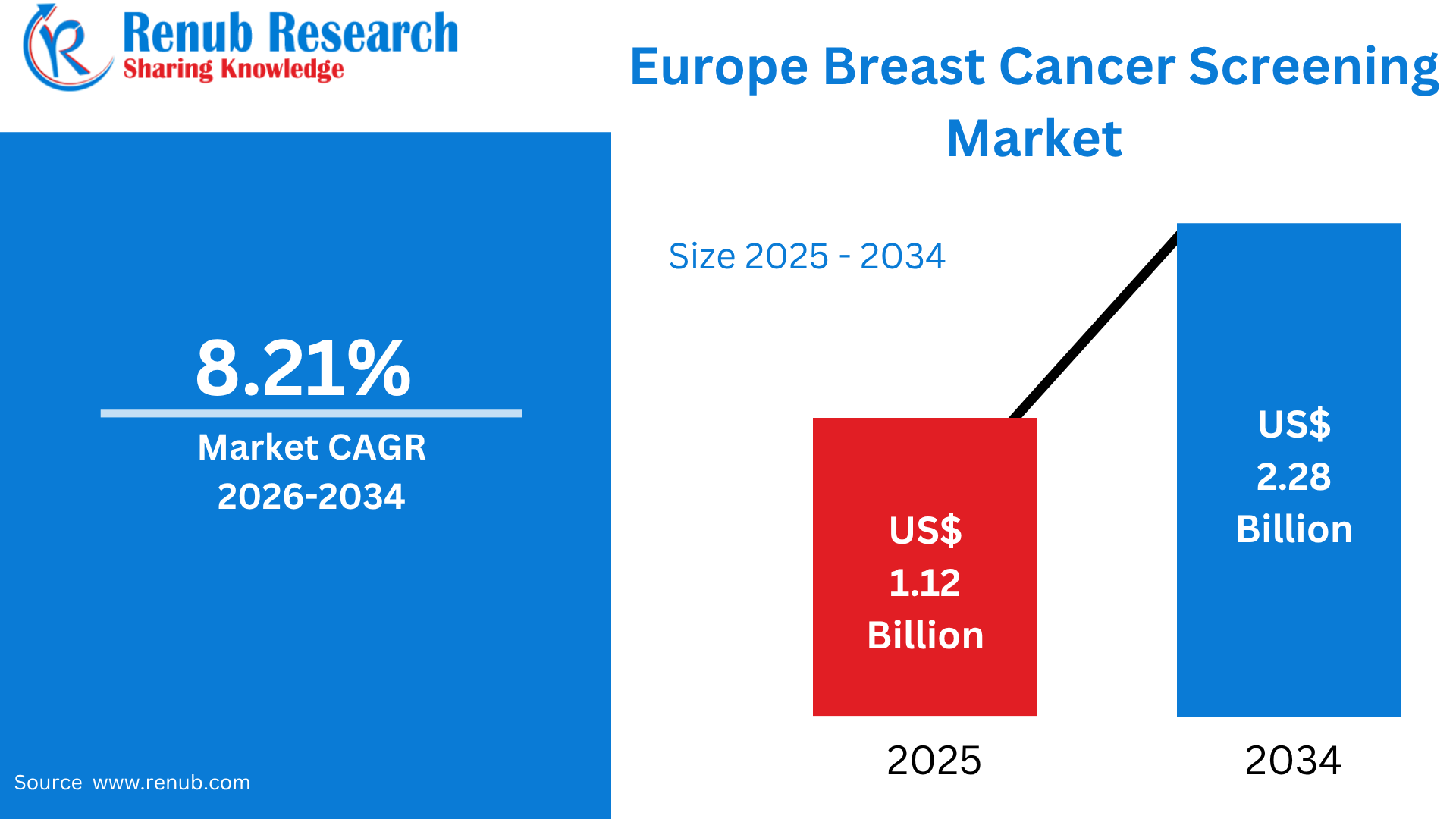
Europe Breast Cancer Screening Market is expected to reach US$ 2.28 billion by 2034 from US$ 1.12 billion in 2025, with a CAGR of 8.21% from 2026 to 2034. The rising incidence of cancer, growing awareness of early diagnosis, and the expansion of government-funded cancer screening programs throughout Europe are the main drivers of market growth. Early cancer detection improves treatment outcomes and survival rates. This is made possible by cancer screening technology. The market for cancer screening is expanding throughout the region thanks to the increasing use of cutting-edge diagnostic technologies, improving healthcare infrastructure, and rising investments in preventive healthcare.
Europe Breast Cancer Screening Industry Overview
The Europe breast cancer screening industry had evolved significantly due to increasing emphasis on early cancer detection and preventive healthcare strategies. Breast cancer screening had remained a major component of public healthcare programs across European countries, supported by national awareness campaigns and organized screening initiatives. Third-party assessments had indicated that healthcare authorities had increasingly prioritized routine mammography and early diagnosis to reduce breast cancer mortality rates and improve treatment outcomes. Growing awareness among women regarding the importance of regular screenings had contributed to higher participation in preventive healthcare services. In addition, healthcare providers had expanded access to screening facilities and improved outreach efforts to strengthen early diagnosis initiatives throughout the region.
Technological advancements had also played a major role in transforming the breast cancer screening landscape in Europe. Digital mammography, breast tomosynthesis, artificial intelligence-assisted imaging, and computer-aided detection systems had increasingly been adopted to improve diagnostic accuracy and workflow efficiency. These innovations had enhanced the ability of healthcare professionals to detect abnormalities at earlier stages, supporting more effective treatment planning. The integration of advanced imaging technologies into screening protocols had further strengthened healthcare capabilities across hospitals, diagnostic centers, and specialized oncology facilities. In addition, the growing use of risk-based screening approaches and personalized healthcare strategies had contributed to the modernization of breast cancer prevention programs.
Cancer screening refers to the process of testing asymptomatic individuals to detect early signs of cancer before clinical symptoms appear. It includes established population-based screening programs for breast, cervical, and colorectal cancers, along with emerging screening approaches for lung and prostate cancers supported by advanced imaging technologies and molecular diagnostics. The European market is characterized by a strong public healthcare framework, where most screening initiatives are funded and managed through national healthcare systems.
According to the European Commission’s Health Union monitoring, over 25 million EU citizens were invited to participate in organized cancer screening programs in 2022, reflecting significant efforts to restore screening activities following disruptions caused by the pandemic. Estimates from the European Cancer Information System (ECIS) indicate that around 2.7 million new cancer cases were diagnosed across EU Member States in 2024, representing a modest 1.7% decline compared to 2022 figures. In addition, the European Union’s Beating Cancer Plan, introduced in 2021 with a budget allocation of 4 billion euros, aims to ensure that 90% of the eligible population across member states has access to breast, cervical, and colorectal cancer screening by 2025. This policy-supported and publicly financed ecosystem, combined with ongoing innovations in non-invasive liquid biopsy technologies and AI-enabled imaging solutions, is creating a distinctive market landscape where public health priorities and technological advancements work together to improve cancer detection and survival outcomes across Europe.
Growth Drivers of the Europe Breast Cancer Screening Market
Increasing Awareness Regarding Early Breast Cancer Detection
The Europe breast cancer screening market had been strongly driven by increasing awareness regarding the importance of early diagnosis and preventive healthcare. Public health campaigns and educational initiatives had encouraged women to participate in regular screening programs aimed at detecting breast cancer at earlier stages. Healthcare authorities across Europe had increasingly promoted routine mammography and preventive oncology services to reduce mortality rates and improve treatment success. Growing awareness regarding breast cancer risk factors and benefits of timely diagnosis had contributed to higher participation in organized screening programs. In addition, support from healthcare organizations and patient advocacy groups had strengthened public engagement in women’s health initiatives. These awareness-driven efforts had significantly contributed to the expansion of breast cancer screening services across Europe.
Advancements in Diagnostic Imaging Technologies
Technological advancements in breast imaging had played a major role in driving market growth. Healthcare providers had increasingly adopted digital mammography, 3D breast tomosynthesis, AI-assisted imaging, and computer-aided detection systems to improve diagnostic precision and workflow efficiency. These technologies had enhanced the ability to identify abnormalities at earlier stages and reduce false-positive rates. Improved imaging quality and automation capabilities had also supported faster diagnosis and more accurate clinical decision-making. In addition, the integration of artificial intelligence into diagnostic workflows had strengthened radiology efficiency and interpretation consistency. Continuous innovation in breast imaging technologies had encouraged healthcare facilities to modernize screening infrastructure, contributing to broader adoption of advanced breast cancer screening solutions across Europe.
Expansion of Government-Supported Screening Programs
Government-backed screening initiatives had significantly contributed to the growth of the Europe breast cancer screening market. Many European countries had implemented organized national screening programs aimed at improving accessibility and encouraging routine participation among eligible populations. Public healthcare funding and awareness campaigns had strengthened the adoption of preventive screening practices. Healthcare authorities had also focused on expanding access to underserved communities and improving screening coverage. In addition, policy support for women’s health programs and preventive oncology services had enhanced healthcare system capabilities. Collaborative efforts between healthcare providers, public health agencies, and research organizations had further supported breast cancer prevention initiatives. These coordinated strategies had played an important role in strengthening the breast cancer screening ecosystem across Europe.
Challenges in the Europe Breast Cancer Screening Market
Variability in Screening Participation and Accessibility
One of the major challenges in the Europe breast cancer screening market had been the variability in participation rates and healthcare accessibility across different regions. While some countries had established highly organized screening systems with strong participation levels, others had experienced lower screening uptake due to limited awareness, cultural barriers, or healthcare infrastructure constraints. Rural and underserved populations had sometimes faced difficulties accessing specialized diagnostic facilities and routine mammography services. Differences in public healthcare funding and regional healthcare capabilities had also contributed to inconsistent screening coverage. In addition, patient reluctance and concerns regarding diagnostic procedures had impacted participation in certain areas. These disparities had created challenges in achieving uniform breast cancer prevention and early diagnosis outcomes across Europe.
High Costs of Advanced Screening Technologies
The increasing adoption of advanced breast imaging technologies had introduced financial challenges for healthcare providers and diagnostic facilities. Technologies such as digital breast tomosynthesis, AI-assisted imaging systems, and automated diagnostic platforms had required significant investments in equipment, software integration, and workforce training. Smaller healthcare facilities had sometimes faced budget limitations when implementing advanced screening solutions. In addition, ongoing maintenance costs and infrastructure modernization requirements had increased operational expenses. Reimbursement limitations in certain healthcare systems had also influenced the pace of technology adoption. Although advanced imaging technologies had improved diagnostic accuracy and efficiency, cost-related barriers had remained a challenge for broader implementation across all European healthcare settings.
United Kingdom Breast Cancer Screening Market
The United Kingdom breast cancer screening market had been supported by well-established national screening programs and strong emphasis on preventive healthcare. Healthcare authorities had increasingly promoted routine mammography services aimed at improving early diagnosis and reducing breast cancer mortality. The country had witnessed growing adoption of digital mammography and advanced breast imaging technologies across hospitals and diagnostic centers. Public awareness campaigns and women’s health initiatives had further strengthened participation in organized screening programs. In addition, integration of artificial intelligence and digital healthcare systems had improved diagnostic workflows and screening efficiency. Government-backed healthcare policies supporting preventive oncology services had contributed to continued market development. Research collaborations and healthcare modernization initiatives had also strengthened innovation within breast imaging technologies. The market had continued evolving with increasing focus on accessibility, diagnostic precision, and patient-centered preventive care strategies.
The UK market's expansion demonstrates a highly structured call recall system that aggressively invites qualified people instead of depending on patient initiative, leading to organized and predictable demand patterns. The NHS Long Term Plan, which aims to diagnose 75% of cancers at stage one or two by 2028, is a major motivator. This calls for a significant increase in screening capacity and outreach. According to NHS England sources, the Targeted Lung Health Check initiative will test hundreds of thousands of high-risk smokers each year, creating a sizable new source of income for diagnostic providers. With the NHS Genomic Medicine Service incorporating whole genome sequencing into standard treatment for specific cancer types, the nation is also a leader in the use of genomic screening. Be Clear on Cancer and other public awareness efforts have successfully raised symptom presentation rates, which has indirectly increased screening uptake.
Germany Breast Cancer Screening Market
The Germany breast cancer screening market had been characterized by strong healthcare infrastructure and increasing adoption of advanced diagnostic imaging technologies. Organized screening initiatives and public healthcare programs had supported routine mammography participation among eligible populations. Healthcare providers had increasingly integrated digital mammography, breast tomosynthesis, and AI-assisted imaging systems into clinical workflows to improve diagnostic accuracy. The country had also witnessed rising investments in healthcare modernization and radiology infrastructure development. Growing awareness regarding early breast cancer detection had further contributed to increased screening participation. Government-supported women’s healthcare initiatives and research activities related to oncology diagnostics had strengthened market growth. In addition, advancements in digital healthcare integration had improved workflow management within diagnostic facilities. Overall, the market had continued evolving through technology-driven innovation and expansion of preventive healthcare services.
France Breast Cancer Screening Market
The France breast cancer screening market had experienced growth due to increasing focus on women’s health awareness and preventive oncology initiatives. National healthcare programs had encouraged routine mammography participation and early breast cancer diagnosis. The country had increasingly adopted digital imaging technologies and automated screening systems to improve diagnostic efficiency and accuracy. Public awareness campaigns and healthcare outreach initiatives had further strengthened participation in organized screening programs. In addition, investments in healthcare infrastructure and radiology modernization had supported broader adoption of advanced breast imaging technologies. Government support for preventive healthcare services and oncology research had also contributed to market expansion. Healthcare providers had focused on improving accessibility to screening facilities across different population groups. The market had continued progressing through technological advancements and growing emphasis on personalized preventive healthcare strategies.
Italy Breast Cancer Screening Market
The Italy breast cancer screening market had been influenced by increasing awareness regarding early diagnosis and women’s preventive healthcare services. Public healthcare initiatives had promoted routine mammography participation and expansion of organized screening programs across the country. Healthcare providers had increasingly adopted digital mammography and advanced imaging technologies to improve screening quality and diagnostic outcomes. In addition, awareness campaigns related to breast cancer prevention had contributed to stronger public participation in preventive healthcare services. Healthcare modernization efforts and digital healthcare integration had supported workflow efficiency within diagnostic facilities. Despite regional differences in healthcare accessibility, demand for advanced breast imaging solutions had continued to increase. Government support for oncology care and women’s health initiatives had further strengthened market development. The market had remained focused on improving early diagnosis capabilities and expanding access to preventive screening services.
Europe Breast Cancer Screening Market Segments
Europe Breast Cancer Screening Market
- Mammography Screening Market
- MRI Screening Market
- Ultrasound Screening Market
Europe Breast Cancer Screening Population
- Mammography Screening Population
- MRI & Ultrasound Screening Population
Countries
- United Kingdom
- France
- Germany
- Italy
- Spain
- Switzerland
- Norway
- Netherlands
All companies have been covered with 5 Viewpoints
- Overviews
- Key Person
- Recent Developments
- SWOT Analysis
- Revenue Analysis
Company Analysis
- AstraZeneca
- Novartis
- Sanofi
- Pfizer
- Bayer AG
- GlaxoSmithKline plc
Report Details:
| Report Features | Details |
| Base Year |
2025 |
| Historical Period |
2022 - 2025 |
| Forecast Period |
2026 - 2034 |
| Market |
US$ Billion |
| Segment Covered |
Type, and Countries |
| Countries Covered |
|
| Companies Covered |
|
| Customization Scope |
20% Free Customization |
| Post-Sale Analyst Support |
1 Year (52 Weeks) |
| Delivery Format |
PDF and Excel through Email (We can also provide the editable version of the report in PPT/Word format on request) |
Customization Services available
- Analysis of Market Size and Its Segments
- More Company Profiles (Upto 10 without any additional cost):
- Additional Countries (Other than mentioned Countries):
- Region/Country Specific Reports:
- Market Entry Strategy:
- Region-Specific Market Dynamics:
- Regional Market Share Analysis:
- Trade Analysis:
- Production Insights:
- Others Customized Requests:
For more information contact our analysts.
Need More Assistance?
- Talk to our analysts to get more precious information on the current market trends.
- Include more countries and segments and customize the report based on the final requirement.
- Get a competitive advantage in your industry by knowing the report findings and making a positive impact on your revenues and operations.
- Our analysts are always ready to provide more help and pertinent information if you need any additional assistance.