Global Cardiac Holter Monitor Market Report by Product Type, Lead Type, End User, Countries and Company Analysis 2026-2034
Buy NowCardiac Holter Monitor Market Size and Forecast
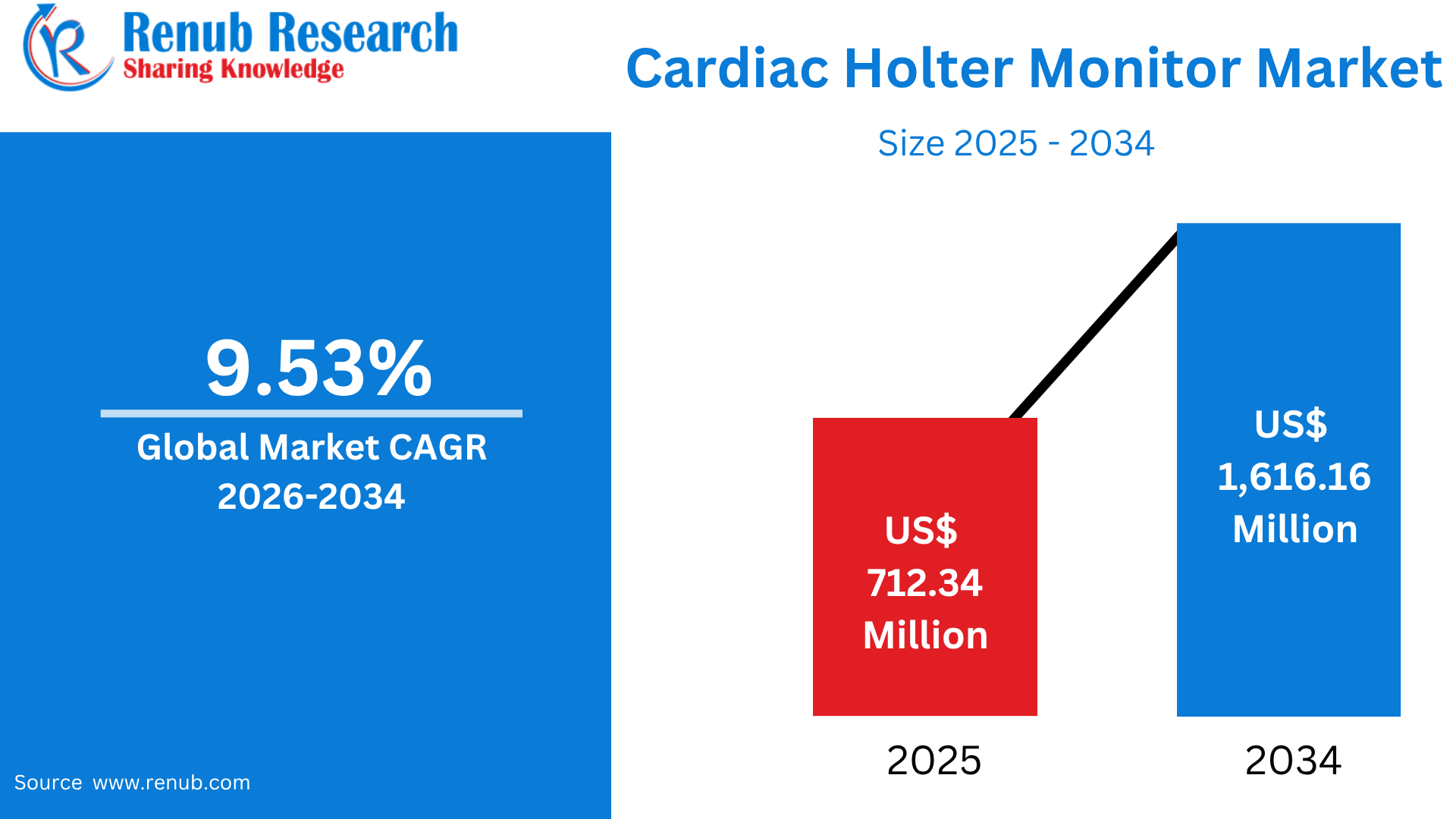
Cardiac Holter Monitor Market is projected to expand from US$ 712.34 million in 2025 to US$ 1,616.16 million by 2034, registering a Compound Annual Growth Rate (CAGR) of 9.53% during the forecast period from 2026 to 2034. The market is expected to experience robust growth over the coming decade, driven by the rising prevalence of cardiovascular diseases and the growing need for continuous and long-term cardiac monitoring. Increasing adoption of ambulatory cardiac monitoring solutions is enabling healthcare professionals to detect intermittent and abnormal heart rhythms more effectively outside traditional clinical settings.
What is the Cardiac Holter Monitor Market and Its Uses & Popularity Worldwide
A cardiac Holter monitor is a portable ambulatory electrocardiography (ECG) device that continuously records a patient’s heart rhythm during normal daily activities, generally for 24–48 hours and, with newer systems, for substantially longer periods. Unlike a conventional ECG that captures cardiac activity for only a short period, Holter monitoring can identify intermittent abnormalities that may not occur during a clinical examination. These devices are widely used to detect and characterize arrhythmias, investigate unexplained palpitations, dizziness, fainting, chest pain, and shortness of breath, and evaluate treatment effectiveness.
Holter monitoring is also used for assessing atrial fibrillation, ventricular ectopy, heart-rate patterns, and certain cardiac conditions requiring prolonged observation. International clinical guidance recommends 24–48-hour Holter monitoring when frequent symptomatic events are expected, while extended ambulatory monitoring may be appropriate when symptoms occur less frequently. Worldwide adoption remains strong because cardiovascular diseases are the leading cause of death globally, accounting for an estimated 19.8 million deaths in 2022, or approximately 32% of all global deaths.
Top 10 Countries with the Highest Coronary Heart Disease Death Rates
- Tajikistan: 389.75 deaths per 100,000 population
- Azerbaijan: 388.41 deaths per 100,000 population
- Uzbekistan: 354.54 deaths per 100,000 population
- Ukraine: 305.47 deaths per 100,000 population
- Oman: 301.95 deaths per 100,000 population
- Afghanistan: 301.71 deaths per 100,000 population
- Vanuatu: 299.44 deaths per 100,000 population
- Solomon Islands: 285.85 deaths per 100,000 population
- Mongolia: 283.82 deaths per 100,000 population
- Belarus: 282.35 deaths per 100,000 population
Growth Drivers of the Cardiac Holter Monitor Market
Rising Global Burden of Cardiovascular Diseases
The increasing prevalence and clinical burden of cardiovascular diseases is a major factor supporting demand for cardiac Holter monitors worldwide. Cardiovascular diseases remain the leading cause of death globally, with the World Health Organization estimating approximately 19.8 million CVD-related deaths in 2022, equivalent to around 32% of global deaths. As cardiovascular conditions become more prevalent among aging populations and individuals with risk factors such as obesity, diabetes, hypertension, and physical inactivity, the requirement for continuous cardiac assessment is increasing. Holter monitoring provides physicians with an extended view of cardiac electrical activity and can help identify intermittent arrhythmias that may be missed during a standard ECG. The technology is particularly useful for patients experiencing unexplained palpitations, syncope, dizziness, or suspected rhythm disturbances. Clinical consensus recognizes ambulatory ECG as an important diagnostic tool for detecting abnormal rhythm patterns that cannot always be captured during short clinical examinations. Consequently, the growing worldwide cardiovascular disease burden is expanding the potential patient population requiring ambulatory cardiac monitoring.
Growing Need for Continuous and Remote Cardiac Monitoring
The increasing need to observe cardiac activity beyond hospitals and physician offices is another important growth driver for the Holter monitor market. Traditional resting ECG examinations provide only a brief snapshot of cardiac activity, whereas ambulatory ECG enables monitoring during routine daily activities. This capability is particularly valuable when symptoms are intermittent or unpredictable. Clinical guidance indicates that 24–48-hour Holter monitoring is recommended when frequent symptomatic events are expected, while extended ambulatory ECG monitoring of approximately 15–30 days may be considered when symptoms occur less frequently or their timing is uncertain. Modern ambulatory monitoring systems are also becoming more compact and convenient, with wearable patch-based devices incorporating wireless transmission and embedded electrodes. These developments are improving patient mobility and creating opportunities for outpatient and home-based cardiac monitoring. Remote data transmission can additionally support faster review by healthcare professionals and integration with digital healthcare workflows. As healthcare systems increasingly emphasize outpatient care, early diagnosis, and continuous observation, demand for portable cardiac monitoring technologies is expected to increase.
Technological Advancements in Wearable Cardiac Monitoring
Technological innovation is significantly improving the capabilities, comfort, and usability of Holter and ambulatory ECG systems. Traditional Holter monitors have increasingly evolved toward smaller, lightweight, wearable, wireless, and patch-based designs. The ISHNE-HRS consensus describes newer adhesive patch ECG monitors as a class of ambulatory devices featuring embedded electrodes and wireless data transmission. Modern systems can also support longer monitoring periods, automated event detection, digital data storage, and sophisticated analysis of rhythm patterns. According to clinical guidance, some newer ambulatory ECG devices can record for up to 30 consecutive days, compared with the traditional 24–48-hour monitoring period. Improvements in sensor technology and connectivity can enhance patient comfort while reducing dependence on cumbersome equipment. Artificial intelligence and automated ECG interpretation are also creating opportunities for more efficient identification of potentially significant rhythm abnormalities, although clinical oversight remains important. These technological developments are expanding the applications of ambulatory monitoring and encouraging healthcare providers to adopt more patient-friendly cardiac monitoring solutions.
Challenges of the Cardiac Holter Monitor Market
Limited Diagnostic Yield When Symptoms Are Infrequent
A major challenge for conventional Holter monitors is that their diagnostic effectiveness depends heavily on the frequency and timing of a patient’s symptoms. Traditional Holter monitoring typically covers 24–48 hours, making it highly useful when symptoms occur frequently but potentially less effective when episodes happen only once every several weeks or months. Clinical guidance recommends selecting monitoring duration according to symptom frequency and indicates that extended monitoring may be more suitable for less frequent events. If no relevant event occurs during the recording period, the test may not provide a definitive explanation for the patient’s symptoms. Repeating short-duration Holter monitoring can also have limited value in some cases, prompting physicians to consider event recorders, mobile cardiac telemetry, or implantable loop recorders for selected patients. This variation in diagnostic yield can influence purchasing decisions and encourage healthcare providers to adopt multiple monitoring technologies rather than relying exclusively on conventional Holter systems. Consequently, manufacturers must continue developing longer-duration and more flexible monitoring solutions.
Patient Compliance, Data Management, and Cost Considerations
Patient adherence and the growing volume of cardiac data can create operational challenges for Holter monitoring services. Traditional systems may require patients to wear electrodes and cables continuously and maintain symptom diaries, which can affect comfort and compliance during everyday activities. Although newer patch-based systems have improved convenience, proper placement, continuous wear, and timely return of devices remain important for obtaining usable recordings. In addition, extended monitoring generates substantial ECG datasets that require reliable software, data processing, storage, and clinical interpretation. The increasing adoption of connected and wireless monitoring can improve accessibility but may also increase requirements for digital infrastructure, cybersecurity, interoperability, and trained personnel. Cost is another consideration, particularly in healthcare systems where reimbursement or access to specialized cardiac monitoring varies. Clinical literature emphasizes that appropriate device selection should consider symptom frequency, patient capability, accessibility, diagnostic yield, and cost-effectiveness. Addressing these factors through simpler wearable designs, automated analysis, and integrated digital workflows will remain important for broader market adoption.
Cardiac Holter Monitor Launches Worldwide
- Norav NR-314-P Holter – Norav Medical (2023): Norav Medical launched the NR-314-P Holter in October 2023, featuring 3-lead ECG technology, wireless connectivity, and up to 14 days of continuous ECG recording. The lightweight device was designed to improve patient comfort while supporting long-term ambulatory cardiac monitoring.
- BIOMONITOR IV – BIOTRONIK (2023): BIOTRONIK announced the first global implantation of its BIOMONITOR IV Insertable Cardiac Monitor in June 2023. The device incorporated SmartECG and AI technology and was designed to reduce false-positive detections by 86% while preserving 98% of true episodes, supporting more efficient arrhythmia monitoring.
- UbiqVue Holter Program – UltraLinQ (2024): UltraLinQ launched its UbiqVue Holter and ECG Interpretation Software in February 2024. The wearable system included a lightweight 28-gram, disposable 2-channel device capable of monitoring for up to 5 days, with wireless connectivity and event marking.
- Vivalink Ambulatory Cardiac Monitoring Solution – Vivalink (2024): Vivalink introduced a turnkey solution for Mobile Cardiac Telemetry (MCT) and Holter monitoring in May 2024. The platform combined remote patient monitoring technology with advanced arrhythmia-detection algorithms to streamline ambulatory ECG monitoring and remote cardiac-care workflows.
- Zio Long-Term Continuous Monitoring Service – iRhythm (2024): iRhythm commercially launched its Zio monitor and Zio Long-Term Continuous Monitoring service in Austria, the Netherlands, Spain, and Switzerland in August 2024. The patch-based system provides up to 14 days of continuous ECG monitoring, extending monitoring beyond conventional 24–48-hour Holter testing.
- BIOMONITOR IV European Launch – BIOTRONIK (2024): Following its earlier global implantation, BIOTRONIK introduced the BIOMONITOR IV at the EHRA Congress 2024 following CE approval and its first European implant. Its SmartECG technology uses AI and algorithms to reduce false detections while supporting identification of atrial fibrillation, bradycardia, tachycardia, and pauses.
- SmartCardia 7L Platform – SmartCardia (2024): The SmartCardia 7L Platform represents a wearable Holter-monitoring system using a disposable adhesive 7-lead patch and reusable sensor. The platform supports monitoring for up to 14 days and transmits ECG and heart-rate information through Bluetooth and a mobile gateway to its cloud service.
- Cor MDx – Peerbridge Health (2025): Peerbridge Health introduced its Cor MDx multi-lead ECG wearable at HIMSS Global Health Conference in March 2025. The device was designed to support 14-day Holter monitoring, mobile cardiac telemetry, and hemodynamic assessment, combining wearable ECG monitoring with AI-powered analysis.
- UbiqVue 2AYe Holter System – LifeSignals/UltraLinQ (2025): LifeSignals launched the UbiqVue 2AYe Holter System at Heart Rhythm 2025 in April 2025. The system uses a single-use, chest-worn 2-channel biosensor capable of collecting ECG and event data for up to 5 days, with cloud-based transmission and faster diagnostic reporting.
- Cardiologs Holter Platform – Philips (2025): Philips received U.S. FDA 510(k) clearance for its Cardiologs Holter Platform in August 2025. The platform is classified as an electrocardiograph for cardiovascular applications and adds an AI-oriented Holter analysis platform to Philips’ cardiac-monitoring portfolio.
Rising Adoption of Connected and Remote Monitoring
The wireless cardiac Holter monitor market is expanding as healthcare providers increasingly seek convenient, portable, and connected solutions for continuous cardiac monitoring. Unlike conventional wired Holter systems, wireless devices provide greater freedom of movement and can transmit ECG information through Bluetooth, smartphones, wireless gateways, or cloud-based platforms. This enables physicians to review patient information remotely and supports home-based and outpatient cardiac monitoring. The growing cardiovascular disease burden is strengthening demand for these solutions. Cardiovascular diseases remain the leading cause of death worldwide, accounting for approximately 19.8 million deaths in 2022, or around 32% of global deaths, according to the World Health Organization. Increasing adoption of IoT-enabled healthcare devices and artificial intelligence is further improving automated rhythm analysis and data management. Wireless systems can also reduce dependence on bulky equipment and improve patient comfort during prolonged monitoring. As telecardiology and remote patient monitoring expand, hospitals, diagnostic centers, and home healthcare providers are increasingly adopting wireless Holter technologies.
AI-Based ECG Analysis and Digital Healthcare Integration
The cardiac Holter monitor software market is growing rapidly as healthcare organizations increasingly depend on digital platforms to analyze large volumes of ECG data accurately and efficiently. Holter software processes continuous ECG recordings and assists clinicians in identifying arrhythmias, abnormal heart rhythms, pauses, tachycardia, bradycardia, and other clinically relevant events. Artificial intelligence and machine-learning algorithms are increasingly incorporated into analysis platforms to automate event detection and prioritize potentially significant recordings for physician review. This is particularly important as monitoring durations expand from traditional 24–48-hour recordings to extended periods of up to 14–30 days with newer ambulatory technologies. Cloud-based platforms also allow authorized healthcare professionals to access patient data remotely, supporting telecardiology and distributed healthcare delivery. Integration with electronic health records and hospital information systems can further streamline reporting and data management. As healthcare providers seek faster diagnostic workflows and more efficient interpretation of continuously generated ECG information, demand for advanced Holter software, cloud analytics, automated reporting, and AI-supported cardiac diagnostics is expected to increase.
Cost-Effective Solution for Routine Ambulatory ECG Monitoring
The 2-channel cardiac Holter monitor segment continues to represent an important part of ambulatory cardiac monitoring because of its relatively simple design, affordability, and suitability for routine diagnostic applications. These devices simultaneously record electrical cardiac activity through two ECG channels, enabling healthcare professionals to identify common rhythm abnormalities and intermittent arrhythmias. Two-channel systems are particularly useful when extended multi-lead diagnostic information is not required, making them attractive for outpatient clinics, smaller hospitals, diagnostic laboratories, and healthcare facilities in price-sensitive markets. Conventional Holter monitoring generally covers 24–48 hours, although the appropriate monitoring duration depends on symptom frequency and clinical requirements. Two-channel devices can provide sufficient information for many patients experiencing frequent palpitations, dizziness, or suspected rhythm disturbances. Manufacturers are improving these systems through smaller form factors, longer battery life, improved electrodes, digital storage, and wireless data transfer. Their combination of functionality and comparatively low acquisition costs supports continued use, particularly where healthcare providers prioritize accessible and routine cardiac monitoring.
Increasing Hospital-Based Cardiac Diagnostics and Monitoring
Hospitals remain a major end-user segment for cardiac Holter monitors because they manage large numbers of patients requiring cardiac rhythm assessment, diagnosis, and follow-up. Holter systems are used to investigate unexplained palpitations, dizziness, syncope, chest discomfort, suspected arrhythmias, and other symptoms that may not be detected during a short resting ECG. The rising global cardiovascular disease burden is increasing the number of patients requiring diagnostic monitoring. The World Health Organization estimates that cardiovascular diseases cause approximately 19.8 million deaths globally each year based on 2022 data, highlighting the substantial need for effective cardiac diagnosis and monitoring. Hospital adoption is also being supported by modernization of healthcare IT infrastructure. Contemporary Holter systems can integrate with ECG management platforms, electronic medical records, cloud services, and hospital information systems, facilitating storage, interpretation, and reporting of patient data. Growth in tertiary-care hospitals, specialist cardiac centers, preventive cardiology programs, and outpatient services is creating additional demand. As hospitals emphasize early diagnosis, continuous monitoring, and efficient clinical workflows, advanced Holter systems are expected to remain an important cardiac diagnostic technology.
United States Cardiac Holter Monitor Market
United States cardiac Holter monitor market is witnessing steady growth, supported by the high prevalence of cardiovascular disorders, including arrhythmias and coronary artery disease. Cardiovascular conditions remain a major contributor to healthcare utilization and hospital admissions, increasing the need for reliable cardiac monitoring and early diagnosis. Holter monitors enable physicians to continuously record and evaluate heart activity, helping identify intermittent rhythm abnormalities that may not be detected during a conventional ECG. Technological advancements are further strengthening market adoption, particularly through wireless, wearable, cloud-connected, and AI-enabled monitoring solutions that improve patient convenience and data analysis. The country’s advanced healthcare infrastructure, broad availability of specialized cardiac-care services, and established reimbursement framework also support the adoption of ambulatory cardiac monitoring technologies. In addition, growing consumer awareness regarding preventive cardiovascular care is encouraging earlier screening and diagnosis. In March 2024, Wellysis and Artella Solutions announced the release of remote cardiac monitoring services in the United States, highlighting the growing integration of wearable monitoring and remote healthcare delivery.
Germany Cardiac Holter Monitor Market
Germany represents an important European market for cardiac Holter monitors, driven by the prevalence of cardiovascular diseases, demographic aging, and strong emphasis on early diagnosis and preventive healthcare. Holter monitoring is widely used to detect intermittent arrhythmias, evaluate heart-rate patterns, and assess long-term cardiac activity among both hospital-based and ambulatory patients. Germany’s well-developed healthcare infrastructure and established reimbursement mechanisms support patient access to advanced diagnostic technologies. The country’s strong focus on medical research, digital healthcare, and technological innovation is also encouraging manufacturers to develop more accurate, compact, and digitally connected cardiac monitoring devices. Wearable cardiac technologies are gaining attention because they allow ECG information to be collected outside conventional clinical environments while improving patient mobility and comfort. Integration with digital platforms can further support remote assessment and timely clinical intervention. In January 2024, Biotronik introduced a new generation of wearable cardiac-monitoring technologies in Germany, reflecting the country’s increasing focus on improving ECG monitoring outside hospitals while enhancing patient comfort and diagnostic capabilities.
India Cardiac Holter Monitor Market
India’s cardiac Holter monitor market is expanding rapidly due to the increasing burden of cardiovascular conditions across different age groups and the growing requirement for continuous cardiac monitoring. Rising incidences of hypertension, arrhythmias, and lifestyle-associated heart disorders are increasing demand for non-invasive diagnostic technologies capable of recording cardiac activity over extended periods. Greater awareness of cardiovascular health, expanding healthcare infrastructure, and the increasing number of diagnostic centers are supporting market penetration in metropolitan as well as semi-urban areas. Portable and wearable cardiac monitoring devices are particularly attractive because they can facilitate outpatient monitoring without requiring prolonged hospital stays. Government initiatives aimed at strengthening healthcare access, prevention, and diagnostic services are also creating a favorable environment for adoption. Meanwhile, improvements in device affordability, connectivity, and AI-based analysis are making advanced cardiac monitoring more accessible. In June 2024, AliveCor India unveiled a personal ECG monitoring device incorporating artificial intelligence capabilities for smartphone-based heart screening, illustrating the growing convergence of cardiac diagnostics, wearable technology, smartphones, and AI in the Indian market.
Saudi Arabia Cardiac Holter Monitor Market
Saudi Arabia’s cardiac Holter monitor market is expected to grow as the country faces a significant burden of cardiovascular risk factors associated with obesity, physical inactivity, lifestyle patterns, and an aging population. The Kingdom’s investments in healthcare infrastructure and advanced medical technologies are strengthening the availability of specialized cardiac diagnostic services. Holter monitors are increasingly utilized in hospitals, cardiology departments, and specialized clinics for the detection and monitoring of cardiac rhythm abnormalities, particularly when symptoms are intermittent and cannot be captured during a short clinical ECG examination. Rising public awareness of cardiovascular health and expanding access to diagnostic services are further supporting adoption. Healthcare modernization and digital transformation are also encouraging the integration of wearable monitoring devices with remote-care platforms, enabling healthcare professionals to evaluate patient data beyond traditional hospital settings. Wearable and remotely connected Holter solutions are gaining particular relevance in major metropolitan healthcare centers. In September 2023, Seha Virtual Hospital in Saudi Arabia launched a remote cardiac monitoring service utilizing wearable Holter monitors, demonstrating the country’s growing emphasis on digital cardiology and remote patient monitoring.
Cardiac Holter Monitor Market Segments
Product Type
- Wired Monitor Device
- Wireless Monitor Device
- Software
Lead Type
- 1-Channel
- 2-Channel
- 3-Channel
- 12-Channel
- Others
End User
- Hospitals
- Ambulatory Surgical Centers
- Others
Countries
North America
- United States
- Canada
Europe
- France
- Germany
- Italy
- Spain
- United Kingdom
- Belgium
- Netherlands
- Turkey
Asia Pacific
- China
- Japan
- India
- South Korea
- Thailand
- Malaysia
- Indonesia
- Australia
- New Zealand
Latin America
- Brazil
- Mexico
- Argentina
Middle East & Africa
- Saudi Arabia
- UAE
- South Africa
All companies have been covered with 5 Viewpoints
- Overviews
- Key Person
- Recent Developments
- SWOT Analysis
- Revenue Analysis
Key Players Analysis
- General Electric Company (GE)
- Nihon Kohden Corporation
- Hill-Rom Holdings, Inc.
- OSI Systems, Inc.
- Boston Scientific Corporation
- Koninklijke Philips N.V.
- Medtronic plc
- Irhythm Technologies Inc
Report Details:
| Report Features | Details |
| Base Year |
2025 |
| Historical Period |
2022 - 2025 |
| Forecast Period |
2026 - 2034 |
| Market |
US$ Million |
| Segment Covered |
Product Type, Lead Type, End User and By Countries |
| Countries Covered |
|
| Companies Covered |
|
| Customization Scope |
20% Free Customization |
| Post-Sale Analyst Support |
1 Year (52 Weeks) |
| Delivery Format |
PDF and Excel through Email (We can also provide the editable version of the report in PPT/Word format on request) |
Key Questions Answered in the Report
- What is the current size and future forecast of the global cardiac Holter monitor market from 2025 to 2034?
- What are the major growth drivers fueling the cardiac Holter monitor market?
- What technological advancements are transforming the cardiac Holter monitor industry?
- What are the primary challenges and restraints faced by this market?
- How is the market segmented by product type, lead type, and end-user?
- Which regions and countries dominate the cardiac Holter monitor market?
- What is the market outlook for the United States, Germany, India, and Saudi Arabia?
- Who are the key players in the global cardiac Holter monitor market, and what are their recent developments?
- How is the rising incidence of cardiovascular diseases influencing market demand?
- What role does healthcare infrastructure play in the growth of the cardiac Holter monitor market globally?
Customization Services available
- Analysis of Market Size and Its Segments
- More Company Profiles (Upto 10 without any additional cost):
- Additional Countries (Other than mentioned Countries):
- Region/Country Specific Reports:
- Market Entry Strategy:
- Region-Specific Market Dynamics:
- Regional Market Share Analysis:
- Trade Analysis:
- Production Insights:
- Others Customized Requests:
For more information contact our analysts.
Need More Assistance?
- Talk to our analysts to get more precious information on the current market trends.
- Include more countries and segments and customize the report based on the final requirement.
- Get a competitive advantage in your industry by knowing the report findings and making a positive impact on your revenues and operations.
- Our analysts are always ready to provide more help and pertinent information if you need any additional assistance.