Bariatric Surgery Devices Market Size, Share, Growth, Trends, Industry Analysis & Forecast 2026–2034
Buy NowBariatric Surgery Devices Market Size
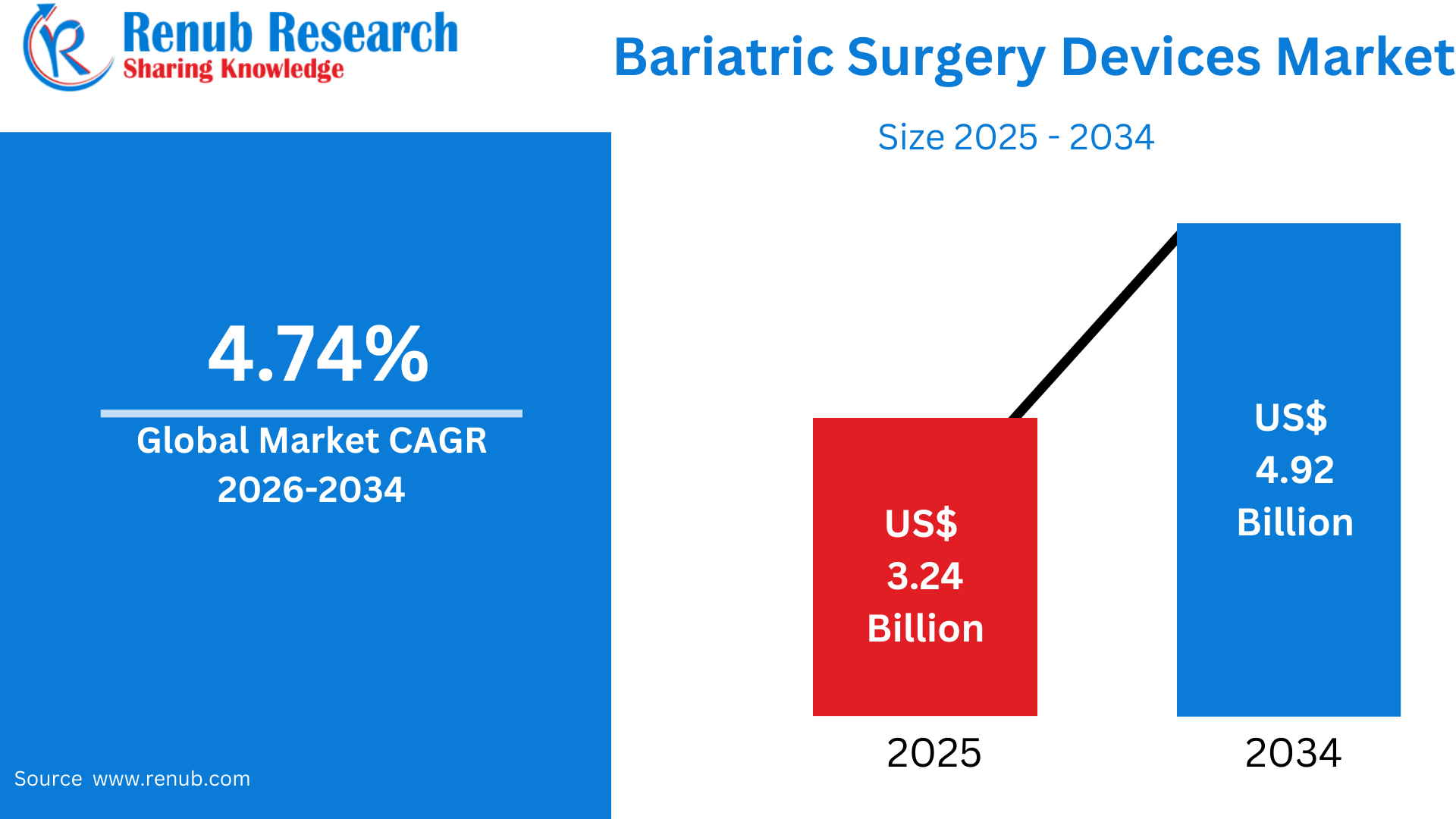
Bariatric Surgery Devices Market is projected to grow from US$ 3.24 billion in 2025 to US$ 4.92 billion by 2034, expanding at a CAGR of 4.74% during 2026–2034. Market growth is driven by the increasing prevalence of obesity, rising awareness of minimally invasive weight-loss procedures, and continuous technological advancements in bariatric surgical devices. The growing burden of obesity-related chronic diseases, higher healthcare spending, improved access to specialized surgical care, and increasing acceptance of bariatric surgery as an effective long-term treatment for severe obesity are further supporting market expansion.
What are Bariatric Surgery Devices and Its Uses & Popularity Worldwide
Bariatric surgery devices are specialized medical instruments and implantable systems used to perform weight-loss surgeries for individuals suffering from severe obesity and obesity-related health conditions. These devices are utilized in procedures such as gastric bypass, sleeve gastrectomy, adjustable gastric banding, biliopancreatic diversion with duodenal switch, and endoscopic bariatric interventions. Common bariatric surgery devices include surgical staplers, trocars, energy-based sealing devices, gastric bands, suturing systems, balloons, and minimally invasive laparoscopic instruments. Their primary purpose is to reduce stomach capacity, modify the digestive process, or limit calorie absorption, enabling patients to achieve substantial and sustained weight loss.
Bariatric surgery has gained worldwide popularity due to the increasing prevalence of obesity, type 2 diabetes, hypertension, cardiovascular diseases, and metabolic disorders. According to global health estimates, more than 1 billion people worldwide are living with obesity, significantly increasing demand for effective long-term weight management solutions. Advances in minimally invasive laparoscopic and robotic-assisted surgery have improved patient safety, reduced hospital stays, minimized postoperative complications, and accelerated recovery. Growing healthcare awareness, favorable reimbursement policies in several countries, and increasing recognition of bariatric surgery as an effective treatment for obesity-related chronic diseases continue to drive global adoption of bariatric surgery devices.
Rising Global Obesity Burden Driving Demand for Bariatric Surgery Devices
- More Than 1 Billion People Living with Obesity: According to the World Health Organization (WHO, 2022), over 1 billion people worldwide were living with obesity during 2021–2022, including approximately 650 million adults, 340 million adolescents, and 39 million children.
- Obesity Expected to Increase Further: WHO estimates that by 2025, nearly 167 million adults and children could experience worsening health due to being overweight or obese, highlighting the growing global obesity crisis.
- Higher Risk of Chronic Diseases: Obesity significantly increases the likelihood of developing type 2 diabetes, cardiovascular disease, hypertension, stroke, chronic kidney disease, reproductive disorders, several forms of cancer, and mental health conditions, making effective weight management a healthcare priority.
- Greater COVID-19 Hospitalization Risk: Individuals with obesity are three times more likely to require hospitalization due to COVID-19, emphasizing the serious health complications associated with excessive body weight.
- Growing Adoption of Bariatric Surgery: Bariatric surgery is increasingly recommended for patients with severe obesity when diet, exercise, and medical therapy fail to achieve sustainable weight loss. These procedures reduce stomach capacity and support long-term weight management while improving obesity-related health conditions.
- Increasing Demand for Bariatric Surgery Devices: The rising prevalence of obesity and associated chronic diseases is driving a continuous increase in bariatric surgical procedures worldwide. Consequently, demand for advanced bariatric surgery devices, including surgical staplers, trocars, energy devices, suturing systems, and minimally invasive surgical instruments, continues to grow across hospitals and specialized surgical centers.
Growth Drivers
Rising Global Obesity Burden Driving Bariatric Surgery Demand
The rapidly increasing prevalence of obesity is the primary driver of the Bariatric Surgery Devices Market. According to the World Health Organization (WHO), more than 1 billion people worldwide are living with obesity, while nearly 2.5 billion adults are overweight. Obesity significantly increases the risk of chronic diseases such as type 2 diabetes, cardiovascular disease, hypertension, sleep apnea, fatty liver disease, and certain cancers. Lifestyle modification and pharmaceutical treatments often fail to provide sustained weight loss in patients with severe obesity, making bariatric surgery an increasingly preferred treatment option. Clinical studies show that bariatric procedures can result in 25–35% long-term body weight reduction, significantly improving metabolic health and quality of life. As healthcare providers increasingly recognize bariatric surgery as an effective therapeutic intervention rather than a cosmetic procedure, the number of surgical procedures continues to rise globally. This trend is generating strong demand for advanced surgical staplers, energy devices, trocars, and laparoscopic surgical systems used during bariatric operations.
Growing Adoption of Minimally Invasive and Robotic Surgery
Technological advancements in minimally invasive surgery are significantly accelerating the growth of the Bariatric Surgery Devices Market. Laparoscopic bariatric procedures have become the preferred surgical approach because they require smaller incisions, reduce blood loss, minimize postoperative pain, and shorten hospital stays compared to traditional open surgery. Today, more than 90% of bariatric surgeries in developed healthcare systems are performed laparoscopically, demonstrating widespread adoption of minimally invasive techniques. Robotic-assisted bariatric surgery is also gaining momentum by offering enhanced visualization, greater surgical precision, improved instrument control, and reduced surgeon fatigue during complex procedures. Continuous innovation in powered stapling systems, vessel sealing technologies, high-definition imaging, and robotic surgical platforms has further improved clinical outcomes. These technological developments have increased patient confidence while encouraging hospitals to invest in advanced surgical infrastructure. As healthcare providers prioritize faster recovery, lower complication rates, and improved surgical efficiency, demand for sophisticated bariatric surgery devices continues to expand across developed and emerging healthcare markets.
Increasing Healthcare Expenditure and Growing Treatment Awareness
Rising healthcare investments and growing awareness regarding obesity treatment are supporting the expansion of the Bariatric Surgery Devices Market. Global healthcare expenditure has exceeded US$10 trillion annually, enabling hospitals and specialized surgical centers to invest in advanced bariatric surgical technologies and minimally invasive operating rooms. Governments and healthcare organizations increasingly recognize obesity as a major public health challenge associated with significant long-term healthcare costs. Growing public education campaigns regarding obesity management, diabetes prevention, and metabolic surgery have encouraged more eligible patients to consider bariatric procedures. Improved insurance coverage and reimbursement policies in several countries have further increased patient access to surgery. Healthcare professionals are also recommending bariatric surgery earlier for patients with severe obesity and obesity-related metabolic diseases based on growing clinical evidence supporting long-term health benefits. Increasing investments in obesity treatment centers, specialized bariatric hospitals, and robotic surgery programs continue to strengthen demand for innovative bariatric surgery devices across both developed and emerging healthcare markets.
Challenge
High Surgical Costs and Limited Patient Accessibility
The high overall cost of bariatric surgery remains one of the most significant barriers to market growth. The total expense includes preoperative consultations, diagnostic evaluations, surgical devices, operating room charges, anesthesia, hospitalization, postoperative monitoring, and long-term nutritional follow-up. Depending on the procedure and country, bariatric surgery can cost between US$10,000 and US$30,000 or more, making treatment unaffordable for many patients without comprehensive insurance coverage. In several developing countries, limited reimbursement policies and inadequate healthcare infrastructure further restrict patient access. Hospitals also face substantial investment costs for advanced laparoscopic systems, robotic platforms, surgical staplers, and specialized bariatric operating equipment. Economic disparities, long waiting lists in public healthcare systems, and limited availability of trained bariatric surgeons reduce procedure volumes in many regions. These financial and infrastructure challenges continue to limit widespread adoption of bariatric surgery devices despite the growing global burden of obesity.
Surgical Risks, Postoperative Complications, and Skilled Workforce Shortages
Although bariatric surgery has become significantly safer due to technological advancements, surgical risks and postoperative complications continue to present challenges for market expansion. Potential complications include bleeding, infections, staple-line leaks, nutritional deficiencies, blood clots, gastrointestinal obstruction, and long-term vitamin and mineral deficiencies requiring lifelong monitoring. Successful patient outcomes depend heavily on experienced bariatric surgeons, multidisciplinary care teams, nutritionists, and structured postoperative follow-up programs. However, many countries continue to face shortages of trained bariatric specialists and specialized surgical centers capable of managing complex obesity cases. Additionally, strict patient selection criteria limit the number of eligible candidates for surgery, reducing procedural volumes. Healthcare providers must also invest continuously in surgeon training, robotic surgery certification, and updated surgical technologies to maintain high clinical standards. Addressing workforce shortages, expanding specialized obesity treatment centers, and improving long-term patient management remain essential for sustaining growth in the global bariatric surgery devices market.
Bariatric Surgery Devices Product Launches Worldwide
- Johnson & Johnson Submitted the OTTAVA Robotic Surgical System for FDA Review (2026)
In January 2026, Johnson & Johnson announced the submission of its OTTAVA Robotic Surgical System to the U.S. Food and Drug Administration (FDA) for De Novo classification. The next-generation robotic platform is designed to support minimally invasive procedures, including bariatric surgery, by providing enhanced precision, advanced visualization, and improved surgical workflow. - Boston Scientific Expanded into Bariatric Care with Endoscopic Weight-Loss Solutions (2024)
In December 2024, Boston Scientific launched its obesity management portfolio in India, introducing Endoscopic Sleeve Gastroplasty (ESG) technologies and Orbera Intragastric Balloon Systems to provide minimally invasive alternatives for long-term weight management. - Allurion Technologies Expanded the Allurion Gastric Balloon Program (2024)
In January 2024, Allurion Technologies expanded the availability of its Allurion Gastric Balloon System through NHS-operated hospitals in the United Kingdom. The swallowable balloon is designed to assist patients with preoperative weight loss and non-surgical obesity management. - Medtronic Introduced the Signia™ Stapling System with Adaptive Firing Technology (2024)
Medtronic expanded its Signia™ Smart Stapling System with advanced adaptive firing technology designed to improve staple line consistency, tissue compression, and surgical efficiency during laparoscopic bariatric procedures. - Intuitive Surgical Expanded da Vinci 5 Robotic Platform for Advanced Minimally Invasive Surgery (2024)
Intuitive Surgical launched the da Vinci 5 Surgical System, featuring enhanced force feedback, improved imaging capabilities, and advanced robotic instrumentation suitable for complex minimally invasive procedures, including bariatric surgery. - Ethicon Introduced ECHELON 3000 Stapler with Digital Tissue Compression Technology (2023)
Ethicon, a Johnson & Johnson MedTech company, launched the ECHELON 3000 Stapler, incorporating digital tissue compression and improved articulation to enhance precision and reduce tissue trauma during bariatric and gastrointestinal surgeries. - Apollo Endosurgery Expanded the OverStitch™ Endoscopic Suturing System (2023)
Apollo Endosurgery introduced enhancements to its OverStitch™ Endoscopic Suturing System, enabling physicians to perform minimally invasive endoscopic sleeve gastroplasty with greater efficiency and improved procedural flexibility. - CONMED Launched AirSeal® Intelligent Flow System Upgrade (2023)
CONMED expanded its AirSeal® Intelligent Flow System, providing stable pneumoperitoneum, continuous smoke evacuation, and improved visualization during laparoscopic bariatric procedures, helping surgeons operate more efficiently. - Olympus Introduced VISERA ELITE III Surgical Imaging Platform (2023)
Olympus launched the VISERA ELITE III imaging platform, delivering ultra-high-definition visualization, fluorescence imaging, and improved endoscopic performance to support advanced laparoscopic bariatric surgeries. - B. Braun Released AESCULAP EinsteinVision® 3D Laparoscopic Imaging System (2023)
B. Braun introduced the AESCULAP EinsteinVision® 3D Imaging System, offering high-definition three-dimensional visualization, superior depth perception, and enhanced precision for minimally invasive bariatric and general surgical procedures, supporting improved clinical outcomes.
Rising Preference for Minimally Invasive Techniques Driving Market Growth
The Bariatric Minimally Invasive Surgical Procedures Market is expanding rapidly as healthcare providers increasingly adopt laparoscopic and robotic-assisted techniques for obesity treatment. Today, more than 90% of bariatric surgeries in developed healthcare systems are performed using minimally invasive laparoscopic procedures, owing to their superior clinical outcomes compared to open surgery. These procedures require only small incisions, resulting in reduced blood loss, less postoperative pain, shorter hospital stays, lower infection risks, and faster patient recovery. The growing prevalence of obesity, affecting over 1 billion people worldwide, continues to increase the number of patients seeking safer and more effective surgical interventions. Technological advancements in high-definition imaging, robotic-assisted surgery, and energy-based surgical instruments have further enhanced procedural accuracy and patient safety. Hospitals are increasingly investing in minimally invasive surgical infrastructure to improve treatment efficiency and reduce postoperative complications. Growing awareness among surgeons and patients regarding the long-term benefits of laparoscopic sleeve gastrectomy and gastric bypass procedures continues to support strong market growth worldwide.
Advanced Surgical Instruments Enhancing Procedural Precision
The Bariatric Surgery Assisting Devices Market is experiencing consistent growth due to increasing demand for precision surgical instruments that improve the safety and efficiency of bariatric procedures. These devices include trocars, insufflators, retractors, laparoscopic cameras, suturing systems, graspers, stapling accessories, and visualization equipment used throughout minimally invasive surgeries. As over 90% of bariatric procedures are now performed laparoscopically in many developed countries, demand for advanced assisting devices has increased substantially. Continuous technological innovation has improved instrument ergonomics, durability, maneuverability, and visualization quality, enabling surgeons to perform complex procedures with greater precision and shorter operating times. Hospitals and specialized bariatric centers are investing heavily in high-performance surgical equipment to improve clinical outcomes, reduce complications, and enhance operating room efficiency. Growing procedure volumes driven by rising obesity prevalence and expanding bariatric treatment centers are expected to sustain long-term demand for assisting devices that support safe and effective minimally invasive bariatric surgeries.
Sleeve Gastrectomy Industry Becoming the Leading Bariatric Procedure
The Bariatric Sleeve Gastrectomy Surgery Devices Market has become one of the fastest-growing segments of the bariatric surgery industry due to the widespread adoption of sleeve gastrectomy as the preferred surgical treatment for severe obesity. Globally, approximately 55–60% of all bariatric procedures performed today are sleeve gastrectomies, making it the most commonly performed metabolic surgery. The procedure involves removing nearly 75–80% of the stomach, significantly reducing food intake while maintaining normal digestive function. Its relatively lower complication rates, shorter surgical duration, and excellent long-term weight-loss outcomes have encouraged both surgeons and patients to choose sleeve gastrectomy over other bariatric procedures. Growing technological advancements in powered surgical staplers, tissue reinforcement materials, energy sealing devices, and minimally invasive surgical instruments have further improved procedural safety and consistency. Increasing obesity prevalence, expanding healthcare access, and greater clinical acceptance continue to drive strong demand for sleeve gastrectomy surgery devices across hospitals and specialized bariatric centers worldwide.
Rising Recognition of Obesity as a Chronic Disease Supporting Weight Loss Bariatric Surgery Devices Demand
The Weight Loss Bariatric Surgery Devices Market is growing steadily as obesity is increasingly recognized as a chronic disease requiring long-term medical intervention. According to global health estimates, more than 1 billion people worldwide are living with obesity, while obesity significantly increases the risk of diabetes, hypertension, cardiovascular disease, sleep apnea, and metabolic disorders. Bariatric surgery devices—including surgical staplers, gastric bands, balloons, suturing systems, and laparoscopic instruments—are specifically designed to reduce stomach capacity or alter digestive pathways, promoting sustainable weight loss. Clinical evidence shows that bariatric surgery can achieve 25–35% long-term body weight reduction, while substantially improving obesity-related health conditions. Growing physician recommendations, increasing patient awareness, and expanding insurance coverage in several countries have strengthened acceptance of surgical weight-loss procedures. Continuous technological innovations in robotic-assisted surgery, endoscopic bariatric therapies, and personalized surgical planning are further enhancing treatment outcomes and supporting long-term market expansion.
Advanced Hospital Infrastructure Supporting Bariatric Surgery Devices Market Leadership
Hospitals represent the largest end-user segment in the Bariatric Surgery Devices Market due to their comprehensive surgical infrastructure, multidisciplinary care teams, and ability to manage complex obesity cases. Most bariatric procedures are performed in hospitals equipped with advanced operating rooms, intensive care units, diagnostic imaging systems, and specialized bariatric surgical departments. Globally, millions of surgical procedures are performed in hospitals each year, with bariatric surgery increasingly becoming a standard treatment for severe obesity in tertiary healthcare facilities. Hospitals provide complete patient management, including preoperative evaluations, nutritional counseling, surgical intervention, postoperative monitoring, and long-term follow-up care. Continuous investments in robotic surgery systems, laparoscopic equipment, powered stapling devices, and advanced visualization technologies have significantly improved surgical safety and patient outcomes. Favorable reimbursement policies, increasing establishment of dedicated bariatric centers, and growing healthcare expenditure continue to strengthen hospital-based procedure volumes, making hospitals the dominant revenue-generating segment within the global bariatric surgery devices market.
Advanced Healthcare Infrastructure and Rising Obesity Supporting United States Market Leadership
The United States Bariatric Surgery Devices Market is the largest globally, driven by a high prevalence of obesity, advanced healthcare infrastructure, and widespread adoption of minimally invasive surgical technologies. According to recent health estimates, more than 42% of U.S. adults are affected by obesity, while obesity-related diseases such as type 2 diabetes, cardiovascular disorders, and hypertension continue to increase demand for bariatric procedures. The country performs over 250,000 bariatric surgeries annually, making it one of the highest-volume markets worldwide. Strong reimbursement support, highly trained bariatric surgeons, and extensive availability of robotic-assisted and laparoscopic surgical systems further strengthen market growth. Continuous innovation in powered staplers, vessel sealing technologies, and robotic surgery platforms has significantly improved surgical precision and patient outcomes. In January 2026, Johnson & Johnson announced the submission of its OTTAVA Robotic Surgical System to the U.S. Food and Drug Administration (FDA) for De Novo classification, highlighting continued investment in next-generation robotic surgery technologies for complex surgical procedures.
NHS Support and Increasing Acceptance of Metabolic Surgery Driving the United Kingdom Market Growth
The United Kingdom Bariatric Surgery Devices Market is expanding steadily due to rising obesity rates, growing awareness of metabolic surgery, and strong support from the National Health Service (NHS). Nearly 28% of adults in the United Kingdom are living with obesity, increasing demand for effective long-term weight management solutions. The NHS continues to support bariatric surgery for eligible patients with severe obesity and obesity-related conditions such as diabetes and cardiovascular disease. Laparoscopic bariatric procedures have become the preferred treatment because they reduce hospital stays, postoperative pain, and recovery time while improving clinical outcomes. Strict regulatory oversight ensures high standards of patient safety and device quality, increasing confidence among healthcare providers and patients. Growing recognition of bariatric surgery as a medically necessary treatment rather than a cosmetic procedure continues to expand patient acceptance. In January 2024, an NHS-operated hospital introduced Allurion Technologies’ gastric balloon system to assist patients in achieving preoperative weight loss, supporting broader obesity management strategies alongside surgical treatment.
Rising Obesity, Medical Tourism, and Healthcare Investments Fueling Expansion in India
India Bariatric Surgery Devices Market is witnessing robust growth due to increasing obesity prevalence, rapid urbanization, rising disposable incomes, and greater awareness of obesity-related health risks. India is home to more than 1.4 billion people, with obesity and lifestyle-related diseases increasing rapidly across both urban and semi-urban populations. Growing awareness regarding metabolic disorders and preventive healthcare has encouraged more patients to consider bariatric surgery as a long-term treatment option. The country’s expanding middle-class population and comparatively affordable surgical costs have also strengthened India’s position as a major destination for medical tourism. Private hospitals continue investing in advanced laparoscopic and robotic surgical technologies to improve treatment quality. In December 2024, Boston Scientific entered India’s obesity management market by launching a comprehensive portfolio of bariatric solutions, including endoscopic sleeve gastroplasty technologies and intragastric balloon systems, expanding access to minimally invasive weight-loss treatments for patients across the country.
Vision 2030 and High Obesity Prevalence Accelerating Saudi Arabia Market Growth
Saudi Arabia Bariatric Surgery Devices Market is expanding rapidly due to increasing obesity prevalence, government healthcare reforms, and growing investment in advanced surgical technologies. According to national health estimates, more than one-third of adults in Saudi Arabia are affected by obesity, making weight management a major public health priority. Under Saudi Vision 2030, substantial investments are being directed toward healthcare modernization, preventive medicine, and specialized surgical services. Hospitals throughout the Kingdom are increasingly adopting minimally invasive laparoscopic systems and robotic-assisted surgical platforms to improve bariatric treatment outcomes and reduce recovery times. Rising public awareness regarding obesity-related complications, including diabetes and cardiovascular diseases, has significantly improved acceptance of bariatric surgery, particularly among younger adults. Expanding private healthcare facilities and specialized obesity treatment centers continue to support market growth. In December 2025, the Saudi Ministry of Health launched a nationwide awareness initiative promoting education on obesity management, patient eligibility, and the importance of bariatric surgery within accredited healthcare facilities, further encouraging adoption of advanced bariatric surgical treatments.
Market Segmentation
Procedure Type
- Minimally Invasive
- Non-Invasive
Device Type
- Assisting Devices
- Implantable Devices
Procedure
- Sleeve Gastrectomy
- Adjustable Gastric Banding
- Roux-en-Y Gastric Bypass
- Biliopancreatic Diversion with Duodenal Switch
- Others
Application
- Weight Loss
- Hereditary Disease
- Others
End User
- Bariatric Surgery Clinics
- Hospitals
- Others
Countries
North America
- United States
- Canada
Europe
- France
- Germany
- Italy
- Spain
- United Kingdom
- Belgium
- Netherlands
- Turkey
Asia Pacific
- China
- Japan
- India
- Australia
- South Korea
- Thailand
- Malaysia
- Indonesia
- New Zealand
Latin America
- Brazil
- Mexico
- Argentina
Middle East & Africa
- South Africa
- Saudi Arabia
- United Arab Emirates
All companies have been covered with 5 Viewpoints
- Overview
- Key Persons
- Recent Development & Strategies
- Product Portfolio
- Financial Insights
Company Analysis
- Apollo Endosurgery Inc.
- GI Dynamics
- Intuitive Surgical Inc.
- Johnson & Johnson Services Inc.
- Medtronic Inc.
- Olympus Corporation
- Reshape Lifesciences Inc.
- TransEnterix Inc.
Report Details:
| Report Features | Details |
| Base Year |
2025 |
| Historical Period |
2022 - 2026 |
| Forecast Period |
2026 - 2034 |
| Market |
US$ Billion |
| Segment Covered |
Procedure Type, Device Type, Procedure, Application, End User and Countries |
| Countries Covered |
|
| Companies Covered |
|
| Customization Scope |
20% Free Customization |
| Post-Sale Analyst Support |
1 Year (52 Weeks) |
| Delivery Format |
PDF and Excel through Email (We can also provide the editable version of the report in PPT/Word format on request) |
Key Questions Answered in Report:
- How big is the Bariatric Surgery Devices industry?
- What is the Bariatric Surgery Devices growth rate?
- Who are the key players in Bariatric Surgery Devices industry?
- What are the factors driving the Bariatric Surgery Devices industry?
- Which Region held the largest market share in the Bariatric Surgery Devices industry?
- What segments are covered in the Bariatric Surgery Devices Market report?
Customization Services available
- Analysis of Market Size and Its Segments
- More Company Profiles (Upto 10 without any additional cost):
- Additional Countries (Other than mentioned Countries):
- Region/Country Specific Reports:
- Market Entry Strategy:
- Region-Specific Market Dynamics:
- Regional Market Share Analysis:
- Trade Analysis:
- Production Insights:
- Others Customized Requests:
For more information contact our analysts.
Need More Assistance?
- Talk to our analysts to get more precious information on the current market trends.
- Include more countries and segments and customize the report based on the final requirement.
- Get a competitive advantage in your industry by knowing the report findings and making a positive impact on your revenues and operations.
- Our analysts are always ready to provide more help and pertinent information if you need any additional assistance.