Asia Pacific Weight Loss Market Report by Type, Equipment Type, Service, Gender, Age Group, Countries and Companies Analysis 2026-2034
Buy NowAsia Pacific Weight Loss Market Size & Forecast
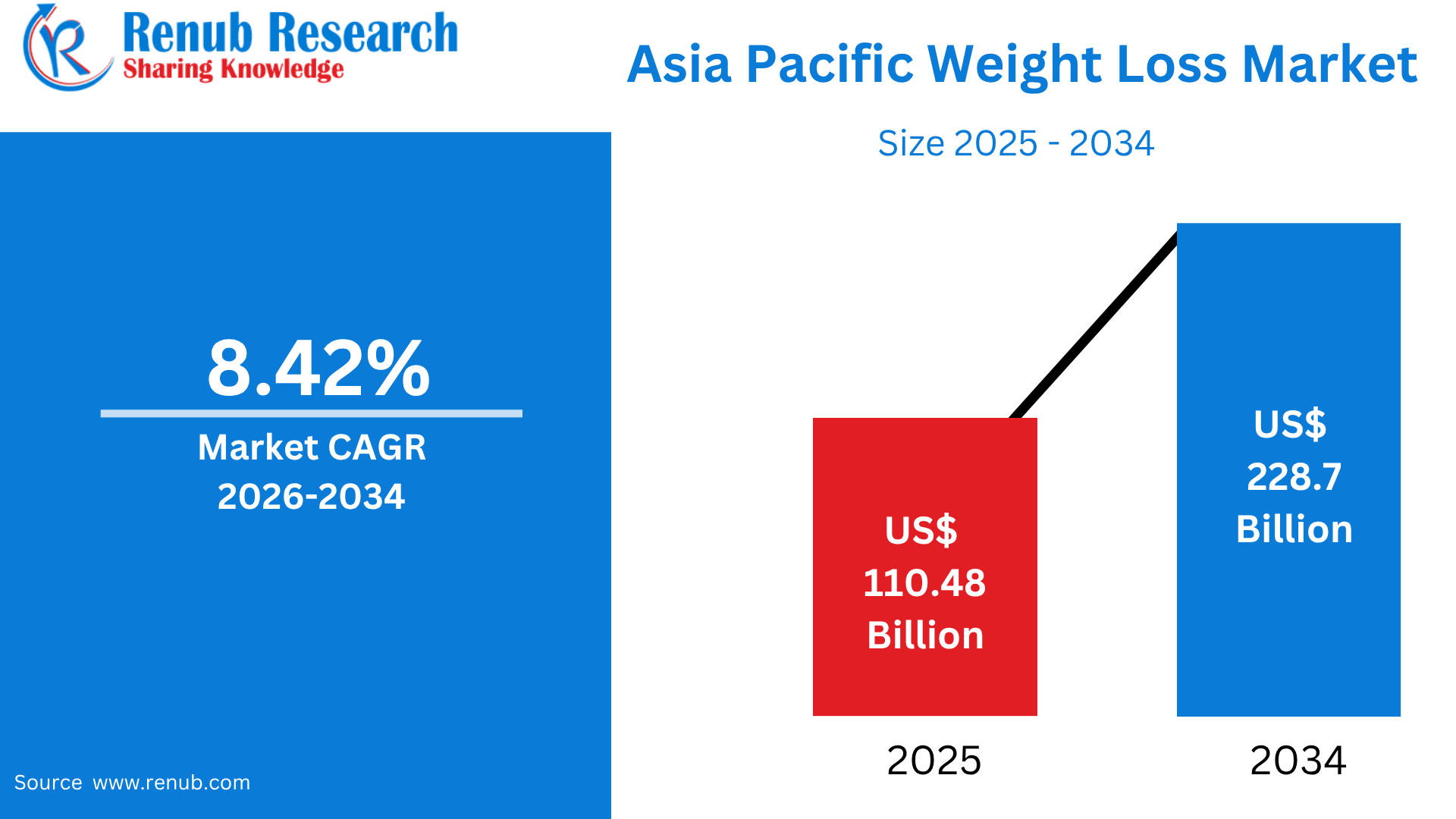
Asia Pacific Weight Loss Market is projected to expand from US$ 110.48 Billion in 2025 to US$ 228.70 Billion by 2034, registering a Compound Annual Growth Rate (CAGR) of 8.42% during the forecast period from 2026 to 2034. The market is witnessing strong growth due to the rising prevalence of obesity and overweight conditions, increasing health and wellness awareness, and growing participation in fitness and weight management programs. Rising consumer demand for weight loss products, nutritional solutions, dietary supplements, and related services is further supporting market expansion.
What is Weight Loss and its Uses & Popularity in Asia Pacific
Weight loss refers to the reduction of excess body weight through a combination of dietary changes, physical activity, behavioral modifications, medical interventions, and, when appropriate, weight-management medications or bariatric procedures. The primary objective is to achieve and maintain a healthier body composition while reducing the risk of obesity-related conditions such as type 2 diabetes, cardiovascular disease, hypertension, and certain cancers. In Asia Pacific, weight-loss solutions are increasingly being adopted as obesity and overweight levels rise alongside urbanization, sedentary lifestyles, changing dietary patterns, and greater health awareness.
WHO reports that one in five adults in the South-East Asia Region is currently overweight, while the Western Pacific Region recorded adult overweight prevalence of 36.3% in 2022. Weight management is therefore becoming increasingly popular among consumers seeking healthier lifestyles, improved physical fitness, and disease prevention. Demand spans weight-loss programs, fitness centers, nutrition products, dietary supplements, digital health applications, wearable devices, and prescription therapies. Growing awareness of personalized health and preventive care is expected to further strengthen adoption across major Asia Pacific markets.
Top Countries by Increase in Overweight Prevalence Among Adults (2010–2022)
·1. Viet Nam
- 2. Bangladesh
·3. Nepal
- 4. Cambodia
·5. Pakistan
- 6. Indonesia
- 7. India
- 8. Mongolia
- 9. China
- 10. Sri Lanka
Source: WHO Global Health Observatory (GHO), 2024.
Top 10 Countries by Increase in Obesity Prevalence Among Adults (2010–2022)
- 1. Viet Nam
- 2. Bangladesh
- 3. Cambodia
- 4. Nepal
- 5. Indonesia
- 6. China
- 7. Pakistan
- 8. Korea
- 9. Lao PDR
- 10. India
Source: WHO Global Health Observatory (GHO), 2024.
Growth Driver
Rising Prevalence of Overweight and Obesity
The increasing prevalence of overweight and obesity is one of the strongest drivers of the Asia Pacific weight loss market. Rapid urbanization, sedentary lifestyles, increased consumption of energy-dense foods, and declining physical activity are contributing to weight gain across several countries. WHO reports that one in five adults in the South-East Asia Region is currently overweight, highlighting a substantial addressable population for weight-management solutions. In the Western Pacific Region, adult overweight prevalence increased from 27.8% in 2012 to 36.3% in 2022, while adult obesity reached 8.5% in 2022. The burden is particularly significant in Pacific island countries, where nine of the world’s ten countries with the highest obesity prevalence among adults were located in the Pacific according to WHO’s reporting on 2022 data. These trends are encouraging demand for structured weight-loss programs, nutritional products, fitness services, digital weight-management platforms, and medical therapies designed to support sustainable weight reduction.
Growing Health and Wellness Awareness
Increasing awareness of the relationship between excess weight and chronic diseases is encouraging consumers across Asia Pacific to adopt weight-management strategies. Overweight and obesity are associated with higher risks of diabetes, hypertension, cardiovascular disease, and other noncommunicable conditions, making weight control an increasingly important component of preventive healthcare. WHO notes that higher-than-optimal BMI contributed to an estimated 5 million NCD deaths globally in 2019. In September 2024, WHO called on South-East Asian countries to strengthen policies promoting healthy diets and physical activity because rising overweight and obesity are contributing to the region’s growing NCD burden. Consumers are consequently showing greater interest in calorie-controlled diets, nutrition counseling, fitness programs, wearable activity trackers, mobile health applications, and personalized wellness plans. Social media, online health content, and increasing availability of professional nutrition and fitness services are also improving awareness. This shift from reactive treatment toward preventive health is expected to sustain demand for weight-loss products and services throughout the forecast period.
Expansion of Digital Health and Personalized Weight Management
The increasing integration of technology into healthcare and fitness is creating new opportunities for the Asia Pacific weight loss market. Digital platforms enable consumers to monitor calorie intake, physical activity, body weight, sleep, and other lifestyle indicators through smartphones, connected devices, and wearable technologies. Personalized programs can combine nutritional guidance, exercise recommendations, behavioral coaching, and progress tracking, making weight management more convenient and accessible. WHO’s Western Pacific data show that overweight and obesity continue to rise among both children and adults, while many countries in the region remain off track toward global obesity targets, increasing the need for scalable prevention and management solutions. Technology-supported programs can extend weight-management services beyond traditional gyms and clinics, particularly through mobile applications and online consultations. Growing consumer familiarity with telehealth, fitness applications, smartwatches, connected scales, and personalized wellness platforms is therefore supporting market development. Pharmaceutical innovation and the increasing availability of medically supervised obesity-management therapies are also broadening the range of solutions available to consumers.
Challenges of the Asia Pacific Weight Loss Market
Unequal Access and Affordability of Weight-Loss Solutions
Unequal access to healthcare, nutrition services, fitness facilities, and advanced weight-management therapies remains a major challenge across Asia Pacific. The region contains both highly developed healthcare systems and lower- and middle-income economies, resulting in significant differences in consumers’ ability to access professional weight-management services. WHO identifies limited availability of affordable healthy food, insufficient opportunities for physical activity, and gaps in health-system responses as important environmental factors contributing to overweight and obesity. Advanced medical weight-loss therapies, specialized consultations, structured programs, and technology-enabled solutions may also involve costs that are difficult for lower-income consumers to sustain. Rural populations can face additional barriers because specialized obesity-management services and trained professionals are often concentrated in major urban centers. These disparities can limit market penetration and create uneven adoption across countries and population groups. Addressing affordability, expanding primary-care screening, improving access to nutrition and physical-activity programs, and integrating obesity management into broader healthcare systems will therefore be important for long-term market development.
Lifestyle, Dietary and Behavioral Barriers
Persistent lifestyle and behavioral factors can make sustained weight loss difficult and may limit the effectiveness of weight-management programs. Rapid urbanization and economic development across Asia Pacific have contributed to changes in dietary habits, physical activity patterns, and daily routines. WHO identifies unhealthy diets and insufficient physical activity as key contributors to the region’s increasing overweight and obesity burden. The challenge is further complicated by the region’s diverse food cultures, socioeconomic conditions, and consumer preferences, meaning that standardized weight-loss programs may not be equally effective across different populations. In the Western Pacific Region, adult overweight prevalence increased to 36.3% in 2022 from 27.8% in 2012, demonstrating the scale of the underlying lifestyle challenge. Maintaining long-term adherence to calorie control, regular exercise, and behavioral changes can also be difficult, particularly when consumers expect rapid results. Consequently, market participants need to develop culturally appropriate, affordable, personalized, and sustainable weight-management solutions rather than relying solely on short-term dieting approaches.
Weight Loss Product Launches in the Asia Pacific Region
- Mounjaro (Tirzepatide) Injection
- Company: Eli Lilly and Company
- Country/Region: India
- Launch Year: 2025
- Mounjaro KwikPen
- Company: Eli Lilly and Company
- Country/Region: India
- Launch Year: 2025
- Wegovy (Semaglutide) Injection Pen
- Company: Novo Nordisk
- Country/Region: India
- Launch Year: 2025
- Poviztra (Semaglutide)
- Company: Emcure Pharmaceuticals & Novo Nordisk
- Country/Region: India
- Launch Year: 2025
- Yurpeak (Tirzepatide Brand)
- Company: Cipla
- Country/Region: India
- Launch Year: 2025
- Meta Green Calorie Cut Jelly
- Company: Amorepacific
- Country/Region: South Korea
- Launch Year: 2024
- Biolive Killfat Diet Probiotics
- Company: hy
- Country/Region: South Korea
- Launch Year: 2025
- MultiBurn™ Weight Management Supplement
- Company: Herbalife
- Country/Region: Asia Pacific
- Launch Year: 2025
- Allurion Balloon Program
- Company: Allurion Technologies
- Country/Region: India
- Launch Year: 2022
Growing Demand for Convenient and Natural Weight Management Solutions
Asia Pacific weight loss supplements market is expanding as consumers increasingly seek convenient solutions for managing body weight, improving nutrition, and supporting active lifestyles. Products include metabolism boosters, appetite-control formulations, protein supplements, meal-replacement products, probiotics, vitamins, and herbal weight-management solutions. Demand is particularly supported by rising overweight and obesity levels across the region. WHO data indicate that around one in five adults in South-East Asia is overweight, while adult overweight prevalence in the Western Pacific Region increased from 27.8% in 2012 to 36.3% in 2022. Increasing consumer preference for natural and plant-based ingredients is also encouraging manufacturers to introduce botanical extracts, functional foods, and clean-label formulations. China, India, Japan, South Korea, and Australia represent important markets due to large consumer populations and established health and wellness industries. Furthermore, e-commerce and online pharmacies are improving accessibility to domestic and international brands, while personalized nutrition and preventive healthcare trends are supporting continued product innovation and segment growth.
Rising Adoption of Home Fitness and Connected Exercise Equipment
Asia Pacific weight loss fitness equipment market is benefiting from greater consumer participation in physical activity and increasing awareness of the health risks associated with sedentary lifestyles. Products such as treadmills, stationary bicycles, rowing machines, elliptical trainers, resistance equipment, and strength-training accessories are increasingly used in homes, gyms, hotels, and corporate wellness facilities. The rise in overweight and obesity across the region is strengthening demand for regular exercise as part of comprehensive weight-management strategies. WHO reported that adult overweight prevalence in the Western Pacific Region reached 36.3% in 2022, up from 27.8% in 2012. Japan, South Korea, Australia, China, and India are among the important markets for fitness equipment adoption. Manufacturers are increasingly integrating connected features, including mobile applications, heart-rate monitoring, virtual coaching, digital workout tracking, and personalized exercise programs. Growing demand for compact equipment and flexible home workouts is further supporting sales through online retail platforms, while fitness centers continue investing in technologically advanced equipment.
Increasing Preference for Advanced Body-Contouring Technologies
Asia Pacific weight loss non-invasive equipment market is gaining momentum as consumers increasingly seek body-contouring and fat-reduction solutions that avoid surgery and lengthy recovery periods. Technologies based on radiofrequency, ultrasound, cryolipolysis, electromagnetic energy, and other non-invasive or minimally invasive approaches are being incorporated into aesthetic clinics and medical wellness centers. Demand is particularly strong among urban consumers seeking improvements in body shape and localized fat reduction alongside conventional diet and exercise programs. China, South Korea, Japan, Singapore, and Australia are important markets because of their developed medical aesthetics industries and high consumer awareness of cosmetic procedures. South Korea, in particular, has become a major hub for aesthetic technologies and cosmetic treatments. Rising disposable incomes and expanding private healthcare and medical aesthetics infrastructure are supporting investment in advanced equipment. In addition, manufacturers are developing systems with improved energy delivery, shorter treatment times, and enhanced patient comfort. Growing interest in personalized body-contouring programs is expected to create further opportunities for equipment providers throughout the Asia Pacific region.
Shift Toward Personalized and Data-Driven Weight Management
Asia Pacific weight loss consulting service market is expanding as consumers increasingly recognize the importance of professional guidance for achieving sustainable weight-management outcomes. Services provided by nutritionists, registered dietitians, fitness coaches, physicians, and wellness consultants can combine dietary planning, physical activity recommendations, behavioral modification, and progress monitoring. Rising overweight and obesity levels are increasing demand for structured interventions rather than short-term dieting approaches. WHO has highlighted the growing burden of overweight and obesity across Asia Pacific, reinforcing the need for healthier diets and increased physical activity. India, Australia, Japan, China, and South Korea are important markets for professional weight-management services. Digital health platforms are also transforming the segment by enabling remote consultations, personalized meal plans, virtual fitness coaching, and app-based monitoring. Wearables and connected devices can provide information on activity, sleep, and other lifestyle parameters that support customized programs. Increasing consumer interest in preventive healthcare and long-term wellness is therefore creating opportunities for both traditional consulting practices and digitally delivered weight-management services.
Increasing Focus on Women’s Wellness and Personalized Weight Management
Women represent an important consumer segment in the Asia Pacific weight loss market, with demand supported by growing awareness of nutrition, fitness, healthy aging, and lifestyle-related health risks. Weight-management needs can vary across life stages, including young adulthood, pregnancy and post-pregnancy periods, menopause, and older age. Consequently, consumers are increasingly seeking personalized nutrition plans, women-focused fitness programs, wellness products, and professional consulting services. Rising overweight and obesity prevalence across the region is further increasing the importance of healthy weight management among women. In India, China, Japan, South Korea, and Australia, expanding healthcare awareness and increasing access to digital health platforms are encouraging greater participation in structured wellness programs. Mobile fitness applications, wearable devices, online coaching, and social-media-based fitness communities are particularly influential among younger women. Meanwhile, demand for protein products, nutritional supplements, and functional foods is increasing as consumers focus on healthier lifestyles. Growing emphasis on preventive healthcare and personalized wellness is expected to sustain demand for women-oriented weight loss products and services across Asia Pacific.
Digital Fitness Trends Drive Engagement Among Younger Consumers
15–30-year-old demographic represents a highly dynamic segment of the Asia Pacific weight loss market because younger consumers are generally more exposed to digital fitness platforms, social media, wellness trends, and technology-enabled health services. Fitness applications, wearable devices, online workout programs, nutrition-tracking tools, protein products, and personalized coaching are increasingly integrated into daily routines. Social media influencers and online fitness communities also play an important role in shaping awareness of exercise, nutrition, body composition, and healthy lifestyles. Rising overweight and obesity among younger populations is adding to the importance of early weight-management interventions. WHO reported that the prevalence of overweight among children and adolescents in the Western Pacific Region increased from 17.6% in 2012 to 22.2% in 2022, highlighting a broader shift toward unhealthy weight trends among younger populations. Consumers aged 15–30 generally favor convenient, affordable, mobile-enabled solutions, supporting demand for digital coaching, wearable technology, fitness subscriptions, nutritional products, and connected exercise equipment. These preferences are expected to make younger consumers an important growth segment.
Rising Obesity Burden and Rapid Digitalization Support China Market Expansion
China represents one of the largest and fastest-evolving weight loss markets in Asia Pacific, supported by rising overweight and obesity levels, urbanization, changing dietary habits, and growing health awareness. WHO data indicate that China was among the Asian countries experiencing a significant increase in adult overweight and obesity prevalence during 2010–2022. The country’s large population and expanding middle class create a substantial consumer base for weight management products and services. Increasing smartphone and internet penetration has accelerated adoption of fitness applications, online nutrition programs, wearable devices, and e-commerce-based supplements. Consumers are also showing greater interest in personalized diets, fitness subscriptions, functional foods, and medically supervised weight management. Government initiatives promoting healthy lifestyles and obesity prevention are further strengthening awareness of weight-related health risks. In addition, China’s advanced technology ecosystem is encouraging startups and healthcare companies to develop digital weight-management platforms and personalized wellness solutions. The combination of a large addressable population, digital infrastructure, rising disposable incomes, and preventive-health awareness is expected to maintain China’s position as a major regional growth engine.
India's Growing Lifestyle Disease Burden Creates Strong Demand for Weight Management
India’s weight loss market is expanding rapidly as rising obesity, sedentary lifestyles, dietary changes, and increasing awareness of preventive healthcare encourage consumers to adopt structured weight-management solutions. WHO data place India among the Asian countries experiencing substantial increases in adult overweight and obesity prevalence during 2010–2022. The country’s large young population provides a significant consumer base for gyms, fitness applications, nutrition programs, dietary supplements, and wellness services. Urban consumers are increasingly using smartphones and digital platforms for online fitness coaching, calorie tracking, personalized meal planning, and health monitoring. At the same time, traditional approaches such as Ayurveda, herbal formulations, yoga, and plant-based nutrition continue to complement modern weight-management products. India’s expanding e-commerce ecosystem has improved access to domestic and international wellness brands, while rising disposable incomes are supporting premium fitness and nutrition services. Although affordability and regional differences in healthcare access remain challenges, increasing health consciousness and the growing prevalence of diabetes and other lifestyle-related conditions are expected to support sustained demand for weight loss solutions.
Japan Aging Population and Preventive Healthcare Strengthen Demand for Sustainable Weight Management
Japan has a mature and sophisticated weight loss market characterized by strong consumer awareness of nutrition, physical activity, preventive healthcare, and healthy aging. The country also has one of the world’s oldest populations, with people aged 65 and above accounting for approximately 29.3% of the population in 2024, creating demand for weight-management approaches that support mobility, metabolic health, and quality of life. Japanese consumers tend to favor sustainable lifestyle changes, functional foods, dietary supplements, structured exercise, and scientifically supported wellness products. The market also benefits from advanced healthcare infrastructure and high consumer trust in regulated products. Fitness centers, home exercise equipment, wearable technologies, and digital health platforms are increasingly integrated into weight-management routines. In addition, demand for functional foods and beverages containing ingredients associated with metabolic health and body-fat management remains significant. Japan’s highly developed retail and e-commerce networks provide consumers with convenient access to health products and services. The combination of population aging, preventive-health awareness, technological sophistication, and established wellness habits makes Japan one of the most stable and advanced weight management markets in Asia Pacific.
Asia Pacific Weight Loss Market Segmentation
Type
- Supplements
- Meals
- Beverages
Equipment Type
- Fitness Equipment
- Cardiovascular Equipment
- Strength Training Equipment
- Others
Surgical Equipment
- Minimally Invasive/ Bariatric Equipment
- Non-Invasive Equipment
Service
- Fitness Centers and Health Clubs
- Consulting Service
- Online Weight Loss Programs
- Slimming Centers
- Others
Gender
- Men
- Women
Age Group
- Below 15 Years
- 15 to 30 Years
- 31 to 60 Years
- Above 60 Years
Countries
- China
- Japan
- India
- South Korea
- Thailand
- Malaysia
- Indonesia
- Australia
- New Zealand
- Rest of Asia Pacific
Companies have been covered from 4 viewpoints
- Overviews
- Key Person
- Recent Developments
- Revenue
Key Players Analysis
- Herbalife
- Apollo Endosurgery Inc.
- Johnson & Johnson
- Kellogg Company
- Johnson Health Tech. Co. Ltd.
- Medtronic plc.
- TECHNOGYM S.p.A
- WW International Inc.
Report Details:
| Report Features | Details |
| Base Year |
2025 |
| Historical Period |
2022 - 2025 |
| Forecast Period |
2026 - 2034 |
| Market |
US$ Billion |
| Segment Covered |
Type, Equipment Type, Service, Gender, Age Group and Countries |
| Countries Covered |
|
| Companies Covered |
|
| Customization Scope |
20% Free Customization |
| Post-Sale Analyst Support |
1 Year (52 Weeks) |
| Delivery Format |
PDF and Excel through Email (We can also provide the editable version of the report in PPT/Word format on request) |
Customization Services available
- Analysis of Market Size and Its Segments
- More Company Profiles (Upto 10 without any additional cost):
- Additional Countries (Other than mentioned Countries):
- Region/Country Specific Reports:
- Market Entry Strategy:
- Region-Specific Market Dynamics:
- Regional Market Share Analysis:
- Trade Analysis:
- Production Insights:
- Others Customized Requests:
For more information contact our analysts.
Need More Assistance?
- Talk to our analysts to get more precious information on the current market trends.
- Include more countries and segments and customize the report based on the final requirement.
- Get a competitive advantage in your industry by knowing the report findings and making a positive impact on your revenues and operations.
- Our analysts are always ready to provide more help and pertinent information if you need any additional assistance.