Asia Pacific Transdermal Skin Patches Market Report by Types, Application, Distribution Channel, Countries and Companies Analysis 2026-2034
Buy NowAsia Pacific Transdermal Skin Patches Market Size and Forecast
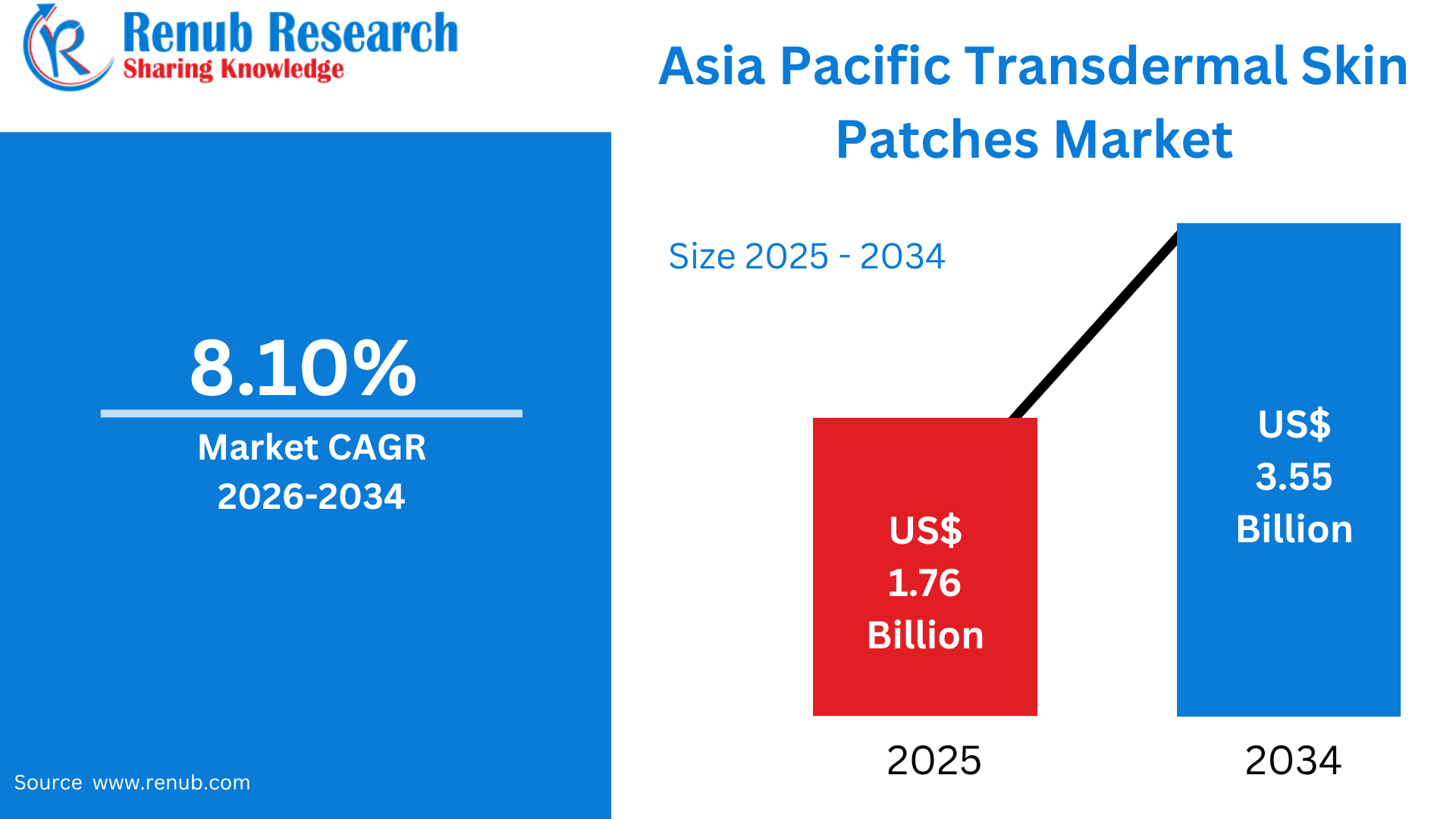
Asia Pacific Transdermal Skin Patches Market is projected to reach US$ 3.55 Billion by 2034, rising from US$ 1.76 Billion in 2025 and expanding at a Compound Annual Growth Rate (CAGR) of 8.1% during 2026–2034. Market growth is being driven by the increasing prevalence of chronic diseases, rapid population aging, and growing consumer preference for convenient, non-invasive drug delivery methods. Transdermal patches offer controlled and sustained drug release while potentially improving treatment adherence and reducing the need for frequent oral medication. Rising healthcare expenditure, expanding access to advanced drug-delivery technologies, and increasing awareness of patient-friendly therapeutic options are further supporting adoption across major Asia Pacific markets.
What are Transdermal Skin Patches and Their Uses & Popularity in Asia Pacific?
Transdermal skin patches are medicated adhesive patches applied to the skin that deliver active pharmaceutical ingredients directly into the bloodstream at a controlled rate over an extended period. Unlike oral tablets or injections, these patches provide non-invasive, painless, and sustained drug delivery, improving patient convenience and medication adherence. Transdermal patches are widely used for pain management, smoking cessation, hormone replacement therapy, cardiovascular diseases, neurological disorders, motion sickness, and overactive bladder treatment. Recent technological advancements, including microneedle patches and smart wearable patches, have further expanded their therapeutic applications.
In Asia Pacific, the popularity of transdermal skin patches is increasing rapidly due to the rising burden of chronic diseases, aging populations, and growing demand for self-administered healthcare solutions. Countries such as China, Japan, India, and South Korea are witnessing greater adoption because patches reduce dosing frequency and improve compliance among elderly patients. Japan’s population aged 65 years and above accounts for approximately 29.3% of the total population, while nearly 95% of older adults in China live with at least one chronic disease, creating substantial demand for long-term drug delivery technologies.
Populations are ageing across the region
Projected percentage of population aged 65 and over in selected countries, 2021‑60
- China: The share of the population aged 65+ is projected to increase from approximately 12.9% in 2021 to 35.5% by 2060.
- India: The population aged 65+ is projected to rise from around 6.6% in 2021 to approximately 17.3% by 2060.
- Korea: South Korea is projected to experience the fastest aging trend, with the 65+ population increasing from about 16.8% in 2021 to approximately 43.5% by 2060.
- Japan: Japan already had the highest proportion of people aged 65+ in 2021, at approximately 29.5%, and this is projected to reach around 37.5% by 2060.
- Asia Pacific: The overall proportion of people aged 65+ is projected to increase from approximately 8% in 2021 to around 20.5% by 2060.
- OECD: The OECD average is projected to rise from approximately 17.5% in 2021 to around 29% by 2060.
- 2025: Aging is expected to accelerate across the region, with Korea reaching about 20%, China approximately 15%, India around 7–8%, and Japan close to 30%.
- 2030: China’s 65+ population share is projected to approach 18%, while Korea is expected to reach approximately 25% and Japan around 31%.
- 2040: Korea and Japan are projected to have roughly 34–35% of their populations aged 65 or older, compared with approximately 26% in China.
- Overall trend: The chart shows a substantial demographic shift toward older populations across Asia Pacific through 2060, increasing demand for healthcare services, chronic disease management, elderly-care solutions, and age-related pharmaceutical products.
Source: UN World Population Prospects (2022), 2022 Revision
Growth Drivers of the Asia Pacific Transdermal Skin Patches Market
Rising Burden of Chronic Diseases Across Asia Pacific
The increasing prevalence of chronic diseases is one of the most significant growth drivers for the Asia Pacific transdermal skin patches market. Conditions such as diabetes, cardiovascular diseases, chronic pain, hypertension, neurological disorders, cancer, and respiratory illnesses require long-term treatment and continuous medication management. Transdermal patches provide a convenient alternative to oral medicines by delivering drugs steadily through the skin, improving therapeutic outcomes and patient compliance. According to health estimates, India reports more than 1.39 million new cancer cases annually, while studies indicate that chronic obstructive pulmonary disease (COPD) prevalence among Indian non-smokers ranges from 1.6% to 26.6%. In South Korea, approximately 20% of adults suffer from two or more chronic diseases, increasing demand for easy-to-use drug delivery methods. Chronic disease management often requires lifelong medication, making sustained-release technologies increasingly important. Additionally, rising incidences of arthritis, chronic pain, cardiovascular disorders, and neurological diseases are creating opportunities for pain relief patches, hormone patches, and Alzheimer’s treatment patches. The growing patient population across Asia Pacific is therefore expected to significantly accelerate the adoption of transdermal drug delivery systems.
Rapid Growth of the Elderly Population
Population aging is a major factor supporting the expansion of transdermal skin patches in Asia Pacific. Elderly patients frequently experience difficulty swallowing pills, managing multiple medications, or adhering to complex treatment schedules. Transdermal patches address these challenges by offering simple, non-invasive, and long-lasting drug administration. Japan has one of the oldest populations globally, with people aged 65 years and above accounting for 29.3% of the total population, while the World Health Organization estimates that approximately 28% of China’s population could be aged 60 years or older by 2040. In India, the number of people aged 60 years and above is expected to reach approximately 139.4 million, creating substantial demand for patient-friendly therapies. Elderly individuals often require long-term treatment for conditions such as pain, hypertension, Alzheimer’s disease, hormone disorders, and cardiovascular diseases. Transdermal patches improve compliance by reducing dosing frequency and minimizing gastrointestinal side effects associated with oral drugs. Consequently, demographic changes across China, Japan, India, and South Korea are expected to remain a strong catalyst for market growth.
Technological Advancements in Drug Delivery Systems
Continuous innovation in transdermal drug delivery technologies is significantly expanding the application scope of skin patches across Asia Pacific. Traditional adhesive patches are evolving into more advanced solutions, including microneedle patches, smart wearable patches, iontophoretic systems, and controlled-release polymer technologies. These innovations improve drug absorption, extend wear duration, and enhance patient comfort. Pharmaceutical companies are increasingly investing in new-generation patches capable of delivering complex molecules, biologics, and targeted therapies. In March 2025, Japan approved Luye Pharma’s Rivastigmine Twice Weekly Transdermal Patch for Alzheimer’s disease, improving dosing convenience and treatment adherence. Additionally, Rohto Pharmaceutical introduced a wearable transdermal neuromodulation patch in China for overactive bladder treatment in 2026. Smart patches integrated with sensors and digital monitoring capabilities are also gaining attention as healthcare systems adopt more personalized and connected treatment approaches. Technological progress is broadening therapeutic applications beyond pain management and nicotine replacement, supporting future growth across neurological, hormonal, cardiovascular, and chronic disease segments.
Challenges of the Asia Pacific Transdermal Skin Patches Market
Skin Irritation and Adhesion-Related Issues
Despite their advantages, transdermal skin patches face challenges related to skin compatibility and adhesive performance. Some patients experience redness, itching, irritation, allergic reactions, or discomfort after prolonged use. These issues can reduce treatment adherence and negatively affect patient satisfaction. Maintaining an optimal balance between strong adhesion and skin comfort remains a technical challenge for manufacturers. The issue is particularly important in Asia Pacific because varying climatic conditions, including high temperatures and humidity, can influence patch performance. Excessive sweating or environmental moisture may reduce adhesion or alter drug release patterns. Elderly patients and individuals with sensitive skin are particularly vulnerable to irritation. Manufacturers are increasingly investing in hypoallergenic adhesives, breathable materials, and advanced polymer technologies to improve user comfort. However, these innovations can increase production costs and regulatory complexity. Continuous product improvement is necessary to ensure reliable performance across diverse environmental conditions and patient groups. Addressing these limitations will remain important for achieving broader adoption of transdermal therapies.
Limited Drug Compatibility and High Development Costs
Another major challenge is that not all pharmaceutical compounds are suitable for transdermal delivery. Effective transdermal drugs must possess specific molecular characteristics, including appropriate size, potency, and skin permeability. Many biologics, large molecules, and complex therapies still face limitations in crossing the skin barrier effectively. This restricts the range of medications that can be delivered through patches compared with oral or injectable formulations. Furthermore, developing transdermal systems requires significant investment in research, formulation science, clinical trials, and manufacturing technologies. Advanced products such as microneedle patches, smart wearable patches, and controlled-release systems involve high production costs and complex regulatory approval processes. Smaller pharmaceutical companies may face barriers to entering the market due to the need for specialized expertise and technology. Product recalls and medication failures related to patch performance can also affect consumer confidence. As manufacturers continue to innovate, balancing technological sophistication, affordability, regulatory compliance, and commercial viability remains a key challenge for the Asia Pacific transdermal skin patches market.
Transdermal Skin Patch Launches in Asia Pacific
- Rivaluen® LA Patch 25.92 mg/51.84 mg – Japan (2025): Luye Pharma received Japanese approval for its twice-weekly rivastigmine transdermal patch for mild-to-moderate Alzheimer’s disease. It was the first extended-release rivastigmine transdermal formulation approved for marketing in Japan.
- ALLYDONE® Patches 27.5 mg and 55 mg – Japan (2023): Teikoku Seiyaku and Kowa Company introduced these transdermal patches in Japan for dementia associated with Alzheimer’s disease, highlighting the expansion of patch-based neurological therapies.
- Roihitsuboko Coin Patch – South Korea (2025): Ildong Pharmaceutical launched this OTC analgesic patch in South Korea in July 2025. Licensed from Japan, the patch uses menthol and salicylate-based ingredients for anti-inflammatory and analgesic effects and is distributed through pharmacies.
- Rheumastop Power Plaster – South Korea (2025): Dongkook Pharmaceutical and Samyang Holdings entered an agreement in August 2025 to expand distribution of the pain-relief and anti-inflammatory plaster through Korean healthcare and pharmacy channels.
- Wearable Neuromodulation Smart Patch for Overactive Bladder – China (2026): Rohto Pharmaceutical announced plans to launch a wearable smart patch-type medical device in China in June 2026. The ankle-worn device uses neuromodulation technology to support bladder function and can be used at home.
- Sino Biopharmaceutical Rivastigmine Transdermal Patch – China (2024): Sino Biopharmaceutical received NMPA approval for a domestically produced rivastigmine patch, representing an important development in China’s neurological transdermal drug-delivery segment.
- Nitto Denko Pharmaceutical-Grade Transdermal Materials – Japan (2023): Nitto Denko introduced additional pharmaceutical-grade transdermal materials in Japan for advanced patch fabrication, supporting the development and manufacturing of next-generation transdermal systems.
- Transdermal Pain-Relief Patch Portfolio Expansion – India: India has experienced increasing availability of imported and locally distributed transdermal patches, particularly in pain-management applications. Imports of transdermal skin patches recorded a 27.21% CAGR between 2020 and 2024, reflecting expanding market activity.
- Smart and Microneedle Patch Technologies – Asia Pacific: Companies across the region are increasingly introducing advanced transdermal platforms incorporating microneedles, smart sensors, and improved adhesives. These technologies aim to provide controlled delivery while improving patient comfort and adherence.
- Luye Pharma Rivastigmine Twice-Weekly Patch Regional Expansion – Japan (2025): Following its Japanese approval, Luye Pharma identified the twice-weekly rivastigmine patch as part of its broader expansion of transdermal products into international markets. The product represents a shift toward less-frequent administration for long-term neurological treatment.
Controlled and Sustained Drug Delivery
The matrix segment represents a fundamental technology in the Asia Pacific transdermal skin patches market, offering controlled and sustained delivery of active pharmaceutical ingredients through the skin. In matrix patches, the drug is uniformly incorporated into a polymeric material and gradually diffuses toward the skin, enabling a consistent release profile over an extended period. The approach is widely favored because of its relatively simple construction, manufacturing flexibility, and lower risk of leakage compared with reservoir-based systems. Rising demand for non-invasive and long-acting treatments is supporting adoption across pain management, hormone replacement, cardiovascular, and neurological therapies. Pharmaceutical manufacturers are investing in advanced polymers and formulation techniques to improve drug permeability, adhesion, stability, and patient comfort. Increasing chronic disease prevalence and medication-adherence requirements are expected to further strengthen the matrix segment.
Growing Demand for Convenient Pain Management
The transdermal skin pain relief patch segment represents a major application area within the Asia Pacific transdermal patches market, supported by increasing demand for convenient, non-invasive approaches to pain management. These products are commonly used for localized and chronic conditions involving arthritis, muscle and joint pain, sports injuries, neuropathic discomfort, and postoperative pain. Population aging across countries such as Japan, China, and South Korea is increasing the prevalence of musculoskeletal disorders and creating greater demand for easy-to-use therapies. OTC availability and expanding pharmacy and retail networks are also improving consumer access. At the same time, pharmaceutical companies are developing patches with improved adhesion, controlled drug release, and skin-friendly formulations. The growing preference for localized therapies that can complement or reduce reliance on oral medication is expected to keep pain relief patches among the most important applications in the regional market.
Increasing Institutional Adoption of Transdermal Therapies
Hospital pharmacies are an important distribution channel for prescription-based transdermal skin patches throughout Asia Pacific. These facilities support the controlled dispensing of patches used for pain management, cardiovascular conditions, neurological disorders, hormone therapy, and other chronic treatments. Their importance is particularly high for patients requiring long-term medication, elderly individuals, and those who may experience difficulties with conventional oral administration. This growth is expected to encourage greater institutional adoption as healthcare providers seek convenient drug-delivery options that can improve adherence and simplify treatment schedules. Hospital pharmacies also provide an established environment for physician-led prescribing, patient education, and monitoring of adverse reactions or skin-related issues. As healthcare infrastructure expands across emerging Asia Pacific economies and chronic disease treatment becomes increasingly long term, hospital pharmacies are expected to remain a significant channel for distributing advanced transdermal therapies.
China High Chronic Disease Burden Supporting Long-Term Drug Delivery
China’s transdermal skin patches market is expanding rapidly, supported by the country’s substantial chronic disease burden and rapidly aging population. According to the National Council on Aging, approximately 95% of older adults in China have at least one chronic disease, while around 80% live with two or more chronic conditions. This high prevalence of multimorbidity is increasing demand for convenient and sustained drug delivery systems that can simplify long-term treatment. Transdermal patches provide controlled drug release and can reduce dosing frequency, making them particularly suitable for elderly patients managing multiple medications. Growing healthcare modernization, expansion of hospital services, and increasing investment in advanced pharmaceutical technologies are further supporting adoption. Demand is also rising for patches used in pain management, neurological disorders, cardiovascular conditions, and other chronic therapies. Pharmaceutical companies are increasingly focusing on innovative formulations and wearable delivery technologies, strengthening China’s position as a major growth market for transdermal drug delivery solutions across the Asia Pacific region.
Japan's Aging Population Driving Adoption of Patch-Based Therapies
Japan represents one of the most attractive markets for transdermal skin patches because of its exceptionally high proportion of elderly citizens. According to the Statistics Bureau of Japan’s Ministry of Internal Affairs and Communications, people aged 65 years and above account for 29.3% of the country’s total population, representing the highest share globally. This demographic structure is generating strong demand for convenient, simple, and non-invasive drug delivery technologies for chronic disease management. Transdermal patches are particularly valuable for older patients because they can provide sustained medication release while reducing the frequency of administration and potentially improving treatment adherence. Applications include pain management, cardiovascular therapies, hormone treatment, neurological disorders, and Alzheimer’s disease. Japan’s sophisticated healthcare infrastructure, high pharmaceutical expenditure, strong patient awareness, and established pharmaceutical industry further support market development. Continued innovation in controlled-release formulations, wearable technologies, and next-generation patches is expected to strengthen the country’s role as a major contributor to Asia Pacific transdermal skin patch market growth.
India Rising Chronic Disease Prevalence Creating Market Opportunities
India’s transdermal skin patches market is expanding as the country experiences a growing burden of chronic and lifestyle-related diseases. Rapid urbanization, sedentary lifestyles, dietary changes, and an expanding aging population are contributing to increasing prevalence of conditions such as diabetes, hypertension, cardiovascular diseases, and chronic pain. These trends are encouraging greater interest in convenient and non-invasive drug delivery technologies that can support treatment adherence and reduce the burden associated with frequent oral medication. India’s large population and expanding middle class provide a substantial consumer base for advanced pharmaceutical products. Government initiatives aimed at improving healthcare access, increasing insurance coverage, and strengthening domestic pharmaceutical manufacturing are also supporting market development. In addition, India has established itself as a major global pharmaceutical manufacturing hub, creating opportunities for cost-effective production of transdermal delivery systems. Growing investment in research, formulation technologies, and patient-friendly drug delivery solutions is expected to further increase adoption of transdermal patches across hospitals, pharmacies, and emerging online healthcare channels.
South Korea Multimorbidity and Healthcare Innovation Supporting Market Expansion
South Korea’s transdermal skin patches market is benefiting from a significant chronic disease burden, population aging, and strong adoption of advanced healthcare technologies. According to research released by the Korea Disease Control and Prevention Agency (KDCA), one in five South Korean adults has at least two chronic diseases, including diabetes, high blood pressure, and high cholesterol. The growing prevalence of multimorbidity is creating demand for convenient drug delivery solutions that can simplify long-term treatment and reduce dependence on multiple daily oral medications. Transdermal patches can provide controlled and sustained drug release, making them attractive for chronic therapies and pain management. South Korea also has a highly developed healthcare system, advanced pharmaceutical research capabilities, and strong technological expertise in medical devices and digital healthcare. These factors encourage manufacturers to develop innovative patch technologies, including wearable and smart drug delivery systems. Rising healthcare expenditure, increasing awareness of patient-centric therapies, and continued pharmaceutical innovation are expected to support sustained growth in the South Korean transdermal skin patches market.
Asia Pacific Transdermal Skin Patches Market Segmentation
Type
- Matrix
- Reservoir
- Drug-in-Adhesive
- Other Types
Application
- Pain Relief
- Smoking Reduction and Cessation Aid
- Overactive Bladder
- Hormonal Therapy
- Others
Distribution Channel
- Hospital Pharmacies
- Retail Pharmacies
- Online Pharmacies
Countries
- China
- Japan
- India
- South Korea
- Thailand
- Malaysia
- Indonesia
- Australia
- New Zealand
- Rest of Asia Pacific
All companies have been covered with 5 Viewpoints
- Overviews
- Key Person
- Recent Developments
- SWOT Analysis
- Revenue Analysis
Company Analysis:
- Teva Pharmaceutical Industries Ltd
- 3M Company
- Nitto Denko Corporation
- Johnson & Johnson
- Luye Pharma Group
- Bayer AG
- Novartis AG
- Beiersdorf AG
- Viatris Inc.
- Abbott Laboratories
Report Details:
| Report Features | Details |
| Base Year |
2025 |
| Historical Period |
2022 - 2025 |
| Forecast Period |
2026 - 2034 |
| Market |
US$ Billion |
| Segment Covered |
Product Type, Lead Type, End User and Countries |
| Countries Covered |
|
| Companies Covered |
|
| Customization Scope |
20% Free Customization |
| Post-Sale Analyst Support |
1 Year (52 Weeks) |
| Delivery Format |
PDF and Excel through Email (We can also provide the editable version of the report in PPT/Word format on request) |
Customization Services available
- Analysis of Market Size and Its Segments
- More Company Profiles (Upto 10 without any additional cost):
- Additional Countries (Other than mentioned Countries):
- Region/Country Specific Reports:
- Market Entry Strategy:
- Region-Specific Market Dynamics:
- Regional Market Share Analysis:
- Trade Analysis:
- Production Insights:
- Others Customized Requests:
For more information contact our analysts.
Need More Assistance?
- Talk to our analysts to get more precious information on the current market trends.
- Include more countries and segments and customize the report based on the final requirement.
- Get a competitive advantage in your industry by knowing the report findings and making a positive impact on your revenues and operations.
- Our analysts are always ready to provide more help and pertinent information if you need any additional assistance.