Adult Vaccines Market Report by Disease wise (Influenza, Cervical Cancer (HPV), Zoster (Shingles), MMR (Measles, Mumps, and Rubella Vaccine), Pneumococcal, Meningococcal, Hepatitis, Tdap, Travel and Miscellaneous, Varicella) and Countries and Companies Analysis 2026-2034
Buy NowGlobal Adult Vaccines Market Size and Forecast
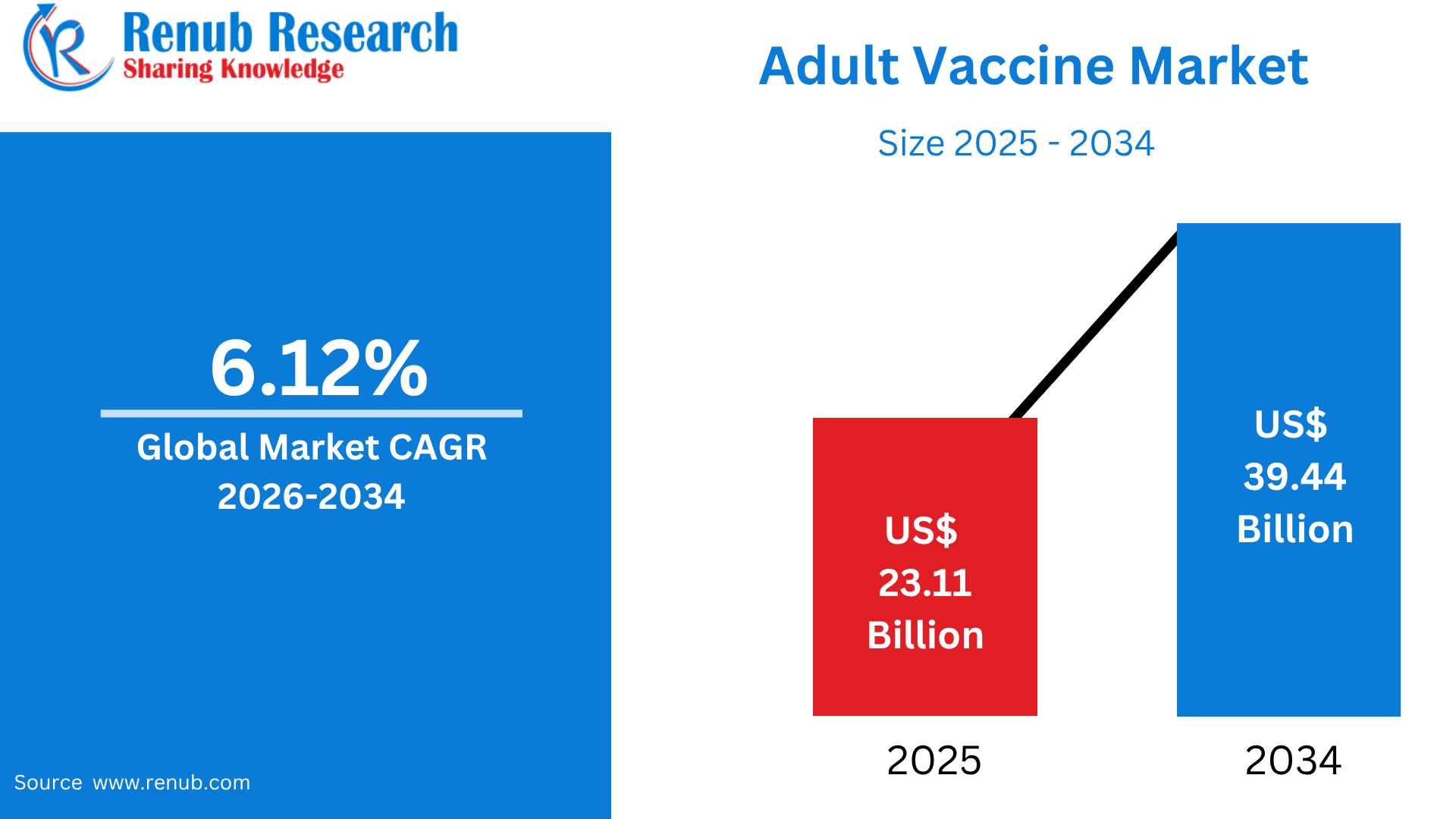
The Global Adult Vaccines Market is projected to expand from US$ 23.11 billion in 2025 to US$ 39.44 billion by 2034, registering a CAGR of 6.12% during 2026–2034. Market growth is supported by increasing awareness of preventive healthcare, expanding adult immunization initiatives, and the rising burden of vaccine-preventable infectious diseases. The growing aging population is also strengthening demand for vaccines targeting influenza, pneumococcal disease, herpes zoster, respiratory syncytial virus (RSV), and other age-related health risks.
What Are Adult Vaccines? Uses and Popularity Worldwide
Adult vaccines are immunization products designed to protect adolescents and adults against infectious diseases and to maintain or restore immunity that may decline with age. They include vaccines for influenza, COVID-19, pneumococcal disease, herpes zoster, respiratory syncytial virus (RSV), hepatitis, tetanus, HPV, and other vaccine-preventable conditions. Adult vaccination is increasingly important as populations age and chronic diseases increase susceptibility to severe infections. WHO reported that adults aged 65 and older now outnumber children under five globally, with nearly 1 billion people expected to be in this age group by 2030.
Adult vaccines are widely used in hospitals, clinics, pharmacies, workplaces, travel-health centers, and community immunization programs to prevent disease, hospitalization, complications, and premature mortality. Their popularity has increased following the COVID-19 pandemic, which demonstrated the importance of adult immunization programs. By the end of 2023, more than 13.6 billion COVID-19 vaccine doses had been administered worldwide, reaching 89% of health workers and 84% of older adults. Overall, WHO estimates that immunization prevents 3.5–5 million deaths annually, reinforcing vaccines as a critical component of global preventive healthcare.
Adult Vaccines Companies Pipeline Worldwide
1. Moderna – mRNA-1647
- Focus Area: Cytomegalovirus (CMV) prevention, particularly in transplant recipients.
- Development Stage: Phase II for the transplant-recipient program. Moderna discontinued the congenital CMV development program but continues evaluating mRNA-1647 in an ongoing Phase II study involving bone-marrow transplant patients.
2. Moderna – mRNA-1083
- Focus Area: Combination vaccine targeting seasonal influenza and COVID-19 in adults.
- Development Stage: Regulatory review. The application has been under review by the European Medicines Agency, while Moderna has also pursued regulatory submissions in other markets.
3. Pfizer – ABRYSVO
- Focus Area: Prevention of respiratory syncytial virus (RSV) disease in adults, including older and higher-risk populations.
- Development Stage: Approved / Indication Expansion. ABRYSVO is one of three FDA-licensed RSV vaccines available for adults in the United States.
4. GSK – AREXVY
- Focus Area: RSV prevention among older adults and adults at increased risk of severe RSV disease.
- Development Stage: Approved / Regulatory Expansion. FDA approvals have expanded AREXVY’s use, including adults aged 18–59 at increased risk and immunocompromised individuals aged 18 and older in specific populations.
5. Moderna – mRNA-1010
- Focus Area: Seasonal influenza prevention in adults.
- Development Stage: Regulatory submissions / potential approvals. Moderna has completed submissions in several markets and has expected regulatory decisions beginning in 2026.
6. Sanofi – RSV + hMPV Combination Vaccine
- Focus Area: Combined protection against respiratory syncytial virus (RSV) and human metapneumovirus (hMPV).
- Development Stage: Clinical development. The program is intended to broaden protection against important respiratory viruses and represents an emerging area of adult vaccine innovation.
7. Pfizer and Valneva – VLA15
- Focus Area: Prevention of Lyme disease, particularly for populations at risk of exposure to Borrelia burgdorferi.
- Development Stage: Late-stage clinical development. The program represents one of the leading efforts to develop a vaccine against Lyme disease for broader population use.
8. Moderna – mRNA-1403
- Focus Area: Prevention of norovirus infection and associated gastroenteritis.
- Development Stage: Phase III. Moderna’s current pipeline identifies mRNA-1403 as a Phase III norovirus vaccine candidate, with the study enrolling participants across additional seasons to support the clinical readout.
9. CureVac and GSK – H5N1 mRNA Vaccine
- Focus Area: Pandemic preparedness and protection against avian influenza H5N1.
- Development Stage: Early clinical development. The program reflects increasing industry investment in mRNA platforms that can potentially support rapid responses to emerging influenza threats.
10. Moderna – mRNA-1189 / mRNA-1195
- Focus Area: Epstein–Barr virus (EBV) prevention, including infectious mononucleosis and potential long-term EBV-related complications.
- Development Stage: Phase II. Moderna currently lists mRNA-1189 and mRNA-1195 as Phase II programs addressing different EBV-related objectives.
Growth Drivers of the Global Adult Vaccines Market
Aging Population and Rising Burden of Vaccine-Preventable Diseases
The rapid aging of the global population is one of the strongest structural drivers of the adult vaccines market. Older adults generally face a higher risk of severe complications from influenza, pneumococcal disease, RSV, herpes zoster, and other infections because immune function declines with age and chronic conditions become more common. WHO reported in 2025 that adults aged 65 and older had already surpassed the number of children under five worldwide, while nearly 1 billion people are expected to belong to this age group by 2030. This demographic shift is increasing demand for vaccination throughout the adult life course rather than limiting immunization primarily to childhood. WHO recommends vaccines such as influenza, COVID-19, pneumococcal, tetanus, and RSV for different adult population groups. However, coverage remains uneven, creating significant room for market expansion. Seasonal influenza alone causes an estimated 3–5 million severe cases and up to 650,000 deaths annually worldwide. As governments and healthcare providers increasingly focus on healthy aging, preventing hospitalization and maintaining productivity, demand for adult immunization is expected to rise substantially.
Expansion of Government Immunization Programs and Preventive Healthcare
The expansion of national vaccination policies and greater emphasis on preventive healthcare are accelerating adult vaccine adoption worldwide. Governments are increasingly recognizing that immunization should continue throughout the life course, particularly for older adults, healthcare workers, pregnant women, travelers, and people with underlying risk factors. WHO’s 2025 assessment found that 94% of 194 Member States reported COVID-19 vaccination for older adults, while 59% reported seasonal influenza vaccination and 17% reported pneumococcal vaccination within national programs. Although substantial gaps remain, these figures demonstrate the expanding institutional focus on adult immunization. The economic benefits also support greater investment: a recent health-economic assessment cited by WHO found that scaling up influenza, RSV, herpes zoster, and pneumococcal vaccination programs in 10 high- and upper-middle-income countries could generate returns of up to 19 times the initial investment. Pharmaceutical companies and healthcare providers are therefore benefiting from increased government procurement, pharmacy-based vaccination, workplace programs, and public awareness campaigns. Continued implementation of life-course immunization strategies is expected to strengthen adult vaccine demand.
Vaccine Innovation and Expansion of Adult Vaccine Applications
Technological advancements in vaccine development and the introduction of new products are creating additional growth opportunities in the adult vaccines market. The COVID-19 pandemic accelerated vaccine research, manufacturing capacity, regulatory pathways, and public familiarity with adult immunization. More than 13.6 billion COVID-19 vaccine doses had been administered globally by the end of 2023, demonstrating that large-scale adult vaccination can be rapidly implemented when healthcare systems, governments, and manufacturers coordinate effectively. Innovation is now extending beyond COVID-19 toward vaccines targeting RSV, herpes zoster, influenza, pneumococcal disease, tuberculosis, and combinations of respiratory infections. WHO notes that new vaccines under development are broadening target populations beyond childhood, including next-generation tuberculosis vaccines and vaccines designed to address multiple respiratory viruses. The availability of newer vaccines also creates opportunities to improve protection among older adults and high-risk populations. As vaccine platforms, formulations, delivery systems, and manufacturing technologies continue to evolve, the adult vaccines market is expected to benefit from an expanding product pipeline and wider clinical applications.
Challenges of the Global Adult Vaccines Market
Unequal Access and Low Adult Vaccination Coverage
Unequal access to adult vaccination remains a major challenge, particularly across low- and middle-income countries. While high-income countries have established adult immunization programs through hospitals, pharmacies, primary-care facilities, and national health systems, many lower-income countries continue to prioritize childhood vaccination. WHO reported that adult vaccination remains an overlooked area in many low- and middle-income countries, with millions of adults lacking access to recommended vaccines. Influenza vaccination illustrates this disparity: only 4% of low-income countries offer influenza vaccination to pregnant women and 8% offer it to older adults, compared with 87% and 89%, respectively, among high-income countries. Limited healthcare infrastructure, inadequate cold-chain capacity, financing constraints, shortages of healthcare professionals, and geographic barriers can restrict vaccine availability. These disparities reduce potential market penetration and create uneven demand across regions. Expanding financing mechanisms, pharmacy-based vaccination, community outreach, and integrated primary-care services will be important for improving adult vaccine access and unlocking opportunities in underserved markets.
Vaccine Hesitancy, Awareness Gaps, and Implementation Barriers
Vaccine hesitancy and insufficient awareness among adults can limit vaccination uptake even when products are available. Unlike childhood immunization, adult vaccination often depends on individuals recognizing their own risk, receiving recommendations from healthcare professionals, and actively seeking vaccination. This creates additional behavioral and communication challenges for manufacturers and healthcare systems. Global vaccination data also demonstrate persistent gaps: WHO reported that 13.5 million children received no vaccines in 2025, highlighting broader weaknesses in immunization access and confidence that can affect vaccination systems across the life course. Adult programs also face operational barriers, including limited physician recommendations, fragmented healthcare delivery, inadequate vaccination records, affordability concerns, and difficulties reaching older or high-risk populations. In many countries, national immunization schedules still provide limited adult-specific recommendations. WHO’s 2023 data showed that only 59% of Member States reported seasonal influenza vaccination for older adults and just 17% reported pneumococcal vaccination. Improving public education, strengthening healthcare-provider recommendations, simplifying access through pharmacies and primary-care centers, and integrating adult vaccination into routine healthcare can help overcome these barriers.
Top Adult Vaccine Launches Worldwide
1. Pfizer – ABRYSVO Expanded Adult Indication
- Focus Area: RSV prevention in adults aged 18–59 who are at increased risk of RSV-related lower respiratory tract disease.
- Launch/Approval Date: October 22, 2024
- Significance: The U.S. FDA expanded ABRYSVO’s indication to high-risk adults aged 18–59, broadening its existing adult RSV indication.
2. Pfizer – ABRYSVO European Expanded Approval
- Focus Area: Prevention of RSV-related lower respiratory tract disease in additional adult populations.
- Launch/Approval Date: April 1, 2025
- Significance: The expanded European authorization strengthened Pfizer’s presence in the growing adult RSV vaccination market.
3. GSK – AREXVY Expanded U.S. Approval
- Focus Area: RSV prevention in adults aged 50–59 who are at increased risk.
- Launch/Approval Date: June 7, 2024
- Significance: FDA approval expanded AREXVY beyond adults aged 60 and older. More than 13 million U.S. adults aged 50–59 have medical conditions associated with increased risk of severe RSV outcomes.
4. GSK – AREXVY European Expanded Approval
- Focus Area: RSV prevention among high-risk adults aged 50–59.
- Launch/Approval Date: August 29, 2024
- Significance: The expansion supported broader access to RSV vaccination among younger high-risk adult populations in Europe.
5. Moderna – mRNA-1083 Combination Vaccine Program
- Focus Area: Combined protection against seasonal influenza and COVID-19.
- Launch/Development Update: June 10, 2024
- Significance: The combination-vaccine program represents Moderna’s strategy to simplify adult immunization by providing protection against two important respiratory diseases through a single vaccine.
6. Moderna – mRESVIA
- Focus Area: Prevention of RSV lower respiratory tract disease in older adults.
- Launch/Approval Date: May 2024
- Significance: mRESVIA became Moderna’s first FDA-approved vaccine, expanding the company’s presence in the adult respiratory vaccine segment. FDA identifies mRESVIA alongside ABRYSVO and AREXVY as an FDA-approved RSV vaccine for adults aged 60 and older.
7. Sanofi – Novavax–Sanofi COVID-19 Vaccine Commercialization
- Focus Area: COVID-19 vaccination and development of next-generation respiratory vaccine combinations.
- Launch/Commercialization Date: May 10, 2024
- Significance: The collaboration strengthened Sanofi’s respiratory vaccine portfolio and supported the development and commercialization of innovative COVID-19 vaccine solutions.
8. GSK – AREXVY Long-Term Protection Program
- Focus Area: Evaluating sustained, multi-season protection against RSV in adults.
- Development Update: October 8, 2024
- Significance: Long-term protection research is important for determining future revaccination strategies and supporting the continued use of RSV vaccines among older and high-risk adults.
9. Pfizer – ABRYSVO Adult Recommendation Expansion
- Focus Area: Expansion of recommendations for RSV vaccination among eligible adult populations.
- Update Date: April 16, 2025
- Significance: Changes in immunization recommendations can substantially influence adult vaccine adoption by increasing awareness and improving access through healthcare providers and vaccination programs. ABRYSVO is currently FDA-indicated for adults aged 60 and older and high-risk adults aged 18–59.
10. GSK – AREXVY Expanded Regulatory Filing
- Focus Area: RSV prevention among younger adults at increased risk of severe disease.
- Regulatory Update: July 14, 2025
- Significance: The filing reflects GSK’s continuing strategy to broaden AREXVY’s eligible adult population. The vaccine’s U.S. indication now covers adults aged 18–59 who are at increased risk, in addition to adults aged 60 and older.
Rising Booster Requirements and Maternal Immunization
Tdap adult vaccines market is expanding as healthcare systems place greater emphasis on maintaining protection against tetanus, diphtheria, and pertussis among adults. In the United States, the CDC recommends one Tdap dose for adults who have never previously received it, followed by Td or Tdap every 10 years to maintain protection against tetanus and diphtheria. Pregnant women are recommended to receive Tdap during every pregnancy, preferably between 27 and 36 weeks of gestation, making maternal immunization an important recurring demand segment. CDC data indicate that Tdap vaccination during pregnancy can reduce the risk of whooping cough in infants younger than two months by approximately 78%, strengthening adoption among expectant mothers. Demand is also supported by vaccination of healthcare personnel and adults with close contact with infants. Growing pertussis activity, preventive-health awareness, workplace vaccination programs, and improved access through pharmacies and healthcare providers are expected to sustain market growth.
Outbreak Prevention, Travel, and High-Risk Adult Vaccination
The meningococcal adult vaccines market is gaining momentum as governments and healthcare organizations strengthen protection against meningococcal disease, particularly among defined high-risk groups. Neisseria meningitidis includes 12 identified serogroups, with A, B, C, W, X, and Y responsible for disease and epidemics. Adult vaccination is particularly relevant for travelers visiting areas with elevated disease risk, laboratory personnel, individuals with certain immunodeficiencies, and populations exposed during outbreaks. WHO identifies vaccination as the principal strategy for controlling meningococcal epidemics and highlights the association between mass gatherings such as the Hajj and potential international dissemination of meningococcal disease. Demand is further supported by travel medicine, military vaccination programs, university health requirements, and outbreak-response campaigns. Pharmaceutical companies are also pursuing vaccines offering broader serogroup coverage, while improvements in surveillance and rapid immunization responses are creating additional opportunities for adult meningococcal vaccine adoption worldwide.
Expanding Adult Immunization and Liver-Disease Prevention
The hepatitis adult vaccines market is supported by continued efforts to prevent hepatitis A and B infections and their potentially severe liver-related complications. Adult immunization has become increasingly important for healthcare personnel, travelers, people with specific medical risk factors, and individuals requiring protection because of occupational or behavioral exposure. The United States, for example, includes both hepatitis A and hepatitis B vaccines within its adult immunization framework, with vaccination recommendations varying according to age, risk factors, occupation, travel, and medical conditions. Rising awareness of liver health and preventive medicine is encouraging adults to seek vaccination outside traditional childhood immunization programs. Healthcare providers, pharmacies, travel clinics, and occupational-health programs are consequently becoming important distribution channels. Combination hepatitis vaccines also improve convenience by reducing the number of separate vaccinations required. Continued government investment in immunization, disease-elimination strategies, improved healthcare infrastructure, and broader vaccine availability is expected to support sustained expansion of the global adult hepatitis vaccine market.
Strong Healthcare Infrastructure and Expanding Adult Immunization in United States
The United States adult vaccines market remains one of the most developed worldwide, supported by extensive healthcare infrastructure, established immunization recommendations, insurance coverage, pharmacy-based vaccination, and significant pharmaceutical innovation. The CDC’s 2025 adult schedule covers a broad portfolio, including influenza, Tdap/Td, pneumococcal, shingles, hepatitis, meningococcal, and RSV vaccines. However, substantial room for market expansion remains because vaccination coverage is still below recommended levels for several adult vaccines. CDC’s 2024 data show pneumococcal vaccination coverage of 64.7% among adults aged 65 years and older, while herpes zoster vaccination coverage among adults with an indication reached 41.7%. Product innovation is also strengthening the market. In October 2024, Pfizer’s ABRYSVO received FDA approval for adults aged 18–59 at increased risk of RSV-related lower respiratory tract disease. The expansion of RSV vaccination into younger high-risk populations demonstrates the increasing breadth of the adult vaccine market.
Germany Preventive Healthcare and Structured Immunization Policies
Germany represents an important European adult vaccines market, supported by comprehensive healthcare coverage and a well-established national immunization framework. The Standing Committee on Vaccination (STIKO) at the Robert Koch Institute regularly updates recommendations covering adult vaccination against diseases such as influenza, hepatitis, pneumococcal disease, meningococcal disease, herpes zoster, and other vaccine-preventable infections. Germany’s aging population is particularly relevant to demand for vaccines targeting older adults and people with underlying health conditions. For example, STIKO recommends a one-time RSV vaccination for everyone aged 75 years and older, while certain adults aged 60–74 with serious underlying conditions or living in nursing facilities are also recommended for vaccination. Growing awareness of preventive healthcare, stronger focus on protecting older populations, and continuing vaccine innovation are creating opportunities for market expansion. Increasing availability of adult vaccination through physicians and healthcare providers is also supporting broader adoption.
India Growing Awareness and Expansion Beyond Childhood Immunization
The India adult vaccines market is transitioning from a predominantly childhood-focused immunization model toward broader life-course vaccination. Increasing awareness of preventive healthcare, longer life expectancy, rising chronic-disease prevalence, healthcare professional recommendations, and greater availability through private hospitals are supporting demand for adult vaccines. Hepatitis B, influenza, pneumococcal, Tdap, HPV, and other vaccines are gaining greater attention among high-risk adults, healthcare personnel, older individuals, and travelers. India’s expanding hospital and private healthcare networks are improving access, although differences between urban and rural healthcare infrastructure remain a constraint. Corporate healthcare programs and specialized adult-vaccination centers are also creating new distribution opportunities. The country’s large pharmaceutical manufacturing base provides an additional advantage by supporting domestic vaccine production and potentially improving affordability and supply security. Partnerships between hospitals and vaccine manufacturers are further raising awareness. The overall market is therefore benefiting from a gradual shift toward preventive, life-course healthcare, although affordability, awareness gaps, and uneven access continue to limit comprehensive adult vaccination coverage.
Hajj, Preventive Healthcare, and Vision 2030
Saudi Arabia adult vaccines market is supported by government-led preventive healthcare initiatives, international travel, and the country’s unique requirement to manage infectious-disease risks associated with large religious gatherings. Meningococcal vaccination is particularly important because mass gatherings such as the Hajj can facilitate international transmission of meningococcal disease, making vaccination a key component of pilgrimage health protection. The country’s adult vaccination landscape also includes influenza, hepatitis, pneumococcal, and other vaccines for specific risk groups. Saudi Arabia’s broader healthcare transformation under Vision 2030 is increasing emphasis on prevention, digital health, healthcare accessibility, and local pharmaceutical manufacturing. Investments in domestic vaccine and pharmaceutical production are intended to strengthen supply resilience and reduce dependence on imports. Rising healthcare expenditure, an expanding modern healthcare infrastructure, and increasing awareness of preventive medicine are expected to support adult vaccine adoption. Together, mandatory or recommended vaccination for specific travel and pilgrimage groups, government health initiatives, and localization of pharmaceutical manufacturing provide a strong foundation for long-term market growth.
Adult Vaccine Market Segments
Disease wise – Adult Vaccines Market
- Influenza
- Cervical Cancer (HPV)
- Zoster (Shingles)
- MMR (Measles, Mumps, and Rubella Vaccine)
- Pneumococcal
- Meningococcal
- Hepatitis
- TdaP
- Travel and Miscellaneous
- Varicella
Disease wise – Numbers of Vaccinated Adults
- Influenza
- Cervical Cancer (HPV)
- Zoster (Shingles)
- MMR
- Pneumococcal
- Meningococcal
- Hepatitis
- TdaP
- Varicella
Countries
North America
- United States
- Canada
Europe
- France
- Germany
- Italy
- Spain
- United Kingdom
- Belgium
- Netherlands
- Turkey
Asia Pacific
- China
- Japan
- India
- Australia
- South Korea
- Thailand
- Malaysia
- Indonesia
- New Zealand
Latin America
- Brazil
- Mexico
- Argentina
Middle East & Africa
- South Africa
- Saudi Arabia
- United Arab Emirates
All companies have been covered with 5 Viewpoints
- Overviews
- Key Person
- Recent Developments
- SWOT Analysis
- Revenue Analysis
Key Players Analysis
- GlaxoSmithKline, plc.
- AstraZeneca plc
- Sanofi Pasteur
- Pfizer, Inc.
- CSL Limited
Report Details:
| Report Features | Details |
| Base Year |
2025 |
| Historical Period |
2022 - 2025 |
| Forecast Period |
2026 - 2034 |
| Market |
US$ Billion |
| Segment Covered |
Disease wise and Countries |
| Countries Covered |
|
| Companies Covered |
|
| Customization Scope |
20% Free Customization |
| Post-Sale Analyst Support |
1 Year (52 Weeks) |
| Delivery Format |
PDF and Excel through Email (We can also provide the editable version of the report in PPT/Word format on request) |
Customization Services available
- Analysis of Market Size and Its Segments
- More Company Profiles (Upto 10 without any additional cost):
- Additional Countries (Other than mentioned Countries):
- Region/Country Specific Reports:
- Market Entry Strategy:
- Region-Specific Market Dynamics:
- Regional Market Share Analysis:
- Trade Analysis:
- Production Insights:
- Others Customized Requests:
For more information contact our analysts.
Need More Assistance?
- Talk to our analysts to get more precious information on the current market trends.
- Include more countries and segments and customize the report based on the final requirement.
- Get a competitive advantage in your industry by knowing the report findings and making a positive impact on your revenues and operations.
- Our analysts are always ready to provide more help and pertinent information if you need any additional assistance.