United States Wine Cooler Market Report by Product, Type, Price Range, Distribution channel, States and Company Analysis 2026-2034
Buy NowUnited States Wine Cooler Market Size and Forecast 2026-2034
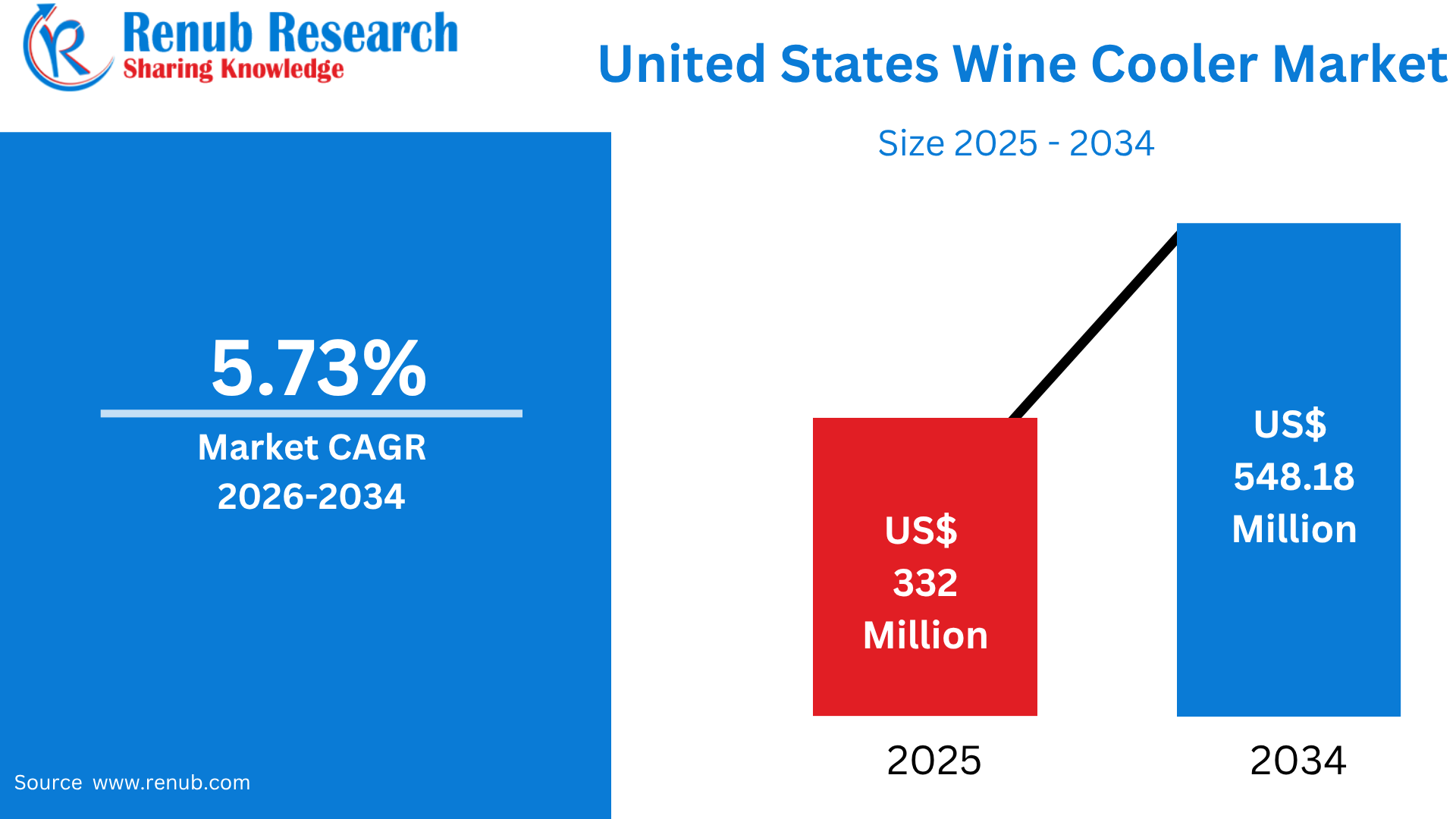
United States Wine Cooler Market is expected to reach US$ 548.18 Million by 2034 from US$ 332 Million in 2025, with a CAGR of 5.73% from 2026 to 2034. Rising U.S. wine consumption, expanding home entertainment culture, and growing demand for smart, energy-efficient appliances are key drivers, supported by innovations such as app-connected wine coolers and new product launches enhancing accessibility and consumer convenience.
United States Wine Cooler Industry Overview
A wine cooler is a specialized appliance designed to store wine at optimal temperature and humidity levels to preserve its flavor, aroma, and quality. Unlike standard refrigerators, wine coolers maintain consistent conditions ideal for aging and serving different wine varieties. They often include features such as dual-zone cooling, UV-protected glass doors, vibration reduction, and adjustable shelving for bottles of various shapes. Modern wine coolers come in freestanding, built-in, and thermoelectric formats, making them suitable for homes, restaurants, and entertainment spaces. As wine appreciation grows, these appliances offer both convenience and proper care for maintaining a curated wine collection.
The U.S. wine cooler market is growing due to increasing interest in wine culture, home entertaining, and premium kitchen appliances. Consumers are investing more in proper wine storage to maintain taste and quality, especially as at-home consumption becomes more common. Rising adoption of smart home technology also supports demand for wine coolers with digital controls, energy-efficient systems, and app connectivity. Interior design trends favoring built-in and integrated appliances further boost market momentum. Additionally, greater product variety—from compact units to luxury multi-zone models—allows consumers across different lifestyles and budgets to find suitable storage solutions, strengthening overall market expansion.
Recent Developments in United States Wine Cooler Market
- In November 2024, Dacor — a subsidiary of Samsung Electronics America — introduced a new under-counter line of luxury kitchen appliances. This collection includes advanced beverage refrigeration and wine cellar formats. The wine cellar is equipped with dual-temperature zones, precision rails, and Dacor’s proprietary GlideRack system made from high-end oak wood, designed to provide premium protection and smooth access for wine storage.
- In January 2023, Samsung Electronics unveiled its “Bespoke Infinite Line” column refrigerator series. The range features a combined 805-liter capacity across its fridge and freezer units, while the integrated wine cellar offers storage for up to 101 bottles, complementing the line’s premium modular and customizable kitchen design philosophy.
Growth Drivers for the United States Wine Cooler Market
Rising Wine Consumption and Home Entertainment
Increasing wine consumption across the United States is a major driver of the wine cooler market. As wine becomes an integral part of social gatherings, consumers are investing in dedicated storage appliances to maintain quality and flavor. The growth of home entertainment culture, including wine tasting events and private collections, further boosts demand. Wine coolers provide precise temperature and humidity control, which is essential for preserving different wine varieties. This trend is reinforced by the premiumization of wine consumption and lifestyle upgrades among households.
A strong example of this trend is the November 2024 launch of TCL’s WC18L1S display wine cooler, designed for home entertainment with LED lighting and aesthetic display features, aligning with consumer demand for both functionality and style.
Smart & Advanced Appliance Integration
Technological innovation is significantly transforming the wine cooler market. Modern appliances now feature smart connectivity, app-based controls, dual-zone cooling, and energy-efficient thermoelectric systems. These features allow users to monitor and adjust storage conditions remotely, ensuring optimal preservation of wine. The integration of wine coolers into smart home ecosystems has increased their appeal among tech-savvy consumers. Additionally, sleek designs and premium finishes make them desirable lifestyle appliances rather than purely functional devices.
Supporting this trend, LG launched its SIGNATURE 65-bottle smart wine cellar in 2023, incorporating UV protection, humidity control, and premium design, showcasing the shift toward intelligent and luxury wine storage solutions.
E-Commerce Expansion and Product Accessibility
The rapid growth of e-commerce is transforming the U.S. wine cooler market by improving product accessibility, price transparency, and consumer reach. Online platforms allow buyers to compare models, read reviews, and access advanced features that may not be available in physical stores. This is particularly beneficial in regions with limited specialty appliance outlets. Manufacturers are increasingly adopting direct-to-consumer strategies, leveraging digital channels to promote innovative designs and smart features.
A notable example is the 2026 launch of the “Porta” rechargeable cordless smart wine cooler, designed for online-first distribution through major crowdfunding and e-commerce platforms. The unit features portable, rechargeable cooling technology and app-connected temperature control, making it ideal for modern consumers seeking flexibility and smart functionality. This digital-first rollout highlights how online ecosystems support rapid market reach and drive interest in next-generation wine cooling solutions.
Challenges in the United States Wine Cooler Market
High Initial Costs & Consumer Prioritization
The high upfront cost of wine coolers remains a key barrier to market growth. Premium models with dual-zone cooling, smart connectivity, and built-in designs can be expensive, limiting adoption among middle-income consumers. Many households consider wine coolers a luxury rather than a necessity, prioritizing essential appliances instead. Additionally, limited awareness about the benefits of specialized wine storage compared to traditional refrigeration further slows adoption. Space constraints in urban homes also restrict demand for larger units. Although entry-level and countertop models are becoming more affordable, cost sensitivity continues to challenge widespread penetration, particularly during economic uncertainty when discretionary spending declines.
Changing Beverage Preferences & Market Dependence
Another emerging challenge is the rising consumer avoidance of ultra-processed foods. Many soup products—especially canned, instant, and dehydrated varieties—are often associated with artificial additives, preservatives, and flavor enhancers. This perception reduces appeal among health-conscious consumers seeking fresher, more natural alternatives.
As clean-label trends continue to gain momentum, demand shifts toward refrigerated, organic, and minimally processed soups. This shift forces traditional brands to revisit formulation strategies, update ingredient sourcing, and adjust production processes to meet evolving expectations. Companies that rely heavily on long shelf-life products may struggle to adapt quickly, creating competitive pressure and potentially reducing market share in segments resistant to ultra-processed foods.
California Wine Cooler Market
California dominates the U.S. wine landscape, generating around $84.51 billion in total economic activity from wine production, distribution, sales, and tourism. The state hosts over 4,600 wineries and 570,000 acres of vineyards, making it a pivotal market for both wine and related appliances like wine coolers. Consumers and premium homes in California often invest in wine storage solutions, driven by a strong culture of wine appreciation and cellar building. Despite recent industry challenges, including declining volumes in some segments, the state’s deep wine ecosystem continues to support wine accessory demand, particularly in urban and affluent regions such as Napa and Sonoma.
Texas Wine Cooler Market
Texas is one of the fastest-growing wine markets in the U.S., with the wine industry generating approximately $24.39 billion in total economic activity across production, sales, tourism, and jobs in 2025. The wine sector supports over 136,700 jobs, including vineyard operations, distribution, and hospitality, while drawing 2.64 million tourist visits annually to winery regions. These economic dynamics help stimulate demand for wine-related appliances, including wine coolers for residential collections and commercial use in tasting rooms, restaurants, and hospitality venues. A mature wine culture in urban centers like Austin and Dallas, combined with expanding tourism, reinforces consumer interest in proper wine storage solutions across both consumer and trade segments.
New York Wine Cooler Market
New York’s wine industry contributes significantly to its economy, with about $16.81 billion in economic impact from wine production, distribution, sales, and tourism in 2025. The state has 507 wine producers and over 32,000 acres of vineyards, and its wine sector supports more than 83,000 jobs across agriculture, manufacturing, and retail. Regions such as the Finger Lakes and Long Island are well-known for quality wine production, driving an enthusiastic consumer base that values proper storage. This ecosystem bolsters wine cooler demand among both wineries and residential consumers who seek reliable, temperature-controlled storage for diverse wine collections. Urban wine culture in New York City further elevates expectations for premium wine accessories and appliances.
Florida Wine Cooler Market
Florida’s wine market may be smaller in production scale, but it still generates substantial economic activity, estimated at around $20.09 billion in 2025 across the wine value chain. The industry supports over 126,000 jobs, including roles in wineries, distribution, retail, and hospitality, and attracts significant tourism that underpins wine consumption trends. While Florida is not a major grape-growing state, its strong tourism economy and affluent population create robust demand for wine and related lifestyle products. As a result, wine coolers are increasingly part of home and hospitality appliance portfolios where proper wine storage is valued for quality and presentation. This blend of high demand and tourism income supports consistent adoption of wine preservation solutions.
United States Built-In Wine Cooler Market
The built-in wine cooler market in the United States is expanding due to increasing adoption of premium kitchen appliances and rising interest in organized, temperature-controlled wine storage. Built-in units are favored in modern kitchens because they integrate seamlessly with cabinetry, enhance aesthetic appeal, and save space—making them popular among homeowners and luxury apartment developers. Growth is also driven by higher spending on home remodeling, where built-in wine coolers are added as part of upgraded kitchen suites. Consumers with expanding wine collections prefer dual-zone and multi-zone models that preserve varietals at optimal temperatures. Advancements such as quieter compressors, digital controls, and smart connectivity further enhance demand, contributing to steady market adoption across U.S. households.
United States Thermoelectric Wine Cooler Market
The U.S. thermoelectric wine cooler market is supported by growing consumer preference for energy-efficient and vibration-free cooling technologies. Thermoelectric systems appeal to casual wine drinkers and small households seeking compact, quiet, and environmentally friendly storage options. These coolers use no refrigerants and consume less power than compressor-based models, aligning with sustainability-focused purchasing habits in the United States. Their light weight and portability also make them ideal for apartments and smaller living spaces. While typically designed for smaller bottle capacities, improvements in thermoelectric module performance are expanding their appeal. Rising online appliance sales and availability of affordable models across major retail platforms continue to drive adoption among cost-conscious and eco-minded consumers.
United States Wine Cooler Market Segments
Product
- Built-in
- Free-standing
- Countertop
Type
- Thermoelectric
- Compressor-based
Price Range
- < USD 500
- USD 501 to 1,500
- > USD 1,500
Distribution channel
- Hypermarkets & Supermarkets
- Electronic Stores
- Exclusive Brand Outlets
- Online stores
- Others
Top States
- California
- Texas
- New York
- Florida
- Illinois
- Pennsylvania
- Ohio
- Georgia
- New Jersey
- Washington
- North Carolina
- Massachusetts
- Virginia
- Michigan
- Maryland
- Colorado
- Tennessee
- Indiana
- Arizona
- Minnesota
- Wisconsin
- Missouri
- Connecticut
- South Carolina
- Oregon
- Louisiana
- Alabama
- Kentucky
- Rest of United States
All companies have been covered with 5 Viewpoints
- Overviews
- Key Person
- Recent Developments
- SWOT Analysis
- Revenue Analysis
Company Analysis
- Whirlpool Corporation
- Danby
- Frigidaire
- Haier Inc.
- NewAir
- Kalamera
- Robert Bosch GmbH
- EdgeStar
- Avanti Products
- Vinotemp
Report Details:
| Report Features | Details |
| Base Year |
2024 |
| Historical Period |
2021 - 2024 |
| Forecast Period |
2025 - 2033 |
| Market |
US$ Million |
| Segment Covered |
Product, Type, Price Range, Distribution channel and Region |
| Region Covered |
|
| Companies Covered |
|
| Customization Scope |
20% Free Customization |
| Post-Sale Analyst Support |
1 Year (52 Weeks) |
| Delivery Format |
PDF and Excel through Email (We can also provide the editable version of the report in PPT/Word format on request) |
Key Questions Answered in This Report:
-
What is the projected growth rate (CAGR) for the United States wine cooler market from 2025 to 2033?
-
Which segment is expected to drive significant growth in the wine cooler market?
-
What are the three main types of wine coolers mentioned in the report?
-
How does the use of thermoelectric wine coolers benefit consumers?
-
What is the estimated market size of the United States wine cooler market in 2024?
-
Which distribution channel is becoming increasingly popular for wine coolers in the U.S.?
-
How has the growing interest in home entertainment contributed to the market's expansion?
-
What role do built-in wine coolers play in high-end kitchen renovations?
-
What are the challenges associated with the U.S. wine cooler market?
Customization Services available
- Analysis of Market Size and Its Segments
- More Company Profiles (Upto 10 without any additional cost):
- Additional Countries (Other than mentioned Countries):
- Region/Country Specific Reports:
- Market Entry Strategy:
- Region-Specific Market Dynamics:
- Regional Market Share Analysis:
- Trade Analysis:
- Production Insights:
- Others Customized Requests:
For more information contact our analysts.
Need More Assistance?
- Talk to our analysts to get more precious information on the current market trends.
- Include more countries and segments and customize the report based on the final requirement.
- Get a competitive advantage in your industry by knowing the report findings and making a positive impact on your revenues and operations.
- Our analysts are always ready to provide more help and pertinent information if you need any additional assistance.