United States Proton Therapy Market Report Forecast by Indication, Set-up Type, States and Company Analysis 2026-2034
Buy NowUnited States Proton Therapy Market Size & Forecast 2026-2034
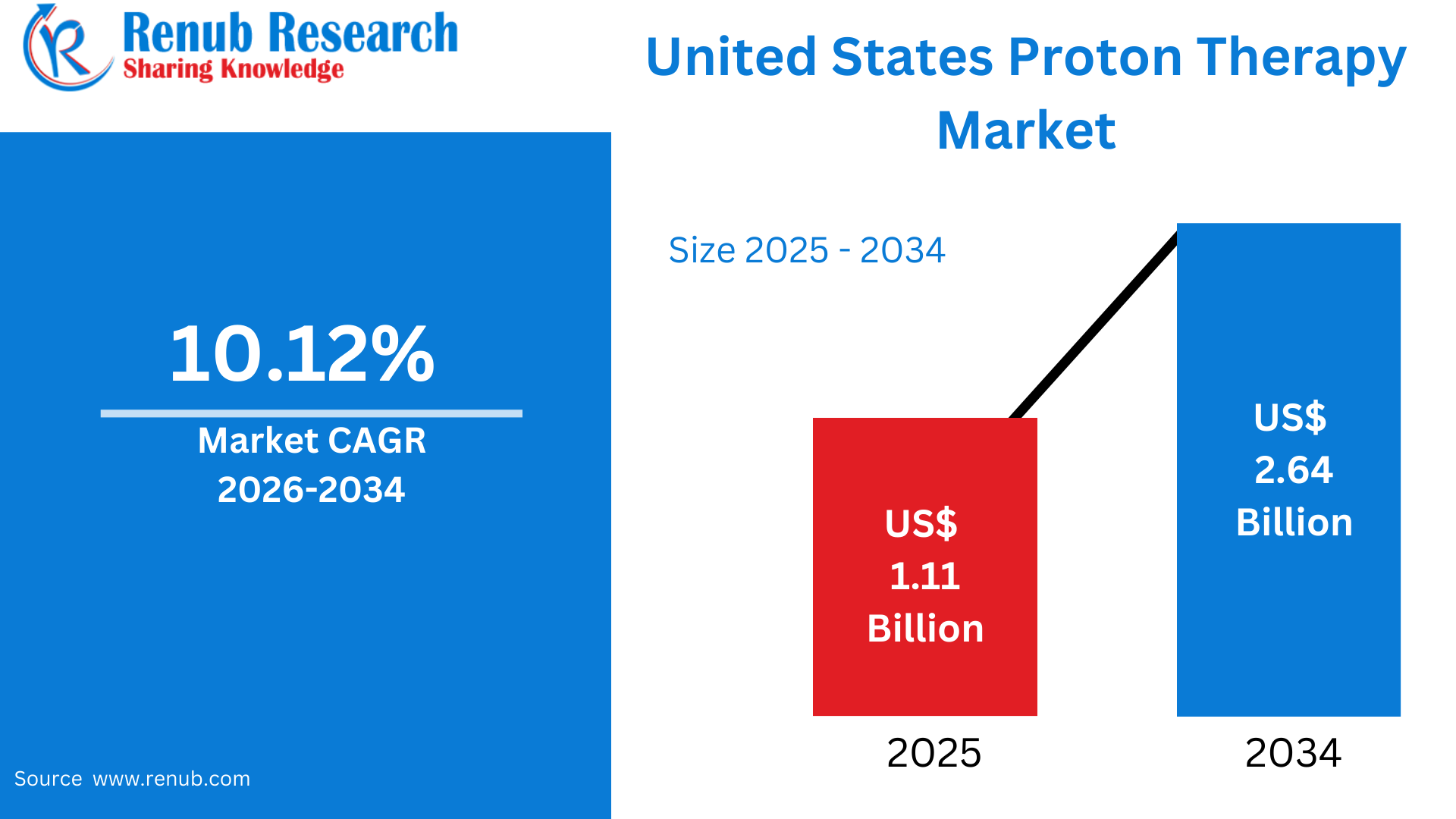
The United States proton therapy market is expected to grow steadily over the forecast period due to the increasing incidence of cancer, the growing adoption of precise radiation therapy, and ongoing technological developments in cancer treatment systems. The robust healthcare infrastructure, growing body of evidence, and increasing access to compact proton therapy solutions are also contributing factors. Consequently, the market is expected to expand from US$ 1.11 Billion in 2025 to US$ 2.64 Billion in 2034, registering a Compound Annual Growth Rate (CAGR) of 10.12% from 2026-2034.
United States Proton Therapy Market Outlook
Proton therapy is a highly advanced version of radiation therapy that is employed to treat cancer by focusing highly targeted proton beams on the cancerous cells. Unlike conventional radiation therapy, which employs the use of X-rays, proton therapy involves the delivery of a high dose of radiation energy to the cancerous cells with minimal exposure to healthy tissues. This makes it possible to deliver a higher dose of radiation safely to cancerous tissues that are close to critical organs such as the brain, spinal cord, heart, and eyes. Proton therapy is employed in the treatment of pediatric cancers, brain cancers, head and neck cancers, prostate cancer, and lung cancers.
In the United States, proton therapy has received widespread acceptance because of the country’s well-developed infrastructure for cancer care and its focus on precision medicine. The United States has the largest number of proton therapy facilities in the world. The availability of clinical evidence, patient acceptance, and selective insurance coverage have also contributed to the increased acceptance of proton therapy. Technological innovations such as pencil beam scanning and single-room proton therapy facilities have enhanced the precision and availability of proton therapy. Proton therapy continues to be an integral part of cancer treatment in the United States.
Growth Drivers of the United States Proton Therapy Market
Rising Cancer Incidence and Demand for Precision Oncology
According to estimates, in 2025, there will be 2,041,910 new cases of cancer and 618,120 cancer deaths in the United States. The rising incidence of cancer in the United States is a major driving factor for the growth of the proton therapy market. Prostate, lung, brain, and pediatric cancers are some of the most common types of cancers. These cancers require accurate radiation delivery to ensure the highest possible efficacy of treatment with the least possible harm to healthy tissues. The accuracy of proton therapy in targeting cancerous tissues makes it an extremely effective treatment option for such cancers. With the rising age of the population in the United States and the increasing incidence of cancer, the demand for advanced radiation therapy is increasing.
Advanced Healthcare Infrastructure and Technology Adoption
The United States has the benefit of a very advanced healthcare infrastructure that promotes the quick adoption of innovative cancer treatment technology. The best academic hospitals and cancer centers are early adopters of proton therapy technology. Ongoing innovations in technology such as pencil beam scanning, real-time imaging, and single-room systems enhance the precision and efficiency of treatment. The presence of strong R&D infrastructure and access to qualified medical staff also contribute to the growth of the market. With hospitals adopting the latest advances in cancer treatment technology, proton therapy is also increasingly adopted in the US healthcare setting. Jan. 2025, A new report from Corti and YouGov has found that a third of U.S. healthcare professionals using AI are spending up to three additional hours weekly correcting it. This finding comes as Corti announced a breakthrough approach to healthcare AI: specialized foundation models designed and trained to help AI deliver on its original promise to healthcare - to make time for patients, not take it away.
Favorable Clinical Evidence and Reimbursement Support
The increasing clinical evidence of the efficacy of proton therapy in targeted cancer types is fueling adoption in the United States. Improved patient outcomes, fewer long-term side effects, and improved quality of life facilitate clinical acceptance. Targeted insurance coverage for proton therapy, especially for pediatric and complex cancer patients, improves affordability. As reimbursement criteria change and clinical indications broaden, the adoption of proton therapy continues to accelerate. The University of Florida Health Proton Therapy Institute finished an expansion project in August 2023, which added a fifth treatment room and improved pencil beam scanning capabilities to treat more cancer types with precision, increasing its treatment capacity by 25%.
Challenges of the United States Proton Therapy Market
High Capital Investment and Operating Costs
One of the biggest hurdles in the United States proton therapy market is the very high investment cost involved in setting up and running proton therapy centers. Setting up a proton therapy center involves high investment costs in equipment, large treatment vaults, radiation shielding, and advanced infrastructure. Apart from the investment costs involved in setting up the equipment, other costs such as maintenance costs, the cost of highly qualified medical staff, and upgrading technology further increase the investment costs. Due to these high costs, the use of proton therapy is currently restricted to large academic institutions and cancer centers. Small healthcare facilities may find it difficult to generate adequate returns on investment, particularly in a competitive healthcare market.
Reimbursement Uncertainty and Limited Insurance Coverage
Reimbursement issues are another significant barrier for the US proton therapy market. Although proton therapy is reimbursed for specific cancer types, insurance coverage may differ significantly based on the insurance company’s policies and requirements. Some insurance companies demand a lot of documentation or do not reimburse the costs because there is limited comparative data available for advanced photon therapies. This can act as a deterrent for both the provider and the patient to opt for proton therapy. Reimbursement approval may also affect the treatment schedule.
USA Head & Neck Cancer Proton Therapy Market
The head and neck cancer proton therapy market in the United States is increasing due to the requirement for highly precise radiation therapy in regions close to critical organs. Head and neck cancers are often located close to the brain, spinal cord, salivary glands, and optic structures. Proton therapy enables precise radiation therapy with reduced exposure to healthy tissues, thus lowering the incidence of side effects such as swallowing problems and dry mouth. The rising incidence of head and neck cancers, along with the growing body of clinical evidence of the benefits of proton therapy, is fueling the adoption of proton therapy. The major cancer centers in the United States are expanding their proton therapy services for head and neck cancers.
USA Prostate Cancer Proton Therapy Market
The prostate cancer proton therapy market in the United States is growing as patients and physicians look for alternatives that have less long-term toxicity. Proton therapy allows for precise irradiation of the prostate with less exposure to the bladder and rectum. This leads to less urinary and rectal toxicity than with traditional radiation therapy. The high incidence of prostate cancer in the aging male population and the growing awareness of advanced treatment modalities drive the market. With the evolving clinical data, proton therapy is a popular alternative for selected patients with prostate cancer seeking high-quality outcomes.
USA Lung Cancer Proton Therapy Market
The lung cancer proton therapy market in the US is fueled by the requirement for the treatment of cancers close to critical organs like the heart and spinal cord. Proton therapy is beneficial in preventing damage to healthy lung tissue, which is essential for patients with compromised respiratory function. Improvements in motion management and imaging capabilities have enhanced the precision of proton therapy for tumors that move during treatment. The increasing incidence of lung cancer and the need for sophisticated radiation therapy solutions are contributing factors.
USA Single Room Proton Therapy Market
The single room proton therapy market in the US is expanding at a fast pace because of its lower installation cost and smaller size compared to multi-room proton therapy systems. Single room proton therapy systems enable mid-sized hospitals to provide proton therapy services to patients. Technological advancements in single room proton therapy systems, such as improved efficiency and reduced operational complexity, are also contributing to their adoption. Single room proton therapy systems are helping to improve patient access to proton therapy services in the US.
California Proton Therapy Market
The California proton therapy market is among the most advanced in the United States, with a robust healthcare infrastructure, top-notch academic medical institutions, and large patient volumes for cancer. The state has a large population and a high incidence of cancers such as prostate, lung, and pediatric cancers, thereby creating a demand for advanced radiation therapy modalities such as proton therapy. The innovation-friendly and adoption-friendly approach of the state of California to advanced medical technologies helps in the development of the proton therapy market. The presence of top-notch cancer research centers and specialized cancer hospitals helps in the acceleration of adoption and research activities.
Texas Proton Therapy Market
The Texas proton therapy market is expanding due to the growing infrastructure of oncology and a large and diverse population. The increasing number of cancer cases and investment in the healthcare infrastructure are factors that support the demand for advanced radiation therapy. Texas has been improving access to proton therapy by establishing specialized cancer centers in major cities. The increasing awareness among patients and professionals about the benefits of proton therapy is fueling adoption. Although the size of the state creates challenges for access, investments in cancer care and advanced therapies are leading to steady growth in the Texas proton therapy market.
New Jersey Proton Therapy Market
The New Jersey proton therapy market is favored by its proximity to prominent medical research institutions and the presence of a well-organized healthcare infrastructure. The demand for proton therapy is fueled by the high awareness of cancer and the availability of sophisticated cancer care facilities. Patients tend to look for advanced care options, such as proton therapy, for complex and pediatric cancers. The combined efforts of neighboring states improve patient referrals and accessibility.
Washington Proton Therapy Market
The proton therapy market in Washington is fueled by the presence of strong research initiatives and a focus on precision medicine. The top hospitals and research organizations in the state are driving the adoption of advanced radiation therapy. The demand for proton therapy is fueled by the prevalence of cancer and a focus on patient-centric care. Investments in oncology infrastructure and research initiatives are improving access to treatment. With the continued focus on innovation and advanced healthcare solutions in Washington, proton therapy remains an integral part of the state’s cancer treatment landscape.
Market Segmentation
Indication
- Head & Neck Cancer
- Sarcoma
- Pediatric Cancer
- Gastro-intestinal Cancer
- Prostate Cancer
- Lung Cancer
Set-up Type
- Single Room
- Multi – Room
Top States
- California
- Texas
- New York
- Florida
- Illinois
- Pennsylvania
- Ohio
- Georgia
- New Jersey
- Washington
- North Carolina
- Massachusetts
- Virginia
- Michigan
- Maryland
- Colorado
- Tennessee
- Indiana
- Arizona
- Minnesota
- Wisconsin
- Missouri
- Connecticut
- South Carolina
- Oregon
- Louisiana
- Alabama
- Kentucky
- Rest of United States
Reimbursement Policy
- Reimbursement Policies for Patients
- Reimbursement for Institutions, Stakeholders and Manufacturers
Components of a Standard Proton Therapy Center
Proton Accelerator
- Synchrotrons (example: LLUMC at Loma Linda)
- Cyclotrons (example: MGH Boston)
- Synchrocyclotrons (examples: Orsay, Uppsala)
- Linacs (Rome)
- H-minus Synchrotrons
- Separated Sector Cyclotrons
- Super-conducting Cyclotrons
- Fast Cycling Synchrotron
Beam Transport System
- Beam Delivery System
- The Passive Scattering Technique
- Beam Scanning
Nozzle
- Single Scattering
- Double Scattering
- Uniform Scanning Nozzle
- Pencil Scanning Nozzle
Treatment Planning System
- Image Viewers
- Patient Positioning System (PPS)
- Human Resource
All companies have been covered with 5 Viewpoints
- Overviews
- Key Person
- Recent Developments
- SWOT Analysis
- Revenue Analysis
Key Players Analysis
- IBA
- Varian Medical System
- Hitachi Ltd.
- Mevion Medical Systems
- Mitsubishi Electric Corporation
Report Details:
| Report Features | Details |
| Base Year |
2025 |
| Historical Period |
2022 - 2025 |
| Forecast Period |
2026 - 2034 |
| Market |
US$ Billion |
| Segment Covered |
Indication, Set-up Type and States |
| State Covered |
|
| Companies Covered |
|
| Customization Scope |
20% Free Customization |
| Post-Sale Analyst Support |
1 Year (52 Weeks) |
| Delivery Format |
PDF and Excel through Email (We can also provide the editable version of the report in PPT/Word format on request) |
Customization Services available
- Analysis of Market Size and Its Segments
- More Company Profiles (Upto 10 without any additional cost):
- Additional Countries (Other than mentioned Countries):
- Region/Country Specific Reports:
- Market Entry Strategy:
- Region-Specific Market Dynamics:
- Regional Market Share Analysis:
- Trade Analysis:
- Production Insights:
- Others Customized Requests:
For more information contact our analysts.
Need More Assistance?
- Talk to our analysts to get more precious information on the current market trends.
- Include more countries and segments and customize the report based on the final requirement.
- Get a competitive advantage in your industry by knowing the report findings and making a positive impact on your revenues and operations.
- Our analysts are always ready to provide more help and pertinent information if you need any additional assistance.