United States Lingerie Market Size, Share, Trends, Growth and Forecast Report by Product Type, Material, Price Range, Distribution Channel, States and Company Analysis 2026–2034
Buy NowUnited States Lingerie Market Size Overview
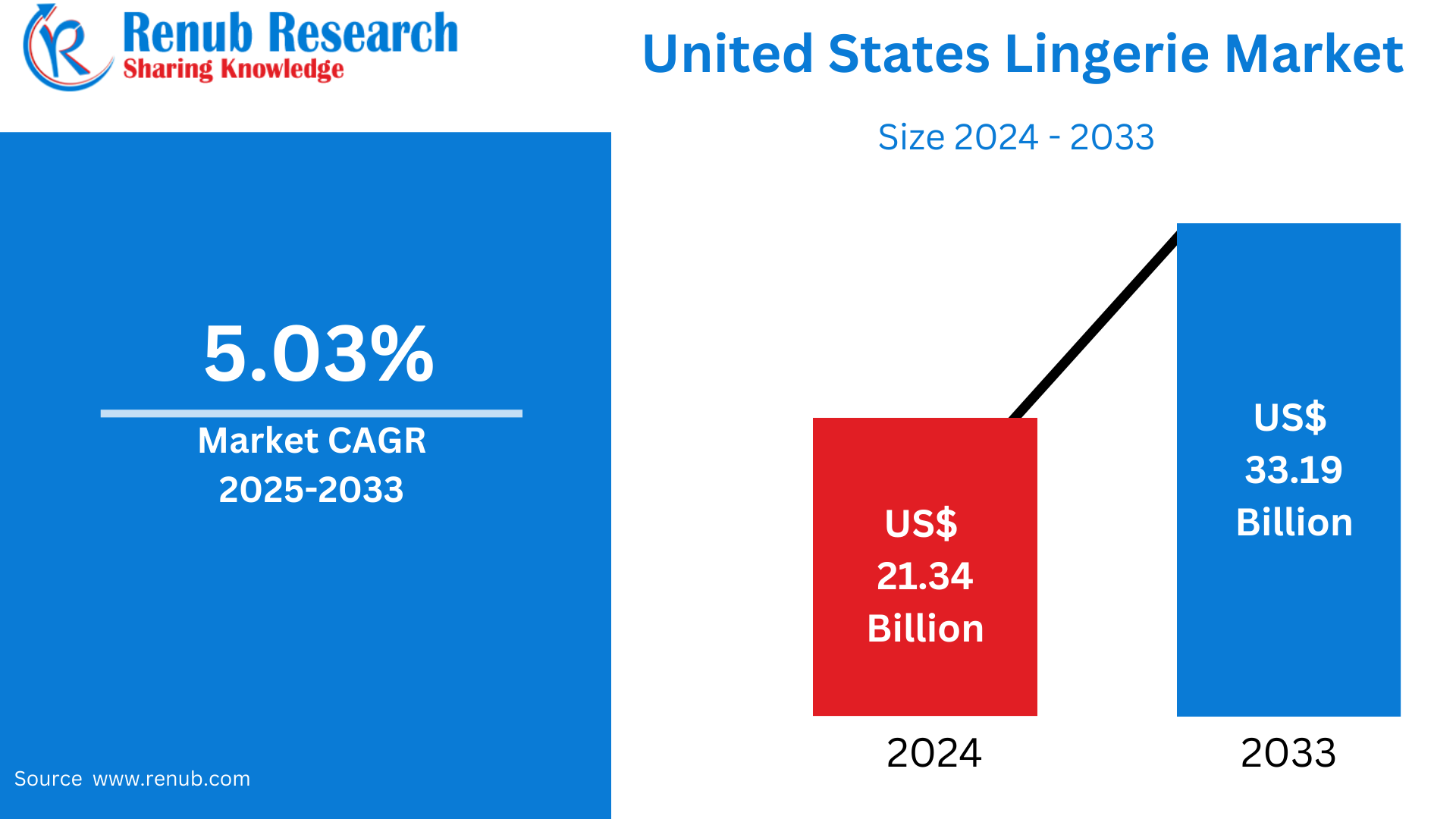
United States Lingerie Market is projected to grow from US$ 29.43 Billion in 2025 to US$ 46.13 Billion by 2034, registering a Compound Annual Growth Rate (CAGR) of 5.12% during the forecast period of 2026–2034. Market growth is driven by rising consumer demand for comfortable, inclusive, and fashion-forward intimate apparel, along with increasing adoption of premium and sustainable lingerie products. Expanding e-commerce channels, product innovation, body-positive marketing, and advancements in fabric technology are expected to further accelerate market expansion across the United States.
United States Lingerie Industry Trends
Lingerie refers to a category of women’s intimate apparel designed for comfort, support, style, and personal expression. It includes items such as bras, panties, camisoles, slips, bodysuits, corsets, and nightwear. Traditionally made from fabrics like lace, silk, satin, cotton, and microfiber, lingerie combines functionality with fashion. Its primary uses include providing body support, ensuring comfort, enhancing confidence, and serving as an attractive choice for special occasions or everyday wear.
In the United States, lingerie has become a popular part of the fashion and personal care industry. American consumers increasingly view lingerie not only as a necessity but also as a way to express individuality, confidence, and personal style. The rise of online shopping, inclusive sizing, and diverse designs has expanded its popularity among different age groups and body types. Brands now focus on comfort, sustainability, and representation, making lingerie more accessible and appealing. The U.S. lingerie market continues to grow due to changing fashion trends, social acceptance, and increased interest in self-care. Today, lingerie represents a blend of practicality, beauty, and empowerment.
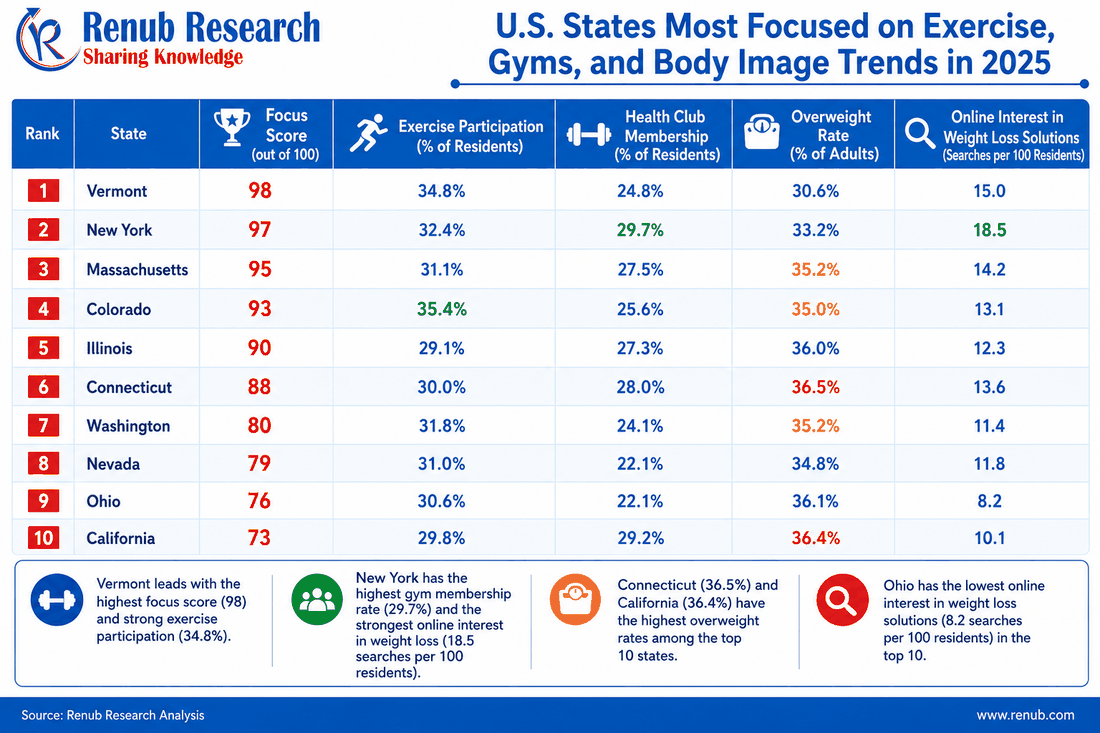
U.S. States Most Focused on Exercise, Gyms, and Body Image Trends in 2025
- Vermont ranks as the U.S. state most focused on weight loss culture, achieving a score of 98 out of 100. The state has one of the highest rates of regular exercise participation, with 34.8% of residents engaging in physical activity. Vermont also records one of the highest levels of online interest in weight loss solutions, with around 15 related searches per 100 residents.
- New York takes second place with a score of 97. The state leads the country in health club membership, with 29.7% of residents belonging to fitness facilities. New Yorkers also show the strongest online interest in diets, weight loss methods, and medications such as Ozempic.
- Massachusetts ranks third with a score of 95. About 31.1% of residents regularly exercise, while online searches for dieting and weight management remain high. The state has a 35.2% overweight rate, reflecting continued interest in health and fitness trends.
- Colorado places fourth with a score of 93 and stands out for its active lifestyle, with 35.4% of residents participating in sports or fitness activities. Its overweight rate remains comparable to Massachusetts at around 35%.
- Illinois ranks fifth with a score of 90, supported by strong fitness participation. Around 27.3% of residents hold health club memberships, while 29.1% exercise regularly. Online searches for weight loss solutions are also significant.
- Connecticut follows in sixth place with a score of 88. Although it has one of the highest overweight rates among the top states (36.5%), nearly one-third of residents participate in regular exercise, and 28% maintain gym memberships.
- Washington ranks seventh with a score of 80. The state shows strong fitness habits, with 31.8% of residents exercising and 24.1% joining health clubs. Its overweight rate is similar to Massachusetts at 35.2%.
- Nevada ranks eighth with a score of 79. While gym membership levels are lower at 22.1%, about 31% of residents remain physically active. The state also shows considerable online interest in weight loss topics.
- Ohio places ninth with a score of 76. Around 30.6% of residents exercise regularly, although health club membership remains lower at 22.1%. Online searches related to weight loss are among the lowest in the top 10.
- California completes the top 10 with a score of 73. The state has one of the highest overweight rates in the ranking at 36.4%, but it also has strong gym participation, with 29.2% of residents holding health club memberships.
Market Catalysts:
Increasing Consumer Focus on Comfort and Body Positivity
Today, the U.S. lingerie market has had a sizeable transformation as comfort, inclusivity, and body confidence are favored by consumers over a purely aesthetic or sensual design emphasis. The body-positivity movement, alongside inclusive fashion campaigns, has encouraged brands to diversify their size range, skin tones, and fits. Instead of unattainable beauty standards, consumers seek lingerie that reflects individuality and empowerment. This has sparked innovations in breathable fabrics, adaptive designs, and seamless constructions. Brands that promote diversity and realistic representation in both marketing and design have had stronger emotional connections with buyers. American Eagle's Aerie brand proves the commercial validity of the approach: 21 consecutive quarters of double-digit comparable sales growth through 2024 via embracing unretouched photography and size inclusivity. The impact of the movement goes far beyond the aesthetic of marketing, provoking substantive changes to product development processes, as brands invest in a series of fit studies across diverse body types and extend size ranges to cater to previously under-served segments.
Online Retail Growth and Increased Digital Interaction
E-commerce has completely changed the lingerie shopping experience in the U.S., enabling consumers to explore brands, compare styles, and find perfect fits in the privacy of their own homes. Online retail platforms and D2C brands have disrupted traditional sales models by providing access to personalized recommendations, virtual fittings, and subscription-based purchasing options. Social media campaigns, influencer marketing, and digital content are increasingly crucial in building trust and driving engagement, especially for younger consumers. Further, digital-first brands usually focus on transparency, sustainability, and customer feedback, which helps create long-term loyalty. Improved return policies, flexible payments, and data-driven customization enhance customer satisfaction and make online purchases less frictional. July 2025, Victoria's Secret launched the Body by Victoria FlexFactor Bra, a game-changing innovation with a flexible titanium underwire and adaptive memory foam for comfort and support in a class of its own. The line features a range of inclusive sizes and styles that allow women to choose between movement, fit, and elegance.
Increasing Demand for Sustainable and Ethical Lingerie
Sustainability has emerged as a major growth catalyst in the U.S. lingerie market, reflecting consumers' increasing concern for environmental and ethical accountability. Modern shoppers are more interested in how their garments are produced, and they want transparency in sourcing, materials, and labor practices. In response, many brands are increasingly adopting eco-friendly fabrics made of organic cotton, bamboo, recycled nylon, and Tencel. The use of biodegradable packaging and low-impact dyes adds to the credibility of the brands. Ethical labor sourcing and transparency in the supply chain have become a strong selling point for conscious consumers. This shift is being driven primarily by younger demographics who prefer to align themselves with brands that reflect their environmental values. August 2025, Wacoal introduced its Autumn/Winter 2025 Lingerie Collection: a curated range that expertly balanced seasonal elegance with everyday practicality. The range introduced statement pieces and updated essentials perfect for the festive season, harnessed by luxurious lacework, rich seasonal tones, and fabrics with sustainability at the forefront.
Market Restraints:
Intense Market Competition and Price Pressure
Competition in the U.S. lingerie market is fierce, with several international and domestic players competing for market share. Traditional brands are finding it increasingly difficult to compete as digital natives create stylish, affordable, and inclusive designs. The pricing pressure has been further pushed up a notch with the ability of fast-fashion retailers to produce low-priced lingerie collections in record time. The pressure is on to maintain profitability without compromising quality and innovation. Further, the middle tiers have similar products, making differentiation hard to achieve. To be relevant, brands have to make significant investments in marketing, research, and digital engagement, adding to their operational costs. Premium and specialist labels try to counter price competition with a focus on personalization, sustainability, or craftsmanship. However, fluctuating consumer spending and trends toward promotional pricing can erode margins. The task of making products affordable but maintaining brand identity and long-term profitability is one of the most significant challenges seen in the American lingerie landscape.
Fit Inconsistencies and Sizing Standardization Issues
Poor fits and sizing inconsistencies persist in the U.S. lingerie market. Though technology has advanced, many customers still find it difficult to get an accurate fit from one brand or product line to another. Lack of universal size standards in the industry creates confusion among consumers, which leads to dissatisfaction and high return rates, especially while shopping online. Since lingerie requires precise support and comfort, even minor variations in size can make a difference in customer retention. Inclusive sizing complicates this further as new dimensions need to consider the diverse shapes and sizes of bodies. Brands are increasingly using virtual fitting, body scanning, and AI-powered size recommendations to work around these challenges. Yet, this makes it challenging to ensure consistent quality across multiple collections. For retailers, poor sizing means expensive logistics and eroded consumer confidence. Conventional sizing transparency and better product education are critical to enhancing customer experience and driving efficiency within the lingerie market.
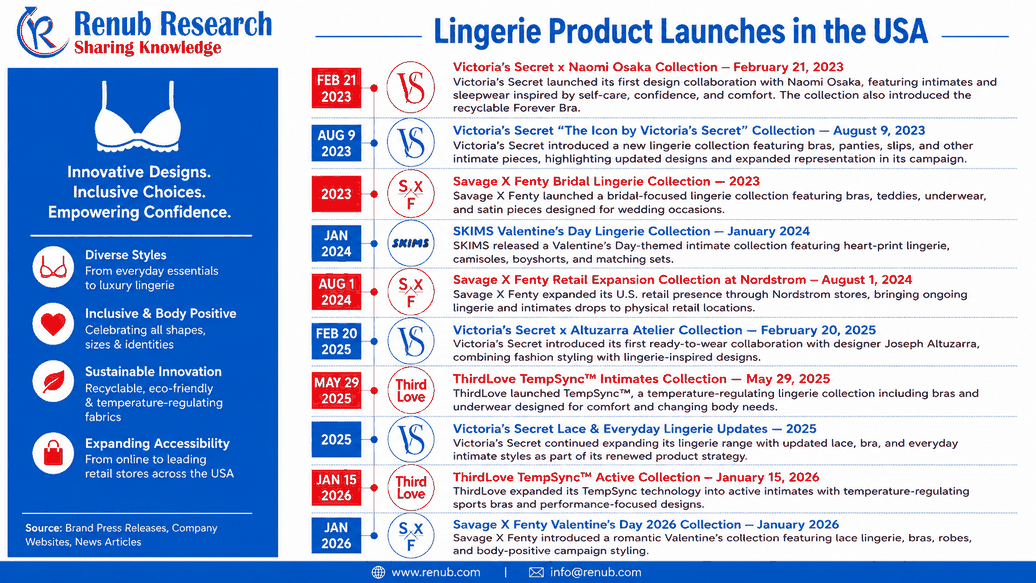
Lingerie Product Launches in the USA
- Victoria’s Secret x Naomi Osaka Collection — February 21, 2023
Victoria’s Secret launched its first design collaboration with Naomi Osaka, featuring intimates and sleepwear inspired by self-care, confidence, and comfort. The collection also introduced the recyclable Forever Bra. - Victoria’s Secret “The Icon by Victoria’s Secret” Collection — August 9, 2023
Victoria’s Secret introduced a new lingerie collection featuring bras, panties, slips, and other intimate pieces, highlighting updated designs and expanded representation in its campaign. - Savage X Fenty Bridal Lingerie Collection — 2023
Savage X Fenty launched a bridal-focused lingerie collection featuring bras, teddies, underwear, and satin pieces designed for wedding occasions. - SKIMS Valentine’s Day Lingerie Collection — January 2024
SKIMS released a Valentine’s Day-themed intimate collection featuring heart-print lingerie, camisoles, boyshorts, and matching sets. - Savage X Fenty Retail Expansion Collection at Nordstrom — August 1, 2024
Savage X Fenty expanded its U.S. retail presence through Nordstrom stores, bringing ongoing lingerie and intimates drops to physical retail locations. - Victoria’s Secret x Altuzarra Atelier Collection — February 20, 2025
Victoria’s Secret introduced its first ready-to-wear collaboration with designer Joseph Altuzarra, combining fashion styling with lingerie-inspired designs. - ThirdLove TempSync™ Intimates Collection — May 29, 2025
ThirdLove launched TempSync™, a temperature-regulating lingerie collection including bras and underwear designed for comfort and changing body needs. - Victoria’s Secret Lace & Everyday Lingerie Updates — 2025
Victoria’s Secret continued expanding its lingerie range with updated lace, bra, and everyday intimate styles as part of its renewed product strategy. - ThirdLove TempSync™ Active Collection — January 15, 2026
ThirdLove expanded its TempSync technology into active intimates with temperature-regulating sports bras and performance-focused designs. - Savage X Fenty Valentine’s Day 2026 Collection — January 2026
Savage X Fenty introduced a romantic Valentine’s collection featuring lace lingerie, bras, robes, and body-positive campaign styling.
Product Type Insights:
Brassiere Lingerie Industry
In contrast, the brassiere segment is still the core of the U.S. lingerie market, blending functionality, comfort, and aesthetics together. Current innovations involve light materials, seamless construction, and wireless support to get rid of discomfort. Consumers increasingly seek versatile bras that are just right to wear both at work and for casual activities. These include T-shirt bras, bralettes, and adaptive designs. Inclusive sizing and adjustable fits address the needs of diverse body types, while sustainable fabrics appeal to eco-conscious buyers. Smart bras with moisture-wicking materials and ergonomic structures are also taking center stage, reflecting the fusion of technology with fashion. Marketing campaigns on body confidence and diversity have reshaped the perception of bras from restrictive garments to empowering essentials. As the balance between style, comfort, and inclusivity changes, the brassiere U.S. market will keep playing a key driver in the overall lingerie innovation and sales growth.
Shapewear Lingerie Industry
The U.S. shapewear lingerie market has shifted from restrictive undergarments to performance-oriented and comfort-enhancing designs. Shapewear today focuses more on flexibility, breathability, and body contouring rather than compression alone. For consumers, it has become an empowering garment that accentuates natural curves and posture without discomfort. Seamless fabrics, compression zones, and adaptive stretch technology have enhanced both aesthetic and wearability benefits. Influencers and celebrities have also contributed to shapewear mainstreaming as everyday wear. Added to this is size inclusivity and diversity of skin tone that makes the target audience bigger than ever before. Another growing demand which has increased the crossover between athleisure and shapewear-commonly seen in leggings, bodysuits, and control briefs-further boosts demand. With American consumers demanding apparel that bridges style and performance, shapewear has been continuously flourishing with the support of revolutionary materials and changing perceptions of body positivity.
Material Insights:
Cotton Lingerie
Cotton lingerie has a stronghold on the U.S. market due to its softness, breathability, and hypoallergenic qualities. The consumer seeks natural fibers that can be worn through daily activities and remain functional. Cotton is an excellent choice for warm climates and sensitive skin. Its moisture-absorbing properties make it ideal for hygiene and comfort during extended wear. The shift toward sustainable and organic textiles has reinforced demand for ethically produced cotton lingerie. Brands are offering modern interpretations that meld classic comfort with modern silhouettes, appealing to the diverse young and mature demographics. Additionally, it is affordable, so its price supports accessibility across all income classes and keeps it relevant in the mass market. Lifestyle trends of wellness, natural fabrics, and minimalism keep cotton lingerie synonymous with everyday practicality and trusted comfort in American wardrobes, bringing together affordability and quality seamlessly.
Nylon Lingerie
With its light weight, smooth finish, and versatility in design, nylon lingerie holds a particular significance within the U.S. market. Strong and resilient, nylon allows for the creation of magnificent lacework and bold patterns that are so appealing to the truly fashion-conscious customer. Resistance and better fitting are achieved through the ability to blend this yarn with spandex and polyester blends. Nylon lingerie caters to that consumer who desires sleek and sensual aesthetics, whether for everyday wear or special occasions. Furthermore, with enhanced fiber technology, breathability and comfort have been improved, striving to eliminate previous perceptions of synthetic fabrics. The adaptability of this fabric enables designers to produce items that employ daring colors, semi-sheer styles, and modern silhouettes. As lingerie fuses both fashion and performance, nylon continues to be one of the top materials for contemporary collections to combine visual appeal and long-lasting wear in the U.S.
Price Range Insights
Premium Lingerie
The premium lingerie segment in the U.S. epitomizes sophistication, artistry, and indulgence. Consumers in this segment are drawn to high-quality materials and skilled craftsmanship over mass-market appeal. Most premium brands play up the inspiration of European design, laces done by hand, and superior comfort technologies. This market also continues to benefit from a culture of self-purchase, wherein women are investing in luxury lingerie as expressions of confidence and self-care rather than external validation. In addition to celebrity collaborations and limited-edition collections, brand prestige is enhanced by lines of sustainable luxury. Affluent consumers are seeking personalized fitting and customized design for a tailored experience. Although prices may be higher, demand stays strong because the products create emotional appeal and last longer. Meanwhile, the premium segment will be well-set in an upward trajectory to achieve further growth, as American consumers increasingly link luxury lingerie with lifestyle identity and well-being.
Distribution Channel Insights
Specialized Lingerie Stores
Specialized lingerie stores in the U.S. hold their relevance through customized service, expert fittings, and engaging shopping experiences. Comfort consultation, precision in size, and a selection of goods not found elsewhere are stressed by these specialty boutiques, in contrast to mass retailers. This professional guidance and sensory experience are components consumers cannot as readily find with online channels. Boutique retailers also offer an assortment of high-end and specialty brands targeting select style or functional needs. In-store events, loyalty programs, and options for customization help to further reinforce customer relationships. Many specialized stores are now incorporating various digital tools to further improve access, such as virtual fitting sessions. Despite the competition from e-commerce, the experiential nature and basis of trust in lingerie shopping continue to attract loyal customers. Such a blending of personalized service with curated product selection makes the specialized lingerie retailer an integral and robust channel in the U.S. intimate apparel market.
Online Lingerie Stores
Online lingerie stores have become the dominant sales channel, with convenience, privacy, and technological innovation driving this segment. Virtual fitting tools, detailed size guides, and AI recommendations raise the accuracy and confidence when shopping. E-commerce platforms provide a wide range of product options, competitive pricing, and hassle-free returns, suited to busy lifestyles. Recently, subscription boxes and "try-before-you-buy" models have further enhanced the online experience. Digital-native brands use social media marketing, influencer partnerships, and real-time consumer feedback to enhance their collections. Again, diversity and body inclusivity featured in digital campaigns really resonate with American consumers. Online retailers also benefit from data analytics, enabling personalized marketing and demand forecasting. As technology continues to evolve, the online store continues to revolutionize the lingerie purchasing journey through the melding of efficiency with emotional engagement and unparalleled access through the U.S. market.
States Insights:
California
California is an important hub in the U.S. lingerie market because of its trendsetting culture and fashion-forward consumers. California boasts a strong fitness lifestyle, resulting in demand for comfortable, versatile lingerie, which transitions between wearing it in casual, active, and intimate settings. Brands usually headquartered in California often stress sustainability, ethical sourcing, and minimalist design — reflecting the region’s eco-conscious values. Online selling and influencer-led marketing thrive in California’s digitally savvy consumer environment. The warm climate also favors lightweight, breathable fabrics that include cotton and bamboo. Moreover, the Hollywood influence in this category shapes lingerie aesthetics with bold, modern designs. With these drivers expected to keep defining consumer choices at the juncture of fashion, fitness, and sustainability, California remains a vital market for innovation and growth for the U.S. lingerie industry overall, influencing nationwide style and material trends.
New York
New York is the pulse of the U.S. fashion industry and an important hub for high-end and luxury lingerie. In this cosmopolitan city, people have different tastes for all kinds of styles, from functional everyday wear to high-end designer collections. Urban consumers, appreciative of quality, comfort, and brand prestige, further inspire creativity in design and innovation in fit. Major fashion shows and retail flagships in New York bring visibility to both established and emerging lingerie brands. Moreover, New Yorkers' professional lifestyle helps create conditions for consistent sales of stylish yet practical lingerie. E-commerce and boutique shopping coexist strongly in this market, reflecting the fast-paced yet discerning culture of the city. Indeed, inclusivity and sustainability continue to shape the next wave of fashion, and New York remains at the forefront of the lingerie scene with creativity, diversity, and a balance of luxury and accessibility.
Washington
The lingerie market is booming in Washington as consumers increasingly embrace inclusion, comfort, and modern ways of retail. The state's educated and socially conscious population values sustainability and ethical production in intimate apparel purchases. Urban centers like Seattle are hubs for boutique lingerie stores, independent designers, and digitally driven retail concepts. There is a steadily growing demand for practical yet stylish lingerie suitable for diverse lifestyles—professional, athletic, or casual. The cooler climate favors layering-friendly fabrics such as cotton blends and modal. E-commerce adoption is very strong, with a lot of consumers depending on online channels for convenience and variety. Moreover, local brands focusing on craftsmanship and body positivity are gaining recognition. As Washington continues to align fashion with values of equality and environmental responsibility, its lingerie market becomes a showcase of the evolving preferences of the modern American consumer.
Market Segmentation
Product Type
- Brassiere
- Knickers or Panties
- Shapewear
- Others
Material
- Cotton
- Silk
- Satin
- Nylon
- Others
Price Range
- Economy
- Premium
Distribution Channel
- Mass Merchandizers
- Specialized Stores
- Online Stores
- Others
Top States
- California
- Texas
- New York
- Florida
- Illinois
- Pennsylvania
- Ohio
- Georgia
- New Jersey
- Washington
- North Carolina
- Massachusetts
- Virginia
- Michigan
- Maryland
- Colorado
- Tennessee
- Indiana
- Arizona
- Minnesota
- Wisconsin
- Missouri
- Connecticut
- South Carolina
- Oregon
- Louisiana
- Alabama
- Kentucky
- Rest of United States
All companies have been covered with 5 Viewpoints
- Overviews
- Key Person
- Recent Developments
- SWOT Analysis
- Revenue Analysis
Company Analysis:
- Fashion Nova LLC
- Hanesbrands Inc.
- H & M Hennes & Mauritz AB
- Hunkemöller International B.V.
- Jockey International Inc.
- MAS Holdings
- PVH Corp.
- The Gap Inc.
- The Groupe Chantelle
- Triumph International Ltd.
Report Details:
| Report Features | Details |
| Base Year |
2024 |
| Historical Period |
2021 - 2024 |
| Forecast Period |
2025 - 2033 |
| Market |
US$ Billion |
| Segment Covered |
Product Type, Material, Price Range, Distribution Channel and States |
| States Covered |
|
| Companies Covered |
|
| Customization Scope |
20% Free Customization |
| Post-Sale Analyst Support |
1 Year (52 Weeks) |
| Delivery Format |
PDF and Excel through Email (We can also provide the editable version of the report in PPT/Word format on request) |
Customization Services available
- Analysis of Market Size and Its Segments
- More Company Profiles (Upto 10 without any additional cost):
- Additional Countries (Other than mentioned Countries):
- Region/Country Specific Reports:
- Market Entry Strategy:
- Region-Specific Market Dynamics:
- Regional Market Share Analysis:
- Trade Analysis:
- Production Insights:
- Others Customized Requests:
For more information contact our analysts.
Need More Assistance?
- Talk to our analysts to get more precious information on the current market trends.
- Include more countries and segments and customize the report based on the final requirement.
- Get a competitive advantage in your industry by knowing the report findings and making a positive impact on your revenues and operations.
- Our analysts are always ready to provide more help and pertinent information if you need any additional assistance.