United States E-Commerce Payment Market Size, Share, Report by Type, Application, States and Companies Analysis 2026-2034
Buy NowUnited States E-Commerce Payment Market Size & Forecast 2026-2034
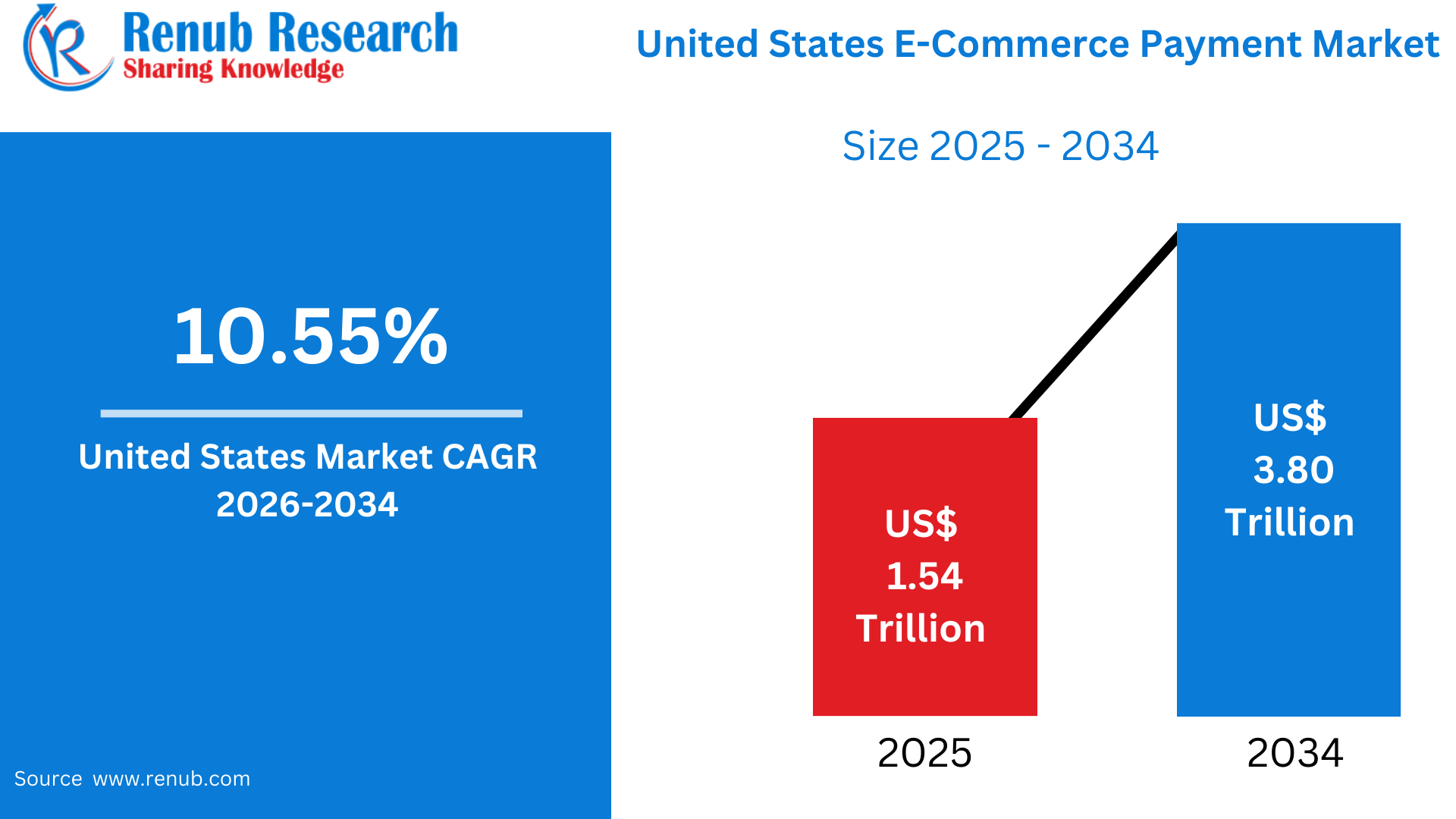
The United States online payment market is expected to expand from US$ 1.54 trillion in the year 2025 to US$ 3.80 trillion by the end of 2034, with a compound annual growth rate of 10.55% from 2026-2034. This growth can be attributed to an increase in the online payment market due to the growth of online transactions, digital wallets, m-wallet, and innovation in payment technologies.
United States E-Commerce Payment Market Analysis
E-commerce Payment, E-commerce Payment Systems, Digital Payment, Online Shopping, Credit Card Payment, Payment Gateway E-commerce payment can be defined as the online approaches and technologies used for facilitating and processing online transactions when a consumer purchases goods/substance online. E-commerce payment processing methods include the use of credit cards, debit cards, online wallets, electronic fund transfer, online installment plans, and other advanced technologies like contactless and biometric payments. E-commerce payment processing is designed and developed for faster, efficient, and secured transactions, while keeping fraud at bay through encryption, tokenization, and two-factor authentication. E-commerce payment processing is a very significant aspect of online shopping.
In the United States, e-commerce payment systems are extremely popular and are implemented on a large scale because of the country’s sophisticated technology infrastructure and consumer affinity towards online shopping. Credit and debit cards are still the most prominent mode of online payments, and e-wallets and mobile payment systems have gained prominence due to their convenience and speed. The increased usage of e-commerce, subscription models, and on-demand services has heightened the need for convenient and secure online payment systems. Moreover, the country has optimum smartphone usage, robust cybersecurity norms, and the ingenuity of fintech firms propelling the usage of sophisticated e-commerce payment systems.
Growth Driver in the United States E-Commerce Payment Market
Rapid Expansion of E-Commerce and Omnichannel Retail
The US digital payment market is fueled by the steady growth of online shopping and omnichannel retail,” says GlobalData. “With more and more consumers accessing websites, mobile apps, social media platforms, and online marketplaces to shop, the demand for flexible payment options has increased.” Brands and consumers are continuing to drive innovation here. Today’s consumers are all about convenience, subscriptions, and social commerce. Direct-to-consumer brands and digital marketplaces are further propelling this demand. As same-day delivery, click-and-collect options, and mobile commerce rise to prominence, payment solutions must seamlessly dovetail among all these options. Amazon.com has furthered its inexpensive online shopping platform Amazon Bazaar, colloquially named “Haul” inside the US, to 14 new markets to further compete against China’s up-and-coming online shoppers from giants like Shein and PDD Holdings' “Temu” in the race to offer the cheapest products possible—$10 dresses and accessories that ship for only $5.”
Increased use of Digital Wallets & Mobile Payment Services
Digital wallets and mobile payments remain a rapidly propelling factor in the e-commerce payment industry of the United States. Now, consumers are preferring digital wallets because of fast checkout, saved credentials, and improved security options including tokenization and biometric authentication. Mobile shopping, m-commerce, and widespread adoption of smartphones in their country have significantly accelerated digital wallet adoption. By offering digital wallets, businesses receive various key advantages such as increased approval rates, ease of checkout, and improved customer retention & loyalty. Digital wallets with integrated loyalty programs and “buy-now, pay later” options further boost customer attraction. As long as convenience and security top priority lists, digital wallets continue to sway market share in digital payments. June 2025, Klarna has ventured into the US mobile telco industry with an unlimited phone plan, which consumers can buy and manage through their existing app facility itself. While digital wallets promise more convenience, they do not offer improved security as they don't store credit card numbers, but they store credentials like email addresses and passwords,” a spokesperson of CyberSource, a digital payment and payment security service of Visa, clarified to PaymentsSource.com Correspondent Gibson Xavier in a recent interview. In June of this year, Klarna, a Swedish fintech firm, ventured into the US mobile telco industry with a new product offering - “an unlimited phone
Payment Technologies and Fraud Protection
Continuous innovation in payment technology is driving the growth of the market. Developments in artificial intelligence, machine learning, and real-time analytics have led to better methods of fraud management, allowing for increased trust in payments on the internet. Additional benefits of tokenization, multi-factor authentication, and secure APIs include increased security for payments while allowing for easy user experience. Payments companies are also enhancing their cross-border, subscription, and recurring payments services. in July 2023, FedNow enables an interbank instant payment system, allowing all financial institutions to provide their customers with the ability to instantly receive and send payments, 24/7/365. It has gained widespread adoption, boasting of more than 1,400 participants as of July 2025, allowing for services including instant insurance payouts and payrolls.
Challenge in the U.S. E-Commerce Payment Industry
Increase in Cyber Security Risksand Payment Frauds
Although there are advancements in technology, risks associated with cybersecurity have continued to be a significant issue. The e-commerce environment is increasingly faced with threats of data breaches, account takeover, and payment fraud. Even complex fraud attacks might result in reduced customer trust, thus increased compliance and clean-up expenses for the merchants or the payment service providers. Small retailers might not be able to invest in cutting-edge security solutions for various aspects of security against cyber threats.
Complex Regulatory and Compliance Requirements
In today’s complex, payments landscape for e-commerce in the U.S. is also subject to various rules, requirements, and regulations. These include rules on data protection, anti-money laundering, security, and more. These requirements can be costly for the companies to implement, especially if they have to keep up with changing rules. State rules within the U.S. may also be different, with global rules applying to international payments.
United States E-Commerce Digital Wallet Payment Market
Digital wallets rank as one of the most rapidly increasing areas within the U.S. ecommerce payment industry. Consumers appreciate the benefits of using digital wallets for their speed, convenience, and increased level of security. The digitals wallets make the process easier by eliminating the need for re-entering credit card information and offering the option for one-click payment. The integration with mobile apps and buy-now, pay-later payment systems adds to the benefits of using a digitals wallet and fuel its adoption rate by merchants.
United States - E- Commerce Credit Card Payments Market
Credit cards are the most popular form of online payments in the United States due to their widespread acceptance, familiarity, and rewards offerings. The use of credit cards is attractive as they provide fraud protection and chargeback options in addition to their integration capability with the online environment. Despite the rise in alternative modes of payment, use of credit cards still constitutes a considerable part of online transactions.
United States E-Commerce PrePay Payment Market
Prepaid payment alternatives, prepaid cards, and prepaid solutions are gradually being embraced within the e-commerce industry within the United States. This option benefits consumers who require control of finances, are unserved or underserved, or value their privacy. The use of prepaid solutions takes place within gift, subscription, and youth or unbanked markets. The prepaid segment will experience steady growth within the e-commerce payments industry with the advancement of prepaid distribution through digital channels.
United States Electronics & Media E-Commerce Payment Market
The electronics & media e-commerce payments industry is one of the largest contributors to the overall growth of digital payments in the United States, due to the heavy demand for electronics and digital media content and services on the internet. Consumers often make purchases of smartphones, laptops, gaming devices, subscriptions, and digital media content, and this requires speedy, secure, and reliable payments. Credit card payments and digital wallets are the most preferred in this industry due to their widespread adoption, rewards, and robust fraud protection mechanisms. Buy Now, Pay Later services are gaining traction, especially for pricey electronics, allowing consumers to pay in installments. Payment solutions providers in this industry are always looking for streamlined checkout and robust fraud detection mechanisms to reduce cart abandonment and chargebacks. The rising digital entertainment, gaming, and direct-to-consumer brands of electronics are expected to boost payments, ensuring a steady stream of demand for advanced e-commerce payments in the United States.
United States Fashion Accessories E-commerce Payment Market
The United States fashion accessories online payment market is growing steadily, thanks to the rise in online sales of apparel, footwear, jewelry, and lifestyle accessories. Customers in this market want convenience, speed, and flexibility when completing a purchase. As a result, online wallets, mobile payments, and buy-now, pay-later services have gained huge popularity. Younger generations want the convenience of one-click payments and installment plans, which make purchasing more affordable and convenient. Credit cards remain prominent, particularly for purchasing higher-end products, because they provide benefits for loyalty programs and buyer protection. The fashion industry engages in streamlining the payment process on mobile devices. Social commerce, influencer sales, and consumer-direct fashion brands have gained prominence, so there is a huge market demand for a safe, convenient, and malleable online fashion accessories market payment service solution.
California E-Commerce Payment Market
The California symbolizes one of the biggest and most advanced e-commerce payment markets within the United States, owing to the robust digital economy and widespread adoption of digital services like the Internet in the state. The state houses many tech companies, fintech companies, and digital marketplace firms that are at the forefront of e-commerce payment innovations. Californians display immense adoption of digital wallets, mobile payments, and buy-now, pay-later services, symbolizing the state's emphasis on the adoption of quick, easy, and technologically enabled checkout processes. Credit cards and debit cards are widely accepted, especially when dealing with significant purchases, whereas subscription models are widely practiced within the digital services domains of the media sector in California. The biggest advantage of California merchants pertains to advanced fraud protection systems and the utilization of AI-related risk management tools because of the escalated transaction activity within the state.
New York E-Commerce Payment Market
The New York market is an important e-commerce payments market, and the consumer base, finance sector, and e-commerce activity are rich in the state. A developed payments ecosystem, widespread use of credit cards, mobile payments, and bank-led payments, and consumer demand for convenience, security, and flexibility have contributed to the adoption of payments solutions in New York. Fashion, media, subscription, and luxury goods industries add significantly to the volume of e-commerce payments. Fintech, along with the proximity to finance institutions, helps the adoption and implementation of innovative payments solutions. Merchant focus and concentration on preventing fraud payments, ensuring compliance, and optimizing customer experience have been the prime focus. As new payment methodologies emerge, including social commerce, same-day delivery, and multi-channel payments, the need for safe and friction-free payments in the e-commerce domain is expected to continue.
New Jersey E-Commerce Payment Market
The market for payments in the e-commerce segment in the state of New Jersey has also demonstrated consistent growth, with the state’s high per-capita income, adoption of technological solutions, and linkages with prime retail and logistics hubs in the Northeast contributing to the growth of e-commerce payments in the state. Consumers in the state also have an inclination towards using credit cards and mobile payments for their transactions in the cyberspace, while the state also benefits from being close to the prime e-commerce fulfillment hubs, further contributing to the rapid processing of transactions in the country. Categories of products, including subscription-based products, electronic products, healthcare products, and lifestyle products, have had significant contributions in the state’s e-commerce payments, while the adoption of secure payment options by the growing number of retailers in the state, including the adoption of tokenization, has further increased trust in transactions in the country. As payments through mobile commerce and cross-boundary e-commerce in the country escalate, the market for payments in the e-commerce segment in the state of New Jersey will continue to witness growth, driven by the increased demand for convenience and secure transactions in the country.
Texas E-Commerce Payment Industry
Texas has one of the most rapidly expanding e-commerce payment industries in the United States, driven by population growth, internet adoption, and online shopping adoption. Mobile payment systems, digital wallets, and BNPL solutions have become increasingly popular with Texans, especially when shopping for fashion, electronics, and home decor items. Credit cards continue to be popular because of their reward systems and consumer protection guarantees. The expanding presence of smaller and medium-scale e-commerce ventures in Texas has created a demand for scalable and economic payment systems. Also, the growing popularity of mobile shopping and social media-driven transactions has boosted the need for frequent payments. Texas remains one of the most rapidly expanding solutions for e-commerce payment systems because of ongoing economic and digital growth and adoption.
Market Segmentations
Type
- Digital Wallet
- Credit Card
- Debit Card
- Account-to-Account (A2A)
- Buy now pay later (BNPL)
- Cash on Delivery (CoD)
- PrePay
- Others
Application
- Electronics & Media
- Food & Personal Care
- Fashion Accessories
- Furniture & Appliances
- Others
Top States
- California
- Texas
- New York
- Florida
- Illinois
- Pennsylvania
- Ohio
- Georgia
- New Jersey
- Washington
- North Carolina
- Massachusetts
- Virginia
- Michigan
- Maryland
- Colorado
- Tennessee
- Indiana
- Arizona
- Minnesota
- Wisconsin
- Missouri
- Connecticut
- South Carolina
- Oregon
- Louisiana
- Alabama
- Kentucky
- Rest of United States
All companies have been covered with 5 Viewpoints
- Overviews
- Key Person
- Recent Developments
- SWOT Analysis
- Revenue Analysis
Company Analysis:
- Amazon.com Inc.
- American Express Company
- Apple Inc.
- Fiserv Inc.
- Mastercard Incorporated
- Paypal Holdings Inc.
- Visa Inc.
Report Details:
| Report Features | Details |
| Base Year |
2025 |
| Historical Period |
2022 - 2026 |
| Forecast Period |
2026 - 2034 |
| Market |
US$ Tillion |
| Segment Covered |
Type, Application and State |
| States Covered |
|
| Companies Covered |
|
| Customization Scope |
20% Free Customization |
| Post-Sale Analyst Support |
1 Year (52 Weeks) |
| Delivery Format |
PDF and Excel through Email (We can also provide the editable version of the report in PPT/Word format on request) |
Customization Services available
- Analysis of Market Size and Its Segments
- More Company Profiles (Upto 10 without any additional cost):
- Additional Countries (Other than mentioned Countries):
- Region/Country Specific Reports:
- Market Entry Strategy:
- Region-Specific Market Dynamics:
- Regional Market Share Analysis:
- Trade Analysis:
- Production Insights:
- Others Customized Requests:
For more information contact our analysts.
Need More Assistance?
- Talk to our analysts to get more precious information on the current market trends.
- Include more countries and segments and customize the report based on the final requirement.
- Get a competitive advantage in your industry by knowing the report findings and making a positive impact on your revenues and operations.
- Our analysts are always ready to provide more help and pertinent information if you need any additional assistance.