United States DIY Furniture Market Report by Material, Product Type, End User, Distribution Channel, States and Company Analysis, 2025-2033
Buy NowUnited States DIY Furniture Market Size and Forecast 2025-2033
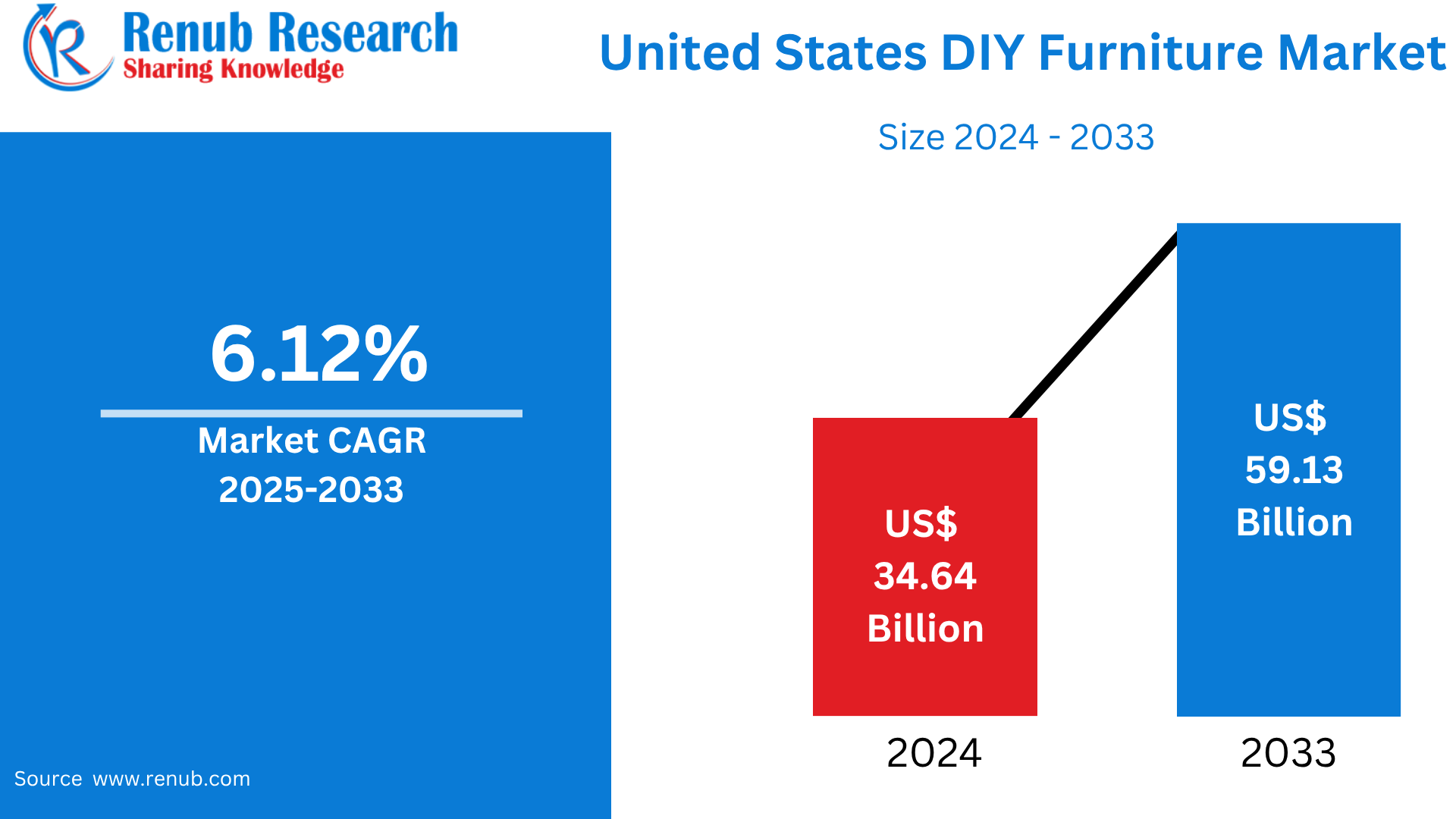
United States DIY Furniture Market is expected to reach US$ 59.13 billion by 2033 from US$ 34.64 billion in 2024, with a CAGR of 6.12% from 2025 to 2033. The United States DIY Furniture Market is expected to experience steady growth over the forecast period, driven by rising consumer preference for customization, affordability, and sustainability in home furnishing solutions.
United States DIY Furniture Industry Overview
The United States DIY Furniture Market is witnessing notable growth as consumers increasingly embrace self-assembly and customizable furniture solutions. Changing lifestyle trends, growing urbanization, and the popularity of home improvement activities have significantly influenced the demand for DIY furniture. These products offer cost-effective and flexible furnishing options, enabling consumers to personalize living spaces according to their needs. The rising influence of e-commerce and online design tools has also simplified the process of purchasing and assembling furniture, appealing especially to younger demographics and first-time homeowners seeking creative and budget-friendly solutions.
Sustainability is a key factor shaping the industry, as eco-conscious consumers prioritize materials with low environmental impact. Manufacturers are focusing on producing modular and recyclable furniture using sustainable wood, metal, and composite materials. The growing trend of small-space living, particularly in urban areas, has accelerated demand for multifunctional and space-saving DIY furniture. Moreover, the rise of social media platforms and digital influencers promoting home décor has contributed to heightened interest in DIY and home customization projects. The market also benefits from advancements in design and packaging that make furniture assembly easier and more accessible to a broader customer base.
Furthermore, the U.S. market is marked by the presence of both domestic and international players offering diverse furniture styles, materials, and designs. Continuous innovation in materials and assembly techniques has improved product durability and customer satisfaction. However, challenges such as fluctuating raw material costs and competition from ready-to-use furniture persist. Despite these constraints, increasing consumer awareness, product innovation, and online retail expansion are expected to drive long-term growth in the United States DIY Furniture Market, as consumers continue to seek affordable, stylish, and environmentally responsible furnishing options.
Key Factors Driving the United States DIY Furniture Market Growth
Rising Demand for Affordable and Customizable Furniture Solutions
Affordability and personalization are major drivers of the United States DIY Furniture Market. Consumers are increasingly opting for furniture that allows them to express individuality while staying within budget. DIY furniture offers flexible design options, allowing users to modify layouts, colors, and finishes to match personal preferences. With rising housing costs and smaller living spaces, consumers value the adaptability and functionality that modular furniture provides. Additionally, DIY furniture eliminates assembly labor costs, making it an attractive choice for cost-conscious buyers. The convenience of flat-pack designs and step-by-step assembly instructions has made these products accessible to a wider audience, further boosting their appeal across various consumer segments.
Growing Popularity of Online Retail and E-Commerce Platforms
The rapid growth of e-commerce has significantly transformed the DIY Furniture Market in the United States. Online platforms provide consumers with access to a wide range of customizable furniture options, price comparisons, and detailed assembly tutorials. Retailers have also introduced augmented reality tools that allow customers to visualize furniture placement in their homes before purchase. This digital shift has made DIY furniture shopping more convenient, especially for tech-savvy and younger consumers. The rise of direct-to-consumer brands offering affordable and sustainable designs has intensified competition while expanding product diversity. As online retail channels continue to evolve, they are expected to remain a key growth enabler for the DIY furniture industry.
Increasing Focus on Sustainability and Eco-Friendly Materials
The growing awareness of environmental sustainability has encouraged consumers to adopt eco-friendly lifestyles, driving demand for DIY furniture made from sustainable and recyclable materials. Manufacturers are introducing furniture crafted from responsibly sourced wood, bamboo, and recycled composites to meet this rising demand. Additionally, flat-pack furniture reduces shipping costs and carbon emissions, aligning with green consumer preferences. Companies are also emphasizing modular designs that allow users to repair, reuse, or reconfigure furniture, extending product life cycles and reducing waste. These sustainability-driven innovations have enhanced the appeal of DIY furniture among environmentally conscious consumers and strengthened the market’s long-term growth outlook.
Challenges in the United States DIY Furniture Market
Quality and Durability Concerns
One of the primary challenges in the United States DIY Furniture Market is maintaining product quality and durability. While DIY furniture offers affordability and convenience, some consumers perceive it as less robust than traditional pre-assembled furniture. Frequent assembly and disassembly can compromise structural integrity, especially in low-cost products made from lightweight materials. Manufacturers face the challenge of balancing cost-efficiency with durability to ensure long-lasting products. Negative customer experiences related to poor material quality or difficult assembly processes can impact brand reputation. To overcome this, companies must invest in superior materials, ergonomic designs, and user-friendly assembly systems to enhance reliability and consumer trust.
Supply Chain and Raw Material Volatility
Fluctuations in raw material prices and supply chain disruptions pose challenges for DIY furniture manufacturers. Dependence on wood, metal, and other construction materials makes the market sensitive to inflation and global trade conditions. Delays in material sourcing and logistics can increase production costs, ultimately affecting retail pricing. Additionally, environmental regulations on material sourcing add complexity to supply chain management. Manufacturers must adapt by diversifying suppliers, adopting sustainable sourcing practices, and optimizing logistics to ensure stability. Managing cost fluctuations while maintaining competitive pricing remains a significant challenge in sustaining profit margins and ensuring consistent market growth.
United States DIY Furniture Market Overview by States
The United States DIY Furniture Market exhibits strong growth across key regions, including California, Texas, New York, and Florida, driven by urbanization, online retail expansion, and increasing consumer interest in home improvement and customization. The following provides a market overview by States:
California DIY Furniture Market
The California DIY Furniture Market is expanding due to the state’s high concentration of urban dwellers and environmentally conscious consumers. Strong demand for space-saving, modular, and sustainable furniture supports steady market growth. The popularity of home renovation projects and online retail platforms has made DIY furniture a preferred choice among homeowners and renters. California’s sustainability-focused lifestyle encourages the use of eco-friendly materials and recyclable designs. The growing trend of remote work has also spurred investments in customizable home office setups. With its emphasis on creativity, design flexibility, and environmental responsibility, California continues to represent a key regional hub for DIY furniture innovation and demand.
Texas DIY Furniture Market
The Texas DIY Furniture Market is driven by a rapidly growing population, expanding housing developments, and increasing interest in personalized home décor. Consumers in Texas value affordable and functional furniture that accommodates large residential spaces and diverse design preferences. The state’s strong e-commerce adoption and rising do-it-yourself culture have supported the popularity of modular and easy-to-assemble furniture. Additionally, growing awareness of sustainable home solutions is influencing purchase decisions, encouraging manufacturers to introduce eco-friendly product lines. As real estate development and homeownership continue to rise, the demand for customizable and budget-conscious DIY furniture is expected to strengthen across both urban and suburban markets in Texas.
New York DIY Furniture Market
The New York DIY Furniture Market benefits from a dense urban population and a strong culture of home customization. Limited living space in apartments and condos drives demand for compact, modular furniture solutions. Consumers in New York prioritize modern, multifunctional, and space-efficient designs that fit into small homes. The prevalence of online retail channels and home improvement platforms makes DIY furniture accessible to a wide audience. Additionally, the growing interest in eco-friendly materials and minimalist design trends aligns with consumer preferences. As younger professionals and renters seek cost-effective furnishing solutions, the DIY furniture market in New York continues to expand, reflecting a strong focus on innovation, convenience, and sustainability.
Florida DIY Furniture Market
The Florida DIY Furniture Market is growing steadily, supported by the state’s thriving real estate sector and increasing home renovation activities. The warm climate and diverse housing styles influence the demand for lightweight, functional, and stylish furniture options. Florida’s strong tourism and rental property markets have also encouraged investments in affordable and customizable furniture. Consumers show a growing preference for eco-friendly materials and easy-to-assemble designs that complement modern interiors. The expansion of online furniture retail platforms and rising do-it-yourself culture among homeowners contribute to sustained market growth. With increasing urbanization and a strong focus on home décor trends, Florida remains an important regional contributor to the United States DIY Furniture Market.
Market Segmentations
Material
- Metal
- Plastic
- Wood
- Glass
- Others
Product Type
- Storage & Organization
- Seating
- Tables & Desks
- Shelving Units
- Beds & Bedroom
- Kitchen & Dining
- Others
End User
- Individual Consumers
- Retailers
- Contractors
- Interior Designers
- Others
Distribution Channel
- Offline
- Online
States
- California
- Texas
- New York
- Florida
- Illinois
- Pennsylvania
- Ohio
- Georgia
- New Jersey
- Washington
- North Carolina
- Massachusetts
- Virginia
- Michigan
- Maryland
- Colorado
- Tennessee
- Indiana
- Arizona
- Minnesota
- Wisconsin
- Missouri
- Connecticut
- South Carolina
- Oregon
- Louisiana
- Alabama
- Kentucky
- Rest of United States
All the Key players have been covered
- Overviews
- Key Person
- Recent Developments
- SWOT Analysis
- Revenue Analysis
Company Analysis:
- Global Upholstery
- Herman Miller
- Steelcase
- Ikea
- Wipro Furniture
- Godrej & Boyce
- Williams-Sonoma
- Creative Wood
- Kinnarps
- Kokuyo
Report Details:
| Report Features | Details |
| Base Year |
2024 |
| Historical Period |
2021 - 2024 |
| Forecast Period |
2025 - 2033 |
| Market |
US$ Billion |
| Segment Covered |
Material, Product Type, End User, Distribution Channel and States |
| States Covered |
|
| Companies Covered |
|
| Customization Scope |
20% Free Customization |
| Post-Sale Analyst Support |
1 Year (52 Weeks) |
| Delivery Format |
PDF and Excel through Email (We can also provide the editable version of the report in PPT/Word format on request) |
Customization Services available
- Analysis of Market Size and Its Segments
- More Company Profiles (Upto 10 without any additional cost):
- Additional Countries (Other than mentioned Countries):
- Region/Country Specific Reports:
- Market Entry Strategy:
- Region-Specific Market Dynamics:
- Regional Market Share Analysis:
- Trade Analysis:
- Production Insights:
- Others Customized Requests:
For more information contact our analysts.
Need More Assistance?
- Talk to our analysts to get more precious information on the current market trends.
- Include more countries and segments and customize the report based on the final requirement.
- Get a competitive advantage in your industry by knowing the report findings and making a positive impact on your revenues and operations.
- Our analysts are always ready to provide more help and pertinent information if you need any additional assistance.