United States Cannabis Market Report by Source, Derivatives, End Use, States and Company Analysis 2026-2034
Buy NowUnited States Cannabis Market Size & Forecast 2026-2034
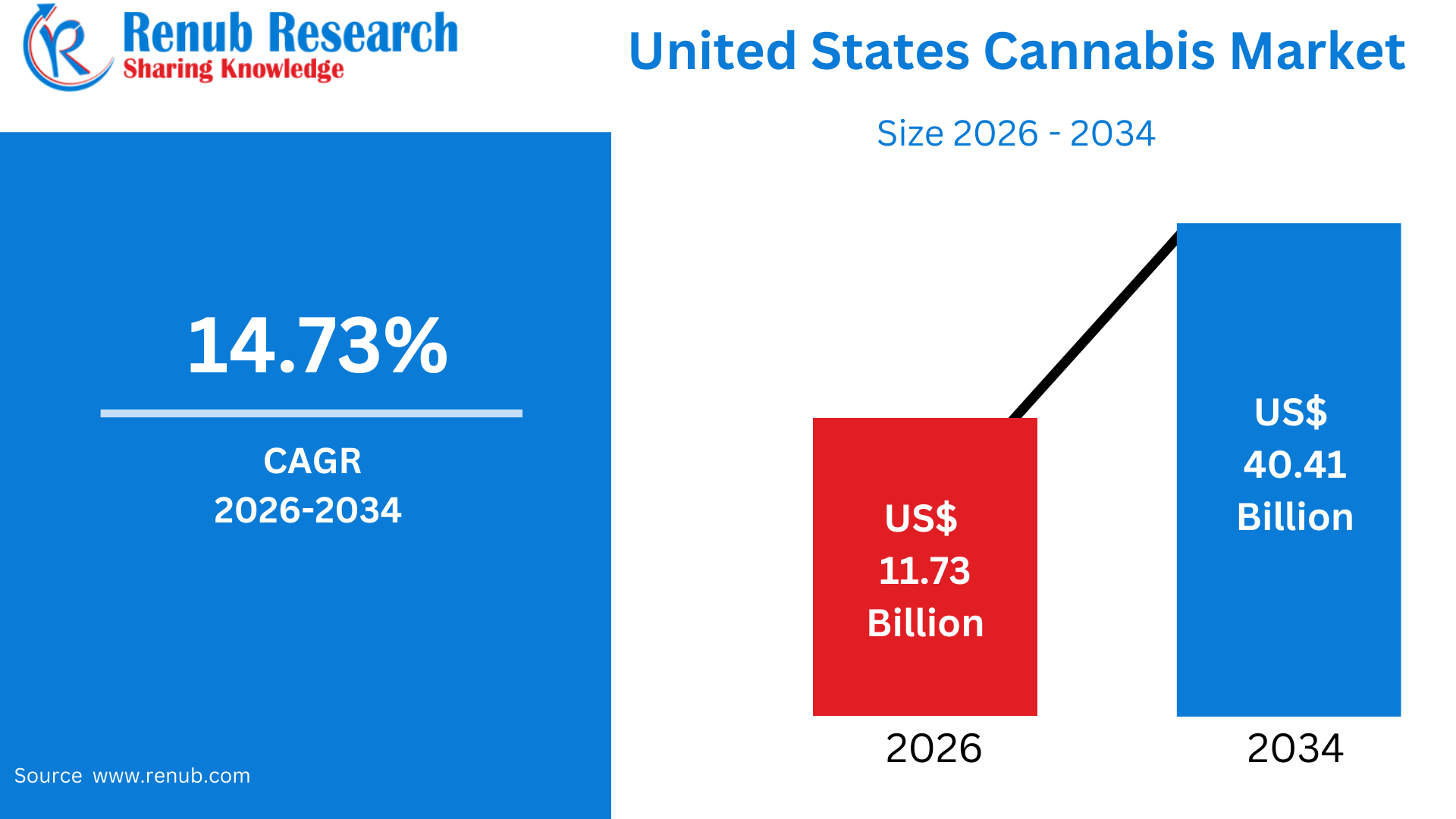
The United States Cannabis Market is also set to grow substantially, rising from USD 11.73 Billion in 2025 to USD 40.41 Billion in 2034, with a CAGR of 14.73% from 2026 to 2034. This is owing to increased legalization in different states, acceptance of marijuana use for medicinal as well as recreation purposes, along with massive investments in farming, stores, as well as developments in products. In line with rising diversifications within consumer spending, the U.S. marijuana industry is also bound to emerge as one of the rapidly expanding controlled markets within the country.
United States Cannabis Market Outlook
Cannabis is a plant that has active molecules called cannabinoids, mainly THC and CBD, which affect the body’s endocannabin system to produce a certain effect, whether medicinal or psychoactive. It is used in different ways: as dried flowers, edibles, oils, tinctures, and extracts. This plant, which was limited in the past, has experienced a resurgence in popularity owing to its usefulness in easing pain, alleviating anxiety, enhancing sleep, and treating chronic ailments. The fact that the plant has multiple uses has led to increased user engagement.
In the United States, marijuana has been on the rise as the legalization of use, whether for medicinal and/or recreation, continues to spread throughout multiple states. Societal norms, scientific acceptance, and overall regulations have led to increased acceptance of marijuana use. Throughout America, millions of people use marijuana for purposes of wellness, recreation, as well as medicinal use, thanks to a developing industry that supports such use with products aimed at a widened base of customers. On top of that, product development, including micro-dosed edibles, vape, beverages, and CBD wellness products, has led to increased acceptance.
Growth Drivers of the United States Cannabis Industry
Increasing Legalization and Mainstream Acceptance
The quickly intensifying legalization trend throughout states within the U.S. is still, hands down, the most significant factor propelling the growth of the cannabis industry. The more states that support marijuana use for medicinal and/or recreation purposes, the more people who have accessibility, leading to a dramatic increase in consumer participation. This is made possible by a shift in cultural acceptance, societal support, and the confirmation of the product’s usefulness by scientific research into relieving pain, anxiety, sleep, and the treatment of chronic illnesses. Job stimulation, taxes, and infrastructure development within the industry are additional reasons for states to legalize, which in turn leads to a historical positive shift. Additionally, the establishment of dispensaries with regulations removes the negative factor of buying from the street, giving the consumer a purified product, which leads to increased acceptance. According to Pew Research Center, "About nine-in-ten U.S. adults say that marijuana should be legal for use for medicinal and recreation purposes, or legal for medicinal use only, with 54% taking the former position and 33% taking the latter. An additional 12% say that marijuana should not be legal at all. Attitudes have remained stable on these questions when surveyed in January over the past six years.”
Product Innovations and Diversifications in Different Consumer Segments
Innovations in product categories such as edibles, beverages, concentrates, pre-rolled products, topicals, and vapor products are changing the face of the cannabis industry. New products are attractive to customers who do not want to consume through the commonly used inhalation methods, thus increasing the base of customers. The development of micro-dosed, fast-acting, and functional versions is making the product more appealing to customers who want wellness but are limited by the effect sizes. Companies are developing terpene-dense strains, pre-rolled infused products, solventless extracts, and more for high-end customers. The increased development of minor cannabinoids such as CBG, CBN, and THCV is providing a new path for recreation as well as use for wellness. Packaging, taste development, and brand creation are making the product competitive with mainstream goods. Nov. 2025 – MariMed, a leader in the consumer packaged goods sector of the cannabis industry with a presence in diversified sectors, has stated the development of a product agreement that allows the Company to enter the rapidly blossoming hemp-derived THC industry.
Increasing Use in Medicine and Integration with Healthcare Discourse
The medical marijuana industry remains on a growth trajectory with increased acceptance by doctors and patients alike in recognizing marijuana as a legitimate treatment alternative. Patients consume marijuana to suppress chronic pain, anxiety, inflammation, cancer, epilepsy, and insomnia, which are typically alleviated with pharmaceutical medications that have more severe side effects. The opioid epidemic has further fueled the need for safer alternatives for people suffering from chronic pain, making marijuana a healthy add-on in harm reduction. The medical marijuana initiative is taking a more organized structure within U.S. states with organized dosing, improved products, and patient education. Increased scientific research, as well as talks on insurance coverage, has further legitimized marijuana within the medical arena. Sep 2025— The Cannabist Company Holdings Inc., which has been one of the most experienced cultivators, manufacturer, and marketers of marijuana-derived products within the U.S., revealed that it has joined hands with Queen Mary, the award-winning California wellness-oriented marijuana brand, which has been recognized for the development of unique pot mixes that combine plant medications with healthy supplements. The brand’s best-selling Sativa Rosin and Indica Rosin gummies are set to go on sale in all 19 Cannabist Company retail stores in Colorado from this week.
Challenges in the United States Cannabis Market
The Problem of Regulatory Fragmentation and Federal Legal Uncertainty
It is still illegal on a federal level in the USA, making for a complicated nationwide set of regulations that vary from state to state. Every state imposes different guidelines on licensing, growing, packaging, strength, taxes, and transportation, making it hard for businesses to expand nationwide. Inter-state trade is still illegal, making businesses set up unnecessary facilities in every state that has legalized it, making it even more expensive. Additionally, lack of federal regulation means limited use of bank services, making businesses operate on a lot of cash, which is not only a safety problem but also a regulatory compliance nightmare. Even with high demand, the sector has still not been able to reach its full potential.
High Taxes, Illicit Market Competition, and Pricing Pressures
High state and local pot taxes drive up retail prices, making it more expensive to buy legal weed compared to what can be obtained from illegal sources. This price discrepancy keeps the illegal markets afloat, with states that lack robust enforcement mechanisms taking longer to issue licenses a prime breeding ground for such markets. This makes illegal vendors charge lower prices with a wider reach, cutting into the income generated from the legal trade. On the other hand, overproduction in some states has pushed wholesale prices downward, making it no longer profitable to grow, make, and, most importantly, sell weed.
United States Cannabis Flower Market
The flower segment remains the biggest and most established within the U.S. marijuana market. The consumers are drawn to the affordability, strain options, terp profiles, and quick onset of effects. The flower is appealing to the established customers as well as newcomers who prefer a natural, minimally processed product. New genetics from breeders are constantly being introduced with improved potency, aroma, and flavor profiles, ensuring that the flower segment remains fresh and competitive. Notwithstanding the growth of the edible and vape sectors, the flower sector's popularity has been attributed to its usability for both smoking, vaporizing, and infusing. The high-quality indoor flower segment would attract a segment of customers who are looking to pay a premium price for high-quality flower.
Pre-rolls are considered one of the most rapidly growing areas because of convenience, predictability, and portability. Consumers also tend to prefer pre-rolls because of the convenience of use, as they do not require grinding or rolling. Companies are now providing customers with infused pre-rolls with extracts or kief. This is resulting in increased potency. Multi-packs, as well as pre-rolls with different flavors, serve a purpose for customers looking for a product that is shareable. It is also a preferred product for beginners looking for precise dosing with easy usability. It has been noticed that pre-rolls are transforming into a lifestyle product, similar to specialty cigarettes.
United States Medical Marijuana Market
The medical marijuana category is very essential in determining the national marijuana scene. Patients consume medical marijuana as a result of chronic pain, for cancer support, for epilepsy, PTSD, as well as for autoimmune conditions. The medial marijuana has the advantage of high potency, which is tailored, and there are physician recommendations. Patients who consume medial marijuana mostly prefer capsules, tinctures, topicals, as well as products that are a mixture of CBD/THC. The medial marijuana has the advantage of a scientific alternative to pharmaceuticals and opioids. The category is steadily growing because more states are recognizing medial marijuana with a support system for patients.
United States Adult Use (Recreational) Cannabis Market
The overall adult use marijuana market is accountable for most of the revenues in states that support the sale of marijuana for recreational use. Customers buy marijuana for purposes of relaxation, health, creativity, socialization, and enjoyment. This category comprises a myriad of different products such as edibles, drinks, concentrates, vape products, as well as marijuana flowers. Store experiences, innovation in brand design, and the availability of products play a pivotal role in instilling customer loyalty. The legalization of marijuana for adult use leads to increased customer engagement, government revenues, as well as improved value chains. The increase in states switching from a medical marijuana regime to a recreational regime means that the adult use segment is poised to take center stage on a national front.
United States THC-Dominant Cannabis Industry
THC-dominant products are most popular because of their high psychoactive properties. High-THC flowers, concentrates, and edibles are mostly bought by experienced consumers. High-THC breeds are locally being developed by growers. So, a differentiator is introduced. THC-dominant products are used for recreational purposes as well as for relieving patients from issues such as pain, nausea, and insomnia. The segment is subject to strict government regulations in terms of maximum allowed potency, packaging, and dose. The demand is also high; hence, a huge source of revenue is generated by this segment in the medical as well as recreation sector.
United States Minor Cannabinoids Market
Area of interest in the other minors, such as CBG, CBN, CBC, and THCV, is quickly escalating. The distinct properties of these molecules, such as CBN for sleep, CBG for inflammation, and THCV for appetite suppression, are diversifying the uses of the entire plant. Products for this segment are being developed in the form of tinctures, capsules, infused foods, and wellness products. The minors are appealing to a user who wants a different effect from what is obtained with the regular product. The demand for specialty cannabinoid drinks is predicted to rise with advancements in research.
California Marijuana Market
The biggest and most significant marijuana market in the United States is in California. This is because a diverse group of consumers, a rich marijuana culture, and a marijuana farming environment make the state a hub with significant demand for all types of marijuana products. The state is the leader when it comes to high-quality indoor flower marijuana, solventless extracts, infused drinks, and artfully prepared marijuana edibles. Although the state has taxes on marijuana products that pose a significant barrier, it’s still a breeding ground for innovations in marijuana products.
New York Cannabis Market
New York is a rising force in the U.S. cannabis space, thanks to its population size, robust consumer demand, and rapidly developing licensing structure. New York is a leader in prioritizing equitable licensing, social justice, and consumer-friendly regulations. The cultural hub that New York City is makes New York a leader in the development of branded, lifestyle, and experiential offerings. Now that dispensaries are rolling out, New York is set to become one of the fastest-growing markets in the cannabis sector.
Washington Marijuana Industry
Washington is one of the earliest states that has legalized the use of marijuana, resulting in a mature environment for the sector. Washington is recognized as a state that has a highly developed growing infrastructure, with low prices as a result of high consumer activity. The state focuses on high standards, with a lot of innovation happening in the concentrate, vape, and edible sectors. Washington has a highly experienced operator base, making it a bedrock of the West Coast marijuana industry.
Market Segmentation
Product Type
- Flower
- Pre-Rolls
- Concentrates
- Edibles
- Beverages
- Capsules/Soft-Gels
- Topicals and Transdermals
- Tinctures/Sublinguals
- Other Product Types
Application
- Medical (Rx)
- Adult-Use/Recreational
- Wellness and Nutraceuticals
Compound Type
- THC-Dominant
- CBD-Dominant
- Balanced THC: CBD
- Minor Cannabinoids
- Terpene/Flavonoid-rich Extracts
Top States
- California
- Texas
- New York
- Florida
- Illinois
- Pennsylvania
- Ohio
- Georgia
- New Jersey
- Washington
- North Carolina
- Massachusetts
- Virginia
- Michigan
- Maryland
- Colorado
- Tennessee
- Indiana
- Arizona
- Minnesota
- Wisconsin
- Missouri
- Connecticut
- South Carolina
- Oregon
- Louisiana
- Alabama
- Kentucky
- Rest of United States
All companies have been covered with 5 Viewpoints
- Overviews
- Key Person
- Recent Developments
- SWOT Analysis
- Revenue Analysis
Company Analysis:
- Canopy Growth Corporation
- Tilray Brands, Inc.
- Curaleaf
- Aurora Cannabis Inc.
- Jazz Pharmaceuticals plc.
- Green Thumb Industries (GTI)
- Trulieve
- Cresco Labs
- Organigram Global
- TerrAscend
Report Details:
| Report Features | Details |
| Base Year |
2025 |
| Historical Period |
2022 - 2025 |
| Forecast Period |
2026 - 2034 |
| Market |
US$ Billion |
| Segment Covered |
Source, Derivatives, End Use, States |
| States Covered |
|
| Companies Covered |
|
| Customization Scope |
20% Free Customization |
| Post-Sale Analyst Support |
1 Year (52 Weeks) |
| Delivery Format |
PDF and Excel through Email (We can also provide the editable version of the report in PPT/Word format on request) |
Customization Services available
- Analysis of Market Size and Its Segments
- More Company Profiles (Upto 10 without any additional cost):
- Additional Countries (Other than mentioned Countries):
- Region/Country Specific Reports:
- Market Entry Strategy:
- Region-Specific Market Dynamics:
- Regional Market Share Analysis:
- Trade Analysis:
- Production Insights:
- Others Customized Requests:
For more information contact our analysts.
Need More Assistance?
- Talk to our analysts to get more precious information on the current market trends.
- Include more countries and segments and customize the report based on the final requirement.
- Get a competitive advantage in your industry by knowing the report findings and making a positive impact on your revenues and operations.
- Our analysts are always ready to provide more help and pertinent information if you need any additional assistance.