United States Botanical Supplements Market Report by Source, Form, Distribution Channel, States and Company Analysis, 2025-2033
Buy NowUnited States Botanical Supplements Market Size and Forecast
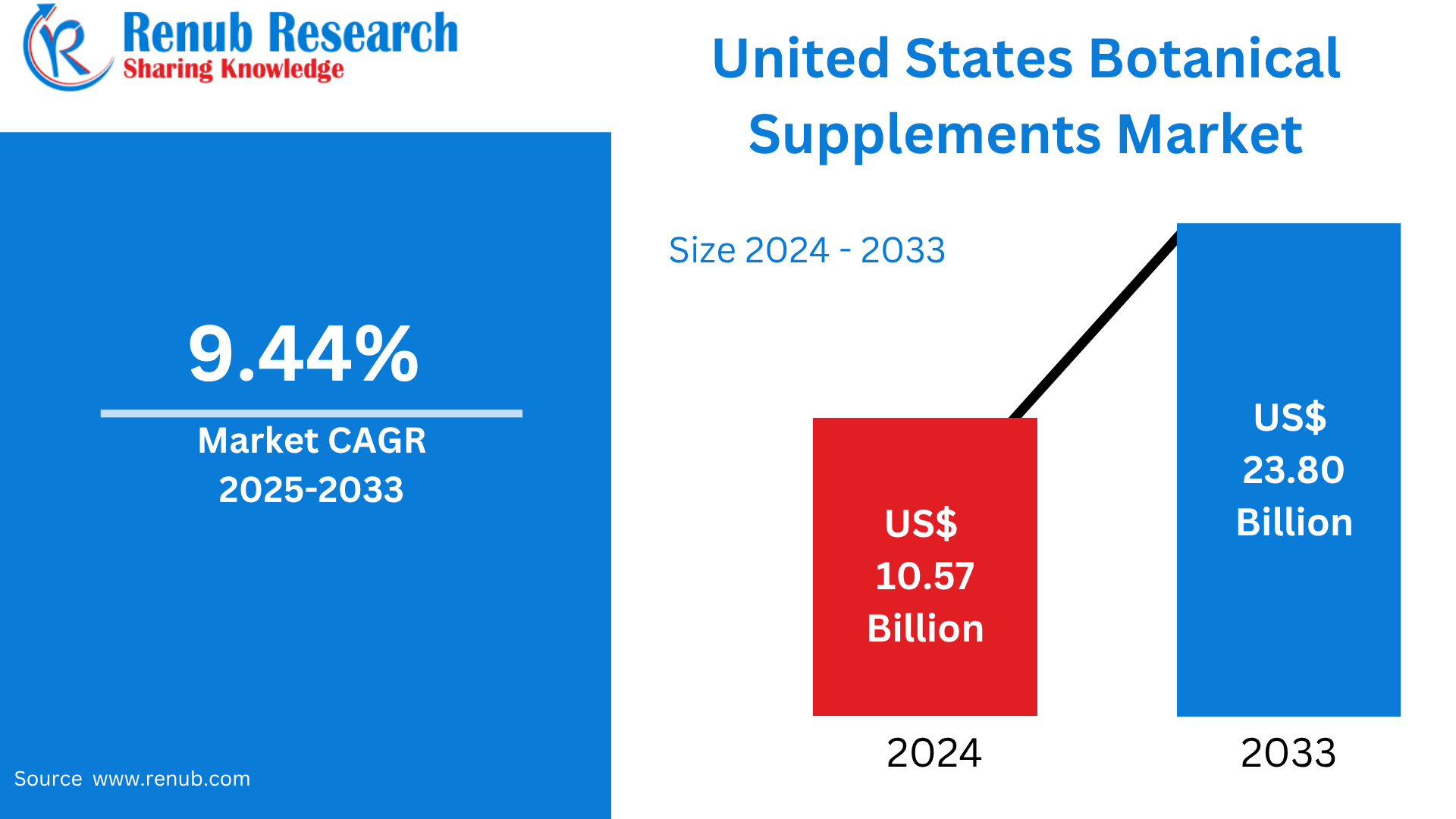
United States Botanical Supplements Market is expected to reach US$ 23.8 billion by 2033 from US$ 10.57 billion in 2024, with a CAGR of 9.44% from 2025 to 2033. The United States Botanical Supplements Market is projected to expand steadily during the forecast period, driven by growing health consciousness, rising demand for natural products, and increasing consumer preference for preventive healthcare solutions.
United States Botanical Supplements Industry Overview
The United States Botanical Supplements Market is witnessing consistent growth as consumers increasingly shift toward natural and plant-based products for health and wellness. Rising awareness about the benefits of herbal and botanical ingredients, combined with growing skepticism toward synthetic pharmaceuticals, has significantly boosted the demand for botanical supplements. These products, derived from herbs, roots, and plant extracts, are being widely used to support immunity, digestion, mental well-being, and overall vitality. The growing aging population, along with increasing focus on preventive healthcare, has further fueled market expansion. The popularity of supplements containing ingredients such as turmeric, ginseng, echinacea, and ashwagandha continues to grow across various consumer demographics.
Manufacturers are focusing on product innovation, transparency, and quality assurance to meet evolving consumer expectations. The demand for organic, non-GMO, and sustainably sourced botanical ingredients has risen sharply, prompting companies to adopt clean-label practices and improve traceability throughout the supply chain. E-commerce and digital retail channels are playing a crucial role in expanding accessibility and awareness, allowing brands to reach consumers directly and promote personalized supplement solutions. Furthermore, partnerships between supplement producers and healthcare professionals are strengthening product credibility and driving adoption among health-conscious consumers. Advances in extraction technologies and formulation techniques are also enhancing product efficacy and stability, contributing to the market’s overall growth trajectory.
Despite the positive outlook, the market faces challenges such as regulatory complexity and quality standardization. The absence of uniform guidelines for labeling and product claims poses risks to consumer trust and brand reputation. However, ongoing efforts by industry stakeholders and government agencies to establish stricter quality regulations are expected to enhance transparency and accountability. The growing influence of functional foods, nutraceuticals, and wellness trends continues to support the long-term potential of botanical supplements. With increasing focus on sustainability, innovation, and consumer education, the United States Botanical Supplements Market is set to maintain steady growth in the years ahead.
Key Factors Driving the United States Botanical Supplements Market Growth
Rising Health Awareness and Shift Toward Natural Remedies
Increasing awareness about preventive healthcare and natural wellness is a major driver of the United States Botanical Supplements Market. Consumers are becoming more health-conscious and are seeking safer, plant-based alternatives to synthetic medicines. The growing prevalence of lifestyle-related diseases, such as obesity, diabetes, and cardiovascular issues, has accelerated the adoption of botanical supplements as part of daily health routines. Additionally, the influence of holistic and alternative medicine practices has expanded consumer understanding of the therapeutic potential of herbal products. Millennials and older adults alike are embracing botanical supplements for their perceived purity, minimal side effects, and overall health benefits. The rising trend of self-care and preventive health management further supports consistent market demand, positioning botanical supplements as essential components of the modern wellness and nutrition landscape in the U.S.
Growing Popularity of E-commerce and Digital Wellness Platforms
The increasing penetration of e-commerce and digital health platforms is significantly driving the growth of the United States Botanical Supplements Market. Online retail channels offer consumers convenient access to a wide range of herbal products, supported by detailed ingredient information and transparent reviews. This accessibility enables informed decision-making and fosters trust in natural supplement brands. Social media and digital marketing campaigns have also played a pivotal role in promoting botanical supplements, especially among younger consumers seeking organic and sustainable options. Subscription-based wellness programs and direct-to-consumer business models are expanding brand reach and customer loyalty. Furthermore, the integration of artificial intelligence and data analytics into digital retail is enhancing personalization, allowing companies to recommend supplements based on individual health goals. The continued expansion of digital commerce is expected to accelerate product adoption across diverse consumer segments.
Innovation and Product Diversification
Continuous innovation in formulation and product development is a key factor propelling the United States Botanical Supplements Market. Manufacturers are investing in research to improve bioavailability, taste, and delivery formats, ensuring greater consumer satisfaction. The introduction of novel forms such as gummies, powders, tinctures, and ready-to-drink beverages has expanded consumer appeal beyond traditional capsules and tablets. Companies are also focusing on combining botanical ingredients with vitamins, minerals, and probiotics to create multifunctional supplements that address multiple health concerns simultaneously. This diversification caters to consumers seeking comprehensive wellness solutions. Additionally, clean-label and organic certifications have become essential for brand differentiation, encouraging transparency in sourcing and manufacturing practices. By leveraging advanced extraction technologies and sustainable ingredient sourcing, companies are enhancing both product quality and environmental responsibility, driving long-term growth and consumer trust in the botanical supplements sector.
Challenges in the United States Botanical Supplements Market
Regulatory Uncertainty and Quality Control Issues
One of the primary challenges in the United States Botanical Supplements Market is the lack of consistent regulatory oversight and quality assurance. Unlike pharmaceutical products, supplements are not subject to stringent pre-market approvals, leading to variations in formulation, labeling, and claims. This inconsistency has raised concerns about product efficacy and safety among consumers and healthcare professionals. The presence of adulterated or misbranded products in the market further complicates trust and transparency. Manufacturers face the ongoing challenge of complying with evolving guidelines issued by the FDA and other regulatory bodies. Establishing standardized quality testing, traceability, and labeling systems remains crucial for long-term industry credibility. Companies that invest in third-party certifications, transparent sourcing, and clinical validation are better positioned to overcome regulatory hurdles and strengthen consumer confidence in botanical supplement products.
Market Competition and Consumer Misinformation
Intense market competition and widespread misinformation pose significant challenges for the United States Botanical Supplements Market. The growing number of brands and private-label manufacturers has led to product saturation and price sensitivity. Many consumers struggle to differentiate between high-quality and low-quality supplements, often influenced by misleading claims or inadequate product education. The rapid spread of unverified health information on digital platforms has further complicated purchasing decisions, affecting market credibility. Companies must focus on transparency, accurate labeling, and evidence-based marketing to retain consumer trust. Educating customers about the benefits, risks, and appropriate usage of botanical supplements is essential for fostering brand loyalty. Building partnerships with healthcare professionals and wellness experts can also help bridge the information gap, ensuring consumers make informed choices while strengthening brand reliability in a competitive and evolving marketplace.
United States Botanical Supplements Market Overview by States
The United States Botanical Supplements Market is regionally driven by states such as California, Texas, New York, and Florida, supported by high consumer health awareness, strong retail presence, and increasing preference for natural wellness products. The following provides a market overview by States:
California Botanical Supplements Market
The California Botanical Supplements Market is thriving due to the state’s strong culture of health consciousness, sustainability, and natural living. Consumers in California are highly inclined toward plant-based wellness products that align with organic and eco-friendly lifestyles. The growing popularity of herbal remedies, driven by wellness trends and preventive healthcare awareness, has encouraged manufacturers to introduce innovative and clean-label formulations. E-commerce platforms and health food stores in the region have significantly boosted product accessibility and brand visibility. Additionally, the state’s robust network of health professionals and alternative medicine practitioners promotes greater awareness of botanical supplements. Local manufacturers are emphasizing transparency, quality, and environmental responsibility in their sourcing and production processes. With strong consumer demand and evolving wellness preferences, California remains one of the most influential markets for botanical supplements in the United States.
Texas Botanical Supplements Market
The Texas Botanical Supplements Market is expanding steadily, fueled by rising consumer interest in natural health products and holistic wellness solutions. Increasing awareness of the benefits of herbal and plant-based supplements has boosted demand across urban and suburban regions. The state’s diverse demographic base and growing health-conscious population support wide-ranging product preferences, from immunity boosters to stress-relief formulations. Retail chains, pharmacies, and e-commerce channels play a vital role in improving market reach and product availability. Manufacturers are focusing on innovative formulations and regional branding to appeal to local consumers. Additionally, Texas’ increasing emphasis on preventive healthcare and fitness culture further encourages supplement adoption. The growing acceptance of clean-label, organic, and sustainably sourced products continues to shape the market’s evolution, positioning Texas as a key contributor to the national botanical supplements industry.
New York Botanical Supplements Market
The New York Botanical Supplements Market is witnessing consistent growth, driven by an urban population that prioritizes wellness, convenience, and natural health solutions. The state’s fast-paced lifestyle has increased interest in supplements promoting energy, immunity, and stress management. High awareness of preventive healthcare and the influence of wellness trends have led to a surge in demand for premium herbal formulations. Retail pharmacies, health food stores, and online platforms dominate distribution, offering consumers a wide selection of trusted brands. Manufacturers are leveraging digital marketing and influencer collaborations to enhance engagement and brand credibility. Additionally, the rise of organic and clean-label products reflects the state’s preference for transparency and quality. With its diverse consumer base and strong purchasing power, New York remains a major hub for botanical supplement consumption and innovation in the United States.
Florida Botanical Supplements Market
The Florida Botanical Supplements Market is growing rapidly, supported by the state’s large aging population, increasing health awareness, and favorable climatic conditions for natural ingredient sourcing. Consumers are increasingly incorporating botanical supplements into daily routines to support immunity, digestion, and overall wellness. The state’s strong tourism and hospitality sectors also contribute to demand, particularly for relaxation and energy-enhancing formulations. Retailers and online platforms have expanded product availability, while educational initiatives are raising awareness of the benefits of plant-based health solutions. Manufacturers are focusing on quality assurance, sustainability, and innovative delivery formats to meet evolving consumer expectations. Additionally, Florida’s proactive adoption of preventive healthcare practices aligns with the growing preference for natural and organic products. These factors collectively position Florida as one of the most dynamic and opportunity-rich markets for botanical supplements in the United States.
Recent Developments in U.S. Botanical Supplements Market
- Modine In April 2025, VIVAZEN unveiled Botanical Gummies, their newest product. These candies offer a tasty and practical way to boost vitality, improve concentration, encourage relaxation, and elevate mood. Active botanical elements are used in the creation of each product, guaranteeing a wonderful taste without any unpleasant aftertaste.
- January 2025: In order to increase its online visibility, iHerb opened a storefront on the Albertsons Companies platform in the US. Through the Albertsons retail network, this expansion enables iHerb to reach a larger client base and provide customers with access to iHerb's product assortment through the Albertsons digital marketplace.
- December 2024: A new 28-count PartySmart bottle has been released by Himalaya Wellness, a range of herbal and plant-based supplements and personal care products. Customers now have more options for family sharing, social gatherings, and home storage because to the herbal formula's larger packaging format.
- In February 2024, Herbalife launched nutrition companion product combinations in the US for people on GLP-1 weight-loss drugs. Both Classic and Vegan versions of these products are available from the brand.
Market Segmentations
Source
- Leaves
- Spices
- Herbs
- Flowers
- Others
Form
- Powder
- Liquid
- Tablets
- Capsules
- Gummies
- Others
Distribution Channel
- Offline
- Online
States
- California
- Texas
- New York
- Florida
- Illinois
- Pennsylvania
- Ohio
- Georgia
- New Jersey
- Washington
- North Carolina
- Massachusetts
- Virginia
- Michigan
- Maryland
- Colorado
- Tennessee
- Indiana
- Arizona
- Minnesota
- Wisconsin
- Missouri
- Connecticut
- South Carolina
- Oregon
- Louisiana
- Alabama
- Kentucky
- Rest of United States
All the Key players have been covered
- Overviews
- Key Person
- Recent Developments
- SWOT Analysis
- Revenue Analysis
Company Analysis:
- Dabur India
- NBTY Inc.
- Ricola AG.
- PLT Health Solution
- Mondelez International
- Procter and Gamble
- Nutraceutical International Company
- BASF SE
- The Himalaya Drug Company
Report Details:
| Report Features | Details |
| Base Year |
2024 |
| Historical Period |
2021 - 2024 |
| Forecast Period |
2025 - 2033 |
| Market |
US$ Billion |
| Segment Covered |
Source, Form, Distribution Channel and States |
| States Covered |
|
| Companies Covered |
|
| Customization Scope |
20% Free Customization |
| Post-Sale Analyst Support |
1 Year (52 Weeks) |
| Delivery Format |
PDF and Excel through Email (We can also provide the editable version of the report in PPT/Word format on request) |
Customization Services available
- Analysis of Market Size and Its Segments
- More Company Profiles (Upto 10 without any additional cost):
- Additional Countries (Other than mentioned Countries):
- Region/Country Specific Reports:
- Market Entry Strategy:
- Region-Specific Market Dynamics:
- Regional Market Share Analysis:
- Trade Analysis:
- Production Insights:
- Others Customized Requests:
For more information contact our analysts.
Need More Assistance?
- Talk to our analysts to get more precious information on the current market trends.
- Include more countries and segments and customize the report based on the final requirement.
- Get a competitive advantage in your industry by knowing the report findings and making a positive impact on your revenues and operations.
- Our analysts are always ready to provide more help and pertinent information if you need any additional assistance.