United States Biscuits Market Report by Product, Type, Source, Distribution channel, States and Company Analysis 2026-2034
Buy NowUnited States Biscuits Market Size & Forecast 2026-2034
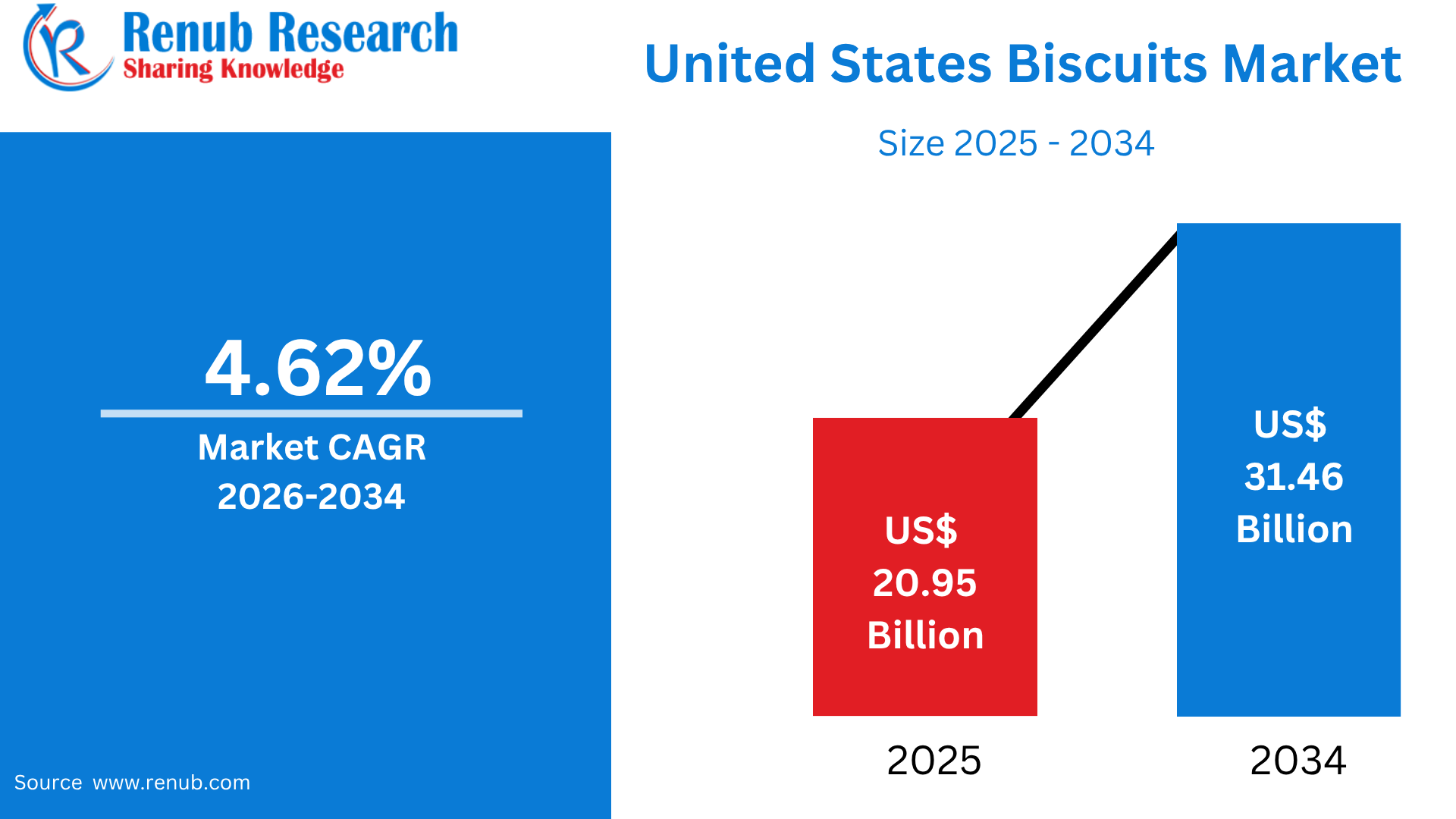
Market size of United States Biscuits Market estimated to increase from US$ 20.95 Billion in 2025 to US$ 31.46 Billion in 2034 at a compound annual growth rate (CAGR) of 4.62% between 2026 and 2034. Some of the factors that are driving market growth include increased demand for convenience snacking, growing consumption of premium and healthier biscuits, and widening distribution channels. The development of flavored, organic, and low sugar biscuits will also play a pivotal role in fueling market growth.
United States Biscuits Market Outlooks
Biscuits can be defined as baked food products that consist of flour, sugar, fat, and flavorings in varying proportions in the form of either sweet, savory, cream filled, or health conscious variants. In the U.S.A., biscuits are consumed widely as snacks, breakfasts, desserts, and convenient food products. It is generally served with tea, coffee, milk or is taken as a standalone quick energy food product. There are cookies, crackers, sandwich biscuits, digestive biscuits, and artisan biscuits in the market.
As the demand for health conscious food products is increasing in the country, more people are eating organically grown, low-calorie, gluten-free, and high fiber biscuits. The demand for biscuits in the country has been growing rapidly due to lifestyle changes, hectic work timings, and increasing demand for packaged foods. Biscuits are highly popular in America because of their accessibility through supermarkets, convenience stores, and online stores.
The major brands keep launching new products with unique flavors, functional ingredients, and attractive packaging designs. Seasonal factors, gift trends, and increasing consumption of premium foods have contributed largely to the popularity of biscuits in the U.S.A.
Healthy Biscuit Launches in the USA
2025 – BASE Cookies by BASE FOOD
Nutrient-dense healthy cookies with protein, fiber, and 21 vitamins & minerals launched in the US market.
* 2025 – belVita Energy Snack Bites by Mondelez
Whole-grain energy snack bites made with fruits and seeds for healthier snacking.
* 2025 – Sweet Loren’s Breakfast Biscuits
Gluten-free, plant-based breakfast biscuits with protein and fiber.
* 2025 – Entenmann’s Big Chunk Soft Baked Cookies
Premium soft-baked cookies launched with portable packaging and indulgent ingredients.
* 2024 – Chips Ahoy! Gluten-Free Cookies
Mondelez introduced its first certified gluten-free chocolate chip cookie in the USA.
* 2024 – Ritz Buttery-er Crackers
Limited-edition crackers featuring enhanced buttery flavor for snack consumers.
* 2024 – Hardee’s Blueberry Biscuit
Seasonal fruit-flavored breakfast biscuit launched nationwide in the US.
* 2024 – Oreo Coca-Cola Sandwich Biscuits
Limited-edition Oreo biscuit innovation launched through Coca-Cola collaboration.
* 2024 – Ritz Bits Spicy Queso Crackers
Bite-sized flavored cracker sandwiches were introduced to meet demand for bold snacks.
* 2025 – Ritz Hot Honey Crackers
Sweet-and-spicy flavored crackers were introduced by Mondelez for modern snack trends.
Growth Driver of the United States Biscuits Market
Rising Demand for Convenient and On-the-Go Snacks
The increasing demand for convenient and ready-to-eat food items has been one of the key factors propelling the growth of the US biscuits market. The changing lifestyles, along with the rise in the number of working people and urbanization in the country, has led to an increase in demand for snack items that are easy to carry and consume. Biscuits remain highly favored due to their low prices, availability, and ability to be consumed quickly. Portability and tasty snacks have become important factors for consumers who are looking to make their snacks more convenient and enjoyable. Consumers have also shown increased interest in single serving packagings and snack-sized biscuits. With the increasing presence of biscuits from supermarket chains, convenience stores, vending machines, and even online shopping sites, it becomes evident that there are even more opportunities to expand the market. Increased popularity of snacks provides excellent growth opportunities for biscuit producers in the USA. On September 2025, Callie’s Hot Little Biscuit, an iconic company located in Charleston, introduced two innovative varieties of their biscuits at 1400 Publix stores – Sea Salt Biscuit Crackers and Sharp Cheddar Biscuit Crackers.
Increasing Popularity of Healthier Biscuit Variants
Health-conscious consumers have played a vital role in the innovative development and success of the United States biscuits market. Consumers are preferring more healthy snacking options which come with less sugar content, fewer calories, and health benefits such as high-fiber content, including wholegrain, oats, and nuts. Manufacturers of the United States biscuits have been responding to consumers' demand by producing gluten-free, organic, vegan, protein-rich, and digestive biscuits. Awareness on the part of consumers about nutrition and health has resulted in higher demand for products that contain natural ingredients and healthy label formulations. There is also an increasing demand among parents to get healthy snacking options for their children. Moreover, consumers with special diets like those who suffer from diabetes and gluten intolerance are helping to create the demand. The demand for premium and healthy biscuits has risen because of higher disposable incomes and changing eating habits. Health-oriented innovations in product developments continue to increase the consumer base of the United States biscuits market. In January 2025, Mondelēz International introduced belVita Breakfast Biscuits in a high protein variety to cater to consumers who lead a physically active lifestyle.
Product Innovation and Expanding Premium Segment
Product innovations, including the development of various new products and flavors, along with the growing popularity of premium biscuits, have been identified as major drivers that will drive the growth of the United States biscuits market. New product innovation is essential for manufacturers to attract consumers' attention and retain their brand's competitiveness by providing innovative offerings. Premium biscuits offering chocolate coatings, gourmet fillings, and exotic tastes are gaining popularity as customers demand products that offer unique experiences. Seasonal launches, personalized packaging options, and limited edition releases are other factors driving the growth of the market by helping manufacturers build closer ties with consumers and generate revenue. Innovative health-conscious biscuits and eco-friendly packaging material offerings are other strategies used by manufacturers that enhance their brand value among environmentally conscious customers. With an increased use of social media, online shopping portals, and other marketing tools, manufacturers can now expand their market reach easily and introduce their products successfully. Moreover, disposable income and willingness to pay for premium products are other factors contributing positively to the market. Pladis July 2024, introducing the McVitie’s Signature range, a premium line of snacks with a selection of three new variants. These new products will comprise the following:
Caramel Chocolate Rounds, comprised of caramel surrounded by a crunchy biscuit and milk chocolate coating. Chocolate Caramel Biscuits, consisting of a golden biscuit layered with caramel, milk chocolate, and biscuit pieces. Chocolate Cream Swirls, featuring a chocolate cream filling sandwiched between two layers of crunchy and patterned biscuits.
Challenges of the United States Biscuits Market
Growing Health Concerns Regarding Sugar and Processed Foods
The other significant obstacle facing the US biscuits industry is the rising consumer perception about high sugar contents, artificial ingredients, and processed foods. Most of the traditional biscuits consist of high sugar contents, refined flours, saturated fat, and preservatives. These factors have become increasingly unpopular with health conscious customers in recent times. The growing realization regarding obesity, diabetes, heart disease, and improper dietary habits among consumers has resulted in their preference towards healthier options such as protein bars, fresh snacks, and nutritious food items. Consumers have become increasingly cautious about health and nutrition. The government campaigns for healthy food options and regulation of product labeling have further created pressures on manufacturers to change the composition of biscuits. This would not only increase the cost of production but also pose formulation difficulties in maintaining product quality.
Volatility in Raw Material Prices and Supply Chain Disruptions
Raw materials price volatility and interruptions within the supply chain pose considerable obstacles in the US biscuits market. Raw materials like wheat flour, sugar, cocoa, edible oils, dairy products, and packaging materials are very sensitive to price changes, weather factors, and shipping charges. Any spike in the price of raw materials affects the production costs of biscuits makers. Similarly, interruptions in the supply chain due to labor shortage, delays in transportation, political disputes, and inflation can have an adverse effect on the availability and production schedules. The manufacturers find it difficult to keep the prices stable despite increasing costs of operation. Small firms tend to be more vulnerable because they cannot afford high costs. The prices of fuel and logistical costs can also affect the transportation and pricing of products across the country.
United States Cookies and Biscuits Market
There is growing momentum witnessed in the cookies and biscuits industry in the United States driven by escalating consumer demand for snack foods and premium offerings. Cookies and biscuits are commonly consumed by all age groups in their day-to-day life as snacks, desserts, and lunchbox items. The United States cookies and biscuits industry thrives thanks to constant innovations regarding flavors, ingredients, and packaging formats that help manufacturers cater to diverse tastes. Increasing health consciousness among consumers is driving demand for low sugar, gluten-free, organic, and fiber-rich products prompting firms to develop healthy offerings. Premium varieties like chocolate biscuits, nuts, and creams are popular with consumers seeking indulging treats. E-commerce platforms as well as advanced retail chains have ensured that products can be easily accessed throughout the country. The seasonal trends during holiday seasons also drive market growth in the United States. Major brands are making substantial investments in developing new products as well as marketing strategies in order to maintain customer loyalty.
United States Cream Wafers Biscuits Market
The market of cream wafers biscuits in the US is experiencing steady growth owing to increasing preference amongst the consumers for light, crunchy, and flavoured snacks. Cream wafers biscuits are widely consumed by kids, teens, and young adults for their sweet taste and layering along with a wide range of cream fillings such as chocolate, vanilla, strawberry, and hazelnut. Manufacturers are coming up with new flavours, quality ingredients, and interesting package designs to enhance the attractiveness of their products and build brand competitiveness. The demand for premium and imported wafers is growing amongst consumers who are willing to indulge in tasty snacks. Single-serving packaging and convenience-oriented packaging options also add to the demand for wafer products in the US. The presence of a robust retail network with supermarkets, convenience stores, and online retail channels facilitates the growth of the market. Moreover, health-oriented companies are also entering the market with low-sugar content and low calorie wafers to cater to health-conscious consumers.
United States Organized Biscuits Market
The organized biscuits market in the US includes branded and professionally produced biscuits that are retailed through proper distribution channels. The demand for such biscuits is growing on account of consumer preference toward quality assurance, standardization, hygiene, and consistency in products. Manufacturers of organized biscuits spend heavily on promotion, innovation, and extensive distribution network to ensure their presence throughout the country. Growing consumer preference toward branded biscuits owes to several reasons like safety, nutritional information, and high-quality packaging. Organized retail formats such as supermarkets and hypermarkets as well as e-commerce have added fuel to the growth of organized biscuits sales. In addition to this, there is also a rapid trend of introducing healthier and premium variants of biscuits by organized players in response to shifting demands. Advertising along with celebrity endorsements has increased brand awareness among consumers. The increasing preference of consumers toward branded biscuits rather than locally produced products is driving the growth of the organized biscuits market.
United States Oats Biscuits Market
There have been remarkable developments in the market of oats biscuits in the U.S., which can be attributed to growing consumer consciousness about healthy eating and nutritious snacking. Consumers consider oats biscuits healthier than traditional biscuits owing to their high fiber, whole grain, and nutrient content. With the increased emphasis on health, health-conscious consumers tend to buy oats biscuits for consumption during breakfast time, as well as midday and evening snacks and also while following diets to reduce weight. There is particularly great demand for oats biscuits among fitness enthusiasts, senior citizens, and health-aware parents wanting to offer their children healthy snacks. There has also been innovation with the addition of several ingredients like nuts, seeds, honey, fruit, and proteins, among others, to make oats biscuits more nutritious and flavorful. Besides, oats biscuits that have reduced sugar content, are gluten-free or organic are gaining popularity. The increase in availability through the expansion of health sections in retail stores and online grocery portals is also contributing to this growth.
United States Wheat Biscuits Market
The United States wheat biscuits market is experiencing growth because more and more people are opting for snack items that are healthy and cost-effective and are prepared using whole grain and wheat based ingredients. Wheat biscuits serve as breakfast snacks, tea time snacks, and packaged snacks owing to their energy content and healthy attributes. Rising consumer awareness about digestive health and the need for balanced diets has resulted in people preferring whole wheat and multi-grain biscuit varieties compared to other forms of baked products. Biscuit manufacturers are now offering high fiber and low sugar and fortified varieties of wheat biscuits. The availability of such biscuits is not limited to traditional retail channels but has expanded to cover convenience and online sales outlets as well. There is an increased demand for wheat biscuits among professional groups and aged customers. In addition, wheat biscuits are preferred by households in search of nutritious snacks. It is anticipated that the United States wheat biscuits market will gain further momentum on account of rising preference for natural and healthy food items.
United States Biscuits Convenience Stores Market
Convenience stores are a crucial distribution channel for the US biscuits market owing to the easy access to the channel and quick buying opportunities. The purchase of biscuits in convenience stores can be attributed to the consumption of biscuits as impulse purchases, travel products, and quick bite items. Single-serve packages, portability packaging solutions, and value-for-money pricing models greatly contribute to the sales of biscuits via the convenience store retail channel. A broad range of biscuit types such as cookies, cream biscuits, crackers, and healthy snacking options is available in convenience stores to facilitate instant purchases by consumers. On-the-go snacking preferences for busy professionals, students, and travelers contribute towards the market growth through this channel. Biscuit manufacturers are involved in strategic alliances with convenience stores for promoting their products through campaigns, proper placement, and season-specific offerings. Moreover, long hours of operations and wider geographical distribution channels of convenience stores provide for enhanced reach of products. The growing influence of quick commerce and local retail shopping has boosted biscuit sales in this distribution channel.
United States Biscuits Supermarkets Market
Even today, supermarkets and hypermarkets constitute one of the largest sale channels for biscuits in the United States because of the wide variety of products available there along with an organized retail environment. Consumers like supermarkets because they get various brands of biscuits with different types of packaging as well as pricing. There has been a remarkable addition to the number of imported, premium, organic, and health-related biscuit products in recent years. Discount and promotional campaigns also help the consumer spend more in this segment. Private label products that have been offered in major supermarket chains in the US are gaining popularity with cost-sensitive consumers. Consumers' growing preference for a single-point shopping experience along with the expansion of supermarkets in urban and semi-urban markets in the US makes it a preferred sale channel for the manufacturer of biscuits in the country.
United States Biscuits Market Segments
Product
1. Cookies
2. Filled/Coated Biscuits
3. Crackers
• Flat Crackers
• Saltine Crackers
• Filled Crackers
• Graham Crackers
4. Cream Wafers
5. Others
Type
- Organized
- Unorganized
Source
- Oats
- Wheat
- Millets
- Others
Distribution Channel
- Specialist Retail Stores
- E-commerce
- Convenience Stores
- Supermarkets
- Others
Regional Analysis
- California
- Texas
- New York
- Florida
- Illinois
- Pennsylvania
- Ohio
- Georgia
- New Jersey
- Washington
- North Carolina
- Massachusetts
- Virginia
- Michigan
- Maryland
- Colorado
- Tennessee
- Indiana
- Arizona
- Minnesota
- Wisconsin
- Missouri
- Connecticut
- South Carolina
- Oregon
- Louisiana
- Alabama
- Kentucky
- Rest of United States
All companies have been covered with 5 Viewpoints
- Overviews
- Key Person
- Recent Developments
- SWOT Analysis
- Revenue Analysis
Company Analysis
- Mondelēz International
- Britannia Industries
- Kellanova
- United Biscuits
- PARLE
- General Mills Inc.
- Nestlé
- The Campbell's Company
- Ferrero
- PARTNERS
Report Details:
| Report Features | Details |
| Base Year |
2025 |
| Historical Period |
2022 - 2025 |
| Forecast Period |
2026 - 2034 |
| Market |
US$ Billion |
| Segment Covered |
Product, Type, Source, Distribution channel and States |
| States Covered |
|
| Companies Covered |
|
| Customization Scope |
20% Free Customization |
| Post-Sale Analyst Support |
1 Year (52 Weeks) |
| Delivery Format |
PDF and Excel through Email (We can also provide the editable version of the report in PPT/Word format on request) |
Customization Services available
- Analysis of Market Size and Its Segments
- More Company Profiles (Upto 10 without any additional cost):
- Additional Countries (Other than mentioned Countries):
- Region/Country Specific Reports:
- Market Entry Strategy:
- Region-Specific Market Dynamics:
- Regional Market Share Analysis:
- Trade Analysis:
- Production Insights:
- Others Customized Requests:
For more information contact our analysts.
Need More Assistance?
- Talk to our analysts to get more precious information on the current market trends.
- Include more countries and segments and customize the report based on the final requirement.
- Get a competitive advantage in your industry by knowing the report findings and making a positive impact on your revenues and operations.
- Our analysts are always ready to provide more help and pertinent information if you need any additional assistance.