United States Asparagus Market Size, Share, Trends, Growth and Forecast Report by Product, Variety, States and Company Analysis 2026–2034
Buy NowUnited States Asparagus Market Growth Projections
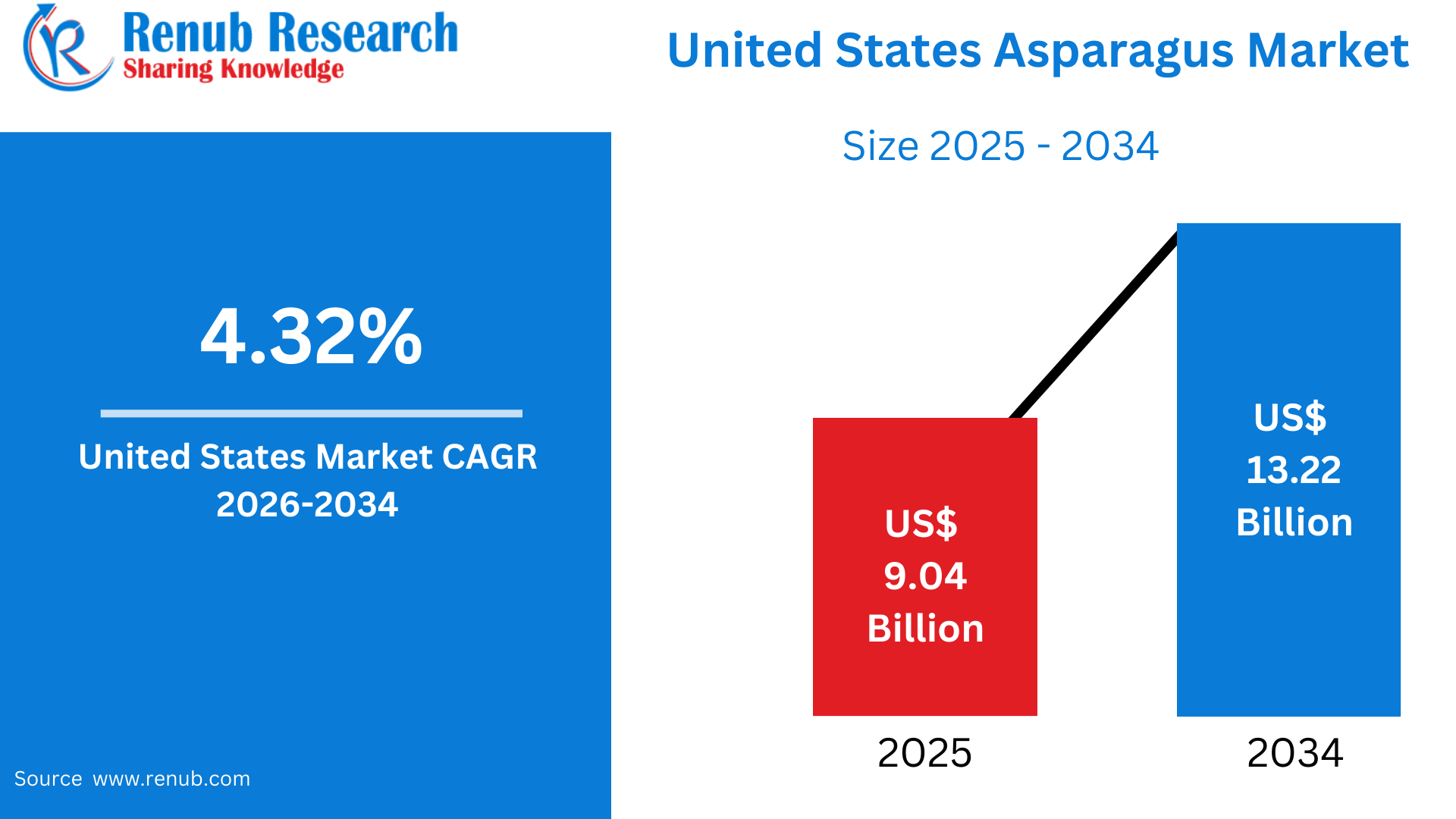
The United States asparagus sector is on a trajectory for steady growth, with its market valuation projected to climb from US$ 9.04 Billion in 2025 to US$ 13.22 Billion by 2034. This expansion represents a compound annual growth rate (CAGR) of 4.32% over the 2026–2034 forecast window.
The primary catalysts driving this upward momentum include a continuous rise in nutritional vegetable consumption, a strong retail shift toward fresh and organic produce, and expanding commercial volume deployment across both professional foodservice operations and home-cooking applications. On an operational level, this multi-billion dollar expansion is further sustained by structural innovations in precision farming, enhanced cold-chain logistics infrastructure, and robust, recurring procurement lines from the retail, hospitality, and processed food manufacturing sectors nationwide.
United States Asparagus Market Analysis
Asparagus is a nutrient-rich perennial vegetable known for its tender green, white, or purple spears and distinctive flavor. It belongs to the lily family and is widely cultivated for culinary use. Rich in vitamins A, C, E, K, folate, fiber, and antioxidants, asparagus supports digestion, heart health, and immune function. It can be steamed, roasted, grilled, or added to soups, salads, and pasta dishes. Its low-calorie content and high nutritional value make asparagus a popular choice among health-conscious consumers worldwide.
To cater to year-round demand beyond the traditional harvest window, the market utilizes three core product forms:
- Fresh: Commonly steamed, grilled, roasted, or sautéed for center-of-plate presentation, salads, and culinary entrees.
- Frozen: Extends shelf life and serves as a key raw material for prepared meals.
- Canned: Provides excellent long-term supply stability and distribution convenience.
Its low-calorie count and high nutrient density make it a foundational staple in weight-conscious, balanced, and preventive health-focused diets.
Asparagus has achieved notable retail momentum across the United States, driven by a macro-consumer shift toward preventive wellness, clean-label, plant-based diets, and fresh, whole foods. Modern consumers value the vegetable for its functional roles in digestive health, cardiovascular support, and anti-inflammatory nutrition.
Simultaneously, its mainstream adoption across home-gourmet cooking and premium restaurant menus has broadened its culinary applications. It remains highly sought after for seasonal spring promotions, outdoor holiday grilling menu cycles, and premium catering. This consistent household consumption is supported by robust supply networks spanning major supermarkets, regional farmers’ markets, and specialized organic food stores, positioning asparagus as a staple commodity in the American agricultural market.
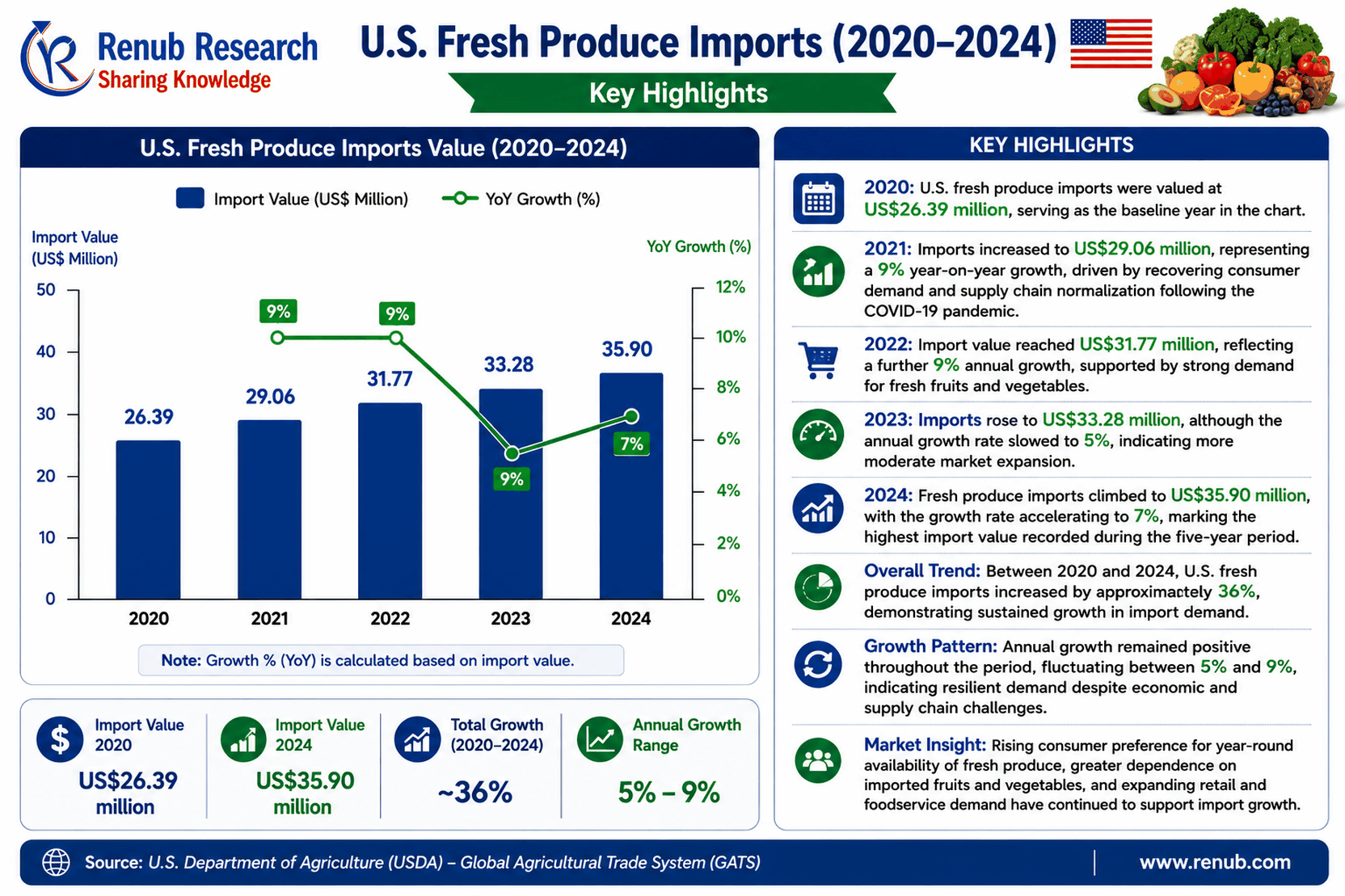
U.S. Fresh Produce Imports (2020–2024) – Key Highlights
- 2020: U.S. fresh produce imports were valued at US$26.39 million, serving as the baseline year in the chart.
- 2021: Imports increased to US$29.06 million, representing a 9% year-on-year growth, driven by recovering consumer demand and supply chain normalization following the COVID-19 pandemic.
- 2022: Import value reached US$31.77 million, reflecting a further 9% annual growth, supported by strong demand for fresh fruits and vegetables.
- 2023: Imports rose to US$33.28 million, although the annual growth rate slowed to 5%, indicating more moderate market expansion.
- 2024: Fresh produce imports climbed to US$35.90 million, with the growth rate accelerating to 7%, marking the highest import value recorded during the five-year period.
- Overall Trend: Between 2020 and 2024, U.S. fresh produce imports increased by approximately 36%, demonstrating sustained growth in import demand.
- Growth Pattern: Annual growth remained positive throughout the period, fluctuating between 5% and 9%, indicating resilient demand despite economic and supply chain challenges.
- Market Insight: Rising consumer preference for year-round availability of fresh produce, greater dependence on imported fruits and vegetables, and expanding retail and foodservice demand have continued to support import growth.
Key Growth Pillars
Increasing Consumer Preference for Healthy and Nutritious Foods
Growing awareness of health and wellness is one of the primary factors driving the U.S. asparagus market. Consumers are increasingly adopting nutritious diets to support weight management, cardiovascular health, and digestive wellness, boosting demand for fresh and minimally processed vegetables. Asparagus is highly valued for its rich nutritional profile, containing dietary fiber, folate, antioxidants, and essential vitamins A, C, E, and K. Its compatibility with popular dietary trends such as plant-based eating, low-carbohydrate lifestyles, and clean-label food choices has further strengthened its market appeal. Additionally, its perceived detoxification and anti-inflammatory properties make it an attractive option for health-conscious consumers. Retailers and food manufacturers continue to promote asparagus as a functional food through nutrition-focused marketing campaigns, while restaurants and meal-kit providers increasingly incorporate it into healthier menu offerings. These developments are encouraging repeat consumption across a broad consumer base. For instance, in March 2024, the National Academy of Medicine (NAM) Collaborative, together with more than 90 founding partners, including the Centers for Disease Control and Prevention’s National Institute for Occupational Safety and Health (NIOSH) and the Dr. Lorna Breen Heroes’ Foundation, launched a nationwide initiative recognizing Health Workforce Well-Being Day, reflecting the broader national emphasis on health and wellness.
Expansion of Foodservice and Meal Kit Services
The continued expansion of the U.S. foodservice industry and subscription-based meal kit market is significantly contributing to asparagus demand. Restaurants, catering companies, and hospitality establishments increasingly utilize asparagus because of its premium appearance, versatility, and ability to complement meat, seafood, and plant-based dishes. At the same time, meal-kit providers are incorporating asparagus into their recipe offerings due to its quick preparation time, portion-friendly nature, and high consumer acceptance. These channels help sustain year-round demand by extending asparagus consumption beyond traditional retail purchases. Furthermore, asparagus is increasingly featured in frozen meals, ready-to-cook products, and premium frozen side dishes, broadening its application across convenience food categories. Strong demand from institutional buyers and home-delivery platforms provides stable sales opportunities for growers and distributors. According to the International Fresh Produce Association, the United States imported approximately 515.4 million pounds of fresh asparagus in 2024. While Mexico supplied nearly two-thirds of total imports, Peru’s favorable climate enables year-round production, strengthening the consistency of asparagus supply in the U.S. market.
Technological Advancements in Production and Supply Chain Management
Technological improvements across agricultural production and supply chain operations are enhancing the competitiveness of the U.S. asparagus market. Modern cultivation techniques, including precision farming, advanced irrigation systems, improved seed varieties, and integrated pest management practices, have increased productivity while improving crop quality and consistency. Simultaneously, investments in controlled-atmosphere storage, refrigerated transportation, and efficient cold-chain logistics have extended product shelf life and maintained freshness during long-distance distribution. These innovations reduce post-harvest losses and improve year-round product availability across domestic markets. In addition, digital supply chain management platforms enable better coordination between growers, distributors, and retailers, minimizing demand-supply imbalances and reducing price volatility. Packaging innovations further enhance product presentation, improve food safety, and reduce spoilage, supporting stronger market growth and higher consumer satisfaction.
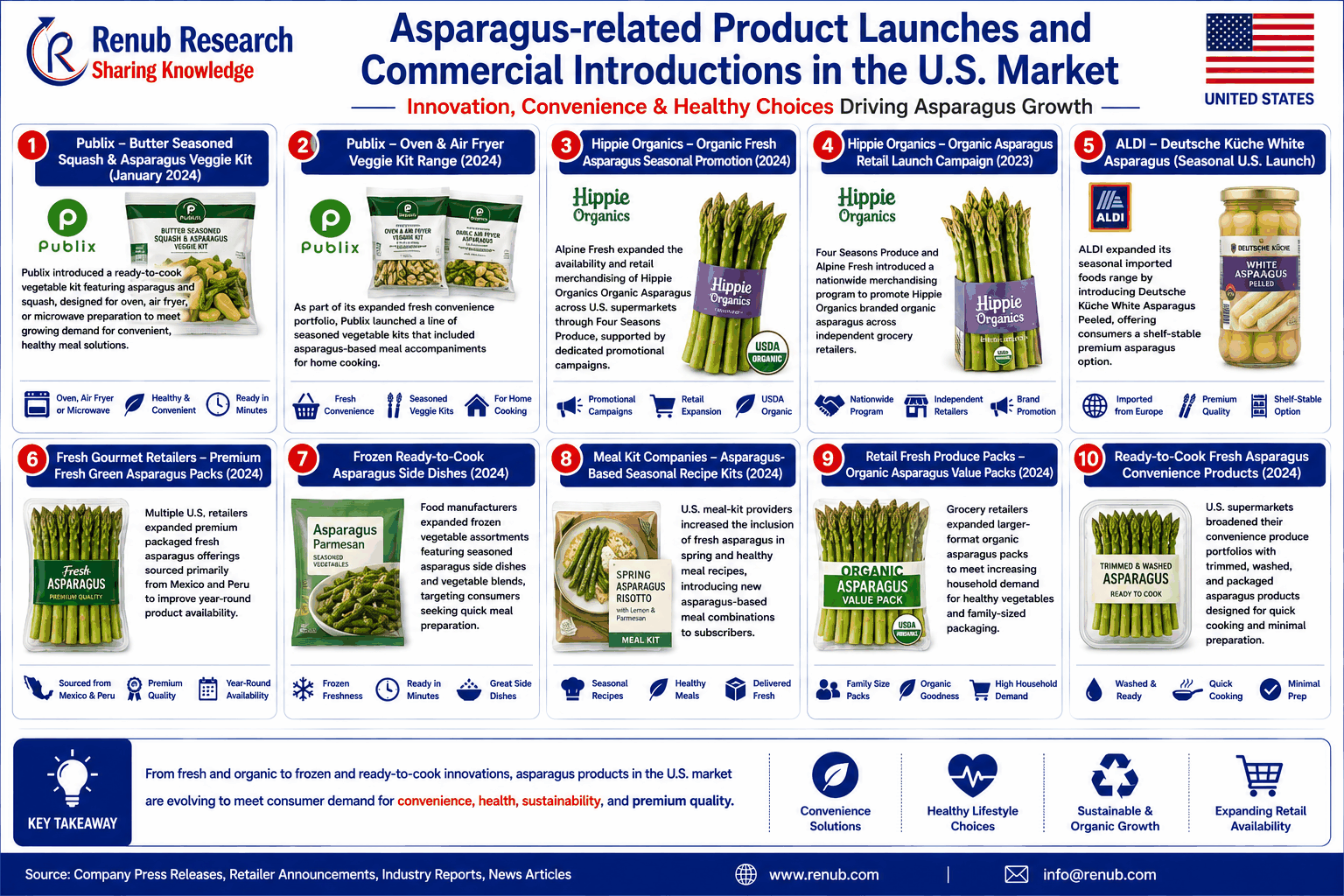
Asparagus-related product launches and commercial introductions in the U.S. market
- Publix – Butter Seasoned Squash & Asparagus Veggie Kit (January 2024): Publix introduced a ready-to-cook vegetable kit featuring asparagus and squash, designed for oven, air fryer, or microwave preparation to meet growing demand for convenient, healthy meal solutions.
- Publix – Oven & Air Fryer Veggie Kit Range (2024): As part of its expanded fresh convenience portfolio, Publix launched a line of seasoned vegetable kits that included asparagus-based meal accompaniments for home cooking.
- Hippie Organics – Organic Fresh Asparagus Seasonal Promotion (2024): Alpine Fresh expanded the availability and retail merchandising of Hippie Organics Organic Asparagus across U.S. supermarkets through Four Seasons Produce, supported by dedicated promotional campaigns.
- Hippie Organics – Organic Asparagus Retail Launch Campaign (2023): Four Seasons Produce and Alpine Fresh introduced a nationwide merchandising program to promote Hippie Organics branded organic asparagus across independent grocery retailers.
- ALDI – Deutsche Küche White Asparagus (Seasonal U.S. Launch): ALDI expanded its seasonal imported foods range by introducing Deutsche Küche White Asparagus Peeled, offering consumers a shelf-stable premium asparagus option.
- Fresh Gourmet Retailers – Premium Fresh Green Asparagus Packs (2024): Multiple U.S. retailers expanded premium packaged fresh asparagus offerings sourced primarily from Mexico and Peru to improve year-round product availability.
- Frozen Ready-to-Cook Asparagus Side Dishes (2024): Food manufacturers expanded frozen vegetable assortments featuring seasoned asparagus side dishes and vegetable blends, targeting consumers seeking quick meal preparation.
- Meal Kit Companies – Asparagus-Based Seasonal Recipe Kits (2024): U.S. meal-kit providers increased the inclusion of fresh asparagus in spring and healthy meal recipes, introducing new asparagus-based meal combinations to subscribers.
- Retail Fresh Produce Packs – Organic Asparagus Value Packs (2024): Grocery retailers expanded larger-format organic asparagus packs to meet increasing household demand for healthy vegetables and family-sized packaging.
- Ready-to-Cook Fresh Asparagus Convenience Products (2024): U.S. supermarkets broadened their convenience produce portfolios with trimmed, washed, and packaged asparagus products designed for quick cooking and minimal preparation.
Market Restraints
Rising Labor Costs and Workforce Availability Constraints
Labor shortages and rising wage rates continue to present major challenges for U.S. asparagus producers. Since asparagus harvesting requires careful manual cutting to avoid damaging the crop, production remains highly labor-intensive despite advances in agricultural technology. Increasing labor costs, combined with a limited supply of seasonal agricultural workers and ongoing uncertainty surrounding immigration policies, have significantly increased production expenses. Small and medium-sized growers are particularly affected, as they struggle to compete with lower-cost imported asparagus. Although mechanized harvesting technologies are under development, they remain expensive and are not yet widely adopted. Higher production costs are ultimately reflected in retail prices, reducing consumer demand during price-sensitive periods. Moreover, inconsistent labor availability can delay harvesting schedules, resulting in lower yields and quality deterioration. These workforce-related challenges continue to affect profitability, operational efficiency, and the long-term competitiveness of domestically produced asparagus.
Market Price Fluctuations and Intense Import Competition
Frequent price volatility remains a significant constraint on the growth of the U.S. asparagus market. Seasonal production cycles, weather-related supply disruptions, and the industry’s heavy dependence on imported asparagus during periods of lower domestic production contribute to unstable market prices. Imported asparagus, often produced at lower costs, competes aggressively with domestic products across both retail and foodservice channels, placing downward pressure on growers’ profit margins. In addition, fluctuations in transportation costs, fuel prices, and trade policies further increase uncertainty throughout the supply chain. Retailers frequently prioritize lower-cost imported products to maintain competitive consumer pricing, particularly during periods of economic uncertainty. As a result, domestic growers face challenges in forecasting revenues and making long-term investments in production expansion. The absence of effective price stabilization mechanisms continues to expose producers to substantial financial risk, limiting investment and restricting the long-term growth of U.S. asparagus production.
Types Insights
Fresh Asparagus
Fresh asparagus is the largest and most consumer-preferred segment of the U.S. market for asparagus. Fresh asparagus enjoys strong associations among consumers with higher nutrition, better texture, and superior taste than processed alternatives. The products are very visible at retail, particularly during peak seasons such as spring, to elicit impulse purchases. Demand is fueled by home cooking, health-oriented eating habits, and growing interest in fresh and minimally processed foods. Farmers' markets and the local food movements further bolster fresh asparagus sales by focusing on freshness and farm-to-table positioning. However, the segment is highly seasonal and sensitive to temperature fluctuations, transportation delays, and shelf life. Retailers rely heavily on fast refrigerated logistics to maintain quality. These issues aside, consumer willingness to pay more for freshness keeps this segment dominant in value terms within the overall U.S. asparagus market.
Frozen Asparagus
The frozen asparagus segment caters to convenience-oriented consumers who look for extended shelf life and year-round availability. Frozen asparagus is widely used in foodservice operations, ready meals, and institutional catering due to its stable pricing and reduced spoilage risk. It appeals especially to time-conscious households that want nutritious vegetables without frequent grocery trips. Technological advances in flash freezing help retain much of the original texture, color, and nutritional profile, improving consumer acceptance of frozen formats. Frozen asparagus also enjoys reduced seasonal price volatility and easier inventory management for retailers. However, many consumers still perceive frozen vegetables to be inferior in quality compared to fresh ones. To overcome this perception, brands will continue to focus on nutritional retention, versatility in cooking, and sustainable food-waste reduction. With convenience-oriented lifestyles continuing to rise, the frozen asparagus market can be expected to see steady, resilient demand across the United States.
Color Insights
Green Asparagus
Green asparagus dominates production and consumption in the United States because of its adaptability to a wide range of climatic conditions, flavor profile, and great consumer familiarity. It has a higher yield compared with specialty varieties of asparagus. Its mild yet distinctive flavor makes it great to be grilled, roasted, steamed, sautéed, and incorporated into salads and pasta dishes. Retailers heavily promote green asparagus during seasonal harvests, therefore driving high volume movement. Nutritional awareness also supports its popularity, as green asparagus is rich in antioxidants, fiber, and essential vitamins. The foodservice sector uses up green asparagus to offer menu variety and a greater visual appeal. Because it offers the best balance between cost, availability, and consumer acceptance, green asparagus forms the backbone of the U.S. asparagus market and accounts for the majority of retail, foodservice, and processing demand nationwide.
Purple Asparagus
Purple asparagus occupies a small but growing niche in the U.S. asparagus market. The plant has a distinctive color, a sweeter flavor, and tender texture not found in traditional green varieties, which makes it sell to premium consumers, gourmet restaurants, and specialty grocery stores. Higher levels of anthocyanins are responsible for its vibrant appearance and perceived health benefits. However, purple asparagus tends to have higher production costs and lower yields, which increases its retail price. Awareness among mainstream consumers is limited, which constrains volume growth. Demand is driven mainly by culinary enthusiasts, chefs desiring visual differentiation, and shoppers oriented toward health who are interested in antioxidants. As consumer interest in specialty produce and visually appealing foods increases via social media and culinary trends, purple asparagus continues to find modest traction as a high-value, low-volume segment within the broader U.S. asparagus market.
White Asparagus
White asparagus remains a niche, high-value product in the United States, mainly consumed by gourmet shoppers and aficionados of European cuisine. Grown away from sunlight by specialized cultivation methods, white asparagus is milder and softer compared to green varieties. The labor involved in growing it greatly raises its production cost and the selling price of the produce. Most white asparagus sold in the U.S. is imported or produced in small quantities domestically to small, high-end markets. Demand remains focused on high-class restaurants, specialty grocers, and seasonal food festivals. However, consumer awareness is increasing through global cuisine exposure and promoted specialty foods, albeit at a slow pace. Penetration into mass markets has remained limited so far. Despite its small market size, white asparagus has notable cultural and culinary significance within narrow consumer segments, maintaining its raison d'être as a high-end novelty within the overall asparagus landscape of the United States.
States Insights
California
California is the leading asparagus-producing state in the United States due to the favorable climate, soil fertility, and well-developed agricultural infrastructure. The long growing season supports high yields and consistent quality for both fresh and processing markets. Proximity to large population centers and export hubs adds a strong logistics dimension to California's advantage. In this state, growers apply modern irrigation systems, research-based farming techniques, and cold-chain distribution to maximize output and reduce losses. Increased water costs, land prices, and labor expenses exert upward pressure on the cost of production, continuing to strain profitability. Despite these pressures, California continues to form the backbone of the domestic asparagus supply by serving large retail chains and foodservice operators across the country. Indeed, further investment in the sustainability of farming practices and water-efficient technologies would be expected to sustain California's leading position in the U.S. asparagus market long into the future.
New York
New York's asparagus market is driven mainly by local, seasonal demand and strong consumer preference for regionally grown produce. The state's market is inextricably linked to farmers' markets, farm-to-table restaurants, and community-supported agriculture programs. Fresh, locally harvested asparagus can command premium pricing during months of peak harvest due to strong consumer demand for freshness and traceability. Urban consumers in New York City show rising interest in organic and sustainable vegetables, boosting specialty asparagus sales. However, the generally shorter growing seasons and cool climates limit large-scale commercial production. As a result, New York relies heavily on supplies from other states during most of the year. Even so, the state plays an important role as a high-value retail and foodservice consumption center within the broader U.S. asparagus market.
Texas
Texas is in a category of growing consumption and limited production, helped by a large population, expanding urban centers, and a diversified food culture. Demand comes through restaurants, retail chains, and food service institutions across Houston, Dallas, Austin, and San Antonio. Just like other states, favorable asparagus-growing areas are present in the state. In addition, large-scale farming of asparagus crops has not been as extensive, especially when compared with California. Because of that, Texas relies on intensive interstate and imported supplies to meet year-round demand. It also benefits from the general growth of health-conscious consumers, principally among younger people. The strong logistics infrastructure of the state allows for quick redistribution of fresh produce from other producing regions. As Texas continues to expand its economic and demographic base, its role as a high-volume asparagus consumption market will continue to strengthen.
Arizona
Arizona's asparagus market is shaped by its arid climate, limited agricultural water availability, and proximity to major supply routes. While the state does not produce large volumes of asparagus domestically, it is an important distribution and consumption hub, benefiting from strong logistics connectivity to neighboring producing regions. Urban centers like Phoenix and Tucson support steady retail and foodservice demand driven by population growth and rising health awareness. Seasonal consumption peaks during spring when fresh asparagus promotions attract price-sensitive consumers. However, environmental constraints and a shortage of water are major limiting factors in the expansion of local production. As sustainability concerns grow, Arizona increasingly has to rely on efficient cold-chain distribution rather than the expansion of water-consuming farming. The role of this state in the U.S. asparagus market is thus more demand- and distribution-oriented rather than production-driven.
Market Segmentations
Product
- Fresh Asparagus
- Canned Asparagus
- Frozen Asparagus
Variety
- Green Asparagus
- White Asparagus
- Purple Asparagus
- Others
Top States
- California
- Texas
- New York
- Florida
- Illinois
- Pennsylvania
- Ohio
- Georgia
- New Jersey
- Washington
- North Carolina
- Massachusetts
- Virginia
- Michigan
- Maryland
- Colorado
- Tennessee
- Indiana
- Arizona
- Minnesota
- Wisconsin
- Missouri
- Connecticut
- South Carolina
- Oregon
- Louisiana
- Alabama
- Kentucky
- Rest of United States
All companies have been covered with 5 Viewpoints
- Overviews
- Key Person
- Recent Developments
- SWOT Analysis
- Revenue Analysis
Company Analysis:
- Altar Produce LLC
- Walker Brothers, Inc.
- Limgroup B.V.
- Jersey Asparagus Farms Inc.
- Cutter Asparagus Seed
- Thiermann Spargelhof
- Danper
- Golden Valley Seed.
- Transplants Inc.
- Südwestdeutsche Saatzucht GmbH & Co.KG
Report Details:
| Report Features | Details |
| Base Year |
2025 |
| Historical Period |
2021 - 2025 |
| Forecast Period |
2026 - 2034 |
| Market |
US$ Billion |
| Segment Covered |
Product, Variety, Countries, and States |
| States Covered |
|
| Companies Covered |
|
| Customization Scope |
20% Free Customization |
| Post-Sale Analyst Support |
1 Year (52 Weeks) |
| Delivery Format |
PDF and Excel through Email (We can also provide the editable version of the report in PPT/Word format on request) |
Customization Services available
- Analysis of Market Size and Its Segments
- More Company Profiles (Upto 10 without any additional cost):
- Additional Countries (Other than mentioned Countries):
- Region/Country Specific Reports:
- Market Entry Strategy:
- Region-Specific Market Dynamics:
- Regional Market Share Analysis:
- Trade Analysis:
- Production Insights:
- Others Customized Requests:
For more information contact our analysts.
Need More Assistance?
- Talk to our analysts to get more precious information on the current market trends.
- Include more countries and segments and customize the report based on the final requirement.
- Get a competitive advantage in your industry by knowing the report findings and making a positive impact on your revenues and operations.
- Our analysts are always ready to provide more help and pertinent information if you need any additional assistance.