United Kingdom Leather Goods Market Size, Share, Trends, Growth Analysis and Forecast Report 2026–2034
Buy NowUnited Kingdom Leather Goods Market Size
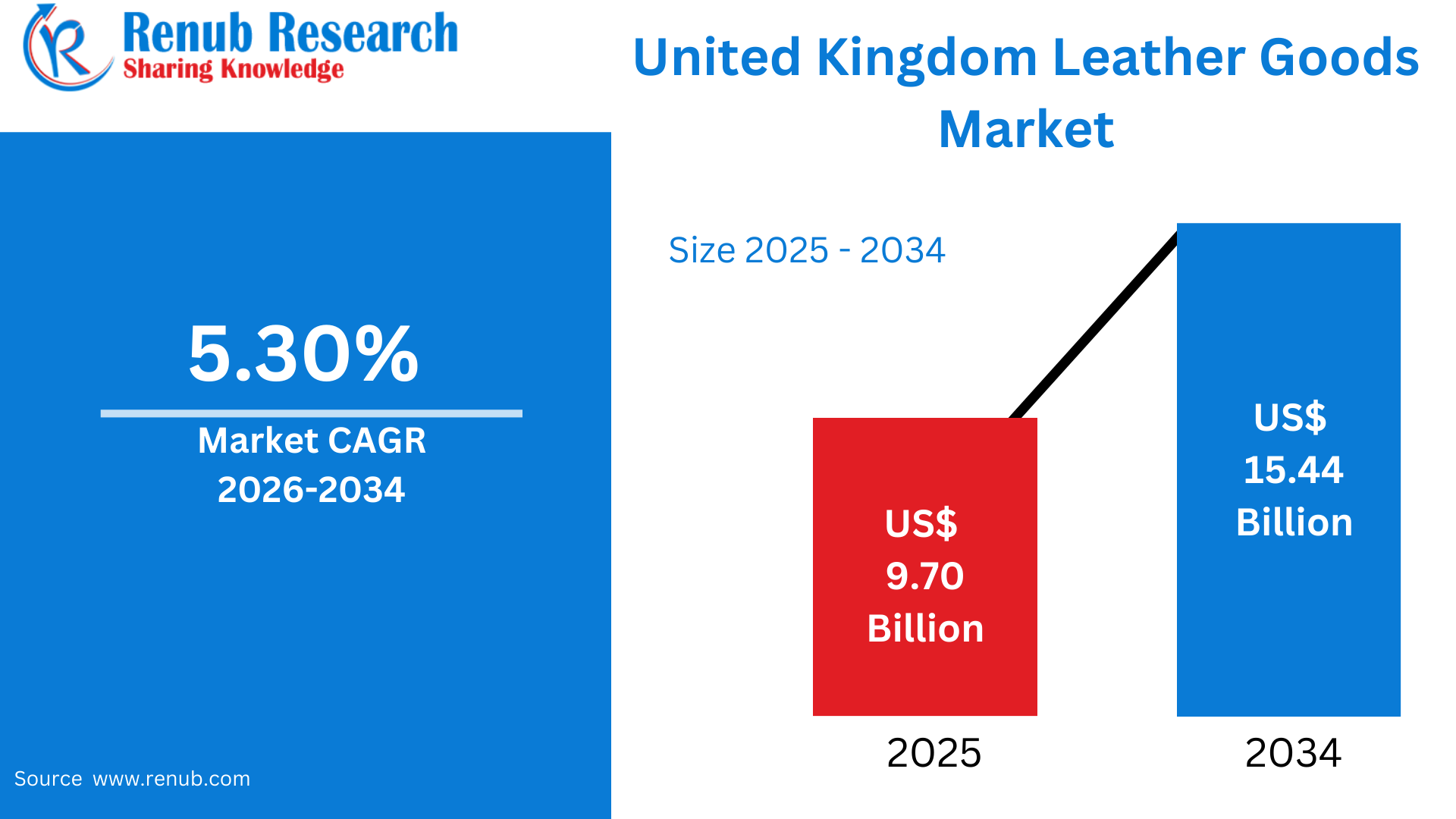
United Kingdom leather goods market is projected to expand from US$ 9.70 billion in 2025 to US$ 15.44 billion by 2034, registering a CAGR of 5.30% during 2026–2034. Market growth is being fueled by rising consumer demand for premium fashion accessories, luxury handbags, footwear, and travel products. Increasing disposable incomes, the strong presence of globally recognized luxury brands, growing preference for sustainable leather products, and the rapid expansion of e-commerce platforms are expected to drive market growth throughout the forecast period.
United Kingdom Leather Goods Industry Analysis
Leather goods comprise a broad range of products manufactured from processed animal hides, valued for their durability, elegance, and long service life. The category includes handbags, wallets, belts, footwear, luggage, travel accessories, jackets, watch straps, and upholstery products. Leather undergoes specialized tanning, cutting, stitching, and finishing processes to produce premium-quality goods that combine functionality with aesthetic appeal. Over time, genuine leather develops a distinctive patina, enhancing its visual appeal and making it a preferred material for luxury and high-end consumer products.
The United Kingdom remains one of Europe’s leading markets for leather goods, supported by its rich fashion heritage, well-established luxury retail sector, and strong consumer preference for premium craftsmanship. Renowned British designers and heritage brands continue to introduce innovative collections that blend timeless craftsmanship with contemporary design, strengthening the country’s position in the global luxury market. Growing tourism, rising expenditure on premium lifestyle products, and increasing demand for personalized and designer accessories are further supporting market expansion.
Sustainability has become a key trend shaping the UK leather goods industry. Manufacturers are increasingly adopting responsibly sourced leather, environmentally friendly tanning processes, and recycled materials to meet evolving consumer expectations. At the same time, the availability of vegan leather and bio-based alternatives has broadened product offerings, attracting environmentally conscious buyers. Furthermore, the rapid growth of online retail, digital marketing, influencer collaborations, and omnichannel shopping experiences has significantly improved product accessibility, enabling brands to reach a wider customer base across the United Kingdom.
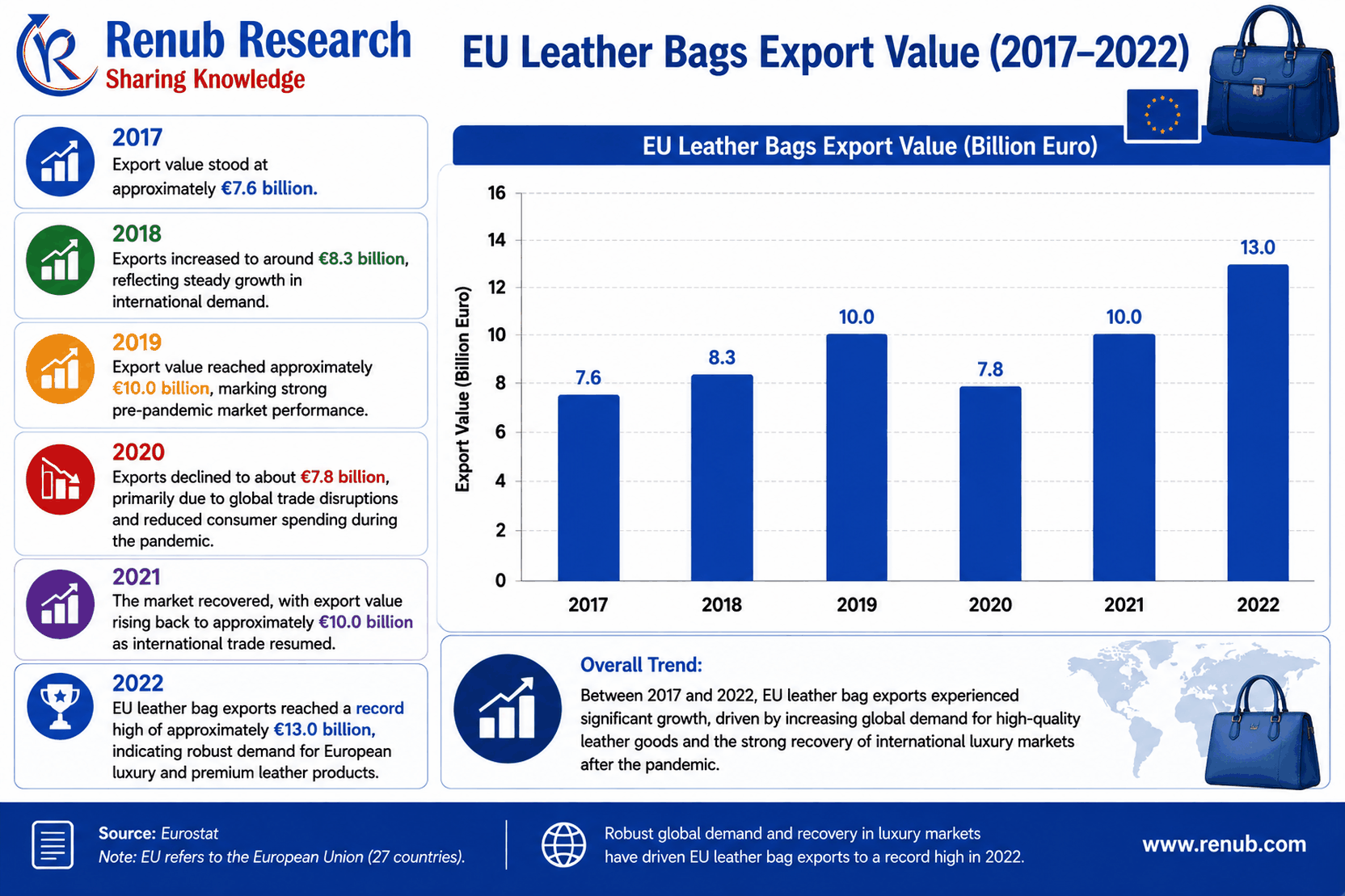
EU Leather Bags Export Value (2017–2022)
- 2017: Export value stood at approximately €7.6 billion.
- 2018: Exports increased to around €8.3 billion, reflecting steady growth in international demand.
- 2019: Export value reached approximately €10.0 billion, marking strong pre-pandemic market performance.
- 2020: Exports declined to about €7.8 billion, primarily due to global trade disruptions and reduced consumer spending during the pandemic.
- 2021: The market recovered, with export value rising back to approximately €10.0 billion as international trade resumed.
- 2022: EU leather bag exports reached a record high of approximately €13.0 billion, indicating robust demand for European luxury and premium leather products.
- Overall Trend: Between 2017 and 2022, EU leather bag exports experienced significant growth, driven by increasing global demand for high-quality leather goods and the strong recovery of international luxury markets after the pandemic.
Key Growth Pillars
Material Heritage & Premium Brand Positioning
The UK leather goods market is propelled by a deeply rooted fashion culture and a robust appetite for premium luxury. Home to globally renowned fashion houses and high-end designers, the region emphasizes meticulous craftsmanship, superior materials, and timeless appeal. British consumers heavily associate leather with elegance and long-term durability, consistently investing in staple items like handbags, wallets, footwear, and travel gear. Furthermore, international tourism provides a substantial boost to luxury leather sales in major metropolitan areas. This consumer desire is continually stimulated by seasonal fashion cycles, influencer endorsements, and powerful brand storytelling. Highlighting this trend, premium brand Von Baer launched its dedicated UK platform in May 2025, introducing high-end, vegetable-tanned Italian leather accessories directly to British consumers seeking sustainable luxury.
Digital Evolution and E-Commerce Expansion
The rapid acceleration of online retail has transformed the UK leather market, offering consumers unparalleled access to both domestic and international brands via dedicated websites and digital marketplaces. This shift to e-commerce provides shoppers with greater convenience, transparent pricing, comprehensive product details, and flexible return policies, all of which boost purchasing confidence. Digital marketing campaigns, social commerce, and virtual try-on innovations serve as crucial modern buying determinants. By leveraging direct-to-consumer models, independent brands are reducing their reliance on traditional physical storefronts. Retailers are also innovating logistics to bridge the gap between online and offline shopping; for instance, in November 2025, Lakeland Leather partnered with HubBox to launch a “Ship to Shop” service, allowing customers to seamlessly collect online orders from local designated hubs.
Product Premiumization & Material Grade Demands
Modern market growth is heavily dictated by a shift toward product premiumization and eco-conscious manufacturing. UK consumers are increasingly prioritizing longevity over disposable fast-fashion, driving up the demand for full-grain leather and handcrafted goods. Concurrently, environmental awareness is forcing brands to adopt responsible material sourcing, chrome-free tanning methods, and ethical supply chains. Personalization has also emerged as a major value-add, with younger demographics leaning toward custom monogramming and bespoke sizing. Innovation in this space is moving rapidly; in November 2024, UNCAGED Innovations introduced ELEVATE—a luxury biobased leather alternative made from grains—collaborating with global independent brands to integrate sustainable materials into mainstream wallets and watch straps.
Market Restraints
Regulatory Hurdles and Environmental Pressures
The traditional leather sector faces intense scrutiny regarding its environmental footprint and ethical implications. Conventional tanning processes rely heavily on chemicals, triggering stricter environmental and workplace safety regulations that ultimately inflate production costs. Today’s consumers demand greater transparency regarding animal welfare, carbon footprints, and supply chain traceability. Consequently, manufacturers must invest heavily in eco-friendly tanning technologies and advanced wastewater treatment to maintain public trust. Tightening import regulations on raw hides and finished goods add further complexity, forcing brands to constantly balance operational profitability with stringent sustainability expectations.
Synthetic Substitutes and Shifting Price Sensitivity
Traditional leather producers face stiff competition from the rise of synthetic and vegan alternatives. These substitutes are generally lighter, more affordable, and heavily marketed as cruelty-free, making them highly attractive to both budget-conscious and ethically driven shoppers. Fast-fashion retailers exploit this by flooded the market with low-cost faux leather items. At the same time, volatile raw leather prices and escalating manufacturing overheads are squeezing profit margins for authentic leather producers. Because consumers can effortlessly compare prices across online platforms, mid-tier brands are losing their pricing leverage. To survive, traditional manufacturers must continuously reinforce their unique value proposition rooted in authentic craftsmanship and enduring quality.
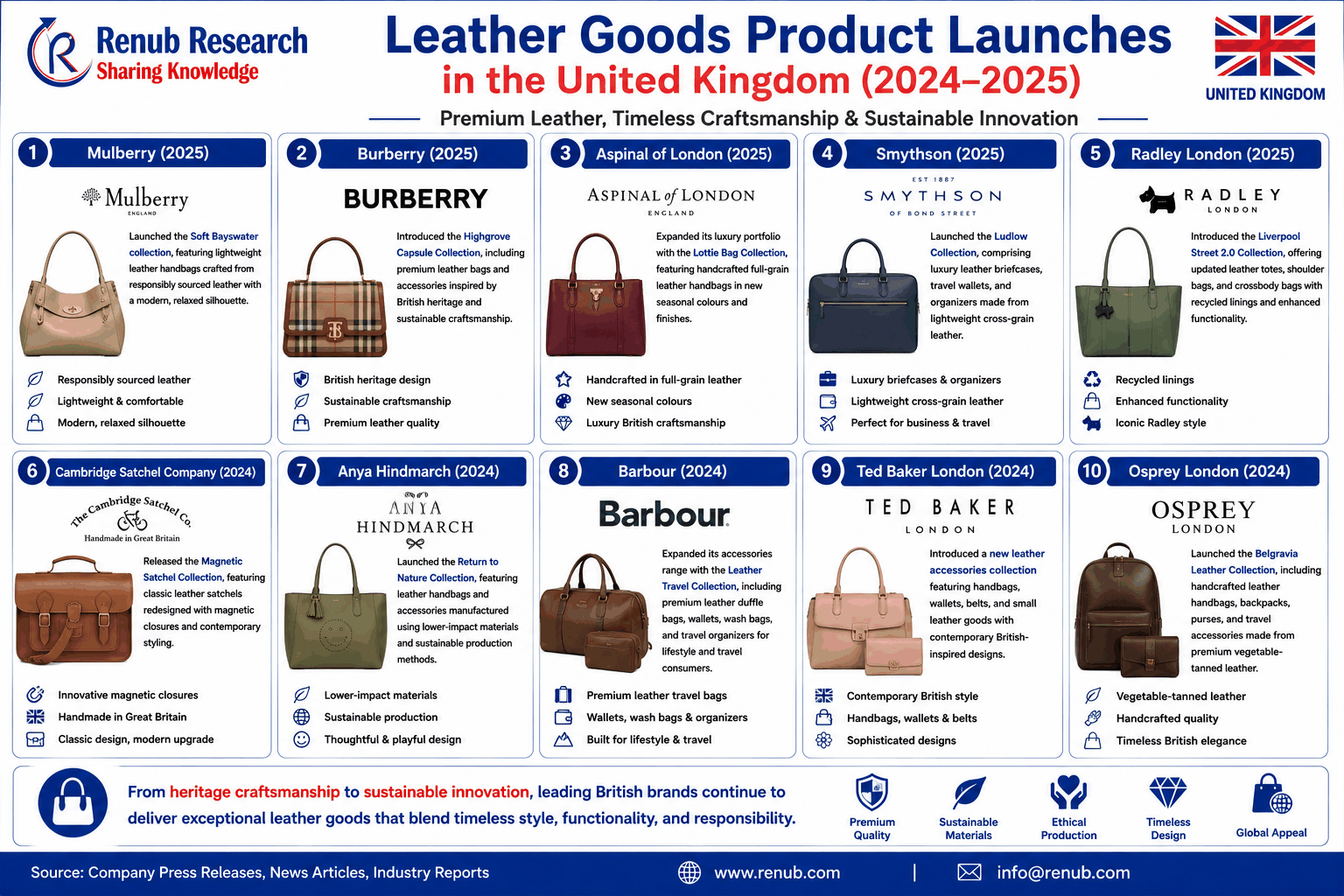
Leather Goods product launches in the United Kingdom
- Mulberry (2025): Launched the Soft Bayswater collection, featuring lightweight leather handbags crafted from responsibly sourced leather with a modern, relaxed silhouette.
- Burberry (2025): Introduced the Highgrove Capsule Collection, including premium leather bags and accessories inspired by British heritage and sustainable craftsmanship.
- Aspinal of London (2025): Expanded its luxury portfolio with the Lottie Bag Collection, featuring handcrafted full-grain leather handbags in new seasonal colours and finishes.
- Smythson (2025): Launched the Ludlow Collection, comprising luxury leather briefcases, travel wallets, and organizers made from lightweight cross-grain leather.
- Radley London (2025): Introduced the Liverpool Street 2.0 Collection, offering updated leather totes, shoulder bags, and crossbody bags with recycled linings and enhanced functionality.
- Cambridge Satchel Company (2024): Released the Magnetic Satchel Collection, featuring classic leather satchels redesigned with magnetic closures and contemporary styling.
- Anya Hindmarch (2024): Launched the Return to Nature Collection, featuring leather handbags and accessories manufactured using lower-impact materials and sustainable production methods.
- Barbour (2024): Expanded its accessories range with the Leather Travel Collection, including premium leather duffle bags, wallets, wash bags, and travel organizers for lifestyle and travel consumers.
- Ted Baker London (2024): Introduced a new leather accessories collection featuring handbags, wallets, belts, and small leather goods with contemporary British-inspired designs.
- Osprey London (2024): Launched the Belgravia Leather Collection, including handcrafted leather handbags, backpacks, purses, and travel accessories made from premium vegetable-tanned leather.
Leather Footwear in United Kingdom
Leather footwear is an important segment in the UK leather goods market due to its durability, comfort, and premium look. Products include formal shoes, casual wear, boots, luxury dress shoes, and specialty footwear for work and outdoor use. UK consumers find value in leather shoes because they are long-lasting, breathable, and suitable for variations in weather conditions. Corporate offices, schools, and professions with uniform requirements keep demand brisk for formal leather footwear. Conversely, fashion trends increase demand for designer sneakers, boots, and lifestyle shoes made from premium leather. The increasing trend towards sustainable footwear also encourages brands to provide eco-friendly tanning and recycled sole materials. Online platforms, brand websites, and omnichannel retail now significantly contribute to footwear sales. With replacement cycles continuing steadily, driven by fashion upgrades as well, leather footwear will remain an impactful revenue contributor to the leather goods market of the UK.
Genuine Leather Goods in the United Kingdom
The UK genuine leather goods segment focuses on products produced from real animal hide, which is valued for its strength, durability, and natural texture. Main products encompass handbags, wallets, belts, briefcases, travel accessories, and upholstery products. British customers equate genuine leather with authenticity, high quality, and craftsmanship. Heritage brands evoking traditional leatherworking methods have high consumer trust. Genuine leather goods also find extensive applications in corporate gifting and executive accessories. Demand is yet again fueled by a desire for investment pieces that age well and have long-term utility. Despite heavy rivalry in the market from synthetic replacements, many UK customers go for genuine leather on account of its durability and classic aesthetic appeal. The value of the market further increases with customized craftsmanship, bespoke products, and limited-edition collections, keeping genuine leather an indispensable segment within the UK leather goods industry.
United Kingdom Leather Premium Products Industry
Luxury leather goods in the UK target high-end consumers and fashion buyers of luxury goods who appreciate exclusivity and craftsmanship excellence. Examples of products in this category include high-end designer handbags, luxury shoes, premium luggage, and quality accessories. This market is characterized by strong brand heritage, craftsmanship credentials, and material quality. Consumers perceive high-end leather goods as status symbols and long-term fashion investments. Retail points for luxury boutiques, flagship brand stores, airport duty-free outlets, and online luxury platforms lead to increased sales. Tourism and gifting culture strengthen demand on a high note. Younger wealthy consumers are captured by limited editions, artisanal production, and sustainable luxury positioning. Regardless of economic cycles, the premium leather segment shows resilience due to brand loyalty and aspirational buying behaviors. As luxury retail continues to evolve with a digital perspective, premium leather brands continue to increase their omnichannel strategies in the UK.
Leather Goods Mass Products in United Kingdom
The mass leather goods segment caters to middle-income and more budget-conscious consumers who are looking for style and functionality at an affordable price. Other products include everyday handbags, wallets, belts, shoes, and travel accessories in genuine or blended leather materials. Distribution is dominated by supermarkets, high-street retailers, discount stores, and fast-fashion outlets. For this market segment, price, trend alignment, and practicality are more important than brand heritage. The frequency of style changes and promotional pricing stimulates high sales volumes. Many products employ split leather or leather-coated fabrics to help keep prices low but still provide a leather appearance. Highly competitive, this market segment exhibits high sensitivity to price changes and fashion cycles. Though the margins are thinner, the mass leather goods market yields significant overall volume and facilitates the widespread use of leather products throughout the UK.
Leather Goods Departmental Stores in the United Kingdom
Departmental stores are playing a key role in the UK leather goods market by offering customers various premium, mid-range, and mass-market brands under one roof. These stores provide direct product experience and quality assurance, thereby enhancing customer service and increasing buyer confidence. Key product categories sold through these department stores include leather handbags, footwear, belts, wallets, and luggage. Purchase behavior may be influenced by seasonal promotions, loyalty rewards, and in-store displays. Departmental stores also continue to act as important launch platforms for new collections and designer collaborations. While online retail continues to grow, physical departmental stores remain effective for the distribution of luxury and premium leather brands for reasons of tactile inspection and personalized service, and hybrid strategies, like click-and-collect, further enhance their relevance.
United Kingdom Online Stores Leather Goods Industry
E-commerce is the fastest-growing channel for leather goods in the UK, driven by convenience, price transparency, and wide brand accessibility. In this respect, consumers can immediately compare styles, prices, and reviews across multiple platforms. Brands benefit from direct-to-consumer models that improve margins and brand control. Digital functionalities such as 360-degree product views, virtual fitting, AI-powered recommendations, and social media integration further enhance engagement. Home delivery, easy return policies, and mobile shopping apps facilitate impulse and repeat buys. International brands find access to the UK market quite easy by using online platforms. All this increases competition and gives a wide choice to consumers. As digital trust improves and logistics get better, online channels are becoming the most vital in shaping leather goods retail in the UK.
London Leather Goods Industry Growths
London remains the UK's largest and most influential leather goods market, given the status of this city as a global fashion and luxury capital. Upscale shopping districts, high-end boutiques, department stores, and airport retail drive demand for high-quality leather items. Tourists contribute greatly to sales of high-fashion handbags, shoes, wallets, and travel luggage. Corporate professionals and fashion-conscious consumers create consistent demand within the local market. Fashion weeks, trade shows, and flagship brand launches in London further fuel market activity. Online fulfillment centers for luxury goods are boosting London’s position as a commercial hub. Sustainability-infused fashion, in particular, has its roots in London, which is influencing the design of various products and brand strategies. The city continues to set the standard for leather goods marketing and consumption in the UK.
Leather Goods Industry Expansion in Manchester
The leather goods market in Manchester is driven by its young population, expanding retail infrastructure, and vibrant fashion scene. Shopping centers, high-street outlets, and online adoption fuel demand for both premium and mass leather products. Consistent demand is seen in handbags, footwear, and accessories by students, professionals, and lifestyle-oriented consumers. Manchester also benefits from a growing creative and design community that supports independent leather brands and artisanal products. E-commerce fulfillment hubs around the region improve online order processing. Purchasing patterns are heavily influenced by seasonal sales, outlet stores, and fast-fashion chains. Its status as a regional economic and cultural center guarantees consistent growth for the leather goods market.
Leather Goods Market in Liverpool
The Leather Goods Retailing market in Liverpool benefits from tourism, port-related trade, and ongoing urban regeneration. Shopping districts, including waterfront developments and outlet malls, attract both local buyers and visitors. Tourism-driven demand means that leather travel accessories, handbags, and footwear perform well. The city's connectivity-boosting logistics supports efficient distribution for online retailers. Regenerated retail zones and cultural districts host premium and mid-range leather brands. Local consumers like economical, good-looking leather products in step with today's fashion trends. With further development in the city center and a rise in retail tourism, the Leather Goods Retailing market of Liverpool is exhibiting steady growth, supported by both leisure and resident spending.
Leather Goods Industry in Edinburgh
The Edinburgh leather goods market is driven strongly by international tourism, heritage retail, and premium craftsmanship appeal. Visitors seek quality leather accessories, travel goods, and locally inspired products as souvenirs and gifts. Boutique stores, heritage shops, and department stores dominate sales. Professionals and affluent residents also drive demand for premium leather footwear, handbags, and office accessories. Sustainability and artisanal branding resonates strongly with buyers in Edinburgh. Seasonal tourism peaks greatly enhance leather goods sales during festivals and holiday periods. While Edinburgh is smaller in volume compared to London or Manchester, the city has a high-value, quality-focused leather goods market with strong premium product penetration.
Market Segmentations
Product
- Footwear
- Luggage
- Accessories
Material
- Genuine Leather
- Synthetic Leather
Price
- Premium Products
- Mass Products
Distribution Channel
- Clothing and Sportswear Retailers
- Departmental Stores
- Supermarkets and Hypermarkets
- Online Stores
- Others
Cities
- London
- Manchester
- Birmingham
- Leeds
- Liverpool
- Edinburgh
- Glasgow
- Tyneside
- Bristol
- Rest of United Kingdom
All companies have been covered with 5 Viewpoints
- Overviews
- Key Person
- Recent Developments
- SWOT Analysis
- Revenue Analysis
Company Analysis:
- Adidas AG
- American Leather Holdings LLC
- Capri Holdings Limited
- Hermès International S.A.
- Kering S.A.
- LVMH
- Puma SE
- Tapestry Inc.
- VIP Industries (Piramal Group)
- Woodland (Aero Group)
Report Details:
| Report Features | Details |
| Base Year |
2025 |
| Historical Period |
2022 - 2025 |
| Forecast Period |
2026 - 2034 |
| Market |
US$ Billion |
| Segment Covered |
Product, Material, Price, Distribution Channel and Cities |
| Cities Covered |
|
| Companies Covered |
|
| Customization Scope |
20% Free Customization |
| Post-Sale Analyst Support |
1 Year (52 Weeks) |
| Delivery Format |
PDF and Excel through Email (We can also provide the editable version of the report in PPT/Word format on request) |
Customization Services available
- Analysis of Market Size and Its Segments
- More Company Profiles (Upto 10 without any additional cost):
- Additional Countries (Other than mentioned Countries):
- Region/Country Specific Reports:
- Market Entry Strategy:
- Region-Specific Market Dynamics:
- Regional Market Share Analysis:
- Trade Analysis:
- Production Insights:
- Others Customized Requests:
For more information contact our analysts.
Need More Assistance?
- Talk to our analysts to get more precious information on the current market trends.
- Include more countries and segments and customize the report based on the final requirement.
- Get a competitive advantage in your industry by knowing the report findings and making a positive impact on your revenues and operations.
- Our analysts are always ready to provide more help and pertinent information if you need any additional assistance.