United Kingdom Diabetes Devices Market Size, Share, Growth, Trends, Industry Analysis & Forecast 2026–2034
Buy NowUnited Kingdom Diabetes Devices Market Size
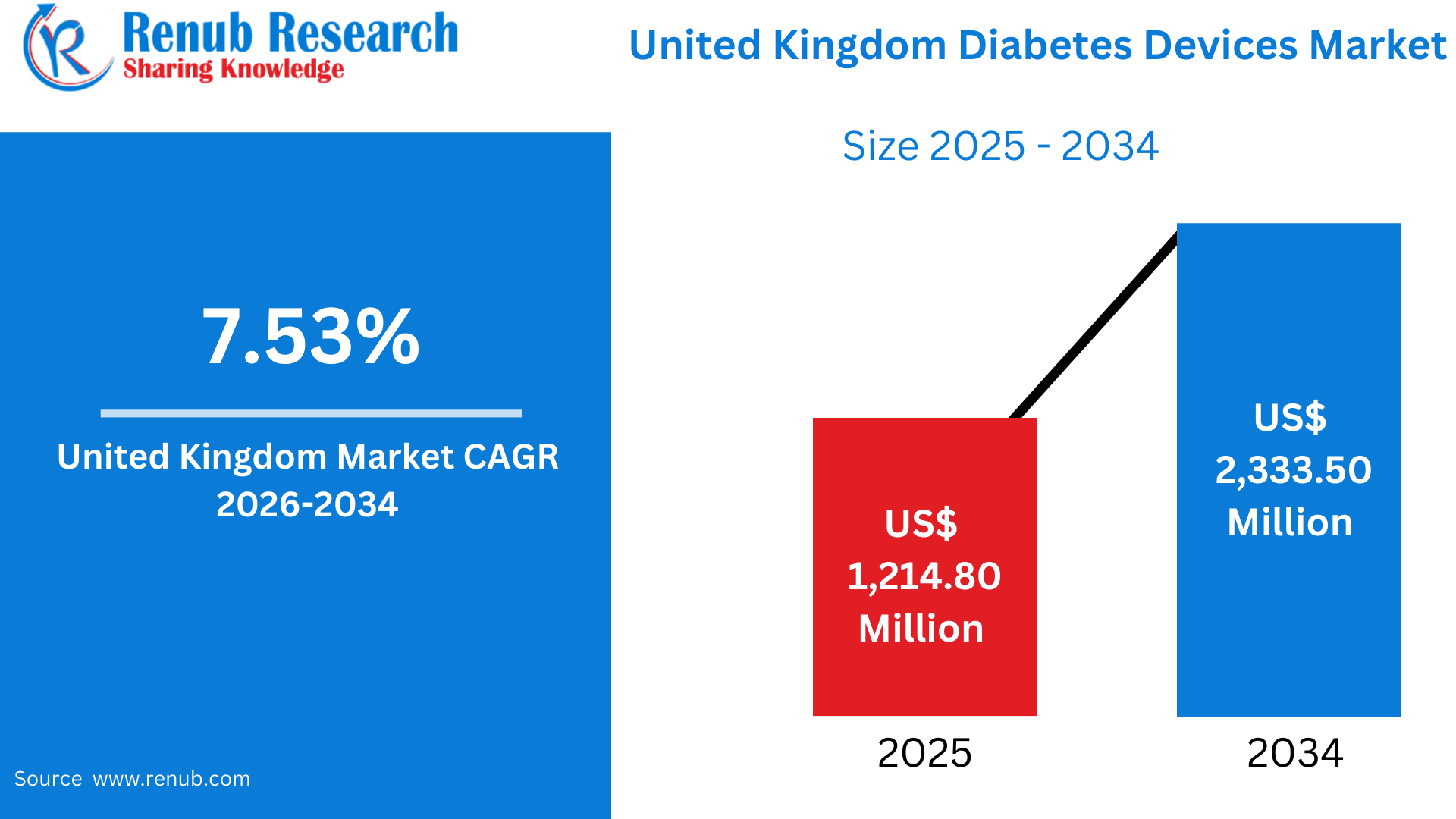
United Kingdom Diabetes Devices Market is projected to experience steady growth, expanding from US$ 1,214.80 million in 2025 to US$ 2,333.50 million by 2034, registering a compound annual growth rate (CAGR) of 7.53% during the forecast period from 2026 to 2034. Market growth is driven by the increasing prevalence of diabetes, rising adoption of continuous glucose monitoring (CGM) systems, growing demand for advanced insulin delivery devices, and the healthcare sector’s strong focus on early diagnosis, effective disease management, and preventive care.
Diabetes Devices and its Demands in United Kingdom
Diabetes devices are specialized medical technologies designed to monitor blood glucose levels and support effective diabetes management through accurate insulin delivery and continuous patient monitoring. These devices include self-monitoring blood glucose (SMBG) meters, continuous glucose monitoring (CGM) systems, insulin pens, insulin pumps, and digital health platforms that record and analyze glucose data. By enabling regular glucose monitoring and precise insulin administration, these technologies help improve glycemic control, reduce diabetes-related complications, and enhance patients’ quality of life. Increasing integration with digital health solutions, mobile applications, and cloud-based platforms is further improving the functionality and convenience of modern diabetes management devices.
The United Kingdom has witnessed growing adoption of diabetes devices as the number of individuals living with both Type 1 and Type 2 diabetes continues to rise. The country’s healthcare system places significant emphasis on early diagnosis, preventive healthcare, patient education, and self-management, encouraging wider use of glucose monitoring and insulin delivery technologies. Improved access to advanced diabetes devices, expanding availability of continuous glucose monitoring systems, favorable clinical guidelines, and ongoing technological innovations have further accelerated market adoption. As healthcare providers increasingly embrace connected diabetes management solutions, the demand for smart, user-friendly, and digitally integrated diabetes devices is expected to continue growing throughout the forecast period.
UK Diabetes Prevalence Key Highlights
- Diabetes prevalence in the UK reached a record high in 2023–24, with more than 4.5 million people diagnosed across England, Scotland, Wales, and Northern Ireland.
- The total number of diagnosed diabetes cases has increased steadily every year since 2017–18, reflecting the growing burden of the disease.
- England accounts for the largest share of diabetes cases, representing over 80% of the UK's diagnosed population throughout the period.
- Scotland remains the second-largest contributor, with diabetes prevalence gradually increasing year after year.
- Wales has also recorded consistent growth in diagnosed diabetes cases over the seven-year period.
- Northern Ireland contributes the smallest share, but the number of diagnosed patients has continued to rise steadily.
- Total diagnosed diabetes prevalence increased from approximately 3.6 million in 2017–18 to over 4.5 million in 2023–24, representing an increase of nearly 1 million people.
- The most notable annual increases occurred after 2021–22, highlighting the accelerating growth in diabetes prevalence across the UK.
- The upward trend reflects factors such as an aging population, increasing obesity rates, sedentary lifestyles, and improved diabetes diagnosis.
- The growing prevalence of diabetes is expected to drive continued demand for glucose monitoring systems, insulin delivery devices, and other diabetes management technologies across the UK.
Growth Drivers
Rising Diabetes Prevalence and Aging Population
The increasing prevalence of diabetes across the United Kingdom is a major factor driving demand for diabetes management devices. Growing rates of Type 1 and Type 2 diabetes, fueled by lifestyle changes, obesity, and longer life expectancy, continue to expand the patient population requiring regular glucose monitoring and insulin therapy. The country’s aging population further contributes to market growth, as older adults are more susceptible to diabetes and often require continuous disease management. Diabetes devices, including self-monitoring blood glucose (SMBG) meters, continuous glucose monitoring (CGM) systems, and insulin delivery devices, play an essential role in improving glycemic control, reducing diabetes-related complications, and minimizing hospital admissions. According to Diabetes UK, more than 150,000 additional people were diagnosed with diabetes in 2021 compared with the previous year. Furthermore, over 13.6 million people in the UK are estimated to be at increased risk of developing Type 2 diabetes, while the total number of diagnosed and undiagnosed diabetes cases is projected to reach 5.5 million by 2030, supporting sustained demand for advanced diabetes care technologies.
Adoption of Advanced Monitoring Technologies and Digital Health Solutions
Continuous technological innovation is significantly transforming diabetes management across the United Kingdom. The growing adoption of continuous glucose monitoring systems, smart insulin pens, automated insulin delivery devices, and hybrid closed-loop systems is enabling more accurate, convenient, and personalized diabetes care. These advanced technologies provide real-time glucose data, automated insulin dosing, and seamless integration with smartphones and digital health platforms, allowing patients and healthcare professionals to make informed treatment decisions. Connected diabetes devices also improve treatment adherence, enhance patient engagement, and facilitate remote monitoring. Reflecting this trend, in May 2023, the National Institute for Health and Care Excellence (NICE) updated its clinical guidance to recommend the use of continuous glucose monitoring (CGM) and flash glucose monitoring technologies for children with Type 2 diabetes, reducing reliance on frequent finger-prick testing and improving patient comfort and disease management.
Growing Focus on Preventive Healthcare and Self-Management
The United Kingdom’s healthcare system places strong emphasis on preventive healthcare, early intervention, and patient self-management of chronic diseases, creating favorable conditions for the diabetes devices market. Diabetes monitoring technologies enable patients to regularly assess blood glucose levels and make informed decisions regarding medication, nutrition, and physical activity, contributing to improved long-term disease control. Public health initiatives, educational programs, and clinical guidance continue to encourage greater adoption of glucose monitoring and insulin delivery devices to enhance treatment outcomes and reduce diabetes-related complications. As patient-centered care and self-management strategies become increasingly integrated into diabetes treatment, demand for advanced diabetes devices continues to grow. Supporting this trend, Medtronic plc launched its advanced hybrid closed-loop insulin pump system in November 2023, further expanding access to automated diabetes management technologies in the UK.
Diabetes Device Launches in the United Kingdom
- May 2024: Dexcom launched the Dexcom ONE+ Continuous Glucose Monitoring (CGM) System in the UK, featuring a smaller sensor, improved wear flexibility, and real-time glucose monitoring for people with diabetes.
- June 2024: Insulet commercially launched the Omnipod® 5 Automated Insulin Delivery (AID) System in the UK with support for both Dexcom G6 and Abbott FreeStyle Libre 2 Plus CGM sensors.
- April 2023: Abbott, Ypsomed, and CamDiab introduced the FreeStyle Libre 3 integrated Hybrid Closed-Loop System in the UK, combining Libre 3, mylife™ YpsoPump, and CamAPS FX technology.
- 2024: NHS England expanded the rollout of Hybrid Closed-Loop (HCL) diabetes systems, including Medtronic MiniMed 780G, Omnipod 5, Tandem t:slim X2, and mylife YpsoPump for eligible patients.
- 2024: Dexcom expanded UK access to the Dexcom ONE CGM, enabling approximately 100,000 additional people with Type 2 diabetes to benefit from continuous glucose monitoring technology.
- 2024: Tandem Diabetes Care expanded UK availability of the t:slim X2™ Insulin Pump with Control-IQ® technology, supporting automated insulin delivery through Dexcom CGM integration.
- 2024: Ypsomed expanded deployment of the mylife™ YpsoPump Starter Kit integrated with FreeStyle Libre 3 and CamAPS FX for hybrid closed-loop diabetes management in the UK.
- 2024: Medtrum introduced the A8 TouchCare Nano Automated Insulin Delivery System to the UK market through the NHS Hybrid Closed-Loop framework.
- 2024: Medtronic expanded the UK rollout of the MiniMed™ 780G Smart Insulin Pump System with advanced automated insulin delivery capabilities under NHS adoption programs.
- 2024: Abbott expanded UK availability of the FreeStyle Libre 2 Plus Sensor, enabling integration with automated insulin delivery systems including Omnipod 5, supporting next-generation diabetes management.
Challenges
Healthcare Budget Constraints and Reimbursement Limitations
One of the primary challenges facing the United Kingdom diabetes devices market is the financial pressure on the healthcare system and reimbursement limitations for advanced diabetes technologies. While innovative products such as continuous glucose monitoring systems and insulin pumps provide significant clinical benefits, their relatively high acquisition costs can restrict widespread adoption. Healthcare providers and reimbursement authorities often evaluate these technologies based on cost-effectiveness before approving broader patient access. As a result, budgetary constraints within the healthcare system may slow the uptake of premium diabetes devices despite their proven ability to improve patient outcomes.
Patient Adoption and Device Usability Challenges
Despite increasing availability of advanced diabetes management technologies, patient adoption remains a challenge for certain population groups. Some individuals perceive diabetes devices as difficult to use, uncomfortable, or disruptive to their daily routines, which can affect long-term adherence. Older adults and patients with limited digital literacy may encounter difficulties operating connected devices, interpreting glucose data, or using smartphone-integrated diabetes management platforms. Addressing these usability challenges through simplified device designs, patient education, and ongoing technical support will be essential to improving adoption rates and maximizing the clinical benefits of advanced diabetes care technologies.
Types Insights
SMBG Devices in United Kingdom
The self-monitoring of blood glucose (SMBG) devices market in the United Kingdom remains a well-established segment of diabetes care. SMBG devices, including glucose meters and test strips, continue to be widely used by individuals with both Type 1 and Type 2 diabetes for routine blood glucose monitoring. These devices remain particularly important for insulin-dependent patients as well as individuals managing diabetes through lifestyle modifications and oral medications. Their affordability, ease of use, and broad availability have supported continued adoption, especially among the elderly population. Although market growth is relatively slower than that of newer continuous monitoring technologies, steady replacement demand and widespread clinical use ensure a stable market outlook. SMBG devices continue to play a vital role in diabetes diagnosis, daily glucose monitoring, and short-term disease management across the UK.
CGM Devices in United Kingdom
The continuous glucose monitoring (CGM) devices market in the United Kingdom is experiencing strong growth as healthcare providers and patients increasingly adopt real-time glucose monitoring technologies. CGM systems continuously measure glucose levels, provide trend analysis, and generate alerts for abnormal glucose fluctuations, enabling more effective diabetes management while reducing the need for frequent finger-prick testing. These devices are widely used by individuals with Type 1 diabetes and are seeing increasing adoption among insulin-treated patients with Type 2 diabetes. Integration with smartphones, mobile health applications, and digital healthcare platforms has further improved patient convenience and engagement. Supported by favorable clinical guidelines and growing emphasis on improving long-term health outcomes, CGM technology is becoming a cornerstone of modern diabetes management in the United Kingdom.
Insulin Pumps in United Kingdom
The United Kingdom insulin pumps market is expanding due to growing demand for precise, flexible, and automated insulin delivery solutions. Insulin pumps provide continuous subcutaneous insulin infusion, offering greater convenience and more consistent glucose control compared with multiple daily insulin injections. These devices are primarily utilized by patients with Type 1 diabetes and individuals requiring intensive insulin therapy. Ongoing technological advancements, including automated insulin delivery and hybrid closed-loop systems, have significantly improved treatment accuracy, safety, and patient outcomes. Although the relatively high cost of insulin pumps may limit adoption among certain patient groups, increasing clinical acceptance and demand for advanced diabetes management solutions continue to support market growth.
Insulin Pen Devices in United Kingdom
The insulin pen devices market in the United Kingdom continues to grow as patients increasingly prefer convenient and accurate insulin delivery methods. Insulin pens provide a simpler and more precise alternative to conventional syringes, making insulin administration easier for both newly diagnosed and long-term diabetes patients. Available in disposable and reusable formats, these devices offer flexibility to meet individual patient preferences. Recent innovations, including smart insulin pens capable of recording dosing information and connecting with digital health applications, have further enhanced treatment convenience and medication adherence. Continued physician recommendations and strong patient preference are expected to support sustained growth in the UK insulin pen market.
Distribution Channel Insights
Diabetes Devices Diagnostic Centers in United Kingdom
Diagnostic centers represent an important end-user segment within the United Kingdom diabetes devices market by supporting the diagnosis, monitoring, and ongoing management of diabetes. These facilities utilize SMBG devices, professional continuous glucose monitoring systems, and other glucose monitoring technologies to assess patients’ glycemic status and evaluate treatment effectiveness. Diagnostic centers play a crucial role in early disease detection, personalized treatment planning, and continuous patient monitoring. Growing emphasis on preventive healthcare, early intervention, and chronic disease management is increasing demand for advanced diabetes monitoring devices across diagnostic facilities throughout the UK.
Diabetes Devices Retail Pharmacies in United Kingdom
Retail pharmacies serve as one of the primary distribution channels for diabetes devices in the United Kingdom. Pharmacies provide convenient access to a broad range of diabetes management products, including glucose meters, test strips, insulin pens, CGM sensors, insulin pump accessories, and other essential supplies. Their widespread presence across urban and rural areas ensures easy availability of diabetes devices for patients. In addition to product distribution, pharmacists play an important role in patient education, device training, prescription management, and medication adherence. As diabetes prevalence continues to rise, retail pharmacies are expected to remain a critical component of the UK’s diabetes care ecosystem.
States Insights
London Diabetes Devices
London represents the largest and most technologically advanced diabetes devices market in the United Kingdom. A large patient population, high diabetes prevalence, and access to leading hospitals, specialist clinics, and research institutions contribute to strong demand for glucose monitoring systems and insulin delivery devices. As a major healthcare innovation hub, London has been an early adopter of advanced technologies such as continuous glucose monitoring systems, smart insulin pens, and insulin pumps. High levels of patient awareness, comprehensive specialist care, and excellent access to pharmacies and diagnostic centers further support widespread device adoption. The city’s strong emphasis on preventive healthcare and chronic disease management continues to drive sustained market growth.
Manchester Diabetes Devices
The Manchester diabetes devices market is expanding due to the growing number of diabetes patients and continuous improvements in healthcare infrastructure across Greater Manchester. Regional healthcare providers place significant emphasis on diabetes prevention, early diagnosis, and long-term disease management, driving demand for SMBG devices, insulin pens, and increasingly, CGM systems. Hospitals, community healthcare services, and primary care providers actively promote remote monitoring and patient self-management. Affordable, user-friendly diabetes devices remain particularly popular among patients with Type 2 diabetes, while retail pharmacies continue to serve as major distribution channels. Growing awareness of digital diabetes technologies is further supporting market expansion.
Leeds Diabetes Devices
The Leeds diabetes devices market benefits from a strong healthcare network and increasing emphasis on preventive medicine and chronic disease management. Demand remains robust for blood glucose monitoring devices and insulin delivery solutions, while adoption of continuous glucose monitoring systems continues to increase through specialist diabetes care services. An integrated healthcare system that promotes patient education, regular monitoring, and self-management has strengthened demand for diabetes technologies across the region. The market continues to grow steadily as patients seek reliable, affordable, and clinically effective diabetes management solutions.
Liverpool Diabetes Devices
The Liverpool diabetes devices market is supported by a well-developed public healthcare system and continued efforts to improve chronic disease management. A relatively high prevalence of diabetes has increased demand for blood glucose monitoring systems, insulin delivery devices, and other diabetes management technologies. Self-monitoring of blood glucose devices remain widely used due to their affordability and accessibility, while awareness and adoption of continuous glucose monitoring systems continue to increase. Hospitals and healthcare providers actively promote patient education, regular monitoring, and preventive care, encouraging consistent use of diabetes devices. Liverpool’s ongoing focus on improving long-term diabetes outcomes is expected to sustain market growth in the coming years.
Market Segmentations
Types- Industry is divided into 4 viewpoints:
- Self-Monitoring Devices
- Continuous Glucose-Monitoring Devices
- Insulin Pumps
- Insulin Pens
Distribution Channel - Industry is divided into 4 viewpoints:
- Hospital Pharmacies
- Retail Pharmacies
- Diabetes Clinics/Centers
- Online Pharmacies
Top Cities
- London
- Manchester
- Birmingham
- Leeds
- Liverpool
- Edinburgh
- Glasgow
- Tyneside
- Bristol
- Rest of United Kingdom
All companies have been covered with 5 Viewpoints
- Overviews
- Key Person
- Recent Developments & Strategies
- Product Portfolio & Product Launch in Last 1 Year
- Revenue
Company Analysis
- Abbott Laboratories
- Roche
- Medtronic
- Novo Nordisk A/S
- Terumo Corporation
- Eli Lilly
- BD
- Dexcom Inc
Report Details:
| Report Features | Details |
| Base Year |
2025 |
| Historical Period |
2022 - 2025 |
| Forecast Period |
2026 - 2034 |
| Market |
US$ Billion |
| Segment Covered |
Product, End User, Distribution Channel and Countries |
| Cities Covered |
|
| Companies Covered |
|
| Customization Scope |
20% Free Customization |
| Post-Sale Analyst Support |
1 Year (52 Weeks) |
| Delivery Format |
PDF and Excel through Email (We can also provide the editable version of the report in PPT/Word format on request) |
Customization Services available
- Analysis of Market Size and Its Segments
- More Company Profiles (Upto 10 without any additional cost):
- Additional Countries (Other than mentioned Countries):
- Region/Country Specific Reports:
- Market Entry Strategy:
- Region-Specific Market Dynamics:
- Regional Market Share Analysis:
- Trade Analysis:
- Production Insights:
- Others Customized Requests:
For more information contact our analysts.
Need More Assistance?
- Talk to our analysts to get more precious information on the current market trends.
- Include more countries and segments and customize the report based on the final requirement.
- Get a competitive advantage in your industry by knowing the report findings and making a positive impact on your revenues and operations.
- Our analysts are always ready to provide more help and pertinent information if you need any additional assistance.