United Arab Emirates Beef Market Report by Cut, Slaughter Method, Distribution Channel, Region and Company Analysis 2025-2033
Buy NowUnited Arab Emirates Beef Market Size and Forecast 2025-2033
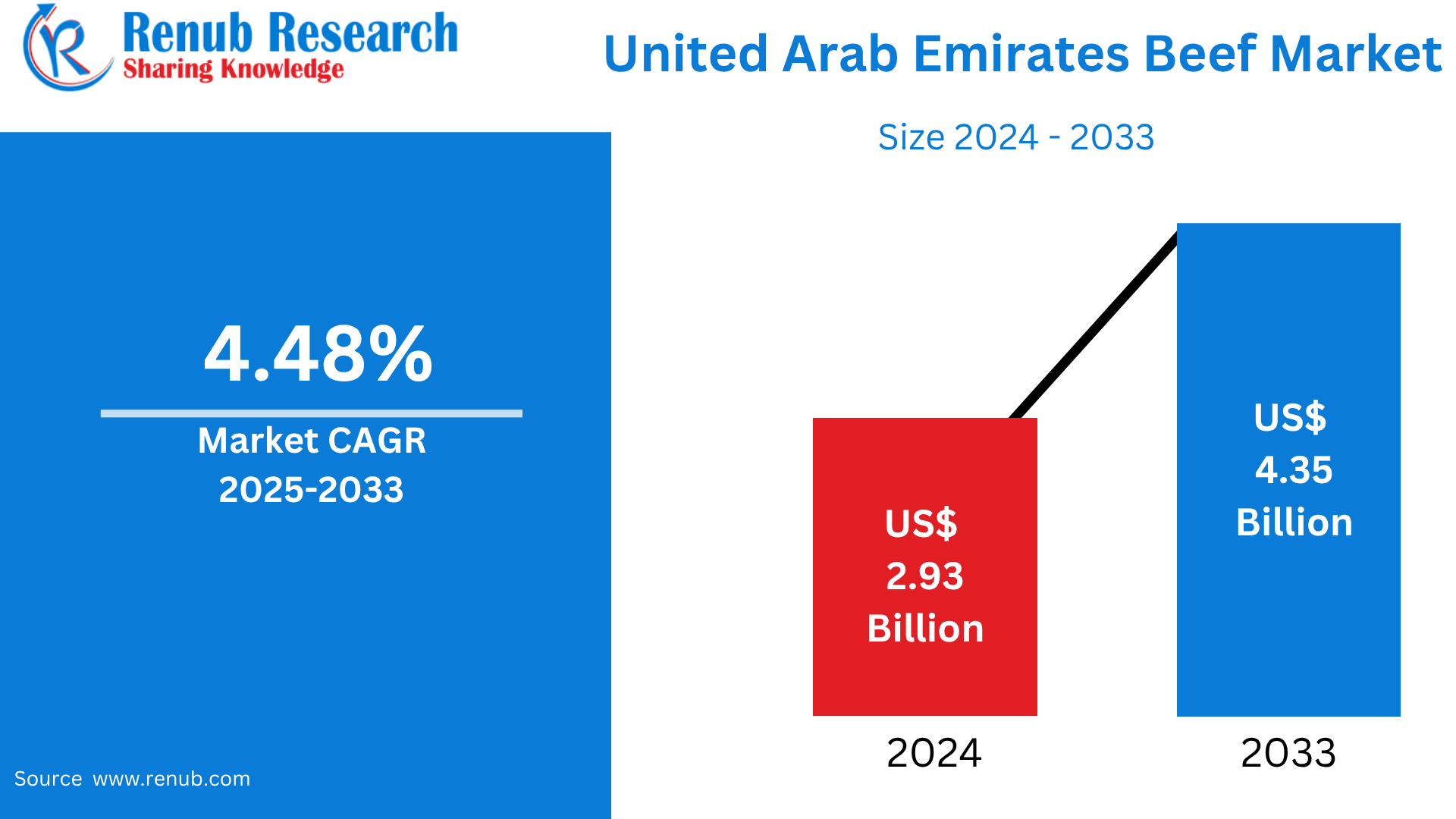
United Arab Emirates Beef Market is expected to reach US$ 4.35 billion by 2033 from US$ 2.93 billion in 2024, with a CAGR of 4.48% from 2025 to 2033. The growing expatriate population, growing demand for premium meat products, growing consumer desire for protein-rich diets, and the growth of contemporary retail and foodservice industries providing a variety of international and halal-certified beef options are the main drivers of the UAE beef market.
United Arab Emirates Beef Industry Overview
Cattle flesh, or "beef," is a major source of high-quality protein, iron, and other vital minerals. It is used in many different types of food, from raw cuts to processed goods like minced beef and sausages. Cultural preferences, halal certification requirements, and the existence of varied expatriate communities all have an impact on beef consumption in the United Arab Emirates. To meet domestic demand, the market imports most of its supplies from nations like Brazil, India, and Australia. In the Emirates, beef is utilized extensively in dining establishments, lodging facilities, and homes, reflecting both local and international culinary traditions.
Due to growing health consciousness and a need for protein-based diets among both residents and foreigners, the UAE beef industry is growing. Consumption in upscale dining establishments and lodging facilities is still driven by the flourishing tourist and hospitality sectors. Product accessibility is improved by expanding retail infrastructure, such as supermarkets and online meat delivery services. Furthermore, the nation's robust halal certification system guarantees customer confidence and draws in international producers. Higher disposable incomes, changing dietary habits, and government programs encouraging food security and import diversification are all contributing to the UAE's beef industry's strong growth as a result of ongoing urbanization, population expansion, and economic diversification.
Growth Drivers for the United Arab Emirates Beef Market
Rising Demand for Protein-Rich and Premium Meat Products
Beef has been a main protein source in the UAE due to consumers' growing health consciousness and demand for nutrient-dense, high-protein diets. Leaner, grass-fed, and premium beef types are becoming more popular among consumers as they fit into diets that emphasize wellbeing. The demand for premium cuts and imported specialty beef from nations like Australia, Japan, and the US is further fueled by the growth of upscale dining establishments and retail stores. Furthermore, the UAE's fitness and wellness movement promotes the intake of high-quality proteins and is bolstered by gym culture and good eating trends. Higher disposable incomes and this change in eating habits are driving up demand for premium and organic beef products, which is supporting the market's long-term growth trajectory.
Expansion of the Hospitality and Foodservice Industry
The beef market is growing thanks in large part to the UAE's booming tourist and hospitality industries. The demand for a variety of culinary experiences, including beef-based dishes, is still high in hotels, resorts, and fine-dining places due to the millions of foreign visitors that come here each year. Premium halal beef imports have increased as a result of the fast expansion of international dining chains and steakhouses in places like Dubai and Abu Dhabi. Consumption is further increased by the expanding trends of luxury dining, food festivals, and the adoption of Western-style cuisine. Furthermore, foodservice providers are promoting collaborations with respectable foreign beef producers as they place a greater emphasis on sustainability and quality assurance. The increasing incorporation of beef into foreign menus and quick-service restaurants guarantees steady market growth as the UAE maintains its position as a global center for hospitality.
Strong Halal Certification and Reliable Import Network
The UAE's food business is built on halal compliance, which promotes customer trust and makes it easier to import huge quantities of beef from suppliers throughout the world. Because of the country's strong halal certification system, which guarantees quality and religious observance, imported beef products are commonly accepted. Stable and varied supply chains are made possible by the UAE's advantageous geographic location, sophisticated logistical infrastructure, and solid economic ties with nations like Australia, India, and Brazil. Additionally, continuous product availability is ensured by government initiatives to improve food security through cold chain extension and import diversity. The UAE's standing as a regional center for the distribution and trading of halal beef throughout the Middle East is reinforced by this dependable import network as well as effective certification and inspection procedures.
Challenges in the United Arab Emirates Beef Market
Heavy Reliance on Imports and Supply Chain Vulnerability
The UAE’s beef market is highly dependent on imports, making it vulnerable to global supply disruptions, fluctuating prices, and changing trade dynamics. Geopolitical tensions, rising transportation costs, and logistical bottlenecks can significantly affect beef availability and pricing. Additionally, the limited scope for domestic cattle farming due to arid climate and scarce resources further amplifies this dependence. Any restrictions from key supplier nations or changes in international meat export regulations can disrupt supply chains. Although the UAE is investing in food security initiatives and diversification strategies, achieving a stable and self-reliant meat supply remains a long-term challenge for sustaining market growth and ensuring consistent product quality.
Rising Costs and Shift Toward Alternative Proteins
The increasing cost of imported beef, driven by global inflation, currency fluctuations, and stricter quality standards, poses a major challenge for UAE importers and consumers. Premium and grass-fed beef products are becoming more expensive, limiting accessibility for middle-income consumers. Moreover, the growing awareness of environmental sustainability and ethical food consumption has encouraged some consumers to explore alternative protein sources such as plant-based or lab-grown meat. This shift could gradually reduce traditional beef consumption in certain segments. To address this, suppliers and retailers must innovate through competitive pricing, local value addition, and sustainability-focused initiatives to maintain consumer confidence and meet evolving dietary preferences.
Abu Dhabi Beef Market
Abu Dhabi’s beef market is driven by its expanding hospitality sector, affluent population, and government-backed initiatives promoting food diversification. High-end restaurants and luxury hotels across the capital emphasize premium and imported beef cuts. The city’s retail sector is also witnessing a rise in demand for organic, grass-fed, and ready-to-cook beef products. With strong regulatory oversight and halal compliance systems, Abu Dhabi ensures quality assurance and consumer safety. Additionally, initiatives focusing on sustainable food sourcing and investment in cold storage infrastructure enhance supply chain reliability. As the Emirate continues its economic diversification under Vision 2030, the growing focus on premium dining and health-conscious eating habits is expected to boost beef consumption significantly.
Dubai Beef Market
Dubai represents the UAE’s largest and most dynamic beef market, driven by a cosmopolitan population, vibrant tourism, and a diverse foodservice industry. The city’s high concentration of international restaurants, steakhouses, and luxury hotels creates strong demand for premium imported beef. With advanced logistics and access to global suppliers, Dubai serves as a regional distribution hub for halal-certified meat. The growth of e-commerce platforms and gourmet food retailers has further increased accessibility for consumers seeking high-quality products. Sustainability and traceability are becoming key trends, encouraging partnerships with ethical suppliers. As Dubai continues to host global events and attract expatriates, demand for diverse beef products across all price segments remains robust.
Sharjah Beef Market
Sharjah’s beef market is expanding steadily, supported by population growth, urban development, and increasing retail modernization. The Emirate’s consumers exhibit strong demand for affordable and halal-certified beef options, with rising adoption of packaged and frozen products. Local supermarkets and hypermarkets are improving their fresh meat sections, enhancing product visibility. Additionally, Sharjah’s growing middle-class population and expansion of quick-service restaurants are contributing to steady demand. While it imports beef primarily through nearby Dubai ports, government monitoring ensures quality and halal compliance. Increasing awareness of balanced diets and protein consumption is further driving market growth. Continued investment in logistics and cold storage will strengthen Sharjah’s position in the national beef supply network.
Ajman Beef Market
Ajman’s beef market is growing due to rising urbanization, expanding retail networks, and growing expatriate communities seeking diverse meat options. The Emirate’s supermarkets and local butcheries are enhancing their offerings with imported halal-certified beef to meet evolving consumer preferences. Increased restaurant openings and catering services also contribute to demand growth. While Ajman’s market is smaller compared to Dubai and Abu Dhabi, it benefits from proximity to major import channels and improved logistics infrastructure. Price-sensitive consumers drive sales of frozen and processed beef, while premium demand is gradually increasing. Continued investments in retail expansion and food quality standards are expected to support the Emirate’s role in the UAE’s overall beef market development.
Recent Developments in United Arab Emirates Beef Market
- September 2025: The Organic Meat Company Limited (Pakistan) entered into an export agreement with Gold Crest Trading FZE (UAE) to supply frozen boneless beef. This partnership strengthens UAE–Pakistan trade relations and expands the availability of premium-quality beef products in the UAE market.
- October 2025: The Australia–UAE Comprehensive Economic Partnership Agreement (CEPA) officially came into effect, eliminating tariffs on Australian frozen red meat exports. The deal enhances trade competitiveness, lowers beef import costs, and supports the UAE’s strategy to secure diverse, high-quality meat sources for its consumers.
United Arab Emirates Beef Market Segments:
Cut
- Brisket
- Shank
- Loin
- Others
Slaughter Method
- Halal
- Kosher
- Others
Distribution Channel
- Supermarket and Hypermarket
- Retail Store
- Wholesaler
- E-Commerce
- Others
Regions
- Abu Dhabi
- Dubai
- Sharjah
- Ajman
- Umm Al-Quwain
All companies have been covered from 5 viewpoints:
- Company Overview
- Key Persons
- Recent Development & Strategies
- SWOT Analysis
- Sales Analysis
Key Players Analysis
- JBS S.A
- Tyson Foods
- Pilgrim's Pride Corporation
- Danish Crown Group
- Vion Food Group
- WH Group
- Hormel Foods Corporation
- Muyuan Foods
Report Details:
| Report Features | Details |
| Base Year |
2024 |
| Historical Period |
2021 - 2024 |
| Forecast Period |
2025 - 2033 |
| Market |
US$ Billion |
| Segment Covered |
Cut, Slaughter Method, Distribution Channel and Regions |
| Regions Covered |
|
| Companies Covered |
|
| Customization Scope |
20% Free Customization |
| Post-Sale Analyst Support |
1 Year (52 Weeks) |
| Delivery Format |
PDF and Excel through Email (We can also provide the editable version of the report in PPT/Word format on request) |
Customization Services available
- Analysis of Market Size and Its Segments
- More Company Profiles (Upto 10 without any additional cost):
- Additional Countries (Other than mentioned Countries):
- Region/Country Specific Reports:
- Market Entry Strategy:
- Region-Specific Market Dynamics:
- Regional Market Share Analysis:
- Trade Analysis:
- Production Insights:
- Others Customized Requests:
For more information contact our analysts.
Need More Assistance?
- Talk to our analysts to get more precious information on the current market trends.
- Include more countries and segments and customize the report based on the final requirement.
- Get a competitive advantage in your industry by knowing the report findings and making a positive impact on your revenues and operations.
- Our analysts are always ready to provide more help and pertinent information if you need any additional assistance.