Tomato Seeds Market Report by Products, Application, Type, Technology, Countries and Company Analysis 2026–2034
Buy NowTomato Seeds Market Size and Forecast 2026-2034
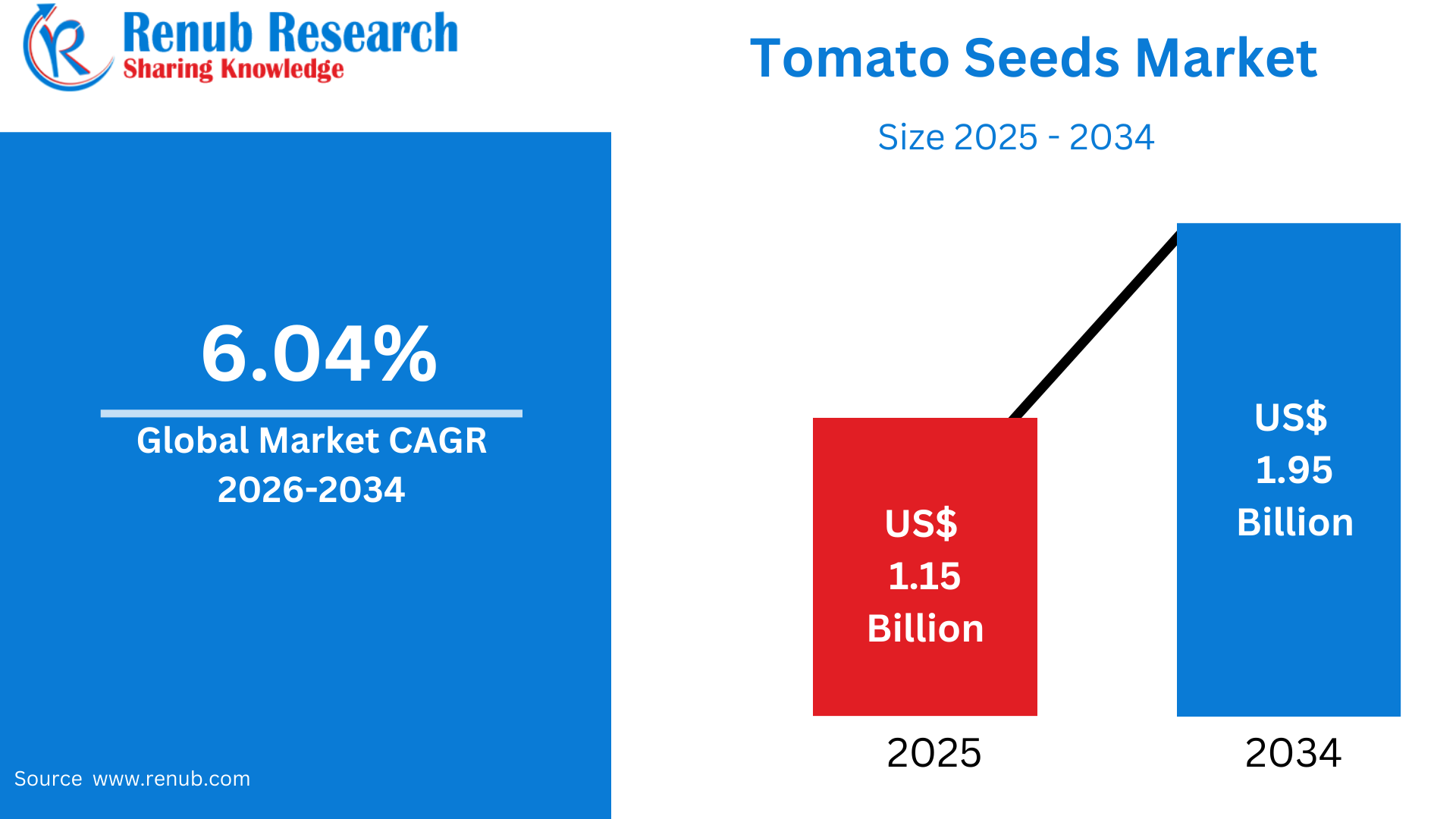
Tomato Seeds Market is expected to reach US$ 1.95 billion by 2034 from US$ 1.15 billion in 2025, with a CAGR of 6.04% from 2026 to 2034. Growing consumer demand for tomatoes in both fresh and processed forms, combined with the spread of protected cultivation methods, is accelerating market expansion. Advancements in hybrid breeding and increasing adoption of disease-resistant varieties further strengthen global growth momentum for tomato seeds.
Tomato Seeds Industry Overview
Tomato seeds are the tiny, mature reproductive parts of tomato fruits that enable growers to cultivate new plants. After extraction, they are cleaned, dried, and prepared for planting, with some undergoing treatments to improve germination and protection against soil-borne diseases. Farmers can choose from diverse seed types, including hybrids, open-pollinated, and heirloom varieties, each offering distinct benefits in yield, flavor, and adaptability. Tomato seeds play a central role in commercial and home gardening, supporting the production of a wide range of tomatoes suited for salads, cooking, and industrial processing. Their quality directly influences crop performance and market value.
The market for tomato seeds is expanding due to rising global demand for high-quality tomatoes used in culinary applications, packaged foods, and industrial processing. Hybrid varieties with improved yield potential and resilience against common pests are increasingly favored by commercial farmers. Investments in greenhouse farming, hydroponic systems, and precision agriculture further boost seed demand by enabling year-round production. Government support for horticulture and the development of climate-smart farming solutions also contribute to market growth. As consumers gravitate toward flavorful and nutrient-rich tomatoes, seed companies continue innovating to deliver specialty and high-performing varieties suited for diverse growing environments.
Growth Drivers for the Tomato Seeds Market
Rising Use of High-Yield Hybrid and Disease-Resistant Seeds
A major driver of the tomato seeds market is the global shift toward high-yield hybrid seeds that offer dependable performance and better tolerance to common diseases. These hybrids produce uniform fruits, respond well to controlled irrigation and nutrient programs, and thrive in diverse climates. For farmers, hybrid seeds reduce the risk of crop failure by resisting threats like blight, wilt, and viral infections. As unpredictable weather patterns become more frequent, dependable hybrid seed varieties are increasingly essential for stable production. Seed companies are investing heavily in research to develop region-specific hybrids tailored to soil type, climate, and disease pressure. This growing preference for reliable, resilient seeds continues to push the market forward worldwide.
Expansion of Controlled-Environment Farming
The growing adoption of controlled-environment farming—such as greenhouses, polyhouses, vertical farms, and hydroponic setups—is significantly increasing demand for tomato seeds optimized for such systems. These protected structures allow steady production throughout the year, enabling farmers to produce premium-quality tomatoes regardless of seasonal fluctuations. Seeds developed for these environments typically offer traits such as rapid maturation, compact growth, and high productivity. As urban farming and commercial greenhouse clusters expand globally, they create a consistent and large-scale need for specialized seeds. The shift toward water-efficient and resource-smart agriculture also strengthens reliance on seeds that perform well in precision-farming environments. This trend plays a major role in sustaining global market growth.
Increasing Worldwide Consumption of Tomato-Based Foods
The rising consumption of fresh tomatoes and processed tomato products—such as ketchup, sauces, soups, canned tomatoes, and ready-to-cook meals—is another strong driver of the tomato seeds market. Urbanization, expanding food service industries, and changing dietary habits continue to fuel tomato demand in both developed and emerging economies. As food manufacturers require a stable supply of high-quality tomatoes, farmers are increasingly adopting improved seed varieties that deliver consistent shape, firmness, and shelf life. Nutrition-conscious consumers also favor tomatoes for their antioxidant content, boosting demand for specialty varieties like cherry, grape, and colored tomatoes. This growing appetite for diverse tomato products directly reinforces the need for advanced and premium tomato seeds.
Challenges in the Tomato Seeds Market
High Price of Hybrid and Advanced Seeds
One of the major challenges in the tomato seeds market is the relatively high cost of hybrid and technologically enhanced seeds. While these seeds offer superior performance, they require significant upfront investment, which can be difficult for small or resource-limited farmers. In many regions, farmers also need additional inputs—such as fertilizers, drip irrigation, and crop protection products—to unlock the full potential of hybrid varieties. When weather is unpredictable or markets fluctuate, growers may hesitate to invest heavily. Limited access to finance and agricultural credit further restricts adoption. This cost barrier slows down the widespread use of improved tomato seeds, especially in developing countries.
Increasing Climate Vulnerability and Environmental Stress
Climate variability presents a serious challenge for tomato seed performance. Rising temperatures, irregular rainfall, and extended drought periods can disrupt seed germination, fruit setting, and overall plant health. Even the most advanced hybrid seeds may underperform when exposed to extreme or unpredictable weather. New pests and diseases are also emerging because of changing climate patterns, increasing the need for continuous breeding innovation. Developing varieties that can thrive under multiple stress conditions requires high research investment and time. As climate risks intensify, farmers remain uncertain about productivity levels, which in turn affects seed purchasing decisions and market stability.
United States Tomato Seeds Market
The tomato seeds market in the United States is supported by advanced agricultural infrastructure, large commercial farms, and strong demand from food processors. U.S. growers prefer hybrid seeds with high yields, long shelf life, and strong disease tolerance to meet strict quality standards. Protected cultivation and precision farming tools—such as automated irrigation and climate monitoring—are widely used, raising demand for seeds suited to controlled environments. Rising popularity of organic and specialty tomatoes, including cherry and heirloom types, is creating opportunities for premium seed varieties. Continuous research and innovation from seed companies and agricultural universities ensure steady advancement in high-performing tomato genetics.
Germany Tomato Seeds Market
Germany’s tomato seeds market thrives on its developed greenhouse sector and strong consumer demand for sustainable, locally grown produce. German farmers invest heavily in energy-efficient controlled-environment systems that require seeds capable of thriving under artificial lighting, precise irrigation, and climate-regulated spaces. The country’s commitment to organic farming boosts the demand for non-GMO and certified organic seed varieties. Technological advancements in horticulture—such as automated nutrient delivery systems and hydroponic cultivation—support the need for specialized tomato seeds tailored to high-tech farming. Germany’s strong food retail sector and preference for premium-quality vegetables further stimulate demand for reliable, high-performing seed varieties.
China Tomato Seeds Market
China is one of the most dynamic tomato seed markets, driven by large-scale farming, rapid urbanization, and rising consumption of tomato products. Major government investments in greenhouse expansion, irrigation modernization, and seed quality improvement significantly strengthen demand. Chinese farmers increasingly prefer hybrid seeds that can boost productivity, resist pests, and adapt to changing climate conditions. As China is also a major global supplier of industrial tomato paste, demand for high-yield processing varieties continues to grow. Competition among domestic and international seed companies fuels innovation in breeding technologies, making China a key hub for advanced seed development and commercialization.
Saudi Arabia Tomato Seeds Market
Saudi Arabia’s tomato seeds market is heavily shaped by its desert climate and reliance on controlled-environment farming. Greenhouses, hydroponic systems, and climate-regulated facilities are widely used to ensure year-round tomato production. As water conservation is a national priority, farmers require seeds that perform well under low-water conditions and advanced irrigation systems. Hybrid seeds with strong heat tolerance and rapid maturation are in high demand. Government-backed food security initiatives and incentives for modern horticulture attract investments in high-tech agriculture. Growing consumer demand for fresh vegetables and the expansion of modern retail outlets create a steady need for premium, reliable tomato seed varieties.
Recent Developments in Tomato Seeds Market
- September 2025: NRGene introduced commercial tomato varieties engineered with resistance to Tomato Brown Rugose Fruit Virus (ToBRFV). These newly released varieties offer growers an effective defense against one of the most damaging viral threats in tomato production, helping ensure more stable yields and improved crop security.
- July 2025: DENSO completed the acquisition of Axia Vegetable Seeds, a Netherlands-based specialist in greenhouse-optimized tomato varieties. This move expands DENSO’s footprint in agricultural technology and enables deeper integration of artificial intelligence, robotics, and controlled-environment systems to support more sustainable tomato cultivation.
- May 2025: Sakata Seed Corporation launched a new research facility in Antalya, Türkiye, dedicated to advancing tomato and pepper breeding programs. The center aims to develop improved, high-performance varieties tailored to the distinct needs of diverse international markets.
Market Segmentation
Product
- Large Tomato Seeds
- Cherry Tomato Seeds
- Others
Application
- Farmland
- Greenhouse
- Others
Type
- Open-Pollinated Varieties
- Hybrids
- Others
Technology
- Open-Field
- Protected Cultivation
Countries
North America
- United States
- Canada
Europe
- France
- Germany
- Italy
- Spain
- United Kingdom
- Belgium
- Netherlands
- Turkey
Asia Pacific
- China
- Japan
- India
- South Korea
- Thailand
- Malaysia
- Indonesia
- Australia
- New Zealand
Latin America
- Brazil
- Mexico
- Argentina
Middle East & Africa
- Saudi Arabia
- UAE
- South Africa
All the Key players have been covered from 5 Viewpoints:
- Overviews
- Key Person
- Recent Developments
- SWOT Analysis
- Revenue Analysis
Company Analysis:
- BASF S.E.
- Sakata Seed Corporation
- Bayer Crop Science SE.
- Syngenta AG
- Gansu Dunhuang Seed Co., Ltd.
- UPL LMt.
- GroupeLimagrain Holding
- RijkZwaanZaadteelt en Zaadhandel B.V.
Report Details:
| Report Features | Details |
| Base Year |
2025 |
| Historical Period |
2022 - 2025 |
| Forecast Period |
2026 - 2034 |
| Market |
US$ Billion |
| Segment Covered |
Product, Application, Type, Technology, and Countries |
| Countries Covered |
|
| Companies Covered |
|
| Customization Scope |
20% Free Customization |
| Post-Sale Analyst Support |
1 Year (52 Weeks) |
| Delivery Format |
PDF and Excel through Email (We can also provide the editable version of the report in PPT/Word format on request) |
Customization Services available
- Analysis of Market Size and Its Segments
- More Company Profiles (Upto 10 without any additional cost):
- Additional Countries (Other than mentioned Countries):
- Region/Country Specific Reports:
- Market Entry Strategy:
- Region-Specific Market Dynamics:
- Regional Market Share Analysis:
- Trade Analysis:
- Production Insights:
- Others Customized Requests:
For more information contact our analysts.
Need More Assistance?
- Talk to our analysts to get more precious information on the current market trends.
- Include more countries and segments and customize the report based on the final requirement.
- Get a competitive advantage in your industry by knowing the report findings and making a positive impact on your revenues and operations.
- Our analysts are always ready to provide more help and pertinent information if you need any additional assistance.