Saudi Arabia E-commerce Apparel Market Size, Share, Growth, Trends, Industry Analysis & Forecast 2026–2034
Buy NowSaudi Arabia E-commerce Apparel Market Trends
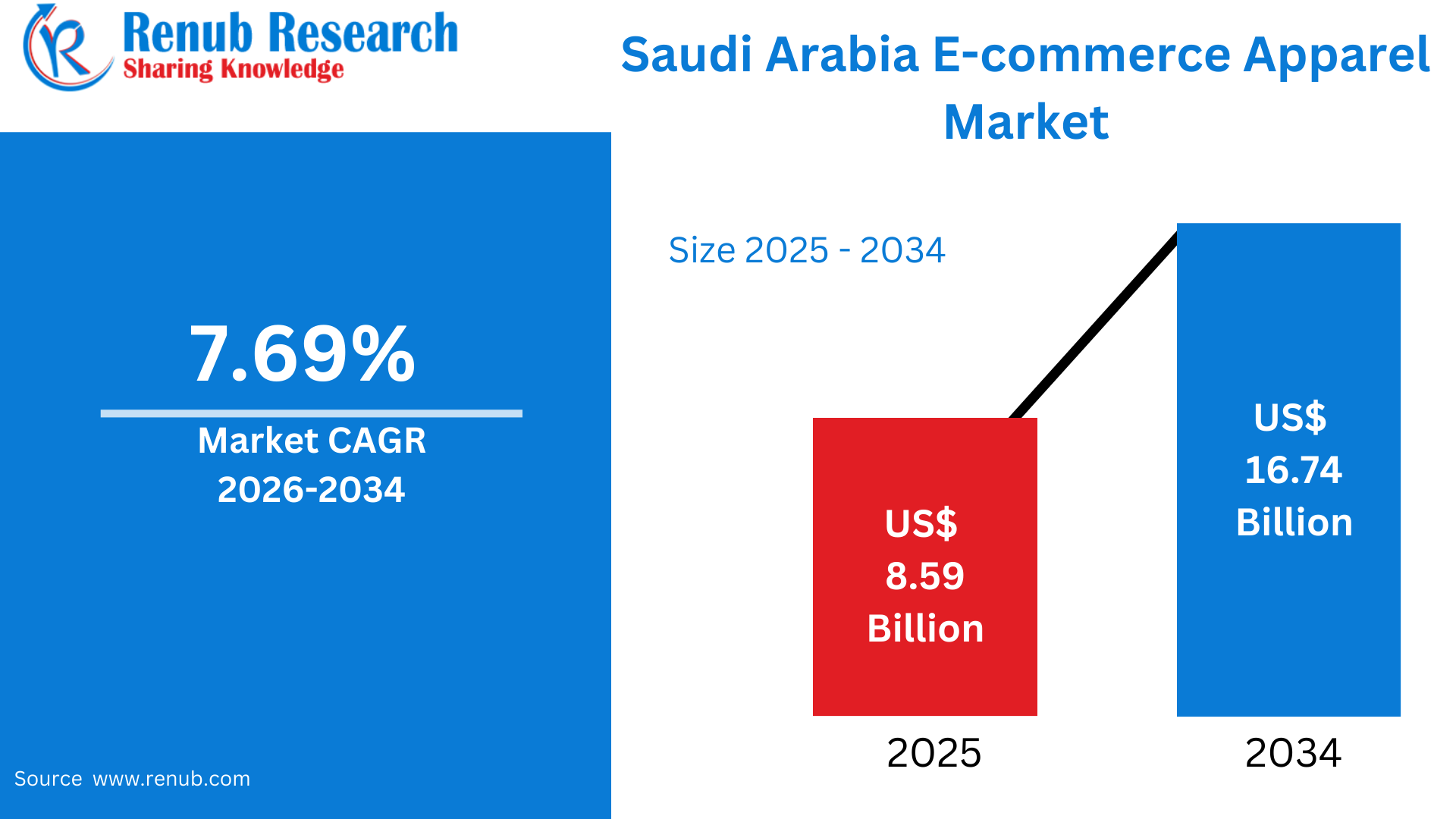
The Saudi Arabia e-commerce apparel market is projected to grow from US$ 8.59 billion in 2025 to US$ 16.74 billion by 2034, registering a CAGR of 7.69% during 2026–2034. The market is being driven by rapid digitalization, rising internet and smartphone penetration, and shifting consumer preferences toward online shopping. A young, tech-savvy population, expanding e-commerce platforms, improved logistics networks, and increasing adoption of secure digital payment solutions are expected to further accelerate market growth throughout the forecast period.
E-commerce Apparel and its Demands in Saudi Arabia
E-commerce apparel refers to the online sale of clothing, footwear, and fashion accessories through brand-owned websites, mobile applications, and online marketplaces. The market includes a diverse range of products such as casual wear, formal wear, traditional attire, sportswear, luxury fashion, and fast-fashion collections. Online retailers enhance the customer experience by offering convenient digital payment methods, doorstep delivery, hassle-free returns, personalized product recommendations, virtual fitting tools, customer reviews, and detailed sizing information.
Saudi Arabia has emerged as one of the fastest-growing e-commerce apparel markets in the Middle East, supported by the country’s ongoing digital transformation and evolving consumer lifestyles. High smartphone usage, widespread social media engagement, and a growing fashion-conscious youth population have significantly increased online apparel purchases. Consumers are increasingly attracted to the convenience of shopping anytime and anywhere, along with access to a broad selection of local and international fashion brands, exclusive online collections, and competitive pricing.
The market is also benefiting from continuous investments in logistics infrastructure, fulfillment centers, and last-mile delivery services, enabling faster and more reliable order fulfillment across the Kingdom. Furthermore, government initiatives under Vision 2030, which promote digital commerce, fintech innovation, and cashless transactions, are fostering greater consumer confidence in online shopping. As retailers continue to integrate artificial intelligence, data analytics, and omnichannel retail strategies to deliver personalized shopping experiences, the Saudi Arabia e-commerce apparel market is expected to witness sustained growth over the coming years.
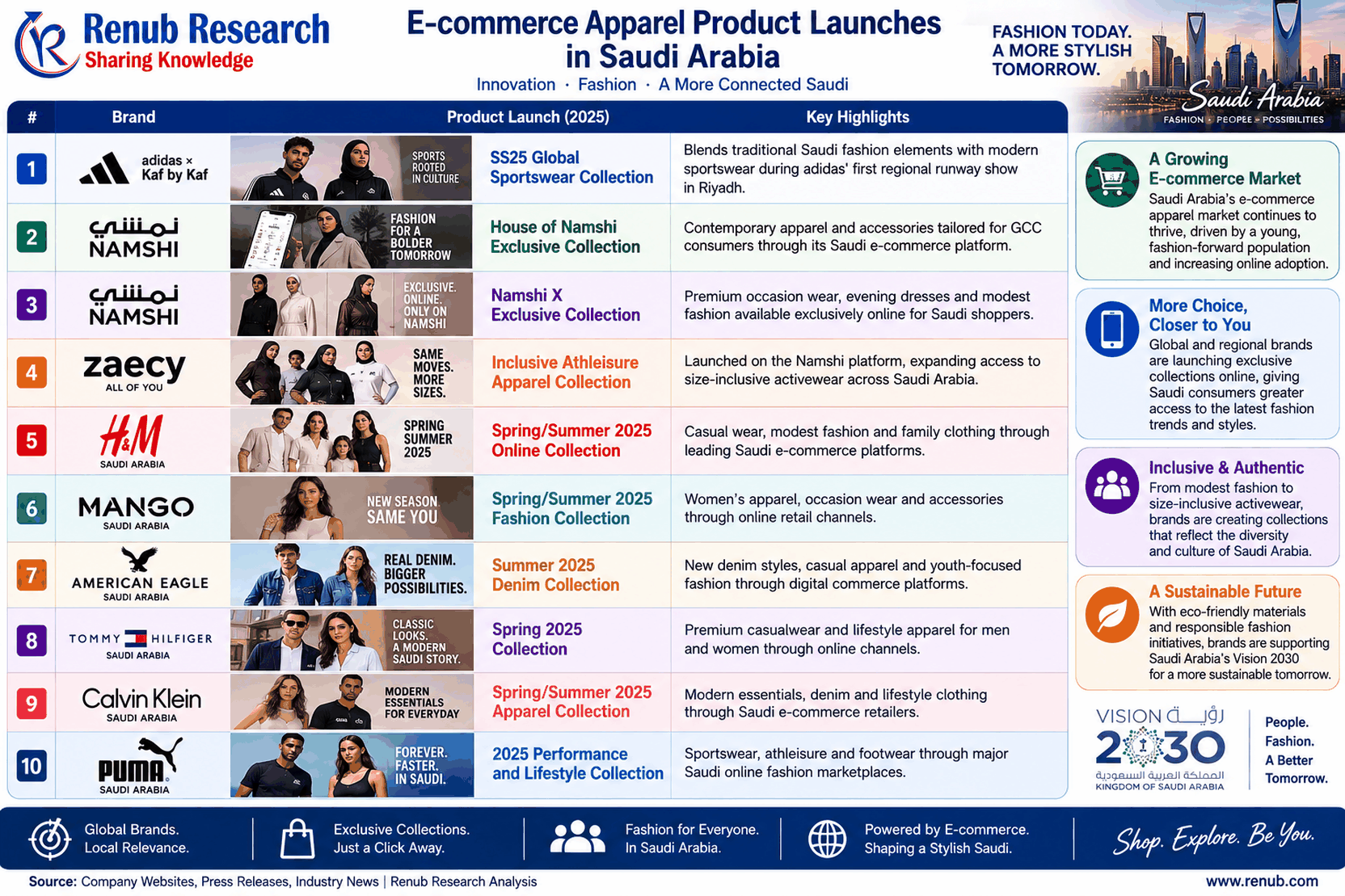
E-commerce Apparel Product Launches in Saudi Arabia
- adidas × Kaf by Kaf (2025): Launched the SS25 Global Sportswear Collection in Saudi Arabia, blending traditional Saudi fashion elements with modern sportswear during adidas' first regional runway show in Riyadh.
- Namshi (2025): Introduced the House of Namshi exclusive fashion collection, featuring contemporary apparel and accessories tailored for GCC consumers through its Saudi e-commerce platform.
- Namshi (2025): Expanded its Namshi X exclusive collection with premium occasion wear, evening dresses, and modest fashion available exclusively online for Saudi shoppers.
- Zaecy (2025): Launched its inclusive athleisure apparel collection on the Namshi platform, expanding access to size-inclusive activewear across Saudi Arabia.
- H&M Saudi Arabia (2025): Released its Spring/Summer 2025 online apparel collection, featuring casual wear, modest fashion, and family clothing through leading Saudi e-commerce platforms.
- Mango Saudi Arabia (2025): Introduced the Spring/Summer 2025 fashion collection, including women's apparel, occasion wear, and accessories through online retail channels.
- American Eagle Saudi Arabia (2025): Launched its Summer 2025 Denim Collection, featuring new denim styles, casual apparel, and youth-focused fashion through digital commerce platforms.
- Tommy Hilfiger Saudi Arabia (2025): Expanded its online offering with the Spring 2025 Collection, introducing premium casualwear and lifestyle apparel for men and women.
- Calvin Klein Saudi Arabia (2025): Released its Spring/Summer 2025 apparel collection, including modern essentials, denim, and lifestyle clothing through Saudi e-commerce retailers.
- PUMA Saudi Arabia (2025): Launched its 2025 Performance and Lifestyle Collection, featuring sportswear, athleisure, and footwear through major Saudi online fashion marketplaces.
Market Catalysts
Accelerated Smartphone Penetration and Ecosystem Digitization
The Saudi Arabian digital retail sector is fundamentally driven by world-leading mobile connectivity, with internet penetration exceeding 98%. This ubiquitous digital access has established mobile devices as the primary transactional medium for a highly connected population, particularly younger demographics and working professionals. Apparel purchasing behaviors are increasingly dictated by algorithmically targeted social media campaigns, influencer marketing, and localized digital advertising. To capitalize on this shift, e-commerce platforms deploy mobile-first architectures integrated with AI-driven personalization engines, dynamic sizing guides, and localized secure payment gateways. The transition away from traditional brick-and-mortar storefronts is further accelerated by the rapid consumer adoption of digital wallets and cashless financial infrastructure, making online fashion procurement friction-free.
Demographic Dividends, Fashion Modernization, and Global Market Access
Saudi Arabia’s young, digitally native demographic is accelerating the demand for international fashion, luxury labels, and fast-fashion inventory. E-commerce platforms effectively eliminate legacy geographic barriers, allowing domestic consumers to directly source from global brands without relying on local physical retail networks. Online-exclusive promotions, flash sales, and influencer-curated digital collections consistently drive high volumes of impulse purchases and strengthen brand stickiness. This structural shift encompasses growing demand segments such as athleisure, premium modest wear, and luxury streetwear. Reflecting this regional transformation, industrial milestones like the launch of the Saudi Fashiontex Expo in Jeddah demonstrate the Kingdom’s strategy to position itself as a major Middle East and Africa (MEA) hub for fashion, textiles, and technology, thereby attracting foreign direct investment and integrating with global fashion trade networks.
Vision 2030 Infrastructure Mandates and Logistics Optimization
Under the strategic umbrella of Saudi Arabia’s Vision 2030, systemic investments in national digital infrastructure, regulatory modernization, and logistics frameworks have created an optimal environment for e-commerce growth. The commercial footprint of online fashion retail has expanded due to the rapid development of regional fulfillment centers, automated sorting facilities, and optimized last-mile delivery services. Regulatory updates—including simplified customs protocols and streamlined digital business licensing—have lowered entry barriers for international and domestic brands alike. Furthermore, state-backed initiatives encouraging SME participation have allowed homegrown fashion labels to rapidly digitize operations. Supported by the National Industrial Development and Logistics Program (NIDLP), which aims to scale the logistics sector’s GDP contribution from roughly 6% in 2022 to 10% by 2030, continuous upgrades to national road networks and localized express hubs have significantly reduced delivery lead times and enhanced consumer fulfillment experiences.
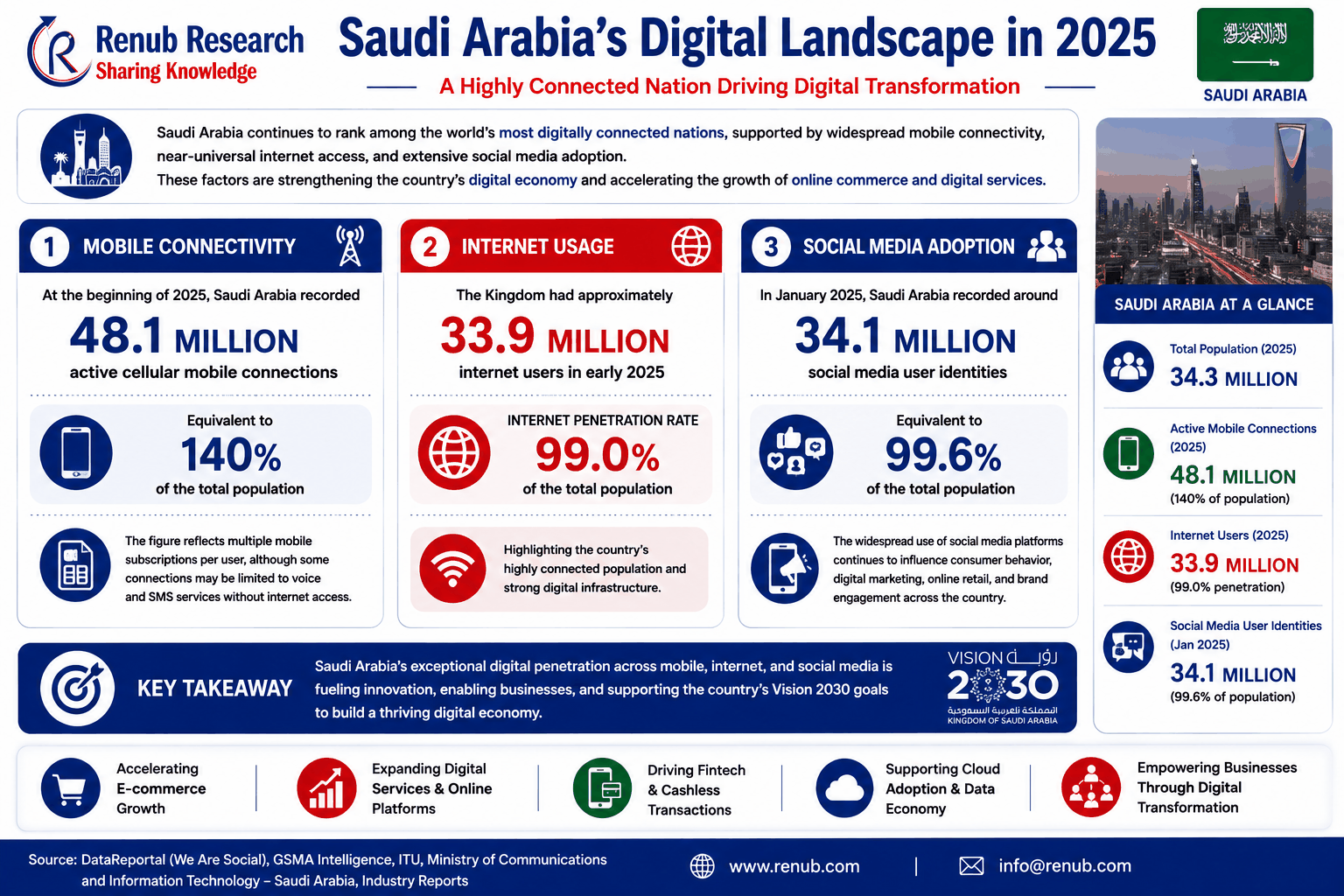
Saudi Arabia’s Digital Landscape in 2025
Saudi Arabia continues to rank among the world’s most digitally connected nations, supported by widespread mobile connectivity, near-universal internet access, and extensive social media adoption. These factors are strengthening the country’s digital economy and accelerating the growth of online commerce and digital services.
- Mobile Connectivity: At the beginning of 2025, Saudi Arabia recorded 48.1 million active cellular mobile connections, equivalent to 140% of the total population. The figure reflects multiple mobile subscriptions per user, although some connections may be limited to voice and SMS services without internet access.
- Internet Usage: The Kingdom had approximately 33.9 million internet users in early 2025, representing an internet penetration rate of 99.0%, highlighting the country’s highly connected population and strong digital infrastructure.
- Social Media Adoption: In January 2025, Saudi Arabia recorded around 34.1 million social media user identities, equivalent to 99.6% of the total population. The widespread use of social media platforms continues to influence consumer behavior, digital marketing, online retail, and brand engagement across the country.
Market Restraints
Reverse Logistics Expenditures and Fit Discrepancies
A primary operational vulnerability in the Kingdom’s digital apparel market is the high rate of product returns stemming from sizing, fit, and material quality discrepancies. The inability of consumers to physically assess garments prior to purchase leads to structural dissatisfaction, which is further complicated by the unique tailoring requirements of premium modest wear. Managing reverse logistics—including return pickups, quality assurance inspection, product sorting, and inventory restocking—imposes severe margin pressure and operational overhead on e-commerce retailers. These high return volumes frequently disrupt inventory planning models and increase localized warehousing expenses. While virtual try-on software and advanced sizing metrics mitigate these issues, reverse logistics remains a complex operational challenge and a major source of margin erosion.
Market Saturation, Margin Compression, and Consumer Trust Barriers
The Saudi digital fashion marketplace is highly fragmented and fiercely competitive, featuring aggressive market share battles among domestic e-commerce platforms, multinational marketplaces, and direct-to-consumer (D2C) brand portals. Omnipresent discounting regimes, perpetual promotional cycles, and real-time digital price-comparison engines restrict corporate pricing power and compress gross margins. Consumer retention remains low, as shoppers readily migrate across platforms to exploit short-term promotional incentives. Concurrently, rising digital advertising costs across major social channels have elevated customer acquisition costs (CAC). Emerging and mid-tier sellers face additional customer trust barriers related to counterfeit risks, delayed fulfillment schedules, and variable product quality, forcing platforms to differentiate through superior delivery execution, strict quality control, and robust payment security.
Cosmetics E-commerce in Saudi Arabia Industry
The Saudi Arabia e-commerce cosmetics market is experiencing robust growth, driven by increasing consumer preference for purchasing skincare, makeup, fragrances, haircare, and personal grooming products through online platforms. Rising beauty awareness among young consumers, working women, and male grooming enthusiasts, coupled with the strong influence of social media creators and beauty influencers, has significantly boosted demand for premium, international, and halal-certified cosmetic brands. E-commerce platforms offer extensive product selections, exclusive online launches, subscription services, doorstep delivery, and competitive pricing, enhancing the overall shopping experience. Features such as customer reviews, virtual beauty consultations, video tutorials, and AI-powered product recommendations further support informed purchasing decisions. Seasonal campaigns during Ramadan, Eid, and major shopping festivals, along with secure packaging, product authenticity verification, and convenient return policies, continue to strengthen consumer confidence and encourage repeat purchases.
Groceries E-commerce in Saudi Arabia Market
The Saudi Arabia e-commerce grocery market is expanding steadily as consumers increasingly prioritize convenience, time savings, and digital shopping experiences. Urban households are increasingly purchasing fresh produce, dairy products, packaged foods, beverages, household essentials, and personal care products through online grocery platforms. Mobile applications offer features such as scheduled deliveries, subscription-based replenishment, digital payment options, and real-time order tracking, improving customer convenience. Investments in dark stores, advanced cold-chain logistics, and quick-commerce fulfillment centers have enabled same-day and instant delivery services, particularly in major metropolitan areas. Seasonal demand during Ramadan and festive periods, along with routine monthly grocery replenishment and bulk purchasing, continues to drive transaction volumes. Although competition remains intense, loyalty programs, personalized offers, and private-label products are helping online grocery retailers improve customer retention and profitability.
Home Appliances E-commerce in the Saudi Arabia Industry
Saudi Arabia’s e-commerce home appliances market continues to grow as consumers increasingly purchase refrigerators, washing machines, air conditioners, kitchen appliances, televisions, and smart home devices through digital channels. Online platforms provide greater price transparency, easy product comparisons, financing options, free installation, and home delivery, making them attractive alternatives to traditional retail stores. Rising residential construction, urban housing developments, and increasing adoption of smart home technologies are supporting demand for modern household appliances. Seasonal promotional campaigns, exclusive online discounts, and flexible installment payment plans further encourage high-value purchases. Manufacturers are also strengthening direct-to-consumer online sales channels while offering warranty registration, after-sales support, and extended service plans digitally, contributing to greater consumer confidence in purchasing expensive appliances online.
Apparel Business-to-Consumer E-commerce in Saudi Arabia
The Business-to-Consumer (B2C) segment represents the largest share of Saudi Arabia’s e-commerce apparel market, driven by increasing online purchases through brand websites, fashion marketplaces, and mobile shopping applications. Consumers actively shop for casual wear, modest fashion, luxury apparel, sportswear, children’s clothing, and traditional garments, benefiting from personalized recommendations, loyalty programs, influencer campaigns, and exclusive online collections. The country’s young, digitally connected population, along with growing smartphone usage and mobile commerce adoption, continues to fuel demand. Fast delivery services, flexible payment options including Buy Now Pay Later (BNPL), and hassle-free return policies have significantly improved the online shopping experience, enabling the B2C segment to maintain its leadership position within the Saudi apparel e-commerce market.
E-commerce Apparel Business-to-Business in Saudi Arabia
The Saudi Arabia B2B e-commerce apparel market is witnessing steady growth as businesses increasingly adopt digital procurement platforms for sourcing apparel in bulk. Retailers, corporate organizations, educational institutions, hospitality companies, healthcare providers, and industrial firms utilize online wholesale marketplaces to purchase uniforms, workwear, promotional clothing, safety apparel, and ready-made garments. B2B platforms offer negotiated pricing, volume discounts, flexible payment terms, inventory management, and supply chain integration, improving procurement efficiency. Rising digital transformation across enterprises and growing demand from hospitality, education, healthcare, and industrial sectors continue to support expansion of the B2B apparel e-commerce market throughout the Kingdom.
States Insights:
Riyadh
Riyadh remains the largest regional market for online apparel sales in Saudi Arabia, supported by its large population, high disposable income, strong digital infrastructure, and widespread internet penetration. Consumers in the capital actively purchase luxury fashion, premium brands, fast fashion, modest wear, sportswear, and international labels through online channels. Efficient logistics networks and extensive last-mile delivery services enable rapid order fulfillment across the city. Riyadh’s vibrant influencer ecosystem, expanding expatriate community, and concentration of corporate headquarters further contribute to diverse fashion demand and higher average transaction values, reinforcing the city’s leadership in Saudi Arabia’s e-commerce apparel industry.
Jeddah
Jeddah is a major contributor to Saudi Arabia’s online apparel market, benefiting from its role as a commercial hub, international gateway, and popular tourist destination. Consumers demonstrate strong demand for casual wear, luxury fashion, beachwear, sportswear, and internationally recognized brands through online platforms. The city’s multicultural population supports diverse fashion preferences, while its well-developed port and airport infrastructure facilitate efficient product distribution. Seasonal tourism, shopping festivals, and holiday promotions generate additional online apparel sales, making Jeddah one of the leading fashion e-commerce markets in western Saudi Arabia.
Dammam
The Dammam e-commerce apparel market is expanding steadily, driven by increasing digital adoption, a growing industrial workforce, and rising disposable incomes among young families. Consumers frequently purchase casual clothing, workwear, sportswear, children’s apparel, and everyday fashion essentials through online platforms. Improved courier services, expanding logistics infrastructure, and widespread use of digital payment solutions have enhanced delivery efficiency and customer satisfaction. As mobile commerce adoption continues to increase, Dammam is strengthening its contribution to Saudi Arabia’s overall online apparel market.
Khobar
Khobar has emerged as an important regional market for online apparel, supported by its affluent population, strong expatriate community, and high purchasing power. Consumers show significant demand for premium fashion, luxury brands, sportswear, designer apparel, and imported clothing available through domestic and international e-commerce platforms. High smartphone penetration, advanced digital banking services, and convenient cross-border access to regional fashion trends further encourage online shopping. The city’s preference for premium products, combined with fast delivery services and exclusive online collections, continues to strengthen Khobar’s position within Saudi Arabia’s growing e-commerce apparel ecosystem.
Market Segmentations
Type
- Home Appliances
- Apparel, Footwear and Accessories
- Books
- Cosmetics
- Groceries
- Others
Transaction
- Business-to-Consumer
- Business-to-Business
- Consumer-to-Consumer
- Others
Cities
- Riyadh
- Jeddah
- Dammam
- Dhahran
- Jubail
- Khobar
- Tabuk
- Mecca
- Medina
- Rest of Cities
All companies have been covered with 5 Viewpoints
- Overviews
- Key Person
- Recent Developments
- SWOT Analysis
- Revenue Analysis
Company Analysis:
- Alibaba.com
- Amazon.com Inc.
- ASOS
- Best Buy
- Ebay Inc.
- Flipkart Inc.
- Groupon Inc.
- JD.com Inc.
- Shopify Inc.
- Walmart Inc.
Report Details:
| Report Features | Details |
| Base Year |
2025 |
| Historical Period |
2022 - 2025 |
| Forecast Period |
2026 - 2034 |
| Market |
US$ Billion |
| Segment Covered |
Type, Transaction and Cities |
| Cities Covered |
|
| Companies Covered |
|
| Customization Scope |
20% Free Customization |
| Post-Sale Analyst Support |
1 Year (52 Weeks) |
| Delivery Format |
PDF and Excel through Email (We can also provide the editable version of the report in PPT/Word format on request) |
Customization Services available
- Analysis of Market Size and Its Segments
- More Company Profiles (Upto 10 without any additional cost):
- Additional Countries (Other than mentioned Countries):
- Region/Country Specific Reports:
- Market Entry Strategy:
- Region-Specific Market Dynamics:
- Regional Market Share Analysis:
- Trade Analysis:
- Production Insights:
- Others Customized Requests:
For more information contact our analysts.
Need More Assistance?
- Talk to our analysts to get more precious information on the current market trends.
- Include more countries and segments and customize the report based on the final requirement.
- Get a competitive advantage in your industry by knowing the report findings and making a positive impact on your revenues and operations.
- Our analysts are always ready to provide more help and pertinent information if you need any additional assistance.