Point of Care Diagnostics Market Report by Products, Technology, Point of Prescription, End-User, Countries and Company Analysis 2026–2034
Buy NowPoint of Care Diagnostics Market Forecast
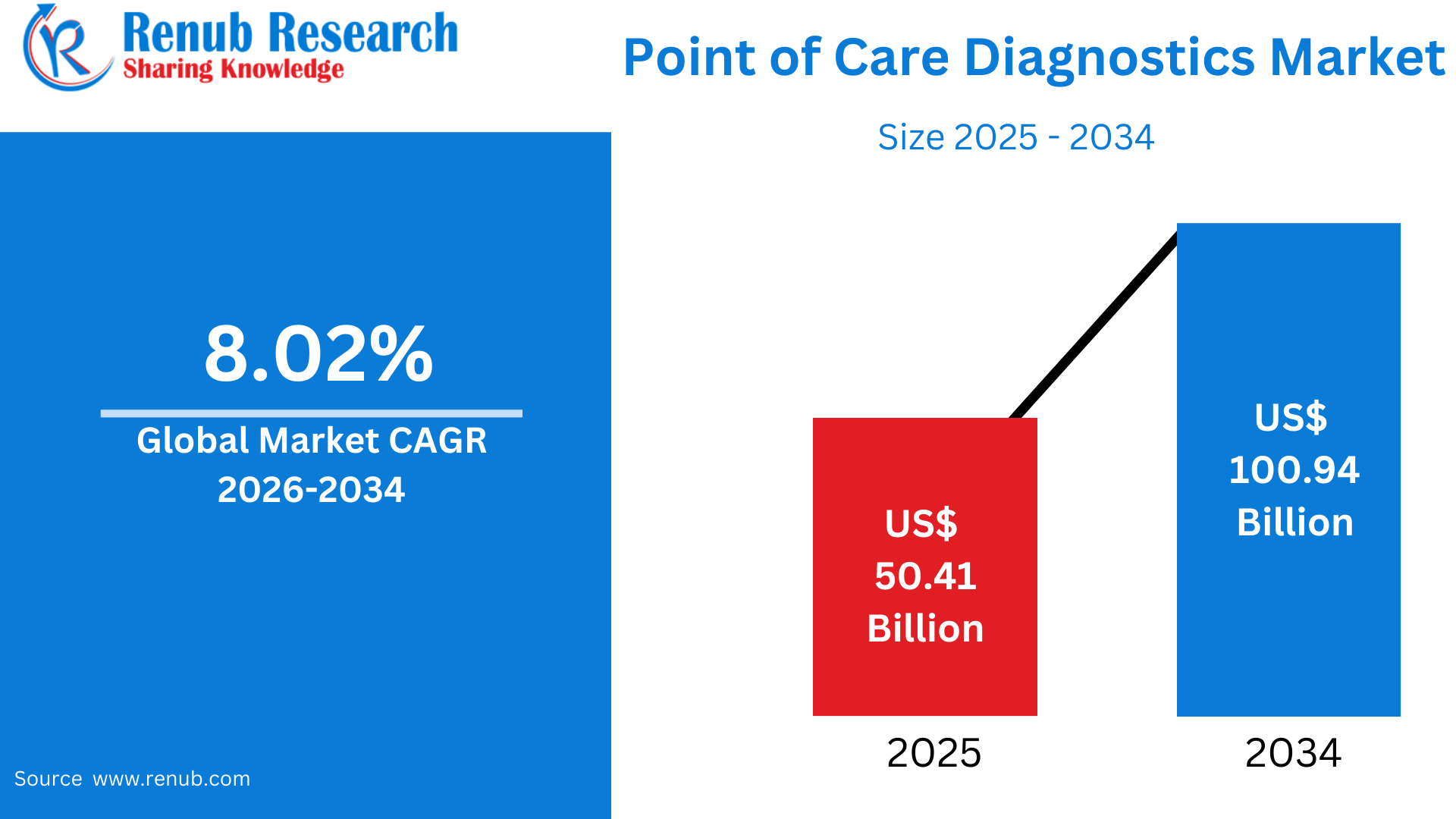
Point of Care Diagnostics Market is expected to grow from US$ 50.41 billion in 2025 to US$ 100.94 billion by 2034, registering a compound annual growth rate (CAGR) of 8.02% during 2026–2034. Market growth is driven by the rising demand for rapid and accurate diagnostic testing, the increasing prevalence of infectious and chronic diseases, and the expanding adoption of point-of-care testing in home healthcare settings. Technological advancements, including portable and user-friendly diagnostic devices, improved connectivity, and faster test results, are enhancing the efficiency and accessibility of point-of-care diagnostics.
What is Point of Care Diagnostics and Its Uses & Popularity Worldwide
Point of Care Diagnostics (POCD) refers to medical testing performed at or near the location where a patient receives care, such as hospitals, clinics, physician offices, pharmacies, ambulances, or even at home. Unlike conventional laboratory testing, point-of-care diagnostics provide rapid results—often within minutes—allowing healthcare professionals to make timely clinical decisions and initiate treatment without delays. These diagnostic solutions include blood glucose monitors, pregnancy tests, rapid antigen tests, cardiac biomarker analyzers, blood gas analyzers, coagulation monitors, and portable molecular diagnostic devices.
POCD is widely used for detecting infectious diseases, monitoring chronic conditions such as diabetes and cardiovascular disorders, screening for pregnancy, assessing kidney and liver function, and supporting emergency and critical care. Its popularity has grown significantly worldwide due to increasing demand for faster diagnosis, improved patient outcomes, and decentralized healthcare delivery. The COVID-19 pandemic further accelerated the adoption of rapid diagnostic technologies across healthcare systems. Continuous advancements in biosensors, microfluidics, artificial intelligence, and portable diagnostic platforms are improving test accuracy and usability. As healthcare increasingly shifts toward preventive, personalized, and home-based care, Point of Care Diagnostics has become an essential component of modern healthcare systems across both developed and emerging economies.
The World’s Disease Transitions (2000–2023) – Key Bullet Points
- Infectious diseases have declined significantly between 2000 and 2023, while noncommunicable diseases (NCDs) have continued to increase globally.
- Diarrheal diseases
- Declined substantially from over 2,000 DALYs per 100,000 in 2000.
- Continued downward trend despite a temporary disruption during the COVID-19 pandemic (2020).
- HIV/AIDS
- Increased slightly in the early 2000s before declining steadily.
- Disease burden reduced significantly by 2023 due to improved prevention and treatment.
- Tuberculosis (TB)
- Experienced a continuous decline throughout the study period.
- DALYs fell by more than half between 2000 and 2023.
- Ischemic Heart Disease
- Remained the leading global cause of disease burden throughout the period.
- Declined modestly but still recorded nearly 2,000 DALYs per 100,000 in 2023.
- Diabetes Mellitus
- Showed a steady upward trend from 2000 to 2023.
- Reflects the growing global burden of obesity, aging populations, and lifestyle-related risk factors.
- Depressive Disorders
- Gradually increased over the study period.
- Experienced a noticeable rise around the COVID-19 pandemic, remaining elevated afterward.
- Overall Trend
- Global health has shifted from infectious diseases toward chronic, noncommunicable diseases.
- Heart disease remains the largest contributor to global disease burden, while diabetes and mental health disorders continue to rise.
- The findings highlight the growing need for long-term disease management, preventive healthcare, and early diagnostic strategies worldwide.
Growth Drivers of the Point of Care Diagnostics Market
Rising Burden of Infectious and Chronic Diseases Accelerating POCD Adoption
The growing prevalence of infectious diseases and chronic conditions is one of the primary drivers of the Point of Care Diagnostics (POCD) market. According to global health estimates, more than 537 million adults worldwide are living with diabetes, while cardiovascular diseases account for nearly 20 million deaths annually. Additionally, respiratory infections, influenza, HIV, tuberculosis, hepatitis, and emerging viral outbreaks continue to create demand for rapid diagnostic testing. Point-of-care diagnostic devices enable healthcare professionals to obtain results within 5–30 minutes, allowing immediate clinical decision-making and earlier treatment initiation. In diabetes management alone, millions of blood glucose tests are performed every day using portable POCD devices. Rapid diagnostic testing also reduces hospital admissions, shortens emergency department waiting times, and improves patient outcomes. As healthcare systems increasingly focus on early disease detection and continuous monitoring, hospitals, clinics, pharmacies, and home healthcare providers are expanding the use of portable diagnostic technologies, making disease prevalence a major long-term growth driver for the global POCD market.
Technological Advancements in Portable and Digital Diagnostic Devices
Continuous innovation in biosensors, microfluidics, molecular diagnostics, artificial intelligence (AI), and smartphone-enabled diagnostic platforms is significantly expanding the capabilities of point-of-care diagnostics. Modern POCD systems now offer laboratory-quality accuracy while remaining compact, portable, and user-friendly. The development of multiplex testing enables a single device to detect multiple pathogens simultaneously, reducing diagnosis time and improving treatment accuracy. Miniaturized PCR systems, handheld ultrasound devices, portable blood analyzers, and wearable monitoring technologies have broadened POCD applications beyond hospitals into physician offices, ambulances, pharmacies, and home settings. AI-powered software further enhances diagnostic interpretation, minimizes operator errors, and supports clinical decision-making. The integration of wireless connectivity allows test results to be uploaded directly into electronic health records for remote monitoring and telemedicine consultations. Growing investments in digital healthcare and diagnostic innovation are accelerating commercialization of next-generation POCD devices, enabling faster disease diagnosis, improved workflow efficiency, and broader access to healthcare services across developed and emerging economies.
Expanding Home Healthcare and Decentralized Healthcare Delivery
The rapid expansion of home healthcare services and decentralized healthcare delivery is creating substantial opportunities for the Point of Care Diagnostics market. Aging populations, rising healthcare costs, and increasing patient preference for convenient healthcare solutions are encouraging greater adoption of home-based diagnostic testing. More than one billion people worldwide are estimated to be aged 60 years or older, increasing demand for regular monitoring of chronic diseases such as diabetes, hypertension, kidney disease, and heart failure. Home-use POCD devices allow patients to monitor health conditions without frequent hospital visits, reducing healthcare costs and improving quality of life. The widespread adoption of telemedicine has further strengthened demand for connected diagnostic devices capable of transmitting real-time patient data to healthcare providers. Governments and healthcare organizations are also promoting community-based testing programs to improve healthcare accessibility in rural and underserved regions. As healthcare delivery shifts toward personalized, preventive, and remote care models, decentralized diagnostics will remain a major catalyst for long-term market expansion.
Point of Care Diagnostics Product Launches Worldwide
1. Abbott – FreeStyle Libre 2 Plus Continuous Glucose Monitoring Sensor (2025)
Company: Abbott
Launch Year: 2025
Abbott introduced the FreeStyle Libre 2 Plus sensor, an advanced point-of-care continuous glucose monitoring (CGM) system designed for people with diabetes. The device provides automatic glucose readings every minute, optional real-time alarms for high and low glucose levels, and smartphone connectivity for continuous monitoring. The launch strengthens point-of-care diabetes management by reducing fingerstick testing while enabling rapid treatment decisions in home and clinical settings.
2. Roche – LumiraDx Point-of-Care Diagnostic Platform Integration (2024)
Company: Roche Diagnostics
Launch Year: 2024
Roche completed the acquisition and global rollout of the LumiraDx Point-of-Care Platform, expanding its decentralized diagnostics portfolio. The compact microfluidic-based system supports multiple disease assays, including infectious diseases, cardiac markers, coagulation, and immunology, delivering laboratory-quality results within minutes at the point of care.
3. Roche – LumiraDx System Commercial Launch in Germany (2025)
Company: Roche Diagnostics
Launch Year: 2025
Roche commercially launched the LumiraDx System in Germany following platform integration. The portable analyzer supports multiple diagnostic tests on a single device using microfluidic technology, enabling healthcare professionals to perform near-patient testing rapidly in hospitals, clinics, and physician offices.
4. Abbott – Determine™ HBsAg 2 Rapid Test
Company: Abbott
Launch Period: Global expansion (2024–2026)
Abbott expanded availability of the Determine™ HBsAg 2 rapid diagnostic test, designed for highly sensitive detection of hepatitis B surface antigen. The point-of-care assay provides rapid results from whole blood, serum, or plasma and supports hepatitis screening programs in hospitals, community clinics, and low-resource healthcare settings.
5. Abbott – i-STAT CHEM8+ Cartridge
Company: Abbott
Launch Period: Expanded global commercialization (2024–2026)
Abbott expanded deployment of the i-STAT CHEM8+ Cartridge, enabling rapid bedside analysis of electrolytes, hematology, and chemistry parameters within approximately two minutes. The cartridge is widely used in emergency medicine, intensive care units, and ambulances for immediate clinical decision-making.
6. Abbott – Afinion™ 2 Multi-Assay Analyzer
Company: Abbott
Launch Period: Expanded global adoption (2024–2026)
The Afinion™ 2 Analyzer continues expanding into primary care and outpatient settings. The compact analyzer performs HbA1c, CRP, lipid, and other near-patient tests with laboratory-quality performance, supporting rapid diagnosis and chronic disease monitoring during a single patient visit.
7. Abbott – ID NOW™ Rapid Molecular Platform Expansion
Company: Abbott
Launch Period: 2024–2026
Abbott expanded the ID NOW™ Platform, an isothermal molecular point-of-care diagnostic system for rapid infectious disease detection. The portable platform supports testing for respiratory pathogens and other infectious diseases, delivering molecular results in minutes for emergency departments, urgent care centers, and physician offices.
8. Abbott – Determine™ HIV Early Detect Test
Company: Abbott
Launch Period: Global market expansion (2024–2026)
Abbott expanded distribution of the Determine™ HIV Early Detect rapid test, a fourth-generation point-of-care assay capable of detecting both HIV antibodies and p24 antigen. The product enables earlier diagnosis and faster linkage to treatment programs, particularly in decentralized and resource-limited healthcare settings.
9. Abbott – i-STAT Alinity Handheld Blood Analyzer
Company: Abbott
Launch Period: Expanded commercialization (2024–2026)
Abbott continued the worldwide rollout of the i-STAT Alinity handheld analyzer, providing laboratory-quality blood testing at the patient's bedside. The portable system supports blood gases, cardiac markers, electrolytes, and metabolic testing while offering cloud connectivity and electronic medical record integration.
10. Abbott – World's First Dual Glucose-Ketone Sensing Technology (2026)
Company: Abbott
Launch Year: 2026
Abbott secured CE Mark for the world's first integrated glucose and ketone sensing technology, representing a major advancement in point-of-care diabetes monitoring. The technology enables simultaneous monitoring of glucose and ketone levels, helping improve diabetic ketoacidosis risk detection and diabetes management through a single wearable platform.
Challenges of the Point of Care Diagnostics Market
Accuracy, Quality Control, and Regulatory Compliance Challenges
Despite significant technological progress, maintaining consistent diagnostic accuracy remains a major challenge for the Point of Care Diagnostics market. Unlike centralized laboratory testing, POCD devices are frequently operated by non-laboratory personnel, increasing the risk of user-related errors and inconsistent test performance. Environmental conditions such as temperature, humidity, and improper sample collection can also affect test accuracy. False-positive or false-negative results may delay appropriate treatment or lead to unnecessary medical interventions. Regulatory agencies impose strict validation, manufacturing, and quality assurance requirements before approving diagnostic devices, increasing product development timelines and compliance costs. Manufacturers must continuously demonstrate analytical sensitivity, specificity, reproducibility, and clinical reliability through extensive validation studies. Frequent software updates, calibration requirements, and post-market surveillance further increase operational complexity. Maintaining high-quality standards across rapidly expanding decentralized healthcare settings remains essential for ensuring physician confidence and patient safety while supporting sustainable market growth.
High Costs and Limited Accessibility in Low-Resource Settings
Although point-of-care diagnostics reduce long-term healthcare costs through earlier diagnosis and treatment, the initial costs of advanced diagnostic instruments, cartridges, consumables, and maintenance remain significant barriers in many regions. Molecular diagnostic platforms, portable PCR analyzers, and multiplex testing systems often require substantial capital investment, making adoption difficult for smaller hospitals, rural clinics, and healthcare facilities with limited budgets. Reimbursement policies also vary considerably across countries, creating uncertainty regarding financial returns for healthcare providers. In many developing economies, inadequate healthcare infrastructure, limited electricity supply, insufficient trained personnel, and inconsistent distribution networks further restrict widespread adoption. Additionally, recurring expenses for disposable test cartridges and quality control materials increase total ownership costs over time. Price sensitivity among healthcare providers and patients continues to influence purchasing decisions, particularly in low- and middle-income countries. Expanding affordable diagnostic technologies, strengthening reimbursement frameworks, and improving healthcare infrastructure remain essential for overcoming accessibility barriers and achieving broader global adoption of point-of-care diagnostics.
Rapid Disease Detection Driving Point of Care Infectious Diseases Kits Market Growth
Point of Care (POC) Infectious Diseases Kits market is experiencing strong growth due to the increasing need for rapid diagnosis of communicable diseases and faster clinical decision-making. These kits are designed to detect infections such as COVID-19, influenza, HIV, hepatitis, tuberculosis, malaria, dengue, respiratory syncytial virus (RSV), and sexually transmitted infections within 10–30 minutes, significantly reducing the time required compared to conventional laboratory testing. More than 17 million people die annually from infectious diseases worldwide, while billions of diagnostic tests are performed every year to support disease surveillance and outbreak management. Hospitals, clinics, emergency departments, pharmacies, airports, and community healthcare centers increasingly rely on portable infectious disease testing kits because they minimize delays in treatment initiation and help reduce disease transmission. Continuous improvements in antigen detection, molecular diagnostics, multiplex testing, and portable PCR technologies are enhancing diagnostic sensitivity and specificity. Government preparedness programs, increasing public awareness of infectious disease control, and expanding healthcare access in emerging economies continue to support long-term demand for point-of-care infectious disease diagnostic kits across global healthcare systems.
Affordable Rapid Testing Expanding Clinical Applications
Lateral Flow Point of Care Diagnostics market continues to expand because of its simplicity, affordability, and ability to deliver rapid results without requiring sophisticated laboratory infrastructure. Lateral flow assays operate using immunochromatographic technology and can typically provide diagnostic results within 5–20 minutes, making them ideal for hospitals, physician offices, pharmacies, home healthcare, and remote medical settings. These diagnostic tests are widely used for pregnancy testing, COVID-19, influenza, HIV, malaria, dengue, cardiac biomarkers, and drug screening. Globally, billions of lateral flow tests are performed annually, reflecting their widespread clinical acceptance. Their portability, minimal training requirements, and low manufacturing costs make them particularly valuable in low-resource and rural healthcare environments. Recent technological advancements have improved analytical sensitivity, quantitative measurement capabilities, smartphone connectivity, and multiplex detection, enabling broader clinical applications beyond infectious diseases. Increasing demand for decentralized healthcare, preventive screening, and self-testing solutions is expected to further accelerate adoption of lateral flow diagnostics across both developed and developing healthcare markets.
Professional Healthcare Adoption Supporting Point of Care Prescription-Based Devices Market Expansion
Point of Care Prescription-Based Devices market is expanding steadily as healthcare providers increasingly utilize advanced diagnostic instruments requiring physician authorization or professional supervision. These devices include portable blood analyzers, molecular diagnostic systems, cardiac biomarker analyzers, coagulation analyzers, blood gas analyzers, HbA1c testing systems, and infectious disease molecular testing platforms. Unlike over-the-counter diagnostic products, prescription-based devices provide higher analytical accuracy and are commonly used in hospitals, intensive care units, emergency departments, outpatient clinics, and specialty healthcare centers. The growing burden of chronic diseases, cardiovascular disorders, diabetes, kidney diseases, and cancer is increasing demand for rapid laboratory-quality diagnostic testing at the point of care. Modern systems can produce clinically reliable results within 15–60 minutes, enabling physicians to initiate treatment immediately. Integration with electronic health records, artificial intelligence-assisted interpretation, cloud connectivity, and automated quality control is improving clinical workflow efficiency. Rising healthcare expenditure, increasing hospital modernization, and expanding precision medicine initiatives are expected to sustain long-term growth in prescription-based point-of-care diagnostic devices worldwide.
Home-Based Healthcare and Self-Monitoring Driving Point of Care Diagnostics Home Care Demand
The Point of Care Diagnostics Home Care market is growing rapidly as healthcare systems increasingly shift toward patient-centered, home-based disease management. Portable diagnostic devices enable individuals to monitor chronic conditions, perform routine health assessments, and detect diseases without visiting hospitals or diagnostic laboratories. Home care point-of-care diagnostics include blood glucose monitors, blood pressure monitors, pregnancy tests, coagulation monitors, cholesterol testing devices, pulse oximeters, rapid infectious disease tests, and portable ECG systems. More than 1 billion people worldwide are aged 60 years or older, while the prevalence of chronic diseases continues to rise, creating sustained demand for convenient home monitoring solutions. These devices improve patient compliance, reduce hospital admissions, lower healthcare costs, and enable earlier medical intervention through continuous health monitoring. Integration with smartphones, wearable technologies, cloud-based health platforms, and telemedicine services allows healthcare professionals to remotely monitor patient conditions and adjust treatments when necessary. Growing awareness of preventive healthcare, increasing digital health adoption, and expanding remote patient monitoring programs are expected to drive continued growth of the global Point of Care Diagnostics Home Care market.
Advanced Healthcare Infrastructure and Rapid Diagnostic Adoption in United States
The United States Point of Care (POC) Diagnostics market is the largest globally, supported by advanced healthcare infrastructure, high healthcare expenditure, and rapid adoption of innovative diagnostic technologies. The country performs billions of diagnostic tests annually, with point-of-care testing becoming increasingly important in hospitals, emergency departments, physician offices, pharmacies, and home healthcare settings. More than 38 million Americans live with diabetes, while approximately 1.9 million new cancer cases are diagnosed annually, creating sustained demand for rapid blood glucose monitoring, cardiac biomarker testing, infectious disease detection, and molecular diagnostics. The increasing prevalence of cardiovascular diseases, respiratory infections, and chronic kidney disease further supports market expansion. Technological innovations such as portable PCR systems, AI-enabled diagnostic devices, wireless connectivity, and smartphone-integrated analyzers are improving diagnostic accuracy and clinical efficiency. Growing adoption of decentralized healthcare, telemedicine, and remote patient monitoring, combined with strong investments by biotechnology and medical device companies, is expected to maintain the United States as the leading market for point-of-care diagnostics worldwide.
NHS Modernization and Community Healthcare Driving United Kingdom Growth
The United Kingdom Point of Care Diagnostics market is expanding steadily due to modernization of the National Health Service (NHS), increasing demand for rapid disease diagnosis, and greater emphasis on community-based healthcare delivery. Point-of-care testing has become an essential component of emergency medicine, primary healthcare, pharmacies, and outpatient services by enabling faster diagnosis and treatment decisions. More than 500,000 new cancer cases are diagnosed annually in the UK, while millions of people live with diabetes, cardiovascular disorders, and respiratory diseases, increasing demand for portable diagnostic devices. The NHS continues to expand the use of blood glucose monitoring, cardiac biomarker testing, coagulation analyzers, and molecular infectious disease diagnostics to improve patient outcomes and reduce laboratory workloads. The integration of electronic health records, digital health platforms, and AI-assisted diagnostic interpretation further enhances clinical efficiency. Rising healthcare investments, aging demographics, and increased adoption of home-based monitoring technologies are expected to support sustained growth of the UK point-of-care diagnostics market.
Growing Healthcare Access and Rising Disease Burden Fueling India Expansion
India’s Point of Care Diagnostics market is witnessing rapid growth due to expanding healthcare infrastructure, increasing awareness of early disease detection, and a rising burden of infectious and chronic diseases. India reports millions of cases of diabetes, cardiovascular disorders, tuberculosis, dengue, malaria, and respiratory infections every year, creating significant demand for rapid diagnostic solutions. With a population exceeding 1.4 billion, affordable and portable diagnostic devices are becoming essential for improving healthcare access across urban and rural regions. Point-of-care testing is increasingly used in primary healthcare centers, diagnostic laboratories, hospitals, pharmacies, and community health programs for blood glucose monitoring, pregnancy testing, infectious disease screening, and cardiac diagnostics. Government healthcare initiatives, digital health programs, and expanding telemedicine services are improving access to decentralized diagnostics. Continuous investment by domestic biotechnology companies, increasing availability of low-cost diagnostic kits, and advancements in portable molecular testing technologies are expected to accelerate market growth. Rising home healthcare adoption and preventive health awareness further strengthen India’s position as one of the fastest-growing point-of-care diagnostics markets in Asia.
Healthcare Transformation and Vision 2030 Supporting Saudi Arabia Market Growth
Saudi Arabia’s Point of Care Diagnostics market is growing significantly due to healthcare modernization under Vision 2030, increasing healthcare expenditure, and expanding adoption of advanced diagnostic technologies. The country faces a high prevalence of diabetes, obesity, cardiovascular diseases, and chronic kidney disorders, creating strong demand for rapid and accessible diagnostic testing. Approximately one in every five adults is affected by diabetes, making blood glucose monitoring one of the largest point-of-care testing segments in the country. Hospitals, primary healthcare centers, emergency departments, and specialized clinics are increasingly implementing portable diagnostic devices for infectious disease detection, cardiac biomarker analysis, coagulation monitoring, and molecular diagnostics. Investments in digital healthcare, artificial intelligence, electronic medical records, and connected diagnostic systems are improving clinical decision-making and patient management. Government support for expanding healthcare infrastructure, strengthening laboratory capabilities, and increasing access to healthcare services in remote regions is accelerating market development. Continued biotechnology investment and healthcare digitalization are expected to position Saudi Arabia as one of the leading point-of-care diagnostics markets in the Middle East.
Market Segmentation
Products
- Glucose Monitoring Kits
- Infectious Diseases Kits
- Pregnancy & Fertility Testing Kits
- Haematology Testing Kits
- Cardiometabolic Monitoring Kits
- Urinalysis Testing Kits
- Cholesterol Test Strips
- Drugs Abuses Testing Kits
- Others
Technology
- Lateral Flow
- Agitation
- flow through
- solid phase
- biosensor
- Others
Point of prescription
- Prescription-Based Devices
- Over-the-counter (OTC)-Based Devices
End-User
- Professional Diagnostic Centers
- Research Laboratories
- Home Care
- Others
Country – Market breakup of 25 Countries:
North America
- United States
- Canada
Europe
- France
- Germany
- Italy
- Spain
- United Kingdom
- Belgium
- Netherlands
- Turkey
Asia Pacific
- China
- Japan
- India
- South Korea
- Thailand
- Malaysia
- Indonesia
- Australia
- New Zealand
Latin America
- Brazil
- Mexico
- Argentina
Middle East & Africa
- Saudi Arabia
- UAE
- South Africa
All the Key players have been covered from 5 Viewpoints:
- Overviews
- Key Person
- Recent Developments
- SWOT Analysis
- Revenue Analysis
Company Analysis
- Sysmex
- Abbott Laboratories (US)
- Becton Dickinson and Company (US)
- Danaher Corporation (US)
- Quidel Diagnostics (US)
- F. Hoffmann-La Roche Ltd
- Thermo Fisher Scientific Inc.
- Bio-Rad Laboratories Inc.
Report Details:
| Report Features | Details |
| Base Year |
2025 |
| Historical Period |
2022 - 2025 |
| Forecast Period |
2026 - 2034 |
| Market |
US$ Billion |
| Segment Covered |
Product, Technology, Point of Prescription, End User and Countries |
| Countries Covered |
|
| Companies Covered |
1. Sysmex |
| Customization Scope |
20% Free Customization |
| Post-Sale Analyst Support |
1 Year (52 Weeks) |
| Delivery Format |
PDF and Excel through Email (We can also provide the editable version of the report in PPT/Word format on request) |
Customization Services available
- Analysis of Market Size and Its Segments
- More Company Profiles (Upto 10 without any additional cost):
- Additional Countries (Other than mentioned Countries):
- Region/Country Specific Reports:
- Market Entry Strategy:
- Region-Specific Market Dynamics:
- Regional Market Share Analysis:
- Trade Analysis:
- Production Insights:
- Others Customized Requests:
For more information contact our analysts.
Need More Assistance?
- Talk to our analysts to get more precious information on the current market trends.
- Include more countries and segments and customize the report based on the final requirement.
- Get a competitive advantage in your industry by knowing the report findings and making a positive impact on your revenues and operations.
- Our analysts are always ready to provide more help and pertinent information if you need any additional assistance.