Photodynamic Therapy Market Report by Product Type, Application, End User, Country and Company Analysis 2026-2034
Buy NowPhotodynamic Therapy Market Size and Forecast 2026-2034
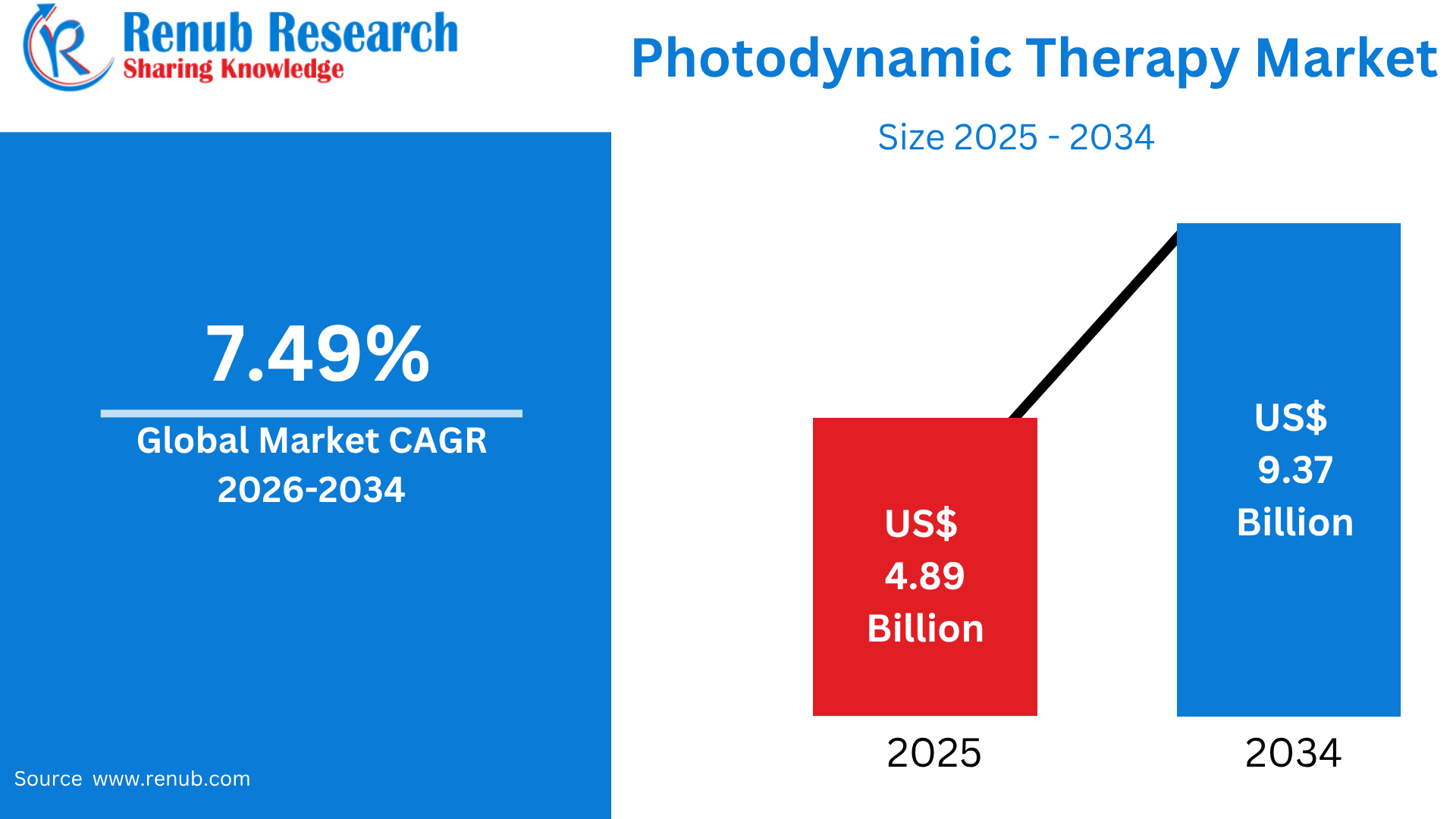
Photodynamic Therapy Market is expected to reach US$ 9.37 billion by 2034 from US$ 4.89 billion in 2025, with a CAGR of 7.49% from 2026 to 2034. Growing skin cancer incidence, rising preference for minimally invasive treatments, improving dermatology infrastructure, and expanding global collaborations are accelerating photodynamic therapy adoption. Regulatory progress and wider access to advanced light-based devices further strengthen market momentum across major healthcare regions.
Photodynamic Therapy Industry Overview
Photodynamic therapy (PDT) is a targeted, minimally invasive medical treatment that uses a photosensitizing compound activated by a specific wavelength of light to destroy abnormal or diseased cells. Once the drug concentrates in damaged tissue, controlled light exposure triggers a chemical reaction that produces reactive oxygen species, selectively damaging the cells while preserving surrounding healthy areas. PDT is widely used to treat actinic keratosis, superficial skin cancers, acne, and certain non-cutaneous conditions. It offers distinct advantages, including minimal scarring, short recovery time, repeatability, and reduced systemic side effects, making it a valuable alternative to surgery or conventional drug therapies.
The photodynamic therapy market is expanding due to rising rates of actinic keratosis and non-melanoma skin cancers, coupled with rapid growth in aesthetic and dermatologic procedures. Increasing clinical acceptance, advancements in illumination technology, and improved patient tolerance further support adoption. Collaborations among pharmaceutical and engineering companies enhance global product availability. Regulatory clearances, stronger reimbursement pathways, and the shift toward outpatient care also contribute to widespread usage. As patients seek effective, low-downtime treatments with minimal invasiveness, PDT continues to gain relevance across dermatology, oncology, and chronic disease management, positioning the therapy as an integral component of modern clinical practice.
Growth Drivers for the Photodynamic Therapy Market
Strategic Collaborations Expanding PDT Access
Strategic collaborations are accelerating the global adoption of photodynamic therapy by improving access to advanced illumination devices and supporting technologies. In February 2024, Biofrontera AG entered a partnership with GME - German Medical Engineering GmbH to promote the Multilite daylight lamp for treating actinic keratosis across Germany and the United Kingdom. This collaboration increases the availability of daylight-PDT, a patient-friendly option offering improved comfort and shorter clinic visits. Such alliances help companies strengthen distribution capability, accelerate market penetration, and enhance physician awareness through joint training initiatives. As dermatology clinics seek effective and economical PDT solutions, these cooperative efforts play a crucial role in ensuring widespread device accessibility. The growing emphasis on daylight-based modalities and comprehensive support networks positions strategic partnerships as a primary force driving the next phase of PDT market expansion.
Regulatory Approvals Reinforcing Market Confidence
Regulatory milestones significantly elevate confidence in photodynamic therapy technologies by confirming their safety, efficacy, and real-world usability. In July 2023, Better Therapeutics received authorization from the U.S. Food and Drug Administration (FDA) for AspyreRx, a PDT-based digital therapeutic designed to deliver behavior-modification therapy to adults with type 2 diabetes. Although beyond the traditional dermatology domain, this approval demonstrates the growing regulatory acceptance of PDT-related mechanisms and expands the therapeutic landscape. Clearances such as these encourage greater investment in PDT research, enable stronger insurance support, and motivate clinicians to integrate advanced light-based therapies into standard care. As regulators continue enabling innovation, new indications, improved drug-light combinations, and digital-enabled PDT solutions are expected to enter the market. This strengthens the therapy’s credibility and accelerates adoption across multiple medical specialties.
Pharma–Engineering Partnerships Expanding Global Reach
Collaborations between pharmaceutical manufacturers and engineering specialists are propelling the global expansion of photodynamic therapy by combining drug development expertise with advanced device engineering. In February 2023, Galderma partnered with German Medical Engineering (GME) to promote its photosensitizer drug Metvix globally. The partnership enhanced Galderma’s international footprint, expanding provider access to a coordinated drug-and-light treatment package. These alliances streamline product distribution, support clinician training, and elevate treatment quality by ensuring compatibility between illumination systems and photosensitizing agents. They also accelerate R&D activity by merging pharmaceutical insights with engineering innovation, fostering next-generation PDT solutions. As healthcare systems increasingly favor minimally invasive therapies with predictable outcomes, integrated approaches created through such cross-industry collaboration become essential for broader PDT adoption worldwide.
Challenges in the Photodynamic Therapy Market
Limited Awareness and Clinical Training
A key challenge for the photodynamic therapy market is the inconsistent awareness of PDT’s benefits among patients and healthcare professionals. Many clinicians lack training in dosing strategies, illumination protocols, and post-treatment management, restricting optimal usage. Smaller dermatology clinics often have limited exposure to advanced daylight-PDT or combination-therapy methods, resulting in uneven adoption across regions. Patients may also be unfamiliar with PDT’s advantages—such as minimal scarring and shorter recovery—reducing demand. Without standardized educational frameworks and continuous professional development programs, the gap between technological advancements and real-world clinical utilization remains significant. Enhanced training courses, patient awareness campaigns, and inclusion of PDT in medical curricula are essential for addressing this limitation.
Cost Constraints and Reimbursement Gaps
High equipment costs and unpredictable reimbursement structures remain substantial barriers to photodynamic therapy adoption. Many advanced illumination systems require considerable initial investment, limiting accessibility for small and mid-sized practices. Photosensitizer drugs can also be expensive, increasing overall treatment cost. In several regions, insurers offer partial or inconsistent reimbursement, sometimes categorizing PDT as cosmetic rather than therapeutic. These financial hurdles discourage clinics from upgrading technologies or offering PDT regularly. Additionally, the need for skilled operators adds operational expenses. Improving reimbursement clarity, demonstrating long-term cost-effectiveness, and increasing payer awareness are critical steps toward making PDT more accessible and financially viable for both providers and patients.
United States Photodynamic Therapy Market
The United States represents a leading photodynamic therapy market, supported by a high prevalence of skin cancer, advanced healthcare infrastructure, and strong investment in dermatology technologies. Regulatory progress from the FDA, robust clinical research activity, and the presence of major pharmaceutical and device manufacturers contribute significantly to market maturity. Growing patient preference for minimally invasive treatments and expanding insurance coverage for actinic keratosis enhance demand. Dermatology clinics and outpatient centers increasingly utilize daylight-PDT and improved illumination systems to reduce procedure time and improve outcomes. With rising emphasis on early detection and preventive skin care, PDT adoption is expected to continue growing across therapeutic and cosmetic applications.
Germany Photodynamic Therapy Market
Germany has a strong photodynamic therapy market driven by advanced dermatology networks, high screening rates for skin cancer, and growing preference for non-invasive treatments. The country has seen notable expansion in daylight-PDT usage, supported by collaborations between global pharmaceutical manufacturers and local engineering firms. Favorable reimbursement policies, evidence-based clinical guidelines, and increasing patient awareness contribute to market stability. Germany’s strong academic and research institutions actively support PDT advancements, improving clinical outcomes and expanding therapeutic applications. As dermatology clinics continue integrating modern illumination systems and photosensitizers, the demand for reliable, efficient PDT solutions is expected to sustain long-term growth within the national healthcare landscape.
China Photodynamic Therapy Market
The China photodynamic therapy market is rapidly developing, driven by expanding healthcare infrastructure, rising incidence of skin disorders, and growing demand for aesthetic dermatology services. Increased investment in hospitals and specialty clinics improves access to advanced PDT devices and photosensitizers. Both domestic and international companies are enhancing their presence, broadening product availability and lowering treatment costs through competitive pricing. Government initiatives promoting early cancer detection support greater adoption of PDT for actinic keratosis and superficial skin cancers. Rising disposable income, patient interest in minimally invasive procedures, and the development of high-end urban dermatology centers are accelerating market growth. Strengthening regulatory frameworks and device modernization further support long-term expansion.
Saudi Arabia Photodynamic Therapy Market
Saudi Arabia is emerging as a promising market for photodynamic therapy due to rising prevalence of sun-induced skin conditions and expanding dermatology services. Government-driven healthcare modernization under Vision 2030 is increasing access to advanced medical technologies, including PDT systems. Higher awareness of aesthetic treatments, growing medical tourism, and increasing disposable income contribute to robust demand for minimally invasive options. International pharmaceutical and device companies are partnering with local distributors, improving the availability of photosensitizers and illumination equipment. As hospitals and specialized dermatology clinics integrate newer PDT modalities, the market is expected to grow steadily, supported by enhanced practitioner training and expanding dermatologic infrastructure.
Recent Developments in Photodynamic Therapy Market
- March 2025 – Sun Pharmaceutical Industries announced a definitive agreement to acquire Checkpoint Therapeutics for USD 355 million. The deal enhances Sun Pharma’s position in the onco-dermatology segment and broadens its late-stage development pipeline.
- November 2024 – The U.S. Food and Drug Administration (FDA) authorized the commercial launch of LumiThera’s Valeda Light Delivery System for treating dry age-related macular degeneration, following clinical results showing that 58% of treated eyes improved by at least five letters in visual acuity.
- October 2024 – The FDA approved increasing the allowable dosage of Ameluz to three tubes per actinic keratosis treatment session, enabling clinicians to manage larger or multiple lesion areas more efficiently.
- June 2024 – Biofrontera AG introduced the RhodeXL lamp alongside Ameluz (aminolevulinic acid hydrochloride) topical gel to expand its photodynamic therapy offerings for patients with actinic keratosis and further strengthen its dermatology product portfolio.
Photodynamic Therapy Devices Market Segments
Product Type
- Photodynamic Therapy Devices
- Photosensitizer Drugs
Application
- Cancer
- Actinic Keratosis
- Psoriasis
- Acne
- Others
End User
- Hospitals
- Cosmetics & Dermatology Clinics
- Cancer Treatment Centers
- Others
Countries
North America
- United States
- Canada
Europe
- France
- Germany
- Italy
- Spain
- United Kingdom
- Belgium
- Netherland
- Turkey
Asia Pacific
- China
- Japan
- India
- South Korea
- Thailand
- Malaysia
- Indonesia
- Australia
- New Zealand
Latin America
- Brazil
- Mexico
- Argentina
Middle East & Africa
- Saudi Arabia
- UAE
- South Africa
All the Key players have been covered from 5 Viewpoints:
- Overview
- Recent Development
- Revenue Analysis
Key Players Analysis
- Gladerma S.A
- Sun Pharmaceutical Industries Ltd
- Biofrontera Inc.
- Lumibird S.A
- Bausch Health Companies Inc.
- Soligenix Inc.
- Modulight Corporation
- Theralase Technologies Inc.
Report Details:
| Report Features | Details |
| Base Year |
2025 |
| Historical Period |
2022 - 2025 |
| Forecast Period |
2026 - 2034 |
| Market |
US$ Billion |
| Segment Covered |
Product Type, Application, End User and Countries |
| Countries Covered |
|
| Companies Covered |
|
| Customization Scope |
20% Free Customization |
| Post-Sale Analyst Support |
1 Year (52 Weeks) |
| Delivery Format |
PDF and Excel through Email (We can also provide the editable version of the report in PPT/Word format on request) |
Customization Services available
- Analysis of Market Size and Its Segments
- More Company Profiles (Upto 10 without any additional cost):
- Additional Countries (Other than mentioned Countries):
- Region/Country Specific Reports:
- Market Entry Strategy:
- Region-Specific Market Dynamics:
- Regional Market Share Analysis:
- Trade Analysis:
- Production Insights:
- Others Customized Requests:
For more information contact our analysts.
Need More Assistance?
- Talk to our analysts to get more precious information on the current market trends.
- Include more countries and segments and customize the report based on the final requirement.
- Get a competitive advantage in your industry by knowing the report findings and making a positive impact on your revenues and operations.
- Our analysts are always ready to provide more help and pertinent information if you need any additional assistance.