Global Oats Market Report by Type (Rolled Oats, Whole Oats, Steel Cut Oats, Instant Oats, Others), Application (Food & Beverage, Animal Feed, Personal Care & Cosmetics, Others), Countries and Company Analysis 2026-2034
Buy NowGlobal Oats Market Analysis: Plant-Based Diets & Clean-Label Trends Fueling Global Market Expansion
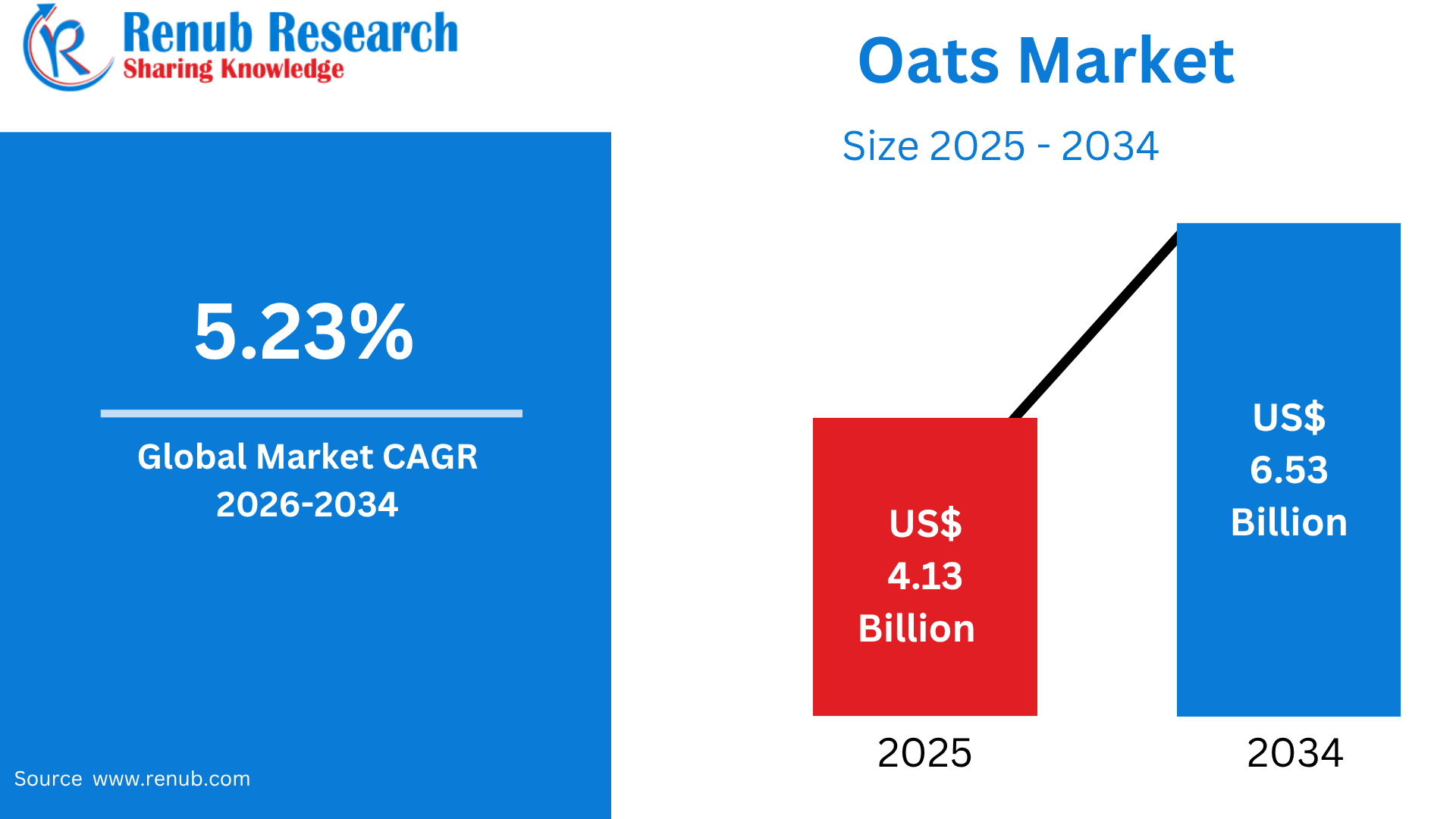
Global Oats Market is projected to increase from US$ 4.13 billion in 2025 to US$ 6.53 billion by 2034, registering a CAGR of 5.23% during the forecast period from 2026 to 2034. Market growth is being driven by rising consumer preference for healthy, fiber-rich, and nutritious food products, along with the growing popularity of plant-based diets. Expanding applications of oats in breakfast cereals, bakery products, snacks, beverages, and dairy alternatives, coupled with their recognized health benefits, continue to support sustained growth in the global oats market.
What are Oats and Their Uses & Popularity Worldwide
Oats are nutrient-rich cereal grains obtained from the plant Avena sativa, widely recognized for their high dietary fiber, protein, vitamins, minerals, and antioxidant content. They are particularly valued for containing beta-glucan, a soluble fiber known to support heart health, regulate blood sugar levels, and promote digestive wellness. Oats are consumed in various forms, including rolled oats, steel-cut oats, oat flour, oat bran, instant oats, and oat milk, making them one of the most versatile grains in the global food industry. They are commonly used in breakfast cereals, porridge, granola, bakery products, snack bars, cookies, smoothies, dairy alternatives, and infant nutrition.
Oats also find applications in animal feed, sports nutrition, and cosmetic products due to their moisturizing and soothing properties. Worldwide, oats have gained significant popularity as consumers increasingly adopt healthier eating habits and plant-based diets. Their naturally gluten-free characteristics (when processed in dedicated gluten-free facilities), high nutritional value, and clean-label appeal have further increased demand across North America, Europe, Asia-Pacific, and other regions. Continuous product innovation, including high-protein oat products, ready-to-eat snacks, and oat-based beverages, continues to strengthen the global popularity of oats among health-conscious consumers.
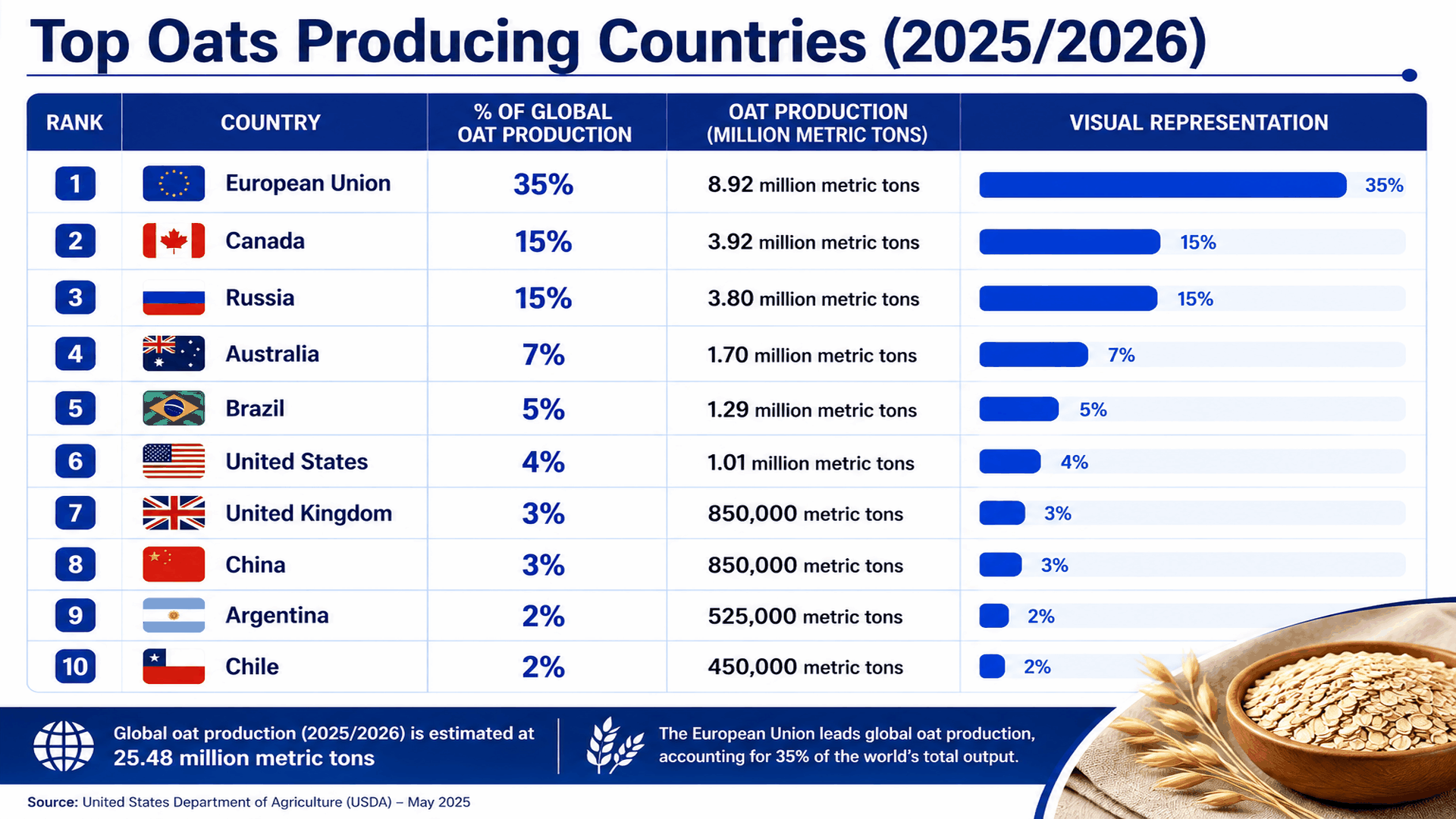
Top Oats Producing Countries (2025/2026)
- European Union – 35% of global oat production (8.92 million metric tons)
- Canada – 15% of global oat production (3.92 million metric tons)
- Russia – 15% of global oat production (3.80 million metric tons)
- Australia – 7% of global oat production (1.70 million metric tons)
- Brazil – 5% of global oat production (1.29 million metric tons)
- United States – 4% of global oat production (1.01 million metric tons)
- United Kingdom – 3% of global oat production (850,000 metric tons)
- China – 3% of global oat production (850,000 metric tons)
- Argentina – 2% of global oat production (525,000 metric tons)
- Chile – 2% of global oat production (450,000 metric tons)
Growth Driver
Rising Consumer Preference for Healthy and Functional Foods
The growing awareness of nutrition and preventive healthcare is one of the primary drivers of the global oats market. Consumers are increasingly choosing whole grains that offer health benefits beyond basic nutrition, making oats a preferred ingredient in daily diets. Oats are rich in beta-glucan, a soluble fiber scientifically recognized for helping reduce LDL cholesterol, improve heart health, and support blood sugar management. Health organizations recommend adults consume approximately 25–30 grams of dietary fiber daily, and oats contribute significantly toward achieving this intake. Rising incidences of obesity, cardiovascular diseases, and type 2 diabetes have encouraged consumers to replace refined cereals with nutrient-dense alternatives. Food manufacturers are responding by introducing fortified oat cereals, protein-enriched oatmeal, granola, and healthy snack products. Growing demand for clean-label foods with natural ingredients has further strengthened oat consumption across supermarkets, online retail platforms, and foodservice channels. As health-conscious lifestyles continue expanding globally, the demand for oats is expected to remain strong across both developed and emerging markets.
Rapid Expansion of Plant-Based Foods and Dairy Alternatives
The increasing popularity of plant-based diets has become a major growth driver for the global oats market. Consumers are seeking sustainable, lactose-free, and vegan-friendly alternatives to conventional dairy products, significantly increasing demand for oat-based foods and beverages. Oat milk has become one of the fastest-growing plant-based beverage categories due to its creamy texture, nutritional profile, and relatively low environmental footprint. Industry estimates indicate that the global plant-based food sector continues to expand at a strong pace, supported by changing dietary preferences among younger consumers and increasing awareness of environmental sustainability. Oats are now widely incorporated into plant-based milk, yogurt, frozen desserts, creamers, protein drinks, and nutritional supplements. Their versatility, mild flavor, and compatibility with food processing technologies make them an attractive ingredient for product innovation. Food manufacturers continue investing in new oat-based formulations with improved protein content, texture, and functionality. The ongoing shift toward vegan and flexitarian diets is expected to significantly accelerate demand for oat-derived products over the coming decade.
Expanding Applications in Processed Foods and Convenience Products
The versatility of oats has led to their widespread use across multiple food categories, driving consistent market growth worldwide. Oats are increasingly utilized in breakfast cereals, bakery products, snack bars, biscuits, cookies, infant nutrition, ready-to-eat meals, smoothies, sports nutrition, and functional beverages. The global packaged food industry continues to expand as busy lifestyles increase demand for convenient, nutritious meal options. Oats provide manufacturers with valuable functional properties, including improved texture, moisture retention, and enhanced nutritional value. Their high fiber and protein content also enable manufacturers to develop products with health-focused marketing claims. The growing popularity of high-protein snacks, meal replacement products, and fitness nutrition has further expanded commercial opportunities for oat ingredients such as oat flour, oat bran, and oat protein concentrates. Continuous innovation in flavored oatmeal, instant breakfast products, and gluten-free formulations is broadening consumer appeal across different age groups. As convenience foods continue gaining popularity worldwide, oats are expected to remain an essential ingredient supporting long-term market expansion.
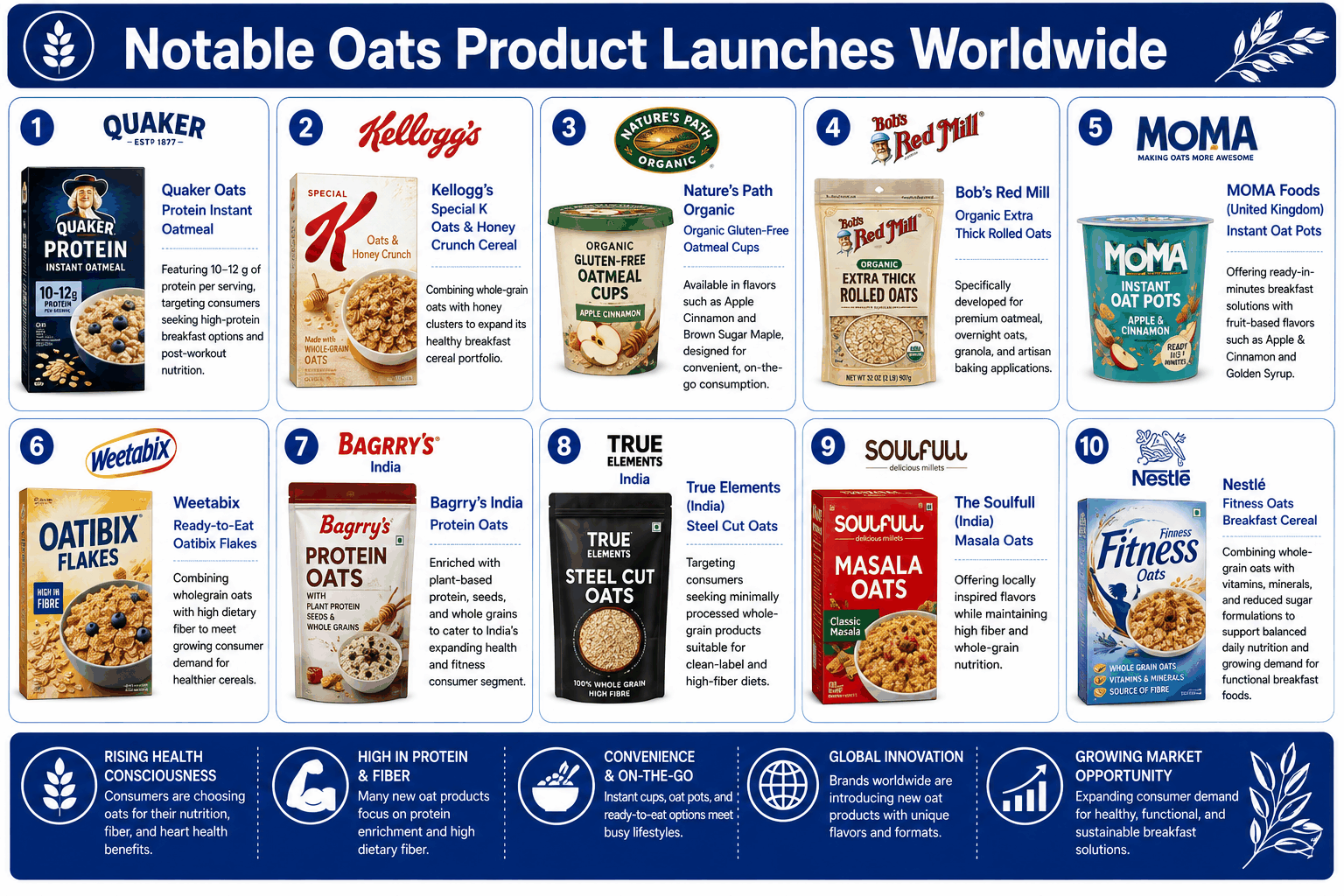
Notable Oats Product Launches Worldwide
- Quaker Oats launched Protein Instant Oatmeal, featuring 10–12 g of protein per serving, targeting consumers seeking high-protein breakfast options and post-workout nutrition.
- Kellogg’s introduced Special K Oats & Honey Crunch Cereal, combining whole-grain oats with honey clusters to expand its healthy breakfast cereal portfolio.
- Nature’s Path Organic launched Organic Gluten-Free Oatmeal Cups, available in flavors such as Apple Cinnamon and Brown Sugar Maple, designed for convenient, on-the-go consumption.
- Bob’s Red Mill introduced Organic Extra Thick Rolled Oats, specifically developed for premium oatmeal, overnight oats, granola, and artisan baking applications.
- MOMA Foods (United Kingdom) launched Instant Oat Pots, offering ready-in-minutes breakfast solutions with fruit-based flavors such as Apple & Cinnamon and Golden Syrup.
- Weetabix expanded its breakfast portfolio with Ready-to-Eat Oatibix Flakes, combining wholegrain oats with high dietary fiber to meet growing consumer demand for healthier cereals.
- Bagrry’s India launched Protein Oats, enriched with plant-based protein, seeds, and whole grains to cater to India’s expanding health and fitness consumer segment.
- True Elements (India) introduced Steel Cut Oats, targeting consumers seeking minimally processed whole-grain products suitable for clean-label and high-fiber diets.
- The Soulfull (India) expanded its healthy breakfast range with Masala Oats, offering locally inspired flavors while maintaining high fiber and whole-grain nutrition.
- Nestlé launched Fitness Oats Breakfast Cereal in selected international markets, combining whole-grain oats with vitamins, minerals, and reduced sugar formulations to support balanced daily nutrition and growing demand for functional breakfast foods.
Challenge
Climate Variability and Agricultural Production Risks
One of the major challenges affecting the global oats market is the dependence on favorable weather conditions for crop cultivation. Oats are primarily grown in temperate regions, where production is vulnerable to droughts, excessive rainfall, heatwaves, and unexpected frost. Climate variability can significantly reduce crop yields, affect grain quality, and create fluctuations in global supply. Changes in rainfall patterns and increasing temperatures have made agricultural planning more difficult for farmers in several major oat-producing countries. Lower harvest volumes often lead to increased raw material costs for food processors and manufacturers, reducing profit margins throughout the supply chain. Additionally, rising fertilizer, fuel, and transportation costs further increase production expenses. Supply shortages may also affect the availability of oat-based products, particularly in rapidly growing international markets. To address these challenges, producers are investing in climate-resilient oat varieties, precision agriculture technologies, and improved crop management practices, but weather-related risks continue to pose a significant constraint on stable market growth.
Competition from Alternative Grains and Plant-Based Ingredients
The global oats market faces increasing competition from other grains and plant-based ingredients that offer similar nutritional and functional benefits. Consumers today have access to a wide range of alternatives, including quinoa, barley, millet, rye, brown rice, sorghum, chia seeds, flaxseed, and ancient grains, all of which are promoted as healthy dietary options. In the plant-based beverage segment, oat milk competes directly with almond, soy, coconut, rice, pea, and cashew-based products. Many food manufacturers diversify their ingredient portfolios to meet varying consumer preferences, reducing reliance on oats alone. Price fluctuations and regional differences in grain availability can also influence purchasing decisions among food processors. Furthermore, consumers seeking higher protein content may choose legumes or other protein-rich ingredients over oats in sports nutrition and functional foods. To remain competitive, oat producers must continue investing in product innovation, nutritional enhancement, sustainable farming practices, and premium value-added products that differentiate oats from competing grains in the global marketplace.
Rising Demand for Traditional and Nutrient-Dense Breakfast Solutions
Rolled oats continue to dominate the global oats market due to their balanced combination of nutrition, affordability, and versatility. Produced by steaming whole oat groats and flattening them into flakes, rolled oats retain high levels of dietary fiber, protein, vitamins, and minerals while offering a cooking time of only 5–10 minutes. According to industry estimates, rolled oats account for approximately 45–50% of global packaged oat product consumption, making them the largest product segment. The category benefits from increasing consumer awareness of heart health, as a 40 g serving of rolled oats provides nearly 4 g of fiber, including significant amounts of beta-glucan known to support cholesterol reduction. North America and Europe remain the largest consumers, while demand across Asia-Pacific is growing at over 7% annually, driven by urbanization and healthier eating habits. Food manufacturers are also introducing flavored, organic, gluten-free, and fortified rolled oats to expand consumer appeal. Additionally, rolled oats are increasingly used in bakery products, granola, snack bars, smoothies, and plant-based recipes, making them a staple ingredient across multiple food categories and supporting sustained market growth.
Convenience-Driven Growth in Ready-to-Eat Nutrition
Instant oats represent one of the fastest-growing segments of the oats industry, fueled by busy lifestyles, increasing workforce participation, and the popularity of quick yet nutritious breakfast options. These oats undergo additional processing, allowing preparation within 1–2 minutes, making them highly suitable for modern consumers seeking convenience. Industry estimates indicate that instant oats contribute around 30–35% of the global oats product market, with demand growing rapidly across developing economies. A standard serving provides approximately 150 calories, 5 g protein, and 3–4 g dietary fiber, delivering balanced nutrition with minimal preparation time. Manufacturers continue expanding their product portfolios with flavored varieties, high-protein formulations, low-sugar options, and functional ingredients such as chia seeds, flaxseeds, and dried fruits. The rapid expansion of e-commerce and organized retail has significantly improved product accessibility, particularly in Asia-Pacific and Latin America. Increasing health awareness among millennials and young professionals, combined with growing demand for portable breakfast solutions, is expected to sustain robust growth for instant oats across both household and foodservice applications over the coming years.
Expanding Applications Beyond Traditional Breakfast Foods
The food and beverage industry remains the largest application segment for oats, accounting for an estimated over 80% of global oat utilization. Oats are increasingly incorporated into breakfast cereals, bakery products, granola bars, cookies, dairy alternatives, beverages, soups, snacks, and nutritional supplements due to their functional and nutritional benefits. Rich in soluble fiber, antioxidants, vitamins, and minerals, oats enhance both product quality and consumer appeal. Oat-based beverages have become one of the fastest-growing categories within plant-based foods, recording double-digit annual growth rates in several major markets. Similarly, oat flour and oat bran are gaining popularity as healthier alternatives in baking applications. Food manufacturers are investing in product innovation through protein-enriched oats, organic offerings, gluten-free certifications, and clean-label formulations to meet evolving consumer preferences. The rising prevalence of obesity, diabetes, and cardiovascular diseases has further accelerated demand for oat-containing foods that support healthier diets. Continuous innovation, expanding vegan populations, and increasing demand for functional ingredients continue to strengthen oats’ role across the global food and beverage industry.
Growing Adoption of Oat-Based Ingredients in Skin and Hair Care
The personal care and cosmetics sector is emerging as an important application area for oats, driven by increasing consumer preference for natural, plant-based, and dermatologically friendly ingredients. Oat extracts, oat kernel flour, colloidal oatmeal, and oat oil are widely incorporated into moisturizers, cleansers, shampoos, conditioners, face masks, body lotions, and baby care products because of their soothing, moisturizing, and anti-inflammatory properties. Industry estimates suggest that approximately 8–10% of industrial oat ingredient consumption is directed toward cosmetic and personal care applications, with demand expanding steadily alongside the natural beauty trend. Colloidal oatmeal is particularly valued for its ability to relieve dry, sensitive, and irritated skin while strengthening the skin barrier through naturally occurring lipids and beta-glucans. Manufacturers are increasingly developing clean-label, fragrance-free, and dermatologist-tested formulations utilizing oat-derived ingredients. Rising consumer awareness regarding sustainable beauty products, combined with growing incidences of eczema, dry skin, and skin sensitivity, is accelerating the adoption of oat-based cosmetic ingredients worldwide. Continued innovation in botanical skincare formulations is expected to further strengthen this specialized but rapidly expanding market segment.
United States Consumer Preference for Healthy Breakfast and Functional Foods
United States represents one of the largest oats markets globally, driven by strong consumer awareness of nutrition, cardiovascular health, and convenient meal options. Americans consume millions of tons of oat-based products annually, with breakfast cereals and oatmeal remaining staple household foods. Industry estimates indicate that more than 60% of U.S. households purchase oat products at least once every year, while ready-to-eat cereals and instant oatmeal account for a significant portion of retail sales. The country also has a well-established oat processing industry supported by extensive cultivation in northern states such as North Dakota, South Dakota, and Minnesota. Oats are increasingly incorporated into granola bars, bakery products, oat milk, protein snacks, and functional beverages. The rapid expansion of plant-based diets has further accelerated demand for oat milk, which has become one of the fastest-growing dairy alternatives. Growing preference for organic, gluten-free, and high-protein oat products, coupled with increasing health-conscious consumers seeking foods rich in beta-glucan fiber, continues to strengthen the United States oats market across retail, foodservice, and industrial applications.
United Kingdom Traditional Consumption Combined with Premium Product Innovation
United Kingdom has one of the highest per-capita oat consumption rates worldwide due to the long-standing popularity of porridge and oat-based breakfast products. Domestic oat production supplies a substantial share of national demand, supported by favorable climatic conditions in Scotland and northern England. Industry estimates suggest that more than 70% of British consumers regularly consume oat-based products, including porridge, cereals, biscuits, snack bars, and bakery goods. Consumer interest in healthy eating has significantly increased demand for wholegrain foods, with oats recognized as an excellent source of soluble fiber that supports heart health and digestive wellness. The country has also experienced rapid growth in oat milk consumption as vegan and flexitarian diets continue expanding. Premium product innovations, including organic oats, flavored porridge cups, high-protein oat cereals, and gluten-free variants, have strengthened retail sales. Furthermore, increasing government initiatives promoting healthier diets and reduced sugar intake encourage consumers to choose nutrient-dense breakfast options, positioning oats as a preferred ingredient within the UK’s evolving health and wellness food industry.
India Rapid Urbanization and Rising Health Awareness Fuel Market Expansion
India has emerged as one of the fastest-growing oats markets in Asia, supported by changing dietary habits, rising disposable incomes, and increasing awareness of preventive healthcare. Although oats are not traditionally consumed across most Indian households, urban consumers have rapidly adopted oat-based foods as healthier alternatives to refined cereals. Industry estimates indicate that the Indian oats market has been expanding at an annual growth rate exceeding 10%, making it among the fastest-growing regional markets globally. Instant oats dominate retail sales because of their convenience and compatibility with Indian recipes such as upma, poha, khichdi, dosa, and breakfast porridges. Manufacturers continue introducing flavored oats, masala variants, protein-enriched products, and fortified formulations targeting health-conscious families and working professionals. E-commerce expansion and modern retail chains have significantly improved product accessibility across metropolitan and Tier II cities. Growing concerns regarding obesity, diabetes, and cardiovascular diseases have further accelerated demand for high-fiber foods, while increasing participation in fitness activities continues driving consumption among younger consumers seeking nutritious, convenient, and functional meal solutions.
Saudi Arabia Demand for Healthy Foods Amid Lifestyle Transformation
Saudi Arabia’s oats market is expanding steadily due to increasing health consciousness, dietary diversification, and government initiatives encouraging healthier lifestyles under national wellness programs. Rising urbanization, growing disposable incomes, and increasing prevalence of obesity and diabetes have encouraged consumers to adopt fiber-rich foods, including oats, as part of healthier daily diets. Industry estimates indicate that more than 80% of packaged oat products consumed in Saudi Arabia are imported, reflecting strong demand supported by international food brands and organized retail networks. Instant oats and rolled oats dominate supermarket shelves, while oat-based breakfast cereals and oat milk are experiencing rapid growth among younger consumers and expatriate populations. The expanding café sector has also increased the use of oat milk in coffee beverages, supporting broader market penetration. Premium organic, gluten-free, and fortified oat products are gaining popularity among health-conscious consumers seeking clean-label nutrition. Continued investments in modern retail infrastructure, rising participation in fitness activities, and growing awareness of preventive healthcare are expected to sustain long-term growth in Saudi Arabia’s oats market across household and foodservice sectors.
Market Segments
Type
- Rolled Oats
- Whole Oats
- Steel Cut
- Instant Oats
- Others
Application
- Animal Feed
- Food & Beverage
- Personal Care & Cosmetics
- Others
Countries
North America
- United States
- Canada
Europe
- France
- Germany
- Italy
- Spain
- United Kingdom
- Belgium
- Netherlands
- Turkey
Asia Pacific
- China
- Japan
- India
- South Korea
- Thailand
- Malaysia
- Indonesia
- Australia
- New Zealand
Latin America
- Brazil
- Mexico
- Argentina
Middle East & Africa
- Saudi Arabia
- United Arab Emirates
- South Africa
All companies have been covered with 5 Viewpoints
- Overviews
- Key Person
- Recent Developments
- SWOT Analysis
- Revenue Analysis
Company Analysis
- General Mills
- B&G Foods Inc
- Kellanova
- Marico Ltd
- PepsiCo Inc
- Nestle SA
- Blue Lake Milling
- Avena Foods
Report Details:
| Report Features | Details |
| Base Year |
2025 |
| Historical Period |
2022 - 2025 |
| Forecast Period |
2026 - 2034 |
| Market |
US$ Billion |
| Segment Covered |
Type, Application and Countries |
| Countries Covered |
|
| Companies Covered |
|
| Customization Scope |
20% Free Customization |
| Post-Sale Analyst Support |
1 Year (52 Weeks) |
| Delivery Format |
PDF and Excel through Email (We can also provide the editable version of the report in PPT/Word format on request) |
Customization Services available
- Analysis of Market Size and Its Segments
- More Company Profiles (Upto 10 without any additional cost):
- Additional Countries (Other than mentioned Countries):
- Region/Country Specific Reports:
- Market Entry Strategy:
- Region-Specific Market Dynamics:
- Regional Market Share Analysis:
- Trade Analysis:
- Production Insights:
- Others Customized Requests:
For more information contact our analysts.
Need More Assistance?
- Talk to our analysts to get more precious information on the current market trends.
- Include more countries and segments and customize the report based on the final requirement.
- Get a competitive advantage in your industry by knowing the report findings and making a positive impact on your revenues and operations.
- Our analysts are always ready to provide more help and pertinent information if you need any additional assistance.