North America Sports Drinks Market Report by Soft Drink Type, Packaging Type, Distribution Channel, Countries and Company Analysis 2026-2034
Buy NowNorth America Sports Drinks Market Size & Forecast
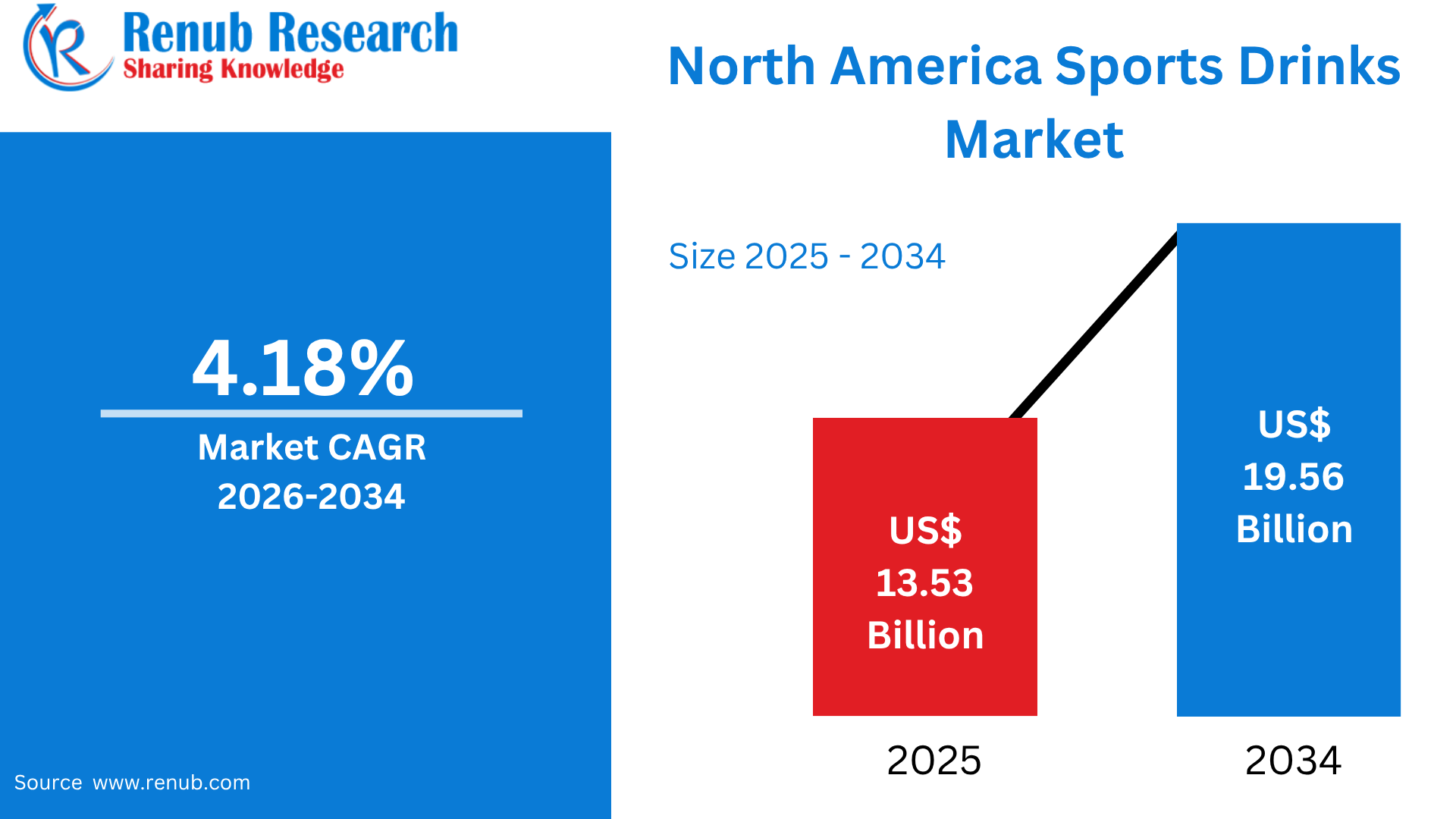
North America sports drinks market is projected to increase from US$ 13.53 billion in 2025 to US$ 19.56 billion by 2034, registering a CAGR of 4.18% during 2026–2034. Market growth is being driven by increasing fitness and health awareness, the expansion of active lifestyles, and rising consumer demand for convenient hydration and electrolyte-replenishment solutions. Growing participation in sports, exercise, outdoor activities, and recreational fitness is further supporting consumption. In addition, product innovation, including low-sugar, functional, and electrolyte-enhanced beverages, is helping manufacturers address evolving consumer preferences across North America.
What Are Sports Drinks? Uses & Popularity in North America
Sports drinks are specially formulated beverages designed to help replenish fluids, electrolytes, and carbohydrates lost during prolonged or intense physical activity. They commonly contain water, sodium, potassium, carbohydrates, and flavoring ingredients, providing hydration and energy during exercise. Sports drinks are primarily consumed by athletes, fitness enthusiasts, runners, cyclists, and individuals participating in recreational or outdoor activities. They are also used during training sessions, competitions, endurance events, and physically demanding activities where maintaining hydration and electrolyte balance is important.
Sports drinks have gained considerable popularity across North America, supported by the region’s strong sports culture, growing fitness participation, and increasing awareness of hydration. In the United States, the sports and fitness industry has a large consumer base, while organized sports, gyms, running events, and outdoor recreation provide multiple consumption occasions. Major brands are also expanding product portfolios with low-sugar, zero-sugar, electrolyte-enhanced, natural, and functional formulations to appeal to health-conscious consumers. In addition, convenient packaging formats, including bottles, cans, and powdered mixes, are improving accessibility. The increasing popularity of active lifestyles, fitness programs, and endurance sports is expected to sustain demand for sports drinks throughout North America.
Key Sports & Energy Drinks Trends in the US
- Growing Demand for Functional Beverages – Consumers are increasingly choosing sports and energy drinks that provide benefits beyond basic hydration or energy, including vitamins, minerals, protein, and other functional ingredients.
- Low-Sugar and Sugar-Free Formulations – Reduced-sugar positioning is becoming increasingly important. Low, no, or reduced-sugar claims influenced 24% of US consumers purchasing sports and functional nutrition products.
- Protein-Enriched Sports Drinks – High-protein claims are an important purchase driver, influencing 26% of US consumers when selecting sports and functional nutrition products.
- Strong Focus on Taste and Flavor – Taste remains a major factor, with 46% of US consumers influenced by taste and flavor when purchasing sports and functional nutrition products, compared with 40% globally.
- Rising Fruit and Superfruit Flavors – Fruit and superfruit flavors are gaining attention, with 27% of consumers looking for these flavor profiles in sports drinks. Sweet flavors also attract 24% of consumers.
- Expansion of Sugar-Free Product Launches – Sugar-free and no-added-sugar claims have expanded significantly. During 2022–2023 YTD, 46% of sports drink launches carried sugar-free claims, reflecting the industry’s response to health-conscious consumers.
- Convenience-Driven Hydration Formats – Consumers increasingly want convenient products that fit active lifestyles. 26% of US consumers are influenced by convenience claims, encouraging brands to introduce portable powders, soluble tablets, and other easy-to-use formats.
- Growth of Rapid-Rehydration Products – Brands are developing products positioned around quick hydration and electrolyte replenishment. Powder and tablet formats are gaining attention because they are lightweight, portable, and convenient for consumers on the move.
- Rise of Sports-Energy Drink Hybrids – The boundaries between sports drinks and energy drinks are becoming less distinct. Manufacturers are experimenting with hybrid products combining hydration, energy, vitamins, minerals, and other functional benefits to reach broader consumer groups.
- All-Day Hydration and Wellness Positioning – Sports drinks are increasingly moving beyond traditional athletic occasions toward everyday hydration and wellness. Innova identifies quick and all-day hydration as an important area for future innovation, alongside nutraceutical and functional ingredients.
Growth Drivers of the North America Sports Drinks Market
Growing Fitness Participation and Active Lifestyles
Increasing participation in fitness, sports, and recreational physical activities is a major driver of the North America sports drinks market. Consumers are increasingly incorporating exercise, running, cycling, gym workouts, and outdoor activities into their lifestyles, creating more occasions for hydration products. According to the Physical Activity Council’s 2025 report, approximately 116 million Americans participated in fitness activities in 2024, demonstrating the large addressable consumer base for sports and hydration beverages. Sports drinks are traditionally associated with athletes, but their consumption is increasingly extending to recreational exercisers and consumers seeking convenient hydration during physically demanding activities. North America’s strong sports culture, including professional leagues, college athletics, marathons, and endurance events, further increases product visibility. Manufacturers are also developing beverages tailored to different activity levels, including electrolyte-focused products for endurance exercise and lower-calorie options for everyday fitness consumers. Gyms, sports clubs, convenience stores, supermarkets, and online retailers provide broad distribution networks. As physical activity becomes increasingly integrated into daily routines, demand for convenient hydration and electrolyte-replenishment products is expected to support continued market expansion.
Rising Demand for Functional and Electrolyte-Enhanced Beverages
The growing consumer interest in functional beverages is creating additional opportunities for sports drinks across North America. Consumers increasingly expect beverages to provide benefits beyond basic hydration, including electrolytes, energy, vitamins, minerals, and other functional ingredients. This trend is encouraging manufacturers to diversify sports drink portfolios beyond traditional high-sugar formulations. According to IFIC’s 2024 Food & Health Survey, 63% of Americans reported that they had changed their eating or drinking habits in the past year, reflecting continued consumer attention to health and wellness. Sports drink companies are responding by launching zero-sugar, low-calorie, electrolyte-rich, and functional formulations aimed at health-conscious consumers. Products containing sodium, potassium, magnesium, B vitamins, and other ingredients are increasingly positioned for exercise recovery and hydration. The expansion of functional beverages is also allowing sports drink brands to reach consumers outside traditional athletic settings, including office workers, travelers, and people engaged in everyday wellness activities. Product innovation, new flavors, convenient packaging, and targeted formulations are therefore broadening the category’s consumer base and supporting sustained growth throughout North America.
Expansion of Low-Sugar and Zero-Sugar Sports Drink Products
The shift toward lower sugar consumption is encouraging sports drink manufacturers to reformulate products and introduce healthier alternatives. Traditional sports drinks can contain substantial amounts of added sugar, creating concerns among consumers who are increasingly monitoring calorie and sugar intake. According to the CDC, adults in the United States consume approximately 17 teaspoons of added sugar per day on average, with sugar-sweetened beverages representing an important source of added sugars. This health-conscious environment is encouraging sports drink companies to develop zero-sugar, reduced-sugar, and naturally sweetened alternatives. Major beverage manufacturers have expanded portfolios with products emphasizing electrolytes, hydration, and lower calorie content while maintaining recognizable flavors. These products can appeal to consumers who want hydration support without the sugar content associated with traditional sports beverages. The availability of multiple formulations also allows manufacturers to target different consumer segments, including athletes, recreational exercisers, and everyday wellness consumers. Retailers are increasingly dedicating shelf space to functional and reduced-sugar beverages, improving product visibility. Continued innovation in sweeteners, flavors, electrolytes, and formulations is expected to strengthen the market’s ability to respond to evolving consumer preferences.
Challenges of the North America Sports Drinks Market
Health Concerns Related to Sugar and Calorie Content
Health concerns surrounding sugar and calorie consumption represent a significant challenge for the North America sports drinks market. Traditional sports drinks are formulated with carbohydrates to provide energy during prolonged physical activity, but consumers who consume these products without engaging in sufficient exercise may perceive their sugar and calorie content negatively. The CDC reports that adults in the United States consume approximately 17 teaspoons of added sugar per day, while dietary guidelines recommend limiting added sugar to less than 10% of daily calories. Such concerns can encourage consumers to choose water, unsweetened beverages, electrolyte waters, or other lower-calorie alternatives. The growing focus on obesity, diabetes, dental health, and overall metabolic wellness further increases scrutiny of sugar-sweetened beverages. In response, manufacturers are expanding zero-sugar and reduced-sugar product lines, but reformulation can create challenges involving taste, texture, ingredient costs, and consumer acceptance. Brands must therefore balance electrolyte and carbohydrate functionality with healthier nutritional profiles. If consumers increasingly perceive conventional sports drinks as unnecessary or overly sugary for routine hydration, demand for traditional formulations could face pressure, making healthier product innovation essential for future market development.
Competition from Water, Energy Drinks, and Functional Hydration Products
Intense competition from alternative beverages is another challenge for the North America sports drinks market. Consumers have numerous options for hydration and energy, including bottled water, enhanced water, coconut water, electrolyte beverages, energy drinks, powdered hydration mixes, and functional beverages. Bottled water is particularly strong because consumers generally perceive it as a simple, low-calorie, and widely accessible hydration option. At the same time, electrolyte powders and hydration tablets are gaining attention because they allow consumers to customize concentration and portability while potentially reducing packaging requirements. Energy drinks also compete for active and younger consumers by combining caffeine with functional ingredients and strong lifestyle marketing. According to the International Bottled Water Association, bottled water remained the largest beverage category in the United States by volume in 2023, demonstrating the strength of alternative hydration products. Sports drink manufacturers must therefore differentiate products through electrolyte profiles, functional benefits, taste, convenience, sustainability, and brand positioning. Increasing competition from emerging hydration formats can fragment consumer demand and make shelf space, marketing visibility, and customer loyalty more difficult to secure.
10 Sports Drink Launches in North America
- Gatorade Lower Sugar – PepsiCo (2026): Gatorade launched its Lower Sugar hydration drink nationwide in the U.S. in March 2026. It contains 75% less sugar than Gatorade Thirst Quencher and has no artificial flavors, sweeteners, or colors. It launched in four flavors: Fruit Punch, Lemonade, Glacier Cherry, and Rain Berry.
- BODYARMOR FIT – The Coca-Cola Company (2026): BODYARMOR introduced BODYARMOR FIT, its first sparkling sports drink, in June 2026. The zero-sugar beverage combines electrolytes, caffeine, and functional ingredients and is offered in a 12-ounce slim can.
- Powerade Power Water – Coca-Cola (2025/2026): Powerade expanded its portfolio with Power Water, targeting consumers seeking lighter, functional hydration. The innovation forms part of Powerade’s broader product expansion alongside Powerade Sours.
- Powerade Sours – Coca-Cola (2025/2026): Powerade introduced Powerade Sours, a new flavor-focused sports drink innovation designed to attract consumers looking for distinctive taste experiences while maintaining the brand’s sports hydration positioning.
- Gatorade Mashups – PepsiCo (2025): Gatorade launched two Mashups in the U.S., combining popular flavors into Cool Blue + Fruit Punch and Lemon-Lime + Orange. The products were inspired by consumers mixing Gatorade flavors themselves.
- Gatorade Zero Sugar Portfolio Expansion – PepsiCo (2025): Gatorade continued expanding its Zero Sugar sports hydration range in North America as demand increased for lower-sugar sports beverages. The portfolio was among the brand’s stronger-performing sports drink offerings in 2025.
- BODYARMOR Zero Sugar – Coca-Cola (2025): BODYARMOR continued expanding its Zero Sugar sports hydration offering, providing a lower-sugar alternative within its premium sports drink portfolio. The product complements BODYARMOR’s electrolyte- and coconut-water-based positioning.
- BODYARMOR SportWater – Coca-Cola (2025): BODYARMOR promoted SportWater, a functional hydration product with a pH of 9+, as part of its broader portfolio targeting active consumers and hydration occasions beyond traditional sports drinks.
- Gatorade Lower-Sugar Reformulation & New Hydration Options – PepsiCo (2026): Alongside Lower Sugar, Gatorade announced expanded hydration options including tablets and powders, giving consumers greater customization and portability for hydration.
- BODYARMOR FIT Sparkling Sports Drink – Coca-Cola/NASCAR Expansion (2026): Following the launch of BODYARMOR FIT, BODYARMOR strengthened its North American sports positioning through its designation as the Official Sports Drink of NASCAR, expanding its presence in one of the region’s major sports properties.
Health-Conscious Hydration Drives Electrolyte-Enhanced Water Segment Expansion
North American electrolyte-enhanced water market is gaining momentum as consumers increasingly seek low-calorie, functional, and convenient hydration alternatives to conventional sugary beverages. Electrolyte-enhanced water typically contains minerals such as sodium, potassium, magnesium, and calcium and is positioned for hydration during exercise as well as everyday wellness. Consumers are increasingly choosing products that provide hydration without the high sugar and calorie content associated with traditional sports drinks. Manufacturers are responding with flavored, unflavored, sparkling, vitamin-enriched, and electrolyte-focused formulations. Retail availability through supermarkets, convenience stores, gyms, specialty retailers, and online channels is further increasing accessibility. The segment is therefore benefiting from the convergence of sports nutrition, everyday hydration, and wellness trends.
Rapid Growth Through Lightweight Hydration Solutions North America
North America hypotonic sports drinks market is developing as consumers increasingly prioritize rapid hydration, lower carbohydrate levels, and lighter beverage formulations. Hypotonic drinks generally contain a lower concentration of dissolved carbohydrates and electrolytes than body fluids, allowing them to be positioned as convenient hydration solutions for consumers engaged in shorter-duration or lower-intensity activities. Hypotonic beverages can benefit from the broader movement toward healthier and lower-sugar sports nutrition products as consumers become more conscious of calorie intake. Manufacturers are introducing products with reduced sugar, electrolytes, natural flavors, and functional ingredients to broaden their appeal beyond professional athletes. Fitness centers, running events, cycling activities, and recreational sports provide important consumption occasions. The segment also benefits from innovation in ready-to-drink packaging and online distribution. As hydration becomes an everyday wellness priority, hypotonic sports drinks are expected to gain greater visibility in North American beverage retail.
Extended Shelf Life and Sustainable Packaging Support North America Growth
North America sports drinks aseptic packages market is emerging as manufacturers and retailers seek packaging formats that provide extended shelf life, efficient distribution, and improved product protection. Aseptic packaging, including cartons and pouches, allows beverages to be processed and packed under controlled conditions, reducing exposure to contamination and helping products remain stable without conventional refrigeration in suitable formulations. The format is particularly attractive for products requiring efficient transportation and storage because longer shelf life can reduce inventory losses and improve distribution efficiency. Sustainability considerations are also encouraging manufacturers to investigate alternatives to conventional plastic packaging. Beverage companies are increasingly evaluating lightweight materials, recyclable structures, cartons, and pouches as consumers and regulators place greater emphasis on packaging waste. Aseptic formats can also support convenient single-serve and portable products for sports, travel, school, and outdoor activities. Continued improvements in barrier properties, packaging design, and material efficiency are expected to strengthen adoption across North America.
Portability and Premium Beverage Positioning Create Opportunities in North America
North American sports drinks metal can market is gaining attention as beverage manufacturers diversify packaging formats and consumers increasingly seek portable, convenient, and visually distinctive hydration products. Aluminum cans offer several advantages, including durability, stackability, rapid cooling, and strong compatibility with modern retail and convenience-store environments. Metal cans can also support premium branding and provide an alternative to conventional PET bottles. Despite this dominance, cans are increasingly appearing in functional hydration and sports beverage portfolios, particularly where brands emphasize portability, sustainability, and modern packaging aesthetics. The broader North American functional water market is benefiting from growing demand for healthier hydration, while aluminum can adoption is being encouraged by sustainability preferences. Manufacturers are therefore experimenting with recyclable aluminum formats, slim cans, resealable solutions, and differentiated designs. Convenience stores and vending environments are particularly suitable for canned sports drinks because consumers often purchase beverages for immediate consumption. Future growth will depend on cost competitiveness, consumer acceptance, and improvements in recycling and supply-chain economics.
Immediate Consumption and Strong Retail Traffic Drive Sales
Convenience stores represent an important distribution channel for sports drinks because they provide high accessibility, immediate consumption opportunities, and extensive geographic coverage. Sports drinks are particularly well suited to convenience retail because consumers frequently purchase them while traveling, commuting, exercising, working, or participating in outdoor activities. Retailers are increasingly using refrigerated displays, promotional pricing, multipacks, and high-visibility shelf placement to increase purchases. The growth of zero-sugar, electrolyte-enhanced, energy-focused, and functional sports beverages is providing additional opportunities to expand shelf space. Convenience stores are also well positioned for impulse purchases because consumers can quickly select chilled beverages without making a planned shopping trip. As active lifestyles and on-the-go consumption continue to expand, convenience stores are expected to remain a major sales channel for sports drinks throughout North America.
Strong Fitness Culture and Product Innovation in the USA
United States represents the largest sports drinks market in North America, supported by widespread participation in fitness, sports, outdoor recreation, and wellness activities. Consumers increasingly use sports drinks for hydration, electrolyte replenishment, exercise, and recovery. The market encompasses traditional carbohydrate-based sports drinks as well as zero-sugar, low-calorie, electrolyte-enhanced, and functional formulations, allowing brands to target a wider consumer base. Strong distribution networks across supermarkets, convenience stores, mass retailers, gyms, sporting venues, and e-commerce platforms ensure broad product availability. Marketing remains an important competitive factor, with leading companies using professional athletes, sports sponsorships, social media, and influencer partnerships to strengthen brand recognition. Changing nutritional preferences are also influencing product development as consumers increasingly seek reduced-sugar and functional hydration options. The U.S. sports drinks industry is further supported by a highly developed beverage sector capable of rapidly introducing new flavors, packaging formats, ingredients, and formulations. Continued innovation, strong consumer awareness, and the country’s established sports and fitness culture are expected to maintain the United States as the dominant market within North America.
Growing Wellness Awareness and Demand for Functional Hydration in Canada
Canada sports drinks market is expanding steadily as consumers increasingly participate in fitness activities and adopt health-conscious lifestyles. Sports drinks are consumed by athletes, recreational exercisers, runners, cyclists, and outdoor enthusiasts seeking convenient hydration and electrolyte replenishment. The market includes conventional sports beverages alongside low-sugar, zero-sugar, electrolyte-focused, and functional products, reflecting changing nutritional preferences. Canada’s extensive supermarket, convenience-store, pharmacy, sporting-goods, and e-commerce networks provide consumers with convenient access to sports beverages. Seasonal outdoor activities, including running, cycling, skiing, hiking, and other recreational sports, create multiple consumption occasions throughout the year. Manufacturers are also emphasizing healthier formulations, sustainable packaging, natural ingredients, and innovative flavors to differentiate their products. Digital retail and direct-to-consumer channels are improving product accessibility while enabling brands to engage consumers through targeted marketing campaigns. Increasing health and wellness awareness, combined with the growing popularity of recreational fitness, is expected to support continued demand. Canada therefore remains an important contributor to the regional sports drinks market, with product innovation and functional hydration trends creating additional opportunities.
Urbanization and Changing Beverage Consumption Patterns in Mexico
Mexico sports drinks market is developing as consumers increasingly focus on fitness, hydration, and healthier lifestyles. Rapid urbanization, expanding middle-income populations, and increasing availability of packaged beverages are creating favorable conditions for sports drink consumption. Consumers are becoming more interested in beverages that provide convenient hydration and functional benefits, particularly among younger and physically active populations. The market includes traditional sports drinks as well as products featuring electrolytes, reduced sugar, vitamins, and other functional ingredients. Expansion of supermarkets, convenience stores, modern retail chains, and e-commerce platforms is improving access to branded sports beverages across major cities and increasingly smaller markets. Brand awareness is also supported by advertising, sports sponsorships, athlete endorsements, and promotional campaigns. Mexico’s strong culture of football and other sports provides additional opportunities for sports drink companies to connect products with athletic performance and active lifestyles. However, increasing consumer scrutiny of sugar content is encouraging manufacturers to diversify their portfolios. Continued urbanization, retail development, health awareness, and product innovation are expected to create attractive growth opportunities in Mexico’s sports drinks market.
Emerging Fitness Trends and Expanding Distribution Networks
The rest of the North America sports drinks market represents smaller but developing markets where increasing awareness of fitness, wellness, and hydration is supporting demand. Consumers are gradually adopting more active lifestyles and participating in recreational sports, gyms, outdoor activities, and fitness programs, creating additional consumption occasions for sports beverages. Improvements in retail infrastructure and distribution networks are making sports drinks more accessible through supermarkets, convenience stores, specialty retailers, gyms, and online platforms. Manufacturers are increasingly introducing products designed around changing consumer preferences, including low-sugar, electrolyte-rich, functional, and convenient single-serve beverages. Fitness centers, sports events, and recreational activities can also serve as important channels for product sampling and brand promotion. Digital marketing and social media provide smaller markets with cost-effective ways to build consumer awareness and encourage trial. Although these markets have smaller consumer bases than the United States, their relatively developing nature provides opportunities for international and regional beverage companies to expand distribution and introduce differentiated products. Increasing wellness awareness, improved product availability, and the expansion of modern retail are expected to support gradual growth across these emerging North American markets.
Recent Developments in North America Sports Drinks Market
- March 2025: Four-time NBA champion Stephen Curry and former First Lady Michelle Obama collaborated to introduce Plezi Hydration, a healthier substitute for sports drinks. Plezi, made using clever ingredients, is sold nationwide on Amazon and at Walmart, Albertsons, and Safeway in California.
- October 2024: Keurig Dr. Pepper completed the purchase of Ghost for USD 990 million. In addition to expanding KDP's market share in the energy and sports nutrition industries, this move takes advantage of Ghost's enormous gaming and lifestyle following. With this acquisition, KDP will be in a stronger position to take on long-standing competitors in the functional beverage market by using Ghost's creative marketing and devoted customer base.
- Coca-Cola introduced BodyArmor Zero Sugar in January 2024, launching it in North American stores and online.
North America Sports Drinks Market Segments
Soft Drink Type – Market breakup from 5 viewpoints
-
Electrolyte-Enhanced Water
-
Hypertonic
-
Hypotonic
-
Isotonic
-
Protein-based Sport Drinks
Packaging Type – Market breakup from 3 viewpoints
- Aseptic packages
- Metal Can
- PET Bottles
Distribution Channel – Market breakup from 5 viewpoints
- Supermarket/Hypermarket
- Convenience Stores
- Online Retail
- Specialty Stores
- Others
North America Sports Drinks Market
- Canada
- Mexico
- United States
- Rest of North America
All companies have been covered with 5 Viewpoints
- Overviews
- Key Person
- Recent Developments
- SWOT Analysis
- Revenue Analysis
Company Analysis
- Abbott Laboratories
- Aje Group
- Bluetriton Brands Holdings, Inc.
- Congo Brands
- Costco Wholesale Corporation
- Keurig Dr Pepper, Inc.
- Monster Beverage Corporation
- PepsiCo, Inc.
- Sabormex SA de CV
Report Details:
| Report Features | Details |
| Base Year |
2024 |
| Historical Period |
2020 - 2024 |
| Forecast Period |
2025 - 2033 |
| Market |
US$ Billion |
| Segment Covered |
By Soft Drink Type, By Packaging Type, By Distribution Channel and By Country |
| Countries Covered |
|
| Companies Covered |
|
| Customization Scope |
20% Free Customization |
| Post-Sale Analyst Support |
1 Year (52 Weeks) |
| Delivery Format |
PDF and Excel through Email (We can also provide the editable version of the report in PPT/Word format on request) |
Key Questions Answered in This Report:
-
What is the expected market size of the North America sports drinks industry by 2033?
-
What is the forecasted CAGR for the North America sports drinks market from 2025 to 2033?
-
What are the key factors driving the growth of the sports drinks market in North America?
-
How are changing consumer preferences influencing the sports drinks industry?
-
Which packaging types are commonly used for sports drinks in North America?
-
What role does sustainability play in shaping consumer choices in the sports drinks market?
-
Which distribution channels are most commonly used for sports drink sales in North America?
-
What are the major challenges faced by the North America sports drinks market?
-
Who are the key players in the North America sports drinks industry?
-
How does the sports drinks market in the U.S. compare to Canada and Mexico?
Customization Services available
- Analysis of Market Size and Its Segments
- More Company Profiles (Upto 10 without any additional cost):
- Additional Countries (Other than mentioned Countries):
- Region/Country Specific Reports:
- Market Entry Strategy:
- Region-Specific Market Dynamics:
- Regional Market Share Analysis:
- Trade Analysis:
- Production Insights:
- Others Customized Requests:
For more information contact our analysts.
Need More Assistance?
- Talk to our analysts to get more precious information on the current market trends.
- Include more countries and segments and customize the report based on the final requirement.
- Get a competitive advantage in your industry by knowing the report findings and making a positive impact on your revenues and operations.
- Our analysts are always ready to provide more help and pertinent information if you need any additional assistance.