Non-Invasive Aesthetic Treatment Market Report by Procedure, Gender, End User, Countries and Company Analysis 2026-2034
Buy NowNon-Invasive Aesthetic Treatment Market, Technological Innovation and Growing Treatment Accessibility
The Non-Invasive Aesthetic Treatment Market is projected to increase from US$39.64 billion in 2025 to US$78.78 billion by 2034, expanding at a CAGR of 7.93% from 2026 to 2034. Market growth is being supported by rising consumer interest in non-surgical cosmetic procedures, minimally disruptive beauty solutions, and natural-looking aesthetic improvements. Increasing awareness of facial rejuvenation, skin tightening, body contouring, hair restoration, and skin-resurfacing procedures is encouraging consumers to consider non-invasive alternatives to conventional surgery.
What is Non-Invasive Aesthetic Treatment? Uses and Popularity Worldwide
Non-invasive aesthetic treatments are cosmetic procedures designed to improve a person’s appearance without conventional surgery, large incisions, or extensive recovery periods. These treatments include Botox and dermal fillers, laser skin resurfacing, intense pulsed light (IPL), radiofrequency skin tightening, ultrasound treatments, cryolipolysis, body contouring, and non-invasive hair-removal procedures. They are commonly used to reduce wrinkles and fine lines, improve skin texture and pigmentation, tighten loose skin, contour selected body areas, reduce unwanted hair, and enhance facial features. Their popularity is increasing worldwide as consumers seek subtle, natural-looking improvements with minimal downtime.
Younger consumers are increasingly interested in preventive aesthetic procedures, while older adults often seek treatments that address visible signs of aging. The expansion of medical spas, dermatology clinics, aesthetic centers, and specialized practices has also improved access to these services. Social media, celebrity influence, beauty trends, and greater consumer awareness have further increased interest in aesthetic treatments. Technological advancements are making procedures more precise, comfortable, and customizable. As disposable incomes rise and consumers increasingly prioritize personal appearance and wellness, non-invasive aesthetic treatments are becoming an important part of the global beauty and aesthetics industry.
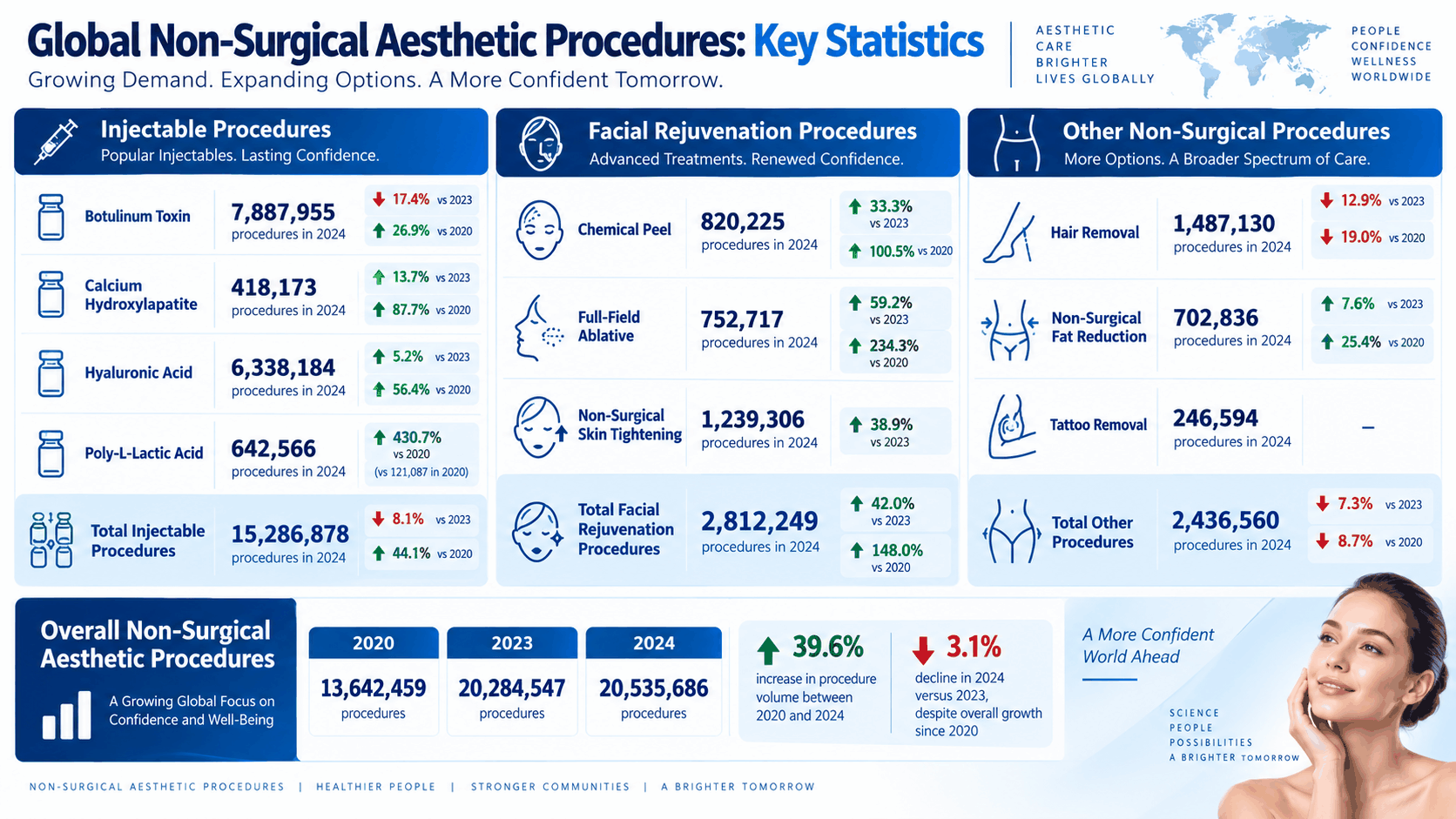
Global Non-Surgical Aesthetic Procedures: Key Statistics
Injectable Procedures
- Botulinum Toxin: 7,887,955 procedures in 2024, down 17.4% from 2023 but up 26.9% compared with 2020.
- Calcium Hydroxylapatite: 418,173 procedures in 2024, representing a 13.7% increase from 2023 and an 87.7% increase from 2020.
- Hyaluronic Acid: 6,338,184 procedures in 2024, increasing 5.2% year-over-year and 56.4% compared with 2020.
- Poly-L-Lactic Acid: 642,566 procedures in 2024, compared with 121,087 in 2020, reflecting a 430.7% increase.
- Total Injectable Procedures: 15,286,878 procedures in 2024, declining 8.1% from 2023 but increasing 44.1% from 2020.
Facial Rejuvenation Procedures
- Chemical Peel: 820,225 procedures in 2024, up 33.3% from 2023 and 100.5% from 2020.
- Full-Field Ablative: 752,717 procedures in 2024, increasing 59.2% from 2023 and 234.3% from 2020.
- Non-Surgical Skin Tightening: 1,239,306 procedures in 2024, representing a 38.9% increase from 2023.
- Total Facial Rejuvenation Procedures: 2,812,249 procedures in 2024, up 42.0% from 2023 and 148.0% from 2020.
Other Non-Surgical Procedures
- Hair Removal: 1,487,130 procedures in 2024, down 12.9% from 2023 and 19.0% from 2020.
- Non-Surgical Fat Reduction: 702,836 procedures in 2024, up 7.6% from 2023 and 25.4% from 2020.
- Tattoo Removal: 246,594 procedures were recorded in 2024.
- Total Other Procedures: 2,436,560 procedures in 2024, down 7.3% from 2023 and 8.7% from 2020.
Overall Non-Surgical Aesthetic Procedures
- Total procedures in 2024: 20,535,686
- Total procedures in 2023: 20,284,547
- Total procedures in 2020: 13,642,459
- Overall procedure volume increased 39.6% between 2020 and 2024, despite a 3.1% decline in 2024 versus 2023.
Growth Drivers of the Non-Invasive Aesthetic Treatment Market
Rising Preference for Non-Surgical Cosmetic Procedures
The growing consumer preference for non-surgical and minimally disruptive aesthetic procedures is a major growth driver for the global non-invasive aesthetic treatment market. Consumers increasingly seek improvements in facial appearance, skin quality, body contours, and signs of aging without undergoing invasive surgery or lengthy recovery. Procedures such as Botox, dermal fillers, laser treatments, radiofrequency, ultrasound skin tightening, IPL, and cryolipolysis offer comparatively convenient treatment experiences. The American Society of Plastic Surgeons reported that U.S. physicians performed approximately 9.5 million minimally invasive cosmetic procedures in 2023, demonstrating the substantial demand for less-invasive aesthetic solutions. Increasing awareness among younger consumers is also expanding the target population beyond traditional older patients. Preventive aesthetics, particularly treatments aimed at maintaining skin quality and reducing early signs of aging, are gaining popularity. Furthermore, improvements in treatment precision and personalized protocols are increasing consumer confidence. As people seek aesthetic enhancement while minimizing disruption to work and daily activities, demand for non-invasive procedures is expected to remain a significant contributor to market expansion.
Technological Advancements and Development of Innovative Treatment Platforms
Rapid advancements in laser, radiofrequency, ultrasound, light-based, and energy-based technologies are significantly expanding the capabilities of non-invasive aesthetic treatments. Modern devices increasingly combine multiple technologies to address several concerns, including wrinkles, pigmentation, skin laxity, unwanted hair, acne scars, and localized fat. Improved energy delivery systems and computerized controls are helping practitioners achieve more consistent and personalized outcomes while improving patient comfort. The global aesthetics industry is also benefiting from growing investment in medical-device research and development, with manufacturers introducing compact systems suitable for dermatology clinics, medical spas, and specialized aesthetic centers. Combination treatments are becoming particularly attractive because patients can address multiple cosmetic concerns during fewer appointments. Technological innovation is also supporting shorter treatment sessions and reduced downtime, strengthening the appeal of non-invasive alternatives to surgery. In addition, manufacturers are developing devices suitable for different skin types and treatment areas, broadening their potential patient base. Continued innovation, product launches, and improvements in safety and efficacy are expected to support adoption and create new opportunities across the global aesthetic-treatment market.
Expansion of Medical Spas and Influence of Social Media
The rapid expansion of medical spas, aesthetic clinics, dermatology practices, and specialized beauty centers is improving access to non-invasive aesthetic procedures worldwide. Medical spas combine clinical aesthetic services with traditional beauty and wellness offerings, making treatments more accessible to consumers who may not consider conventional cosmetic surgery. At the same time, social media platforms have transformed how consumers discover and evaluate aesthetic procedures. Beauty influencers, celebrities, before-and-after content, and educational videos have increased awareness of treatments such as fillers, skin tightening, laser procedures, and body contouring. The International Society of Aesthetic Plastic Surgery reported that more than 34.9 million surgical and non-surgical aesthetic procedures were performed worldwide in 2023, illustrating the scale of global aesthetic demand. Younger adults are increasingly influenced by online beauty trends, while personalized treatment plans are encouraging repeat visits. Rising disposable incomes in developing economies and expanding aesthetic-service infrastructure are also increasing accessibility. As digital exposure and treatment availability continue to grow, social media-driven awareness and medical-spa expansion are expected to remain important market growth catalysts.
Challenges of the Non-Invasive Aesthetic Treatment Market
High Treatment Costs and Limited Insurance Coverage
The relatively high cost of many non-invasive aesthetic procedures remains a significant barrier to wider adoption, particularly because these treatments are generally considered elective cosmetic services and are not routinely covered by health insurance. Prices vary substantially according to the procedure, technology, treatment area, number of sessions, and geographic location. Advanced laser systems, radiofrequency platforms, body-contouring technologies, and premium injectables can require considerable investment from both patients and providers. In addition, many procedures require multiple sessions or periodic maintenance, increasing the overall cost over time. Equipment costs also create challenges for clinics, as advanced aesthetic platforms can require substantial capital expenditure, staff training, maintenance, and technology upgrades. Economic uncertainty and inflation can further influence discretionary consumer spending, causing patients to postpone elective treatments. Price sensitivity is particularly relevant in emerging markets, where access to premium aesthetic services may be concentrated among higher-income consumers. Clinics are therefore increasingly using promotional packages, financing options, membership programs, and bundled treatments to improve affordability. Nevertheless, high out-of-pocket expenses remain an important factor limiting penetration among price-sensitive consumer groups.
Safety Concerns, Regulatory Requirements, and Shortage of Skilled Practitioners
Although non-invasive aesthetic treatments generally involve less recovery than surgery, they are not completely risk-free and can produce complications when performed incorrectly or with unsuitable devices. Potential issues may include burns, pigmentation changes, swelling, bruising, infection, scarring, or undesirable aesthetic outcomes, depending on the procedure. These concerns make practitioner expertise, appropriate patient selection, device quality, and adherence to treatment protocols critical. Regulatory requirements also vary considerably between countries, creating complexity for manufacturers seeking international expansion. Clinics must comply with device regulations, professional licensing requirements, advertising standards, and patient-safety guidelines. Another challenge is the availability of adequately trained practitioners who understand different skin types, device settings, contraindications, and treatment combinations. This is particularly important as demand expands into markets where aesthetic-service infrastructure is still developing. Greater consumer exposure through social media can also create unrealistic expectations regarding treatment results, potentially affecting patient satisfaction. Manufacturers and providers are therefore focusing on practitioner education, clinical training, safety protocols, and transparent patient communication. Maintaining high standards of treatment quality and safety will remain essential for sustainable market growth.
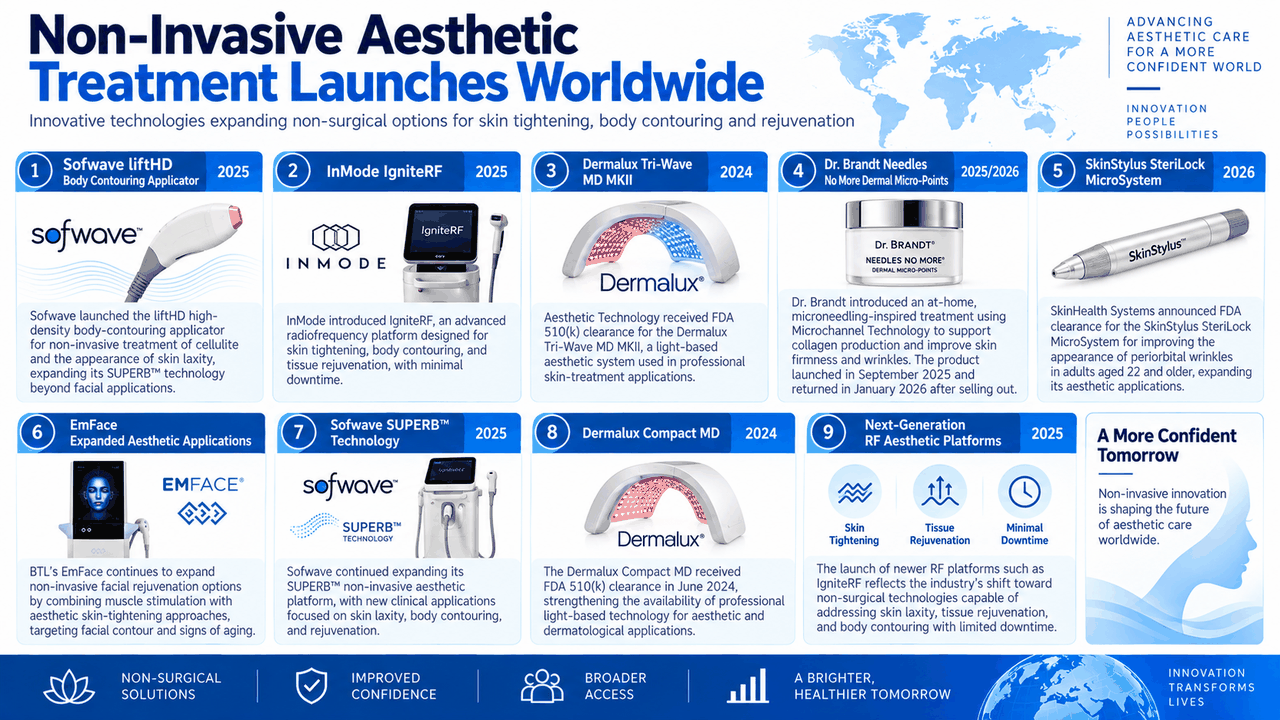
Non-Invasive Aesthetic Treatment Launches Worldwide
- Sofwave liftHD Body Contouring Applicator – 2025: Sofwave launched the liftHD high-density body-contouring applicator for non-invasive treatment of cellulite and the appearance of skin laxity, expanding its SUPERB™ technology beyond facial applications.
- InMode IgniteRF – 2025: InMode introduced IgniteRF, an advanced radiofrequency platform designed for skin tightening, body contouring, and tissue rejuvenation, with minimal downtime.
- Dermalux Tri-Wave MD MKII – 2024: Aesthetic Technology received FDA 510(k) clearance for the Dermalux Tri-Wave MD MKII, a light-based aesthetic system used in professional skin-treatment applications.
- Dr. Brandt Needles No More Dermal Micro-Points – 2025/2026: Dr. Brandt introduced an at-home, microneedling-inspired treatment using Microchannel Technology to support collagen production and improve skin firmness and wrinkles. The product launched in September 2025 and returned in January 2026 after selling out.
- SkinStylus SteriLock MicroSystem – 2026: SkinHealth Systems announced FDA clearance for the SkinStylus SteriLock MicroSystem for improving the appearance of periorbital wrinkles in adults aged 22 and older, expanding its aesthetic applications.
- EmFace – Expanded Aesthetic Applications: BTL’s EmFace continues to expand non-invasive facial rejuvenation options by combining muscle stimulation with aesthetic skin-tightening approaches, targeting facial contour and signs of aging.
- Sofwave SUPERB™ Technology – 2025: Sofwave continued expanding its SUPERB™ non-invasive aesthetic platform, with new clinical applications focused on skin laxity, body contouring, and rejuvenation.
- Dermalux Compact MD – 2024: The Dermalux Compact MD received FDA 510(k) clearance in June 2024, strengthening the availability of professional light-based technology for aesthetic and dermatological applications.
- Next-Generation RF Aesthetic Platforms – 2025: The launch of newer RF platforms such as IgniteRF reflects the industry’s shift toward non-surgical technologies capable of addressing skin laxity, tissue rejuvenation, and body contouring with limited downtime.
Growing Demand for Wrinkle Reduction
Non-Invasive Aesthetic Botulinum Toxin Treatment Market is expanding as consumers increasingly seek minimally invasive solutions for facial aging and expression lines. Botulinum toxin treatments are primarily used to temporarily reduce the appearance of forehead lines, frown lines, crow’s feet, and other dynamic wrinkles. According to the International Society of Aesthetic Plastic Surgery, approximately 8.8 million botulinum toxin procedures were performed globally in 2023, making it one of the most widely performed non-surgical aesthetic procedures. The popularity of these treatments is supported by relatively short procedure times, limited downtime, and predictable results when administered by qualified professionals. Younger consumers are also increasingly using botulinum toxin for preventive aesthetic purposes, while older consumers seek facial rejuvenation. Rising disposable incomes, celebrity influence, social media exposure, and expanding medical-spa networks are improving awareness and accessibility. Product innovation, including longer-lasting formulations and improved injection techniques, is further supporting market development. However, treatment costs, repeat-treatment requirements, and the need for qualified practitioners remain important considerations.
Advancements in Light-Based Skin Rejuvenation
Non-Invasive Aesthetic Photo Rejuvenation Treatment Market is gaining momentum as consumers seek procedures that improve overall skin appearance without surgery. Photo rejuvenation commonly uses intense pulsed light (IPL), laser, and other light-based technologies to address pigmentation, sun damage, redness, uneven skin tone, fine lines, and selected vascular conditions. Growing exposure to ultraviolet radiation and increasing awareness of skin aging are encouraging demand for these procedures. Technological improvements have enhanced treatment precision, energy control, and customization for different skin concerns. The expanding number of dermatology clinics, aesthetic centers, and medical spas is also increasing access to photo rejuvenation services. Social media and image-conscious lifestyles further contribute to demand because consumers increasingly prioritize clear, even-toned, youthful-looking skin. Multiple treatment options allow providers to customize procedures according to age, skin condition, and desired outcomes. Consumers are particularly attracted to procedures that can be completed relatively quickly with limited downtime. Continued development of advanced light-based platforms and combination treatments is expected to support sustained growth in this segment.
Rising Demand for Long-Term Hair Reduction
Hair Removal Non-Invasive Aesthetic Treatment Market is expanding due to increasing consumer preference for longer-lasting alternatives to shaving, waxing, and other traditional hair-removal methods. Laser hair removal and intense pulsed light (IPL) are among the most widely adopted technologies, targeting hair follicles to achieve progressive and long-term hair reduction. According to the International Society of Aesthetic Plastic Surgery, laser hair removal accounted for more than 2 million procedures globally in 2023, demonstrating strong consumer demand for technology-based aesthetic hair removal. Rising personal-grooming awareness among both women and men is expanding the customer base. Technological advancements have also improved treatment speed, comfort, and adaptability for different skin and hair types. Medical spas, dermatology clinics, beauty centers, and specialized laser clinics are making these procedures increasingly accessible. Consumers value the convenience of reducing the frequency of shaving and waxing, particularly for larger treatment areas such as legs, back, arms, and the face. Although multiple sessions are usually required, the longer-lasting results can justify the investment for many consumers. Growing grooming standards and aesthetic awareness are expected to sustain market growth.
Increasing Female Participation in Aesthetic Procedures
Female Non-Invasive Aesthetic Treatment Market represents a major portion of global aesthetic-treatment demand, supported by increasing awareness of skincare, facial rejuvenation, body contouring, and personal grooming. Women commonly seek non-invasive procedures for wrinkle reduction, skin tightening, pigmentation correction, hair removal, body contouring, and facial enhancement. According to global aesthetic procedure data, women account for the overwhelming majority of aesthetic procedures performed worldwide, with non-surgical treatments representing a particularly important category. Increasing participation of women in professional environments, greater disposable income, and growing emphasis on personal appearance are supporting demand. Social media platforms have also increased exposure to aesthetic procedures and encouraged consumers to research treatment options before visiting clinics. Younger women are increasingly interested in preventive skincare and subtle enhancements, while older consumers often focus on reducing visible signs of aging and improving skin firmness. Medical spas and dermatology clinics are expanding their female-focused treatment portfolios through combination therapies and personalized treatment plans. The preference for natural-looking results and minimal downtime is particularly important among working women. These trends are expected to keep female consumers a dominant customer group in the non-invasive aesthetics market.
Medspa Expansion of Accessible Aesthetic and Wellness Services
Medspa Non-Invasive Aesthetic Treatment Market is growing as medical spas increasingly combine aesthetic procedures with wellness, skincare, and personalized beauty services. Medspas commonly provide treatments such as Botulinum toxin injections, dermal fillers, laser hair removal, IPL, skin resurfacing, body contouring, and skin-tightening procedures under medical supervision. The expanding medical-spa model is improving accessibility by providing consumers with multiple aesthetic services in a single location. Global demand for non-surgical aesthetic procedures remains substantial, with the International Society of Aesthetic Plastic Surgery reporting more than 34 million surgical and non-surgical aesthetic procedures worldwide in 2023. Medspas are benefiting from this trend by offering treatment packages, membership programs, financing options, and customized aesthetic plans that encourage repeat visits. Social media marketing and online appointment systems are also helping medspas attract younger consumers. Technological advancements are allowing facilities to expand their treatment portfolios without relying exclusively on surgical procedures. However, competition, practitioner qualifications, regulatory compliance, and equipment investment remain important challenges. As consumers increasingly seek convenient, personalized, and minimally invasive beauty services, medspas are expected to remain an important distribution and service channel for the global non-invasive aesthetic treatment market.
United States Demand and Technology Adoption in Non-Invasive Aesthetic Treatment
United States non-invasive aesthetic treatment market remains a leading global market, supported by high consumer spending, strong awareness of cosmetic procedures, and widespread availability of advanced aesthetic technologies. Demand is increasing for Botulinum toxin, dermal fillers, laser treatments, skin rejuvenation, hair removal, and non-invasive body contouring. According to the International Society of Aesthetic Plastic Surgery, the U.S. recorded more than 6.3 million non-surgical aesthetic procedures in 2023, highlighting the country’s substantial consumer base. The expanding medical-spa industry, increasing participation of dermatologists and plastic surgeons, and growing acceptance among younger consumers are further strengthening demand. Social media and digital beauty trends have also increased awareness of minimally invasive procedures. Manufacturers continue to introduce advanced injectables, energy-based platforms, and personalized treatment technologies. Strong healthcare infrastructure, practitioner expertise, and regulatory oversight further support consumer confidence. With continued innovation, expanding provider networks, and growing preference for treatments involving limited downtime, the U.S. is expected to retain its position as a major contributor to the global non-invasive aesthetics industry.
Growing Preference for Medically Supervised Procedures in Germany
Germany represents an important European market for non-invasive aesthetic treatments, supported by advanced healthcare infrastructure, high consumer awareness, and strong emphasis on treatment safety. Demand is increasing for wrinkle reduction, facial rejuvenation, laser-based skin treatments, hair removal, and non-surgical body contouring. Germany’s aging population provides a significant customer base for procedures designed to address fine lines, skin laxity, pigmentation, and other age-related concerns. Consumers generally place considerable importance on medically supervised treatments and qualified practitioners, benefiting dermatology and aesthetic clinics. The availability of advanced laser, radiofrequency, and other energy-based technologies is also expanding treatment options. Strict European regulatory requirements contribute to product quality and patient confidence, although compliance can increase operating costs for providers. In addition, growing interest in natural-looking outcomes and procedures requiring limited recovery time is encouraging consumers to choose non-surgical alternatives. As aesthetic awareness increases and providers expand personalized treatment offerings, Germany is positioned for steady development within Europe’s non-invasive aesthetic treatment landscape.
China Rapid Expansion Among Younger Consumers
China is emerging as one of the fastest-growing markets for non-invasive aesthetic treatments, driven by urbanization, rising disposable incomes, strong beauty awareness, and the expanding middle-class population. Popular procedures include Botulinum toxin, dermal fillers, laser skin rejuvenation, pigmentation treatments, and non-invasive body contouring. Younger consumers represent an increasingly important customer group and are strongly influenced by social media, beauty influencers, celebrities, and digital platforms. The rapid development of aesthetic clinics and medical-beauty centers is improving access to treatments across major cities and increasingly in lower-tier markets. Local manufacturers are also strengthening their presence by developing competitive aesthetic devices and injectable products, while international companies continue introducing advanced technologies. Consumers are increasingly interested in subtle facial enhancements, skin quality improvement, and preventive aesthetic treatments rather than highly invasive procedures. At the same time, competition among providers is encouraging investment in technology, practitioner training, and service quality. As aesthetic awareness spreads beyond China’s largest metropolitan areas, the country’s expanding consumer base is expected to create significant long-term opportunities for non-invasive aesthetic treatment providers.
Saudi Arabia Rising Demand for Premium Aesthetic Services
Saudi Arabia’s non-invasive aesthetic treatment market is expanding alongside increasing healthcare investment, rising disposable incomes, growing beauty awareness, and greater acceptance of cosmetic procedures. Demand is particularly strong for Botulinum toxin, dermal fillers, laser hair removal, skin rejuvenation, and skin-tightening treatments that offer limited downtime. A young and digitally connected population is increasing exposure to international beauty trends through social media and online platforms. Major cities such as Riyadh and Jeddah are witnessing the development of modern aesthetic clinics, medical spas, and premium healthcare facilities, improving access to advanced procedures. Healthcare-sector transformation initiatives associated with Saudi Vision 2030 are also supporting private-sector investment and the development of specialized medical services. The country’s strong hospitality and medical-tourism ambitions may further create opportunities for premium aesthetic providers. Consumers increasingly favor personalized treatments and high-quality services delivered by qualified professionals. With international aesthetic brands expanding their presence and local providers investing in advanced technologies, Saudi Arabia is developing into an increasingly important market for non-surgical cosmetic and aesthetic services in the Middle East.
Recent Developments in Non-invasive Aesthetic Treatment Market
- In December 2025, Galderma announced that Sculptra had received MDR certification along with an expanded body indication—an important advancement for the aesthetic medicine field. Achieving EU MDR certification reinforces the product’s regulatory strength, elevating standards for safety, clinical evidence, and quality, and further enhancing trust among both physicians and patients.
- In November 2025, Galderma also secured FDA approval for Restylane Lyft with Lidocaine for chin augmentation in adults, broadening the scope of its HA filler portfolio.
- In September 2025, the FDA granted clearance for Obagi’s Saypha MagIQ injectable HA gel, marking the company’s first intradermal filler available in the U.S., with commercial launch anticipated in 2026.
Non-Invasive Aesthetic Treatment Market Segments
Procedure
Injectables
- Botulinum Toxin
- Hyaluronic Acid
- Calcium Hydroxylapatite
- Poly-L-Lactic Acid
Facial Rejuvenation
- Photo Rejuvenation
- Chemical peel
- Micro Ablative Resurfacing
- Full field Ablative
Others
- Hair Removal
- Non-Surgical Fat Reduction
Gender
- Male
- Female
End User
- Hospital/surgery centre
- Medspa
- Traditional Spa
- HCP Owned Clinic
Countries
North America
- United States
- Canada
Europe
- France
- Germany
- Italy
- Spain
- United Kingdom
- Belgium
- Netherlands
- Turkey
Asia Pacific
- China
- Japan
- India
- Australia
- South Korea
- Thailand
- Malaysia
- Indonesia
- New Zealand
Latin America
- Brazil
- Mexico
- Argentina
Middle East & Africa
- South Africa
- Saudi Arabia
- UAE
All the Key players have been covered from 5 Viewpoints:
- Overview
- Key Person
- Product Analysis
- Recent Development
- Revenue
Key Players Analysis
- Johnson & Johnson
- Bausch Health Companies Inc.
- Cutera Inc.
- Abbvie Inc.
- Sisram Medical Ltd.
- Galderma S.A.
- Sientra Inc.
- Revance Therapeutics Inc.
Report Details:
| Report Features | Details |
| Base Year |
2024 |
| Historical Period |
2020 - 2024 |
| Forecast Period |
2025 - 2033 |
| Market |
US$ Billion |
| Segment Covered |
By Procedure, By Gender, By End User and By Countries |
| Countries Covered |
|
| Companies Covered |
|
| Customization Scope |
20% Free Customization |
| Post-Sale Analyst Support |
1 Year (52 Weeks) |
| Delivery Format |
PDF and Excel through Email (We can also provide the editable version of the report in PPT/Word format on request) |
Key Questions Answered in This Report:
-
What is the projected market size for the non-invasive aesthetic treatment industry in 2034?
-
What is the compound annual growth rate (CAGR) of the non-invasive aesthetic treatment market from 2026 to 2034?
-
What are the primary factors driving the growth of the non-invasive aesthetic treatment market?
-
How does technological innovation influence the market for non-invasive aesthetic treatments?
-
What are some examples of popular non-invasive cosmetic treatments?
-
What challenges does the non-invasive aesthetic treatment market face, particularly regarding regulation and safety?
-
How is the rising demand for minimally invasive treatments impacting the market for non-invasive aesthetic procedures?
-
In what way does medical tourism contribute to the growth of the non-invasive aesthetic treatment market?
-
How are regulatory bodies, like the FDA and EMA, influencing the safety and accessibility of non-invasive aesthetic treatments?
-
Which countries are the leading markets for non-invasive aesthetic treatments, and why?
Customization Services available
- Analysis of Market Size and Its Segments
- More Company Profiles (Upto 10 without any additional cost):
- Additional Countries (Other than mentioned Countries):
- Region/Country Specific Reports:
- Market Entry Strategy:
- Region-Specific Market Dynamics:
- Regional Market Share Analysis:
- Trade Analysis:
- Production Insights:
- Others Customized Requests:
For more information contact our analysts.
Need More Assistance?
- Talk to our analysts to get more precious information on the current market trends.
- Include more countries and segments and customize the report based on the final requirement.
- Get a competitive advantage in your industry by knowing the report findings and making a positive impact on your revenues and operations.
- Our analysts are always ready to provide more help and pertinent information if you need any additional assistance.