Netherlands Diabetes Device Market Report by Types, End User, Cities and Companies Analysis 2026-2034
Buy NowNetherlands Diabetes Device Market Size and Forecast 2026-2034
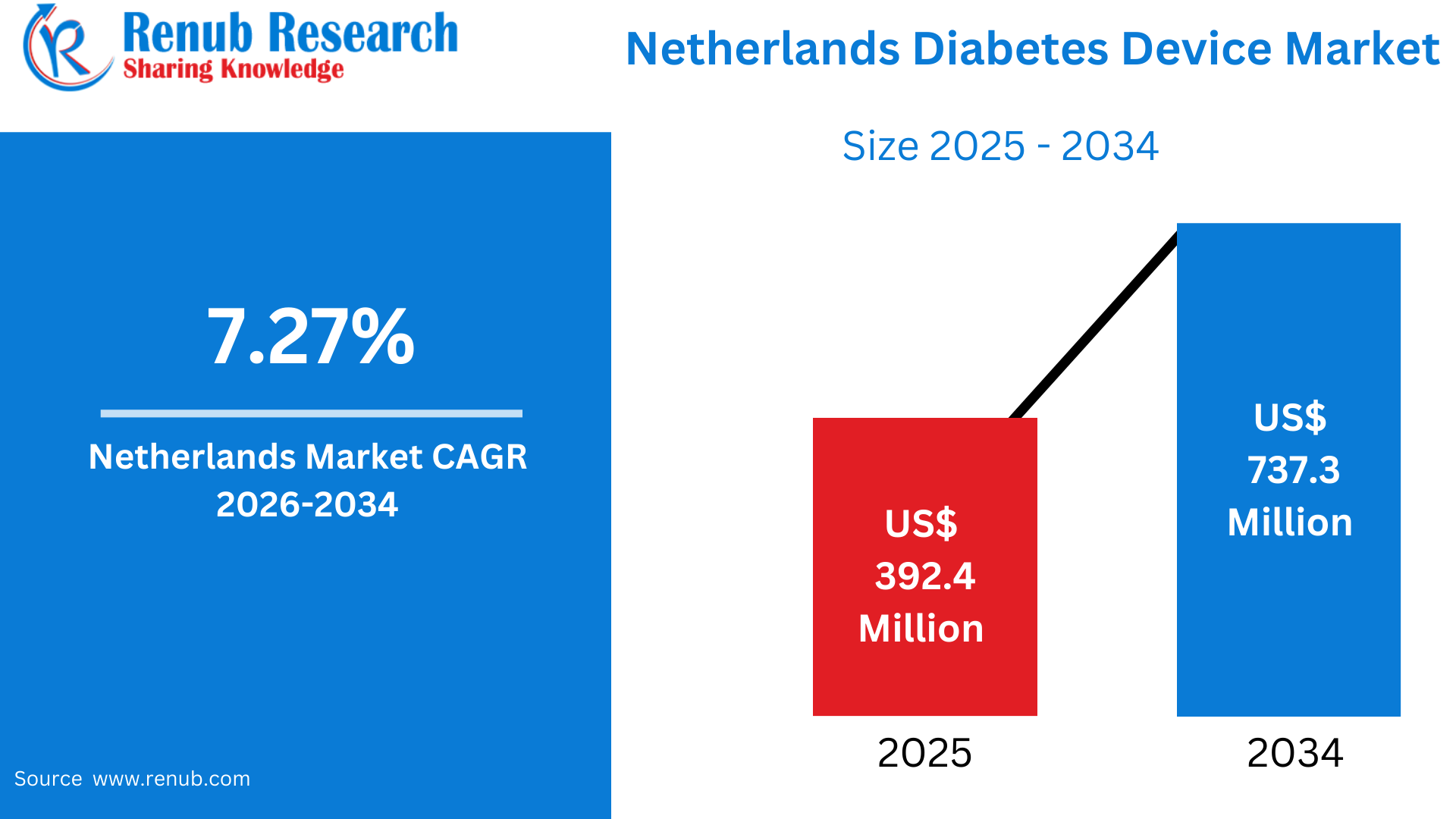
The market for diabetes-care devices in the Netherlands is projected to grow from US$ 392.4 million in 2025 to US$ 737.3 million in 2034, registering a compound annual growth rate of 7.27% between 2026 and 2034. Growth in the Dutch diabetes-care devices market can be attributed to the growing number of diabetes cases, adoption of continuous glucose monitors, insulin delivery devices, as well as the superior healthcare infrastructure in the Netherlands, where early diagnosis, management, and control are given utmost importance.
Netherlands Diabetes Devices Market Outlook
"Diabetes devices refer to the devices used to monitor glucose in the blood as well as assist in insulin administration for diabetics." The devices for diabetes are constituted by self-monitoring blood glucose, continuous glucose monitoring, insulin pens, insulin pumps, as well as digital applications used to monitor glucose levels. The devices have played a significant role in ensuring that diabetics are able to control their glucose levels in their blood as well as have aided in reducing complications that can arise from diabetes. Current devices have incorporated wireless communication for alerts as well as sharing for monitoring by specialists.
In the Netherlands, there is a growing interest in diabetes devices in view of the prominent focus on the concept of preventive healthcare. The Dutch healthcare model stimulates early detection and continuous tracking of the disease, thus contributing to the widespread acceptance of CGM technology and insulin delivery devices. High health consciousness, easy access to medical tech, and adequate support from reimbursements further add to the popularity of these devices. Consequently, diabetes devices have become an established part of long-term DM management.
Growth Driver in the Netherlands Diabetes Devices Market
More Emphasis on Preventative & Self-Managed Care
An important factor propelling the growth of diabetes devices in the Netherlands is its emphasis on preventive care. In fact, diabetes care practices encourage individuals to self-monitor as well as self-manage the condition. SMBG devices, CGMs, as well as insulin pens, form an important part of this process. Patients are made to understand how to rely upon these devices for making changes to lifestyle as well as treatment. Therefore, this approach also encourages repeat purchases for devices as well as an increase in device use. Being an important aspect of diabetes treatment, preventive care as well as managing care outside hospitals means an increasing number of devices for monitoring as well as penetrating for diabetes is being used by more individuals. In the Netherlands, there is an estimated 1.2 million individuals with diabetes out of which 10% have type 1 diabetes. Factors for obtaining type 1 diabetes can also include genetic as well as viral causes. In addition to this, an increase in an increasing number of individuals with an increase in weight gain also accelerates an increase in type 1 diabetes cases.
High Rate of Technology Acceptance among Citizens
The Netherlands has a high rate of emulation of digital healthcare technologies, which contributes considerably to the growth of the diabetes devices market. The increased acceptance of digital healthcare technologies by patients and healthcare professionals has increased the demand for smart glucose management systems, smart insulin pens, and app-friendly platforms. The increased accessibility of data on a real-time basis has improved patient engagement. Healthcare professionals are more dependent on data provided by digital diabetes management tools for therapy optimization. In the future, with maturity in digital healthcare infrastructure, popular demand for technically advanced diabetes management devices continues to remain strong. In February 2024, In Europe, Dexcom launched their real-time continuous glucose management system, Dexcom ONE+. It is a customizable continuous glucose monitoring device that can be worn on three different body parts.
Health Access and Reimbursement Assistance
Easy access to health care services and an encouraging reimbursement framework are important factors that have led to the adoption of the devices among the diabetic population of the Netherlands. People can easily avail themselves of the advanced devices for monitoring and insulin infusion with less burden on their pockets. This builds a positive preference among the masses to start the early use of the Continuous Glucose Monitor (CGM) and Insulin Pump devices, especially among the insulin-dependent patients. With the consistent reimbursement framework, the long-term compliance with the devices will be good. 2023: Roche Unveils Accu-Chek Guide System. The Accu-Chek Guide system is launched in the Dutch market by the company Roche, a leading name in the field of diabetic care. Diabetic patients can now easily test the levels of their sugar by using the Accu-Chek Guide system compared to the older systems.
Challenge in the Netherlands Diabetes Devices Market
Healthcare Cost Pressure Exerted
Although there is a high level of adoption in this industry, a barrier in the Netherlands is that high-tech devices for diabetes care are very expensive. Continuous glucose sensors and insulin pumps demand recurring expenditure on sensors and maintenance. It is necessary to evaluate cost-effectiveness for healthcare authorities in this context. This may hamper speedy development in high-tech devices despite high demand.
Clinician Adoption and Usability Obstacles
Although awareness levels are presently high, not many diabetics are comfortable with the use of advanced diabetic technology. Some persons, especially older diabetics, may have difficulty with technology setup, data analysis, or upkeep. Misgivings about continuous wear of sensors or handling online platforms can impact long-term compliance. Education and assistance are critical but also make care more complex. These are difficulties that can impact the widespread use of advanced technology despite its proven advantages.
Netherlands SMBG Device Market
The self-monitoring of blood glucose (SMBG) devices market in the Netherlands is a fully developed and stable market for diabetes care. SMBG devices such as glucometer and test strips today have become staple tools for people with both type 1 and 2 diabetes in terms of checking the level of sugar in the blood. These tools also have become essential for insulin injection patients and diabetes patients who rely on lifestyle changes and oral medicines. Affordability, simplicity, and ease of use help in the continuous adoption of the devices, especially by older patients and people who have recently acquired diabetes. Even though the growth is not at the same level as the advanced diabetes monitoring systems, the continuous replacement market and clinical use help in the stability of the market.
Netherlands CGM Device Market
The continuous glucose monitoring (CGM) device market is witnessing robust growth in the Netherlands, thanks to the rising demand for instant glucose information. Continuous glucose monitoring devices enable continuous glucose level reading, trend analysis, and notifications to patients, who can consequently manage their diabetes effectively by attaining tight glycaemic control and lowering the incidence of hypoglycaemic episodes. The use of these devices is quite prevalent among type 1 diabetes patients as well as insulin-dependent type 2 diabetes patients. Moreover, the integration capability of these devices with smartphones and m-health platforms facilitates their use from a distance. Due to rising healthcare awareness, these devices form a crucial part of diabetes management today.
Netherlands Insulin Pump Industry
The Dutch insulin pumps market is propelled by the emphasis on precise insulin infusion as well as the management of diabetes as an ongoing process. Insulin pumps assure the user of continuous infusion of insulin through the subcutaneous route, thereby giving the user more freedom and efficacy relative to the current practice of multiple injections per day. Although it is relatively expensive and requires rigorous training, the support and education of healthcare professionals and patients have been key drivers of the demand for insulin pumps. Insulin pumps are considered a high-value and highly advanced category of diabetes management devices available in the Netherlands.
Netherlands Insulin Pen Device Market
Insulin pens are presently widely accepted in the Netherlands because of their convenience, portability, and accuracy in dosage. Insulin pens make it easy for users to inject insulin. Therefore, these are widely prescribed for both type 1 diabetic patients as well as type 2 diabetic patients, especially in cases where the individual has just started taking insulin. Both disposable and reusable versions of insulin pens are available based on the situation. Incremental innovation in insulin pens, such as "smart insulin pens" with tracking functionality, further boosts their usage in the market of the Netherlands.
Netherlands Diabetes Devices & Diagnostics Centers Market
The diagnostic centers have an important role in contributing to the overall market for diabetes care devices in the Netherlands by helping in diagnosis, observation, and optimized management of the disease. The SMBG solution, CGM solution for professionals, and insulin management solution are used in these centers for analyzing the glycemic patterns and efficacy of management together. The role of these centers remains paramount in terms of initial detection, regular observation, and efficient management of the clinical condition in the long run. The trend of preventive care in developed healthcare systems has promoted usage of accurate diabetes care devices in these centers.
Netherlands Diabetes Devices Retail pharmacy Market
Retail pharmacy outlets are a significant distribution channel for diabetes devices in the Netherlands. The role played by these outlets is important as patients have access to glucose meters, test strips, insulin pens, CGM sensors, as well as other consumables for these devices. Retail pharmacy outlets are a significant interface for diabetes care, as they are a convenient outlet for patients to access these devices for their daily diabetes care. Due to the rise in diabetes cases, as well as increased care for patients in their homes, retail pharmacy outlets play a significant role in enhancing access to these devices in the Netherlands.
Market Segmentations
Types
Self-Monitoring Devices
- Test Strips
- Lancets
- Blood Glucose Meters
Continuous Glucose-Monitoring Devices
- Sensors
- Transmitter
- Receiver
Insulin Pumps
- Patch Pumps
- Tethered Pumps
- Consumables
Insulin Pens
- Disposable Insulin Pen
- Reusable Insulin Pen
End User - Volume
- Hospitals
- Diagnostics Centers
- Homecare
Cities
- Amsterdam
- Rotterdam
- The Hague
- Utrecht
- Eindhoven
- Groningen
- Tilburg
- Almere
- Breda
- Nijmegen
All companies have been covered with 5 Viewpoints
- Overviews
- Key Person
- Recent Developments
- SWOT Analysis
- Revenue Analysis
Company Analysis
- Dexcom Inc
- Medtronic
- Roche
- Abbott Laboratories
- Eli Lilly
- Terumo Corporation
- BD
Report Details:
| Report Features | Details |
| Base Year |
2025 |
| Historical Period |
2022 - 2025 |
| Forecast Period |
2026 - 2034 |
| Market |
US$ Billion |
| Segment Covered |
Types, End User and Cities |
| Cities Covered |
|
| Companies Covered |
|
| Customization Scope |
20% Free Customization |
| Post-Sale Analyst Support |
1 Year (52 Weeks) |
| Delivery Format |
PDF and Excel through Email (We can also provide the editable version of the report in PPT/Word format on request) |
Customization Services available
- Analysis of Market Size and Its Segments
- More Company Profiles (Upto 10 without any additional cost):
- Additional Countries (Other than mentioned Countries):
- Region/Country Specific Reports:
- Market Entry Strategy:
- Region-Specific Market Dynamics:
- Regional Market Share Analysis:
- Trade Analysis:
- Production Insights:
- Others Customized Requests:
For more information contact our analysts.
Need More Assistance?
- Talk to our analysts to get more precious information on the current market trends.
- Include more countries and segments and customize the report based on the final requirement.
- Get a competitive advantage in your industry by knowing the report findings and making a positive impact on your revenues and operations.
- Our analysts are always ready to provide more help and pertinent information if you need any additional assistance.