Mexico Compound Feed Market Report by Animal Type, Ingredient, Cities and Company Analysis 2026-2034
Buy NowMexico Compound Feed Market Size and Forecast 2026-2034
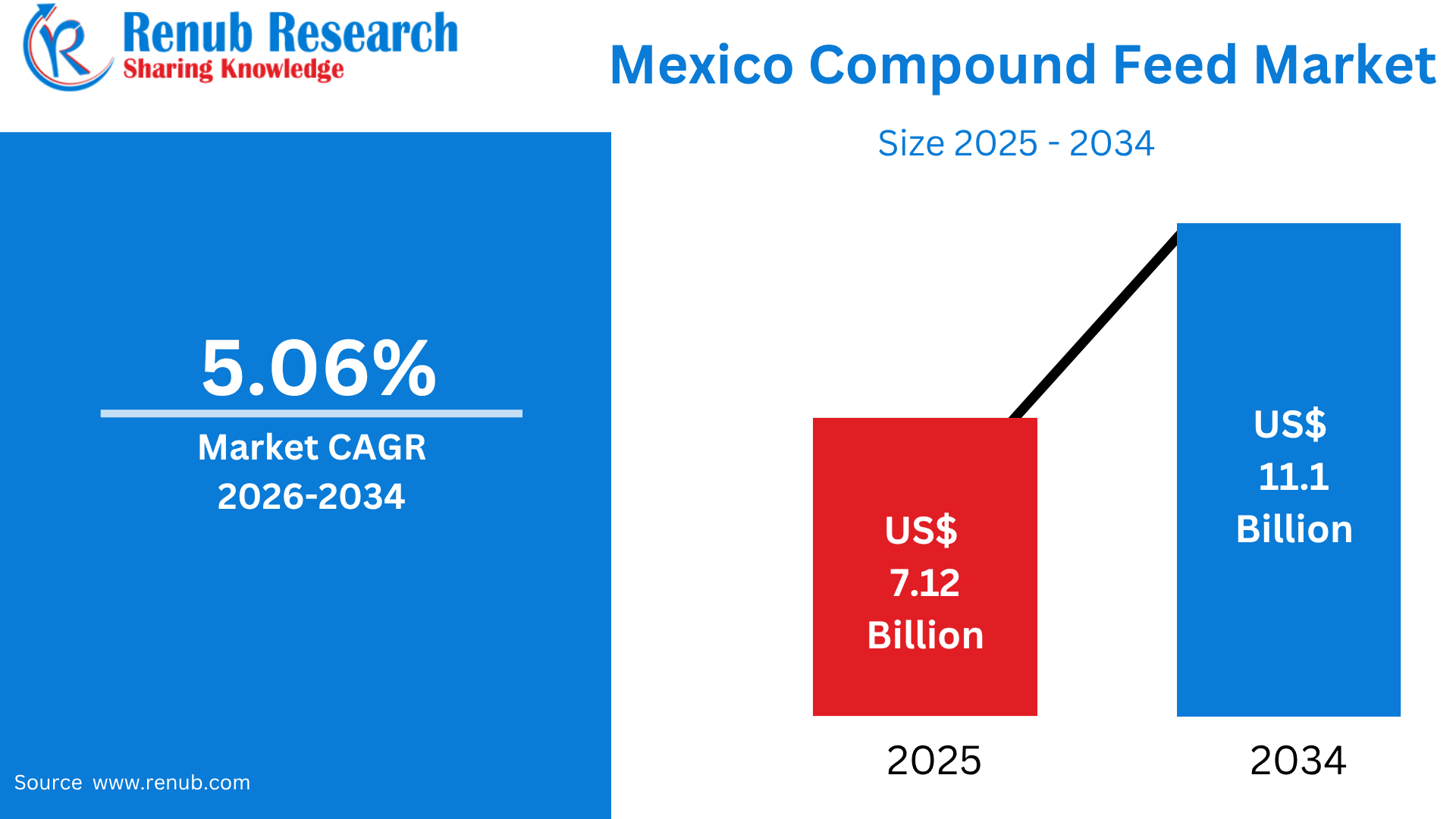
Mexico Compound Feed Market is expected to reach US$ 11.1 billion by 2034 from US$ 7.12 billion in 2025, with a CAGR of 5.06% from 2026 to 2034. Mexico’s compound feed market grows due to rising meat consumption, expansion of poultry and livestock farming, greater focus on animal productivity, and increased adoption of high-quality feed formulations, supported by technological advancements and stronger integration within commercial farming systems.
Mexico Compound Feed Overview
Compound feed is a carefully formulated mixture of ingredients designed to meet the nutritional requirements of livestock, poultry, and aquaculture species. It typically includes cereals, oilseed meals, proteins, vitamins, minerals, and functional additives blended to support balanced growth, immunity, and productivity. Unlike traditional on-farm feeding, compound feed ensures consistent nutrient delivery, improved digestion, and optimized feed conversion ratios. It plays a crucial role in modern intensive farming by reducing variability in diets, enhancing animal health, and supporting sustainable production. With increasing demand for high-quality meat, milk, and eggs, compound feeds help producers achieve greater efficiency and performance across animal systems.
Mexico’s compound feed market is driven by expanding commercial livestock and poultry operations, rising domestic consumption of protein-rich foods, and increasing investment in modern feed manufacturing technologies. Improved genetics in livestock and a shift toward intensive farming require more precise and nutrient-dense feed formulations. International trade integration and growing export opportunities for poultry and beef further strengthen demand for quality feed. Additionally, rising awareness of animal health, efficiency, and sustainability encourages adoption of specialty ingredients and additives. These factors collectively support robust growth in the compound feed industry across Mexico.
Growth Drivers for the Mexico Compound Feed Market
Rising Demand for High-Quality Animal Protein
Mexico’s increasing consumption of poultry, pork, beef, and dairy products is a key driver of the compound feed market. As urbanization accelerates and middle-class incomes rise, consumers demand safer, more consistent, and premium-quality animal protein. To meet this demand, producers are shifting from traditional feeding practices to fully formulated compound feeds that ensure better feed conversion, improved growth rates, and superior animal health. Modern retail and export channels require stringent quality standards, pushing farmers to adopt scientifically balanced feed solutions. Additionally, industry investment in advanced nutrition technologies—including premixes and specialty performance enhancers—supports optimized productivity. Efficient compound feed is critical for minimizing production costs, maintaining uniformity, and ensuring steady supply to meet growing domestic and export needs. This shift toward industrialized production makes high-quality compound feed indispensable in Mexico’s evolving livestock and poultry sectors.
Sustainability, Methane Reduction, and Regulatory Progress
Sustainability and environmental compliance are becoming major growth engines for Mexico’s compound feed market. As pressure builds to reduce emissions and improve resource efficiency, feed manufacturers and producers are adopting innovative, eco-friendly ingredients. A significant boost came in May 2024, when Elanco announced that the FDA had completed its review of Bovaer®, a unique methane-reducing feed ingredient. Elanco also reached an agreement with dsm-firms to expand Bovaer® distribution across North America, including Mexico. This development positions the country to adopt cutting-edge sustainability solutions aligned with global climate goals. Methane-reducing additives, precision nutrition, and improved formulation technologies support greener production outcomes. With regulators and industry partners promoting lower-carbon agriculture, sustainable feed solutions are becoming essential, fueling long-term demand for innovative compound feed formulations.
Strengthening Industry Consolidation and International Partnerships
Strategic partnerships, acquisitions, and foreign investment greatly contribute to the expansion of Mexico’s compound feed market. Multinational companies continue strengthening their presence through collaborations that enhance manufacturing capacity, distribution networks, and technological capabilities. A notable development occurred in June 2023, when Amlan International—Oil-Dri Corporation of America’s animal nutrition division—acquired the remaining non-controlling interest of Agromex Importaciones, S.A. de C.V. This acquisition solidifies Amlan’s influence in Mexico’s feed ingredient supply chain, ensuring stronger access to advanced mineral technologies and toxin-mitigation products. Such corporate consolidation enhances product availability, strengthens local technical support, and accelerates innovation adoption across livestock farms. As global companies continue integrating operations with Mexican partners, the market benefits from improved logistics, consistent quality, and wider access to specialized ingredients. These alliances build a more competitive, efficient, and technologically advanced compound feed sector.
Challenges in the Mexico Compound Feed Market
Volatility in Raw Material Prices
Feed production in Mexico depends heavily on imported grains such as corn and soybean meal, making the industry vulnerable to global price fluctuations, weather disruptions, and supply chain bottlenecks. Currency volatility further increases procurement costs, affecting manufacturers and farmers alike. When feed prices spike, producers often struggle to maintain profitability, especially small and mid-sized livestock farms with limited financial buffers. This volatility can also slow adoption of premium compound feeds as farmers revert to cheaper, less efficient feeding practices. Unpredictable costs reduce stability in production planning and hinder long-term investment in advanced feed technologies.
Disease Risks and Biosecurity Gaps
Livestock and poultry producers in Mexico continue to face challenges from disease outbreaks such as avian influenza, PRRS, and other health threats that disrupt production cycles. Insufficient biosecurity practices, especially among small-scale farms, can result in rapid disease spread, reduced productivity, and increased mortality. When outbreaks occur, demand for compound feed may temporarily decline as production slows or animals are culled. Additionally, disease pressures force farmers to redirect budgets toward emergency treatments rather than nutrition upgrades, slowing adoption of specialized feed solutions. These disruptions also impact supply chains, export activities, and overall market consistency. Strengthening farm-level biosecurity remains essential for stable compound feed demand.
Tijuana Compound Feed Market
Tijuana plays a growing role in Mexico’s compound feed market due to its proximity to the U.S. border, strong trade connectivity, and developing livestock operations in Baja California. The city benefits from efficient cross-border logistics that support the import of grains, additives, and specialized feed ingredients. Poultry and swine producers in the region increasingly adopt compound feed to enhance efficiency and support commercial-scale farming. Tijuana’s expanding food processing and export activities also create consistent demand for high-quality animal protein, indirectly strengthening the local feed sector. With improving infrastructure and growing integration with U.S. supply chains, Tijuana serves as a strategic gateway for advanced feed technologies entering northwest Mexico.
Ecatepec Compound Feed Market
Ecatepec, located in the State of Mexico, is a significant commercial and distribution center supporting the compound feed market in central Mexico. While not a major production zone itself, its dense population and industrial base create strong demand for animal protein supplied from surrounding agricultural regions. The city’s proximity to major highways facilitates efficient movement of feed inputs such as grains, premixes, and additives to regional livestock producers. Feed manufacturers and distributors operating near Ecatepec benefit from access to one of the country’s largest consumer markets, driving investment in modern, high-quality compound feed solutions. Increasing demand for poultry, eggs, and pork in the greater Mexico City area further stimulates feed industry activity.
León Compound Feed Market
León is an important hub for the compound feed market due to its strong livestock presence in the state of Guanajuato, particularly in poultry, cattle, and swine production. The region hosts numerous feed mills and ingredient suppliers that support intensive farming systems. León’s well-developed industrial base and transportation network help distribute compound feed across central Mexico efficiently. The city also benefits from growing agribusiness investment and partnerships with regional cooperatives that promote modern nutrition practices. Rising demand for dairy, beef, and poultry products in Guanajuato and neighboring states continues to drive feed production. León’s strategic location and agricultural diversity make it a key contributor to Mexico’s feed industry growth.
Puebla Compound Feed Market
Puebla is one of Mexico’s most important centers for poultry production, making it a major consumer of compound feed. The region’s large broiler and egg industries require consistent, nutrient-dense feed formulations to maintain productivity and competitiveness. Numerous feed mills operate in and around Puebla, benefiting from access to skilled labor, established agribusiness networks, and expanding commercial farming operations. The city’s proximity to major markets—including Mexico City—supports strong demand for high-quality animal protein, further boosting feed usage. Investments in modern farming systems, disease control, and sustainable nutrition practices reinforce the role of compound feed in regional growth. Puebla remains a cornerstone of Mexico’s poultry and feed manufacturing sectors.
Recent Developments in Mexico Compound Feed Market
- January 2026, Alltech and Archer Daniels Midland Company announced that they have received full regulatory approval for their feed-additive joint venture. Operations are set to begin in the first quarter of 2026, with the partnership focused on delivering natural gut-health solutions for poultry and swine.
- August 2025, Novus International, Inc. strengthened its presence in Mexico by establishing a specialized team dedicated to feed additives, gut health, production management, and sustainability. The team will support poultry, swine, and dairy producers by enhancing feed efficiency and overall animal health—key priorities within the compound feed sector.
- March 2025, ADM opened a USD 39 million wet pet-food facility in Morelos to expand production for its Ganador and Minino brands. The plant will operate using approximately 50% domestically sourced inputs, supporting local supply chains and growing demand in Mexico’s pet-food market.
Mexico Compound Feed Market Segments
Animal Type
- Ruminants
- Poultry
- Swine
- Aquaculture
- Others
Ingredient
- Cereals
- Cakes and Meals
- By-products
- Supplements
Top City
- Tijuana
- Ecatepec
- León
- Puebla
- Ciudad Juárez
- Guadalajara
- Monterrey
- Nezahualcóyotl
- Zapopan
All companies have been covered with 5 Viewpoints
- Overviews
- Key Person
- Recent Developments
- SWOT Analysis
- Revenue
Key Players Analysis
- Archer Daniels Midland
- DeKalb Feeds
- Heiskell & Co.
- Kent Feeds
- Nutreco
- Cargill Inc.
- Land O Lakes Purina
- Alltech Inc.
Report Details:
| Report Features | Details |
| Base Year |
2024 |
| Historical Period |
2020 - 2024 |
| Forecast Period |
2025 - 2033 |
| Market |
US$ Billion |
| Segment Covered |
Animal Type, Ingredient and Region |
| Region Covered |
|
| Companies Covered |
|
| Customization Scope |
20% Free Customization |
| Post-Sale Analyst Support |
1 Year (52 Weeks) |
| Delivery Format |
PDF and Excel through Email (We can also provide the editable version of the report in PPT/Word format on request) |
Customization Services available
- Analysis of Market Size and Its Segments
- More Company Profiles (Upto 10 without any additional cost):
- Additional Countries (Other than mentioned Countries):
- Region/Country Specific Reports:
- Market Entry Strategy:
- Region-Specific Market Dynamics:
- Regional Market Share Analysis:
- Trade Analysis:
- Production Insights:
- Others Customized Requests:
For more information contact our analysts.
Need More Assistance?
- Talk to our analysts to get more precious information on the current market trends.
- Include more countries and segments and customize the report based on the final requirement.
- Get a competitive advantage in your industry by knowing the report findings and making a positive impact on your revenues and operations.
- Our analysts are always ready to provide more help and pertinent information if you need any additional assistance.