Licensed Sports Merchandise Market Size, Share, Growth, Trends, Industry Analysis & Forecast 2026–2034
Buy NowLicensed Sports Merchandise Market Forecast
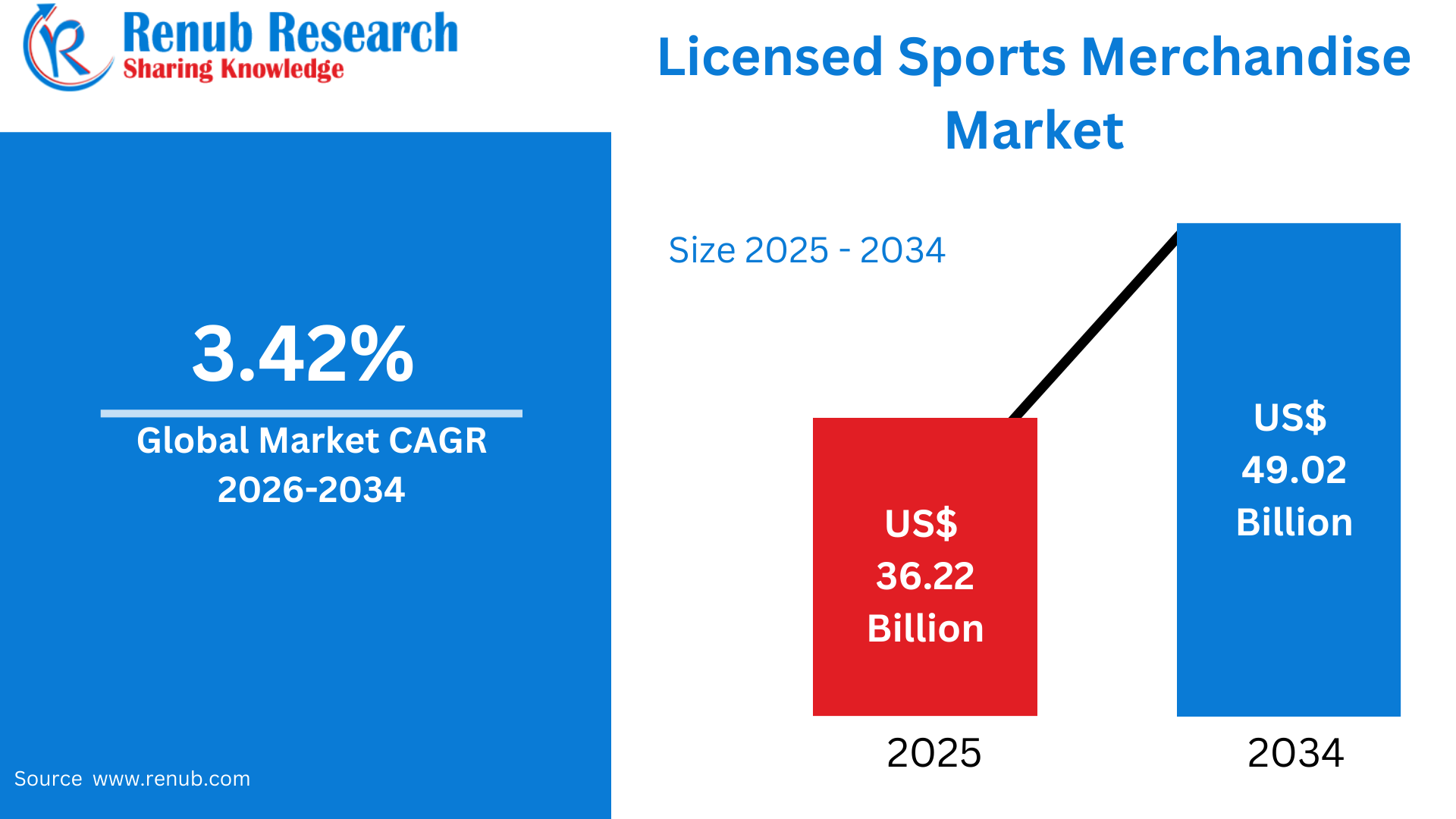
licensed sports merchandise market is expected to grow from US$ 36.22 Billion in 2025 to US$ 49.02 Billion by 2034, registering a CAGR of 3.42% during the forecast period from 2026 to 2034. Market growth is being driven by increasing global sports viewership, rising fan engagement, expanding e-commerce platforms, and growing demand for officially licensed apparel, footwear, accessories, collectibles, and memorabilia. The popularity of major sporting events, international tournaments, professional sports leagues, and sports celebrities continues to strengthen consumer spending on authentic team and player merchandise.
Licensed Sports Merchandise Industry Overview
The licensed sports merchandise industry encompasses the production, marketing, and sale of branded goods that feature professional and collegiate sports teams, athletes, leagues, and events. Products in this industry include apparel (jerseys, caps, t-shirts), footwear, accessories, collectibles, equipment, and memorabilia. Licensing agreements allow manufacturers and retailers to use official logos, team colors, and athlete likenesses, ensuring authenticity while generating revenue for leagues, teams, and athletes. Major leagues such as the NFL, NBA, MLB, NHL, FIFA, and UEFA dominate the global licensing ecosystem, with collegiate and regional sports also contributing significantly.
A primary driver of this industry is fan loyalty and engagement. Sports fans worldwide demonstrate strong emotional connections to teams and athletes, fueling demand for merchandise that allows them to display allegiance. Apparel and casual wear have emerged as prominent segments, combining fandom with lifestyle trends. The growth of e-commerce platforms, social media, and digital marketing has made it easier for fans to access official merchandise, expanding the market beyond stadiums and physical retail outlets. Seasonal events, playoffs, international tournaments, and high-profile athlete endorsements further stimulate sales and create opportunities for limited-edition or exclusive merchandise.
Geographically, North America dominates the licensed sports merchandise market, largely due to the popularity of professional leagues, established retail infrastructure, and high disposable income. Europe follows, with football (soccer) merchandise driving significant sales, while Asia-Pacific shows rapid growth fueled by emerging sports markets, increasing disposable incomes, and growing fan bases for both domestic and international sports leagues.
Challenges for the industry include counterfeit products, intellectual property enforcement, and fluctuating consumer spending during economic downturns. Additionally, overreliance on a few high-profile leagues or athletes can expose manufacturers to market volatility. However, technological innovations, such as personalized merchandise, augmented reality (AR) fan experiences, and sustainable product lines, are creating new growth avenues.
Overall, the licensed sports merchandise industry continues to thrive as a multibillion-dollar global market, driven by passionate fan engagement, strategic licensing partnerships, and expanding digital retail channels. The sector’s resilience and adaptability make it well-positioned to capture further growth in emerging regions and evolving consumer segments.
What is Licensed Sports Merchandise? Its Uses & Popularity Worldwide
Licensed sports merchandise refers to officially authorized products that feature the names, logos, trademarks, colors, mascots, or images of sports teams, leagues, clubs, athletes, and sporting events. These products are manufactured and sold under licensing agreements with sports organizations, ensuring authenticity, quality, and compliance with intellectual property rights. Licensed sports merchandise includes apparel such as jerseys, T-shirts, hoodies, caps, and jackets, as well as footwear, accessories, collectibles, toys, bags, drinkware, home décor, sporting equipment, and memorabilia. These products allow fans to express their loyalty, celebrate their favorite teams and athletes, and commemorate major sporting events while supporting official sports organizations.
Worldwide, licensed sports merchandise has become a thriving consumer market, driven by the growing popularity of professional sports leagues, international tournaments, and global sporting events such as the FIFA World Cup, Olympic Games, ICC Cricket World Cup, NBA, NFL, Formula 1, and UEFA Champions League. Rising sports viewership, increasing fan engagement through digital platforms, and the influence of star athletes have significantly boosted demand for authentic merchandise. The rapid growth of e-commerce, social media marketing, and direct-to-consumer retail channels has further expanded global accessibility to licensed products. Limited-edition collections, athlete collaborations, sustainable apparel, and personalized merchandise continue to attract consumers across all age groups. As sports fandom becomes increasingly global and digitally connected, licensed sports merchandise remains an important source of revenue for sports organizations while strengthening fan identity and brand loyalty worldwide.
Growth Drivers for the Licensed Sports Merchandise Market
Increasing Fan Engagement and Brand Loyalty
One of the primary growth drivers of the licensed sports merchandise market is the growing level of fan engagement and emotional attachment to sports teams, leagues, and athletes. Fans increasingly purchase official merchandise to demonstrate their loyalty and strengthen their connection with their favorite clubs, players, and sporting events. Products such as jerseys, caps, scarves, footwear, and accessories have become symbols of identity, allowing supporters to express their passion both during live matches and in everyday life. The rapid growth of social media platforms, sports streaming services, and digital fan communities has significantly strengthened interactions between sports organizations and their global fan base. Exclusive product launches, athlete collaborations, limited-edition collections, and championship celebrations further encourage repeat purchases. Major sporting events, league finals, and international tournaments consistently generate strong merchandise sales worldwide. Additionally, expanding fan bases in developing economies have created new opportunities for licensed merchandise manufacturers, making fan loyalty and emotional connection fundamental drivers of long-term market growth.
Rapid Expansion of E-Commerce and Digital Retail Platforms
The widespread adoption of e-commerce and digital retail channels has transformed the global licensed sports merchandise market by making official products accessible to consumers worldwide. Online platforms enable fans to purchase authentic merchandise regardless of their geographic location, eliminating dependence on stadium stores or physical retail outlets. Sports organizations and brands increasingly utilize digital marketing, influencer campaigns, social media promotions, and personalized advertising to engage consumers and drive online sales. Technological innovations such as virtual product previews, augmented reality (AR) fitting experiences, product customization, and subscription-based fan merchandise services have significantly enhanced the online shopping experience. Mobile commerce, secure digital payment systems, and faster delivery networks have further increased consumer convenience. Digital retail also enables brands to introduce limited-edition collections, exclusive online releases, and event-based promotional campaigns that create excitement and encourage immediate purchases. As internet penetration and smartphone usage continue to rise globally, particularly among younger consumers, digital commerce remains one of the strongest growth drivers for the licensed sports merchandise market.
Global Expansion of Sports and Growing Demand in Emerging Markets
The increasing globalization of professional sports has created significant growth opportunities for the licensed sports merchandise market. International broadcasting, digital streaming platforms, and social media have enabled fans across Asia-Pacific, Latin America, the Middle East, and Africa to closely follow global sports leagues, tournaments, and star athletes. Competitions such as international football championships, basketball leagues, cricket tournaments, Formula One racing, and other major sporting events have attracted millions of new supporters in emerging markets, creating strong demand for officially licensed merchandise. Rising disposable incomes, expanding middle-class populations, and increasing urbanization further encourage spending on premium sports apparel and collectibles. Sports organizations are also strengthening their global presence through international exhibition matches, regional partnerships, localized marketing campaigns, and collaborations with domestic retailers. Celebrity athlete endorsements and exclusive merchandise collections further increase consumer interest. As sports continue to transcend national boundaries, the worldwide popularity of licensed merchandise is expected to expand steadily across both developed and emerging markets.
Challenges in the Licensed Sports Merchandise Market
Counterfeit Merchandise and Intellectual Property Violations
The widespread availability of counterfeit sports merchandise remains one of the most significant challenges facing the licensed sports merchandise industry. Fake jerseys, apparel, footwear, accessories, and collectibles are often sold at substantially lower prices, reducing revenues for sports organizations, licensed manufacturers, and authorized retailers. Counterfeit products also undermine brand reputation, compromise product quality, and weaken consumer confidence in official merchandise. The rapid expansion of online marketplaces and cross-border e-commerce has made it easier for counterfeit goods to reach consumers globally, complicating enforcement efforts. Sports organizations and manufacturers must invest heavily in intellectual property protection, authentication technologies, legal enforcement, digital monitoring systems, and consumer awareness initiatives to combat unauthorized products. Despite continuous improvements in anti-counterfeiting measures, intellectual property infringement remains a persistent challenge that affects profitability, brand value, and long-term market growth.
Dependence on Economic Conditions and Sporting Event Cycles
The licensed sports merchandise market is highly influenced by economic conditions and the scheduling of major sporting events. Consumer demand typically increases during league seasons, international tournaments, championship matches, and major sporting celebrations, while sales often decline during off-seasons or periods with fewer high-profile competitions. Economic slowdowns, inflation, declining disposable incomes, and reduced consumer confidence can significantly affect spending on discretionary products such as sports apparel, memorabilia, and collectibles. In addition, unforeseen disruptions—including pandemics, geopolitical tensions, natural disasters, or event cancellations—can negatively impact fan engagement and merchandise sales. Manufacturers and licensors must continuously diversify their product portfolios, strengthen digital sales channels, expand international markets, and develop year-round marketing strategies to reduce dependence on seasonal demand. Nevertheless, fluctuations in economic conditions and sporting calendars remain ongoing challenges for maintaining stable revenue growth in the global licensed sports merchandise market.
Licensed Sports Merchandise Launches Worldwide
- Nike x NFL Vapor F.U.S.E. Limited Jersey Collection (2025) – Nike expanded its officially licensed NFL merchandise lineup with lightweight Vapor F.U.S.E. jerseys featuring improved moisture management, enhanced durability, and recycled materials.
- adidas UEFA Champions League 2025/26 Fanwear Collection (2025) – adidas introduced officially licensed jerseys, jackets, hoodies, training wear, and accessories celebrating the new UEFA Champions League season.
- Fanatics x Formula 1 Global Merchandise Collection (2025) – Fanatics expanded its licensed Formula 1 merchandise portfolio with official team apparel, caps, accessories, and collectibles for multiple F1 teams.
- PUMA Manchester City 2025/26 Home Kit (2025) – PUMA launched Manchester City’s officially licensed home jersey and complete fanwear collection featuring the club’s latest design and performance fabrics.
- New Era MLB City Connect Cap Collection (2025) – New Era introduced new officially licensed Major League Baseball City Connect caps and lifestyle apparel inspired by local city identities.
- Mitchell & Ness NBA Hardwood Classics Collection (2025) – Mitchell & Ness expanded its licensed NBA retro merchandise lineup with throwback jerseys, jackets, T-shirts, and vintage-inspired accessories.
- LEGO Formula 1 Licensed Building Set Series (2025) – LEGO unveiled officially licensed Formula 1 construction sets featuring detailed race cars and team branding for motorsport enthusiasts.
- Hasbro Monopoly NFL Edition (2025) – Hasbro launched an officially licensed NFL-themed Monopoly board game featuring team-inspired gameplay, player tokens, and stadium-themed properties.
- PUMA x Scuderia Ferrari HP Fanwear Collection (2025) – PUMA introduced an expanded Ferrari Formula 1 licensed apparel range including performance wear, footwear, backpacks, and lifestyle accessories.
- Fanatics FIFA Club World Cup Merchandise Collection (2025) – Fanatics launched an officially licensed FIFA Club World Cup merchandise range featuring jerseys, scarves, caps, footballs, collectibles, and commemorative fan apparel for participating clubs.
Rising Fan Loyalty Driving Premium Licensed Sports Apparel Merchandise Demand
Licensed Sports Apparel Market is the largest segment of the global licensed sports merchandise industry, fueled by increasing fan engagement, expanding professional sports leagues, and the growing popularity of athlete-branded fashion. Officially licensed jerseys, T-shirts, hoodies, jackets, caps, training kits, and performance wear enable fans to display their support for favorite teams, clubs, and athletes while ensuring product authenticity. Sports organizations and apparel brands continuously introduce new season uniforms, commemorative editions, championship collections, and player-specific merchandise to encourage repeat purchases. Technological innovations in moisture-wicking fabrics, lightweight materials, and sustainable textiles have improved product performance and consumer appeal. Collaborations between sports leagues, fashion brands, and celebrities have further expanded licensed apparel into the lifestyle and streetwear markets. The rapid growth of e-commerce, digital marketing, and direct-to-consumer platforms has increased global product accessibility. As sports participation, international tournaments, and fan communities continue to expand worldwide, the licensed sports apparel market is expected to maintain strong and sustained growth.
Licensed Sports Footwear Performance Innovation and Sneaker Culture Supporting Growth
Licensed Sports Footwear Market is experiencing consistent expansion as consumers increasingly seek officially licensed athletic shoes associated with leading sports teams, professional athletes, and major sporting events. Licensed footwear combines advanced athletic performance with fashionable designs, making it attractive to athletes, collectors, and casual consumers alike. Manufacturers regularly collaborate with sports organizations and celebrity athletes to introduce exclusive footwear collections that generate significant consumer interest. Continuous improvements in cushioning systems, lightweight materials, breathable fabrics, ergonomic construction, and sustainable manufacturing techniques have enhanced both comfort and durability. The growing influence of sneaker culture, limited-edition product launches, and sports-inspired fashion has further strengthened market demand among younger consumers. Online retail platforms and social media campaigns enable brands to launch exclusive collections globally while engaging directly with consumers. Rising participation in sports and fitness activities, increasing disposable incomes, and expanding youth populations are expected to continue driving growth in the licensed sports footwear market worldwide.
Licensed Toy & Game Strengthening Fan Engagement Across Generations
Licensed Toy & Game Market represents an important segment of the sports licensing industry by extending fan engagement beyond apparel into interactive and collectible products. Officially licensed sports toys include action figures, collectible player models, trading cards, board games, plush toys, educational games, electronic gaming accessories, puzzles, and construction sets featuring popular teams, athletes, and sporting events. Sports organizations collaborate with leading toy manufacturers to introduce innovative products that appeal to children, families, collectors, and long-time fans. Limited-edition collectibles and championship-themed merchandise generate additional demand among enthusiasts seeking exclusive memorabilia. Digital gaming integration, augmented reality experiences, and interactive sports-themed products continue to expand consumer engagement across multiple age groups. Seasonal sporting events, international tournaments, and athlete endorsements further stimulate product sales. Growing interest in sports collectibles, family entertainment, and educational play is expected to support steady expansion of the licensed toy and game market across both developed and emerging economies.
Digital Commerce Transforming Fan Shopping Experiences in Licensed Sports Merchandise
The Online Licensed Sports Merchandise Market has become one of the fastest-growing distribution channels due to increasing internet penetration, smartphone usage, and consumer preference for convenient shopping experiences. Fans can easily purchase authentic jerseys, footwear, accessories, collectibles, toys, and memorabilia through official team websites, sports league portals, brand-owned online stores, and leading e-commerce platforms. Digital retail offers broader product availability, global accessibility, secure payment systems, personalized recommendations, and rapid delivery services that significantly enhance customer convenience. Sports organizations increasingly utilize social media campaigns, influencer partnerships, live-stream shopping events, and personalized digital promotions to strengthen consumer engagement and boost online sales. Features such as product customization, virtual product visualization, exclusive online launches, and limited-edition collections further encourage purchases. As digital technologies continue to evolve and consumers increasingly embrace online shopping, the online licensed sports merchandise market is expected to remain one of the most significant drivers of global market growth.
Merchandise Strong Sports Culture Driving Merchandise Sales in USA
The United States Licensed Sports Merchandise Market is the largest and most developed globally, supported by the country’s strong sports culture and the immense popularity of leagues such as the NFL, NBA, MLB, NHL, MLS, and collegiate sports. Consumers actively purchase officially licensed jerseys, apparel, footwear, collectibles, accessories, and memorabilia to support their favorite teams and athletes. Major sporting events, championship seasons, player transfers, and exclusive merchandise launches consistently stimulate consumer spending. A highly developed retail ecosystem—including official team stores, sporting goods retailers, department stores, and e-commerce platforms—ensures broad product availability nationwide. Digital marketing, athlete endorsements, and personalized merchandise further strengthen customer engagement. Manufacturers are increasingly introducing sustainable materials, premium-quality products, and limited-edition collections to meet evolving consumer preferences. Although counterfeit products and changing economic conditions present challenges, continued innovation, strong fan loyalty, and rising online sales are expected to sustain long-term growth in the United States licensed sports merchandise market.
Football Dominance Supporting Market United Kingdom Licensed Sports Merchandise Expansion
United Kingdom Licensed Sports Merchandise Market is driven primarily by the country’s deep-rooted passion for football, along with growing interest in rugby, cricket, Formula One, tennis, and other professional sports. Official jerseys, scarves, training apparel, collectibles, and fan accessories remain highly popular among both domestic supporters and international fans of British sports clubs. Leading football clubs regularly launch new home, away, and special-edition kits, creating recurring demand throughout every sporting season. Strong retail infrastructure, official club stores, sports retailers, and digital commerce platforms have significantly expanded merchandise accessibility both within the UK and internationally. Sports organizations increasingly collaborate with fashion brands and designers to introduce premium lifestyle collections that appeal beyond traditional sports fans. Sustainability initiatives, including recycled fabrics and environmentally friendly packaging, are also influencing purchasing decisions. Despite competition from counterfeit products and economic uncertainties affecting discretionary spending, the United Kingdom continues to be one of Europe’s leading licensed sports merchandise markets with strong global brand recognition.
Rising Sports Fandom Creating New Growth Opportunities in India
India Licensed Sports Merchandise Market is experiencing rapid growth as sports fandom expands beyond cricket to include football, kabaddi, badminton, basketball, and other professional leagues. Cricket remains the largest contributor to merchandise sales, particularly during international tournaments and domestic franchise competitions, where official jerseys, caps, and fan apparel witness strong demand. Rising disposable incomes, urbanization, expanding middle-class populations, and increasing youth participation in sports have significantly strengthened market potential. E-commerce platforms, brand-owned websites, organized retail stores, and sports specialty outlets have improved nationwide access to authentic licensed merchandise. Global sports clubs and international leagues are also attracting growing fan communities, creating demand for official products across multiple sports categories. Manufacturers continue introducing affordable merchandise, customized apparel, and exclusive collections tailored to Indian consumers. Although counterfeit goods and price sensitivity remain key challenges, increasing awareness of authentic products and continuous investment in India’s sports ecosystem are expected to drive sustained growth in the licensed sports merchandise market.
Sports Investments Accelerating Consumer Demand in Saudi Arabia
The Saudi Arabia Licensed Sports Merchandise Market is expanding rapidly due to increasing investment in sports infrastructure, international sporting events, and government initiatives aimed at promoting sports participation and entertainment. Football remains the dominant driver of merchandise sales, while growing interest in motorsports, boxing, golf, esports, and other global sporting events is broadening the consumer base. Official jerseys, sports apparel, footwear, accessories, and collectibles are becoming increasingly popular among the country’s young and digitally connected population. International sports clubs, leagues, and global brands are strengthening their presence through sponsorships, retail partnerships, and localized marketing campaigns. E-commerce platforms and premium shopping malls have significantly improved access to authentic licensed merchandise across major cities. Rising disposable incomes, expanding tourism, and increasing sports participation further support market development. Although counterfeit products and premium pricing present ongoing challenges, Saudi Arabia’s expanding sports industry and long-term investment in international sporting events are expected to drive robust growth in the licensed sports merchandise market.
Recent Developments in Licensed Sports Merchandise Market
- April 2025: For the following four seasons' rivalry games, Nike and the National Football League (NFL) have announced the Rivalries program, which will provide new jerseys and fan gear inspired by local towns. In addition to highlighting the value of community involvement, this effort creates new goods categories associated with particular matchups and local identities.
- March 2025: The "Everyone Watches Women's Sports" collection was introduced by Nike and TOGETHXR. The goal of this project is to increase awareness of women's sports and support female athletes. The collaboration highlights women's sports items as a fast-growing market category and highlights the growing emphasis on it.
- March 2025: Adidas will begin their third partnership with Liverpool Football Club in the 2025–2026 season. Every club and employee will receive match uniforms, training gear, and cultural attire as part of this multi-year collaboration; the first kits will be unveiled in August 2025.
- January 2025: Through a multi-year collaboration with the Mercedes-AMG PETRONAS F1 Team, Adidas entered Formula 1, creating whole lines of clothing, accessories, and shoes. Through cutting-edge lifestyle items that blend motorsport and fashion themes, the partnership hopes to engage new fan generations.
Market Segmentation
Product
- Sports Apparel
- Sports Footwear
- Toy & Game
- Others
Distribution Channel
- Online
- Offline
Countries
North America
- United States
- Canada
Europe
- France
- Germany
- Italy
- Spain
- United Kingdom
- Belgium
- Netherlands
- Turkey
Asia Pacific
- China
- Japan
- India
- Australia
- South Korea
- Thailand
- Malaysia
- Indonesia
- New Zealand
Latin America
- Brazil
- Mexico
- Argentina
Middle East & Africa
- South Africa
- Saudi Arabia
- United Arab Emirates
All the key players have been covered from 5 Viewpoints:
- Overview
- Key Persons
- Recent Development
- SWOT Analysis
- Financial Insights
Key Players Analysis:
- Adidas AG
- Nike Inc.
- Puma SE
- Under Armour, Inc.
- VF Corp
- G-III Apparel Group Ltd
- DICKS Sporting Goods Inc.
- Asics Corporation
Report Details:
| Report Features | Details |
| Base Year |
2025 |
| Historical Period |
2022 - 2025 |
| Forecast Period |
2026 - 2034 |
| Market |
US$ Billion |
| Segment Covered |
Product, Distribution Channel and Countries |
| Countries Covered |
|
| Companies Covered |
|
| Customization Scope |
20% Free Customization |
| Post-Sale Analyst Support |
1 Year (52 Weeks) |
| Delivery Format |
PDF and Excel through Email (We can also provide the editable version of the report in PPT/Word format on request) |
Customization Services available
- Analysis of Market Size and Its Segments
- More Company Profiles (Upto 10 without any additional cost):
- Additional Countries (Other than mentioned Countries):
- Region/Country Specific Reports:
- Market Entry Strategy:
- Region-Specific Market Dynamics:
- Regional Market Share Analysis:
- Trade Analysis:
- Production Insights:
- Others Customized Requests:
For more information contact our analysts.
Need More Assistance?
- Talk to our analysts to get more precious information on the current market trends.
- Include more countries and segments and customize the report based on the final requirement.
- Get a competitive advantage in your industry by knowing the report findings and making a positive impact on your revenues and operations.
- Our analysts are always ready to provide more help and pertinent information if you need any additional assistance.