Insulin Pump Market Report by Types, Disease, Accessories, End User, Country and Company Analysis 2026-2034
Buy NowInsulin Pump Market Size & Forecast
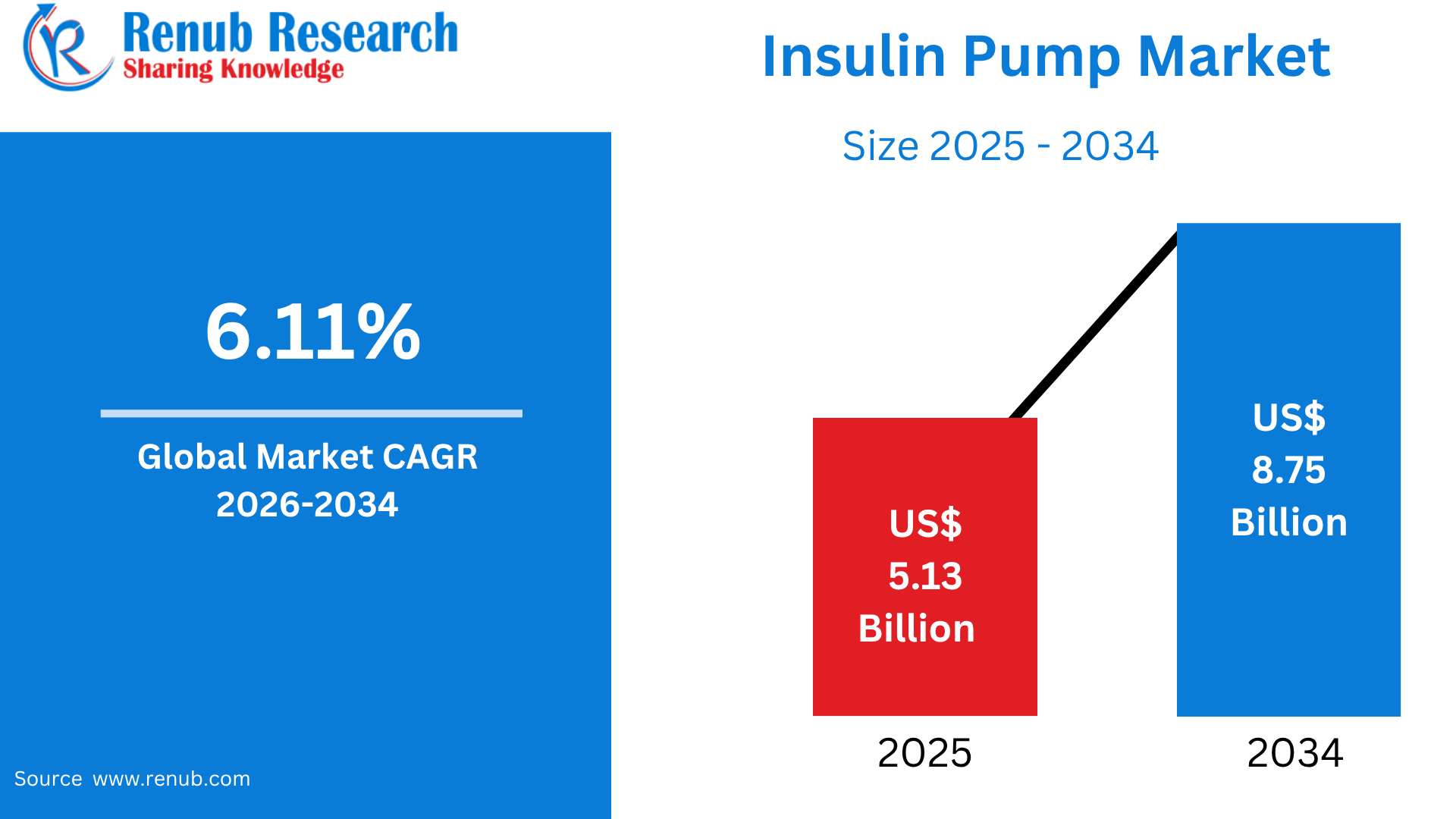
The global insulin pump market is projected to expand from US$ 5.13 billion in 2025 to US$ 8.75 billion by 2034, representing a CAGR of 6.11% during 2026–2034. Market growth is being supported by the rising global prevalence of diabetes and the increasing need for precise, convenient, and continuous insulin delivery. Growing patient preference for advanced diabetes-management technologies is encouraging the adoption of insulin pumps over conventional insulin-delivery methods.
What is an Insulin Pump and Its Uses & Popularity Worldwide?
An insulin pump is a small computerized medical device designed to deliver insulin continuously into the body, providing an alternative to multiple daily insulin injections. The device typically consists of an insulin reservoir, pump mechanism, infusion set, and control system. It delivers rapid-acting insulin in small doses throughout the day and allows users to administer additional doses around meals or when blood glucose levels increase. Insulin pumps are primarily used by people with Type 1 diabetes, although their use is also expanding among selected patients with Type 2 diabetes who require intensive insulin therapy.
The popularity of insulin pumps is increasing worldwide because they can provide more precise insulin delivery, greater flexibility in meal and activity schedules, and improved diabetes management. Modern systems increasingly integrate with continuous glucose monitoring (CGM) devices, enabling automated insulin delivery and reducing the need for frequent manual adjustments. Tubeless pumps, smartphone connectivity, predictive algorithms, and hybrid closed-loop systems are further improving convenience and usability. Growing diabetes prevalence, increasing awareness of advanced therapies, improved healthcare infrastructure, and technological innovation are supporting broader adoption of insulin pumps across developed and emerging markets.
The latest IDF estimates
- 589 million adults (20-79 years) are living with diabetes globally, more than the population of the U.S., Canada, Mexico, and the Caribbean combined.
- The estimated number of adults with diabetes is projected to reach 853 million by 2050.
- 3 in 4 adults with diabetes live in low- and middle-income countries (LMICs).
- Diabetes is responsible for over 3.4 million deaths annually.
- 1 in 8 adults are at high risk of developing type 2 diabetes.
- 1.8 million children and young adults under 20 are living with type 1 diabetes.
Diabetes Statistics
In the United States:
- More than 40 million Americans have diabetes, and more than 1 in 4 adults with diabetes don't know they have it.
- Diabetes is the seventh leading cause of death.
- Type 2 diabetes accounts for about 90% to 95% of all diagnosed cases of diabetes; type 1 diabetes accounts for about 5% to 10%.
- Diabetes is the No. 1 cause of kidney failure, lower-limb amputations, and adult blindness.
- In the last 20 years, the number of adults diagnosed with diabetes has more than doubled.
In the India 2026
- Over 101 million adults live with diabetes
- Around 136 million individuals have prediabetes
- Nearly 237 million people show abnormal blood glucose levels
- Type 2 diabetes remains the most common form
- Younger adults are increasingly affected
Growth Drivers of the Insulin Pump Market
Rising Global Diabetes Prevalence and Growing Need for Insulin Therapy
The increasing global burden of diabetes is one of the strongest drivers of the insulin pump market. According to the International Diabetes Federation (IDF), approximately 589 million adults aged 20–79 years were living with diabetes in 2024, equivalent to around 1 in 9 adults globally. This number is projected to reach 853 million by 2050, creating a substantially larger patient population requiring effective glucose management. Insulin pumps are particularly important for people with Type 1 diabetes because they require continuous insulin to survive, while selected Type 2 diabetes patients may also benefit from intensive insulin delivery. Increasing awareness of complications associated with poorly controlled blood glucose is encouraging patients and healthcare professionals to consider advanced delivery technologies. The growing prevalence of diabetes in emerging economies is also creating new opportunities for manufacturers as healthcare infrastructure and access to diabetes technologies improve. Consequently, the expanding diabetes population, increasing treatment needs, and greater emphasis on achieving better glycemic control are expected to sustain demand for insulin pumps worldwide.
Rapid Adoption of Smart and Automated Insulin Delivery Technologies
Technological innovation is transforming insulin pumps from conventional delivery devices into connected and increasingly automated diabetes-management systems. Modern pumps can integrate with continuous glucose monitoring (CGM) devices, smartphones, digital health platforms, and automated algorithms to adjust insulin delivery based on glucose trends. These developments are increasing convenience and supporting more personalized diabetes management. The expansion of automated insulin delivery and hybrid closed-loop systems is particularly important because these technologies can reduce the need for patients to manually calculate and adjust insulin doses throughout the day. The broader diabetes technology ecosystem is also growing rapidly: global diabetes-related healthcare expenditure reached approximately US$1 trillion in 2024, highlighting the scale of investment and demand for advanced management solutions. Manufacturers are increasingly focusing on smaller pumps, tubeless designs, improved connectivity, longer-lasting components, and user-friendly interfaces. As patients and physicians become more familiar with connected diabetes technologies, smart insulin pumps are expected to gain wider acceptance, strengthening the overall market.
Increasing Focus on Personalized Diabetes Care and Digital Health
The growing emphasis on personalized healthcare is accelerating demand for insulin pumps that can deliver precise, flexible, and data-driven insulin therapy. Unlike conventional injection-based approaches, pumps can provide programmable basal insulin and adjustable mealtime doses, allowing therapy to be adapted to individual requirements. Integration with CGM systems and mobile applications further enables patients and clinicians to review glucose trends and make informed treatment decisions. This shift toward digitally supported diabetes care is being reinforced by the increasing availability of remote monitoring and telehealth services. The IDF estimates that 81% of adults with diabetes live in low- and middle-income countries, demonstrating the enormous need for scalable diabetes-management solutions beyond traditional healthcare systems. Governments and healthcare organizations are also increasingly emphasizing access to quality-assured diabetes technologies as part of comprehensive diabetes care. WHO specifically identifies insulin and associated delivery devices as important health technologies requiring adequate availability, affordability, safety, and quality. As digital health ecosystems expand and patients seek more convenient self-management options, personalized and connected insulin delivery is expected to remain a major market driver.
Challenges of the Insulin Pump Market
High Device Costs and Limited Reimbursement
The relatively high cost of insulin pumps remains a significant barrier to market expansion, particularly in low- and middle-income countries. Patients may face expenses associated with the initial pump, infusion sets, reservoirs, sensors, maintenance, and replacement components. Limited insurance reimbursement can further restrict adoption, even when patients and physicians consider pump therapy clinically appropriate. The broader accessibility problem is substantial: WHO has reported that access to insulin and associated devices remains limited in many countries because of high prices, inadequate availability, weak healthcare infrastructure, and supply-chain challenges. IDF guidance also notes that only about half of people with Type 2 diabetes who could benefit from insulin have access to appropriate insulin therapy, reflecting wider affordability and access problems across diabetes care. These challenges can be even more pronounced for advanced pumps requiring proprietary consumables and compatible monitoring technologies. Consequently, manufacturers and healthcare systems face pressure to reduce device costs, expand reimbursement coverage, and develop affordable alternatives to improve accessibility and accelerate adoption globally.
Limited Healthcare Infrastructure, Training, and Device Accessibility
Insulin pump adoption depends not only on the availability of the device but also on trained healthcare professionals, patient education, reliable supplies, and supporting diabetes-management infrastructure. In many emerging markets, shortages of specialized diabetes services can limit the ability of healthcare professionals to initiate and manage pump therapy effectively. WHO identifies weak health-system capacity, insufficient clinical services, supply-chain limitations, and inadequate access to diabetes technologies as important barriers to effective diabetes care. Patients also require training to operate pumps correctly, understand insulin dosing, respond to device alerts, and manage infusion-set or technical problems. This can create an additional burden for individuals who are unfamiliar with digital medical devices. Furthermore, interruptions in supplies or limited availability of compatible components can discourage long-term use. The complexity of some advanced systems may also affect patient acceptance and adherence. Expanding professional training, strengthening distribution networks, improving patient education, and developing simpler, more affordable pump technologies will therefore be essential for overcoming these barriers and increasing global market penetration.
Insulin Pump Launches Worldwide
- Tandem Mobi – United States (2024): Tandem Diabetes Care commercially launched the Tandem Mobi, a compact durable automated insulin-delivery system designed to provide greater portability and flexibility for people using insulin pump therapy.
- Omnipod 5 – France (2024): Insulet launched the Omnipod 5 Automated Insulin Delivery System in France, initially with Dexcom G6 integration, expanding access to tubeless automated insulin delivery in Europe.
- Omnipod 5 – United Kingdom & Netherlands (2024): Insulet completed the full commercial launch of Omnipod 5 in the UK and Netherlands, with compatibility with both Dexcom G6 and Abbott FreeStyle Libre 2 Plus sensors.
- Omnipod 5 – Italy, Denmark, Finland, Norway & Sweden (2025): Insulet expanded the Omnipod 5 into five additional European markets, offering integration with Abbott FreeStyle Libre 2 Plus and Dexcom G6.
- Omnipod 5 – Australia (2025): The Omnipod 5 AID System became commercially available in Australia, with Dexcom G6 and G7 compatibility and plans for additional CGM integration.
- Omnipod 5 – Belgium & Canada (2025): Insulet announced expansion of Omnipod 5 into Belgium and Canada, further extending its tubeless automated insulin-delivery platform internationally.
- Twiist Automated Insulin Delivery System – United States (2025): Sequel Med Tech’s Twiist represents a new generation of tubed automated insulin delivery, incorporating the Tidepool Loop algorithm and designed around a compact pump format.
- TouchCare Closed-Loop AID – Global (2025): Medtrum commercially launched its TouchCare Closed-Loop Automated Insulin Delivery system, featuring a 13.8-gram tubeless patch pump and an integrated miniature CGM platform.
- t:slim X2 with FreeStyle Libre 3 Plus – United States (2025): Tandem introduced FreeStyle Libre 3 Plus integration with its t:slim X2 insulin pump and Control-IQ+ technology, representing the first stage of a broader international rollout.
- Omnipod 5 – Middle East (2026): Insulet expanded the Omnipod 5 Automated Insulin Delivery System into Middle Eastern markets including Saudi Arabia, Kuwait, Qatar, and the UAE, broadening access to tubeless automated insulin therapy.
Tethered Reliable and Precise Insulin Delivery
Tethered insulin pumps remain a significant segment of the insulin pump market because they provide continuous subcutaneous insulin infusion through a reservoir connected to the body by tubing. These systems allow users to program basal rates and administer bolus doses, supporting more personalized diabetes management. Their established clinical use and relatively large insulin reservoirs make them suitable for patients requiring intensive insulin therapy, particularly those with Type 1 diabetes. According to the International Diabetes Federation, approximately 8.8 million people worldwide were living with Type 1 diabetes in 2024, creating a substantial addressable population for insulin-delivery technologies. Modern tethered pumps increasingly integrate with continuous glucose monitoring (CGM) systems and automated insulin-delivery algorithms, improving convenience and glycemic management. Although tubeless patch pumps are gaining popularity, tethered systems continue to benefit from physician familiarity, programmable dosing, and established reimbursement pathways in several markets. Improvements in smaller pump designs, connectivity, and longer-lasting infusion components are expected to sustain demand. As diabetes management becomes increasingly personalized, tethered pumps remain an important option for patients requiring flexible and continuous insulin delivery.
Type 2 Diabetes Insulin Pumps Expanding Use Beyond Type 1 Diabetes
Insulin pumps are increasingly being considered for selected patients with Type 2 diabetes who require intensive insulin therapy or struggle to achieve adequate glycemic control with injections. Type 2 diabetes accounts for more than 95% of diabetes cases globally, according to the World Health Organization, creating a substantial potential population for advanced insulin-delivery technologies. Unlike traditional multiple daily injections, pumps can provide continuous basal insulin while allowing patients to administer programmable bolus doses around meals. Growing awareness of advanced diabetes technologies, increasing diabetes prevalence, and improvements in pump usability are supporting adoption among eligible Type 2 patients. Clinical studies have also indicated that continuous subcutaneous insulin infusion can help improve glycemic control in appropriately selected patients with poorly controlled Type 2 diabetes. Integration with CGM systems is further enhancing the attractiveness of pump-based therapy by providing real-time glucose information. However, adoption remains more concentrated among patients requiring intensive insulin treatment rather than the broader Type 2 population. Continued physician education, better reimbursement, simplified devices, and evidence demonstrating long-term benefits could expand this segment.
Recurring Demand and Product Innovation
Infusion sets are essential components of insulin pump systems because they deliver insulin from the pump reservoir into the subcutaneous tissue through a small cannula. Unlike the pump itself, infusion sets require regular replacement, generating a recurring revenue stream for manufacturers and distributors. Many conventional infusion sets are replaced approximately every 2–3 days, although replacement schedules can vary according to the product and healthcare-provider recommendations. Consequently, the expansion of the global insulin pump user base directly increases demand for infusion sets. Manufacturers are focusing on improving cannula design, insertion mechanisms, tubing flexibility, adhesive performance, and skin compatibility to increase patient comfort and reliability. Longer-wear infusion sets are also receiving attention because reducing replacement frequency can improve convenience and potentially lower treatment-related costs. Integration with advanced insulin pumps and automated insulin-delivery systems is creating additional demand for reliable infusion technologies. As insulin pump adoption increases among both younger and adult patients, the need for safe, comfortable, and consistent insulin-delivery components is expected to support steady expansion of the infusion-set segment.
Growing Role in Advanced Diabetes Care
Hospitals and clinics represent an important distribution and application channel for insulin pumps, particularly when patients require specialist supervision, therapy initiation, or management of complex diabetes. Healthcare professionals can evaluate patients, determine appropriate insulin requirements, configure pump settings, and provide education on device operation. This is particularly important for patients with Type 1 diabetes, uncontrolled diabetes, or those transitioning from multiple daily injections to automated insulin-delivery systems. The global diabetes burden is substantial, with the International Diabetes Federation estimating approximately 589 million adults aged 20–79 were living with diabetes in 2024. This growing patient population is increasing demand for advanced diabetes-management technologies across healthcare facilities. Hospitals are also increasingly using CGM and insulin-delivery technologies to support more precise glucose management in selected inpatient settings. Improved hospital infrastructure, specialist diabetes centers, and greater availability of endocrinology services are supporting adoption. Furthermore, training programs and multidisciplinary diabetes teams help patients safely transition to pump therapy. As healthcare systems increasingly emphasize personalized and technology-enabled diabetes care, hospitals and clinics are expected to remain important channels for insulin pump initiation and management.
Shift Toward Convenient Self-Management in Insulin Pumps Homecare
Homecare is becoming an increasingly important setting for insulin pump use as diabetes management moves toward portable, connected, and patient-centered care. Insulin pumps allow eligible patients to administer basal and bolus insulin without repeatedly preparing individual injections, supporting greater flexibility in everyday activities. The growing prevalence of diabetes is strengthening demand for convenient home-based treatment options; the International Diabetes Federation estimates that over 589 million adults worldwide had diabetes in 2024, highlighting the enormous need for effective long-term management. Modern pumps can increasingly connect with CGM devices and smartphone applications, enabling users to monitor glucose trends and treatment information remotely. These capabilities can also help healthcare professionals review patient data during telehealth consultations and make appropriate therapy adjustments. Homecare adoption is further supported by improvements in device size, user interfaces, connectivity, and automated insulin-delivery features. Nevertheless, successful home use requires patient education, technical support, and regular clinical follow-up. As remote healthcare and digital diabetes management continue to expand, insulin pumps are expected to become increasingly integrated into home-based chronic disease management.
Advanced Adoption and Technology Integration in United States Insulin Pumps
United States insulin pumps market is among the most developed globally, supported by a large diabetes population, advanced healthcare infrastructure, favorable reimbursement mechanisms, and strong adoption of connected diabetes technologies. According to the International Diabetes Federation, the U.S. had approximately 38.4 million adults aged 20–79 living with diabetes in 2024, creating a substantial patient base for insulin-delivery devices. Demand is particularly strong among people with Type 1 diabetes and insulin-dependent Type 2 diabetes. The growing integration of insulin pumps with continuous glucose monitoring (CGM) systems and automated insulin-delivery algorithms is improving treatment personalization and convenience. Strong awareness among patients and healthcare professionals, combined with continuous product innovation from leading manufacturers, further supports adoption. In addition, digital health platforms and smartphone connectivity are making glucose and insulin data easier to monitor remotely. In February 2025, the U.S. FDA issued a safety communication concerning diabetes devices that rely on smartphones for critical alerts, highlighting the importance of reliable notification systems. As automated insulin delivery and personalized diabetes management gain momentum, the U.S. market is expected to maintain strong growth.
NHS Support and Expanding Automated Therapy in United Kingdom Insulin Pumps
United Kingdom insulin pumps market is expanding steadily, supported by the country’s established healthcare infrastructure, NHS diabetes services, and increasing acceptance of advanced insulin-delivery technologies. The prevalence of diabetes continues to create demand for improved long-term disease management, while insulin pumps are particularly relevant for eligible people with Type 1 diabetes who require intensive insulin therapy. NICE guidance and NHS services have helped establish clinical frameworks for assessing and providing insulin pump therapy. Increasing use of CGM-integrated and automated insulin-delivery systems is also improving the attractiveness of pump-based treatment by helping patients manage glucose levels more effectively. Although access and funding can vary between NHS regions, greater awareness among patients and healthcare professionals is supporting wider adoption. In June 2023, Insulet commercially launched the Omnipod 5 Automated Insulin Delivery System in the UK for people aged 2 years and older with Type 1 diabetes. The availability of such automated systems demonstrates the country’s shift toward connected diabetes management. Continued emphasis on improving quality of life, reducing diabetes-related complications, and supporting technology-enabled care is expected to sustain market development.
India Rising Diabetes Burden and Growing Technology Awareness
India’s insulin pumps market is developing rapidly as the country’s substantial diabetes burden increases the need for advanced treatment and glucose-management technologies. The International Diabetes Federation estimates that more than 89 million adults aged 20–79 in India were living with diabetes in 2024, representing one of the world’s largest diabetes populations. Type 1 diabetes creates demand for intensive insulin therapy, while selected insulin-dependent Type 2 diabetes patients can also benefit from pump-based treatment. Urbanization, changing lifestyles, obesity, and increasing healthcare awareness are contributing to the broader diabetes-management market. However, high device costs, limited insurance coverage, and uneven access to specialist care remain important barriers to wider insulin pump adoption. Private hospitals, endocrinology centers, and specialized diabetes clinics in major cities are currently important adoption channels. Technological improvements and increasing awareness among physicians and patients are gradually improving acceptance. In March 2022, Medtronic launched the MiniMed 780G system in India, a next-generation automated insulin-delivery system designed for people with Type 1 diabetes aged 7–80 years. Falling technology costs, expanding healthcare infrastructure, and greater awareness could accelerate future adoption.
Saudi Arabia Diabetes Prevalence and Healthcare Modernization
Saudi Arabia’s insulin pumps market is gaining momentum due to the country’s high diabetes burden, increasing healthcare expenditure, and government efforts to modernize medical services. According to the International Diabetes Federation, approximately 3.6 million adults aged 20–79 in Saudi Arabia were living with diabetes in 2024, creating significant demand for effective diabetes-management solutions. Sedentary lifestyles, dietary patterns, and obesity contribute to the country’s substantial Type 2 diabetes burden, while patients with Type 1 diabetes represent an important population for insulin pump therapy. Healthcare modernization initiatives under Saudi Vision 2030 are encouraging the adoption of advanced medical technologies and digital healthcare solutions. Private hospitals and specialized diabetes centers are also increasing access to sophisticated insulin-delivery systems. Growing patient awareness and physician familiarity with automated insulin-delivery technologies are supporting adoption. In February 2026, Insulet announced the availability of its Omnipod 5 Automated Insulin Delivery System in Saudi Arabia, Kuwait, Qatar, and the UAE. The expansion of automated pump technologies into the region is expected to strengthen treatment options and support continued market growth as healthcare providers increasingly emphasize personalized diabetes management.
Market Segments
Types
- Tethered Pumps
- Patch Pumps
- Consumables
Diseases
- Type 1 Diabetes
- Type 2 Diabetes
Accessories
- Action Figures Insulin Reservoirs
- Infusion Sets
- Infusion Set Insertion Devices
End-user
- Action Figures Hospital and Clinics
- Home Care
- Others
Countries
North America
- United States
- Canada
Europe
- France
- Germany
- Italy
- Spain
- United Kingdom
- Belgium
- Netherlands
- Turkey
Asia Pacific
- China
- Japan
- India
- Australia
- South Korea
- Thailand
- Malaysia
- Indonesia
- New Zealand
Latin America
- Brazil
- Mexico
- Argentina
Middle East & Africa
- South Africa
- Saudi Arabia
- United Arab Emirates
All companies have been covered with 5 Viewpoints
- Overviews
- Key Person
- Recent Developments
- SWOT Analysis
- Revenue Analysis
Company Analysis:
- Medtronic
- Insulet Corporation
- Tandem Diabetes Care
- Roche
- Ypsomed Holding AG
- Microtech Medical
Report Details:
| Report Features | Details |
| Base Year |
2025 |
| Historical Period |
2022 - 2025 |
| Forecast Period |
2026 - 2034 |
| Market |
US$ Billion |
| Segment Covered |
Type, Disease, Accessories, End User and Countries |
| Countries Covered |
|
| Companies Covered |
1. Medtronic |
| Customization Scope |
20% Free Customization |
| Post-Sale Analyst Support |
1 Year (52 Weeks) |
| Delivery Format |
PDF and Excel through Email (We can also provide the editable version of the report in PPT/Word format on request) |
Customization Services available
- Analysis of Market Size and Its Segments
- More Company Profiles (Upto 10 without any additional cost):
- Additional Countries (Other than mentioned Countries):
- Region/Country Specific Reports:
- Market Entry Strategy:
- Region-Specific Market Dynamics:
- Regional Market Share Analysis:
- Trade Analysis:
- Production Insights:
- Others Customized Requests:
For more information contact our analysts.
Need More Assistance?
- Talk to our analysts to get more precious information on the current market trends.
- Include more countries and segments and customize the report based on the final requirement.
- Get a competitive advantage in your industry by knowing the report findings and making a positive impact on your revenues and operations.
- Our analysts are always ready to provide more help and pertinent information if you need any additional assistance.