India Consumer Electronics Market Size, Share, Trends, Growth Analysis and Forecast Report 2026–2034
Buy NowIndia Consumer Electronics Market Trends & Forecast
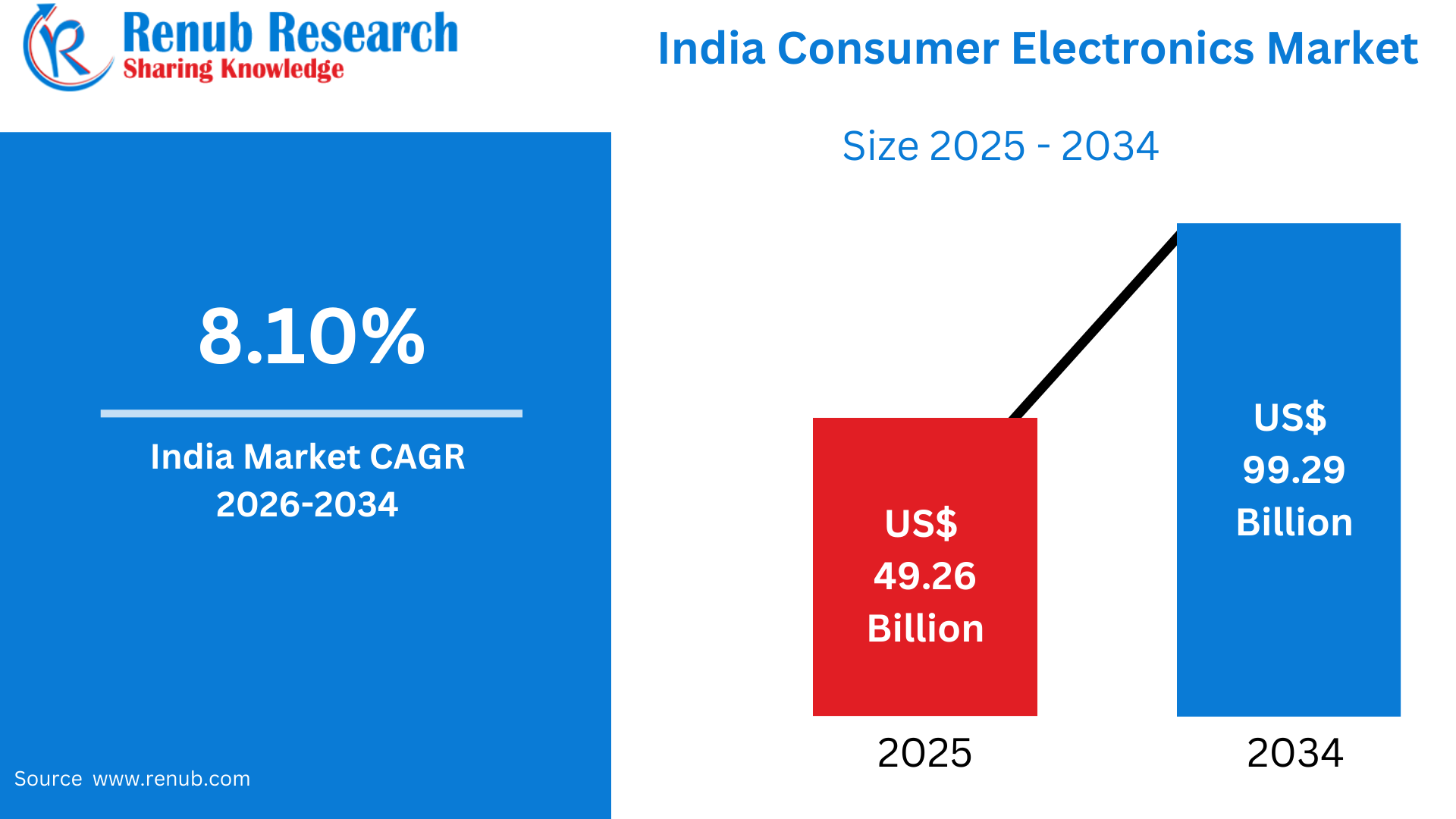
Indian consumer electronics market is projected to experience significant expansion, growing from approximately US$49.26 billion in 2025 to nearly US$99.29 billion by 2034. This growth will be supported by rapid digital transformation, rising consumer purchasing power, and increasing preference for smart and connected electronic products. The market is estimated to achieve a compound annual growth rate (CAGR) of 8.10% during 2026–2034, driven by continuous innovation across smartphones, smart home appliances, wearable technology, and digital entertainment solutions.
What is Consumer electronics and its popularity in India?
Consumer electronics refers to electronic devices designed for personal, household, and entertainment use. These products are developed to improve convenience, communication, productivity, and lifestyle experiences. Common examples include smartphones, televisions, laptops, tablets, smartwatches, headphones, refrigerators, air conditioners, washing machines, smart speakers, and other connected home devices. Consumer electronics combine advanced technology with user-friendly features to meet the changing needs of modern consumers.
In India, consumer electronics have become an essential part of daily life due to increasing digital adoption, rising incomes, and expanding internet connectivity. Smartphones and laptops support communication, online education, remote work, and digital payments, while smart appliances help improve household efficiency. Entertainment devices such as smart TVs and audio systems have also gained popularity with the growth of online streaming platforms.
The popularity of consumer electronics in India is further driven by e-commerce growth, affordable technology, urbanization, and government initiatives supporting local manufacturing. With increasing demand for smart and connected devices, the Indian consumer electronics market continues to expand, reflecting the country’s growing reliance on technology for convenience and improved living standards.
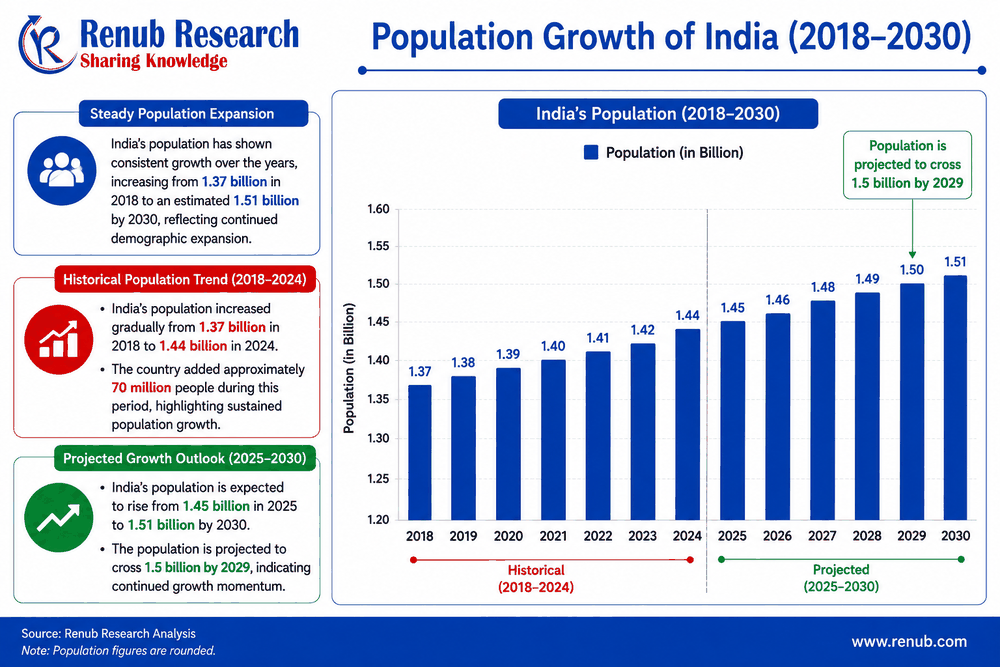
Population Growth of India (2018–2030)
Steady Population Expansion:
- India’s population has shown consistent growth over the years, increasing from 1.37 billion in 2018 to an estimated 1.51 billion by 2030, reflecting continued demographic expansion.
Historical Population Trend (2018–2024):
- India’s population increased gradually from 1.37 billion in 2018 to 1.44 billion in 2024.
- The country added approximately 70 million people during this period, highlighting sustained population growth.
Projected Growth Outlook (2025–2030):
- India’s population is expected to rise from 1.45 billion in 2025 to 1.51 billion by 2030.
- The population is projected to cross 1.5 billion by 2029, indicating continued growth momentum.
Consumer Electronics Launches in India
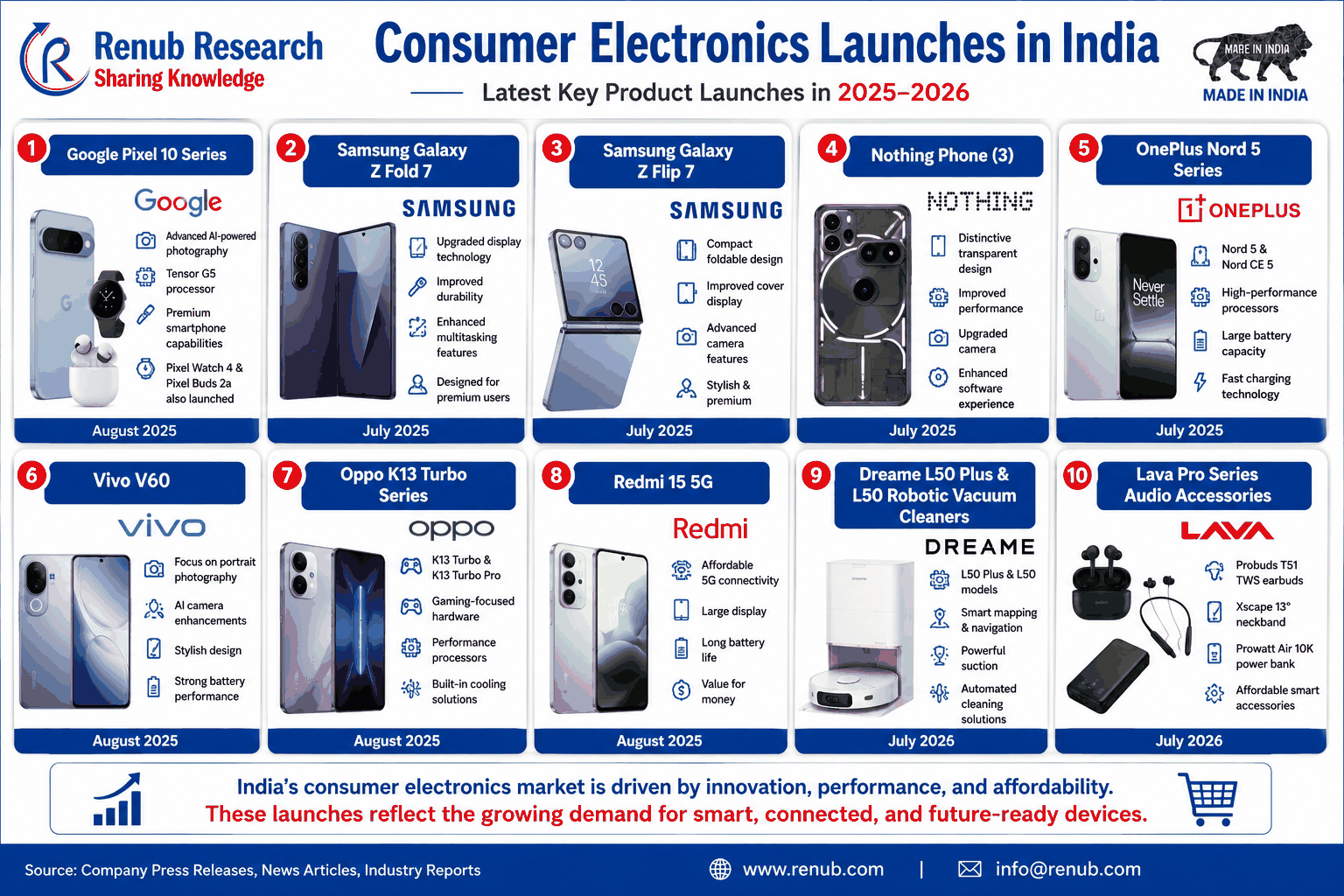
- Google Pixel 10 Series – August 2025
Google launched the Pixel 10 lineup in India, featuring advanced AI-powered photography, Tensor G5 processors, and premium smartphone capabilities. The launch also included the Pixel Watch 4 and Pixel Buds 2a, expanding Google’s connected device ecosystem. - Samsung Galaxy Z Fold 7 – July 2025
Samsung introduced its latest foldable smartphone in India with upgraded display technology, improved durability, and enhanced multitasking features aimed at premium consumers. - Samsung Galaxy Z Flip 7 – July 2025
The Galaxy Z Flip 7 was launched as a compact foldable smartphone offering a stylish design, improved cover display, and advanced camera features. - Nothing Phone (3) – July 2025
Nothing launched its Phone (3) in India, bringing a distinctive transparent design, improved performance, and upgraded camera and software features. - OnePlus Nord 5 Series – July 2025
OnePlus introduced the Nord 5 and Nord CE 5 smartphones in India, targeting the mid-range segment with high-performance processors, large batteries, and fast charging technology. - Vivo V60 – August 2025
Vivo launched the V60 smartphone in India with a focus on portrait photography, AI camera enhancements, stylish design, and strong battery performance. - Oppo K13 Turbo Series – August 2025
Oppo introduced the K13 Turbo and K13 Turbo Pro models in India, featuring gaming-focused hardware, performance processors, and built-in cooling solutions. - Redmi 15 5G – August 2025
Redmi launched the Redmi 15 5G in India, offering affordable 5G connectivity, a large display, and long battery life for value-focused consumers. - Dreame L50 Plus & L50 Robotic Vacuum Cleaners – July 2026
Dreame Technology expanded its smart home portfolio in India with the launch of L50 Plus and L50 robotic vacuum cleaners, targeting consumers seeking automated cleaning solutions. - Lava Pro Series Audio Accessories – July 2026
Indian electronics brand Lava expanded its Pro Series with the launch of Probuds T51 true wireless earbuds, Xscape 13° neckband, and Prowatt Air 10K power bank, focusing on affordable smart accessories.
Key Growth Pillars
Increasing Disposable Income & an Expanding Middle Class
The increasing middle-class population in India drives the demand for consumer electronics significantly, ranging from smartphones and home appliances to televisions, laptops, and wearables. As disposable incomes increase, many households migrate from basic devices to mid- and high-range products that offer better features and a longer lifespan. This migration can also be linked to increasing aspirations for finer lifestyle conveniences and the desire to emulate global consumption patterns. Urbanization increased the pace of electronic goods adoption, with nuclear families investing more in appliances that save daily workload. Easy availability of consumer financing, EMI schemes, and digital credit has also made high-value products more accessible. Per capita disposable income in India stood at US$ 2.11 thousand in 2019 and reached US$ 2.54 thousand in 2023. It is expected to reach US$ 4.34 thousand by the year 2029. Increasing disposable income is forcing a change in consumer spending patterns and enhancing overall purchasing power.
Rapid Digitalization & Proliferation of Internet Connectivity
India's electronic device consumption has emerged as a massive ecosystem backed by affordable data pricing, high smartphone penetration, and the proliferation of internet services. Access to reasonably priced 4G and emerging 5G connectivity has made digital services such as OTT streaming, e-commerce, remote work platforms, online education, and mobile payments an integral part of daily lives, all of which require reliable electronic devices. This is leading households to upgrade or invest in new electronic gadgets. Growing demand for smart devices in urban and rural markets alike is also driven by the government's Digital India initiatives, complemented by heavy investments by the private sector in fiber broadband and telecom infrastructure. Hybrid working, online classrooms, telemedicine, and virtual collaboration tools have further accelerated the demand for laptops, tabs, routers, and other smart accessories. The landscape is in rapid transition, with India's internet user base estimated to surpass the 900-million mark by 2025-end, propelled by increasing internet penetration in rural pockets, according to the Kantar and IAMAI's Internet in India 2024 report.
Internet Penetration in India
India’s digital ecosystem has witnessed remarkable growth, with the number of internet users increasing from approximately 518 million in CY 2019, representing 38% penetration, to an estimated 1.025 billion users by CY 2027, reaching nearly 69% penetration. This rapid expansion indicates that internet adoption is moving toward mass accessibility, while also highlighting substantial growth opportunities, as more than 30% of the population is expected to remain offline by 2027. This offline population represents a significant opportunity for first-time smartphone adoption and digital connectivity. Future internet growth in India is expected to be driven largely by rural and semi-urban communities, women users, senior citizens, lower-income households, and the country’s expanding young population. Smartphones remain the primary gateway to internet access, supported by affordable mobile data plans, cost-effective 4G and 5G devices, and government initiatives focused on digital inclusion.
Growth of E-Commerce & Omnichannel Retailing
E-commerce platforms have revolutionized the way Indian consumers buy electronics, as products offer a wider choice, competitive pricing, transparent reviews, and doorstep delivery. Various e-commerce platforms such as Amazon, Flipkart, Reliance Digital, and brand-owned online stores have increased accessibility for customers in Tier-2 and Tier-3 cities to purchase products not available earlier in their locations. The phenomenon of flash sales, seasonal festival discounts, cashback offers, and exchange programs significantly influences purchase decisions. Further, omnichannel retail—where brands integrate online and offline experiences—has also gained traction and strengthened customer confidence for store pickups, virtual demos, and product trials. Seamless digital payment systems and online financing options include BNPL (Buy Now Pay Later). June 2025: Flipkart sold its 6% stake in Aditya Birla Fashion and Retail for USD 67.68 million, freeing up capital for core investment in e-commerce.
Challenges
Price Sensitivity & Intense Competition
The Indian market is highly price-conscious, and a majority of consumers place affordability over brand loyalty. Therefore, domestic and international brands compete aggressively with an aim to provide feature-rich products at competitive price points. High import duties on components, currency fluctuations, and supply chain disruptions often force manufacturers to hike prices, dampening demand in the process. Firms have to constantly innovate while keeping costs lower, which is a tough balancing act that keeps profit margins under check. Moreover, local brands cannot match up to the global giants which benefit from economies of scale. Counterfeit products and grey-market sales distort the pricing of legitimate products further, making it impossible for known brands to maintain any value. This environment places heavy demands on success drivers such as agile pricing strategies, cost-efficient manufacturing, and compelling brand differentiation.
Infrastructure Gaps & Supply Chain Constraints
Though the situation has improved, logistical support continues to hamper the growth of consumer electronics in India, particularly in rural and remote areas. Inefficient electricity supply, low penetration of high-speed internet, and insufficient cold-chain facilities for specific electronic components result in further inefficiencies. Congested roads and ports, along with exorbitant warehousing costs, further raise the cost of operations for manufacturers and distributors. Dependency on imports for critical inputs such as semiconductors and display panels also makes the industry susceptible to global supply chain disruptions. While initiatives like Make in India encourage local manufacturing, such development is slow. These challenges raise costs, complicate after-sales servicing, and delay delivery while ultimately reducing consumer satisfaction and hindering overall market growth.
Growth in Electronics Manufacturing in India
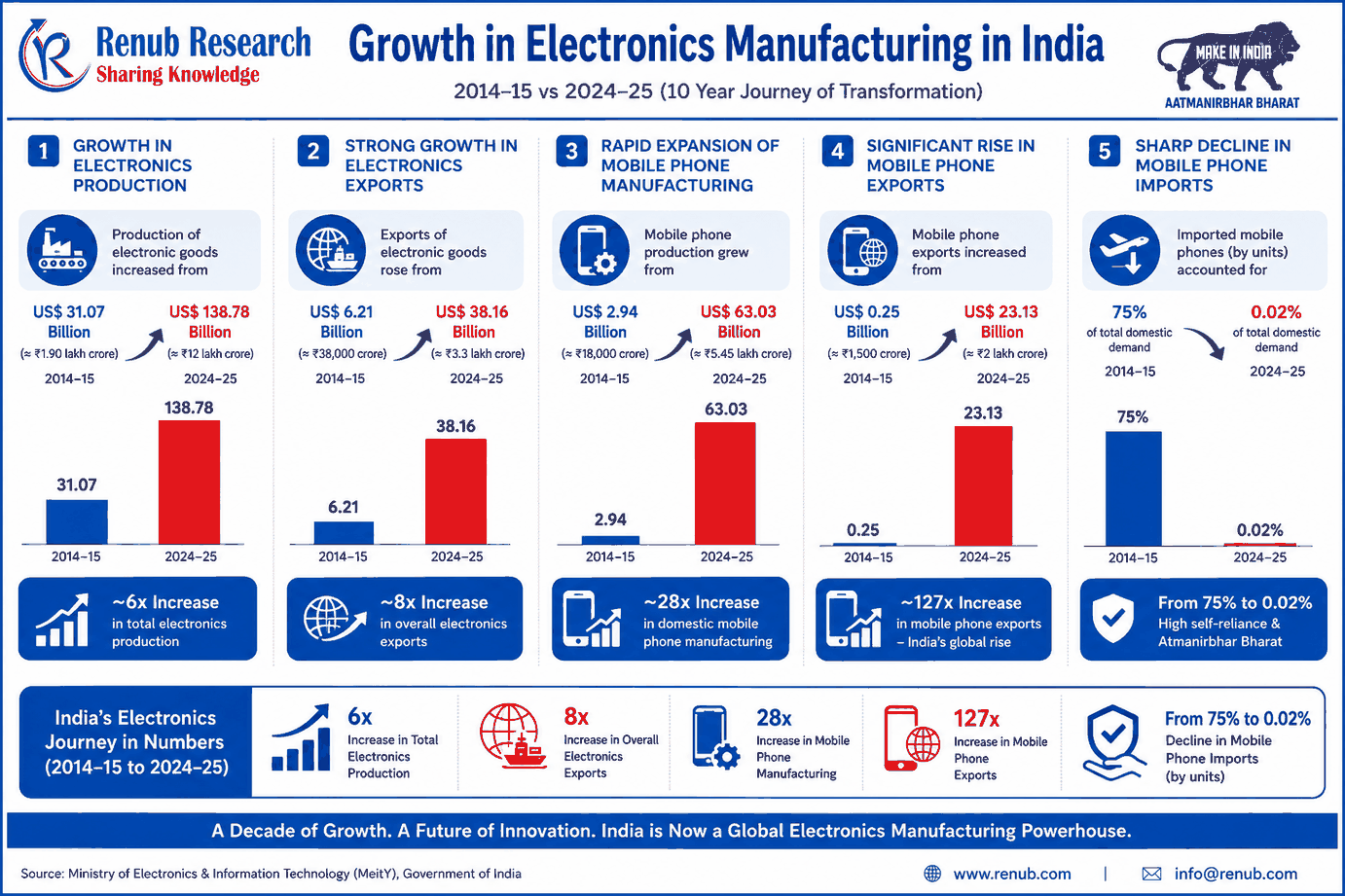
- Production of electronic goods increased from US$ 31.07 billion (≈ ₹1.90 lakh crore) in 2014–15 to US$ 138.78 billion (≈ ₹12 lakh crore) in 2024–25.
- This represents an approximately 6-fold increase in total electronics production.
- Strong Growth in Electronics Exports
- Exports of electronic goods rose from US$ 6.21 billion (≈ ₹38,000 crore) in 2014–15 to US$ 38.16 billion (≈ ₹3.3 lakh crore) in 2024–25.
- Overall electronics exports increased by 8 times during the period.
- Rapid Expansion of Mobile Phone Manufacturing
- Mobile phone production grew from US$ 2.94 billion (≈ ₹18,000 crore) in 2014–15 to US$ 63.03 billion (≈ ₹5.45 lakh crore) in 2024–25.
- This marks a remarkable 28-fold increase in domestic mobile manufacturing.
- Significant Rise in Mobile Phone Exports
- Mobile phone exports increased from US$ 0.25 billion (≈ ₹1,500 crore) in 2014–15 to US$ 23.13 billion (≈ ₹2 lakh crore) in 2024–25.
- Exports expanded by an impressive 127 times, highlighting India’s emergence as a major global mobile phone exporter.
- Sharp Decline in Mobile Phone Imports
- Imported mobile phones (by units) accounted for 75% of total domestic demand in 2014–15.
- By 2024–25, imports had declined to just 0.02% of total demand, indicating a high level of domestic manufacturing and self-reliance.
Laptops/Notebooks Industry Expansions in India
The India laptop and notebook market has seen considerable growth on account of hybrid work models, online education, and increasing demand for portable computing devices. The enterprises and educational institutions have adopted flexible digital frameworks post-pandemic, which are continuing to nurture demand for laptops. Students increasingly require laptops for digital learning, coding, research, and virtual classrooms. Companies also equip their employees with high-performance ultrabooks and business laptops to help their remote collaboration. The market is witnessing an increase in gaming laptops, driven by esports and content creation trends. There is a shift in consumer preference toward lightweight, long battery life, and SSD-based devices. Various models are being launched at multiple price points by the manufacturers, addressing budget, mid-range, and premium users. Easy financing options, EMI schemes, and increased availability through e-commerce further fuel the adoption across urban and semi-urban markets.
India Smartphones Market Analysis
India has one of the largest and fastest-growing smartphone markets in the world, driven by the adoption of 4G and 5G services, the availability of affordable models, and increasing digital consumption. Brands are offering competitive prices for advanced features like high-refresh-rate displays, powerful processors, AI-enabled cameras, and fast charging, attracting a large youth demographic. This trend of moving to smartphones from feature phones in rural areas is continuing to add users in large numbers. Discounts on e-commerce platforms, exchange offers, and easy financing have made smartphones accessible like never before. Moreover, 5G rollouts are also enticing consumers to upgrade their devices and leverage faster connectivity, coupled with an improved user experience. From mobile gaming to OTT streaming, digital payments, and social media becoming part of lifestyle habits, smartphones remain the most important consumer electronic device in India.
Digital Cameras Adoptions in India
The digital camera market in India has evolved from catering primarily to professional photographers to serving a growing community of content creators, vloggers, and social media influencers. While casual photography may have been taken over by smartphones, dedicated digital cameras-especially mirrorless and DSLR-offer better image quality, interchangeable lenses, and enhanced performance in low light, which has again piqued the interest of enthusiasts and semi-professionals. The growth of YouTube channels, Instagram content, and travel vlogging is driving demand for compact mirrorless cameras with advanced autofocus and 4K/8K video capabilities. Professional wedding and event photography remains the main demand driver for high-end cameras. However, the segment remains niche because the cost of equipment is very high. Brands are also offering entry-level models, financing schemes, and bundled accessories to attract first-time buyers and hobbyists.
Online Consumer Electronics Sold in India
Online retailing has emerged as a strong factor in India's consumer electronics landscape, offering convenience, variety, and price competitiveness unparalleled by physical retailing. E-commerce platforms have made available everything from smartphones and laptops to home appliances and accessories, mostly with detailed user reviews that help improve decision-making. Flash sales, festival offers, cashback programs, and no-cost EMI schemes drive purchase activity significantly. Therefore, consumers of Tier-2 and Tier-3 cities also rely on online platforms since offline retail is not very prominent in these cities. And then, of course, brand-exclusive online launches and early-access deals lure in the tech-savvy consumer. Omnichannel models like buy-online-pickup-in-store increase customer confidence and flexibility. As digital payments and last-mile logistics continue to get a wider reach and penetration, online electronics sales continue on an upward trajectory, changing the retail landscape of the country.
Indian’s States Insights
Maharashtra
Growth is driven by urbanization, increasing purchasing power, and retail expansion. Maharashtra is one of the biggest consumer electronics markets in India, driven by highly congested urban cities like Mumbai and Pune. These cities offer a radius of high purchasing power, tech-savvy customers, and high demand for premium electronics like smart TVs, high-end smartphones, gaming devices, and smart home products. A strong retail infrastructure in Maharashtra includes malls, brand showrooms, and multi-brand outlets that facilitate wide availability of products. The IT, finance, entertainment, and startup industries within the state are driving up demand for laptops, wearables, and productivity devices. Rural areas also present increasing adoption on the back of improved electricity access and deeper digital penetration. E-commerce usage is very high, and customers regularly prefer to purchase online deals and door-to-door services. The reason why many manufacturers choose Maharashtra for product launches is its wide customer diversity and strong responsiveness to the market.
Andhra Pradesh
Andhra Pradesh's consumer electronics market is growing fast with the state's investment in digital infrastructure, electricity distribution, and rural connectivity. A surge in middle-income households, penetration of smartphones, and interest in smart TVs and home appliances increase demand across its districts. Visakhapatnam, Vijayawada, and Tirupati are the major retail points with a mix of offline and online buying options. Initiatives by the government on digital learning and smart governance further encourage the adoption of laptops and tablets. Rural areas continue to see the gradual but steady uptake of electronic goods as consumers upgrade from basic appliances to feature-rich ones. Local distributors and brand showrooms are increasing their presence, while online acts as an important channel in offering competitive pricing with wider product availability.
Uttar Pradesh
Uttar Pradesh, India’s most populous state, represents a huge consumer base with rapidly growing demand for electronics. Urban centers like Lucknow, Noida, Ghaziabad, and Kanpur are a strong market for smartphones, televisions, laptops, and home appliances on account of their growing incomes and modern lifestyle aspirations. Growing manufacturing zones and IT parks in the state fuel higher consumption of electronic items among professionals and students. Rural regions, too, are catching up, with an increase in the penetration of smartphones and essential appliances, along with better access to electricity and the internet. E-commerce adoption is very strong, thereby providing access to branded products at competitive prices for consumers in smaller towns. The retail infrastructure is also developing, with malls, multi-brand outlets, and exclusive stores improving reach. This variability in purchasing power across the districts provides ample opportunities not only for budget-friendly product segments but also for the premium ones.
Market Segmentations
Product
- Laptops/Notebooks
- Smartphones
- Desktops
- Tablets
- Digital Cameras
- Hard Disk Drives
- Television
- E-readers
Sales Channel
- Offline
- Online
Top States
- Maharashtra
- Tamil Nadu
- Karnataka
- Gujarat
- Uttar Pradesh
- West Bengal
- Rajasthan
- Telangana
- Andhra Pradesh
- Madhya Pradesh
All companies have been covered with 5 Viewpoints
- Overviews
- Key Person
- Recent Developments
- SWOT Analysis
- Revenue Analysis
Company Analysis:
- Acer Inc.
- Apple Inc.
- ASUSTeK Computer Inc.
- Canon Inc.
- Dell Technologies
- Google LLC
- Hewlett Packard Enterprise Development LP
- HTC Corporation
- Huawei Technologies Co., Ltd.
- Lenovo
Report Details:
| Report Features | Details |
| Base Year |
2025 |
| Historical Period |
2021 - 2025 |
| Forecast Period |
2026 - 2034 |
| Market |
US$ Billion |
| Segment Covered |
Product, Sales Channel and Top State |
| Countries Covered |
|
| Companies Covered |
|
| Customization Scope |
20% Free Customization |
| Post-Sale Analyst Support |
1 Year (52 Weeks) |
| Delivery Format |
PDF and Excel through Email (We can also provide the editable version of the report in PPT/Word format on request) |