India Banana Ketchup Market Size, Share, Trends, Growth Analysis and Forecast Report 2026–2034
Buy NowIndia Banana Ketchup Market Trends and Forecast
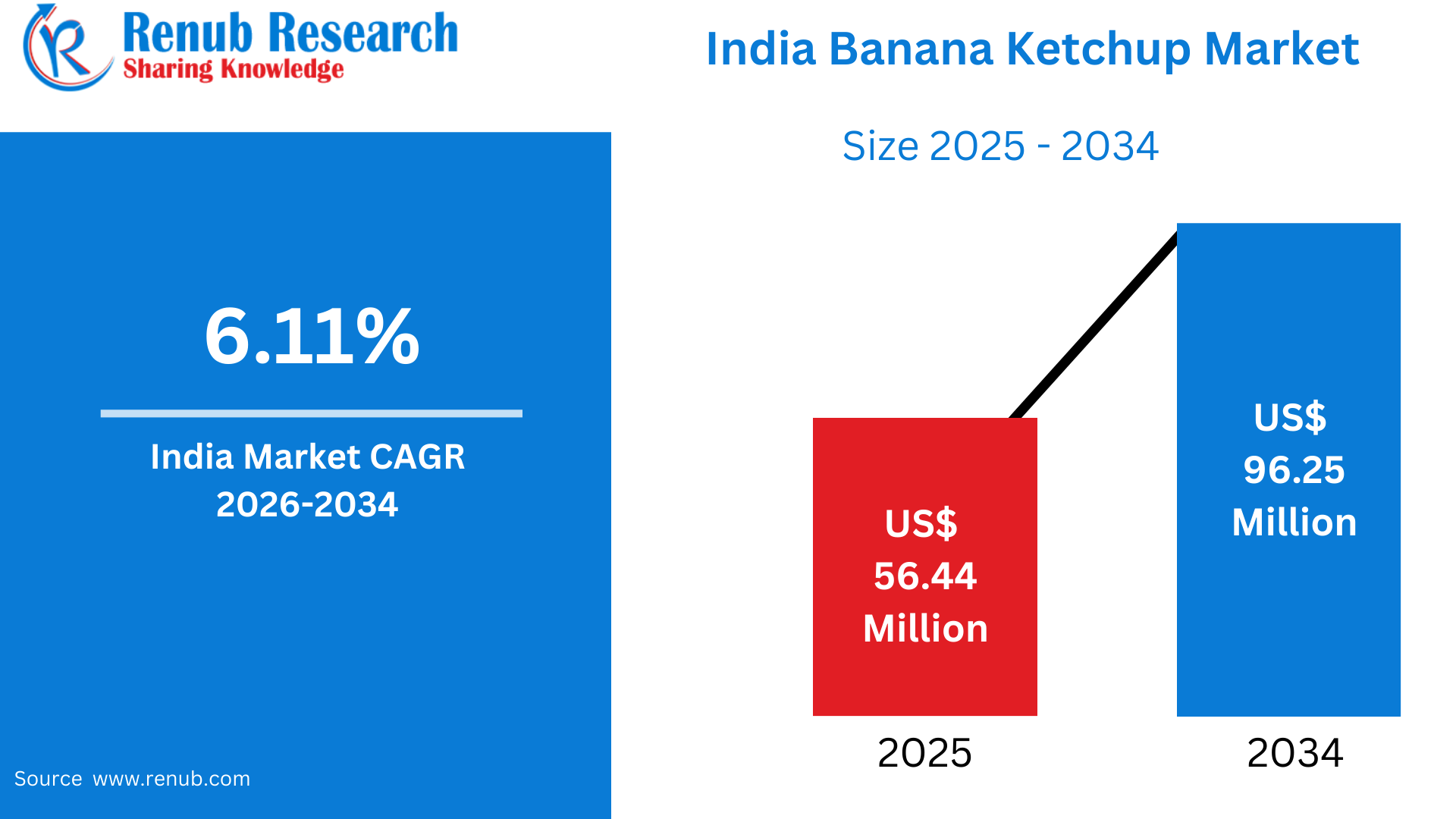
India banana ketchup market is anticipated to register steady growth, expanding from US$ 56.44 million in 2025 to US$ 96.25 million by 2034, at a CAGR of 6.11% during the forecast period of 2026–2034. The market is being driven by rising consumer demand for unique and fruit-based condiments, increasing preference for innovative flavor profiles, and the growing popularity of fusion cuisine. Rapid urbanization, evolving dietary habits, and expanding distribution through supermarkets, hypermarkets, convenience stores, and e-commerce platforms are further supporting market growth.
What Is Banana Ketchup?
Banana ketchup is a fruit-based condiment made primarily from mashed bananas, vinegar, sugar, spices, and seasonings, with natural or food-grade coloring added to resemble traditional tomato ketchup. Originally developed as an alternative to tomato ketchup, it offers a sweet and tangy flavor that complements a wide variety of foods. Banana ketchup is commonly used as a dipping sauce, marinade, cooking ingredient, sandwich spread, burger topping, and accompaniment to snacks, fried foods, grilled meats, seafood, and fast-food items. Its unique taste and versatility have made it popular in both household kitchens and the foodservice industry, where it is increasingly incorporated into fusion recipes and innovative culinary applications.
Banana Ketchup Popularity in India
In India, banana ketchup is gaining popularity as consumers seek healthier, fruit-based, and distinctive condiment options beyond conventional tomato ketchup. Rising urbanization, changing dietary preferences, and increasing exposure to international cuisines have encouraged the adoption of specialty sauces among younger consumers. The growing quick-service restaurant (QSR) sector, expanding retail distribution, and availability through e-commerce platforms have further strengthened market demand. Additionally, manufacturers are introducing preservative-free, organic, and premium banana ketchup variants to cater to health-conscious consumers, supporting the product's expanding presence in India's evolving condiment market.
India Banana Production by Major States
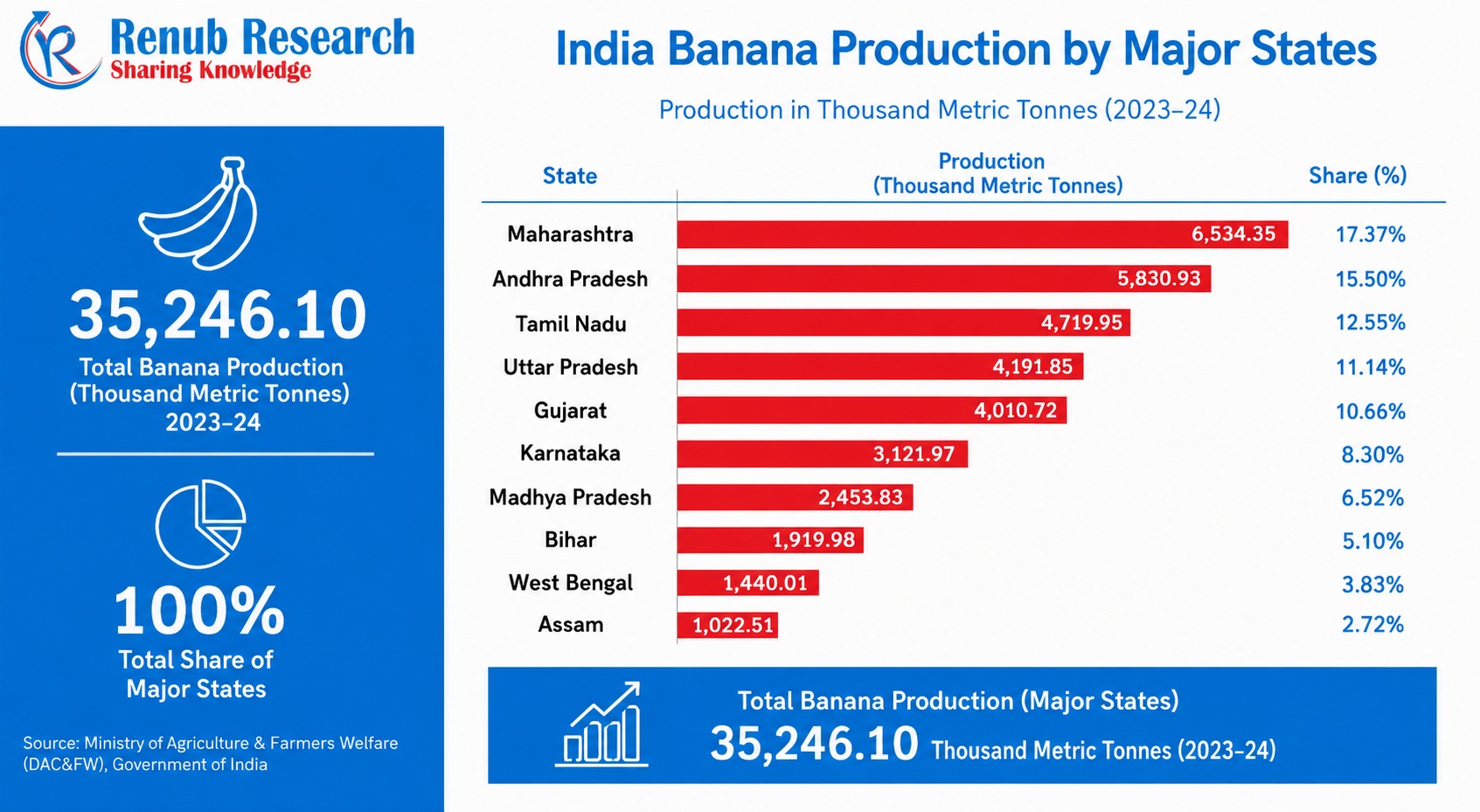
- Maharashtra led banana production with 6,534.35 thousand metric tonnes, accounting for 17.37% of India’s total banana output.
- Andhra Pradesh ranked second, producing 5,830.93 thousand metric tonnes, contributing 15.50% to national production.
- Tamil Nadu produced 4,719.95 thousand metric tonnes, representing 12.55% of the country’s banana production.
- Uttar Pradesh recorded production of 4,191.85 thousand metric tonnes, with a 11.14% share.
- Gujarat contributed 4,010.72 thousand metric tonnes, accounting for 10.66% of total production.
- Karnataka produced 3,121.97 thousand metric tonnes, representing 8.30% of India’s banana output.
- Madhya Pradesh recorded 2,453.83 thousand metric tonnes, contributing 6.52%.
- Bihar produced 1,919.98 thousand metric tonnes, accounting for 5.10% of national production.
- West Bengal contributed 1,440.01 thousand metric tonnes, representing 3.83% of total output.
- Assam produced 1,022.51 thousand metric tonnes, with a 2.72% share of India’s banana production.
- Total banana production across these major producing states reached 35,246.10 thousand metric tonnes during 2023–24.
Growth Drivers
Growing demand for novelty and fusion-type food products
India banana ketchup market sees significant growth as demand among Indian consumers increases for innovative, fusion-style condiments. Younger urban populations, particularly millennials and Gen Z, are gradually accepting the trend of global flavor experimentation and adaptation to suit the Indian taste. Banana ketchup presents a unique sweet and tangy taste with minor spice notes, fitting well with Indian snacks such as pakoras, samosas, and rolls. The rapid exposure of Indian consumers to international cuisines due to travel, food delivery apps, and social media influencers propels the trend further. Food manufacturers are launching banana ketchup variants in Indian flavor twists, thereby evoking consumer interest and trial rates. Restaurants, food trucks, and QSR chains are also adopting this product in their menu offerings, gradually enhancing visibility of the product. All in all, the market gains from an evolving food landscape in India wherein novelty and experimentation with taste become important drivers of purchase.
Abundant Production of Banana and Supportive Supply Chain
India is among the world’s largest banana producers, and this farming strength directly underpins the rise of the banana ketchup market. High availability ensures stability of raw material supply, reduces costs of production, and allows scaling up manufacturing. Surplus or visually imperfect bananas that are unsuitable for retail sale can effectively be utilized in processed products like ketchup, reducing food waste and improving farmer incomes. Government initiatives on fruit processing, food parks, and value-addition in agriculture further encouraged investments in banana-based food manufacturing. Improvements in cold storage, better logistics networks, and increasing contract farming models help maintain quality and consistency. With 37.47 million metric tonnes of production, India is the largest producer of bananas in the world, followed by China, Indonesia, Brazil, and Ecuador. In fact, India accounts for 19.37% of global production of this most consumed staple fruit worldwide. Within India, Gujarat ranks third among the states with an 11.81% share in banana production. Interestingly, even as Gujarat ranks third in the country after Andhra Pradesh, which enjoys a 17.64% share, and Maharashtra, which has a 12.77% share, when it comes to productivity per hectare, Gujarat tops not only in the country but across the globe.
Growing health consciousness and preference for natural ingredients
With increased awareness about health and nutrition, Indian consumers are moving towards condiments perceived to be natural, fruit-based, and less processed. Banana ketchup is made with banana pulp and provides vitamins, fiber, and natural sweetness, hence appealing to families looking for a healthier alternative to traditional tomato ketchup. Mounting skepticism over synthetic flavors, preservatives, and excessive sugar in traditional sauces has driven consumers toward products with cleaner labels. Most brands offering banana ketchup claim to have reduced-sugar versions or use spices that appeal to Ayurveda-inspired preferences. Parents seeking healthy alternatives for children also find banana ketchup easier to digest. With immunity-boosting diets and whole food gaining momentum, fruit-based condiments enjoy a strong positioning advantage.
Challenges
Low Consumer Awareness and Limited Market Penetration
Banana ketchup has immense potential but remains relatively unknown to the average Indian consumer, considering the well-established category of tomato ketchup. This lack of awareness of its taste profile, usage versatility, and nutritional benefits restricts adoption in many regions. Many consumers relate ketchup only with tomatoes and are hesitant to try out a fruit-based alternative. This challenge is accentuated by a lack of mass-market advertising, limited shelf visibility, and few household traditions of consumption. Retailers may not be too keen on devoting precious shelf space to a low-demand product, which further slows down expansion.
Competition from Established Condiment Brands
Large brands of tomato ketchup and sauce dominate the Indian condiment market with strong brand loyalty, wide distribution networks, and large advertising budgets. Competition with such players is a big task for new banana ketchup brands. Traditional condiments include tomato ketchup, chili sauce, and mixed fruit sauces that already command premium shelf space and are items of everyday use in many homes. This leaves little space for niche variants to gain favor. Moreover, rural and semi-urban markets show price sensitivity, hence it becomes difficult for banana ketchup products, priced a little higher due to the complexity of the processing, to penetrate the market deeply. Competition could also be fierce as leading FMCG players begin to market their own fruit-based sauces. For differentiation, therefore, banana ketchup brands must communicate on taste, health, and unique flavor experiences.
Banana Ketchup Launches in India
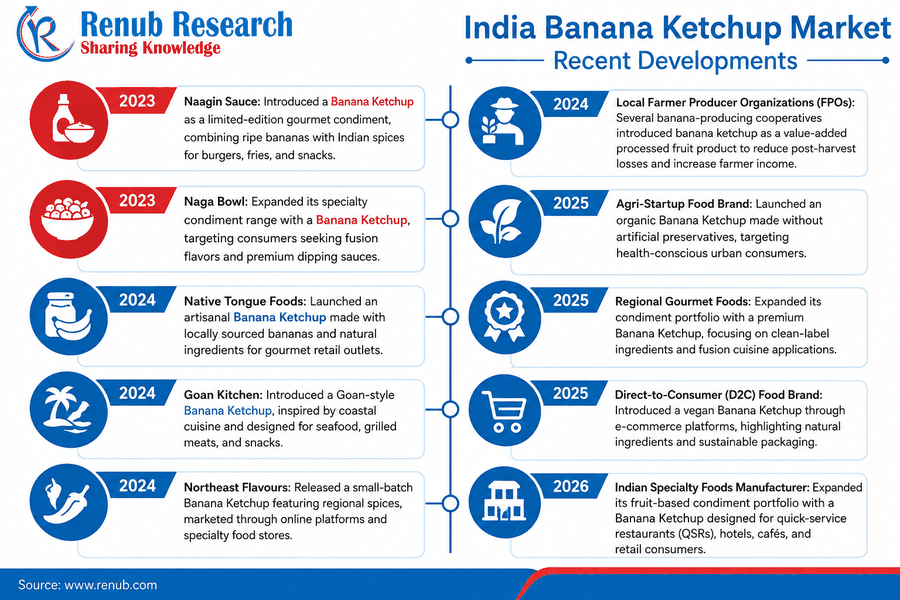
- 2023 – Naagin Sauce: Introduced a Banana Ketchup as a limited-edition gourmet condiment, combining ripe bananas with Indian spices for burgers, fries, and snacks.
- 2023 – Naga Bowl: Expanded its specialty condiment range with a Banana Ketchup, targeting consumers seeking fusion flavors and premium dipping sauces.
- 2024 – Native Tongue Foods: Launched an artisanal Banana Ketchup made with locally sourced bananas and natural ingredients for gourmet retail outlets.
- 2024 – Goan Kitchen: Introduced a Goan-style Banana Ketchup, inspired by coastal cuisine and designed for seafood, grilled meats, and snacks.
- 2024 – Northeast Flavours: Released a small-batch Banana Ketchup featuring regional spices, marketed through online platforms and specialty food stores.
- 2024 – Local Farmer Producer Organizations (FPOs): Several banana-producing cooperatives introduced banana ketchup as a value-added processed fruit product to reduce post-harvest losses and increase farmer income.
- 2025 – Agri-Startup Food Brand: Launched an organic Banana Ketchup made without artificial preservatives, targeting health-conscious urban consumers.
- 2025 – Regional Gourmet Foods: Expanded its condiment portfolio with a premium Banana Ketchup, focusing on clean-label ingredients and fusion cuisine applications.
- 2025 – Direct-to-Consumer (D2C) Food Brand: Introduced a vegan Banana Ketchup through e-commerce platforms, highlighting natural ingredients and sustainable packaging.
- 2026 – Indian Specialty Foods Manufacturer: Expanded its fruit-based condiment portfolio with a Banana Ketchup designed for quick-service restaurants (QSRs), hotels, cafés, and retail consumers.
Type Insights:
SPICY BANANA KETCHUP
The reason for this growth in the spicy variant of banana ketchup is that Indian consumers traditionally favor bold, flavorful, and spice-rich condiments. Spicy banana ketchup is a balanced combination of the sweetness of banana with the heat of chili, which goes well with Indian street foods, fried snacks, and grilled dishes. This variant works best for those consumers who want a different taste than chili sauces but do not want to compromise on spice intensity. Its fusion nature draws interest from younger demographics and food enthusiasts who love experimenting with different unconventional flavors. Brands often add Indian spice blends like chili flakes, cumin, and garlic to further localize the profile. Considering that spicy products enjoy supremacy in the Indian sauce market, there's great growth potential for this segment in both retail and foodservice channels, particularly among quick-service restaurants, cafes, and home cooking.
SWEET BANANA KETCHUP
Sweet banana ketchup targets those consumers who like to have mild and not very spicy condiments, which makes this product very popular among families that have children. Its naturally fruity flavor, smooth consistency, and mild sweetness make it a convenient accompaniment to snacks, sandwiches, parathas, and lunchbox meals. Parents increasingly prefer sweet banana ketchup due to the fruit-based composition and nutritional value perceived over highly processed sugary sauces. The product works well for bakeries, dessert cafés, and home cooking enthusiasts who would use it in fusion recipes and marinades. This kid-friendly flavor encourages parents to repetitively buy the product, ensuring brand loyalty. An increasing demand for healthy replacements for traditional sweet condiments positions sweet banana ketchup as an attractive choice across urban and semi-urban households. This segment is expected to record steady growth with more brands launching low-sugar or naturally sweetened formulas.
Packaging Insights:
GLASS BOTTLE
Glass packaging in the banana ketchup market conveys premium quality, purity of the product, and sustainability. Urban consumers like to go for glass bottles since the chemical leaching from plastic into food is a growing concern among urban consumers. The obvious outcome is that this kind of packaging increases product shelf presence, considering that it bears an artisan or gourmet appeal-important to brands eyeing health-conscious and quality-driven buyers. Besides, glass preserves flavor integrity, which is what one needs for spicy or gourmet banana ketchup variants. Restaurants, cafes, and other hospitality businesses are also seen to prefer glass bottles for dine-in presentation. Although transportation and storage are a bit more costly, the perceived value and eco-friendliness of such packaging justifies the investment. It is due to the trend towards sustainable packaging and acceptance of a higher price by the premium segment consumer that the demand for banana ketchup in glass bottles is stable.
PLASTIC BOTTLE
Plastic bottles are the dominating package types in the banana ketchup market due to their lightweight nature, resistance to breakage, and low cost, hence ideal for mass-market distribution. Plastic packaging appeals to households, food stalls, small eateries, and online buyers who prefer convenience at an affordable price. Squeezable plastic bottles facilitate ease of use, particularly for kids and quick-service settings. They also reduce transportation costs, enabling manufacturers to supply even remote semi-urban and rural areas. Plastic bottles in various sizes, ranging from small trial packs to large family bottles, cater to the demands of consumer choice and encourage market penetration. Even if environmental concerns do exist, plastic packaging is still in high demand because of practical and budgetary advantages. With the product turning mainstream, plastic bottles continue to be the most used packaging format in India.
BANANA KETCHUP Distribution Channel Insights in INDIA
CONVENIENCE STORES
Convenience stores are a significant facilitator of the growth of banana ketchup, as they facilitate easy access and impulse buying. These stores appeal to consumers for quick meal solutions, snacks, and ready-to-use condiments. Small and mid-size bottles of banana ketchup are placed alongside snacks or near billing counters to increase their visibility. The convenience retail format is especially helpful for new products, as consumers can purchase in single units for trial purposes rather than risking large volumes. Urban areas characterized by a high volume of footfall-for example, near offices, hostels, and transit points-offer very good opportunities for small brands of banana ketchup to introduce themselves to first-time buyers. Additionally, the growth of modern convenience chains, such as 24x7 stores, which improve standardized product placement and greater market penetration, adds to the overall effect. Convenience stores are a vital channel for driving trials and expanding consumer acceptance.
INDIA BANANA KETCHUP ONLINE
The online banana ketchup market is growing rapidly with increasing momentum for e-commerce sites, hyperlocal delivery, and direct-to-consumer brand websites. Online channels allow consumers to discover niche and specialty products not available in local retail stores, thus making them ideal for banana ketchup brands with unique variants. Side-by-side product comparisons, detailed descriptions, reviews, and discounts also impact buying decisions. E-commerce thus empowers the manufacturer to reach all customers in India without having to invest in costly physical distribution infrastructure. The convenience of home delivery, subscription models, and digital promotions improve recurrence. Besides, online sales data assist the brand in deciphering consumer preferences and refining the product strategy. With digital commerce continuing to rise, the online segment will be one of the strongest growth enablers for the category of banana ketchup in India.
States Insights:
MAHARASHTRA
With major urban centers like Mumbai and Pune, Maharashtra is a strong market for banana ketchup because of the experimental food culture and high consumption of fast foods. Its cosmopolitan population loves global flavors, and banana ketchup would be an evident choice in cafes, quick-service restaurants, and modern retail outlets. Similarly, a large number of food manufacturers, distribution hubs, and supply chain networks in Maharashtra ensure there is easy availability of products. From vada pav to bhajiyas, sandwiches, and fusion street food, the snack culture of Maharashtra creates enough pairing opportunities for banana ketchup. The fruit-based condiment aspect will be well-received by the equally increasing health-conscious population in Pune and Mumbai. This state houses a large young population with strong purchasing power, and therefore, has a budding ecosystem for food startups, keeping it as one of the most promising markets for banana ketchup in India.
ANDHRA PRADESH
Andhra Pradesh, one of the major banana-growing states of India, naturally supports the expansion in manufacturing and consumption of banana ketchup. In abundance, the availability of raw material lowers the production cost and persuades the local processing units to try value additions such as banana ketchup. The state's cuisine, synonymous with spicy and tangy flavors, relates well with both spicy and sweet varieties of banana ketchup. Street food stalls, tiffin centers, and local eateries are increasingly experimenting with alternative condiments, adding to the market visibility of banana ketchup. Growing urbanization in cities such as Vijayawada, Visakhapatnam, and Guntur increases demand for unique food products. Generally, local consumers of Andhra Pradesh have an open mind towards trying new types of condiments that would suit their snack-oriented eating habits. With agricultural support, culinary compatibility, and emerging food markets, Andhra Pradesh presents a good potential for banana ketchup adoption and growth in localized production.
UTTAR PRADESH
With its huge population and ever-growing retail infrastructure, Uttar Pradesh offers the banana ketchup brands a great opportunity. From chaat to samosas, kachori, and bread pakodas, the state’s strong snacking culture inherently develops a need for new, innovative condiments. Modern trade outlet growth, a surge in supermarkets, and convenience stores across cities like Lucknow, Noida, and Kanpur improve the visibility of non-mainstream products on store shelves. Price sensitivity is very high in this region, and affordable plastic-pack variants of banana ketchup are highly relevant. While awareness might be relatively lower than in metro-heavy states, strategic promotions, sampling, and tie-ups with local eateries could hasten the pace of adoption. Notably, increasing internet penetration and e-commerce usage also support online sales for emerging food items. The scale, evolving retail landscape, and diverse food habits of Uttar Pradesh make the state a very critical growth territory for banana ketchup in India.
Market Segmentations
Type
- Sweet Banana Ketchup
- Spicy Banana Ketchup
Packaging
- Glass Bottle
- Plastic Bottle
- Pouches and Sachets
Distribution Channel
- Supermarkets & Hypermarkets
- Convenience Stores
- Grocery Stores
- Online
- Others
Top States
- Maharashtra
- Tamil Nadu
- Karnataka
- Gujarat
- Uttar Pradesh
- West Bengal
- Rajasthan
- Telangana
- Andhra Pradesh
- Madhya Pradesh
All companies have been covered with 5 Viewpoints
- Overviews
- Key Person
- Recent Developments
- SWOT Analysis
- Revenue Analysis
Company Analysis:
- NutriAsia, Inc.
- Papa Products, Inc.
- Dole Food Company, Inc.
- McCormick & Company, Inc.
- Del Monte Foods, Inc.
- Hot-Headz! Ltd.
- Baron Foods Ltd.
- Fila Manila
- Ben and Pat's Sauce Co.
- Craft Hot Sauce
Report Details:
| Report Features | Details |
| Base Year |
2025 |
| Historical Period |
2021 - 2025 |
| Forecast Period |
2026 - 2034 |
| Market |
US$ Billion |
| Segment Covered |
Type, Packaging, Distribution Channel and Top States |
| States Covered |
|
| Companies Covered |
|
| Customization Scope |
20% Free Customization |
| Post-Sale Analyst Support |
1 Year (52 Weeks) |
| Delivery Format |
PDF and Excel through Email (We can also provide the editable version of the report in PPT/Word format on request) |
Customization Services available
- Analysis of Market Size and Its Segments
- More Company Profiles (Upto 10 without any additional cost):
- Additional Countries (Other than mentioned Countries):
- Region/Country Specific Reports:
- Market Entry Strategy:
- Region-Specific Market Dynamics:
- Regional Market Share Analysis:
- Trade Analysis:
- Production Insights:
- Others Customized Requests:
For more information contact our analysts.
Need More Assistance?
- Talk to our analysts to get more precious information on the current market trends.
- Include more countries and segments and customize the report based on the final requirement.
- Get a competitive advantage in your industry by knowing the report findings and making a positive impact on your revenues and operations.
- Our analysts are always ready to provide more help and pertinent information if you need any additional assistance.