Hormone Replacement Therapy Market Size, Share, Growth Trends, Industry Analysis, Key Companies & Forecast 2026–2034
Buy NowHormone Replacement Therapy Market Size, Share & Global Forecast
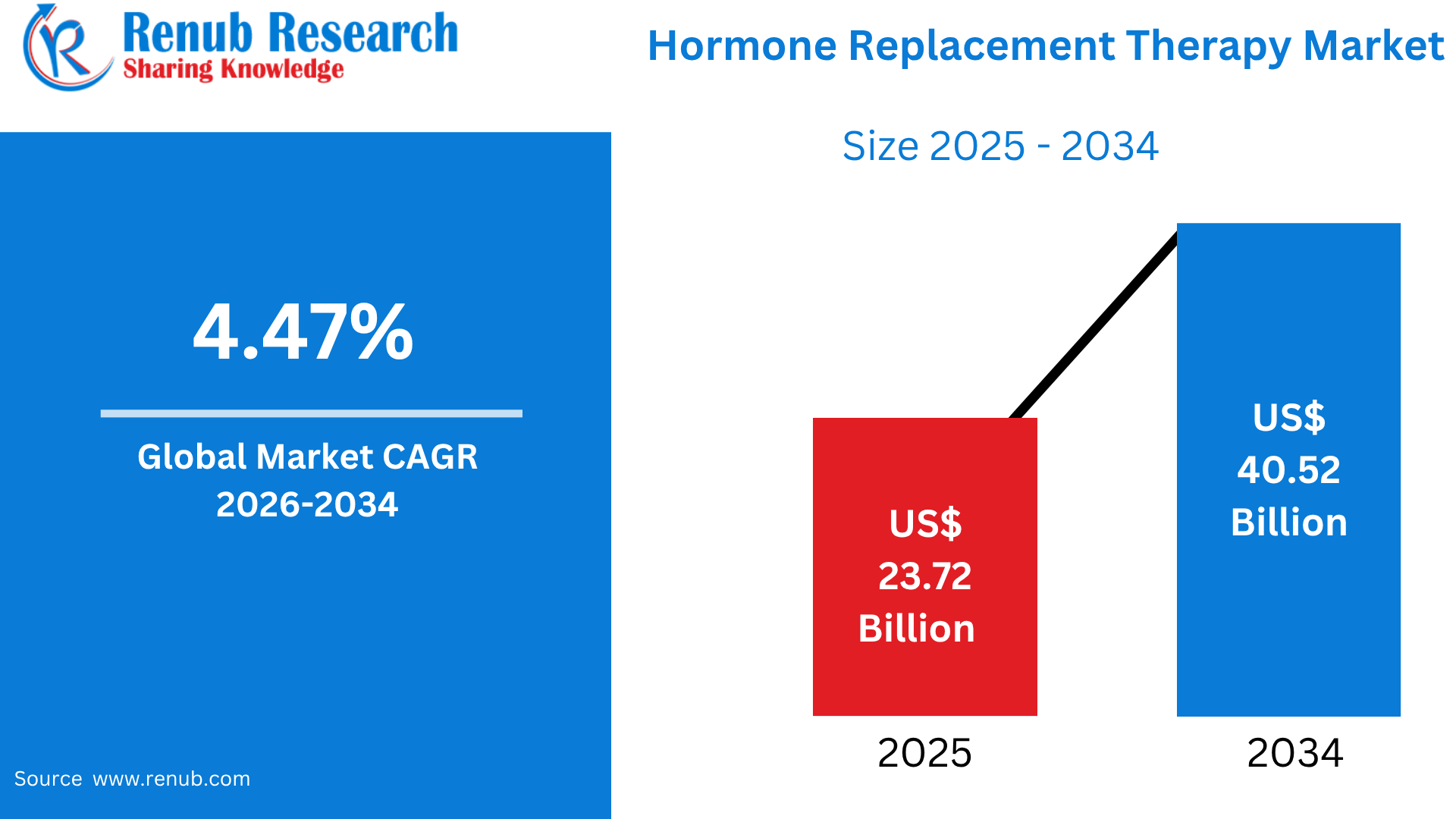
Hormone Replacement Therapy (HRT) Market is projected to grow significantly, increasing from US$ 23.72 billion in 2025 to US$ 40.52 billion by 2034, expanding at a Compound Annual Growth Rate (CAGR) of 6.12% during the forecast period from 2026 to 2034. This growth is primarily attributed to the increasing incidence of hormonal imbalances, the expanding geriatric population, and rising awareness regarding effective menopause treatment and management options. Additionally, advancements in hormone replacement therapies, including the introduction of safer and more personalized treatment approaches, are supporting market expansion.
What is Hormone Replacement Therapy and its Uses & Popularity Worldwide
Hormone Replacement Therapy (HRT) is a medical treatment that involves supplementing the body with hormones to replace those that are reduced or no longer produced naturally. It is most commonly used to manage symptoms associated with menopause in women, when levels of estrogen and progesterone decline. HRT helps relieve symptoms such as hot flashes, night sweats, mood changes, sleep disturbances, vaginal dryness, and bone loss. It is also used for treating hormone deficiencies caused by conditions such as hypogonadism, surgical removal of ovaries, and certain endocrine disorders.
Globally, the popularity of hormone replacement therapy is increasing due to the rising aging population, growing awareness of women’s health, and improved access to specialized healthcare services. Advances in personalized medicine have led to the development of safer therapies, including bioidentical hormones, low-dose treatments, and targeted delivery methods such as patches, gels, creams, and implants. According to global demographic trends, millions of women enter menopause each year, creating significant demand for effective symptom management solutions. Additionally, increased discussions around menopause awareness, workplace health support, and preventive healthcare are encouraging more individuals to seek HRT options. The market continues to expand as healthcare providers focus on improving quality of life and managing age-related hormonal changes.
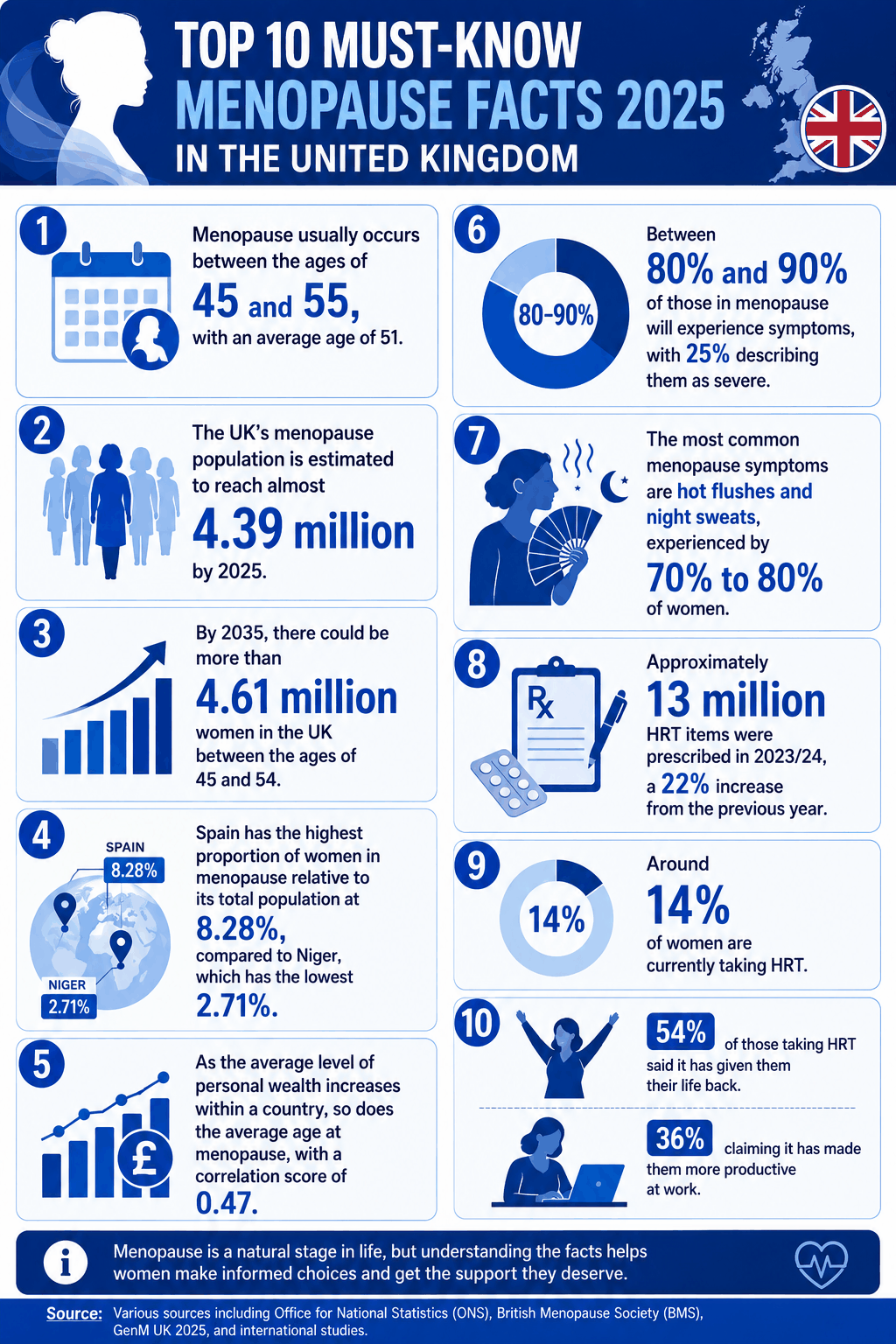
Top 10 must-know menopause facts 2025 in the United Kingdom
- Menopause usually occurs between the ages of 45 and 55, with an average age of 51.
- The UK’s menopause population is estimated to reach almost 4.39 million by 2025.
- By 2035, there could be more than 4.61 million women in the UK between the ages of 45 and 54.
- Spain has the highest proportion of women in menopause relative to its total population at 8.28%, compared to Niger, which has the lowest (2.71%).
- As the average level of personal wealth increases within a country, so does the average age at menopause, with a correlation score of 0.47.
- Between 80% and 90% of those in menopause will experience symptoms, with 25% describing them as severe.
- The most common menopause symptoms are hot flushes and night sweats, experienced by 70% to 80% of women.
- Approximately 13 million HRT items were prescribed in 2023/24, a 22% increase from the previous year.
- Around 14% of women are currently taking HRT.
- 54% of those taking HRT said it has given them their life back, with 36% claiming it has made them more productive at work.
Growth Drivers of the Hormone Replacement Therapy Market
Rising Prevalence of Menopause and Hormonal Disorders
The increasing prevalence of menopause-related symptoms and hormonal disorders is a major driver of the Hormone Replacement Therapy (HRT) market. As global life expectancy increases, a growing number of women are experiencing menopause and requiring effective treatments to manage associated health challenges. According to demographic estimates, more than 1 billion women worldwide are expected to experience menopause by 2025, creating a substantial patient population for hormone therapy solutions. Symptoms such as hot flashes, night sweats, osteoporosis risk, mood fluctuations, and vaginal discomfort are encouraging women to seek medical support. Additionally, hormonal disorders such as hypogonadism, thyroid-related hormonal imbalances, and estrogen deficiency are increasing demand for hormone-based treatments. Healthcare providers are increasingly recommending personalized HRT approaches based on patient age, symptoms, and medical history. The development of safer formulations, including low-dose therapies, transdermal patches, and bioidentical hormones, is further improving treatment acceptance. Growing awareness about early diagnosis and management of hormonal conditions continues to strengthen market growth worldwide.
Growing Aging Population and Increasing Demand for Women’s Healthcare
The expanding global aging population is significantly contributing to the growth of the Hormone Replacement Therapy market. Older populations are more likely to experience hormonal changes associated with aging, increasing the demand for therapies that improve quality of life and manage age-related health conditions. According to global population trends, the number of people aged 60 years and above is expected to reach approximately 2.1 billion by 2050, creating greater demand for age-related healthcare solutions. Women represent a significant proportion of this aging population, and many seek treatment options for menopause symptoms, bone health maintenance, and hormonal balance. Governments, healthcare organizations, and advocacy groups are increasingly focusing on women’s health, improving awareness regarding menopause management and available treatment options. Furthermore, rising healthcare expenditure, improved access to gynecology services, and increasing participation of women in preventive healthcare programs are supporting HRT adoption. Pharmaceutical companies are also investing in innovative hormone delivery systems, enhancing market opportunities across developed and emerging economies.
Advancements in Hormone Therapy Products and Personalized Treatment Options
Technological advancements and innovation in hormone therapy products are accelerating the expansion of the HRT market. Pharmaceutical companies are developing advanced formulations designed to improve safety, effectiveness, and patient convenience. Traditional oral hormone therapies are increasingly being complemented by newer delivery methods, including transdermal patches, gels, creams, vaginal rings, and implants, which provide controlled hormone release and improved patient compliance. The growing adoption of personalized medicine is also transforming the market by allowing physicians to customize hormone treatments according to individual health conditions, symptom severity, and risk factors. Research into bioidentical hormones and combination therapies is increasing treatment options for patients seeking alternative solutions. Additionally, digital healthcare platforms and telemedicine services are improving access to menopause specialists and hormone therapy consultations. The global pharmaceutical industry continues to invest in clinical research and product development, supporting the introduction of innovative therapies. These advancements are expected to increase patient confidence and expand the adoption of HRT solutions worldwide.
Hormone Replacement Therapy (HRT) Product Launches Worldwide
DUAVEE® (Conjugated Estrogens/Bazedoxifene) – Pfizer
- Launch/Availability: 2023 (U.S. market reintroduction)
- Company: Pfizer Inc.
- Product Type: Oral menopause hormone therapy
- Key Highlights: DUAVEE combines conjugated estrogens with bazedoxifene, a selective estrogen receptor modulator, to manage moderate-to-severe vasomotor symptoms associated with menopause and help prevent postmenopausal osteoporosis. The product returned to availability with improved packaging and renewed market access.
Bijuva® (Estradiol and Progesterone Capsules) Expansion – Theramex
- Launch/Expansion: 2023
- Company: Theramex
- Product Type: Oral combination HRT
- Key Highlights: Bijuva is a bioidentical hormone therapy combining estradiol and progesterone in a single capsule. The product gained wider adoption among menopausal women seeking simplified hormone replacement treatment with estrogen and progesterone together.
Lenzetto® Estradiol Spray Market Expansion – Gedeon Richter
- Launch/Expansion: 2023
- Company: Gedeon Richter
- Product Type: Transdermal estrogen therapy
- Key Highlights: Lenzetto is an estradiol transdermal spray designed to provide controlled estrogen delivery through the skin. Increasing preference for non-oral hormone delivery methods supported its market expansion in European countries.
MemUp® Bioidentical HRT Capsule – Jagsonpal Pharmaceuticals
- Launch Year: 2024
- Company: Jagsonpal Pharmaceuticals
- Region: India
- Product Type: Oral bioidentical hormone replacement therapy
- Key Highlights: MemUp was introduced as India’s first hormone replacement therapy featuring a combination of bioidentical estradiol and bioidentical progesterone in a single daily oral capsule. It was designed to manage menopause-related symptoms such as hot flashes, night sweats, and sleep disturbances.
Femoston® HRT Therapy Expansion – Abbott/Viifor Partnership Markets (2024)
- Launch/Expansion: 2024
- Company: Abbott (regional commercialization)
- Product Type: Estrogen-progestogen combination therapy
- Key Highlights: Femoston continued expansion across international markets as a menopause hormone therapy containing estradiol and dydrogesterone. The product supports management of menopausal symptoms and endometrial protection in appropriate patients.
KYO Estradiol Gel, Patch & Progesterone HRT Line – KYO Rx
- Launch Year: 2025
- Company: KYO Rx
- Region: United States
- Product Type: Digital HRT treatment platform
- Key Highlights: KYO introduced a women-focused HRT product line including estradiol tablets, progesterone tablets, estradiol patches, and estradiol gel. The platform provides online consultations and prescription-based hormone therapy access for women experiencing perimenopause and menopause symptoms.
Premarin® Generic Conjugated Estrogens Therapy – U.S. Market Launch
- Launch Year: 2025
- Company: Multiple pharmaceutical manufacturers
- Product Type: Estrogen hormone replacement therapy
- Key Highlights: The introduction of generic conjugated estrogen alternatives increased affordability and accessibility of estrogen replacement therapy. These products provide additional options for women requiring estrogen therapy for menopause-related symptoms and hormone deficiency conditions.
EstroGel® Estradiol Gel Expansion – Ascend Therapeutics
- Launch/Expansion: 2025
- Company: Ascend Therapeutics
- Product Type: Transdermal estrogen gel
- Key Highlights: EstroGel provides estrogen replacement through topical application, allowing gradual hormone absorption. Growing demand for non-oral therapies and personalized menopause care has supported continued adoption of estradiol gel products.
MenoWell Personalized HRT Platform – Emerging Digital Health Launch
- Product Type: Personalized menopause hormone therapy service
- Key Highlights: Digital menopause healthcare platforms expanded their offerings by combining virtual consultations, hormone assessments, and customized HRT recommendations. These services aim to improve access to menopause specialists and personalized treatment plans.
10. Next-Generation Menopause Hormone Therapy Label Updates & Product Optimization – FDA-Regulated HRT Products (2026)
- Launch/Update Year: 2026
- Region: United States
- Product Type: Estrogen, progesterone, and combination HRT products
- Key Highlights: FDA approved updated labeling changes for several menopausal hormone therapy products, covering systemic estrogen, estrogen-progestogen combinations, progestogen-only therapies, and vaginal estrogen products. The changes reflect updated scientific evaluation of risks and benefits, supporting more informed treatment decisions.
Challenges of the Hormone Replacement Therapy Market
Safety Concerns and Risk of Side Effects Associated with Hormone Therapy
Safety concerns related to hormone replacement therapy remain one of the major challenges limiting market growth. Although HRT provides significant benefits for managing menopause symptoms, long-term use of certain hormone therapies has been associated with potential health risks, including increased chances of breast cancer, cardiovascular complications, blood clots, and stroke in some patient groups. Large-scale studies have influenced public perception and created caution among patients and healthcare providers regarding hormone treatments. For example, the Women’s Health Initiative (WHI) study in the early 2000s significantly affected HRT adoption due to concerns about associated health risks. As a result, many women remain hesitant to begin hormone therapy despite its clinical benefits. Healthcare professionals must carefully evaluate patient history, age, dosage, and treatment duration before prescribing HRT. Continuous monitoring and improved clinical guidelines are required to minimize risks. Pharmaceutical companies are focusing on developing safer alternatives, including lower-dose therapies and targeted delivery systems, but concerns regarding long-term safety continue to influence market expansion.
Limited Awareness, High Treatment Costs, and Regulatory Challenges
Limited awareness about hormone replacement therapy and barriers related to affordability and regulation continue to restrict market growth, particularly in developing regions. Many women remain unaware that menopause symptoms can be effectively managed through medical treatments, resulting in underdiagnosis and undertreatment. Cultural stigma surrounding discussions of menopause and hormonal health also prevents many individuals from seeking professional medical advice. Additionally, the cost of hormone therapy, specialist consultations, diagnostic testing, and long-term monitoring can limit accessibility for patients in low- and middle-income countries. Healthcare systems in some regions lack sufficient gynecological services and trained specialists, creating disparities in treatment availability. Regulatory differences across countries also affect the approval and commercialization of new hormone therapy products. Strict guidelines regarding safety evaluation and clinical trials can increase product development timelines and costs for manufacturers. Improving public education, expanding healthcare infrastructure, and increasing insurance coverage for hormone treatments will be essential to overcome these challenges and support wider adoption of HRT globally.
Rising Adoption of Estrogen Therapy for Menopause Management
Estrogen Hormone Replacement Therapy (HRT) Market is witnessing significant growth due to increasing demand for treatments that manage menopause-related symptoms among aging women. Estrogen therapy is widely used to reduce hot flashes, night sweats, vaginal dryness, mood changes, and the risk of osteoporosis caused by declining estrogen levels. Globally, more than 1 billion women are expected to experience menopause by 2025, creating a large potential patient base for estrogen-based treatments. The increasing awareness about women’s health, improved diagnosis of menopausal conditions, and availability of different estrogen delivery methods, including tablets, patches, gels, and creams, are supporting market expansion. Healthcare providers are increasingly recommending personalized estrogen therapies based on patient health conditions and symptom severity. Additionally, advancements in low-dose estrogen formulations are improving safety profiles and patient acceptance. The growing focus on preventive healthcare and improved quality of life among middle-aged and elderly women is expected to further increase demand for estrogen hormone replacement therapies worldwide.
Increasing Prevalence of Thyroid Disorders Driving Market Growth
Thyroid Hormone Replacement Therapy Market is expanding due to the rising prevalence of thyroid disorders, particularly hypothyroidism, across the global population. Thyroid hormone replacement therapy, mainly using levothyroxine-based medications, is considered the standard treatment for individuals with insufficient thyroid hormone production. According to global health estimates, thyroid disorders affect hundreds of millions of people worldwide, with hypothyroidism being one of the most common endocrine conditions. Increasing awareness about thyroid disease diagnosis, routine thyroid function testing, and improved access to healthcare services are driving market demand. The aging population is also contributing to growth, as thyroid dysfunction becomes more common with increasing age. Pharmaceutical companies are focusing on developing improved formulations, including combination therapies and personalized dosing solutions, to enhance treatment effectiveness. Rising healthcare expenditure, expansion of diagnostic facilities, and growing adoption of long-term thyroid management programs are further supporting market development. The increasing focus on preventive healthcare and early detection is expected to maintain steady demand for thyroid hormone replacement therapies globally.
Growing Awareness and Demand for Menopause Symptom Management
Menopause Hormone Replacement Therapy Market is growing rapidly due to increasing awareness about menopause care and the availability of effective treatment options. Menopause affects millions of women worldwide, typically occurring between the ages of 45 and 55, leading to hormonal changes that can impact physical and emotional health. Hormone replacement therapy helps manage symptoms such as hot flashes, sleep disturbances, mood fluctuations, and bone density loss. With global life expectancy increasing, the number of women living through post-menopause years is rising significantly, creating higher demand for menopause-related healthcare solutions. The market is benefiting from increased conversations around women’s wellness, workplace menopause support programs, and improved access to gynecological consultations. Pharmaceutical companies are introducing innovative therapies, including bioidentical hormones, transdermal patches, and customized treatment options. Growing acceptance of menopause as an important healthcare stage rather than a natural condition requiring no treatment is encouraging more women to seek medical support. These factors are expected to strengthen the global menopause HRT market.
Strong Demand for Convenient Oral Hormone Treatment Options
Oral Hormone Replacement Therapy Market continues to hold a significant position due to the convenience, affordability, and widespread availability of oral hormone medications. Oral HRT products, including estrogen and combination estrogen-progestin tablets, are commonly prescribed for managing menopause symptoms and hormone deficiencies. The easy administration method and established clinical effectiveness make oral therapies a preferred option among many patients and healthcare professionals. Increasing numbers of women seeking treatment for menopause symptoms, along with growing awareness about hormonal health, are supporting market expansion. Oral hormone therapies are particularly popular in regions where healthcare systems have strong pharmaceutical distribution networks and easy access to prescription medications. However, manufacturers are focusing on improving oral formulations by reducing side effects and developing lower-dose options suitable for long-term use. The market is also benefiting from rising healthcare spending, increased physician recommendations, and improved diagnosis of hormonal disorders. Despite competition from transdermal and implant-based therapies, oral HRT remains an important segment due to its affordability and patient familiarity.
Expanding Healthcare Infrastructure Supporting HRT Distribution
Hospitals and Pharmacies Segment of the Hormone Replacement Therapy Market plays a crucial role in improving access to hormone-based treatments worldwide. Hospitals, clinics, and retail pharmacies serve as primary distribution channels for hormone replacement therapies by providing diagnosis, prescriptions, patient monitoring, and medication availability. Increasing healthcare infrastructure development, especially in emerging economies, is improving access to specialized hormonal healthcare services. Hospitals are witnessing higher demand for menopause management programs, endocrinology services, and personalized hormone treatment plans. Pharmacies are also becoming important distribution points due to the increasing availability of prescription hormone medications and growing consumer awareness. According to global healthcare trends, pharmaceutical spending continues to rise as populations age and chronic conditions become more prevalent. The expansion of digital healthcare platforms and online pharmacies is further improving access to HRT products by enabling remote consultations and convenient medicine delivery. However, regulatory requirements and the need for professional medical guidance remain important factors influencing this segment. The growing focus on preventive healthcare and patient-centered treatment is expected to support continued growth of hospitals and pharmacies in the HRT market.
Increasing Menopause Awareness and Growing Demand for Women’s Health Solutions in United States
The United States Hormone Replacement Therapy (HRT) Market is experiencing steady growth due to increasing awareness about menopause management and the importance of hormonal health. The U.S. has a large population of aging women, with approximately 6,000 women reaching menopause every day, creating substantial demand for effective treatment options. Hormone replacement therapy is widely used to manage symptoms such as hot flashes, night sweats, mood changes, sleep problems, and vaginal discomfort. Growing discussions around menopause, women’s wellness, and preventive healthcare are encouraging more women to consult healthcare professionals. The availability of different HRT options, including oral tablets, transdermal patches, gels, creams, and implants, is improving treatment accessibility. Additionally, healthcare providers are increasingly adopting personalized approaches by considering patient age, medical history, and symptom severity. Rising healthcare expenditure, advanced medical infrastructure, and strong pharmaceutical research activities are further supporting market expansion. The increasing acceptance of menopause treatment as an important aspect of quality of life is expected to drive continued growth in the U.S. HRT market. The U.S. Hormone Replacement Therapy market is benefiting from advancements in personalized medicine and innovative hormone delivery technologies. Pharmaceutical companies are developing safer and more targeted therapies to address patient concerns regarding traditional hormone treatments. Modern HRT products, including low-dose estrogen therapies, bioidentical hormones, and transdermal delivery systems, are gaining popularity due to improved convenience and controlled hormone release. The United States has a strong healthcare ecosystem, with thousands of hospitals, specialized women’s health clinics, and endocrinology centers providing access to hormone-related treatments. Increasing demand for individualized treatment plans is encouraging physicians to recommend therapies based on specific patient requirements
United Kingdom Government Support and Rising Focus on Menopause Healthcare
United Kingdom Hormone Replacement Therapy Market is expanding due to increasing government attention toward menopause awareness and women’s healthcare services. Menopause affects millions of women in the UK, with around 13 million women currently estimated to be peri-menopausal or menopausal, representing a significant healthcare population. Increased public discussions, workplace menopause policies, and improved medical guidelines have encouraged more women to seek professional support. Hormone replacement therapy is becoming a preferred treatment option for managing symptoms such as hot flashes, mood changes, and sleep disturbances. The National Health Service (NHS) has increased efforts to improve menopause diagnosis and treatment accessibility, helping reduce previous barriers to HRT adoption. The availability of different formulations, including patches, tablets, gels, and vaginal treatments, provides patients with multiple treatment choices. Growing awareness that menopause management can improve physical and emotional well-being is strengthening demand for HRT products. Increasing healthcare investment and improved access to specialist consultations are expected to support long-term market growth in the UK. The UK HRT market is witnessing increased demand for advanced hormone delivery methods, particularly transdermal therapies such as patches and gels. Many patients and healthcare professionals are shifting toward treatment options that provide controlled hormone absorption and improved convenience. The growing emphasis on reducing treatment risks has encouraged adoption of newer formulations designed with lower hormone doses and personalized treatment approaches. The UK has a strong pharmaceutical sector and established healthcare infrastructure, supporting the development and distribution of innovative HRT products.
India Rising Awareness of Women’s Health and Menopause Management
India Hormone Replacement Therapy Market is gradually expanding due to increasing awareness regarding women’s health, menopause symptoms, and hormonal disorders. India has a large and growing female population, with millions of women entering menopause every year. Historically, menopause-related symptoms have received limited attention due to cultural barriers and lack of awareness; however, changing healthcare attitudes are encouraging more women to seek medical advice. Hormone replacement therapy is increasingly used for managing symptoms such as hot flashes, sleep disorders, mood changes, and vaginal health issues. Urban populations in cities such as Mumbai, Delhi, Bengaluru, and Hyderabad are showing greater acceptance of specialized women’s healthcare services. Increasing numbers of gynecology clinics, improved diagnostic facilities, and rising healthcare spending are supporting market growth. Additionally, pharmaceutical companies in India are introducing affordable hormone therapy options, improving accessibility compared with many developed markets. The expansion of health insurance coverage and digital healthcare platforms is further improving patient access. Growing awareness campaigns focused on menopause and hormonal wellness are expected to create new opportunities for HRT adoption in India. India’s strong pharmaceutical manufacturing capabilities are playing an important role in the growth of the hormone replacement therapy market. The country is one of the largest producers of generic medicines globally, allowing manufacturers to provide cost-effective hormone therapy options. Affordable pricing is a significant advantage in increasing access to HRT treatments, particularly among middle-income populations. Rising cases of thyroid disorders, hormonal imbalances, and menopause-related health issues are creating additional demand for hormone-based medications.
Saudi Arabia Healthcare Investment and Growing Women’s Wellness Awareness
Saudi Arabia Hormone Replacement Therapy Market is growing due to rising healthcare investment, increasing life expectancy, and growing awareness about women’s hormonal health. Saudi Arabia has been investing heavily in healthcare modernization under Vision 2030, improving access to specialized medical services, including gynecology and endocrinology care. The country has a significant population of middle-aged and older women who require menopause management solutions. Hormone replacement therapy is gaining attention as women become more aware of treatments available for symptoms such as hot flashes, mood changes, and hormonal imbalance. Improved healthcare infrastructure, expansion of private hospitals, and increased availability of specialized clinics are supporting market development. Rising disposable income and better access to medical consultations are encouraging more women to seek treatment options. Additionally, pharmaceutical companies are expanding their presence in the Middle East by introducing advanced hormone therapy products. The growing focus on preventive healthcare and quality-of-life improvement is expected to increase demand for hormone replacement therapies in Saudi Arabia. The Saudi Arabian HRT market is also driven by the increasing prevalence of hormonal disorders and improved access to advanced healthcare services. Conditions such as menopause-related hormonal changes, thyroid disorders, and reproductive hormone deficiencies are creating demand for hormone-based treatments. The country’s healthcare transformation initiatives are supporting the development of modern hospitals, diagnostic centers, and specialized women’s health facilities. Increasing adoption of digital healthcare platforms and telemedicine services is improving access to medical specialists, especially outside major cities such as Riyadh, Jeddah, and Dammam. Saudi Arabia’s growing pharmaceutical market is also supporting the availability of imported and locally distributed hormone therapy products.
Market Segments
Product Type
- Estrogen Hormone Replacement Therapy
- Human Growth Hormone Replacement Therapy
- Thyroid Hormone Replacement Therapy
- Testosterone Hormone Replacement Therapy
- Progestogen Hormone Replacement Therapy
Disease Type
- Menopause
- Hypothyroidism
- Male Hypogonadism
- Growth Hormone Deficiency
- Others
Route of Administration
- Oral
- Parental
- Others
Distribution Channels
- Hospitals Pharmacies
- Retail Pharmacies & Stores
- Online Pharmacies
Regional Market Analysis
North America
- United States
- Canada
Europe
- France
- Germany
- Italy
- Spain
- United Kingdom
- Belgium
- Netherlands
- Turkey
Asia Pacific
- China
- Japan
- India
- South Korea
- Thailand
- Malaysia
- Indonesia
- Australia
- New Zealand
Latin America
- Brazil
- Mexico
- Argentina
Middle East & Africa
- Saudi Arabia
- UAE
- South Africa
All the Key players have been covered
- Overviews
- Key Person
- Recent Developments
- SWOT Analysis
- Revenue Analysis
Key Market Players and Competitive Landscape
- Abbott Laboratories
- Bayer AG
- Eli Lilly & Company
- Novartis AG
- Novo Nordisk A/S
- Pfizer Inc.
- Abbvie Inc. (Allergan plc)
- Teva Pharmaceutical Industries Ltd
- Dr. Reddy’s Laboratories Ltd
Report Details:
| Report Features | Details |
| Base Year |
2026 |
| Historical Period |
2022 - 2025 |
| Forecast Period |
2026 - 2034 |
| Market |
US$ Billion |
| Segment Covered |
Product Type, Disease Type, Route of Administration, Distribution Channels and Countries |
| Countries Covered |
|
| Companies Covered | 1. Abbott Laboratories 2. Bayer AG 3. Eli Lilly & Company 4. Novartis AG 5. Novo Nordisk A/S 6. Pfizer Inc. 7. Abbvie Inc. (Allergan plc) 8. Teva Pharmaceutical Industries Ltd 9. Dr. Reddy’s Laboratories Ltd |
| Customization Scope |
20% Free Customization |
| Post-Sale Analyst Support |
1 Year (52 Weeks) |
| Delivery Format |
PDF and Excel through Email (We can also provide the editable version of the report in PPT/Word format on request) |
Customization Services available
- Analysis of Market Size and Its Segments
- More Company Profiles (Upto 10 without any additional cost):
- Additional Countries (Other than mentioned Countries):
- Region/Country Specific Reports:
- Market Entry Strategy:
- Region-Specific Market Dynamics:
- Regional Market Share Analysis:
- Trade Analysis:
- Production Insights:
- Others Customized Requests:
For more information contact our analysts.
Need More Assistance?
- Talk to our analysts to get more precious information on the current market trends.
- Include more countries and segments and customize the report based on the final requirement.
- Get a competitive advantage in your industry by knowing the report findings and making a positive impact on your revenues and operations.
- Our analysts are always ready to provide more help and pertinent information if you need any additional assistance.