Hazelnut Market Size, Share, Growth, Trends, Industry Analysis & Forecast 2026–2034
Buy NowGlobal Hazelnut Market Size & Forecast
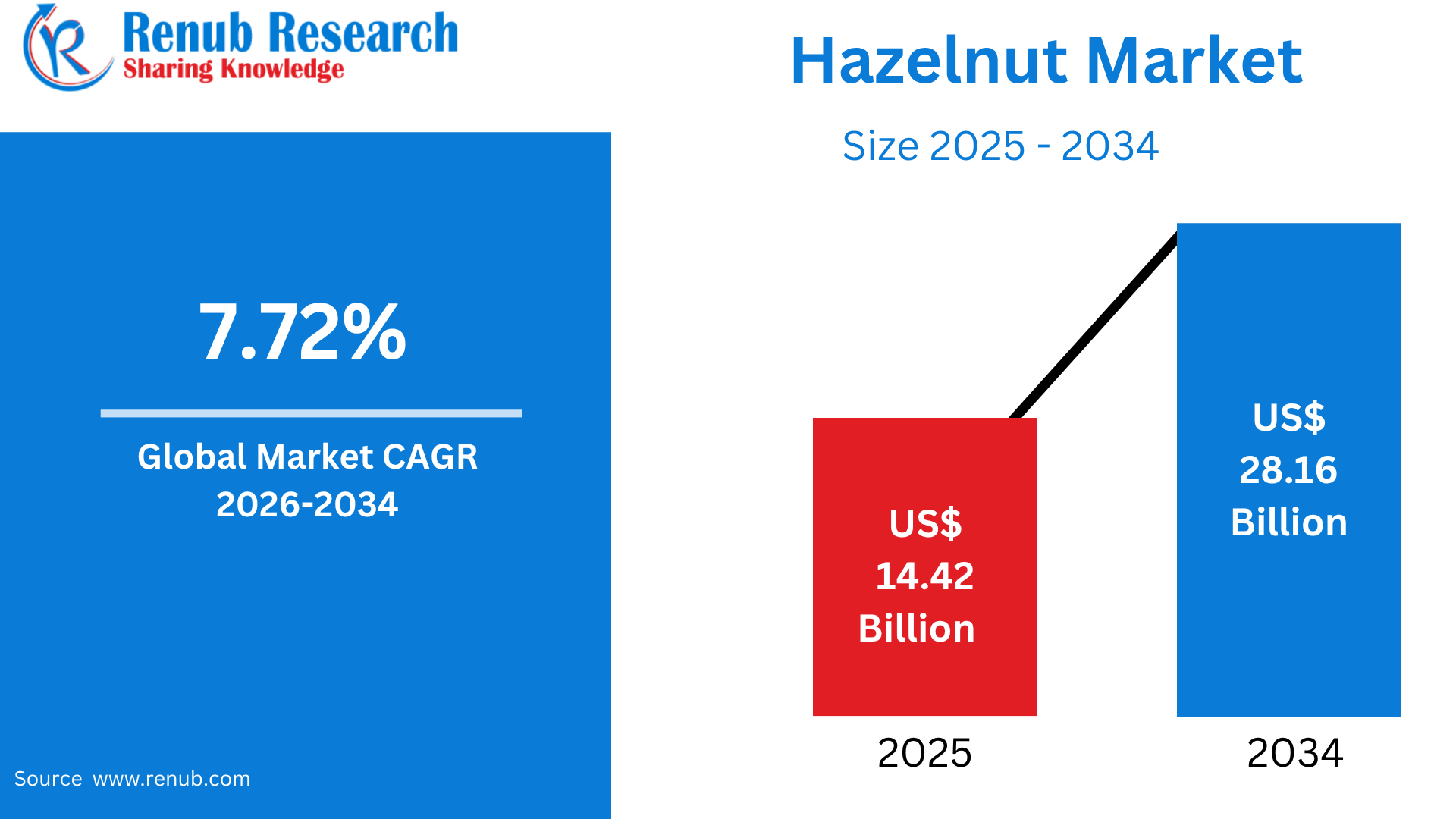
Hazelnut Market is projected to expand from US$ 14.42 billion in 2025 to US$ 28.16 billion by 2034, registering a CAGR of 7.72% during the forecast period from 2026 to 2034. Market growth is primarily driven by the increasing use of hazelnuts in the confectionery, bakery, and chocolate industries, where they are valued for their rich flavor and nutritional profile. Rising consumer preference for healthy snacking has also boosted demand for hazelnut-based products, including roasted nuts, spreads, plant-based beverages, and protein-rich snacks.
Hazelnut Market Outlooks
Hazelnut is a nut that is usually edible and is obtained from the hazel tree. The hazel tree is scientifically known as Corylus avellana. Hazelnut is usually spherical in shape and has a hard shell with a rich flavor that is sweet and buttery in nature. Hazelnuts are usually nutritious and have healthy fat, protein, fiber, vitamins, and minerals such as vitamin E, magnesium, and antioxidants. These components are usually good for health and wellness.
Hazelnuts are usually used in the food and beverage industry. Hazelnuts are used in making confectionery and bakery products. Hazelnuts are used in chocolates, spreads, pralines, cakes, cookies, and breakfast cereals. Hazelnut paste is usually used in making chocolate spreads that are popular among people. Hazelnut oil is usually used in cooking and in making salads. Hazelnut is also used in making hazelnut milk and is used in making snacks. Hazelnut is used in making chocolates and other products because of their flavor and health benefits.
What is Hazelnut and its Uses & Popularity Worldwide
Hazelnut is the edible nut of the hazel tree (Corylus avellana), prized for its rich, buttery flavor, crunchy texture, and exceptional nutritional value. It is an excellent source of healthy monounsaturated fats, protein, dietary fiber, vitamin E, magnesium, copper, and antioxidants, making it a popular ingredient in healthy diets. Hazelnuts are consumed in various forms, including whole, roasted, chopped, sliced, ground into flour, or processed into hazelnut butter, oils, spreads, and plant-based beverages. They are extensively used in the confectionery industry for chocolates, pralines, truffles, biscuits, cakes, pastries, breakfast cereals, and ice creams. Hazelnut oil is also used in cosmetics and skincare products for its moisturizing and antioxidant properties.
Worldwide, hazelnuts have gained significant popularity as consumers increasingly seek nutritious, plant-based, and natural food products. Growing demand for premium chocolates, functional snacks, vegan dairy alternatives, and clean-label ingredients has expanded hazelnut consumption across Europe, North America, and Asia-Pacific. The rise of health-conscious lifestyles and protein-rich diets has further increased demand for hazelnut-based snacks and spreads. Continuous product innovation, expanding applications in food processing, and increasing awareness of the nut’s cardiovascular and antioxidant benefits continue to strengthen the global popularity and commercial importance of hazelnuts.
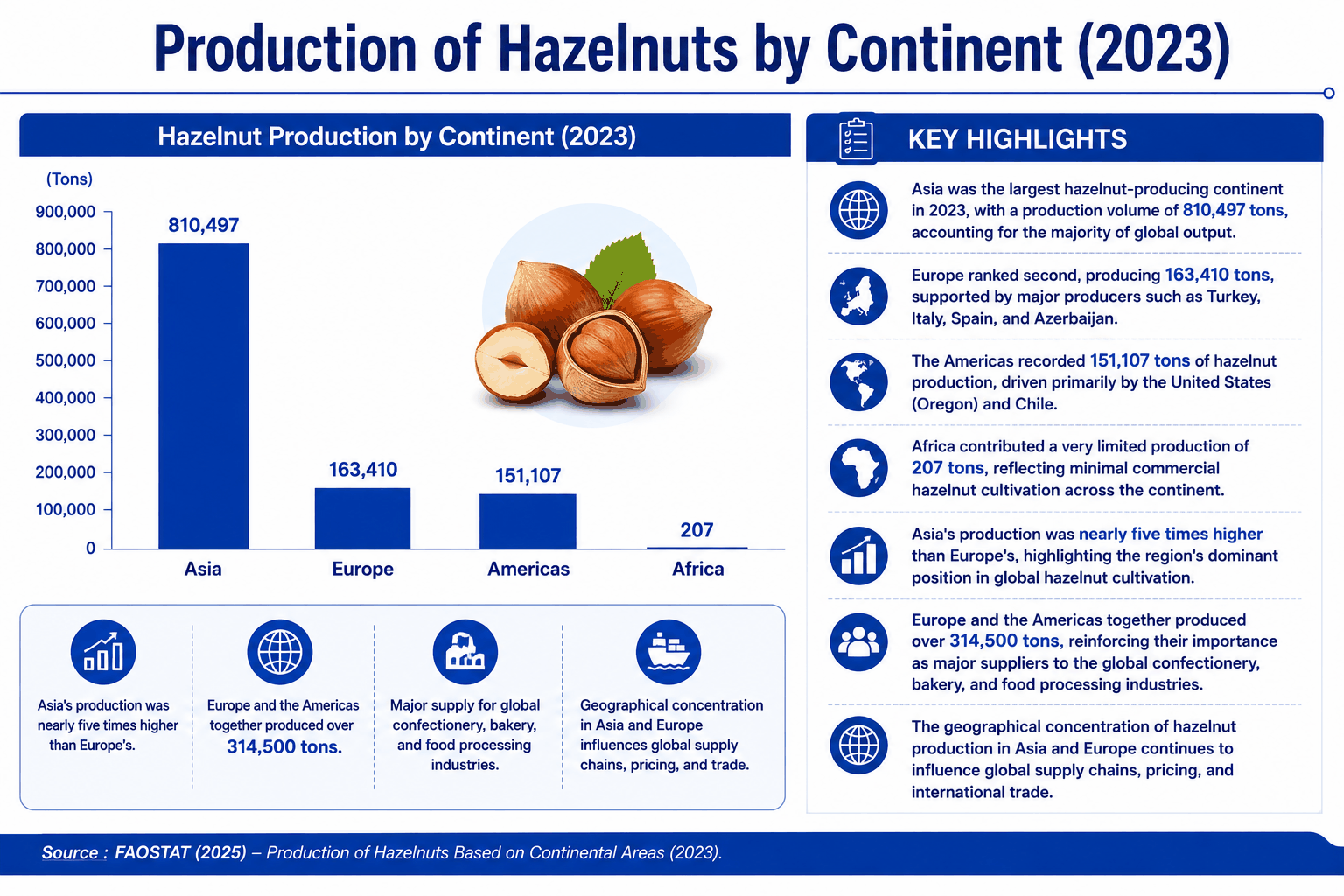
Production of Hazelnuts by Continent (2023)
Key Highlights
- Asia was the largest hazelnut-producing continent in 2023, with a production volume of 810,497 tons, accounting for the majority of global output.
- Europe ranked second, producing 163,410 tons, supported by major producers such as Turkey, Italy, Spain, and Azerbaijan.
- The Americas recorded 151,107 tons of hazelnut production, driven primarily by the United States (Oregon) and Chile.
- Africa contributed a very limited production of 207 tons, reflecting minimal commercial hazelnut cultivation across the continent.
- Asia's production was nearly five times higher than Europe's, highlighting the region's dominant position in global hazelnut cultivation.
- Europe and the Americas together produced over 314,500 tons, reinforcing their importance as major suppliers to the global confectionery, bakery, and food processing industries.
- The geographical concentration of hazelnut production in Asia and Europe continues to influence global supply chains, pricing, and international trade.
Growth Driver
Rising Demand for Healthy Snacks and Plant-Based Nutrition
Growing consumer preference for nutritious snacks and plant-based foods is one of the primary growth drivers of the global hazelnut market. Hazelnuts are naturally rich in monounsaturated fats (approximately 60–65%), protein (14–15%), dietary fiber (9–10%), vitamin E, magnesium, and antioxidants, making them an attractive ingredient for health-conscious consumers. Increasing awareness of cardiovascular health, weight management, and functional nutrition has boosted demand for nuts as convenient, nutrient-dense snacks. According to dietary recommendations, regular nut consumption may help reduce the risk of cardiovascular diseases and improve cholesterol profiles, encouraging greater inclusion of hazelnuts in daily diets. Food manufacturers are responding by launching roasted hazelnuts, nut mixes, protein bars, granolas, dairy-free beverages, and nut butters targeting wellness-oriented consumers. The rapid expansion of vegan and flexitarian diets worldwide has further strengthened demand for hazelnut ingredients in plant-based foods. As consumers increasingly replace processed snacks with natural alternatives, hazelnuts continue to gain popularity across retail, foodservice, and functional food applications.
Expanding Confectionery and Bakery Industry Boosting Hazelnut Consumption
The global confectionery and bakery industries remain the largest consumers of hazelnuts, significantly driving market expansion. Hazelnuts are widely used in premium chocolates, pralines, spreads, cookies, pastries, cakes, breakfast cereals, and desserts because of their distinctive flavor and texture. The global chocolate industry produces millions of tons of chocolate annually, with hazelnuts serving as one of the most widely used tree nuts in premium confectionery formulations. Increasing consumer demand for artisanal chocolates, premium bakery products, and indulgent snacks has encouraged manufacturers to expand hazelnut-based product portfolios. Hazelnut spreads, chocolate-filled wafers, biscuits, and seasonal confectionery continue to record strong global demand, particularly in Europe, North America, and Asia-Pacific. Continuous product innovation, including sugar-reduced and clean-label confectionery, has further expanded hazelnut applications. Rising disposable incomes in emerging economies are increasing spending on premium packaged foods, while food manufacturers continue investing in innovative recipes featuring hazelnuts, supporting sustained long-term growth across confectionery and bakery markets.
Growing Applications in Food Processing and Cosmetic Industries
Beyond traditional food applications, hazelnuts are increasingly utilized across multiple industries, creating new growth opportunities for the global market. Hazelnut oil contains high levels of oleic acid, vitamin E, and natural antioxidants, making it valuable in skincare, haircare, and cosmetic formulations. It is widely incorporated into facial oils, moisturizers, massage oils, soaps, and anti-aging products because of its lightweight texture and moisturizing properties. Within the food industry, hazelnut flour is increasingly used in gluten-free baking, while hazelnut milk has become a popular dairy alternative among vegan consumers. Food manufacturers also utilize hazelnuts in protein powders, nutrition bars, breakfast cereals, frozen desserts, and functional beverages. Global demand for clean-label ingredients and natural plant-derived oils continues to rise, encouraging manufacturers to develop innovative hazelnut-based products. Continuous investment in food processing technologies, expanding premium product categories, and increasing consumer interest in multifunctional natural ingredients are broadening commercial applications and strengthening long-term market demand for hazelnuts worldwide.
Challenge
Climate Change and Production Volatility Affect Global Supply
Hazelnut production is highly dependent on favorable climatic conditions, making the market vulnerable to weather-related disruptions. Approximately 65–70% of global hazelnut production originates from Turkey, creating a concentrated supply chain that is highly exposed to frost, drought, excessive rainfall, and temperature fluctuations. Late spring frosts can significantly damage flowering trees, reducing yields and affecting global exports. Climate variability has resulted in periodic production declines that contribute to supply shortages and increased raw material prices for food manufacturers. In addition, pests, fungal diseases, and changing rainfall patterns further challenge orchard productivity. Since hazelnut trees require several years to reach full commercial production, replacing damaged orchards is a lengthy process. These supply fluctuations create uncertainty for chocolate manufacturers, bakery producers, and ingredient suppliers that rely heavily on consistent hazelnut availability. Expanding cultivation into new producing regions and investing in climate-resilient farming practices remain essential for improving long-term supply stability.
Price Volatility and Rising Production Costs
The hazelnut market faces persistent challenges from fluctuating prices and increasing production costs throughout the supply chain. Hazelnut cultivation requires considerable labor for orchard management, harvesting, sorting, and processing, particularly in mountainous growing regions where mechanization remains limited. Rising labor wages, fertilizer prices, irrigation expenses, transportation costs, and energy prices have increased overall production expenditures for growers and processors. Since Turkey dominates global production with approximately two-thirds of worldwide hazelnut supply, any decline in harvest volumes can trigger sharp price increases across international markets. Food manufacturers producing chocolates, bakery products, spreads, and snack foods often experience higher ingredient costs, reducing profit margins or leading to retail price increases. Exchange rate fluctuations and logistical disruptions also contribute to pricing instability in export markets. These challenges can discourage smaller food manufacturers from expanding hazelnut product lines and encourage substitution with less expensive nuts or alternative ingredients, limiting overall market growth potential.
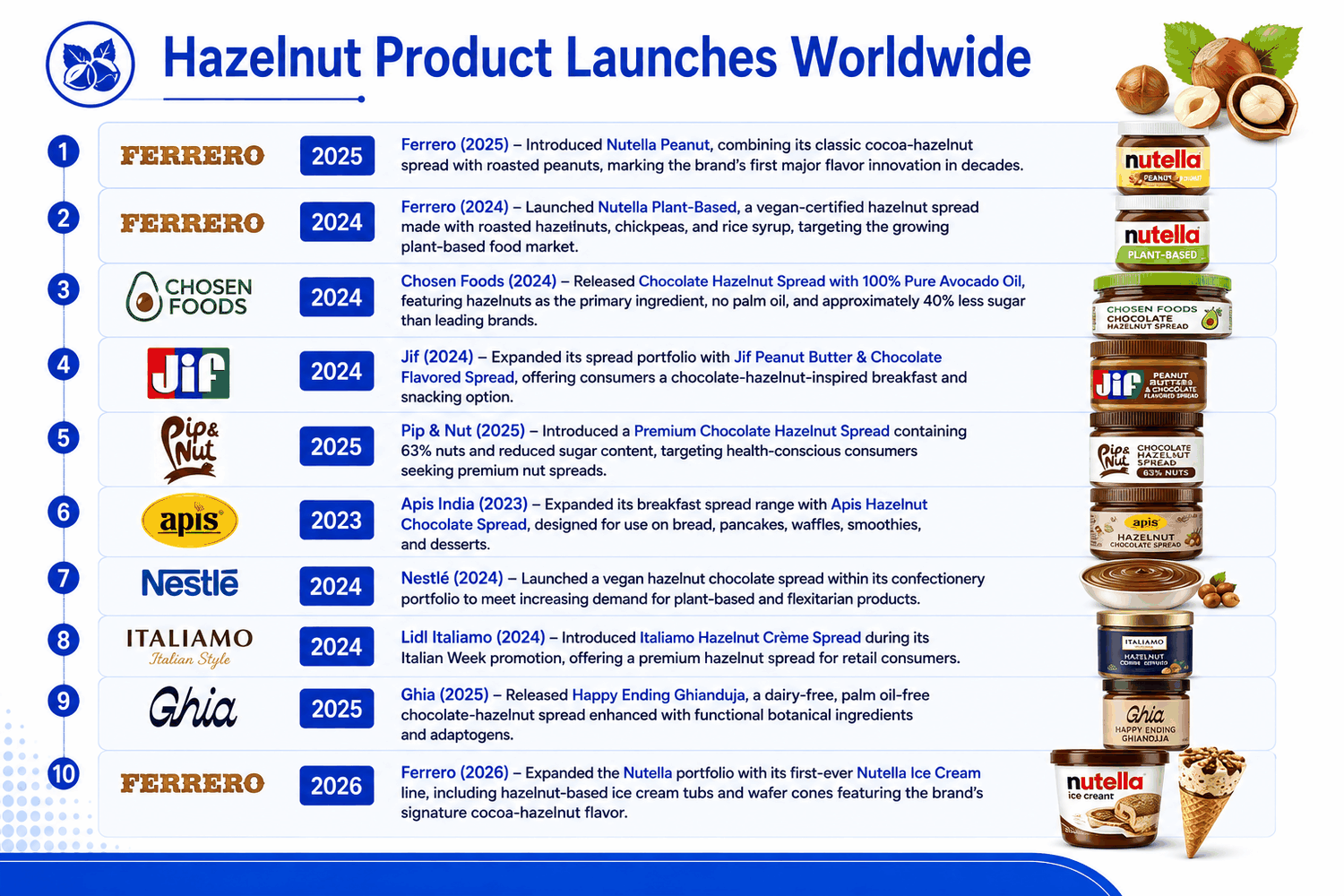
Hazelnut Product Launches Worldwide
- Ferrero (2025) – Introduced Nutella Peanut, combining its classic cocoa-hazelnut spread with roasted peanuts, marking the brand’s first major flavor innovation in decades.
- Ferrero (2024) – Launched Nutella Plant-Based, a vegan-certified hazelnut spread made with roasted hazelnuts, chickpeas, and rice syrup, targeting the growing plant-based food market.
- Chosen Foods (2024) – Released Chocolate Hazelnut Spread with 100% Pure Avocado Oil, featuring hazelnuts as the primary ingredient, no palm oil, and approximately 40% less sugar than leading brands.
- Jif (2024) – Expanded its spread portfolio with Jif Peanut Butter & Chocolate Flavored Spread, offering consumers a chocolate-hazelnut-inspired breakfast and snacking option.
- Pip & Nut (2025) – Introduced a Premium Chocolate Hazelnut Spread containing 63% nuts and reduced sugar content, targeting health-conscious consumers seeking premium nut spreads.
- Apis India (2023) – Expanded its breakfast spread range with Apis Hazelnut Chocolate Spread, designed for use on bread, pancakes, waffles, smoothies, and desserts.
- Nestlé (2024) – Launched a vegan hazelnut chocolate spread within its confectionery portfolio to meet increasing demand for plant-based and flexitarian products.
- Lidl Italiamo (2024) – Introduced Italiamo Hazelnut Crème Spread during its Italian Week promotion, offering a premium hazelnut spread for retail consumers.
- Ghia (2025) – Released Happy Ending Ghianduja, a dairy-free, palm oil-free chocolate-hazelnut spread enhanced with functional botanical ingredients and adaptogens.
- Ferrero (2026) – Expanded the Nutella portfolio with its first-ever Nutella Ice Cream line, including hazelnut-based ice cream tubs and wafer cones featuring the brand’s signature cocoa-hazelnut flavor.
Whole Hazelnut Rising Demand for Natural and Premium Nut Consumption
The whole hazelnut market is experiencing strong growth as consumers increasingly prefer minimally processed, nutrient-rich foods. Whole hazelnuts are widely consumed as healthy snacks and are extensively used in confectionery, bakery, breakfast cereals, trail mixes, and premium chocolate products. They are naturally rich in healthy monounsaturated fats (approximately 60–65%), protein (14–15%), dietary fiber, vitamin E, magnesium, and antioxidants, making them attractive to health-conscious consumers. Global consumption of tree nuts continues to rise due to growing awareness of heart health, plant-based nutrition, and functional foods. Food manufacturers are incorporating whole hazelnuts into energy bars, granolas, yogurt toppings, and gourmet desserts to satisfy consumer demand for natural ingredients and premium textures. Improved packaging technologies, including vacuum sealing and modified atmosphere packaging, have extended product shelf life while maintaining freshness. Expanding retail distribution through supermarkets, specialty food stores, and online grocery platforms has further increased product availability. Rising disposable incomes and demand for clean-label snacks continue to strengthen long-term growth prospects for the whole hazelnut market worldwide.
Hazelnut Oil Expanding Applications Across Food and Personal Care Industries
Hazelnut oil has become an increasingly valuable product due to its nutritional profile and broad industrial applications. Extracted primarily through cold-press or refined processing methods, hazelnut oil contains high concentrations of oleic acid (around 75–80%), vitamin E, omega fatty acids, and natural antioxidants. In the food industry, it is widely used as a premium cooking oil, salad dressing ingredient, flavor enhancer, and gourmet culinary oil because of its delicate nutty taste. The cosmetics and personal care sectors are also driving demand, utilizing hazelnut oil in moisturizers, massage oils, facial serums, shampoos, and anti-aging skincare products due to its lightweight texture and rapid skin absorption. Increasing consumer preference for natural and plant-derived ingredients is encouraging manufacturers to replace synthetic oils with botanical alternatives. Rising awareness of clean-label beauty products, expanding aromatherapy applications, and increasing demand for functional edible oils are supporting continuous market expansion. Technological improvements in oil extraction and quality preservation are further enhancing commercial opportunities across global markets.
Hazelnut Food & Beverage Growing Use in Functional and Premium Food Products
The hazelnut food and beverage market continues to expand as manufacturers introduce innovative products that align with consumer demand for nutritious, plant-based, and premium foods. Hazelnuts are widely incorporated into chocolates, confectionery, bakery products, breakfast cereals, dairy products, frozen desserts, beverages, protein bars, and plant-based milk alternatives. Their naturally sweet flavor and high nutritional value make them a preferred ingredient in both indulgent and health-oriented product categories. Hazelnuts provide approximately 60–65% healthy fats, 14–15% protein, and significant levels of vitamin E and dietary fiber, supporting their popularity among health-conscious consumers. Growing vegan and flexitarian lifestyles have accelerated demand for hazelnut milk, dairy-free spreads, and plant-based beverages. Premium chocolate manufacturers continue introducing new hazelnut-filled products, while food processors increasingly utilize hazelnut flour in gluten-free baking applications. Expanding café culture, specialty beverage innovation, and rising consumption of functional foods are creating new growth opportunities. Continuous product innovation and premiumization trends continue to strengthen the hazelnut food and beverage market globally.
Hazelnut Pharmaceuticals Nutraceutical Potential Driving Healthcare Applications
The hazelnut pharmaceuticals market is gaining momentum as scientific research increasingly highlights the nut’s nutritional and bioactive properties. Hazelnuts contain significant quantities of vitamin E, phenolic compounds, flavonoids, phytosterols, magnesium, and healthy unsaturated fatty acids, all of which contribute to antioxidant and anti-inflammatory activity. These nutritional components are increasingly incorporated into dietary supplements, nutraceutical formulations, cardiovascular health products, and immune-support supplements. Growing consumer awareness of preventive healthcare has increased demand for plant-derived pharmaceutical ingredients that support overall wellness. Hazelnut-derived oils and extracts are also being investigated for their potential applications in skin repair formulations, wound-healing products, and dermatological preparations because of their moisturizing and antioxidant characteristics. The global expansion of the nutraceutical industry, aging populations, and increasing prevalence of chronic diseases have encouraged pharmaceutical companies to develop products containing natural bioactive ingredients. Continued investment in clinical research, botanical extraction technologies, and evidence-based nutraceutical development is expected to create new commercial opportunities for hazelnut-derived pharmaceutical ingredients in the coming years.
United States Hazelnut Expanding Demand for Healthy Snacks and Premium Food Products
The United States hazelnut market is witnessing steady growth, supported by increasing consumer preference for healthy snacks, premium confectionery, and plant-based food products. The U.S. is one of the world’s leading hazelnut producers outside Europe, with Oregon accounting for approximately 99% of domestic hazelnut production due to its favorable climate. Hazelnuts are widely used in chocolates, spreads, bakery products, cereals, dairy alternatives, and gourmet snacks. Americans consume millions of pounds of tree nuts annually, reflecting a broader shift toward nutrient-rich diets that emphasize heart health and natural ingredients. Hazelnuts provide approximately 60–65% healthy monounsaturated fats, 14–15% protein, and high levels of vitamin E and antioxidants, supporting their growing popularity among health-conscious consumers. Expanding demand for vegan beverages, gluten-free bakery products, and functional foods has encouraged manufacturers to incorporate hazelnuts into innovative formulations. Rising investments in premium food processing, expanding retail availability, and continuous product innovation continue to strengthen long-term growth prospects for the U.S. hazelnut market.
United Kingdom Hazelnut Premium Confectionery and Health Trends Fuel Market Growth
The United Kingdom hazelnut market continues to expand as consumers increasingly purchase premium chocolates, bakery products, healthy snacks, and plant-based foods. With a population of nearly 69 million, demand for nutrient-dense ingredients has increased significantly as health awareness and clean-label preferences continue to influence purchasing decisions. Hazelnuts are widely used in chocolate spreads, pralines, biscuits, pastries, breakfast cereals, dairy-free beverages, and premium desserts. The UK’s expanding vegan population and increasing adoption of flexitarian diets have accelerated demand for hazelnut milk, nut butters, and plant-based confectionery. Retailers continue to expand premium private-label nut products while food manufacturers introduce products featuring natural ingredients and reduced sugar content. The country’s well-developed food processing sector supports growing imports of hazelnuts for chocolate manufacturing and specialty bakery production. Rising consumer interest in sustainable sourcing, organic foods, and functional nutrition has further strengthened hazelnut consumption. Continuous innovation in premium packaged foods and healthy snacking continues to support steady growth across the United Kingdom hazelnut market.
India Rising Urban Consumption and Premium Food Industry Expansion
India’s hazelnut market is growing rapidly due to rising disposable incomes, expanding urban populations, and increasing demand for premium packaged foods. With a population exceeding 1.4 billion, India offers substantial long-term growth opportunities for hazelnut-based products despite relatively low per-capita nut consumption compared with developed markets. Hazelnuts are increasingly used in chocolates, bakery products, confectionery, breakfast cereals, ice creams, and premium desserts, particularly in metropolitan cities. India’s growing middle-class population and rapid expansion of organized retail have significantly improved consumer access to imported hazelnut products. The popularity of premium chocolate brands and hazelnut spreads has increased demand among younger consumers. Additionally, growing awareness of healthy fats, antioxidants, vitamin E, and plant-based nutrition is encouraging consumption of roasted hazelnuts and nut-based snacks. The rapid expansion of e-commerce platforms, specialty food retailers, and premium cafés has further strengthened market penetration. Increasing innovation in functional foods, dairy alternatives, and healthy snacking is expected to drive sustained growth in India’s hazelnut market.
Saudi Arabia Growing Demand for Premium Foods and Healthy Nutrition
Saudi Arabia’s hazelnut market is expanding steadily due to increasing health consciousness, higher disposable incomes, and growing demand for premium imported food products. The Kingdom’s population of more than 38 million has shown increasing interest in nutritious snacks, gourmet confectionery, and plant-based ingredients as lifestyle-related health awareness continues to improve. Hazelnuts are widely used in chocolates, bakery products, pastries, desserts, breakfast cereals, and specialty coffee beverages offered by international café chains. The country’s expanding retail sector, including supermarkets, hypermarkets, and online grocery platforms, has significantly improved the availability of imported hazelnut products. Rising tourism, luxury hospitality developments, and premium foodservice establishments are also increasing demand for hazelnut ingredients in desserts and confectionery. Consumers are increasingly seeking foods rich in healthy fats, dietary fiber, protein, and antioxidants, further supporting hazelnut consumption. Government initiatives promoting food diversification, expanding modern retail infrastructure, and growing demand for natural, clean-label, and premium packaged foods continue to strengthen the long-term growth outlook of Saudi Arabia’s hazelnut market.
Market Segments
Product
- Whole Hazelnut
- Hazelnut Paste
- Hazelnut Oil
- Others
Application
- Food & Beverage
- Cosmetics & Personal Care
- Pharmaceuticals
- Others
Countries
North America
- United States
- Canada
Europe
- France
- Germany
- Italy
- Spain
- United Kingdom
- Belgium
- Netherlands
- Turkey
Asia Pacific
- China
- Japan
- India
- South Korea
- Thailand
- Malaysia
- Indonesia
- Australia
- New Zealand
Latin America
- Brazil
- Mexico
- Argentina
Middle East & Africa
- Saudi Arabia
- United Arab Emirates
- South Africa
All companies have been covered with 5 Viewpoints
- Overviews
- Key Person
- Recent Developments
- SWOT Analysis
- Revenue Analysis
Company Analysis
- Archer Daniels Midland Company
- Olam International
- Arslanturk S.A.
- Holmquist Hazelnut Orchards, LLC
- DurakFindik
- DeveHerbes
- Azerstar LLC
- American Hazelnut Company
Report Details:
| Report Features | Details |
| Base Year |
2025 |
| Historical Period |
2022 - 2025 |
| Forecast Period |
2026 - 2034 |
| Market |
US$ Billion |
| Segment Covered |
Product, Application and Countries |
| Countries Covered |
|
| Companies Covered |
|
| Customization Scope |
20% Free Customization |
| Post-Sale Analyst Support |
1 Year (52 Weeks) |
| Delivery Format |
PDF and Excel through Email (We can also provide the editable version of the report in PPT/Word format on request) |
Customization Services available
- Analysis of Market Size and Its Segments
- More Company Profiles (Upto 10 without any additional cost):
- Additional Countries (Other than mentioned Countries):
- Region/Country Specific Reports:
- Market Entry Strategy:
- Region-Specific Market Dynamics:
- Regional Market Share Analysis:
- Trade Analysis:
- Production Insights:
- Others Customized Requests:
For more information contact our analysts.
Need More Assistance?
- Talk to our analysts to get more precious information on the current market trends.
- Include more countries and segments and customize the report based on the final requirement.
- Get a competitive advantage in your industry by knowing the report findings and making a positive impact on your revenues and operations.
- Our analysts are always ready to provide more help and pertinent information if you need any additional assistance.