Global Goat Milk Market Size, Share, Trends, Growth and Forecast Report by Product, Sector, Distribution Channel, Country and Company Analysis 2026-2034
Buy NowGlobal Goat Milk Market Analysis: Market Size, Share, and Strategic Forecast
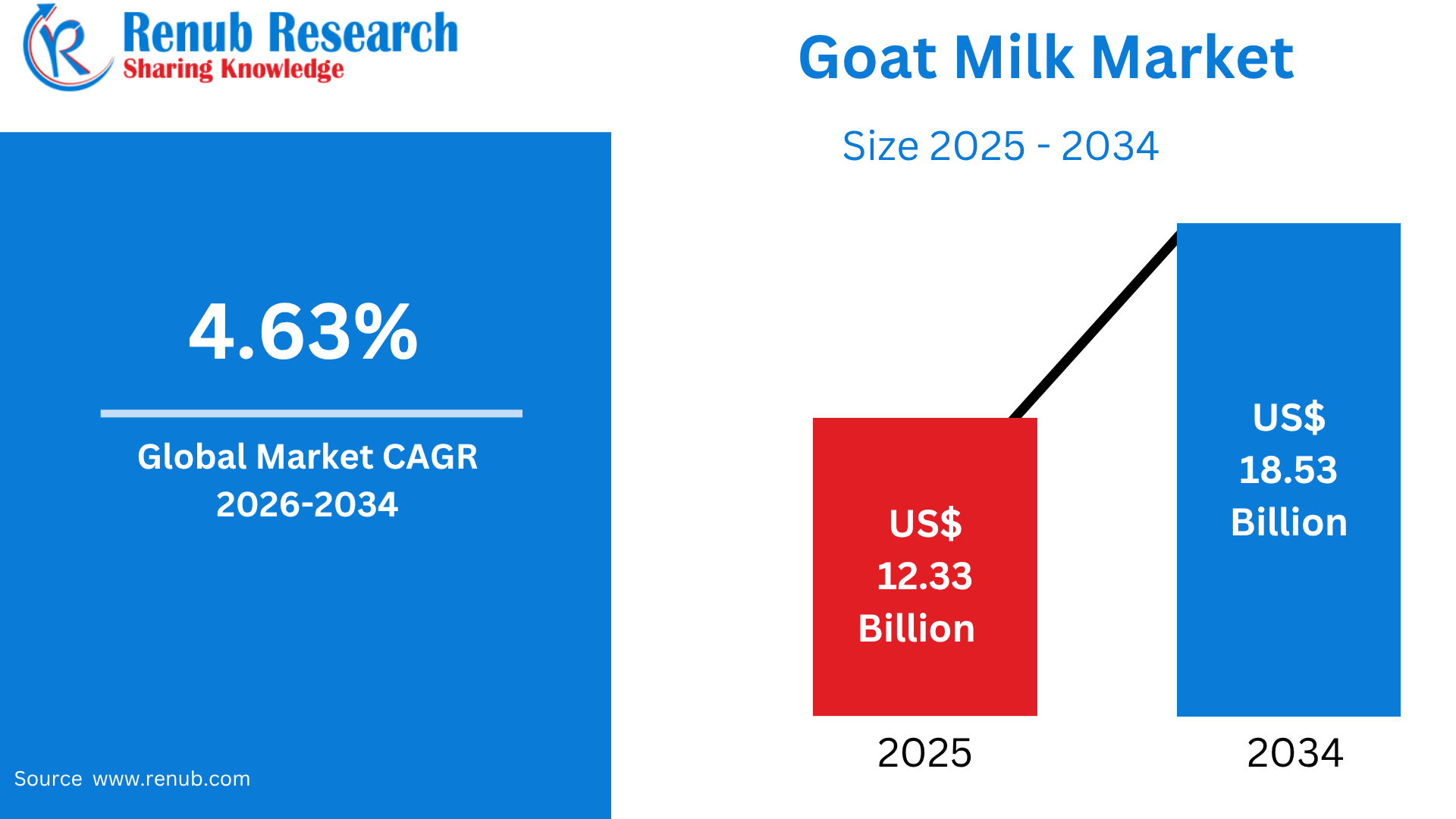
Goat Milk Market is projected to grow from US$12.33 billion in 2025 to US$18.53 billion by 2034, registering a compound annual growth rate (CAGR) of 4.63% during 2026–2034. Market growth is driven by rising consumer demand for nutritious and easily digestible dairy products. Goat milk is widely recognized for its rich nutritional profile, containing essential vitamins, minerals, and proteins, while being a preferred alternative for individuals with lactose sensitivity or digestive concerns. Increasing health awareness, expanding availability of value-added goat milk products, and growing adoption of functional dairy beverages are further supporting the steady expansion of the global goat milk market.
What is Goat Milk? Uses and Global Popularity
Goat milk is a highly nutritious dairy product obtained from domesticated goats and is widely consumed as an alternative to cow’s milk due to its rich nutritional profile and easier digestibility. It contains high-quality protein, calcium, phosphorus, potassium, magnesium, vitamin A, vitamin D, and essential fatty acids that support bone health, immunity, and overall wellness. Goat milk has naturally smaller fat globules and lower levels of alpha-S1 casein than cow’s milk, making it easier to digest for many consumers and a preferred option for individuals with mild lactose sensitivity or digestive discomfort. It is consumed as fresh milk and is extensively processed into cheese, yogurt, butter, infant formula, ice cream, milk powder, and nutritional supplements. Goat milk is also used in the cosmetics industry for soaps, lotions, creams, and skincare products because of its moisturizing properties and naturally occurring vitamins and minerals.
Worldwide, goat milk has gained increasing popularity as consumers seek healthier, functional, and specialty dairy products. It is widely consumed across Asia, Europe, the Middle East, and Africa, while demand is also expanding rapidly in North America and Latin America due to growing awareness of its nutritional benefits. Rising health consciousness, increasing prevalence of lactose intolerance, and consumer preference for natural and minimally processed foods have significantly boosted market demand. Manufacturers are introducing organic, fortified, flavored, and value-added goat milk products to meet evolving consumer preferences. Expanding retail distribution through supermarkets, specialty health stores, online grocery platforms, and premium dairy outlets has improved product accessibility. Continuous innovation in goat milk-based beverages, infant nutrition, and functional dairy products is expected to further strengthen its global popularity and support sustained growth in the worldwide goat milk market.
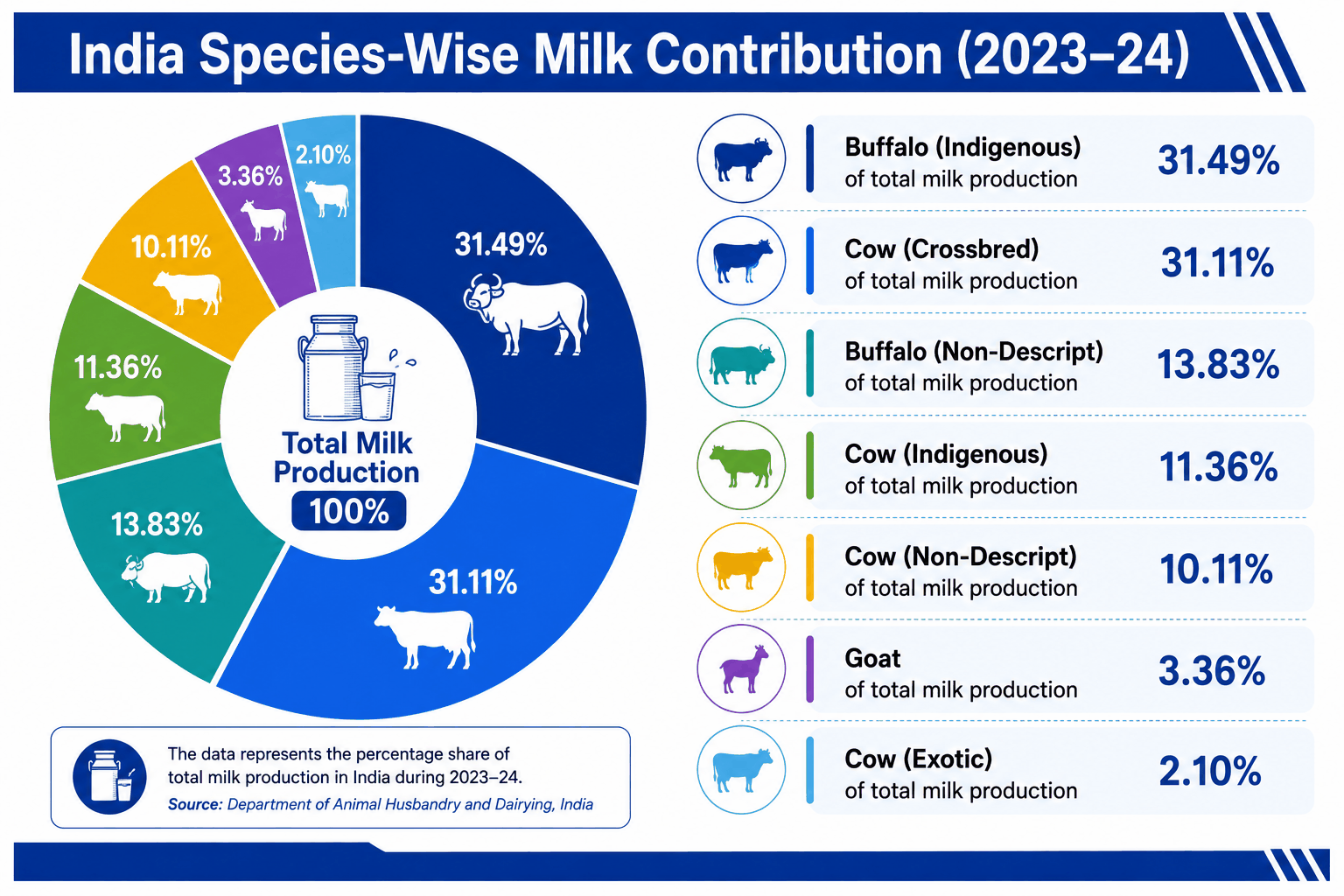
India Species-Wise Milk Contribution (2023–24)
- Buffalo (Indigenous): 31.49% of total milk production (largest contributor).
- Cow (Crossbred): 31.11% of total milk production.
- Buffalo (Non-Descript): 13.83% of total milk production.
- Cow (Indigenous): 11.36% of total milk production.
- Cow (Non-Descript): 10.11% of total milk production.
- Goat: 3.36% of total milk production.
- Cow (Exotic): 2.10% of total milk production.
Growth Driver of the Goat Milk Market
Growing Consumer Preference for Easily Digestible and Nutrient-Rich Dairy Products
Increasing health awareness and demand for digestible dairy alternatives are major drivers of the global goat milk market. Goat milk contains naturally smaller fat globules and lower levels of alpha-S1 casein, making it easier to digest than conventional cow's milk for many consumers. It is also rich in calcium, potassium, phosphorus, vitamin A, and medium-chain fatty acids that support bone health, immunity, and digestion. Industry estimates indicate that more than 65% of global goat milk production is consumed as fresh milk and traditional dairy products, particularly across Asia, the Middle East, and Africa. Rising consumer interest in functional foods, clean-label nutrition, and minimally processed dairy products has expanded demand for goat milk-based beverages, yogurt, cheese, and milk powder. Healthcare professionals increasingly recommend goat milk as an alternative dairy option for individuals with mild digestive discomfort or sensitivity to cow's milk proteins. Growing awareness of its nutritional benefits continues encouraging manufacturers to expand premium and fortified goat milk product portfolios worldwide.
Rising Demand for Infant Nutrition and Functional Dairy Products
The expanding infant nutrition and functional food industries are significantly boosting demand for goat milk worldwide. Goat milk naturally contains proteins, minerals, and fatty acids that make it a valuable ingredient for premium infant formula and specialized nutritional products. Industry estimates suggest that infant formula represents approximately 15–20% of the value-added goat milk product market, with demand increasing rapidly across Asia-Pacific and Europe. Parents are increasingly seeking premium nutrition products with high digestibility and natural ingredients, encouraging manufacturers to invest in goat milk-based infant formula, toddler milk, and fortified nutritional beverages. In addition to infant nutrition, goat milk is widely used in protein drinks, yogurt, fermented dairy products, cheese, and dietary supplements targeting health-conscious consumers. Manufacturers continue introducing organic, probiotic, vitamin-fortified, and high-protein goat milk products to address growing consumer demand for functional nutrition. Continuous innovation in dairy processing and expanding premium dairy consumption are expected to support long-term market growth.
Expansion of Specialty Dairy Products and Premium Retail Distribution
The growing popularity of specialty dairy products is creating significant growth opportunities for the goat milk market. Industry estimates indicate that processed products account for nearly 40% of global goat milk utilization, including cheese, yogurt, butter, milk powder, infant formula, flavored milk, and frozen desserts. Consumers increasingly prefer premium dairy products that offer nutritional benefits, unique taste profiles, and natural ingredients. Supermarkets, specialty food retailers, health stores, and e-commerce platforms have expanded the availability of goat milk products, improving consumer accessibility worldwide. Manufacturers are also investing in organic certification, sustainable farming practices, and premium branding to differentiate their products in competitive markets. The hospitality sector and specialty cheese industry continue to increase demand for goat milk because of its distinctive flavor and culinary versatility. Rising disposable incomes, expanding organized retail networks, and increasing demand for artisanal and premium dairy products are expected to further strengthen the global goat milk market during the forecast period.
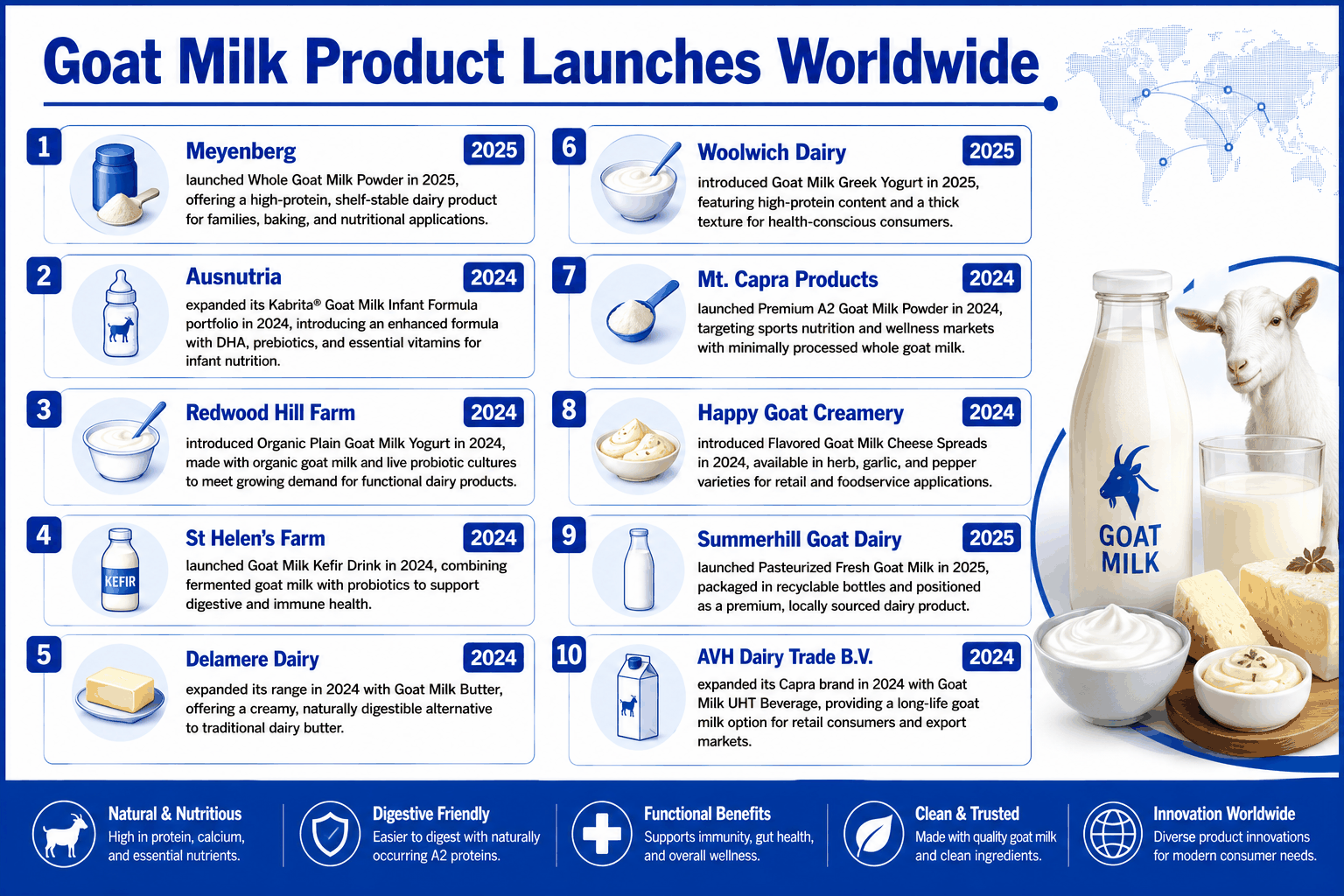
Goat Milk Product Launches Worldwide
- Meyenberg launched Whole Goat Milk Powder in 2025, offering a high-protein, shelf-stable dairy product for families, baking, and nutritional applications.
- Ausnutria expanded its Kabrita® Goat Milk Infant Formula portfolio in 2024, introducing an enhanced formula with DHA, prebiotics, and essential vitamins for infant nutrition.
- Redwood Hill Farm introduced Organic Plain Goat Milk Yogurt in 2024, made with organic goat milk and live probiotic cultures to meet growing demand for functional dairy products.
- St Helen’s Farm launched Goat Milk Kefir Drink in 2024, combining fermented goat milk with probiotics to support digestive and immune health.
- Delamere Dairy expanded its range in 2024 with Goat Milk Butter, offering a creamy, naturally digestible alternative to traditional dairy butter.
- Woolwich Dairy introduced Goat Milk Greek Yogurt in 2025, featuring high protein content and a thick texture for health-conscious consumers.
- Mt. Capra Products launched Premium A2 Goat Milk Powder in 2024, targeting sports nutrition and wellness markets with minimally processed whole goat milk.
- Happy Goat Creamery introduced Flavored Goat Milk Cheese Spreads in 2024, available in herb, garlic, and pepper varieties for retail and foodservice applications.
- Summerhill Goat Dairy launched Pasteurized Fresh Goat Milk in 2025, packaged in recyclable bottles and positioned as a premium, locally sourced dairy product.
- AVH Dairy Trade B.V. expanded its Capra brand in 2024 with Goat Milk UHT Beverage, providing a long-life goat milk option for retail consumers and export markets.
Challenges of the Goat Milk Market
Limited Production Capacity and Higher Production Costs
One of the major challenges facing the global goat milk market is limited production capacity compared with conventional cow's milk. Goats typically produce only 2–4 liters of milk per day, whereas dairy cows can produce 20–30 liters per day under commercial farming conditions. This substantially lower productivity increases production costs and limits economies of scale. Goat farming is also largely concentrated among small and medium-sized producers, making consistent milk collection, processing, and quality standardization more difficult. Higher feed expenses, veterinary care, specialized breeding programs, and relatively lower herd sizes contribute to elevated production costs. These higher costs are reflected in retail prices, making goat milk products more expensive than conventional dairy products in many markets. Limited processing infrastructure and cold-chain facilities in developing regions further restrict market expansion. Increasing investments in commercial goat farming, improved breeding technologies, and modern dairy processing facilities will be essential to overcome these production-related challenges.
Limited Consumer Awareness and Restricted Product Availability
Despite growing demand, consumer awareness of goat milk remains relatively limited in many regions, restricting broader market penetration. Industry estimates indicate that goat milk contributes less than 3% of global commercial dairy consumption, significantly lower than cow's milk. Many consumers remain unfamiliar with its nutritional benefits, digestibility, and product applications, while misconceptions regarding taste and aroma continue to influence purchasing decisions. Retail availability is also limited outside major urban centers, reducing accessibility for potential consumers. Compared with conventional dairy products, goat milk-based beverages, cheese, yogurt, and infant formula are often offered in fewer retail outlets and at premium prices. Manufacturers must invest in consumer education, marketing campaigns, product innovation, and wider retail distribution to improve awareness and encourage trial purchases. Expanding supermarket presence, strengthening e-commerce channels, and introducing flavored and value-added goat milk products can help increase consumer acceptance and support sustained long-term market growth.
Goat Milk Premium Dairy Segment Driven by Specialty Cheese Consumption
Goat Milk Cheese Market represents the largest value-added segment of the global goat milk industry, accounting for an estimated 45–50% of processed goat milk consumption. Goat cheese is widely appreciated for its creamy texture, distinctive flavor, and high nutritional value, making it popular among health-conscious consumers and gourmet food enthusiasts. It contains high-quality protein, calcium, phosphorus, and beneficial fatty acids while being easier to digest than many traditional dairy cheeses. Europe remains the leading producer and consumer of goat cheese, with increasing demand also observed across North America and Asia-Pacific. Premium restaurants, hotels, specialty retailers, and supermarkets continue expanding their offerings of soft, semi-hard, and aged goat cheese varieties. Organic, artisanal, and flavored goat cheese products are gaining popularity due to increasing consumer preference for natural and premium foods. Continuous innovation in specialty cheese production, expanding retail availability, and rising demand for functional dairy products are expected to support sustained growth in the global goat milk cheese market.
Goat Milk Powder Expanding Demand from Infant Nutrition and Functional Foods
Goat Milk Powder Market is experiencing strong growth due to increasing demand for premium infant nutrition and convenient dairy products. Industry estimates indicate that milk powder accounts for approximately 20–25% of value-added goat milk products, supported by growing demand from infant formula manufacturers and nutritional supplement producers. Goat milk powder offers a longer shelf life, easier transportation, and convenient storage compared with fresh milk, making it highly suitable for international trade. It is extensively used in infant formula, protein supplements, bakery products, confectionery, dairy beverages, and functional nutrition. Rising consumer awareness regarding digestibility and nutritional benefits has encouraged manufacturers to introduce organic, fortified, and high-protein goat milk powder formulations. Healthcare professionals increasingly recommend goat milk-based nutrition products for individuals seeking alternative dairy options. Improvements in spray-drying technology, quality control, and packaging have enhanced product stability and export potential. Increasing global demand for premium nutritional products continues supporting expansion of the goat milk powder market.
Goat Milk Traditional Distribution Dominating Rural Consumption
Unorganized Goat Milk Market continues to account for a significant share of global goat milk sales, particularly across Asia, Africa, and parts of the Middle East. Industry estimates suggest that more than 60% of global goat milk is distributed through informal or unorganized channels, including direct farm sales, village cooperatives, local vendors, and community markets. Consumers in rural regions often purchase fresh goat milk directly from farmers because of its affordability, freshness, and traditional consumption patterns. Small-scale goat farming remains the primary source of milk production, with limited processing and packaging infrastructure. While the unorganized sector provides livelihoods for millions of rural households, challenges such as inconsistent quality standards, inadequate cold-chain facilities, limited product standardization, and restricted market access continue affecting commercial expansion. Government initiatives promoting dairy cooperatives, hygienic milk collection systems, farmer training, and improved processing facilities are expected to gradually formalize the sector while enhancing product quality and increasing farmer income.
Modern Retail and Premium Dairy Products Driving Goat Milk Growth
Organized Goat Milk Market is expanding rapidly as consumers increasingly prefer branded, quality-certified, and value-added dairy products. Industry estimates indicate that organized retail channels account for approximately 35–40% of commercial goat milk sales, with continuous growth driven by supermarkets, hypermarkets, specialty health stores, pharmacies, and e-commerce platforms. Organized manufacturers invest heavily in quality assurance, pasteurization, standardized processing, traceability, and attractive packaging to meet evolving consumer expectations. The sector offers a diverse product portfolio, including fresh goat milk, flavored milk, yogurt, cheese, butter, infant formula, milk powder, and nutritional beverages. Growing health awareness, rising disposable incomes, and expanding urban populations are encouraging consumers to shift toward premium branded goat milk products. Manufacturers are also introducing organic, probiotic, lactose-friendly, and fortified product lines to capture higher-value market segments. Continued investments in cold-chain logistics, processing technologies, product innovation, and organized retail distribution are expected to drive long-term growth in the global organized goat milk market.
Premium Dairy and Functional Nutrition Supporting United States Goat Milk Growth
United States Goat Milk Market is expanding steadily as consumer demand for premium dairy products and alternative milk options continues to rise. Industry estimates indicate that the U.S. accounts for approximately 3–5% of the global commercial goat milk market, with growth driven by increasing awareness of digestible and nutrient-rich dairy products. Goat milk is widely used in specialty cheese, yogurt, milk powder, infant nutrition, and premium beverages. The specialty cheese industry represents one of the largest application segments, supplying supermarkets, gourmet retailers, and restaurants nationwide. Consumers seeking clean-label, organic, and minimally processed dairy products are increasingly choosing goat milk because of its nutritional profile and digestibility. Domestic dairy farms are investing in improved breeding, automated milking systems, and value-added product development to enhance production efficiency. Expanding e-commerce platforms and specialty health food retailers have improved product accessibility. Rising health awareness, increasing demand for functional dairy products, and continuous product innovation are expected to support sustained growth in the United States goat milk market.
Rising Demand for Specialty United Kingdom Goat Dairy Products
United Kingdom Goat Milk Market is experiencing consistent growth due to increasing consumer preference for premium dairy products and healthier dietary choices. Industry estimates suggest that goat cheese accounts for more than 50% of commercial goat milk utilization in the UK, reflecting strong demand from the hospitality sector and retail consumers. Goat milk products are increasingly available through supermarkets, organic food stores, and online grocery platforms. Consumers are showing growing interest in organic, artisan, and locally produced dairy products, encouraging manufacturers to expand their premium product portfolios. Goat milk is widely used in cheese, yogurt, butter, milk powder, and nutritional beverages. Advances in dairy farming, improved herd management, and sustainable production practices continue strengthening domestic supply. Growing awareness regarding digestibility, protein quality, and natural nutrition has increased demand among health-conscious consumers. Continued expansion of specialty dairy retailers and premium foodservice outlets is expected to drive long-term growth in the United Kingdom goat milk market.
India Goat Milk Expanding Livestock Resources and Traditional Dairy Consumption
India Goat Milk Market holds significant growth potential due to the country’s large goat population and long-standing tradition of goat milk consumption in rural and semi-urban areas. India possesses one of the world’s largest goat populations, exceeding 150 million animals, providing a substantial resource base for milk production. Goat milk is widely consumed as fresh milk and is increasingly processed into cheese, milk powder, yogurt, sweets, and infant nutrition products. Rising health awareness, increasing disposable incomes, and expanding organized dairy processing are encouraging greater commercial production of goat milk products. Government initiatives supporting livestock development, dairy cooperatives, veterinary healthcare, and rural entrepreneurship continue improving production efficiency. Urban consumers are increasingly purchasing packaged goat milk because of growing interest in functional and premium dairy products. Expansion of supermarkets, online grocery platforms, and specialty dairy retailers has improved product availability. Increasing investment in organized goat farming and value-added dairy processing is expected to sustain long-term growth in the Indian goat milk market.
Saudi Arabia Health Awareness and Premium Dairy Consumption
Saudi Arabia Goat Milk Market is expanding steadily due to increasing demand for nutritious dairy products and strong cultural acceptance of goat milk. Industry estimates indicate that goat milk contributes approximately 8–10% of domestic specialty dairy consumption, supported by rising consumer preference for premium and natural dairy products. Goat milk is widely consumed as fresh milk and processed into yogurt, cheese, milk powder, and traditional dairy products. Growing health awareness, rising disposable incomes, and increasing demand for functional foods have encouraged consumers to choose goat milk for its digestibility and nutritional benefits. Government initiatives under Vision 2030 are promoting investments in modern livestock farming, dairy processing, food security, and agricultural sustainability, strengthening domestic production capabilities. Manufacturers are expanding branded product offerings through supermarkets, hypermarkets, specialty food stores, and online retail platforms. Continuous investments in modern dairy technology, cold-chain infrastructure, and premium product innovation are expected to support sustained growth in the Saudi Arabian goat milk market.
Market Segments
Product
- Milk
- Cheese
- Milk Powder
- Others
Sector
- Unorganized
- Organized
Distribution Channel
- Hypermarket and Supermarket
- Convenience Store
- Specialty Stores
- Medical and Pharmacy Store
- Online
Country
North America
- United States
- Canada
Europe
- France
- Germany
- Italy
- Spain
- United Kingdom
- Belgium
- Netherlands
- Turkey
Asia Pacific
- China
- Japan
- India
- Australia
- South Korea
- Thailand
- Malaysia
- Indonesia
- New Zealand
Latin America
- Brazil
- Mexico
- Argentina
Middle East & Africa
- South Africa
- Saudi Arabia
- United Arab Emirates
All the Key players have been covered from 5 Viewpoints:
- Overviews
- Key Person
- Recent Developments
- SWOT Analysis
- Revenue Analysis
Company Analysis
- Ausnutria Dairy Corporation Ltd.
- AVH Dairy Trade B.V.
- Goat Partners International
- Granarolo S.p.A.
- Meyenberg
- Redwood Hill Farm & Creamery
- St Helen's Farm.
Report Details:
| Report Features | Details |
| Base Year |
2025 |
| Historical Period |
2022 - 2025 |
| Forecast Period |
2026 - 2034 |
| Market |
US$ Billion |
| Segment Covered |
Product, Sector, Distribution Channel and Countries |
| Countries Covered |
|
| Companies Covered |
|
| Customization Scope |
20% Free Customization |
| Post-Sale Analyst Support |
1 Year (52 Weeks) |
| Delivery Format |
PDF and Excel through Email (We can also provide the editable version of the report in PPT/Word format on request) |
Customization Services available
- Analysis of Market Size and Its Segments
- More Company Profiles (Upto 10 without any additional cost):
- Additional Countries (Other than mentioned Countries):
- Region/Country Specific Reports:
- Market Entry Strategy:
- Region-Specific Market Dynamics:
- Regional Market Share Analysis:
- Trade Analysis:
- Production Insights:
- Others Customized Requests:
For more information contact our analysts.
Need More Assistance?
- Talk to our analysts to get more precious information on the current market trends.
- Include more countries and segments and customize the report based on the final requirement.
- Get a competitive advantage in your industry by knowing the report findings and making a positive impact on your revenues and operations.
- Our analysts are always ready to provide more help and pertinent information if you need any additional assistance.