Global Pasta Market report by Types, Raw Materials, Distribution Channels, Countries and Company Analysis (2026-2034)
Buy NowGlobal Pasta Market Size and Forecast 2026-2034
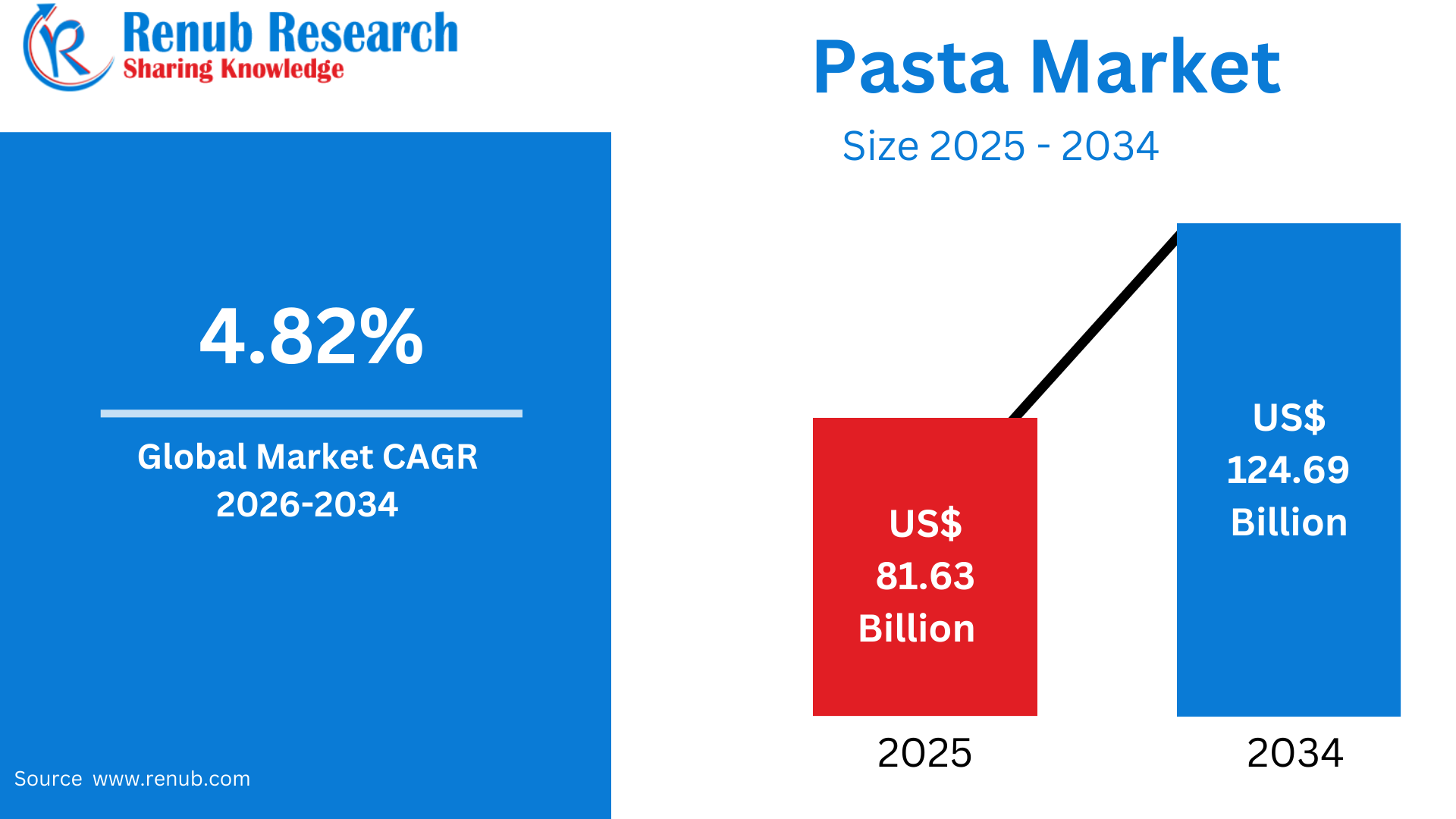
Global Pasta Market is expected to reach US$ 124.69 billion by 2034 from US$ 81.63 billion in 2025, with a CAGR of 4.82% from 2026 to 2034. Rising demand for fresh, premium, and health-oriented pasta drives market growth. Innovations such as gluten-free options, expansion of local production facilities, and the popularity of ready-to-cook meals support increased consumption globally, catering to evolving consumer lifestyles and dietary preferences.
Global Pasta Industry Overview
Pasta is a versatile food product made primarily from wheat flour and water, sometimes enhanced with eggs, vegetables, or other ingredients. Available in numerous shapes—spaghetti, penne, fusilli, and more—it is a cornerstone of Italian cuisine, widely embraced worldwide. Pasta can be boiled quickly, paired with diverse sauces, meats, vegetables, or cheeses, and adapted for special diets, including gluten-free and whole-grain variations. Its convenience, affordability, and long shelf life make it a staple in households and restaurants. Over time, innovations in fresh, premium, and diet-specific pasta have expanded its appeal, combining traditional taste with modern consumer preferences for healthier and gourmet meals.
The global pasta market is expanding due to rising interest in convenient, nutritious, and premium meals. Consumers increasingly prefer fresh and all-natural pasta, as reflected in Barilla’s April 2023 U.S. launch of its fresh pasta range and Pastificio Guerra’s June 2023 U.S. factory expansion. Health-conscious diets and gluten-free trends also fuel demand, exemplified by 8th Avenue Food & Provisions’ May 2023 introduction of gluten-free pasta varieties. The market benefits from a combination of innovation, local production expansion, and rising awareness of diverse dietary needs. These factors collectively drive consumption, allowing pasta manufacturers to strengthen their presence in developed and emerging markets worldwide.
Growth Drivers for the Global Pasta Market
Local Fresh Pasta Production
Investment in local production facilities has become a critical growth driver for the pasta market, as it allows companies to deliver fresher products and respond more effectively to regional demand. In June 2023, Pastificio Guerra announced the opening of its first factory in the United States, focused on fresh pasta production. This move enables the company to reduce distribution time, maintain superior product quality, and better meet North American consumer preferences for premium, fresh meals. Local production also supports scalability and ensures responsiveness to evolving culinary trends. Fresh pasta’s growing popularity, due to its enhanced taste, texture, and convenience, makes this expansion particularly significant. By establishing a presence in the U.S., Pastificio Guerra strengthens its competitive position while highlighting how investments in manufacturing infrastructure can drive market growth through improved accessibility, brand visibility, and alignment with consumer expectations for high-quality, ready-to-cook pasta products.
Introduction of All-Natural Fresh Pasta
Innovation in product offerings is a major driver of pasta market growth, particularly as consumers increasingly demand premium, natural, and fresh foods. In April 2023, Barilla launched a new fresh pasta line in the U.S., featuring all-natural ingredients and a variety of shapes, including spaghetti, penne, and fettuccine. This product expansion reflects broader trends in consumer preference for high-quality, minimally processed foods and demonstrates how established brands can tap into emerging segments of the market. Fresh pasta delivers superior taste and texture compared with dried alternatives, appealing to both health-conscious and culinary-focused consumers. By entering the fresh pasta segment, Barilla not only strengthens its U.S. presence but also reinforces the importance of innovation in meeting evolving customer expectations. Premium, all-natural offerings like this drive growth by encouraging repeat purchase, attracting new consumers, and positioning brands as leaders in quality-focused pasta solutions.
Growth of Gluten-Free and Inclusive Pasta Options
Meeting diverse dietary needs has become a significant growth driver in the pasta market, as consumers increasingly seek gluten-free, organic, and specialty products. In May 2023, 8th Avenue Food & Provisions (Ronzoni) expanded its fresh pasta line to include a variety of gluten-free shapes. This development addresses rising demand from health-conscious consumers and individuals with dietary restrictions such as celiac disease or gluten intolerance. Offering inclusive options allows brands to capture broader market segments and enhance customer loyalty. The expansion also reflects an industry-wide shift toward personalization and catering to lifestyle-specific preferences. By combining convenience, quality, and dietary inclusivity, such product innovations stimulate market growth. Brands that diversify their offerings to accommodate health and wellness trends can capitalize on evolving consumer behaviors, driving overall adoption of fresh and specialty pasta products across both traditional and emerging markets.
Challenges in the Global Pasta Market
Raw Material Dependence and Cost Fluctuations
The pasta industry is inherently dependent on wheat and alternative flours, making it vulnerable to global commodity price volatility. Climatic events, transportation disruptions, and geopolitical tensions can affect supply and increase costs, especially for specialty flours used in gluten‑free, organic, or premium pasta. Securing consistent, quality raw materials requires strategic sourcing, diversified suppliers, and strong supply chain management. Rising input costs can reduce profit margins or force higher retail prices, potentially slowing demand. This is particularly challenging as consumer demand shifts toward quality and health‑oriented products, which often use costlier ingredients. Without resilient supply chains and risk‑mitigation strategies, manufacturers may struggle to maintain stable production and competitive pricing, hampering growth in both established and emerging markets.
Intense Competition and Evolving Consumer Tastes
The global pasta market faces intense competition from established brands and agile regional players, each striving to capture consumer attention. Rapidly shifting tastes — such as preferences for fresh, all‑natural, or diet‑specific pasta — require continuous product innovation and marketing investment. Brands must balance affordability with quality, while also catering to gluten‑free, organic, or artisanal trends. Failure to evolve can lead to erosion of market share. Additionally, differentiating products in a crowded shelf space demands clarity of brand positioning and compelling value propositions. Meeting diverse consumer needs across regions and age groups calls for deep market insights, faster R&D cycles, and adaptive strategies. Companies that successfully align offerings with emerging tastes and deliver both quality and value can overcome competitive pressure and maintain growth momentum.
United States Pasta Market
The U.S. pasta market benefits from strong demand for convenient and premium food solutions. Consumers increasingly value fresh and all‑natural options, supporting product diversification and innovation. Leading companies have responded by launching new fresh pasta lines and expanding gluten‑free offerings to serve health‑oriented segments. Local production facilities improve distribution speed and product quality perception. Retail, e‑commerce, and foodservice channels are key drivers of accessibility and adoption. Urban lifestyles and multicultural culinary interests further boost pasta consumption. These trends, combined with innovation and localized production efforts, position the U.S. market for continued growth with strong demand for fresh, convenient, and specialty pasta products.
Germany Pasta Market
Germany’s pasta market remains robust, driven by high consumption, convenience preferences, and increasing health awareness. German consumers show strong interest in organic, whole‑grain, and gluten‑free pasta, encouraging companies to broaden product lines. Retail supermarkets, discount stores, and online platforms provide wide access, while eco‑friendly packaging and sustainability resonate with local shopper values. Culinary openness to international flavors enhances pasta’s role in everyday meals. Established local producers coexist with international brands competing through innovation and quality. Overall, strong consumer demand for versatile, healthy, and convenient pasta options supports stable market growth, with differentiation and sustainability gaining importance.
China Pasta Market
China’s pasta market is growing rapidly amid urbanization, rising incomes, and exposure to Western diets. Younger consumers value both convenient and premium pasta options, driving demand for fresh, instant, and innovative formats. Imported brands are perceived for quality, while local producers tailor products to regional tastes. Health trends, such as interest in gluten‑free or whole‑grain varieties, are emerging, expanding the market’s appeal. E‑commerce and modern retail chains support broad distribution. Foodservice and delivery platforms also contribute to elevated pasta consumption. Companies that blend localized flavors with global trends are well‑positioned to benefit from China’s evolving pasta market.
Saudi Arabia Pasta Market
In Saudi Arabia, pasta consumption is increasing alongside urbanization, rising disposable incomes, and global food influences. Consumers are turning toward convenient meal solutions, including fresh pasta, premium products, and health‑oriented options like gluten‑free varieties. Imported brands dominate market preferences, supported by expanding retail and hospitality sectors. Eating habits shaped by global cuisines encourage pasta adoption across households and restaurants. Demand for diverse pasta shapes, quality ingredients, and convenient packaging supports market expansion. Companies that align offerings with local tastes and lifestyle trends are capturing growth. With continued interest in international food and greater availability of premium and specialty pasta products, Saudi Arabia’s pasta market is positioned for ongoing development.
Recent Developments in Global Pasta Market
- December 2024, Parfetts expanded its Go Local brand with a new pasta line featuring Spaghetti, Fusilli, and Penne in 500g packages, priced around USD 1.47. Spaghetti is sold in 12-packs, while Fusilli and Penne come in six-packs. A 2020 YouGov poll indicated that Fusilli is the UK’s most popular pasta shape, favored by 19% of enthusiasts, highlighting consumer preference for familiar yet versatile options. This launch positions Parfetts to capitalize on mainstream pasta demand with affordable, ready-to-sell packaging formats for households and retailers alike.
- December 2024, Realfoods Organico introduced a new line of seven organic pasta options just in time for National Spaghetti Day. With approximately 18 million tons of spaghetti consumed worldwide annually, classic thin spaghetti remains the top choice in key markets including China, Canada, Japan, North America, and Germany. Produced in small batches in Bari, Puglia, the pasta focuses on slow-proofing and drying to ensure superior quality, appealing to health-conscious and artisanal-focused consumers.
- November 2024, Barilla launched a festive new pasta shape, Barilla Snowfall, ahead of the holiday season. Continuing its tradition of unique seasonal pasta shapes, such as Barilla Love, the product is designed to enhance family dining experiences. U.S. pasta marketing director Angie Cotter emphasized that the launch reflects Barilla’s commitment to creativity, innovation, and bringing joy to consumers through memorable meal occasions.
- August 2024, EQUII expanded into the pasta category with Protein-Packed Mac & Cheese and Rigatoni, building on its focus on nutrient-rich pantry staples. The products deliver complete protein and enhanced nutritional value, complementing EQUII’s existing Complete Protein Bread range, which includes Power, Balance, and Thin varieties in Classic Wheat and Multigrain. This launch positions EQUII to meet rising consumer demand for better-for-you, convenient pasta options.
Market Segmentation
Types
- Dried Pasta
- Chilled/Fresh Pasta
- Canned/Preserved Pasta
- Others
Raw Materials
- Semolina
- Refined Flour
- Others
Distribution Channel
- Super Market
- Hyper Market
- Discounters
- Independent Small Grocers
- Online
- Other
Countries
North America
- United States
- Canada
Europe
- France
- Germany
- Italy
- Spain
- United Kingdom
- Belgium
- Netherlands
- Turkey
Asia Pacific
- China
- Japan
- India
- South Korea
- Thailand
- Malaysia
- Indonesia
- Australia
- New Zealand
Latin America
- Brazil
- Mexico
- Argentina
Middle East & Africa
- Saudi Arabia
- UAE
- South Africa
All companies have been covered from 5 viewpoints:
- Overviews
- Key Person
- Recent Developments
- SWOT Analysis
- Revenue Analysis
Company Analysis:
- Ebro Foods, S.A.
- General Mills
- Campbell soup company
- Conagra foods Inc
- Unilever
- TreeHouse Foods, Inc (U.S.)
- Nestle (Switzerland)
- The Kraft Heinz company (U.S)
Report Details:
| Report Features | Details |
| Base Year |
2025 |
| Historical Period |
2022 - 2025 |
| Forecast Period |
2026 - 2034 |
| Market |
US$ Billion |
| Segment Covered |
Types, Raw Materials, Distribution Channels and Countries |
| Countries Covered |
|
| Companies Covered |
|
| Customization Scope |
20% Free Customization |
| Post-Sale Analyst Support |
1 Year (52 Weeks) |
| Delivery Format |
PDF and Excel through Email (We can also provide the editable version of the report in PPT/Word format on request) |
Customization Services available
- Analysis of Market Size and Its Segments
- More Company Profiles (Upto 10 without any additional cost):
- Additional Countries (Other than mentioned Countries):
- Region/Country Specific Reports:
- Market Entry Strategy:
- Region-Specific Market Dynamics:
- Regional Market Share Analysis:
- Trade Analysis:
- Production Insights:
- Others Customized Requests:
For more information contact our analysts.
Need More Assistance?
- Talk to our analysts to get more precious information on the current market trends.
- Include more countries and segments and customize the report based on the final requirement.
- Get a competitive advantage in your industry by knowing the report findings and making a positive impact on your revenues and operations.
- Our analysts are always ready to provide more help and pertinent information if you need any additional assistance.