Global Dialysis Market Report by Type, Product & Services, End User, Countries and Companies Analysis 2026-2034
Buy NowGlobal Dialysis Market Size and Forecast 2026-2034
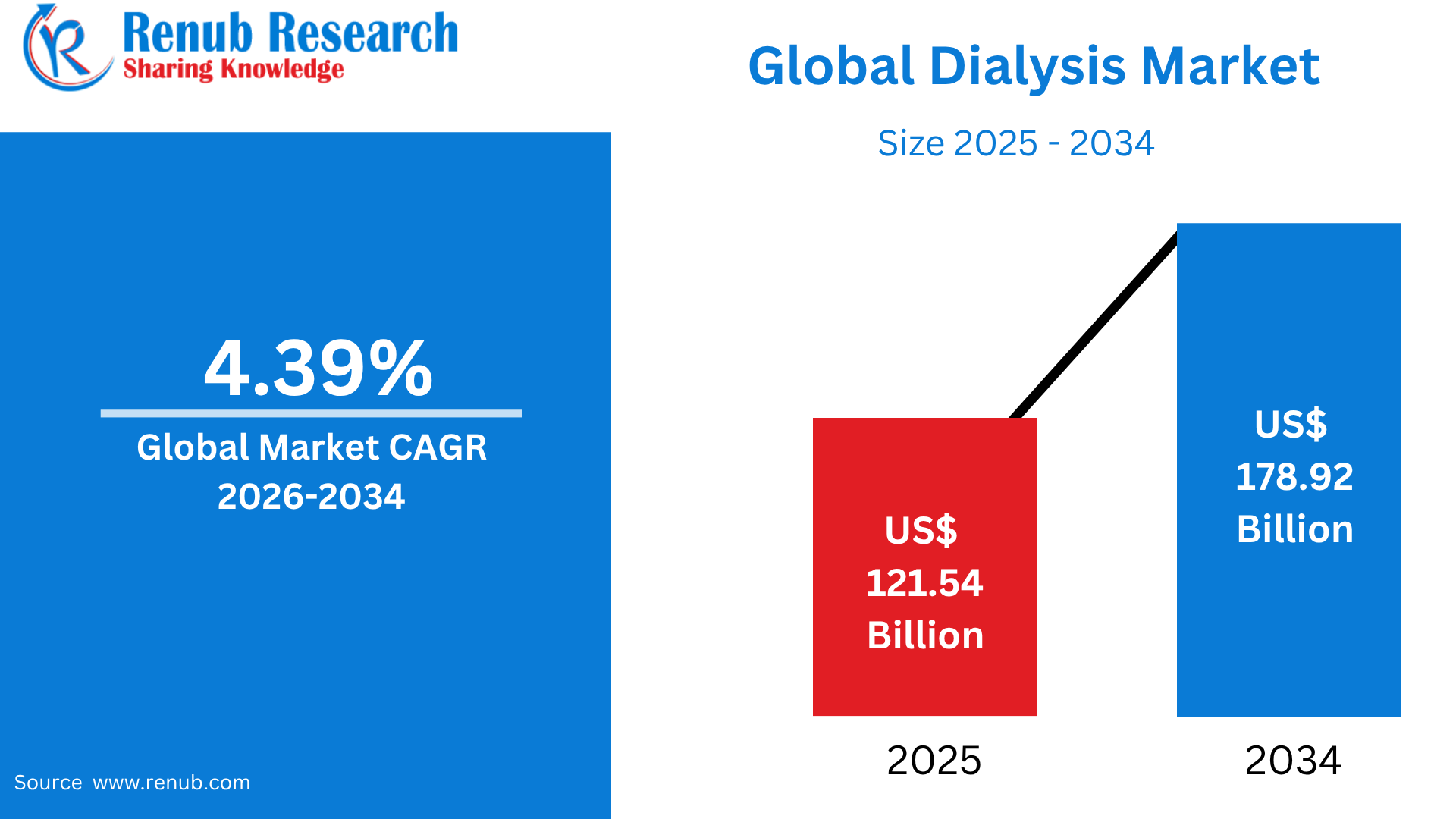
Global Dialysis Market is expected to experience substantial growth during the forecast period due to the increasing prevalence of chronic kidney disease (CKD), rising cases of diabetes and hypertension, and growing demand for renal replacement therapies worldwide. The market will grow from US$ 121.54 Billion in 2025 to US$ 178.92 Billion in 2034, at a Compound Annual Growth Rate (CAGR) of 4.39% from 2026-2034. Technological advancements in dialysis equipment, expanding healthcare infrastructure, and increasing awareness regarding kidney disease management are further contributing to the expansion of the global dialysis market.
Dialysis Market Overview
Dialysis is a medical treatment used to remove waste products, excess fluids, and toxins from the blood when the kidneys are no longer able to function properly. It is primarily used for patients suffering from chronic kidney disease (CKD), end-stage renal disease (ESRD), or acute kidney failure. Dialysis helps maintain the body’s chemical balance, regulate blood pressure, and control electrolyte levels. There are two major types of dialysis: hemodialysis and peritoneal dialysis. Hemodialysis uses a machine and artificial filter to clean the blood, while peritoneal dialysis uses the lining of the abdomen as a natural filter.
The worldwide popularity of dialysis treatment has increased significantly due to the growing prevalence of diabetes, hypertension, obesity, and aging populations, all of which are major risk factors for kidney disease. Rising healthcare awareness, improved access to renal care services, and advancements in dialysis technologies are further supporting global market growth. Governments and healthcare organizations are also investing heavily in kidney disease management programs, increasing the adoption of dialysis treatments worldwide.
Number of People with Diabetes Worldwide and by IDF Region (Age 20–79), 2024–2050
|
Region |
2024 (Million) |
2050 (Million) |
% Increase (2024–2050) |
|
World |
588.7 |
852.5 |
45% |
|
Africa (AFR) |
24.6 |
59.5 |
142% |
|
Europe (EUR) |
65.6 |
72.4 |
10% |
|
Middle East & North Africa (MENA) |
84.7 |
162.6 |
92% |
|
North America & Caribbean (NAC) |
56.2 |
68.1 |
21% |
|
South & Central America (SACA) |
35.4 |
51.5 |
45% |
|
South-East Asia (SEA) |
106.9 |
184.5 |
73% |
|
Western Pacific (WP) |
215.4 |
253.8 |
18% |
Source: International Diabetes Federation (IDF) Diabetes Atlas, 11th Edition, 2025.
Top 10 Countries with the Largest Aging Population Worldwide
|
Rank |
Country |
Elderly Population (Age 65+) |
|
1 |
China |
193.8 Million |
|
2 |
India |
97.7 Million |
|
3 |
United States |
57.1 Million |
|
4 |
Japan |
37.4 Million |
|
5 |
Russia |
22.8 Million |
|
6 |
Brazil |
21.3 Million |
|
7 |
Indonesia |
18.9 Million |
|
8 |
Germany |
18.8 Million |
|
9 |
France |
14.7 Million |
|
10 |
Italy |
14.2 Million |
Source: World Population Review
Growth Drivers of the Global Dialysis Market
Rising Prevalence of Chronic Kidney Disease and Diabetes
One of the major growth drivers of the global dialysis market is the increasing prevalence of chronic kidney disease (CKD) and diabetes worldwide. Diabetes and hypertension are among the leading causes of kidney failure, significantly increasing the number of patients requiring dialysis treatment. Growing urbanization, unhealthy dietary habits, obesity, smoking, and sedentary lifestyles have further contributed to the rising burden of kidney-related disorders. In addition, the aging global population is more vulnerable to chronic diseases that affect kidney function, thereby increasing the demand for long-term renal replacement therapies. Healthcare providers and governments are focusing on early diagnosis and management of kidney diseases, leading to greater awareness and higher treatment adoption rates. As the number of patients with end-stage renal disease (ESRD) continues to rise globally, the demand for dialysis centers, equipment, consumables, and home dialysis solutions is expected to increase significantly. This growing patient pool remains a key factor supporting the expansion of the global dialysis market.
Technological Advancements in Dialysis Equipment
Continuous technological advancements in dialysis equipment and treatment methods are significantly driving the growth of the global dialysis market. Manufacturers are developing advanced dialysis machines with improved filtration efficiency, enhanced patient monitoring systems, and automated treatment processes to improve patient comfort and clinical outcomes. Innovations in portable and wearable dialysis devices are also gaining attention, as they offer greater flexibility and convenience for patients undergoing long-term treatment. In addition, advancements in home dialysis technologies are encouraging patients to choose home-based therapies over conventional in-center treatments. The integration of digital healthcare solutions, remote patient monitoring, and artificial intelligence in dialysis systems is further improving treatment efficiency and reducing healthcare burdens. Improved biocompatible materials used in dialysis membranes and catheters are also helping reduce treatment-related complications. As healthcare providers increasingly adopt technologically advanced renal care solutions to improve treatment quality and patient satisfaction, the global dialysis market is expected to witness strong growth during the forecast period.
Increasing Healthcare Expenditure and Expansion of Dialysis Centers
The growing investment in healthcare infrastructure and expansion of dialysis centers worldwide is another major factor supporting the growth of the global dialysis market. Governments and private healthcare organizations are increasing funding for renal care services due to the rising burden of chronic kidney diseases. Many countries are implementing healthcare programs and reimbursement policies to improve patient access to dialysis treatment, particularly in developing and emerging economies. The establishment of new dialysis clinics and specialized nephrology centers is helping address the increasing demand for renal replacement therapies. In addition, the expansion of hospital networks and partnerships between healthcare providers and dialysis service companies are improving treatment availability in rural and underserved areas. Rising healthcare awareness and improved diagnostic capabilities are also leading to earlier detection of kidney disorders, thereby increasing the number of patients receiving dialysis treatment. These developments are expected to continue driving the demand for dialysis equipment, consumables, and related services across global healthcare systems.
Challenges of the Global Dialysis Market
High Cost of Dialysis Treatment and Limited Affordability
One of the major challenges affecting the global dialysis market is the high cost associated with dialysis treatment and equipment. Dialysis requires ongoing treatment sessions, specialized machines, consumables, trained healthcare professionals, and continuous patient monitoring, making it an expensive long-term therapy. In many low-income and developing countries, limited healthcare funding and inadequate insurance coverage restrict patient access to quality dialysis services. Patients often face significant financial burdens due to repeated treatment expenses, transportation costs, and medication requirements. In addition, the installation and maintenance of advanced dialysis equipment require substantial investment from healthcare facilities. Smaller hospitals and clinics may struggle to establish dialysis units due to budget constraints and operational expenses. The high treatment cost also creates disparities in access to renal care between urban and rural populations. These affordability challenges can limit market growth and prevent many patients from receiving timely and adequate dialysis treatment worldwide.
Risk of Complications and Shortage of Skilled Professionals
The risk of treatment-related complications and the shortage of skilled nephrology professionals remain significant challenges for the global dialysis market. Patients undergoing dialysis are at risk of complications such as infections, low blood pressure, cardiovascular problems, blood clotting, and access site complications. Long-term dialysis treatment can also negatively affect patients’ quality of life and increase hospitalization rates. Managing these complications requires experienced healthcare professionals and specialized monitoring systems. However, many regions, especially developing countries, face a shortage of trained nephrologists, dialysis technicians, and nursing staff capable of handling complex renal care procedures. Inadequate training and limited healthcare resources may reduce treatment efficiency and increase patient safety concerns. Additionally, the growing number of dialysis patients is placing pressure on existing healthcare systems and workforce availability. These operational and clinical challenges may slow the adoption of advanced dialysis therapies and create barriers to the overall growth of the global dialysis market.
United States Dialysis Market
The United States dialysis market is among the largest globally, supported by the growing prevalence of chronic kidney disease (CKD) and a rapidly aging population. Increasing cases of diabetes, hypertension, and obesity are contributing significantly to the rising number of patients requiring renal replacement therapies. Hemodialysis continues to dominate the market due to its widespread availability across hospitals and outpatient dialysis centers. However, home-based treatment options such as continuous ambulatory peritoneal dialysis (CAPD) and automated peritoneal dialysis (APD) are gaining popularity because they provide greater convenience and flexibility for patients. The country has a well-developed network of public and private dialysis providers offering advanced renal care services. Technological innovations in dialysis equipment, remote patient monitoring, and home healthcare solutions are further transforming the market landscape. Despite challenges such as high treatment costs and reimbursement pressures, increasing patient demand and continuous advancements in renal care technologies are expected to support steady market growth in the United States.
Germany Dialysis Market
The Germany dialysis market is well developed and supported by the country’s advanced healthcare infrastructure and growing elderly population. Rising cases of chronic kidney disease (CKD), diabetes, and hypertension are contributing to the increasing demand for dialysis treatment across the country. Hemodialysis remains the most commonly used renal replacement therapy, while peritoneal dialysis is gradually gaining acceptance due to its convenience and suitability for home-based care. Germany benefits from highly skilled healthcare professionals, modern medical technologies, and strong healthcare reimbursement systems that improve patient access to dialysis services. In addition, government support and healthcare funding programs are helping expand the availability of renal care facilities. The growing focus on improving patient outcomes and reducing hospital burden is encouraging the adoption of advanced and home-based dialysis solutions. However, rising healthcare costs and increasing demand for specialized renal care services continue to present operational challenges for the market in Germany.
India Dialysis Market
The dialysis market in India is witnessing rapid growth due to the increasing prevalence of chronic kidney disease (CKD), diabetes, hypertension, and a large aging population. Growing awareness regarding kidney health and improving access to healthcare services are supporting the expansion of dialysis treatment across urban and rural areas. Hemodialysis remains the dominant treatment option because of the widespread presence of dialysis centers and hospitals, while peritoneal dialysis is gradually gaining popularity as awareness of home-based therapies increases. Government healthcare initiatives, public-private partnerships, and expanding insurance coverage are improving the affordability and accessibility of renal care services. In addition, rising investments in healthcare infrastructure and advancements in dialysis technology are supporting market growth nationwide. Private sector participation in establishing dialysis clinics and specialized nephrology centers is also increasing rapidly. As the burden of kidney-related disorders continues to rise, the demand for advanced dialysis treatments and equipment is expected to grow steadily in India.
Saudi Arabia Dialysis Market
The Saudi Arabia dialysis market is expanding steadily due to the rising incidence of chronic kidney disease (CKD), diabetes, hypertension, and the country’s growing elderly population. Increasing awareness regarding kidney disease management and improved healthcare access are supporting the growing demand for dialysis services. Hemodialysis remains the most widely used treatment method, while peritoneal dialysis and home-based renal care options are gradually gaining attention because of their convenience and flexibility for patients. Saudi Arabia’s healthcare sector has made significant investments in advanced medical technologies and specialized renal care facilities, contributing to improved treatment quality and patient outcomes. Government healthcare initiatives aimed at strengthening healthcare infrastructure and expanding access to chronic disease treatment are further driving market growth. In addition, technological advancements in dialysis equipment and growing adoption of patient-centered care models are supporting the development of the dialysis market. The increasing need for long-term renal replacement therapies is expected to continue fueling market expansion in Saudi Arabia.
Dialysis Market Segments
Type
- Peritoneal Dialysis
- Hemodialysis
Product & Services
- Services
- Equipment
- Consumables
- Drugs
End User
- Home Dialysis
- In Center Dialysis
Countries
North America
- United States
- Canada
Europe
- France
- Germany
- Italy
- Spain
- United Kingdom
- Belgium
- Netherlands
- Turkey
Asia Pacific
- China
- Japan
- India
- Australia
- South Korea
- Thailand
- Malaysia
- Indonesia
- New Zealand
Latin America
- Brazil
- Mexico
- Argentina
Middle East & Africa
- South Africa
- Saudi Arabia
- United Arab Emirates
All companies have been covered with 5 Viewpoints
- Overviews
- Key Person
- Recent Developments
- SWOT Analysis
- Revenue Analysis
Key Players Analysis
- Asahi Kasei Corporation
- B. Braun Melsungen AG
- Baxter International Inc.
- Becton Dickinson and Company
- DaVita Inc.
- Fresenius Medical Care AG & Co. KGaA
- JMS Co. Ltd.
- Medtronic Plc.
Report Details:
| Report Features | Details |
| Base Year |
2025 |
| Historical Period |
2022 - 2025 |
| Forecast Period |
2026 - 2034 |
| Market |
US$ Billion |
| Segment Covered |
Type, Product & Services, End User and Countries |
| Countries Covered |
|
| Companies Covered |
|
| Customization Scope |
20% Free Customization |
| Post-Sale Analyst Support |
1 Year (52 Weeks) |
| Delivery Format |
PDF and Excel through Email (We can also provide the editable version of the report in PPT/Word format on request) |
Key Questions Answered in Report:
- What is the current market size of the global dialysis market and what is the projected value by 2034?
- What are the major growth drivers influencing the global dialysis market?
- What are the key challenges limiting the growth of the dialysis market?
- How are technological advancements impacting dialysis treatment methods?
- What is the market share of hemodialysis vs. peritoneal dialysis?
- What role do home dialysis treatments (CAPD & APD) play in market expansion?
- How are private dialysis clinics contributing to the market dynamics?
- Which regions or countries are showing the fastest growth in the dialysis market?
- What are the major product and service segments in the dialysis industry?
- Who are the leading companies operating in the global dialysis market?
Customization Services available
- Analysis of Market Size and Its Segments
- More Company Profiles (Upto 10 without any additional cost):
- Additional Countries (Other than mentioned Countries):
- Region/Country Specific Reports:
- Market Entry Strategy:
- Region-Specific Market Dynamics:
- Regional Market Share Analysis:
- Trade Analysis:
- Production Insights:
- Others Customized Requests:
For more information contact our analysts.
Need More Assistance?
- Talk to our analysts to get more precious information on the current market trends.
- Include more countries and segments and customize the report based on the final requirement.
- Get a competitive advantage in your industry by knowing the report findings and making a positive impact on your revenues and operations.
- Our analysts are always ready to provide more help and pertinent information if you need any additional assistance.