Fundus Camera Market Size, Share, Growth, Trends, Industry Analysis & Forecast 2026–2034
Buy NowFundus Camera Market Forecast
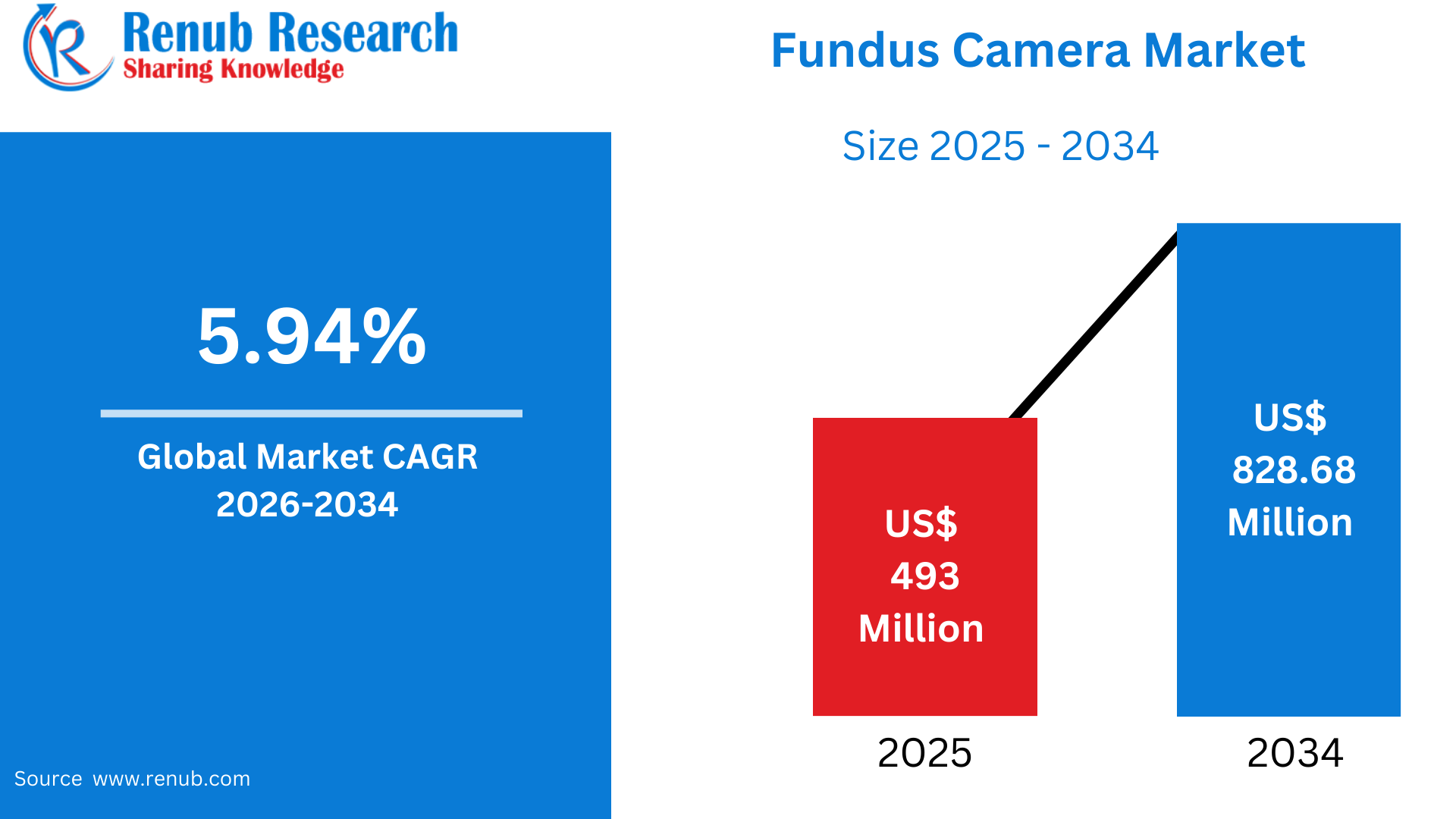
Fundus Camera Market is expected to expand from US$ 493 million in 2025 to US$ 828.68 million by 2034, registering a CAGR of 5.94% during the forecast period from 2026 to 2034. Market growth is being driven by the increasing prevalence of diabetic retinopathy, glaucoma, age-related macular degeneration, and other retinal disorders, which are creating greater demand for early and accurate eye disease diagnosis. The growing adoption of preventive eye screening programs, rising awareness of vision health, and expanding access to ophthalmic care are further supporting market expansion.
What is a Fundus Camera and Its Uses & Popularity Worldwide?
A Fundus Camera is a specialized ophthalmic imaging device used to capture high-resolution photographs of the interior surface of the eye, known as the fundus, which includes the retina, optic disc, macula, and retinal blood vessels. It plays a vital role in the early detection, diagnosis, monitoring, and documentation of various eye diseases, including diabetic retinopathy, glaucoma, age-related macular degeneration (AMD), retinal detachment, hypertensive retinopathy, and other retinal disorders.
Modern fundus cameras are available in mydriatic, non-mydriatic, portable, and ultra-widefield configurations, with many incorporating artificial intelligence (AI) and digital imaging technologies for faster and more accurate diagnosis. These devices are widely used in hospitals, ophthalmology clinics, ambulatory surgical centers, vision screening programs, research institutions, and teleophthalmology services. Worldwide, the popularity of fundus cameras is increasing due to the growing prevalence of diabetes, aging populations, rising awareness of preventive eye care, and expanding government screening initiatives. Continuous advancements in AI-assisted retinal analysis, cloud-based image management, and portable imaging solutions are further accelerating global adoption, making fundus cameras indispensable tools for modern ophthalmic diagnosis and vision preservation.
World Key facts
- Globally, at least 2.2 billion people have a near or distance vision impairment. For at least 1 billion of these people, vision impairment could have been prevented or is yet to be addressed.
- The leading causes of vision impairment and blindness are refractive errors and cataracts.
- It is estimated that 2 out of 3 people in low-income countries who need eyeglasses don’t have access to them.
- In addition, 1 in 2 people globally who need cataract surgery don’t have access to that surgery.
- Vision impairment poses an enormous global financial burden, with the annual global cost of productivity estimated to be US$ 411 billion.
- Vision loss can affect people of all ages; however, most people with vision impairment and blindness are over the age of 50 years.
Growth Drivers of the Fundus Camera Market
Rising Prevalence of Retinal Diseases and Chronic Eye Disorders
The increasing incidence of retinal diseases and chronic health conditions is a major factor driving the growth of the global Fundus Camera Market. The rising prevalence of diabetes, hypertension, glaucoma, age-related macular degeneration (AMD), diabetic retinopathy, and retinal vascular disorders has significantly increased the demand for early and accurate retinal imaging. As the global population ages, the number of individuals at risk of vision-threatening diseases continues to grow, creating greater demand for routine eye examinations. Fundus cameras enable ophthalmologists and optometrists to capture detailed images of the retina, optic nerve, and blood vessels, facilitating timely diagnosis and continuous disease monitoring. Early detection helps prevent irreversible vision loss while reducing long-term treatment costs and improving patient outcomes. Increasing awareness regarding preventive eye care, regular diabetic eye screening, and vision preservation programs is further encouraging healthcare providers to adopt advanced retinal imaging systems. These factors are expected to continue driving sustained demand for fundus cameras across hospitals, specialty eye clinics, and diagnostic centers worldwide.
Technological Advancements in Retinal Imaging Systems
Continuous technological innovation is transforming the Fundus Camera Market by improving imaging quality, diagnostic efficiency, and clinical workflow. Modern fundus cameras feature high-resolution digital sensors, ultra-widefield imaging, non-mydriatic technology, optical image stabilization, faster image acquisition, and enhanced visualization of retinal structures. Artificial intelligence (AI)-powered image analysis is enabling automated detection of diabetic retinopathy, glaucoma, macular degeneration, and other retinal abnormalities with greater speed and accuracy. Cloud-based image storage, electronic health record integration, and telemedicine compatibility allow healthcare professionals to securely store, access, and share retinal images across multiple healthcare facilities. Portable and handheld fundus cameras are expanding access to retinal imaging in rural communities, primary care settings, and mobile screening programs. Manufacturers are also improving user-friendly interfaces, patient comfort, and workflow automation, reducing examination time while increasing diagnostic reliability. These technological advancements continue to enhance clinical adoption and support the expanding role of fundus cameras in modern ophthalmology.
Expansion of Preventive Eye Screening and Teleophthalmology Services
The growing emphasis on preventive healthcare and early diagnosis is significantly accelerating the adoption of fundus cameras worldwide. Governments, healthcare organizations, and public health agencies are expanding retinal screening programs to identify diabetic retinopathy, glaucoma, and other sight-threatening diseases before permanent vision damage occurs. Fundus cameras have become essential tools in community-based vision screening initiatives because they provide fast, accurate, and non-invasive retinal imaging. Simultaneously, the rapid growth of teleophthalmology is creating new opportunities for remote retinal diagnosis and specialist consultations. Digital retinal images captured in local clinics or primary healthcare centers can be securely transmitted to ophthalmologists for expert interpretation, improving access to quality eye care in underserved and rural regions. Integration with artificial intelligence further enhances remote screening by assisting clinicians in prioritizing high-risk patients. The increasing adoption of telemedicine, digital healthcare infrastructure, and preventive eye care initiatives is expected to remain a major driver of the global Fundus Camera Market.
Challenges of the Fundus Camera Market
High Equipment Costs and Limited Healthcare Budgets
The high cost of advanced retinal imaging equipment remains one of the most significant challenges affecting the growth of the Fundus Camera Market. Digital fundus cameras equipped with ultra-widefield imaging, artificial intelligence, cloud connectivity, and advanced diagnostic capabilities require substantial capital investment, making them difficult for smaller hospitals, private clinics, and community healthcare centers to purchase. In addition to acquisition costs, ongoing maintenance, software upgrades, calibration, and staff training further increase the total cost of ownership. Budget limitations within public healthcare systems and healthcare facilities in developing countries often delay equipment procurement and restrict access to advanced retinal imaging technologies. Although manufacturers are introducing portable and lower-cost fundus cameras, affordability continues to be a major concern, particularly in resource-limited settings. Developing cost-effective imaging solutions without compromising image quality or diagnostic performance remains an important challenge for manufacturers seeking to expand global market penetration.
Shortage of Skilled Professionals and Clinical Workflow Integration
The effective use of fundus cameras depends on trained ophthalmologists, optometrists, and technicians who can capture high-quality retinal images and accurately interpret clinical findings. Many developing countries continue to experience shortages of skilled eye care professionals, limiting the widespread utilization of advanced retinal imaging systems. In addition, healthcare facilities often face challenges integrating fundus cameras into existing clinical workflows, electronic health record systems, and hospital information management platforms. Managing large volumes of retinal images, ensuring secure data storage, maintaining interoperability between diagnostic devices, and training staff on new imaging technologies can increase operational complexity. Resistance to adopting new digital technologies and limited technical support may further delay implementation in some healthcare settings. Strengthening workforce training, improving digital infrastructure, and simplifying system integration will be essential to maximize the clinical benefits and global adoption of fundus camera technology.
Recent Fundus Camera Product Launches Worldwide
- Optos Silverstone RGB – October 2025
Optos introduced the Silverstone RGB, an advanced ultra-widefield retinal imaging system combining 200° true-color retinal imaging, swept-source OCT, and nine imaging modalities in a single platform for comprehensive retinal diagnosis. - Optomed Lumo – August 2025
Optomed launched Lumo, a portable non-mydriatic handheld fundus camera designed for primary care and diabetic retinopathy screening, delivering high-quality retinal imaging with enhanced portability. - Visionix VX 610 – October 2024
Visionix unveiled the VX 610, a fully automated non-mydriatic fundus camera featuring high-resolution retinal imaging, autofocus technology, and streamlined workflow for ophthalmology and optometry practices. - Optomed Aurora AEYE – May 2024
Optomed introduced the Aurora AEYE, an AI-enabled handheld fundus camera that automates diabetic retinopathy screening and supports rapid retinal examinations in primary healthcare settings. - Topcon NW500 – October 2022
Topcon launched the NW500, a fully automated non-mydriatic retinal camera equipped with slit-scan illumination, automatic alignment, and fast image capture for improved clinical efficiency. - Canon CR-S1 AF – 2023
Canon expanded its retinal imaging portfolio with the CR-S1 AF, an automated non-mydriatic fundus camera offering high-resolution digital retinal photography, autofocus, and simplified operation for routine eye examinations. - NIDEK AFC-330 – 2023
NIDEK introduced the AFC-330, a compact non-mydriatic fundus camera featuring automatic alignment, high-definition retinal imaging, and seamless integration with digital ophthalmic workflow systems. - Remidio FOP NM-10 – 2023
Remidio launched the upgraded FOP NM-10 smartphone-based non-mydriatic fundus camera, designed for AI-assisted retinal screening, teleophthalmology applications, and community eye care programs. - Kowa VX-20 Alpha – 2022
Kowa introduced the VX-20 Alpha, a fully automated non-mydriatic fundus camera providing rapid retinal image acquisition, improved image quality, and enhanced usability for hospitals and eye clinics. - CenterVue Eidon AF – 2022
CenterVue launched the Eidon AF, a confocal true-color fundus imaging system with integrated autofluorescence technology, enabling detailed retinal visualization for diagnosing and monitoring retinal diseases.
High-Resolution Retinal Imaging Supporting Accurate Diagnosis
Mydriatic Fundus Camera continues to hold a significant share of the global retinal imaging industry due to its ability to produce high-resolution, detailed images of the retina after pharmacological pupil dilation. These cameras are widely used in ophthalmology clinics, hospitals, and research institutions for the diagnosis and monitoring of retinal disorders such as diabetic retinopathy, glaucoma, age-related macular degeneration, retinal vein occlusion, and optic nerve diseases. The larger pupil diameter achieved through dilation enables superior visualization of peripheral retinal structures, allowing ophthalmologists to detect subtle pathological changes with greater accuracy. Mydriatic fundus cameras are particularly valuable for comprehensive eye examinations, pre-surgical evaluations, and long-term disease monitoring. Continuous improvements in digital imaging technology, higher-resolution sensors, artificial intelligence-assisted image analysis, and electronic medical record integration have enhanced diagnostic efficiency. Growing demand for accurate retinal imaging, increasing chronic eye disease prevalence, and expanding ophthalmic healthcare services are expected to support the continued growth of the Mydriatic Fundus Camera Market.
Advancing Early Detection of Retinopathy of Prematurity
ROP Fundus Camera is expanding steadily as healthcare providers increasingly prioritize early diagnosis and treatment of Retinopathy of Prematurity (ROP) in premature infants. ROP fundus cameras are specifically designed to capture detailed retinal images in neonatal patients, enabling ophthalmologists to identify abnormal retinal blood vessel development before permanent vision impairment occurs. Rising rates of premature births, improvements in neonatal intensive care, and increasing survival of low-birth-weight infants have significantly increased the need for specialized retinal screening equipment. These cameras support timely diagnosis, documentation, disease progression monitoring, and treatment planning while minimizing examination discomfort for infants. Portable imaging systems have further expanded screening programs by enabling retinal examinations in neonatal intensive care units, maternity hospitals, and remote healthcare facilities. Integration of digital imaging, cloud-based data management, and artificial intelligence-assisted retinal analysis is improving screening accuracy and workflow efficiency. Growing awareness of neonatal eye health and expanding infant screening initiatives continue to drive demand for ROP fundus cameras worldwide.
Specialized Eye Care Driving Fundus Camera Market Growth
Fundus Camera Market in Ophthalmology Clinics is experiencing strong growth as specialized eye care centers increasingly adopt advanced retinal imaging technologies for routine diagnosis and disease management. Ophthalmology clinics rely on fundus cameras to evaluate retinal health, diagnose diabetic retinopathy, glaucoma, age-related macular degeneration, retinal vascular disorders, and optic nerve abnormalities. The availability of non-mydriatic, mydriatic, ultra-widefield, and AI-enabled fundus cameras enables clinics to perform fast, accurate, and patient-friendly retinal examinations. Digital image storage, cloud connectivity, and electronic health record integration improve patient monitoring and facilitate long-term disease management. Increasing patient awareness regarding preventive eye examinations and the growing prevalence of diabetes and age-related eye diseases are driving higher patient volumes in specialty clinics. Continuous investment in advanced ophthalmic diagnostic equipment, improved workflow automation, and teleophthalmology capabilities is further strengthening adoption. These factors position ophthalmology clinics as one of the largest end-user segments in the global Fundus Camera Market.
Comprehensive Diagnostic Infrastructure Supporting Fundus Camera Market Adoption
The Fundus Camera Market in Hospitals continues to grow as hospitals expand their ophthalmology departments and invest in advanced diagnostic imaging technologies to improve patient care. Hospitals utilize fundus cameras for comprehensive retinal examinations, emergency ophthalmic evaluations, diabetic eye screening, glaucoma management, surgical planning, and post-treatment monitoring. Large healthcare institutions benefit from integrated diagnostic systems that combine fundus imaging with optical coherence tomography, fluorescein angiography, and electronic medical record platforms to provide comprehensive ophthalmic assessments. Hospitals also manage complex retinal disorders requiring multidisciplinary collaboration between ophthalmologists, endocrinologists, neurologists, and primary care physicians. The increasing burden of chronic diseases such as diabetes and hypertension has led hospitals to establish dedicated retinal screening programs for early disease detection. Technological advancements including artificial intelligence-assisted diagnosis, ultra-widefield retinal imaging, automated image management, and telemedicine integration are further improving clinical efficiency. These developments continue to strengthen hospitals as a major end-user segment within the global Fundus Camera Market.
Advanced Ophthalmic Infrastructure Driving Innovation in United States
United States Fundus Camera Market is one of the largest globally, supported by a highly developed healthcare system, advanced ophthalmology practices, and widespread adoption of digital diagnostic technologies. The growing prevalence of diabetic retinopathy, glaucoma, age-related macular degeneration, and other retinal diseases has significantly increased demand for high-resolution retinal imaging devices. Hospitals, ophthalmology clinics, ambulatory surgical centers, and optometry practices are investing in AI-enabled, non-mydriatic, ultra-widefield, and portable fundus cameras to improve diagnostic accuracy and clinical efficiency. Strong emphasis on preventive eye care, routine diabetic screening, and early disease detection further supports market expansion. The integration of artificial intelligence, cloud-based image management, teleophthalmology platforms, and electronic health records is streamlining ophthalmic workflows and improving patient management. Continuous investments in healthcare technology, increasing awareness of vision preservation, and ongoing innovation in retinal imaging solutions are expected to maintain the United States as a leading market for fundus cameras throughout the forecast period.
Germany Precision Healthcare Supporting Retinal Imaging Growth
Germany Fundus Camera Market is witnessing steady growth due to the country’s advanced healthcare infrastructure, strong ophthalmology network, and increasing focus on early diagnosis of retinal diseases. Rising cases of diabetes, glaucoma, and age-related macular degeneration have increased the need for regular retinal examinations across hospitals, specialized eye clinics, and diagnostic centers. German healthcare providers are rapidly adopting advanced fundus cameras featuring non-mydriatic imaging, ultra-widefield visualization, artificial intelligence-assisted diagnosis, and digital connectivity to improve diagnostic efficiency and patient outcomes. Growing investments in digital healthcare transformation and medical imaging technologies further accelerate market development. Research institutions and university hospitals also contribute to technological innovation and clinical adoption of advanced retinal imaging systems. The increasing elderly population, expanding preventive eye screening programs, and growing awareness of vision care continue to support demand. These factors position Germany as one of Europe’s key markets for fundus camera technologies.
India Expanding Eye Care Access Fueling Market Growth
India Fundus Camera Market is expanding rapidly as awareness of eye health, diabetes management, and preventive vision screening continues to increase across the country. India has a large population affected by diabetes and other chronic diseases, creating substantial demand for retinal imaging to detect diabetic retinopathy and other vision-threatening conditions at an early stage. Hospitals, specialty eye hospitals, diagnostic centers, and vision care clinics are increasingly investing in affordable digital, portable, and non-mydriatic fundus cameras to improve accessibility and screening efficiency. Teleophthalmology services are also gaining momentum by enabling retinal images captured in rural and remote locations to be reviewed by specialists in urban healthcare centers. Government initiatives focused on reducing preventable blindness and expanding community eye care programs further support market growth. Increasing healthcare investments, technological advancements, expanding private healthcare infrastructure, and growing adoption of AI-assisted retinal screening are expected to drive the India Fundus Camera Market over the forecast period.
Saudi Arabia Healthcare Modernization Driving Ophthalmic Diagnostics
Saudi Arabia Fundus Camera Market is experiencing steady growth as the country continues to modernize its healthcare infrastructure and strengthen specialized ophthalmic services. Rising prevalence of diabetes and diabetic retinopathy has created significant demand for advanced retinal imaging technologies capable of supporting early diagnosis and long-term disease management. Hospitals, specialty eye centers, and private healthcare providers are increasingly adopting digital, non-mydriatic, portable, and AI-enabled fundus cameras to enhance diagnostic accuracy and improve patient care. Government initiatives aimed at expanding preventive healthcare, promoting digital health transformation, and improving access to specialized medical services are encouraging greater investment in ophthalmic diagnostic equipment. Telemedicine and remote retinal screening programs are also improving access to eye care for patients living in remote regions. Growing healthcare expenditure, increasing public awareness of vision health, and continued investment in advanced medical technologies are expected to support sustained growth of the Saudi Arabia Fundus Camera Market during the forecast period.
Market Segmentation
Product Type
- Mydriatic Fundus Camera
- Non-Mydriatic Fundus Camera
- Hybrid Fundus Camera
- ROP Fundus Camera
End User
- Ophthalmic & Optometrist Offices
- Ophthalmology Clinics
- Hospitals
Countries
North America
- United States
- Canada
Europe
- France
- Germany
- Italy
- Spain
- United Kingdom
- Belgium
- Netherlands
- Turkey
Asia Pacific
- China
- Japan
- India
- Australia
- South Korea
- Thailand
- Malaysia
- Indonesia
- New Zealand
Latin America
- Brazil
- Mexico
- Argentina
Middle East & Africa
- South Africa
- Saudi Arabia
- United Arab Emirates
All companies have been covered with 5 Viewpoints
- Overview
- Key Persons
- Recent Development & Strategies
- Product Portfolio
- Financial Insights
Company Analysis
- Carl Zeiss Medites AG
- Topcon Medical Systems, Inc.
- Merit Medical Systems Inc.
- NIDEK CO
- Revenio Group
Report Details:
| Report Features | Details |
| Base Year |
2025 |
| Historical Period |
2022 - 2025 |
| Forecast Period |
2026 - 2034 |
| Market |
US$ Million |
| Segment Covered |
Product Type, End-User and Countries |
| Countries Covered |
|
| Companies Covered |
|
| Customization Scope |
20% Free Customization |
| Post-Sale Analyst Support |
1 Year (52 Weeks) |
| Delivery Format |
PDF and Excel through Email (We can also provide the editable version of the report in PPT/Word format on request) |
Customization Services available
- Analysis of Market Size and Its Segments
- More Company Profiles (Upto 10 without any additional cost):
- Additional Countries (Other than mentioned Countries):
- Region/Country Specific Reports:
- Market Entry Strategy:
- Region-Specific Market Dynamics:
- Regional Market Share Analysis:
- Trade Analysis:
- Production Insights:
- Others Customized Requests:
For more information contact our analysts.
Need More Assistance?
- Talk to our analysts to get more precious information on the current market trends.
- Include more countries and segments and customize the report based on the final requirement.
- Get a competitive advantage in your industry by knowing the report findings and making a positive impact on your revenues and operations.
- Our analysts are always ready to provide more help and pertinent information if you need any additional assistance.