Global Flexible Packaging Market Report by Application (Food & Beverage, Personal Care, Pharmaceutical, Household Care, Industrial, Others), Packaging Type (Stand-up Pouch, Films, Bag-in-Box, Others), Material (Paperboard, Plastic, Aluminum Foil, PET Film, Others), Countries and Company Analysis 2026-2034
Buy NowFlexible Packaging Market Analysis: Global Valuation, Material Breakdown, and Long-Term Outlook
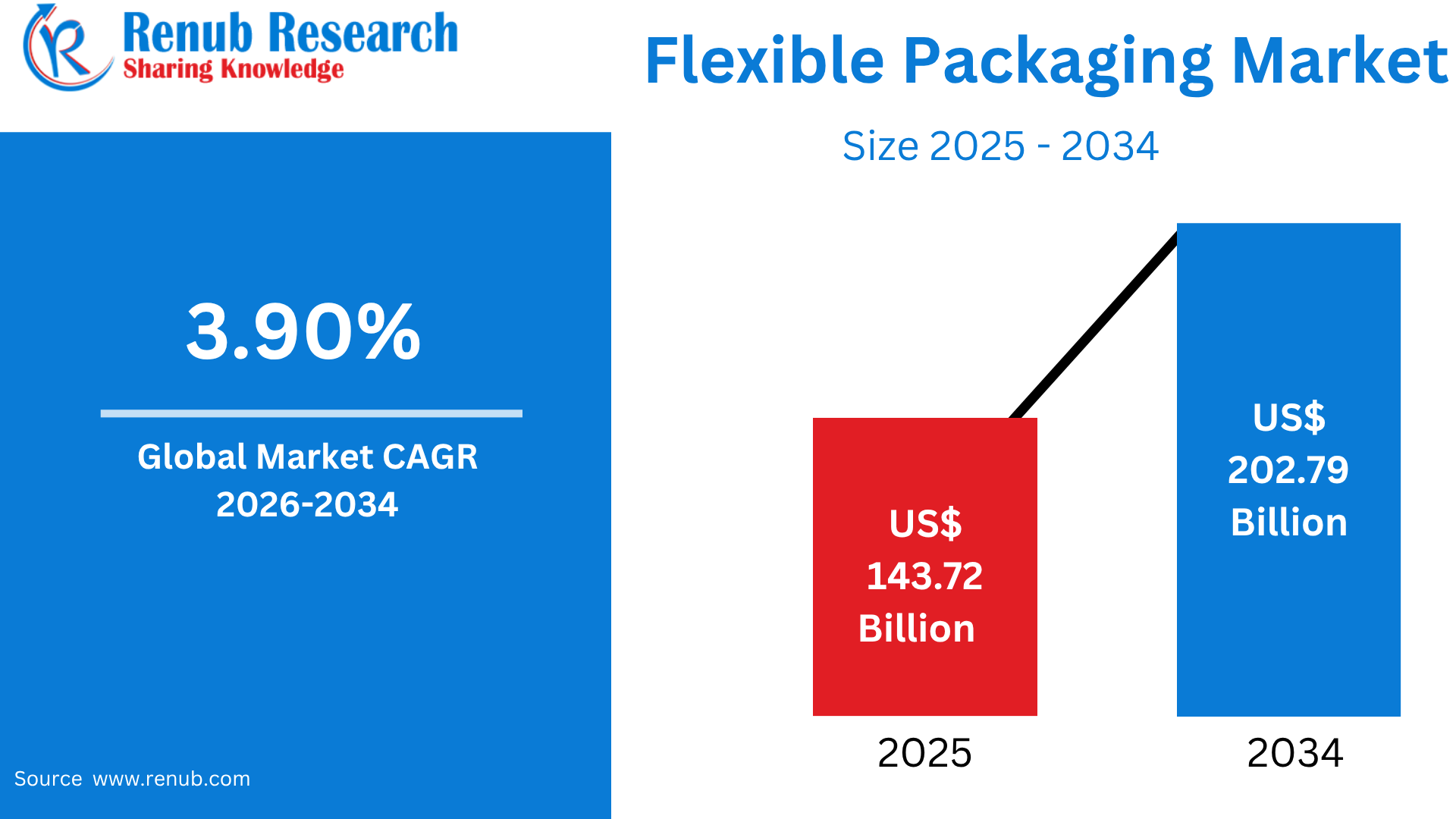
Flexible Packaging Market is projected to expand from US$ 143.72 billion in 2025 to US$ 202.79 billion by 2034, registering a compound annual growth rate (CAGR) of 3.9% during 2026–2034. Market growth is driven by rising demand across the food and beverage, pharmaceutical, and personal care industries, where flexible packaging offers enhanced convenience, product protection, and sustainability. Its lightweight design, cost efficiency, reduced transportation expenses, and ability to extend product shelf life make it an increasingly preferred packaging solution for manufacturers and consumers worldwide.
Flexible Packaging and its Popularity Worldwide
Flexible packaging is a packaging solution manufactured from flexible materials such as plastic films, paper, aluminum foil, bioplastics, and multilayer laminates that can easily change shape while protecting the packaged product. Unlike rigid packaging, flexible packaging is lightweight, easy to transport, and designed to provide excellent barrier protection against moisture, oxygen, light, and contaminants. It includes products such as pouches, bags, sachets, wraps, liners, stick packs, and flexible tubes. Flexible packaging is widely used across industries including food and beverages, pharmaceuticals, personal care, household products, industrial chemicals, and pet food. It helps extend product shelf life, preserve freshness, reduce packaging waste, and improve storage efficiency. Features such as resealable zippers, spouts, easy-tear openings, and stand-up pouches enhance consumer convenience while reducing transportation and logistics costs.
Worldwide, flexible packaging has gained widespread popularity due to rapid urbanization, changing consumer lifestyles, and increasing demand for convenient, portable, and sustainable packaging solutions. The food and beverage industry remains the largest end user, accounting for a significant share of global demand as manufacturers increasingly adopt lightweight packaging for snacks, dairy products, frozen foods, beverages, and ready-to-eat meals. The pharmaceutical sector also relies heavily on flexible packaging for blister packs, sachets, and medical pouches to ensure product safety and extended shelf life. Growing e-commerce activities, rising demand for single-serve packaging, and advances in recyclable and bio-based materials are further driving market expansion. Continuous innovation in high-barrier films, digital printing, and sustainable packaging technologies is expected to strengthen the global popularity of flexible packaging over the coming years.
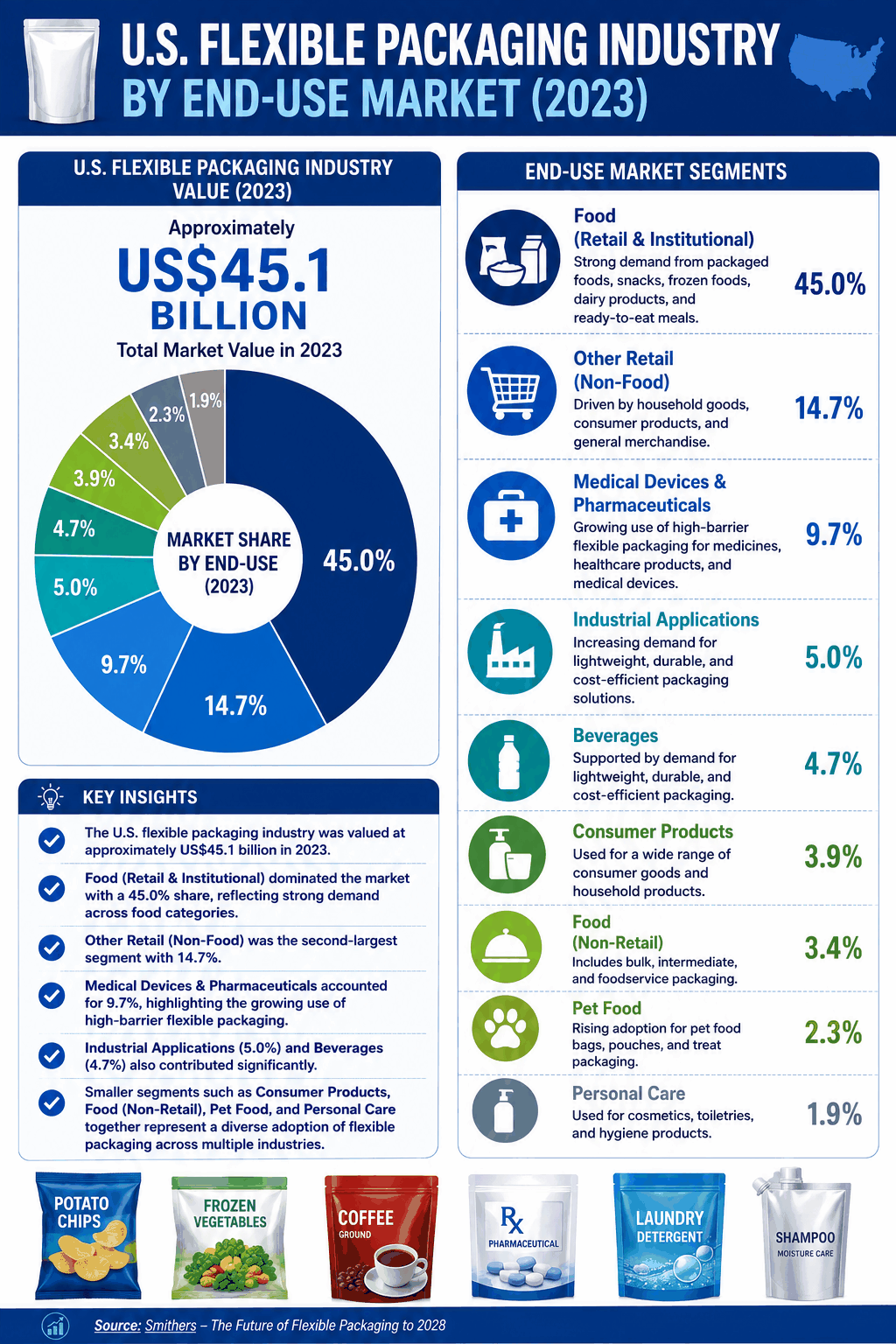
U.S. Flexible Packaging Industry by End-Use Market (2023)
- The U.S. flexible packaging industry was valued at approximately US$45.1 billion in 2023.
- Food (Retail & Institutional) dominated the market with a 45.0% share, reflecting strong demand from packaged foods, snacks, frozen foods, dairy products, and ready-to-eat meals.
- Other Retail (Non-Food) represented the second-largest segment with 14.7%, driven by household goods, consumer products, and general merchandise.
- Medical Devices & Pharmaceuticals accounted for 9.7%, highlighting the growing use of high-barrier flexible packaging for medicines, healthcare products, and medical devices.
- Industrial Applications (5.0%) and Beverages (4.7%) also contributed significantly, supported by increasing demand for lightweight, durable, and cost-efficient packaging solutions.
- Smaller but important segments included Consumer Products (3.9%), Food (Non-Retail) (3.4%), Pet Food (2.3%), and Personal Care (1.9%), illustrating the diverse adoption of flexible packaging across multiple industries.
Growth Driver of the Flexible Packaging Market
Rising Demand from the Food & Beverage Industry
The food and beverage industry is the largest consumer of flexible packaging and remains a primary growth driver for the global market. Industry estimates indicate that food and beverage applications account for approximately 55–60% of global flexible packaging demand, supported by increasing consumption of packaged foods, ready-to-eat meals, frozen products, dairy items, snacks, beverages, and pet food. Rapid urbanization, changing lifestyles, and rising disposable incomes have increased demand for convenient, lightweight, and portable packaging solutions. Flexible packaging offers excellent barrier protection against moisture, oxygen, and contaminants, helping preserve freshness and extend product shelf life while minimizing food waste. Features such as resealable zippers, spouts, easy-open seals, and stand-up pouches further enhance consumer convenience. Food manufacturers also benefit from lower transportation and storage costs because flexible packaging weighs significantly less than rigid alternatives. Continuous innovation in high-barrier films, microwaveable pouches, and recyclable materials is strengthening adoption, making the food and beverage industry the largest contributor to long-term growth in the flexible packaging market.
Expansion of E-commerce and Sustainable Packaging Solutions
The rapid growth of global e-commerce has significantly accelerated demand for flexible packaging solutions that are lightweight, durable, and cost-efficient. Industry estimates suggest that global e-commerce retail sales exceed US$6 trillion annually, creating substantial demand for protective mailers, pouches, flexible wraps, and courier packaging. Flexible packaging reduces shipping weight, minimizes logistics costs, and protects products during transportation, making it highly attractive for online retailers. At the same time, growing environmental awareness is encouraging manufacturers to invest in recyclable, compostable, and bio-based flexible packaging materials. Governments worldwide are promoting circular economy initiatives and setting ambitious packaging waste reduction targets, encouraging innovation in mono-material structures and recycled-content packaging. Consumers are also increasingly choosing brands that offer environmentally responsible packaging. Digital printing technologies enable shorter production runs, customized packaging, and reduced material waste. The combination of expanding online retail and sustainability initiatives continues to drive innovation and long-term growth across the global flexible packaging industry.
Increasing Adoption in Pharmaceutical and Personal Care Industries
The pharmaceutical and personal care industries are increasingly adopting flexible packaging due to its ability to provide superior product protection, convenience, and regulatory compliance. Industry estimates indicate that pharmaceutical packaging represents approximately 10–15% of global flexible packaging demand, with continued growth driven by expanding healthcare expenditure and rising pharmaceutical production. Flexible blister packs, sachets, medical pouches, strip packs, and sterile packaging protect medicines from moisture, oxygen, and contamination while improving dosage accuracy and patient convenience. In the personal care industry, products such as shampoos, lotions, soaps, cosmetics, and skincare items are increasingly packaged in refill pouches and sachets to reduce packaging costs and plastic consumption. Lightweight packaging also lowers transportation expenses and improves supply chain efficiency. Manufacturers continue investing in child-resistant packaging, tamper-evident seals, antimicrobial films, and high-barrier materials to meet evolving safety standards. Rising healthcare demand, aging populations, and expanding cosmetics markets continue supporting strong growth opportunities for flexible packaging worldwide.
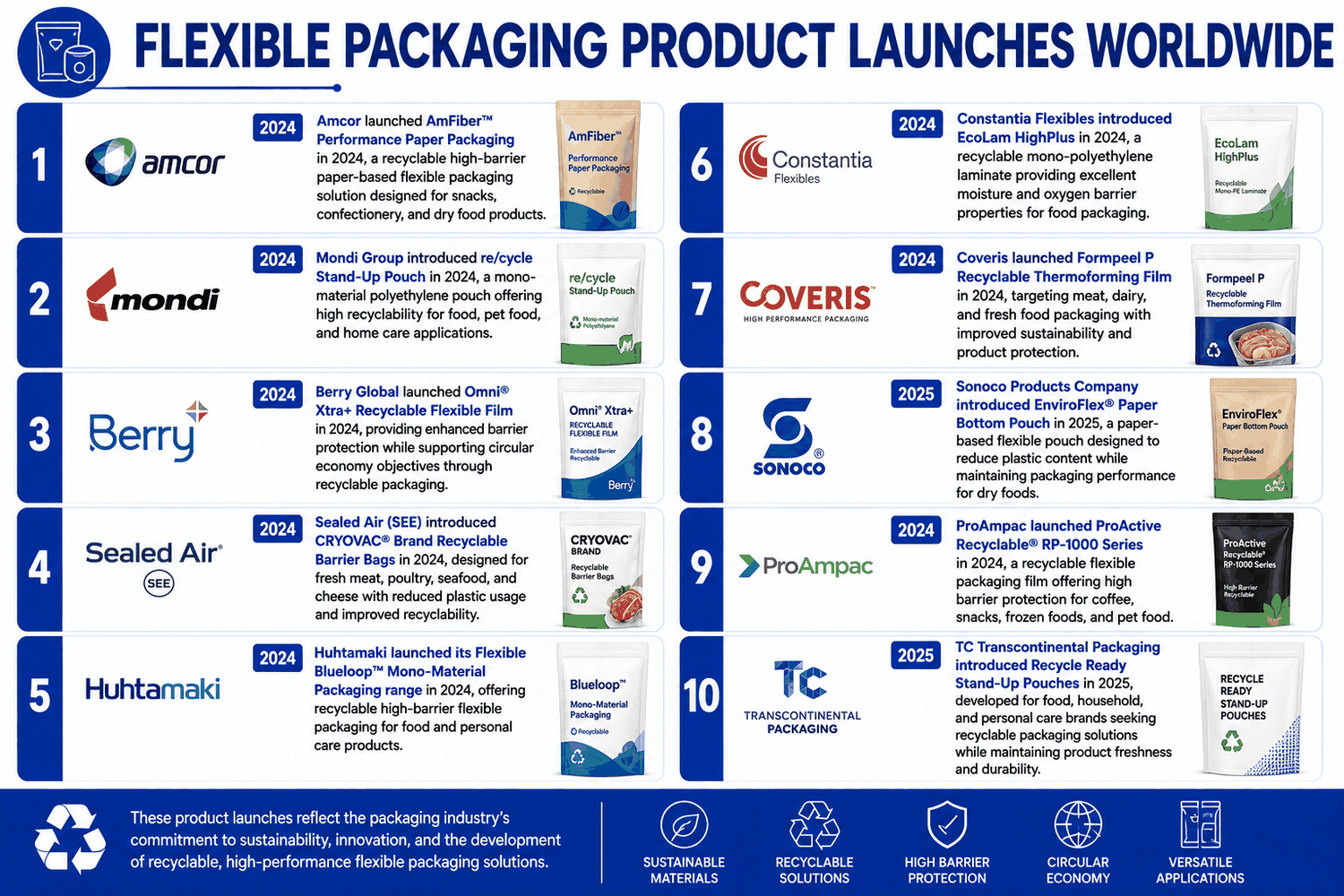
Flexible Packaging Product Launches Worldwide
- Amcor launched AmFiber™ Performance Paper Packaging in 2024, a recyclable high-barrier paper-based flexible packaging solution designed for snacks, confectionery, and dry food products.
- Mondi Group introduced re/cycle Stand-Up Pouch in 2024, a mono-material polyethylene pouch offering high recyclability for food, pet food, and home care applications.
- Berry Global launched Omni® Xtra+ Recyclable Flexible Film in 2024, providing enhanced barrier protection while supporting circular economy objectives through recyclable packaging.
- Sealed Air (SEE) introduced CRYOVAC® Brand Recyclable Barrier Bags in 2024, designed for fresh meat, poultry, seafood, and cheese with reduced plastic usage and improved recyclability.
- Huhtamaki launched its Flexible Blueloop™ Mono-Material Packaging range in 2024, offering recyclable high-barrier flexible packaging for food and personal care products.
- Constantia Flexibles introduced EcoLam HighPlus in 2024, a recyclable mono-polyethylene laminate providing excellent moisture and oxygen barrier properties for food packaging.
- Coveris launched Formpeel P Recyclable Thermoforming Film in 2024, targeting meat, dairy, and fresh food packaging with improved sustainability and product protection.
- Sonoco Products Company introduced EnviroFlex® Paper Bottom Pouch in 2025, a paper-based flexible pouch designed to reduce plastic content while maintaining packaging performance for dry foods.
- ProAmpac launched ProActive Recyclable® RP-1000 Series in 2024, a recyclable flexible packaging film offering high barrier protection for coffee, snacks, frozen foods, and pet food.
- TC Transcontinental Packaging introduced Recycle Ready Stand-Up Pouches in 2025, developed for food, household, and personal care brands seeking recyclable packaging solutions while maintaining product freshness and durability.
Challenges of the Flexible Packaging Market
Environmental Concerns and Plastic Waste Regulations
One of the biggest challenges facing the flexible packaging market is growing concern regarding plastic waste and environmental sustainability. Industry estimates indicate that plastic materials account for nearly 70% of global flexible packaging production, making waste management a significant issue. Multi-layer plastic structures provide excellent barrier performance but are often difficult to recycle because different materials must be separated during processing. Governments across Europe, North America, and Asia are introducing stricter regulations on single-use plastics, extended producer responsibility (EPR), and recycled-content requirements. These regulations require manufacturers to redesign packaging, invest in recyclable materials, and upgrade production technologies, increasing operational costs. Consumers are also demanding environmentally friendly packaging, encouraging companies to shift toward paper-based, compostable, and mono-material alternatives. However, these sustainable materials may involve higher production costs and technical limitations. Balancing environmental compliance, packaging performance, affordability, and product protection remains one of the industry's most significant long-term challenges.
Volatility in Raw Material Prices and Supply Chain Disruptions
The flexible packaging industry is highly dependent on raw materials such as polyethylene (PE), polypropylene (PP), polyethylene terephthalate (PET), aluminum foil, paper, adhesives, and specialty coatings. Price fluctuations in these materials significantly affect manufacturing costs and profitability. Industry estimates indicate that raw materials account for approximately 60–70% of total flexible packaging production costs, making manufacturers highly vulnerable to changes in resin prices and energy costs. Supply chain disruptions caused by geopolitical tensions, transportation bottlenecks, natural disasters, and fluctuations in crude oil prices frequently lead to shortages and increased procurement expenses. Smaller packaging manufacturers often face greater challenges because they have limited purchasing power and lower inventory capacity than multinational companies. In addition, rising energy costs affect film extrusion, lamination, printing, and sealing operations, further increasing production expenses. Managing raw material availability, controlling manufacturing costs, and maintaining competitive pricing while ensuring consistent product quality remain ongoing challenges for the global flexible packaging market.
Food & Beverage Flexible Packaging Largest End-Use Segment Driven by Convenience and Shelf-Life
Food & Beverage Flexible Packaging Market represents the largest application segment, accounting for an estimated 55–60% of global flexible packaging demand. Rising consumption of packaged foods, ready-to-eat meals, frozen foods, dairy products, beverages, confectionery, and snack products continues to drive market expansion. Flexible packaging offers excellent barrier protection against moisture, oxygen, light, and contaminants, helping preserve freshness while significantly extending product shelf life. Stand-up pouches, resealable bags, vacuum packs, sachets, and retort pouches have become increasingly popular because they provide convenience, portability, and reduced packaging waste. Food manufacturers benefit from lightweight packaging, which lowers transportation costs and improves supply chain efficiency compared to rigid packaging. Growing urbanization, changing lifestyles, and increasing demand for portion-controlled and single-serve products further accelerate adoption. Manufacturers are also investing in recyclable mono-material structures and bio-based films to meet sustainability goals. Continuous innovation in high-barrier technologies and digital printing supports strong long-term growth in the global food and beverage flexible packaging market.
Pharmaceutical: Growing Demand for Safe and High-Barrier Flexible Packaging
Pharmaceutical Flexible Packaging Market is expanding steadily due to increasing global healthcare expenditure and rising pharmaceutical production. Industry estimates indicate that pharmaceutical applications account for approximately 10–15% of worldwide flexible packaging demand, with sustained growth supported by aging populations and increasing medicine consumption. Flexible packaging solutions such as blister packs, sachets, strip packs, medical pouches, and sterile packaging provide superior protection against moisture, oxygen, contamination, and ultraviolet light, ensuring product stability and longer shelf life. Pharmaceutical manufacturers increasingly adopt flexible packaging because it reduces material consumption while maintaining strict regulatory compliance. Child-resistant closures, tamper-evident seals, and high-barrier laminates improve product safety and patient confidence. Lightweight packaging also reduces storage and transportation costs throughout the healthcare supply chain. Continuous innovation in antimicrobial materials, recyclable pharmaceutical packaging, and smart packaging technologies supporting traceability and authentication further strengthens market growth. Rising demand for over-the-counter medicines, biologics, and personalized healthcare products continues driving global pharmaceutical flexible packaging demand.
Flexible Packaging High-Performance Films Supporting Product Protection
Flexible Packaging Films Market remains one of the largest material segments due to its versatility, durability, and excellent barrier performance. Industry estimates suggest that plastic films account for nearly 70% of flexible packaging material consumption worldwide. Polyethylene (PE), polypropylene (PP), polyethylene terephthalate (PET), polyamide (PA), and specialty multilayer films dominate the market because they provide superior resistance against moisture, oxygen, grease, and punctures. These films are extensively used in food packaging, pharmaceuticals, personal care products, industrial goods, and agricultural applications. Manufacturers continue developing thinner yet stronger high-performance films that reduce raw material usage while maintaining product protection. Demand for recyclable mono-material films, biodegradable alternatives, and high-barrier structures has increased significantly due to sustainability initiatives and regulatory requirements. Advanced printing technologies improve branding and product appearance while enhancing manufacturing efficiency. Rising packaged food consumption, expanding e-commerce, and continuous innovation in sustainable film technologies are expected to drive long-term growth in the global flexible packaging films market.
Paperboard Flexible Packaging Sustainable Packaging Driving Market Expansion
Paperboard Flexible Packaging Market is experiencing significant growth as manufacturers increasingly adopt renewable and recyclable packaging materials. Industry estimates indicate that paper-based materials account for approximately 20–25% of flexible packaging demand across several consumer goods sectors. Flexible paperboard packaging is widely used for dry foods, bakery products, confectionery, beverages, pharmaceuticals, and personal care products because it offers excellent printability, lightweight characteristics, and improved sustainability compared to conventional plastics. Governments worldwide continue implementing stricter environmental regulations encouraging recyclable and fiber-based packaging solutions. Consumers also demonstrate increasing preference for products packaged in environmentally responsible materials, prompting manufacturers to replace conventional plastic packaging where technically feasible. Technological advancements in barrier coatings and water-resistant paper materials have expanded paperboard applications while maintaining product protection. Growing investments in recyclable fiber technologies, sustainable forestry practices, and circular economy initiatives continue strengthening demand. These factors position paperboard flexible packaging as one of the fastest-growing sustainable packaging segments globally.
Plastic Flexible Packaging Dominant Material Segment with Continuous Innovation
Plastic Flexible Packaging Market continues to dominate the global industry due to its affordability, durability, lightweight properties, and superior barrier performance. Industry estimates indicate that plastic materials represent approximately 65–70% of global flexible packaging production, making them the preferred choice across food, beverages, pharmaceuticals, household products, industrial goods, and personal care sectors. Polyethylene, polypropylene, PET, and multilayer laminates offer excellent protection against moisture, oxygen, chemicals, and physical damage while remaining highly cost-effective. Plastic flexible packaging significantly reduces transportation expenses because it weighs substantially less than rigid packaging alternatives. Manufacturers are increasingly introducing recyclable mono-material packaging, recycled-content plastics, bio-based polymers, and lightweight designs to improve sustainability and comply with evolving environmental regulations. Advances in high-barrier films, digital printing, and intelligent packaging technologies continue enhancing product functionality and consumer convenience. Despite increasing regulatory pressure regarding plastic waste, ongoing material innovation and expanding applications ensure that plastic flexible packaging remains the largest and most influential segment of the global flexible packaging market.
Strong Demand from Food, Healthcare, and E-commerce Industries in United States Flexible Packaging
United States Flexible Packaging Market is one of the largest globally, supported by a well-developed manufacturing sector, advanced packaging technologies, and strong demand from food, pharmaceutical, and personal care industries. Industry estimates indicate that the food and beverage sector accounts for nearly 60% of flexible packaging consumption in the U.S., driven by rising demand for packaged foods, frozen meals, snacks, and ready-to-eat products. The country also has one of the world’s largest e-commerce markets, increasing the need for lightweight mailers, pouches, and protective packaging. Pharmaceutical companies extensively utilize flexible blister packs, sachets, and medical pouches due to stringent product safety requirements. Sustainability remains a major market trend, with manufacturers investing heavily in recyclable mono-material films, post-consumer recycled (PCR) plastics, and bio-based packaging solutions. Digital printing, smart packaging, and high-barrier film technologies continue improving product functionality. Rising consumer preference for convenient packaging and continuous innovation are expected to sustain long-term growth across the United States flexible packaging market.
Flexible Packaging Sustainability and Circular Economy Driving United Kingdom Growth
United Kingdom Flexible Packaging Market continues to expand as businesses increasingly adopt lightweight, recyclable, and resource-efficient packaging solutions. Industry estimates suggest that over 70% of packaged consumer goods sold in the UK utilize some form of flexible packaging, reflecting its widespread adoption across food, beverages, healthcare, and personal care products. The food sector remains the largest end user due to increasing consumption of ready meals, frozen foods, bakery products, and convenience foods. Government initiatives promoting circular economy practices and plastic waste reduction are encouraging manufacturers to develop recyclable and recycled-content flexible packaging. Retailers are also replacing traditional rigid packaging with flexible alternatives to reduce transportation costs and improve sustainability. Advances in digital printing, resealable packaging, and paper-based flexible materials are creating new market opportunities. Growing e-commerce, increasing consumer awareness regarding environmental sustainability, and investments in advanced recycling technologies continue strengthening the long-term outlook for the United Kingdom flexible packaging market.
India Rapid Urbanization and Expanding Packaged Food Industry
India Flexible Packaging Market is experiencing robust growth due to rapid urbanization, rising disposable incomes, and increasing demand for packaged consumer goods. Industry estimates indicate that food and beverage applications contribute more than 50% of India’s flexible packaging demand, supported by strong growth in packaged snacks, dairy products, beverages, spices, and ready-to-cook foods. India also has one of the fastest-growing pharmaceutical industries, creating substantial demand for blister packs, sachets, strip packs, and medical pouches. The expansion of organized retail, e-commerce platforms, and food delivery services has significantly increased the adoption of lightweight packaging formats. Manufacturers are investing in recyclable films, high-barrier laminates, and sustainable packaging materials to meet evolving regulatory requirements and environmental goals. Government initiatives supporting domestic manufacturing and improvements in packaging infrastructure further accelerate market development. Continuous innovation in affordable flexible packaging solutions, combined with growing exports of packaged products, is expected to drive sustained expansion of India’s flexible packaging market.
Saudi Arabia Rising Industrial Development and Food Packaging Demand
Saudi Arabia Flexible Packaging Market is expanding steadily due to increasing industrial diversification, strong food processing activities, and growing demand for convenient packaged products. Industry estimates indicate that food and beverage applications account for approximately 55–60% of flexible packaging demand within the Kingdom, supported by rising consumption of packaged foods, bottled beverages, dairy products, and confectionery. The pharmaceutical and personal care sectors are also contributing to market growth through increasing use of high-barrier flexible packaging for product protection and regulatory compliance. Government initiatives under Vision 2030 are encouraging investments in domestic manufacturing, packaging technologies, and industrial infrastructure, reducing reliance on imports. Manufacturers are increasingly adopting recyclable materials, lightweight films, and advanced printing technologies to improve sustainability and product appeal. The rapid expansion of supermarkets, hypermarkets, e-commerce platforms, and modern retail channels continues increasing demand for innovative flexible packaging solutions. Growing consumer spending, technological advancements, and supportive industrial policies are expected to sustain long-term growth in the Saudi Arabian flexible packaging market.
Market Segmentation
Application:
- Food & Beverage
- Personal Care
- Pharmaceutical
- Household Care
- Industrial
- Others
Packaging Type:
- Stand-up Pouch
- Films
- Bag-in-Box
- Others
Material:
- Paperboard
- Plastic
- Aluminum Foil
- PET Film
- Others
Countries
North America
- United States
- Canada
Europe
- France
- Germany
- Italy
- Spain
- United Kingdom
- Belgium
- Netherlands
- Turkey
Asia Pacific
- China
- Japan
- India
- Australia
- South Korea
- Thailand
- Malaysia
- Indonesia
- New Zealand
Latin America
- Brazil
- Mexico
- Argentina
Middle East & Africa
- South Africa
- Saudi Arabia
- UAE
All companies have been covered with 5 Viewpoints
- Overviews
- Key Person
- Recent Developments
- SWOT Analysis
- Revenue Analysi
Key Companies
- Amcor plc
- Berry Global Group, Inc
- Sealed Air
- DS Smith Plc
- Huhtamaki PPL Limited
- Graphic Packaging holding
Report Details:
| Report Features | Details |
| Base Year |
2025 |
| Historical Period |
2022 - 2025 |
| Forecast Period |
2026 - 2034 |
| Market |
US$ Billion |
| Segment Covered |
Application, Packaging Type, Material and Countries |
| Countries Covered |
|
| Companies Covered | 1. Amcor plc 2. Berry Global Group, Inc 3. Sealed Air 4. DS Smith Plc 5. Huhtamaki PPL Limited 6. Graphic Packaging holding |
| Customization Scope |
20% Free Customization |
| Post-Sale Analyst Support |
1 Year (52 Weeks) |
| Delivery Format |
PDF and Excel through Email (We can also provide the editable version of the report in PPT/Word format on request) |
Customization Services available
- Analysis of Market Size and Its Segments
- More Company Profiles (Upto 10 without any additional cost):
- Additional Countries (Other than mentioned Countries):
- Region/Country Specific Reports:
- Market Entry Strategy:
- Region-Specific Market Dynamics:
- Regional Market Share Analysis:
- Trade Analysis:
- Production Insights:
- Others Customized Requests:
For more information contact our analysts.
Need More Assistance?
- Talk to our analysts to get more precious information on the current market trends.
- Include more countries and segments and customize the report based on the final requirement.
- Get a competitive advantage in your industry by knowing the report findings and making a positive impact on your revenues and operations.
- Our analysts are always ready to provide more help and pertinent information if you need any additional assistance.