Flavored Milk Market Report by Type, Flavoured Type, Application, Packaging Type, Distribution Channel, Countries and Company Analysis 2026–2034
Buy NowFlavored Milk Market Analysis: Valuation, Product Categories, and Long-Term Outlook
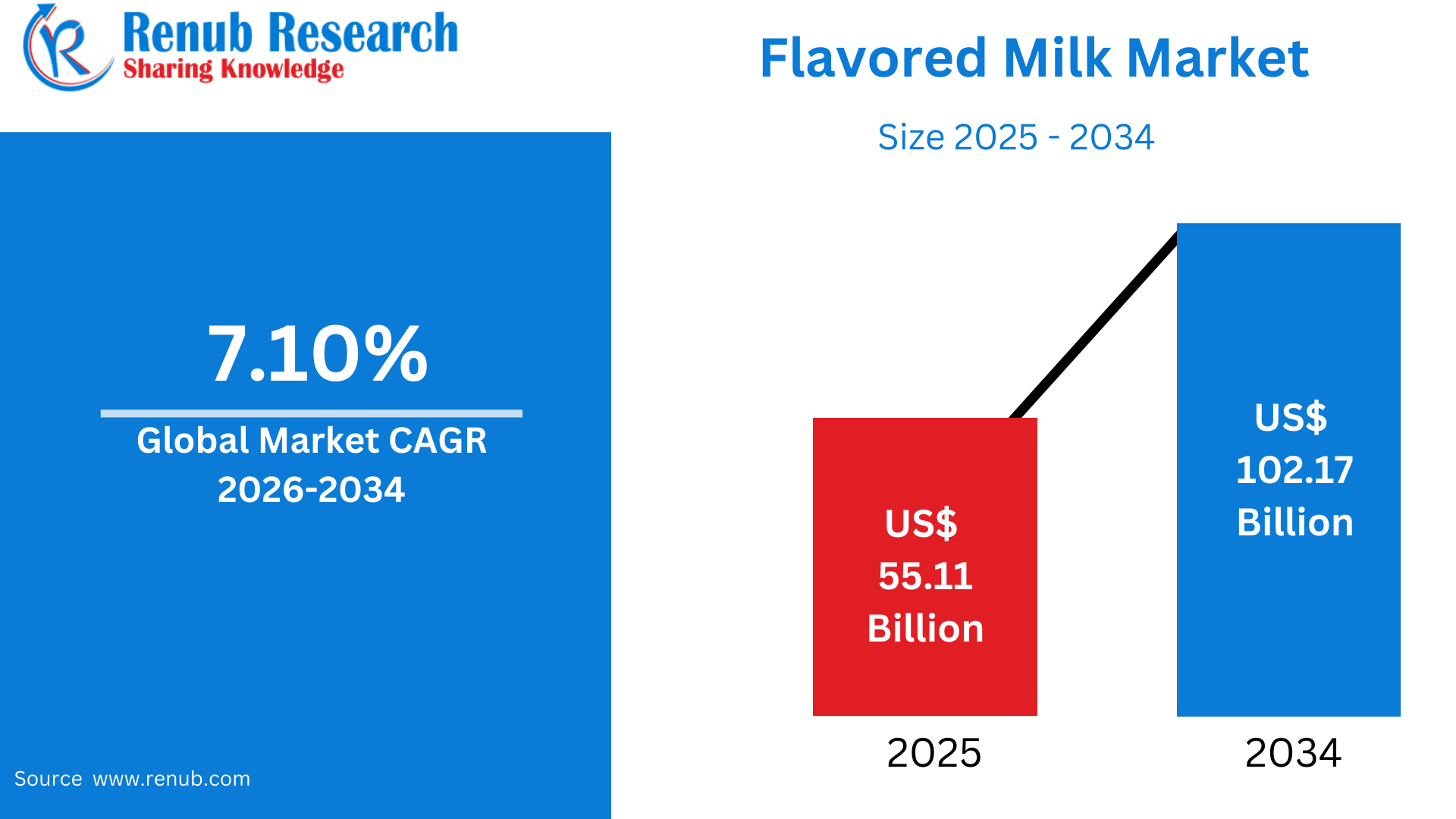
Flavored Milk Market is projected to grow from US$ 55.11 Billion in 2025 to US$ 102.17 Billion in 2034, with a Compound Annual Growth Rate (CAGR) of 7.1% from 2026 to 2034. Market expansion is driven by rising consumer demand for nutritious and convenient dairy beverages, increasing popularity of protein-rich flavored milk, and growing product innovation in low-sugar and functional formulations. Expanding retail distribution, premium flavor offerings, and increasing consumption among children, adolescents, and fitness-conscious adults are expected to support sustained market growth over the forecast period.
Flavored Milk and its uses & popularity in Worldwide
Flavored milk is a dairy-based beverage produced by blending milk with ingredients such as cocoa, fruit extracts, coffee, vanilla, caramel, sweeteners, and natural or artificial flavors. It is available in liquid, ready-to-drink (RTD), and powdered formats, with options including whole, low-fat, skimmed, lactose-free, organic, and plant-fortified varieties. Many flavored milk products are enriched with essential nutrients such as calcium, protein, vitamin D, vitamin A, and probiotics, making them a nutritious alternative to carbonated soft drinks. Flavored milk is widely consumed as a refreshing beverage and is also used as a post-workout recovery drink, breakfast accompaniment, school nutrition beverage, meal replacement, and ingredient in smoothies, desserts, milkshakes, coffee beverages, and bakery preparations. It is particularly popular among children, teenagers, and athletes due to its appealing taste and nutritional benefits.
Worldwide, flavored milk has gained substantial popularity as consumers increasingly seek convenient, healthy, and protein-rich beverages. Rising urbanization, busy lifestyles, and growing awareness of functional nutrition have significantly boosted demand across North America, Europe, Asia-Pacific, Latin America, and the Middle East. Chocolate remains the leading flavor globally, followed by strawberry, vanilla, coffee, banana, and caramel. Manufacturers continue introducing low-sugar, high-protein, organic, lactose-free, and fortified flavored milk products to meet evolving consumer preferences. Expanding retail distribution through supermarkets, convenience stores, cafés, vending machines, online grocery platforms, and foodservice outlets has further strengthened global accessibility. Increasing school milk programs, sports nutrition trends, and continuous product innovation are expected to sustain the worldwide popularity and long-term growth of the flavored milk market.
Dairy Processing Sector in India
India's flavored milk market is benefiting from the country's robust dairy industry and increasing consumer preference for nutritious ready-to-drink beverages. India remains the world's largest milk producer, recording approximately 239.3 million metric tonnes (MMT) of milk production during 2023–24, accounting for nearly 24% of global milk output. Per capita milk availability reached 471 grams per day, ensuring a stable supply of raw milk for value-added dairy products, including flavored milk. The Government of India's continued support for the dairy sector, including measures to stabilize cattle feed prices through restrictions on the export of de-oiled rice bran (DoRB), has helped maintain stable milk production costs. Dairy cooperatives also increased average milk procurement to 662 lakh kilograms per day in 2023–24, representing a 12% increase over 2022–23, strengthening processing capacity. Additionally, India's packaged dairy products market, valued at approximately ₹3 lakh crore, continues to register strong double-digit growth. Rising urbanization, expanding organized retail, increasing health awareness, and growing demand for protein-rich, convenient beverages are expected to further accelerate the growth of the Indian flavored milk market over the forecast period.
Leading Milk Producing States Supporting India's Flavored Milk Market
India's strong milk production base provides a solid foundation for the growth of the flavored milk industry. The top five milk-producing states—Uttar Pradesh (16.21%), Rajasthan (14.51%), Madhya Pradesh (8.91%), Gujarat (7.65%), and Maharashtra (6.71%)—collectively contribute 53.99% of the country's total milk production. These states possess well-developed dairy farming ecosystems, extensive cooperative networks, and modern milk processing facilities that ensure a reliable supply of raw milk for value-added dairy products such as flavored milk. Uttar Pradesh emerged as the leading state in 2024, accounting for over 18.7% of India's milk production, reinforcing its importance in the national dairy value chain. The abundant availability of milk in these regions supports large-scale production of ready-to-drink flavored milk, UHT milk beverages, and fortified dairy products. Continuous investments in cold-chain infrastructure, dairy processing plants, and organized retail distribution, coupled with rising consumer demand for convenient and nutritious beverages, are expected to further strengthen flavored milk production and market expansion across India.
Growth Driver of the Flavored Milk Market
Rising Demand for High-Protein and Functional Dairy Beverages
The growing consumer focus on health and nutrition is a major driver of the flavored milk market. Consumers increasingly seek beverages that provide both taste and functional benefits, leading to higher demand for protein-rich flavored milk fortified with calcium, vitamin D, probiotics, and essential minerals. According to dairy industry estimates, over 70% of consumers globally actively seek foods and beverages with added nutritional benefits, while high-protein beverage consumption continues to expand among athletes, fitness enthusiasts, and working professionals. Chocolate milk, in particular, has gained popularity as a post-exercise recovery drink because it offers an effective balance of carbohydrates and protein. Manufacturers are responding by launching lactose-free, reduced-sugar, organic, and fortified flavored milk products that cater to health-conscious consumers. The increasing popularity of convenient ready-to-drink (RTD) dairy beverages, combined with rising awareness of bone health and immunity, continues to strengthen market demand. Continuous innovation in functional ingredients and premium formulations is expected to support long-term growth in the global flavored milk market.
Expansion of Ready-to-Drink (RTD) Beverage Consumption
The rapid growth of the ready-to-drink beverage industry is significantly boosting the flavored milk market worldwide. Urbanization, busy work schedules, and changing lifestyles have increased consumer demand for convenient, portable, and nutritious beverages that require no preparation. Industry estimates indicate that ready-to-drink dairy beverages account for more than 40% of packaged dairy beverage sales in several developed markets, reflecting strong consumer preference for on-the-go nutrition. Flavored milk is increasingly available in single-serve bottles, aseptic cartons, and resealable packaging suitable for schools, offices, gyms, and travel. Supermarkets, convenience stores, vending machines, cafés, and online grocery platforms continue expanding product availability, improving market accessibility. Manufacturers are introducing innovative flavors such as caramel, coffee, cookies & cream, hazelnut, and seasonal varieties to attract younger consumers. Sustainable packaging and extended shelf-life technologies further support product distribution across domestic and international markets. These factors continue driving strong growth for flavored milk across both developed and emerging economies.
Increasing Consumption Among Children and Young Adults
Growing demand from children, teenagers, and young adults remains one of the strongest drivers of the flavored milk market. School nutrition programs, increasing awareness of childhood nutrition, and parental preference for healthier beverage alternatives have significantly boosted flavored milk consumption. Industry surveys suggest that children account for nearly half of flavored milk consumption in many developed markets, particularly chocolate and strawberry varieties. Parents increasingly choose flavored milk because it provides calcium, protein, and vitamins while encouraging milk consumption among children who may avoid plain milk. Universities, educational institutions, cafés, and quick-service restaurants also contribute to growing demand among young adults seeking convenient nutritional beverages. Social media marketing, celebrity endorsements, attractive packaging, and innovative flavors further increase consumer engagement among younger demographics. Manufacturers continue expanding sugar-reduced and fortified product ranges to align with evolving nutritional guidelines while maintaining taste appeal. This broad consumer base continues supporting stable demand and long-term market expansion worldwide.
Challenges of the Flavored Milk Market
Rising Health Concerns Regarding Sugar Content
One of the major challenges facing the flavored milk market is growing consumer concern regarding sugar intake and obesity. Traditional flavored milk products often contain added sugars to improve taste, leading health-conscious consumers to limit their consumption. According to global health estimates, more than 1 billion people worldwide are living with obesity, while governments increasingly encourage reductions in added sugar consumption through nutrition policies and public awareness campaigns. Several countries have introduced front-of-pack nutritional labeling and school beverage guidelines that encourage manufacturers to reduce sugar levels in dairy beverages. These regulations have increased research and development costs as companies reformulate products using natural sweeteners such as stevia or monk fruit without compromising taste. Consumers also compare flavored milk with lower-calorie beverages and plant-based alternatives when making purchasing decisions. Maintaining flavor, texture, shelf stability, and nutritional value while reducing sugar remains a significant technical and commercial challenge for manufacturers across the global flavored milk industry.
Competition from Plant-Based and Alternative Beverages
The flavored milk market faces increasing competition from plant-based beverages and other functional drinks that appeal to changing consumer preferences. Almond, oat, soy, coconut, and pea-based beverages have gained popularity among vegan, lactose-intolerant, and environmentally conscious consumers. Industry estimates indicate that plant-based milk alternatives account for approximately 15–20% of the global milk alternatives beverage market and continue expanding at a faster pace than conventional dairy beverages. Additionally, protein shakes, smoothies, energy drinks, kombucha, functional waters, and probiotic beverages compete directly with flavored milk for consumer spending. Younger consumers increasingly seek products offering sustainability, lower environmental impact, and specialized health benefits. Dairy manufacturers therefore face pressure to innovate by introducing lactose-free, organic, A2 milk, and clean-label flavored milk products while investing in sustainable packaging and responsible sourcing. Intense competition increases marketing expenditures, limits pricing flexibility, and requires continuous product innovation to maintain market share in an increasingly diversified global beverage industry.
Flavored Milk Product Launches Worldwide
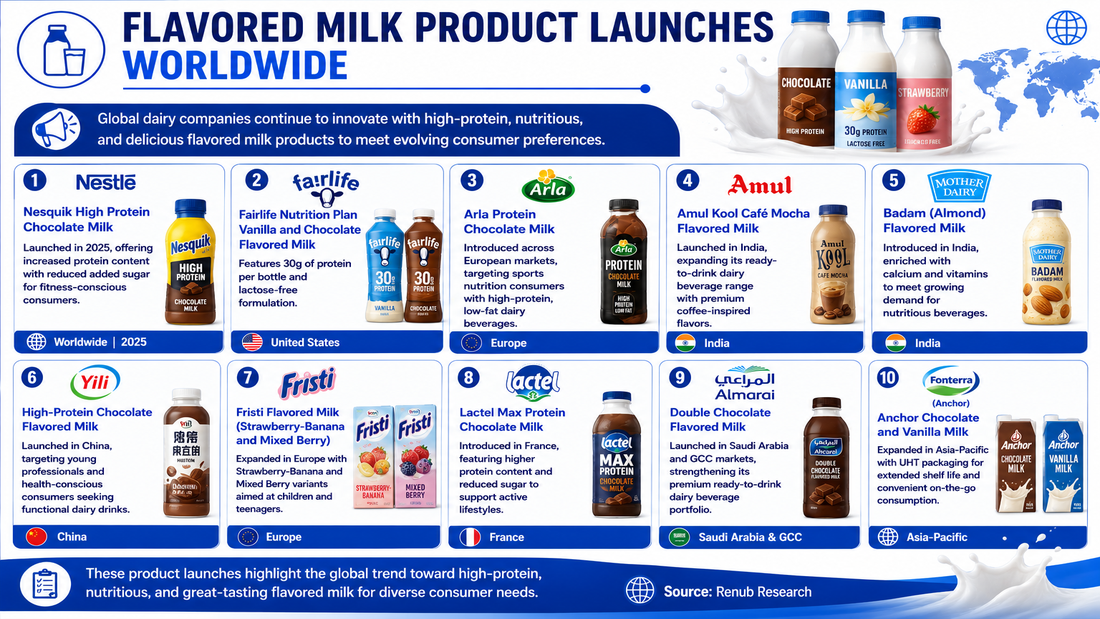
- Nestlé Nesquik launched Nesquik High Protein Chocolate Milk in 2025, offering increased protein content with reduced added sugar for fitness-conscious consumers.
- Fairlife (The Coca-Cola Company) expanded its portfolio with Fairlife Nutrition Plan Vanilla and Chocolate Flavored Milk, featuring 30g of protein per bottle and lactose-free formulation.
- Arla Foods introduced Arla Protein Chocolate Milk across European markets, targeting sports nutrition consumers with high-protein, low-fat dairy beverages.
- Amul launched Amul Kool Café Mocha Flavored Milk in India, expanding its ready-to-drink dairy beverage range with premium coffee-inspired flavors.
- Mother Dairy introduced Badam (Almond) Flavored Milk in India, enriched with calcium and vitamins to meet growing demand for nutritious beverages.
- Yili Group launched High-Protein Chocolate Flavored Milk in China, targeting young professionals and health-conscious consumers seeking functional dairy drinks.
- FrieslandCampina expanded its Fristi flavored milk portfolio in Europe with Strawberry-Banana and Mixed Berry variants aimed at children and teenagers.
- Lactalis introduced Lactel Max Protein Chocolate Milk in France, featuring higher protein content and reduced sugar to support active lifestyles.
- Almarai launched Double Chocolate Flavored Milk in Saudi Arabia and GCC markets, strengthening its premium ready-to-drink dairy beverage portfolio.
- Fonterra (Anchor) expanded its flavored milk range in Asia-Pacific with Anchor Chocolate and Vanilla Milk, offering UHT packaging for extended shelf life and convenient on-the-go consumption.
Rising Consumer Preference for Nutritious Ready-to-Drink Dairy Beverages
Flavored Fresh Milk Market continues to expand as consumers increasingly seek nutritious, minimally processed, and ready-to-drink dairy beverages. Industry estimates indicate that fresh flavored milk accounts for approximately 60–65% of flavored milk sales in developed dairy markets, supported by its natural taste, high nutritional value, and widespread availability. Chocolate, strawberry, vanilla, banana, and coffee remain the most popular flavors among children and young adults. Fresh flavored milk is widely distributed through supermarkets, convenience stores, schools, cafés, and foodservice outlets because of its short shelf life and premium quality. Manufacturers are introducing lactose-free, organic, reduced-fat, and low-sugar formulations to meet evolving health preferences. Growing awareness of calcium, protein, and vitamin intake further supports demand among families and fitness-conscious consumers. Advances in cold-chain logistics and refrigerated retail infrastructure have improved product availability across urban and suburban regions. Continuous innovation in flavor combinations and functional ingredients is expected to sustain long-term growth in the flavored fresh milk market worldwide.
Expanding Demand for Long Shelf-Life Dairy Nutrition
Flavored Milk Powder Market is experiencing steady growth due to increasing demand for convenient, shelf-stable, and easy-to-prepare dairy beverages. Industry estimates suggest that milk powder products account for nearly 25–30% of flavored milk consumption in regions with limited cold-chain infrastructure, making them particularly attractive in emerging economies. Chocolate, malt, vanilla, and fruit-flavored milk powders are widely consumed by children, students, and households due to their affordability and extended storage life. Manufacturers are increasingly fortifying flavored milk powders with calcium, iron, vitamin D, zinc, and protein to improve nutritional value. Schools and institutional feeding programs also contribute significantly to product demand because powdered milk offers easier transportation and lower storage costs than fresh milk. Single-serve sachets and family-size containers further enhance product convenience. Growing urbanization, expanding retail distribution, and increasing awareness of nutritional supplementation continue supporting market growth, while premium formulations featuring organic ingredients and reduced sugar create additional opportunities for product differentiation.
Dominance of Lightweight and Convenient Packaging
Plastic-Based Flavored Milk Market remains the leading packaging segment due to its durability, affordability, and ease of transportation. Industry estimates indicate that plastic bottles account for nearly 50–60% of global ready-to-drink flavored milk packaging, primarily because they provide convenience for on-the-go consumption and extended product protection. PET and HDPE bottles are widely used across supermarkets, convenience stores, vending machines, schools, and foodservice outlets. Resealable packaging, lightweight design, and lower transportation costs make plastic packaging highly attractive for manufacturers and retailers. Premium flavored milk brands increasingly utilize transparent bottles to enhance product visibility and consumer appeal. At the same time, sustainability concerns have encouraged manufacturers to adopt recyclable plastics, recycled PET (rPET), and lightweight packaging technologies to reduce environmental impact. Growing demand for single-serve beverages, expanding retail networks, and improvements in packaging technology continue driving strong demand for plastic-based flavored milk packaging across developed and emerging markets.
Growing Sales Through Quick Retail Access
Flavored Milk Convenience Stores Market is expanding rapidly as consumers increasingly seek nutritious beverages during daily commuting, work, education, and travel. Industry estimates indicate that convenience stores contribute approximately 20–25% of ready-to-drink flavored milk retail sales in many developed markets. Single-serve bottles and cartons dominate this distribution channel because they meet demand for immediate consumption. Extended store operating hours, strategically placed refrigeration units, and locations near schools, offices, fuel stations, and transportation hubs encourage impulse purchases. Chocolate, coffee, vanilla, and strawberry flavored milk remain the highest-selling varieties in convenience retail outlets. Manufacturers frequently introduce promotional pricing, meal combinations, and limited-edition flavors to increase product visibility and repeat purchases. Health-conscious consumers are also driving demand for high-protein, lactose-free, and reduced-sugar flavored milk options. Continued urbanization, rising disposable incomes, and expanding convenience retail networks are expected to strengthen this distribution channel and support sustained growth in the global flavored milk market.
Flavored Milk Digital Grocery Platforms Driving Market Expansion
Flavored Milk Online Market has witnessed significant growth as consumers increasingly purchase dairy beverages through e-commerce and digital grocery platforms. Industry estimates suggest that online grocery sales are expanding at annual double-digit growth rates in many countries, creating substantial opportunities for flavored milk manufacturers. Consumers benefit from home delivery, subscription services, product variety, promotional discounts, and convenient ordering through mobile applications. Online platforms provide access to premium, organic, lactose-free, high-protein, and specialty flavored milk products that may not be widely available in physical stores. Manufacturers utilize digital marketing, influencer campaigns, and personalized product recommendations to increase consumer engagement and brand loyalty. Advances in cold-chain delivery systems and insulated packaging have improved the safe transportation of refrigerated dairy products. The growing adoption of smartphones, digital payment systems, and internet connectivity continues to accelerate online grocery shopping, positioning e-commerce as one of the fastest-growing distribution channels within the global flavored milk market.
United States Flavored Milk Strong Demand for High-Protein and Ready-to-Drink Dairy Beverages
United States Flavored Milk Market is one of the largest globally, driven by strong dairy consumption, product innovation, and increasing demand for protein-rich beverages. Industry estimates indicate that more than 90% of U.S. households consume dairy products regularly, while flavored milk remains one of the most popular ready-to-drink dairy beverages among children, teenagers, and fitness-conscious adults. Chocolate milk accounts for the largest market share, followed by strawberry, vanilla, coffee, and caramel flavors. Schools continue to play an important role in consumption through milk nutrition programs, while supermarkets, convenience stores, and online retailers provide broad product availability. Manufacturers are increasingly introducing lactose-free, reduced-sugar, organic, and high-protein flavored milk to address evolving consumer preferences. Sustainable packaging, extended shelf-life technology, and premium ingredients further strengthen market competitiveness. Rising demand for functional beverages, expanding sports nutrition applications, and continuous flavor innovation are expected to support long-term growth in the United States flavored milk market.
United Kingdom Growing Preference for Convenient Functional Dairy Drinks
United Kingdom Flavored Milk Market continues to expand as consumers seek convenient, nutritious beverages that combine taste with health benefits. Industry estimates suggest that ready-to-drink dairy beverages account for over one-third of packaged dairy drink sales in the UK, with flavored milk representing a significant share. Chocolate remains the leading flavor, followed by strawberry, banana, vanilla, and coffee. Health-conscious consumers increasingly prefer products containing reduced sugar, added protein, calcium, and vitamins. Convenience stores, supermarkets, cafés, and vending machines remain the primary retail channels, while online grocery platforms continue expanding market accessibility. Premium flavored milk products featuring organic ingredients and recyclable packaging are gaining popularity among environmentally conscious consumers. Manufacturers are also developing lactose-free and high-protein formulations to attract younger professionals and fitness enthusiasts. Growing demand for healthier beverage alternatives to carbonated soft drinks, combined with continuous product innovation and expanding retail distribution, continues driving steady growth across the United Kingdom flavored milk market.
India Rising Urbanization and Expanding Dairy Consumption
India Flavored Milk Market is witnessing rapid growth due to increasing urbanization, rising disposable incomes, and strong expansion of the organized dairy sector. India is the world’s largest milk producer, contributing more than 24% of global milk production, providing a strong foundation for flavored milk manufacturing. Chocolate, mango, cardamom, kesar, rose, vanilla, and coffee are among the most popular flavors across the country. Growing demand from school children, young adults, and working professionals has significantly increased sales of ready-to-drink flavored milk in bottles and aseptic cartons. Modern retail outlets, convenience stores, dairy parlors, and e-commerce platforms continue expanding product availability across urban and semi-urban markets. Manufacturers are increasingly launching fortified products containing protein, calcium, vitamin D, and probiotics to appeal to health-conscious consumers. Government support for dairy development, improving cold-chain infrastructure, and continuous innovation in affordable packaging formats are expected to sustain strong long-term growth in India’s flavored milk market.
Saudi Arabia Expanding Demand for Premium Dairy Beverages
Saudi Arabia Flavored Milk Market is growing steadily due to increasing health awareness, rising disposable incomes, and strong demand for convenient dairy beverages. Industry estimates indicate that Saudi Arabia has one of the highest per capita dairy consumption levels in the Middle East, creating favorable conditions for flavored milk products. Chocolate, strawberry, vanilla, banana, and date-flavored milk are widely consumed by children, families, and young professionals. Modern supermarkets, hypermarkets, convenience stores, and café chains dominate retail distribution, while online grocery platforms continue gaining popularity. Manufacturers are introducing low-fat, lactose-free, high-protein, and reduced-sugar flavored milk products to align with changing consumer preferences and healthier lifestyles. Premium packaging, longer shelf-life technologies, and innovative flavor combinations further enhance market competitiveness. Rising participation in sports and fitness activities, expanding foodservice channels, and increasing investment in domestic dairy production continue supporting market expansion. These factors position Saudi Arabia as one of the fastest-growing flavored milk markets in the Gulf region.
Market Segmentation
Type
- Long-Life Flavoured Milk
- Fresh Flavoured Milk
- Other Flavoured Milk
Flavoured Type
- Vanilla
- Chocolate
- Fruits
- Others
Application
- Powder
- Premix
- Fresh
- Others
Packaging Type
- Paper Based
- Plastic Based
- Glass Based
- Metal Based
- Others
Distribution Channel
- Supermarkets and Hypermarkets
- Specialty Stores
- Convenience Stores
- Others
Countries- Industry is divided into 25 viewpoints:
North America
- United States
- Canada
Europe
- France
- Germany
- Italy
- Spain
- United Kingdom
- Belgium
- Netherlands
- Turkey
Asia Pacific
- China
- Japan
- India
- Australia
- South Korea
- Thailand
- Malaysia
- Indonesia
- New Zealand
Latin America
- Brazil
- Mexico
- Argentina
Middle East & Africa
- South Africa
- Saudi Arabia
- United Arab Emirates
All the Key players have been covered from 5 Viewpoints:
- Overviews
- Key Person
- Recent Developments
- SWOT Analysis
- Revenue Analysis
Company Analysis:
- Danone SA.
- Arla Foods
- Saputo Inc.
- The Hershey Company
- Fonterra Co-operative Group
- Nestle S.A.
- Meiji Holdings Co. Ltd.
- Amul Industries Pvt Ltd.
Report Details:
| Report Features | Details |
| Base Year |
2025 |
| Historical Period |
2022 - 2025 |
| Forecast Period |
2026 - 2034 |
| Market |
US$ Billion |
| Segment Covered |
Type, Flavoured Type, Application, Packing Type, Distribution Channel, and Countries |
| Countries Covered |
|
| Companies Covered |
1. Danone SA. |
| Customization Scope |
20% Free Customization |
| Post-Sale Analyst Support |
1 Year (52 Weeks) |
| Delivery Format |
PDF and Excel through Email (We can also provide the editable version of the report in PPT/Word format on request) |
Customization Services available
- Analysis of Market Size and Its Segments
- More Company Profiles (Upto 10 without any additional cost):
- Additional Countries (Other than mentioned Countries):
- Region/Country Specific Reports:
- Market Entry Strategy:
- Region-Specific Market Dynamics:
- Regional Market Share Analysis:
- Trade Analysis:
- Production Insights:
- Others Customized Requests:
For more information contact our analysts.
Need More Assistance?
- Talk to our analysts to get more precious information on the current market trends.
- Include more countries and segments and customize the report based on the final requirement.
- Get a competitive advantage in your industry by knowing the report findings and making a positive impact on your revenues and operations.
- Our analysts are always ready to provide more help and pertinent information if you need any additional assistance.