Fish Oil Market Report by Source, Distribution Channel, End Use, Countries and Company Analysis 2026-2034
Buy NowGlobal Fish Oil Market Size and Forecast
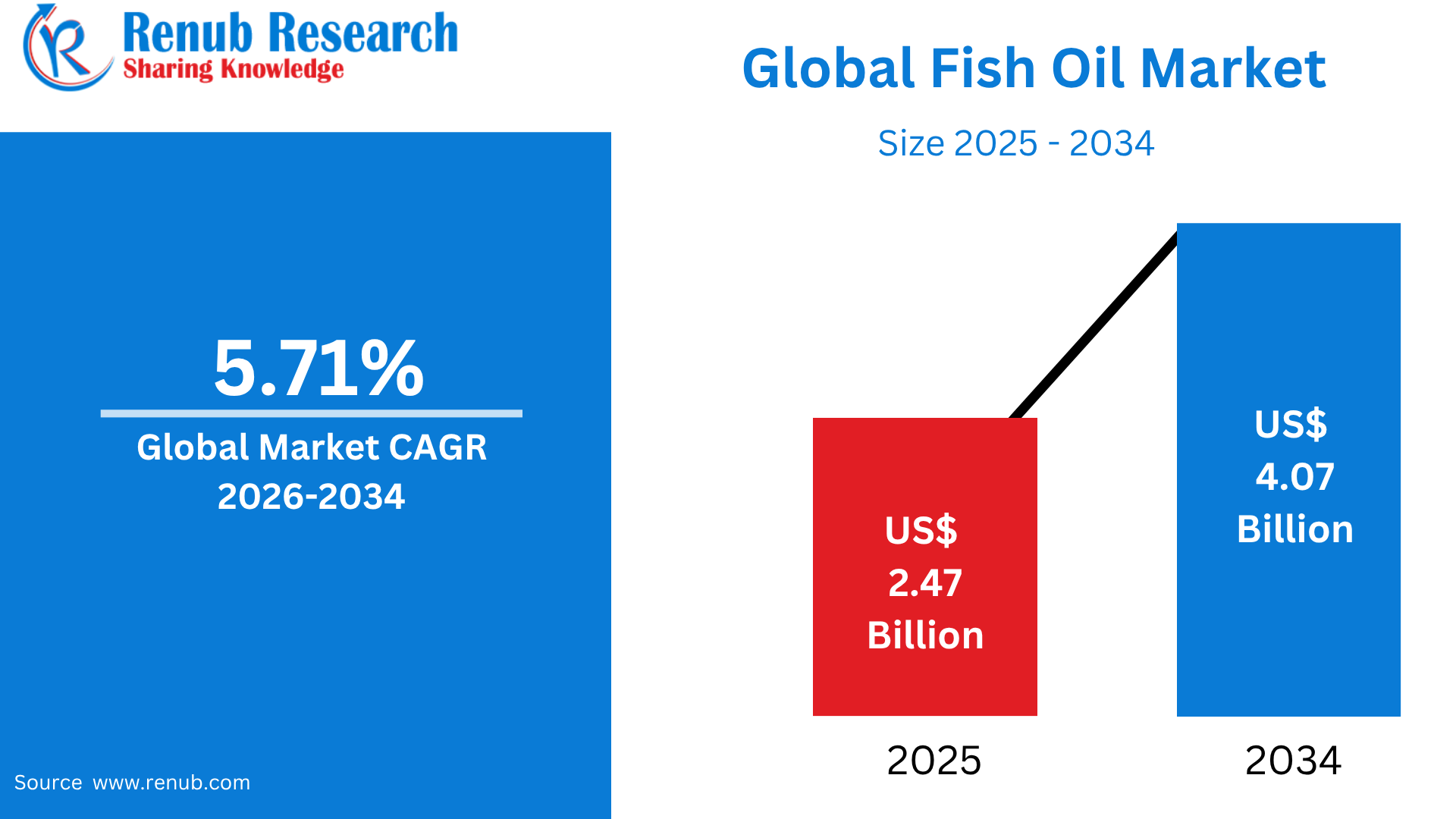
The Global Fish Oil Market is projected to grow from US$ 2.47 billion in 2025 to US$ 4.07 billion by 2034, registering a CAGR of 5.71% during 2026–2034. The market is expected to witness consistent expansion over the forecast period, supported by increasing demand for fish oil across dietary supplements, pharmaceutical formulations, and aquaculture applications. Growing consumer awareness of the health benefits associated with omega-3 fatty acids, particularly EPA and DHA, is encouraging greater consumption of fish oil-based products.
What is Fish Oil and its Uses & Popularity Worldwide
Fish oil is a nutrient-rich oil extracted primarily from the tissues of oily fish such as anchovies, sardines, mackerel, tuna, and salmon. It is valued mainly for its high concentration of long-chain omega-3 fatty acids, particularly eicosapentaenoic acid (EPA) and docosahexaenoic acid (DHA). Fish oil is widely consumed as dietary supplements in the form of softgels, capsules, liquids, and fortified foods. It is also used in pharmaceutical formulations, functional foods, infant nutrition, animal feed, and aquaculture diets. Omega-3 fatty acids are associated with cardiovascular, brain, eye, and overall nutritional health, supporting growing consumer interest in fish-oil products.
The global popularity of fish oil has increased alongside rising health consciousness, preventive healthcare awareness, and demand for nutritional supplements. In aquaculture, fish oil provides essential lipids that support fish growth and feed quality. Pharmaceutical-grade omega-3 products are also increasingly used in specialized formulations. Growing demand for natural nutritional ingredients and increasing awareness of EPA and DHA benefits are therefore strengthening fish oil consumption across developed and emerging markets.
Fish Oil Launches Worldwide
- Epax Evolve 05 – 2025 – Epax launched EPAX Evolve 05, described as the world’s first commercially available very-long-chain polyunsaturated fatty acid (VLC-PUFA) product. The marine concentrate contains approximately 10 times the VLC-PUFA concentration of crude fish oil and was introduced through the company’s NovusLipid range.
- Omega 3 Star – 2025 – Innovaoleo by Natac launched Omega 3 Star, a premium fish oil designed for food, nutraceutical, and pet-nutrition applications. The product provides an 18% EPA and 12% DHA profile and was developed with emphasis on purity, stability, and neutral taste, odor, and color.
- Norwegian Salmon Oil – 2025 – Garden of Life, a Nestlé-owned brand, launched Norwegian Salmon Oil in the United States using Hofseth BioCare’s OmeGo full-spectrum salmon oil. The ingredient is produced from upcycled by-products of farmed Norwegian salmon and offers a broader spectrum of naturally occurring omega components.
- Bioriginal Sustainable Omega-3 Line – 2024 – Bioriginal and POS Biosciences introduced a new line of omega-3 fish, algal, and plant-based oils. The portfolio combines sustainable fish oil with concentrated algal DHA and plant-derived oils for human nutrition and pet-nutrition applications.
- Omega Active – 2024 – Ireland-based Revive Active introduced Omega Active, providing 1,362 mg of omega-3 fish oil per two-capsule serving, including approximately 756 mg EPA and 504 mg DHA. The supplement uses a plant-based enteric shell designed to reduce fishy aftertaste and support delivery through the digestive system.
- Omega-3 Fish Oil Gummy Chews – 2024 – NOW Foods introduced Omega-3 Fish Oil Gummy Chews as part of its second-half 2024 product introductions. The launch reflects the growing shift toward convenient and more consumer-friendly formats for omega-3 supplementation, particularly for consumers who prefer alternatives to conventional softgels.
- Coromega Max Gold – 2024 – Coromega introduced Coromega Max Gold, a high-potency omega-3 fish oil product providing approximately 3,000 mg of omega-3s, including 1,560 mg EPA and 1,060 mg DHA. The formulation targets consumers seeking concentrated omega-3 supplementation for cardiovascular, brain, and joint-health applications.
- B-Romega – 2024 – Groupe Berkem and Arctic Bioscience introduced B-Romega for the North American market. The omega-3 formulation is based on herring caviar oil extract, providing phospholipid-bound omega-3 fatty acids and naturally occurring specialized pro-resolving mediators (SPMs).
- NYO3 Salmon Oil – 2025 – Norwegian nutrition company NYO3 unveiled its Salmon Oil at Vitafoods Europe in May 2025. The launch expanded the company’s omega portfolio beyond krill oil and positioned salmon-derived omega-3 as a premium nutrition ingredient.
- Nutriterra Omega-3 – 2024 – Nufarm continued the commercial expansion of its Nutriterra omega-3 platform during 2024, alongside Aquaterra. The company reported expansion in the United States and development of omega-3 applications spanning human nutrition, pet food, animal feed, and aquaculture.
Growth Drivers of the Fish Oil Market
Rising Consumer Awareness of Omega-3 Health Benefits
Increasing awareness of the nutritional and health benefits of omega-3 fatty acids is a major driver of the global fish oil market. EPA and DHA are recognized as important long-chain omega-3 fatty acids and are widely incorporated into dietary supplements, functional foods, and pharmaceutical products. The global dietary supplements market serves billions of consumers, while omega-3 supplements remain one of the most established categories within nutritional products. Fish oil supplements are commonly marketed for cardiovascular, cognitive, eye, and general wellness applications. Growing interest in preventive healthcare is encouraging consumers to incorporate omega-3 products into their regular diets, particularly in markets with aging populations and higher healthcare awareness. Fish oil is available in multiple forms, including capsules, softgels, liquids, gummies, and fortified foods, making it accessible to different consumer groups. Furthermore, demand for products containing concentrated EPA and DHA is increasing as consumers seek higher-potency formulations. This combination of health awareness, nutritional supplementation, and product innovation is expected to support sustained fish oil market expansion.
Expanding Aquaculture Industry and Demand for Fish Feed
The rapid expansion of aquaculture is another important growth driver for the fish oil market. Aquaculture has become an essential contributor to global seafood supply, with farmed aquatic animals accounting for more than half of total aquatic animal production in recent years. Fish oil is used as an important lipid ingredient in aquaculture feed because it supplies omega-3 fatty acids and energy required for fish development and feed performance. Species such as salmon, trout, tuna, shrimp, and marine fish can benefit from diets containing long-chain omega-3 fatty acids. The growth of intensive and commercial aquaculture operations is consequently generating continued demand for high-quality feed ingredients. Global aquaculture production has surpassed 130 million tonnes annually when aquatic animals and algae are considered, highlighting the scale of the industry. Although feed manufacturers are increasingly incorporating alternative oils and ingredients, fish oil remains important because of its nutritional profile and contribution of EPA and DHA. Increasing seafood consumption, expansion of farmed fish production, and investments in aquaculture infrastructure are therefore supporting long-term demand for fish oil.
Increasing Pharmaceutical and Functional Food Applications
Growing utilization of fish oil in pharmaceutical products, functional foods, and fortified nutrition is creating additional opportunities for market expansion. Concentrated EPA and DHA ingredients are increasingly incorporated into specialized nutritional and pharmaceutical formulations, while omega-3 ingredients are also added to products such as milk, infant nutrition, beverages, cereals, and other functional foods. The global burden of cardiovascular and metabolic disorders is increasing demand for preventive nutrition and health-focused products. Cardiovascular diseases remain the world’s leading cause of death, accounting for an estimated 17.9 million deaths annually, creating significant interest in nutritional approaches that support heart health. Pharmaceutical-grade omega-3 products can contain highly concentrated levels of EPA and DHA compared with conventional supplements, allowing manufacturers to target specific applications. Advances in purification, molecular distillation, concentration, and deodorization technologies are also improving the quality and usability of fish oil ingredients. In addition, pharmaceutical companies and nutrition manufacturers are developing products with higher purity, improved stability, and better absorption characteristics. These developments are broadening the commercial applications of fish oil worldwide.
Challenges of the Fish Oil Market
Limited Availability of Fish Resources and Supply Volatility
Limited availability of suitable marine resources represents a significant challenge for the fish oil industry. Fish oil production depends heavily on the availability of oily fish and fisheries used for reduction into fishmeal and fish oil. Variations in fishing quotas, climatic conditions, ocean temperatures, El Niño events, and changes in fish populations can influence raw-material availability and consequently affect production volumes and prices. Global fishmeal and fish-oil production is relatively limited compared with the rapidly growing demand from human nutrition and aquaculture. Small pelagic species such as anchoveta, sardines, and menhaden account for a substantial proportion of global supply, making the industry vulnerable to regional disruptions. Peru and Chile are particularly important suppliers, and changes in anchovy catches can have a noticeable impact on international prices. Increasing competition between direct human consumption, animal feed, and aquaculture also places pressure on marine resources. Sustainable fisheries management and alternative omega-3 sources are therefore becoming increasingly important for maintaining a stable and environmentally responsible fish oil supply.
Sustainability Concerns and Price Fluctuations
Sustainability concerns and fluctuations in raw-material prices represent major challenges for fish oil manufacturers. The industry faces increasing pressure to demonstrate responsible sourcing, traceability, and protection of marine ecosystems. Fish populations can be affected by overfishing, climate change, ocean warming, and changes in marine food chains, creating concerns about the long-term availability of raw materials. Certification requirements and sustainability programs can increase compliance and procurement costs for manufacturers. At the same time, fish oil prices can fluctuate considerably because supply is influenced by fishing seasons, weather conditions, quotas, and global demand. Rising demand from dietary supplements and aquaculture can intensify competition for available fish oil supplies. Manufacturers are consequently investing in alternative omega-3 sources, including algae-derived DHA and EPA, krill oil, and oils obtained from more sustainable processing streams. Algal omega-3 production is particularly attractive because it can provide DHA and, in some applications, EPA without relying directly on wild-caught fish. These alternatives may reduce supply pressure but can also increase production costs compared with conventional fish oil.
OECD-FAO Projections: Global Demand for Food and Non-Food Aquatic Products
- Overall Trajectory: Total utilization has steadily increased from approximately 100 million metric tonnes in 1990 to around 200 million metric tonnes in the projection period approaching 2034.
·Food Uses:
- Forms the vast majority of total aquatic product utilization throughout the entire timeline.
- Grew continuously from under 70 million metric tonnes in 1990 to over 175–180 million metric tonnes projected by 2034.
·Non-Food Uses:
- Represents a much smaller, relatively stable share over time.
- Fluctuates narrowly between roughly 20 to 30 million metric tonnes across the historical and projected periods.
- Projection Window (Shaded Area): Covers the years from 2025/2026 to 2034, indicating continued, gradual growth primarily driven by demand for human consumption (food uses).
- Data Source: OECD/FAO (2025), “OECD-FAO Agricultural Outlook,” OECD Agriculture statistics database.
Dominant Raw Material for Fish Oil Production
Anchoveta fish oil is produced primarily from Peruvian anchoveta (Engraulis ringens), a small pelagic species that forms the foundation of Peru’s fishmeal and fish oil industry. Peru’s anchoveta fishery is among the world’s largest single-species fisheries, with average annual landings of approximately 4.4 million tonnes. In 2022, anchoveta represented about 77% of Peru’s total fish landings by volume, highlighting its importance to the marine ingredients industry. Peru produced approximately 81,752 tonnes of fish oil in 2022, alongside nearly 976,405 tonnes of fishmeal. Anchoveta oil is valued for its high concentration of omega-3 fatty acids, particularly EPA and DHA, making it suitable for aquaculture feed, nutritional supplements, functional foods, and pharmaceutical applications. Demand is strengthened by the expanding consumption of omega-3 ingredients and the growing aquaculture industry, where fish oil remains an important source of essential fatty acids. The anchoveta fish oil market is highly influenced by fishing quotas, ocean conditions, biomass availability, and climatic events such as El Niño. Anchoveta populations are particularly sensitive to changes in the Humboldt Current ecosystem, which can affect feeding conditions, distribution, and fishing productivity. During the 2023–2024 El Niño period, anchoveta landings in Peru declined substantially compared with 2022, contributing to tighter global fish oil availability and significant price increases. Peru typically contributes around one-fifth of global fishmeal and fish oil production, meaning changes in its anchoveta harvest can influence international supply and prices. Sustainability management, including seasonal fishing controls, biomass assessments, and quota systems, is therefore critical to maintaining long-term supply. At the same time, processors are investing in efficient extraction, purification, and quality-control technologies to maximize oil recovery and improve the nutritional value of anchoveta-derived omega-3 products.
High-Value Omega-3 Source from North Atlantic Fisheries
Capelin fish oil is obtained from capelin, a small pelagic fish found primarily in cold North Atlantic and Arctic waters, particularly around Iceland, Norway, Greenland, and adjacent marine regions. The species is valued by the marine ingredients industry because its oil contains omega-3 fatty acids, including EPA and DHA, which are widely used in nutritional supplements, functional foods, animal nutrition, and aquaculture feeds. Capelin fisheries are closely managed because the species plays an important ecological role as a forage fish for larger marine animals. Fishing quotas and seasonal harvesting restrictions therefore have a direct influence on raw-material availability. Iceland and other North Atlantic fishing economies have established processing infrastructure capable of converting pelagic fish into fishmeal and fish oil. Demand for capelin-derived oil is supported by increasing interest in marine-based omega-3 ingredients, particularly where manufacturers seek concentrated sources of EPA and DHA for premium nutrition and feed formulations. The capelin fish oil market is strongly influenced by sustainable fisheries management, biological stock assessments, and changing ocean conditions. Capelin stocks can fluctuate significantly because of variations in sea temperature, food availability, recruitment, and predator populations. Consequently, annual fishing quotas may change considerably to protect reproductive stocks and maintain ecosystem balance. This creates supply variability for processors and buyers of capelin-derived fish oil. Nevertheless, controlled fisheries and traceability systems can enhance the market’s attractiveness to manufacturers seeking responsibly sourced marine ingredients. Capelin oil can also benefit from growing demand for omega-3 products with high nutritional value, particularly in dietary supplements and specialized animal-feed formulations. Increasing consumer attention toward sustainable seafood ingredients is encouraging producers to emphasize responsible sourcing and certification. Advances in refining, purification, and stabilization technologies are additionally helping processors improve the quality, shelf life, and commercial value of capelin fish oil.
Growing Retail Availability of Fish Oil Supplements
Hypermarkets and supermarkets represent an important distribution channel for consumer-oriented fish oil products, particularly capsules, softgels, liquid omega-3 supplements, and fortified nutritional products. The channel benefits from high consumer traffic, broad product assortment, promotional campaigns, and the convenience of purchasing health products alongside groceries. Fish oil supplements are increasingly positioned within wellness, vitamins, and nutritional supplement categories, making them accessible to consumers seeking convenient sources of EPA and DHA. In the United States, more than 170 million people are estimated to use dietary supplements each year, creating a substantial retail customer base for omega-3 products. Supermarkets and hypermarkets also benefit from private-label opportunities, allowing retailers to offer lower-priced fish oil products alongside premium branded supplements. Increasing consumer awareness of cardiovascular, cognitive, and general nutritional benefits associated with omega-3 fatty acids is encouraging repeat purchases and supporting greater shelf space for fish oil products. Competition within supermarket and hypermarket fish oil sales is increasingly centered on product quality, formulation, price, packaging, and convenience. Retailers are expanding their ranges to include concentrated EPA/DHA products, triglyceride-form fish oil, flavored liquid oils, children’s formulations, and products positioned around heart and brain health. Larger retailers can use private-label products to compete on price while established supplement brands emphasize purity, third-party testing, sustainable sourcing, and higher omega-3 concentrations. Promotional events and loyalty programs also encourage consumers to purchase supplements regularly. At the same time, supermarkets are integrating physical stores with online ordering and home-delivery services, creating an omnichannel purchasing environment. This is particularly relevant for supplements because consumers increasingly research ingredients and product reviews online before purchasing. Improved labeling, transparent sourcing information, and claims related to omega-3 content can further influence purchasing decisions. Consequently, hypermarkets and supermarkets are expected to remain significant channels for mainstream fish oil consumption worldwide.
Strong Demand from Farmed Fish and Seafood Production
Aquaculture represents the largest end-use application for fish oil, making expansion of farmed seafood production a major driver of the aquaculture fish oil market. Fish oil supplies essential long-chain omega-3 fatty acids, particularly EPA and DHA, that support fish growth, feed quality, physiological development, and nutritional value. Approximately 74% of global fish oil utilization was directed toward aquaculture in 2021, demonstrating the sector’s importance to overall demand. Fish oil is particularly relevant in feed formulations for species such as salmon, trout, marine finfish, and other high-value aquaculture species. Global aquaculture production has expanded substantially over the past decade as capture fisheries face biological limitations and consumers demand more seafood. Feed manufacturers are therefore seeking reliable lipid sources capable of supporting efficient growth and maintaining the nutritional characteristics of farmed seafood. Rising investment in intensive and technologically advanced aquaculture systems is expected to sustain demand for high-quality fish oil ingredients. The aquaculture fish oil market is also evolving as feed manufacturers balance nutritional requirements with sustainability and cost considerations. Fish oil remains an effective source of EPA and DHA, but fluctuations in fish catches and raw-material prices can create challenges for feed producers. As a result, aquafeed manufacturers increasingly combine fish oil with other lipid sources while optimizing formulations according to species and growth stage. Alternative ingredients such as algal oils, vegetable oils, and recycled fish-processing oils are being evaluated to reduce pressure on wild-capture fisheries while maintaining adequate omega-3 nutrition. Despite this diversification, marine-derived fish oil remains strategically important because of its nutritional characteristics and established use in premium aquaculture feeds. In 2021, aquaculture accounted for nearly three-quarters of global fish oil utilization, underscoring the sector’s influence on market demand. Growth in salmon, shrimp, trout, and marine-finfish farming, combined with improvements in feed conversion and precision nutrition, is expected to support continued consumption of fish oil in aquaculture.
Growing Preventive Healthcare Awareness Supports Omega-3 Demand in United States
United States fish oil market is witnessing steady expansion, supported by increasing consumer awareness of preventive nutrition, cardiovascular wellness, and the benefits of omega-3 fatty acids. The United States has a large and established dietary supplement industry, with more than 170 million Americans reported to use dietary supplements annually, creating a substantial consumer base for fish oil products. EPA and DHA are widely recognized for their nutritional importance, particularly in products positioned around heart and general wellness. The American Heart Association recommends eating fish, particularly fatty fish, at least twice a week as part of a heart-healthy diet. Rising prevalence of obesity, cardiovascular conditions, elevated triglycerides, and other lifestyle-related health concerns is encouraging consumers to consider omega-3 supplementation. Fish oil is available through pharmacies, supermarkets, specialty nutrition stores, and major e-commerce platforms. In addition, U.S. nutraceutical companies are introducing concentrated, high-EPA and high-DHA capsules, triglyceride-form fish oils, and sustainably sourced products, supporting premiumization and market growth.
Strong Nutritional Awareness and Clean-Label Preferences Drive Germany Growth
Germany represents an important European market for fish oil, supported by high consumer awareness of nutrition, preventive healthcare, and functional dietary supplements. More than one-fifth of Germany’s population is aged 65 years or older, strengthening interest in nutritional products associated with healthy aging and cardiovascular and cognitive wellness. Fish oil supplements containing EPA and DHA are increasingly positioned as convenient sources of omega-3 fatty acids for consumers who do not regularly consume sufficient quantities of fatty fish. Germany’s sophisticated pharmaceutical, nutraceutical, pharmacy, supermarket, and e-commerce infrastructure provides manufacturers with multiple distribution channels. Consumers are also increasingly attentive to ingredient quality, purity, sustainability, and traceability. This trend is encouraging companies to offer molecularly distilled fish oils, concentrated EPA/DHA formulations, and products carrying sustainability or responsible-sourcing certifications. The country’s strong research and healthcare ecosystem further supports product innovation. Growing demand for natural ingredients, premium supplements, and preventive nutrition is therefore expected to maintain Germany as a significant European market for fish oil products.
Rising Health Consciousness and Expanding Supplement Consumption Create India Opportunities
India’s fish oil market is expanding as consumers become increasingly aware of omega-3 fatty acids and their nutritional relevance to cardiovascular, cognitive, and joint health. India has a population exceeding 1.4 billion, providing a substantial potential consumer base for nutritional supplements. Increasing prevalence of lifestyle-associated conditions, including diabetes, obesity, and cardiovascular diseases, is encouraging greater attention toward preventive nutrition and wellness products. Fish oil capsules and omega-3 supplements are becoming more accessible through pharmacies, modern retail outlets, health stores, and online marketplaces. The Food Safety and Standards Authority of India (FSSAI) provides regulatory oversight for foods and health supplements, supporting greater standardization within the sector. Manufacturers are responding by introducing high-potency EPA/DHA capsules, flavored liquid fish oils, vegetarian omega-3 alternatives, and omega-3-fortified foods. Rising disposable incomes, urbanization, digital commerce, and expanding awareness of dietary supplementation are further supporting market penetration. These factors are expected to create significant long-term opportunities for domestic and international fish oil manufacturers in India.
Wellness Trends and Expanding Supplement Consumption Support Saudi Arabia Market Development
Saudi Arabia’s fish oil market is benefiting from increasing health consciousness, rising interest in preventive healthcare, and growing consumer adoption of nutritional supplements. The country’s population exceeds 35 million, providing an expanding consumer base for wellness and nutrition products. Fish oil supplements containing EPA and DHA are increasingly used by consumers seeking nutritional support for cardiovascular, joint, and general health. The country’s healthcare transformation initiatives under Saudi Vision 2030 are also emphasizing preventive healthcare, healthier lifestyles, and improved access to healthcare services. Rising disposable incomes and the expansion of modern pharmacies, supermarkets, specialized health stores, and e-commerce platforms are improving access to nutritional supplements. Saudi consumers are also showing greater interest in premium, high-potency, and scientifically formulated products. International and regional supplement companies are consequently expanding their omega-3 product portfolios through capsules, softgels, and concentrated formulations. Increasing awareness of nutrition, growing wellness expenditure, and improving retail accessibility are expected to support continued growth of the Saudi Arabian fish oil market.
Fish Oil Market Segments
Source
- Anchoveta
- Sardine
- Capelin
- Menhaden
- Herring
- Anchovy
- Others
Distribution Channel
- Hypermarkets and Supermarkets
- Specialty Stores
- Online Stores
- Others
End User
- Aquaculture
- Animal Feed
- Nutritional Supplements
- Pharmaceutical
- Others
Countries
North America
- United States
- Canada
Europe
- France
- Germany
- Italy
- Spain
- United Kingdom
- Belgium
- Netherlands
- Turkey
Asia Pacific
- China
- Japan
- India
- South Korea
- Thailand
- Malaysia
- Indonesia
- Australia
- New Zealand
Latin America
- Brazil
- Mexico
- Argentina
Middle East & Africa
- Saudi Arabia
- UAE
- South Africa
All companies have been covered with 5 Viewpoints
- Overviews
- Key Person
- Recent Developments
- SWOT Analysis
- Revenue Analysis
Key Players Analysis
- Croda International Plc.
- Mukka Proteins Limited
- FKS Multi Agro
- GC Rieber Oil
- Colpex International SAC
- Corpesca S.A.
- FF Skagen A/S
- Nutrifynn Caps, Inc.
| Report Features | Details |
| Base Year |
2025 |
| Historical Period |
2022 - 2025 |
| Forecast Period |
2026 - 2034 |
| Market |
US$ Billion |
| Segment Covered |
Source, Distribution Channel, End Use and Countries |
| Countries Covered |
|
| Companies Covered |
|
| Customization Scope |
20% Free Customization |
| Post-Sale Analyst Support |
1 Year (52 Weeks) |
| Delivery Format |
PDF and Excel through Email (We can also provide the editable version of the report in PPT/Word format on request) |
Key Questions Answered in Report:
- What is the current size of the global fish oil market, and what is the expected growth rate (CAGR) from 2026 to 2034?
- What are the major drivers fueling the growth of the global fish oil market?
- What challenges are limiting the fish oil market’s growth potential, especially in terms of pricing and alternatives?
- Which fish species are the primary sources of fish oil, and how do their market shares compare?
- What are the main end-use industries for fish oil (e.g., aquaculture, pharmaceuticals, supplements), and which segment holds the largest share?
- How is the distribution of fish oil segmented across different retail channels like hypermarkets, specialty stores, and online platforms?
- Which regions and countries are dominating the global fish oil market, and what are the growth trends in key markets such as the U.S., Germany, India, and Saudi Arabia?
- What role does growing consumer awareness of omega-3 fatty acid benefits play in market expansion?
- Who are the major companies in the global fish oil industry, and what are their strategies, recent developments, and market performance?
- How is technological advancement in aquafeed and nutritional supplements shaping the future demand and application of fish oil globally?
Customization Services available
- Analysis of Market Size and Its Segments
- More Company Profiles (Upto 10 without any additional cost):
- Additional Countries (Other than mentioned Countries):
- Region/Country Specific Reports:
- Market Entry Strategy:
- Region-Specific Market Dynamics:
- Regional Market Share Analysis:
- Trade Analysis:
- Production Insights:
- Others Customized Requests:
For more information contact our analysts.
Need More Assistance?
- Talk to our analysts to get more precious information on the current market trends.
- Include more countries and segments and customize the report based on the final requirement.
- Get a competitive advantage in your industry by knowing the report findings and making a positive impact on your revenues and operations.
- Our analysts are always ready to provide more help and pertinent information if you need any additional assistance.