Europe Sulphur Recovery Technologies Market Size, Share, Trends, Growth Analysis and Forecast Report 2026–2034
Buy NowEurope Sulphur Recovery Technologies Market Size & Trends
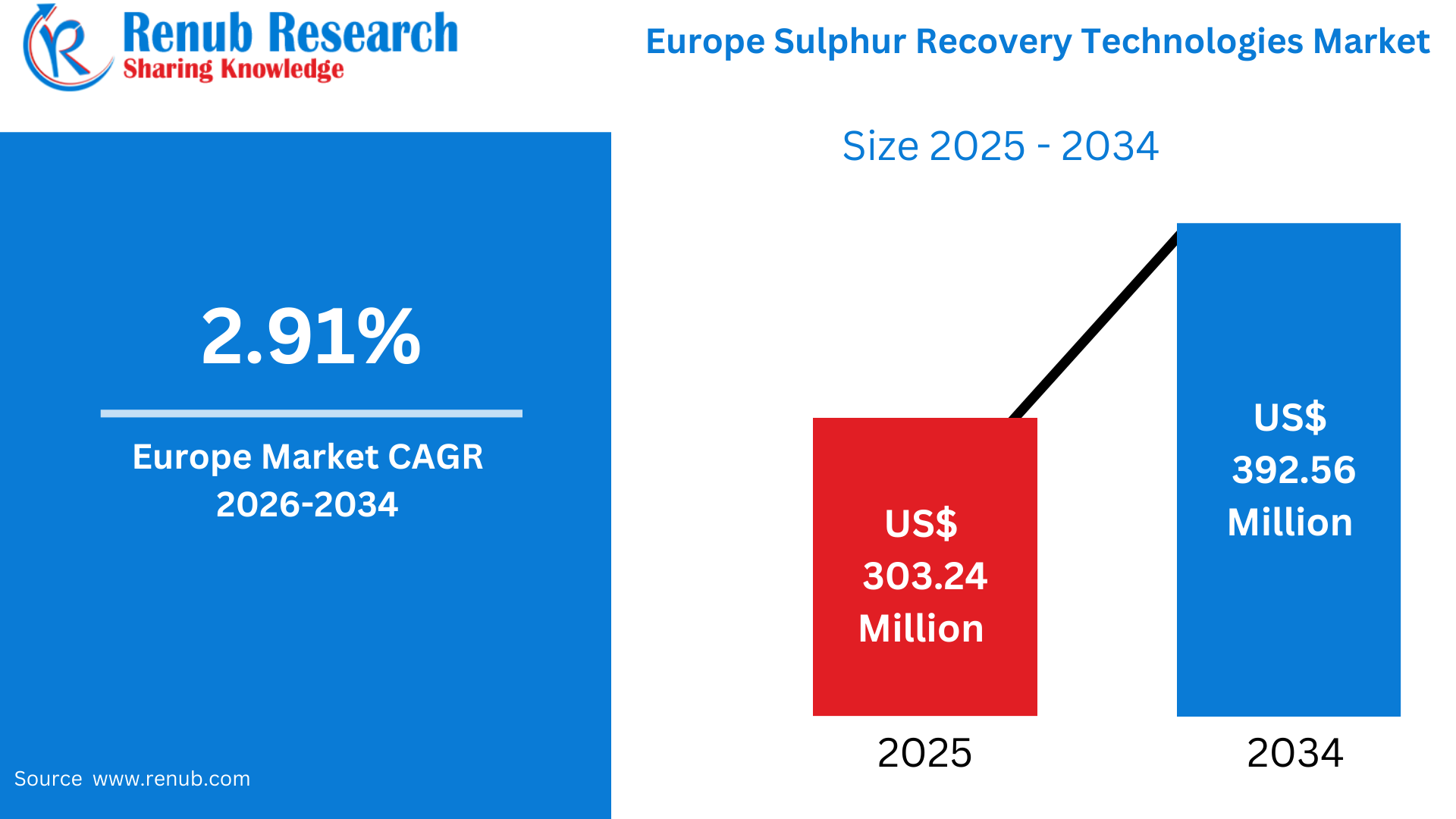
The Europe Sulphur Recovery Technologies Market was valued at US$ 303.24 million in 2025 and is projected to reach US$ 392.56 million by 2034, expanding at a CAGR of 2.91% during the forecast period from 2026 to 2034. Market growth is primarily supported by increasingly stringent environmental and emission regulations, the expansion of refining and natural gas processing activities, and the growing implementation of advanced emission control systems. In addition, rising investments in high-efficiency sulphur recovery units and sustainability initiatives across the oil, gas, and chemical industries are expected to further strengthen market demand throughout the forecast period.
Sulphur Recovery Technologies and its Uses in Europe
Sulphur Recovery Technologies (SRTs) comprise a range of industrial processes designed to recover elemental sulphur from hydrogen sulphide (H₂S)-rich gas streams generated during petroleum refining, natural gas processing, and petrochemical operations. The most widely used technology combines thermal and catalytic treatment methods to convert hazardous hydrogen sulphide into stable, reusable elemental sulphur. These technologies play a critical role in reducing harmful emissions, minimizing equipment corrosion, ensuring regulatory compliance, and enabling the recovery of valuable sulphur for use in fertilizers, chemicals, pharmaceuticals, and other industrial applications.
Across Europe, the adoption of sulphur recovery technologies has accelerated due to increasingly rigorous environmental policies aimed at reducing air pollution and greenhouse gas emissions. The region’s emphasis on producing cleaner fuels, lowering sulphur content in industrial processes, and achieving sustainable manufacturing practices has driven demand for advanced recovery solutions. Furthermore, Europe’s well-established oil and gas infrastructure, coupled with ongoing refinery upgrades and investments in gas processing facilities, continues to support the deployment of modern sulphur recovery systems. The growing focus on circular economy principles, where recovered sulphur is recycled and reused rather than discarded, is also contributing to the long-term expansion of the market.
Sulphur Recovery Technologies Product Launches in Europe
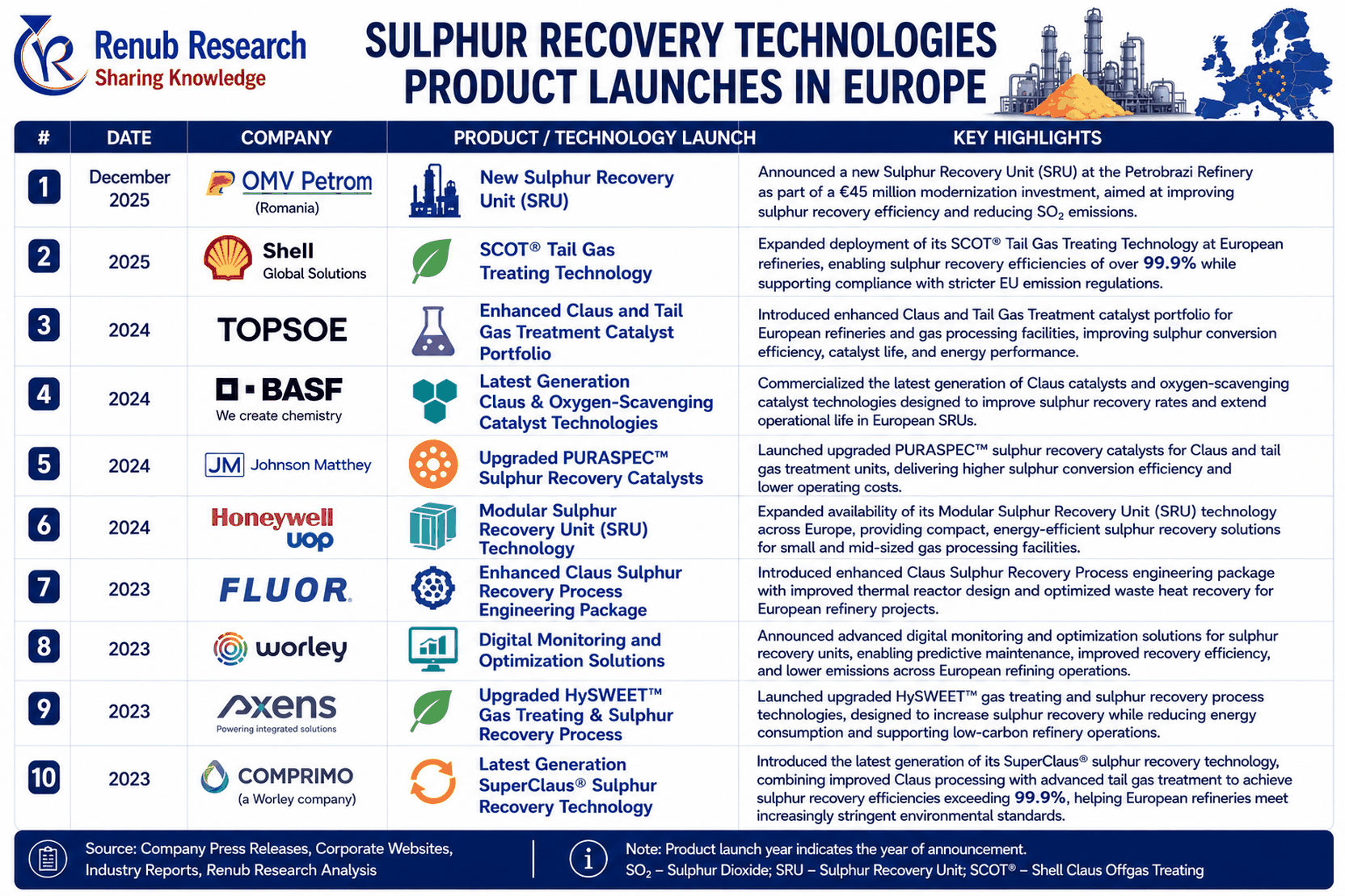
- December 2025 – OMV Petrom (Romania): Announced a new Sulphur Recovery Unit (SRU) at the Petrobrazi Refinery as part of a €45 million modernization investment, aimed at improving sulphur recovery efficiency and reducing SO₂ emissions.
- 2025 – Shell Global Solutions: Expanded deployment of its SCOT® Tail Gas Treating Technology at European refineries, enabling sulphur recovery efficiencies of over 99.9% while supporting compliance with stricter EU emission regulations.
- 2024 – Topsoe: Introduced enhanced Claus and Tail Gas Treatment catalyst portfolio for European refineries and gas processing facilities, improving sulphur conversion efficiency, catalyst life, and energy performance.
- 2024 – BASF: Commercialized the latest generation of Claus catalysts and oxygen-scavenging catalyst technologies designed to improve sulphur recovery rates and extend operational life in European SRUs.
- 2024 – Johnson Matthey: Launched upgraded PURASPEC™ sulphur recovery catalysts for Claus and tail gas treatment units, delivering higher sulphur conversion efficiency and lower operating costs.
- 2024 – Honeywell UOP: Expanded availability of its Modular Sulphur Recovery Unit (SRU) technology across Europe, providing compact, energy-efficient sulphur recovery solutions for small and mid-sized gas processing facilities.
- 2023 – Fluor Corporation: Introduced enhanced Claus Sulphur Recovery Process engineering package with improved thermal reactor design and optimized waste heat recovery for European refinery projects.
- 2023 – Worley: Announced advanced digital monitoring and optimization solutions for sulphur recovery units, enabling predictive maintenance, improved recovery efficiency, and lower emissions across European refining operations.
- 2023 – Axens: Launched upgraded HySWEET™ gas treating and sulphur recovery process technologies, designed to increase sulphur recovery while reducing energy consumption and supporting low-carbon refinery operations.
- 2023 – Comprimo (a Worley company): Introduced the latest generation of its SuperClaus® sulphur recovery technology, combining improved Claus processing with advanced tail gas treatment to achieve sulphur recovery efficiencies exceeding 99.9%, helping European refineries meet increasingly stringent environmental standards.
Key Growth Drivers
Stringent Environmental Regulations Driving Technology Adoption
Strict environmental regulations across Europe continue to be a major factor supporting the adoption of sulphur recovery technologies. Governments and regulatory authorities have introduced rigorous emission standards to reduce the release of sulphur compounds, particularly sulphur dioxide (SO₂), from refineries, natural gas processing facilities, and petrochemical plants. To comply with these regulations, industrial operators are investing in advanced sulphur recovery units (SRUs) and tail gas treatment systems that improve sulphur recovery efficiency while minimizing emissions. Non-compliance can result in substantial financial penalties, operational restrictions, or facility shutdowns, encouraging companies to modernize aging infrastructure. Additionally, the European Union has strengthened its climate agenda through stricter CO₂ emission standards for heavy-duty vehicles, requiring newly manufactured vehicles to achieve a 90% reduction in emissions by 2040. These broader environmental initiatives continue to reinforce investments in cleaner industrial technologies, including sulphur recovery systems.
Modernization of Refining and Natural Gas Processing Infrastructure
The ongoing modernization of Europe’s refining and natural gas processing infrastructure is creating significant opportunities for the sulphur recovery technologies market. Many existing refineries and gas processing plants are replacing outdated equipment with advanced sulphur recovery systems capable of processing higher-sulphur feedstocks while meeting increasingly stringent fuel quality and environmental standards. Rising imports of sour crude oil and sour natural gas further increase the need for high-performance recovery technologies. In parallel, the European Union has approved hundreds of cross-border energy infrastructure projects focused on strengthening regional energy connectivity, including investments in hydrogen and carbon dioxide transport networks. These modernization initiatives not only improve energy security but also encourage the deployment of advanced processing technologies that support cleaner and more efficient industrial operations.
Growing Focus on Sustainability and Circular Economy Practices
Europe’s commitment to sustainability and circular economy principles is significantly accelerating the adoption of sulphur recovery technologies. Rather than being treated as industrial waste, recovered elemental sulphur is increasingly recognized as a valuable raw material used in the production of fertilizers, chemicals, rubber products, and pharmaceuticals. Industries across the region are placing greater emphasis on reducing waste generation, improving resource efficiency, and maximizing the reuse of by-products. Sulphur recovery technologies enable companies to convert hazardous hydrogen sulphide into commercially valuable sulphur, reducing environmental impact while creating additional revenue streams. As industries strive to meet both sustainability objectives and operational efficiency targets, investment in efficient sulphur recovery systems continues to increase.
Key Challenges
High Investment and Operating Expenses
The substantial capital investment required for sulphur recovery technologies remains one of the primary challenges facing the European market. Installing advanced sulphur recovery units and associated tail gas treatment systems involves considerable expenditure on sophisticated process equipment, catalysts, and specialized materials. These high upfront costs can discourage adoption, particularly among small and medium-sized processing facilities. In addition to installation expenses, ongoing operational costs—including energy consumption, catalyst replacement, routine maintenance, and system monitoring—further increase the overall cost of ownership. For facilities with relatively lower processing capacities, achieving an attractive return on investment can be challenging, limiting wider market penetration.
Operational Complexity and Aging Industrial Infrastructure
Sulphur recovery systems rely on highly sophisticated thermal and catalytic processes that require continuous monitoring and precise process control to achieve optimal recovery efficiency. Variations in feed gas composition, sulphur concentration, and plant operating conditions can significantly affect system performance and operational stability. Furthermore, many industrial facilities across Europe continue to operate with aging infrastructure that may not be fully compatible with modern automation and process control technologies, making system integration more complex. The successful operation of advanced sulphur recovery units also depends on the availability of experienced technical personnel capable of managing these complex processes, creating an ongoing need for skilled workforce development and specialized operational expertise.
Technology Insights
Claus Process Sulphur Recovery Technologies
The Claus Process remains the dominant sulphur recovery technology across Europe, accounting for the majority of sulphur recovery units installed in refineries and natural gas processing facilities. This well-established thermal process converts hydrogen sulphide (H₂S) into elemental sulphur, providing an efficient and reliable solution for controlling sulphur emissions. Its widespread adoption is driven by its proven scalability, operational reliability, and ability to comply with Europe’s stringent environmental regulations. To further enhance sulphur recovery efficiency, many European facilities are integrating the Claus Process with advanced tail gas treatment technologies, enabling sulphur recovery rates exceeding 99.9%. Continued modernization of aging refining infrastructure and increasingly stringent sulphur dioxide (SO₂) emission standards are expected to sustain demand for upgraded Claus Process systems throughout the forecast period.
Source Insights
Oil Refining Sulphur Recovery Technologies
Sulphur recovery technologies play a vital role in Europe’s oil refining sector by supporting downstream operations and ensuring compliance with increasingly strict fuel quality and environmental standards. As refiners process larger volumes of sour crude oil containing higher sulphur concentrations, efficient desulphurization and sulphur recovery systems have become essential for removing sulphur compounds during refining. Advanced sulphur recovery technologies help reduce equipment corrosion, improve refinery efficiency, enhance fuel quality, and support the production of ultra-low sulphur fuels. Growing investments in refinery modernization, coupled with the adoption of advanced hydrotreating and hydroprocessing technologies, are driving demand for next-generation sulphur recovery units. These systems not only help refiners meet regulatory requirements but also maximize the commercial value of recovered elemental sulphur while supporting cleaner and more sustainable refining operations.
Gas Sulphur Recovery Technologies
The growing importance of natural gas and liquefied natural gas (LNG) across Europe is significantly increasing demand for gas-based sulphur recovery technologies. Natural gas streams often contain hydrogen sulphide, which must be removed before transportation and distribution to ensure safety, infrastructure protection, and compliance with quality standards. Advanced sulphur recovery systems, integrated with amine gas treating and tail gas cleanup technologies, enable efficient treatment of sour gas while minimizing environmental emissions. As Europe diversifies its natural gas supply sources and expands LNG infrastructure, investments in flexible and high-efficiency gas processing technologies continue to rise. The region’s strong emphasis on energy security, cleaner fuel production, and environmental compliance is expected to further support the growth of sulphur recovery technologies within the natural gas sector.
Countries Insights
France
France represents a significant market for sulphur recovery technologies, supported by its well-established refining, petrochemical, and chemical industries, along with rigorous environmental regulations. Refining and gas processing facilities across the country continue to invest in advanced sulphur recovery systems to improve operational efficiency, reduce emissions, and comply with evolving environmental standards. France’s commitment to sustainability and carbon reduction has accelerated the adoption of high-efficiency sulphur recovery technologies capable of achieving superior sulphur conversion rates. Furthermore, the country’s strong focus on circular economy initiatives encourages the reuse of recovered sulphur in fertilizer, chemical, and industrial manufacturing applications. Ongoing refinery modernization projects and the implementation of advanced environmental monitoring systems are expected to strengthen long-term market growth.
Germany
Germany is one of Europe’s leading markets for sulphur recovery technologies, benefiting from its highly advanced industrial base, strong engineering capabilities, and strict environmental compliance standards. The country’s refineries, petrochemical complexes, and chemical manufacturing facilities have widely adopted sophisticated sulphur recovery and tail gas treatment systems to minimize emissions and maximize operational efficiency. Continuous investments in industrial modernization and process optimization have encouraged the deployment of next-generation sulphur recovery technologies with improved performance and reliability. Germany also continues to strengthen its clean energy infrastructure. In November 2025, Germany and the Czech Republic established a bilateral working group to accelerate development of the Czech-German Hydrogen Interconnector (CGHI) project. The initiative brings together government agencies, regulators, and major gas transmission operators to advance cross-border hydrogen infrastructure, reflecting the country’s broader commitment to sustainable industrial development and cleaner energy technologies.
United Kingdom
The United Kingdom sulphur recovery technologies market is supported by continuous refinery modernization, offshore oil and gas production, and increasingly stringent environmental regulations. Operators are investing in modern sulphur recovery units to upgrade aging facilities, improve emission control, and comply with evolving environmental standards. Although the UK continues to accelerate its transition toward a low-carbon energy system, existing refining and gas processing operations still require efficient sulphur management technologies. At the same time, significant investments in battery manufacturing and clean energy infrastructure—including Agratas’ multi-billion-pound gigafactory in Somerset and AESC’s battery production expansion in Sunderland—demonstrate the country’s broader industrial transformation while maintaining demand for efficient emission control technologies across conventional energy industries.
Russia
Russia remains an important contributor to the European sulphur recovery technologies market due to its extensive oil and natural gas reserves and the large volumes of sulphur-rich feedstocks processed by its refining and gas processing industries. High concentrations of hydrogen sulphide in sour crude oil and natural gas create strong demand for large-capacity sulphur recovery systems capable of achieving high recovery efficiency while meeting environmental standards. Ongoing industrial modernization initiatives and increasing emphasis on reducing emissions are encouraging investments in advanced sulphur recovery technologies. In addition, efforts to improve fuel quality and maximize the commercial utilization of recovered sulphur continue to support market expansion. In December 2025, OMV Petrom, a leading integrated energy company in Southeastern Europe, announced a €45 million investment in a new sulphur recovery unit at its Petrobrazi refinery, highlighting continued investment in advanced sulphur recovery infrastructure across the region.
Market Segmentations
Technology
- Claus Process
- Tail Gas Treatment
Source
- Oil
- Gas
- Others
Countries
- France
- Germany
- Italy
- Spain
- United Kingdom
- Belgium
- Netherlands
- Russia
- Poland
- Greece
- Norway
- Romania
- Portugal
- Rest of Europe
All companies have been covered with 5 Viewpoints
- Overviews
- Key Person
- Recent Developments
- SWOT Analysis
- Revenue Analysis
Company Analysis
- Bechtel Corporation (Bechtel Group Inc.)
- Black & Veatch Holding Company
- Chiyoda Corporation
- KT-kinetics technology SpA
- Linde plc
- Shell plc.
- Sulfur Recovery Engineering Inc.
- WorleyParsons Ltd.
Report Details:
| Report Features | Details |
| Base Year |
2025 |
| Historical Period |
2022 - 2025 |
| Forecast Period |
2026 - 2034 |
| Market |
US$ Million |
| Segment Covered |
Technology, Source and Countries |
| Countries Covered |
|
| Companies Covered |
|
| Customization Scope |
20% Free Customization |
| Post-Sale Analyst Support |
1 Year (52 Weeks) |
| Delivery Format |
PDF and Excel through Email (We can also provide the editable version of the report in PPT/Word format on request) |
Customization Services available
- Analysis of Market Size and Its Segments
- More Company Profiles (Upto 10 without any additional cost):
- Additional Countries (Other than mentioned Countries):
- Region/Country Specific Reports:
- Market Entry Strategy:
- Region-Specific Market Dynamics:
- Regional Market Share Analysis:
- Trade Analysis:
- Production Insights:
- Others Customized Requests:
For more information contact our analysts.
Need More Assistance?
- Talk to our analysts to get more precious information on the current market trends.
- Include more countries and segments and customize the report based on the final requirement.
- Get a competitive advantage in your industry by knowing the report findings and making a positive impact on your revenues and operations.
- Our analysts are always ready to provide more help and pertinent information if you need any additional assistance.