Europe Protein Market Report by Type, End User, Country and Company Analysis 2026-2034
Buy NowEurope Protein Market Size & Forecast
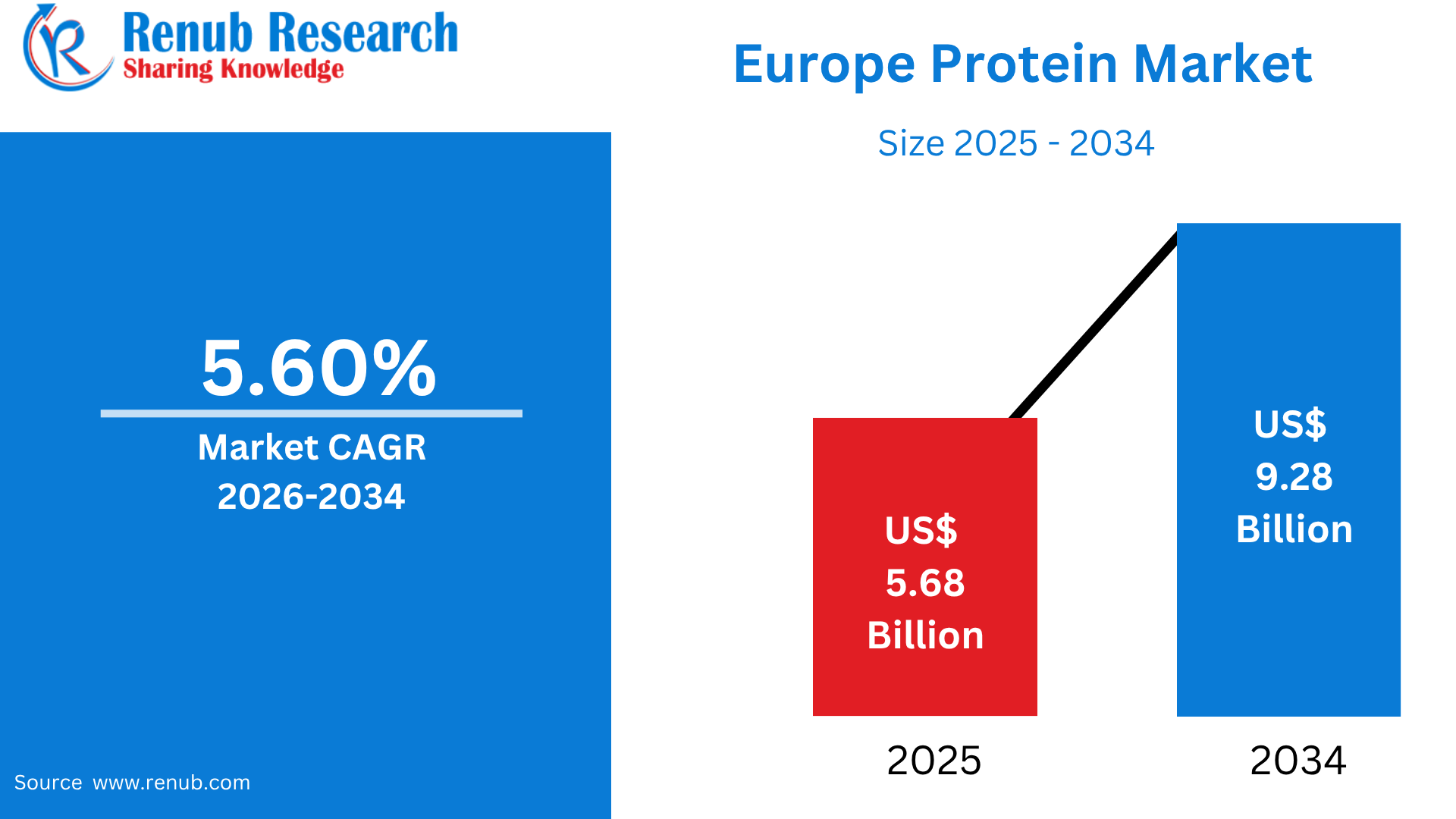
Europe Protein Market is anticipated to grow from US$ 5.68 billion in 2025 to US$ 9.28 billion by 2034, registering a CAGR of 5.60% during the forecast period (2026–2034). Market growth is primarily driven by rising consumer demand for protein-rich foods, increasing health and wellness awareness, and the growing emphasis on balanced nutrition. The expanding use of protein ingredients across food and beverages, sports nutrition, dietary supplements, dairy alternatives, bakery products, and functional foods is further supporting market expansion.
What is Protein and Its Uses & Popularity in Europe?
Protein is one of the essential macronutrients required for the growth, repair, and maintenance of body tissues. It is composed of amino acids that play a critical role in building muscles, producing enzymes and hormones, supporting immune function, and maintaining healthy skin, bones, and organs. Proteins are obtained from both animal sources, such as meat, dairy, eggs, and fish, and plant sources, including soy, peas, wheat, legumes, oats, and other grains. Protein ingredients are widely incorporated into functional foods, beverages, sports nutrition products, dietary supplements, infant nutrition, bakery products, dairy alternatives, and clinical nutrition formulations due to their high nutritional value and functional properties.
In Europe, protein consumption has grown significantly as consumers increasingly prioritize health, fitness, and balanced nutrition. The rising popularity of high-protein diets, active lifestyles, and preventive healthcare has boosted demand for protein-enriched foods and beverages. Additionally, the growing vegan and flexitarian population has accelerated the adoption of plant-based proteins derived from pea, soy, wheat, fava bean, and oat. Countries such as Germany, the United Kingdom, France, the Netherlands, and Italy are leading innovation in sustainable protein ingredients and alternative protein sources. Increasing awareness of healthy aging, muscle maintenance, weight management, and sports nutrition, combined with continuous product innovation and clean-label trends, continues to drive the popularity of protein products across the European market.
Europe-Wide Alternative Protein Investment (2016 – H1 2024)
- 2016
- Total investment: ~€5 million
- Deal count: 13
- 2017
- Total investment: ~€15 million
- Deal count: 20
- 2018
- Total investment: ~€30 million
- Deal count: 37
- 2019
- Plant-based: €86 million
- Cultivated: €29 million
- Total investment: ~€120 million
- Deal count: 64
- 2020
- Plant-based: €364 million
- Cultivated: €86 million
- Fermentation: €61 million
- Total investment: €511 million
- Deal count: 81
- 2021
- Plant-based: €247 million
- Cultivated: €92 million
- Fermentation: €128 million
- Total investment: €467 million
- Deal count: 115
- 2022
- Plant-based: €284 million
- Cultivated: €120 million
- Fermentation: €175 million
- Total investment: €579 million
- Deal count: 102
- 2023
- Plant-based: €553 million
- Cultivated: €116 million
- Fermentation: €100 million
- Total investment: €769 million (Highest)
- Deal count: 155 (Highest)
- H1 2024
- Plant-based: €79 million
- Cultivated: €45 million
- Fermentation: €164 million
- Total investment: €288 million
- Deal count: 60
Source: Good Food Institute Europe (GFI Europe), Europe-wide Alternative Protein Investment Report, 2024.
Growth Driver
Rising Demand for High-Protein and Functional Foods
The growing consumer preference for protein-rich diets is one of the strongest drivers of the Europe protein market. European consumers are increasingly choosing foods and beverages enriched with protein to support muscle health, weight management, satiety, and overall wellness. Protein ingredients are now widely incorporated into dairy products, bakery items, breakfast cereals, snacks, ready-to-drink beverages, and meal replacements. According to the European Commission, the EU has a population of approximately 450 million people, creating a large consumer base for functional nutrition products. The increasing popularity of active lifestyles and preventive healthcare has encouraged manufacturers to launch protein-enriched yogurts, protein bars, fortified beverages, and healthy snacks targeting all age groups. Consumers are also paying greater attention to nutritional labeling and protein content when purchasing packaged foods. In addition, demand for clean-label, low-sugar, and nutrient-dense products continues to rise. Continuous innovation in food processing technologies and functional ingredient development is enabling manufacturers to introduce high-quality protein products that meet evolving dietary preferences, supporting sustained market expansion across Europe.
Rapid Growth of Plant-Based and Sustainable Protein Sources
The increasing adoption of plant-based diets is significantly accelerating growth in the European protein market. Europe is one of the world’s leading regions for vegan, vegetarian, and flexitarian lifestyles, creating strong demand for proteins derived from peas, soy, wheat, fava beans, oats, chickpeas, and other legumes. According to industry estimates, more than 75 million Europeans identify as flexitarian, while the vegan population continues to expand steadily. Environmental sustainability, animal welfare concerns, and carbon footprint reduction have encouraged consumers to shift toward alternative protein sources. Food manufacturers are responding by introducing plant-based meat alternatives, dairy substitutes, protein powders, and functional beverages enriched with plant proteins. Investment in alternative protein innovation has also increased significantly, supported by both private companies and public research initiatives. Improved taste, texture, and nutritional quality of plant proteins have expanded their acceptance among mainstream consumers. As sustainability becomes a major purchasing factor, demand for renewable, clean-label, and environmentally friendly protein ingredients is expected to remain a key long-term growth driver throughout Europe.
Expanding Sports Nutrition and Healthy Aging Population
Growing participation in sports, fitness activities, and healthy aging initiatives continues to drive protein consumption across Europe. Protein supplements are increasingly consumed not only by professional athletes but also by recreational fitness enthusiasts, working professionals, and older adults seeking to maintain muscle mass and physical health. According to Eurostat, nearly 21% of the European Union’s population is aged 65 years and above, creating increasing demand for protein ingredients that support healthy aging, bone strength, and mobility. Protein powders, collagen peptides, amino acid supplements, and medical nutrition products are becoming integral components of daily health routines. Rising gym memberships, marathon participation, cycling events, and home fitness programs have further expanded demand for sports nutrition products. Healthcare professionals increasingly recommend higher protein intake for elderly individuals to reduce age-related muscle loss and improve recovery. Combined with rising disposable incomes, greater awareness of preventive nutrition, and continuous innovation in specialized protein formulations, these demographic and lifestyle trends continue to strengthen the long-term outlook for the European protein market.
Challenge
High Production Costs and Raw Material Price Volatility
One of the major challenges facing the Europe protein market is the volatility in raw material prices and increasing production costs. Protein manufacturers rely on agricultural commodities such as soybeans, peas, wheat, dairy, and other protein-rich crops, whose prices are influenced by climate change, supply chain disruptions, geopolitical tensions, and fluctuating energy costs. Europe also imports a significant portion of its soybean requirements, making manufacturers vulnerable to global commodity price movements. Rising labor costs, transportation expenses, and energy prices have further increased production costs for protein ingredients and finished products. Premium protein extraction technologies, quality assurance programs, and sustainability certifications require additional investment, increasing operational expenses for manufacturers. These higher production costs often result in increased retail prices, potentially reducing affordability for price-sensitive consumers. Companies must continuously optimize supply chains, diversify sourcing strategies, and improve manufacturing efficiency to remain competitive while maintaining product quality and profitability in the evolving European protein market.
Stringent Regulatory Requirements and Product Approval Processes
Europe maintains some of the world’s most comprehensive food safety and labeling regulations, creating compliance challenges for protein manufacturers. Products containing novel proteins, functional ingredients, or health claims must comply with strict regulations established by the European Food Safety Authority (EFSA) and European Union food legislation. Scientific evidence is required to substantiate nutrition and health claims, while manufacturers must also meet rigorous standards for ingredient safety, allergen labeling, traceability, and product quality. Novel protein sources such as insect protein, fermentation-derived proteins, and precision-fermented ingredients often require lengthy approval procedures before commercialization. Compliance with sustainability regulations, environmental reporting, and packaging requirements further increases operational complexity. Smaller companies and start-ups may face greater financial and technical challenges in meeting these regulatory standards compared with larger multinational manufacturers. Although these regulations strengthen consumer confidence and ensure high-quality products, they can delay product launches, increase research and development expenses, and slow innovation, particularly for emerging alternative protein technologies.
Major Protein Product Launches in Europe
- November 2024 – ICL Food Specialties & DAIZ Engineering (Germany) launched ROVITARIS® SprouTx Textured Soy Protein at Food Ingredients Europe in Frankfurt. The product delivers improved texture, taste, nutrition, and affordability for plant-based meat and food applications.
- April 2025 – Eat Just & Vegan Food Group (Europe) expanded JUST Egg, a mung bean-based egg alternative, into the European market through a new manufacturing facility serving retail and foodservice customers.
- September 2024 – Arla Foods Ingredients (Denmark) introduced Lacprodan® MicelPure® Medical, a high-quality micellar casein protein ingredient developed for medical nutrition and healthy aging applications.
- June 2024 – MyProtein (United Kingdom) launched Clear Vegan Protein, a fruit-flavored plant-based protein powder formulated from pea and fava bean proteins for sports nutrition consumers.
- March 2024 – Bulk™ (United Kingdom) introduced Complete Plant Protein+, combining pea, pumpkin seed, and rice proteins with digestive enzymes to support muscle recovery and daily nutrition.
- February 2024 – FrieslandCampina Ingredients (Netherlands) launched Nutri Whey™ ProHeat, a heat-stable whey protein ingredient designed for ready-to-drink beverages, high-protein dairy products, and clinical nutrition.
- January 2024 – BENEO (Germany) introduced BeneoPro W-Tex, a textured wheat protein ingredient developed for plant-based meat alternatives with enhanced texture and nutritional performance.
- October 2023 – Roquette (France) expanded its NUTRALYS® Pea Protein portfolio with improved sensory properties and higher functionality for dairy alternatives, sports nutrition, and protein-enriched foods.
- September 2023 – Kerry Group (Ireland) launched ProDiem™ Refresh, a protein beverage solution designed for clear, refreshing sports and functional drinks with high protein content and improved taste.
- May 2023 – Prinova Europe (United Kingdom) introduced a new range of Plant Protein Blends, combining pea, rice, and fava bean proteins to provide complete amino acid profiles for nutritional supplements and functional food applications.
Healthy Aging and Beauty-from-Within Trends Driving Europe Collagen Protein Growth
Europe Collagen Protein Market is experiencing steady growth, driven by increasing consumer awareness of healthy aging, beauty, and functional nutrition. Collagen protein, primarily derived from bovine, marine, porcine, and poultry sources, is widely used to support skin elasticity, joint mobility, bone strength, muscle recovery, and overall wellness. Europe has one of the world’s oldest populations, with approximately 21% of the European Union’s population aged 65 years and above, creating sustained demand for collagen-based nutritional products. The expanding “beauty-from-within” trend has significantly increased collagen consumption in dietary supplements, functional beverages, ready-to-mix powders, gummies, and fortified foods. Consumers are increasingly seeking scientifically backed products that improve skin hydration, reduce visible signs of aging, and promote active lifestyles. Manufacturers continue to introduce hydrolyzed collagen peptides with enhanced bioavailability and clean-label formulations. Growing investments in clinical research, personalized nutrition, and premium wellness products, combined with expanding distribution through pharmacies, supermarkets, and e-commerce platforms, continue to strengthen the long-term growth prospects of the European collagen protein market.
Sustainable Plant-Based Nutrition Accelerating Europe Hemp Protein Adoption
Europe Hemp Protein Market is witnessing robust expansion as consumers increasingly shift toward sustainable, plant-based nutrition and environmentally responsible food choices. Hemp protein, extracted from hemp seeds, provides all essential amino acids while also delivering dietary fiber, omega-3 and omega-6 fatty acids, vitamins, and minerals. Europe remains one of the leading regions promoting plant-based diets, with millions of consumers adopting vegan, vegetarian, and flexitarian lifestyles. Compared to conventional protein crops, hemp cultivation requires relatively lower water consumption, fewer pesticides, and reduced environmental impact, making it highly attractive from a sustainability perspective. Rising demand for organic foods, clean-label ingredients, and allergen-friendly protein sources has further accelerated hemp protein adoption across protein powders, bakery products, plant-based beverages, nutrition bars, cereals, and meat alternatives. Continuous improvements in hemp cultivation regulations across several European countries have encouraged greater investment and product innovation. As manufacturers continue to develop better-tasting and more functional hemp protein formulations, the market is expected to experience sustained growth throughout the forecast period.
Alternative Proteins and Sustainable Food Innovation Driving Europe Algae Protein Growth
Europe Algae Protein Market is gaining significant momentum as demand for sustainable alternative proteins continues to rise across the region. Algae proteins, primarily produced from spirulina, chlorella, and other microalgae, contain all nine essential amino acids along with vitamins, minerals, antioxidants, and bioactive compounds that support overall health. These proteins are increasingly incorporated into dietary supplements, sports nutrition, functional foods, beverages, clinical nutrition products, and plant-based meat alternatives. Compared with conventional protein production, algae cultivation requires substantially less agricultural land, freshwater, and natural resources while generating a lower environmental footprint. Europe’s strong commitment to sustainability, carbon reduction, and circular economy initiatives has created favorable conditions for algae protein commercialization. Growing consumer awareness regarding vegan nutrition, food security, and environmentally friendly protein sources is further accelerating market adoption. Continuous advancements in algae cultivation technologies, fermentation processes, and ingredient extraction methods are improving product quality, taste, and scalability, positioning algae protein as one of the most promising next-generation protein sources in the European market.
Functional Breakfast Solutions Supporting Europe Breakfast Cereals Protein Market Expansion
Europe Breakfast Cereals Protein Market continues to expand as consumers increasingly seek convenient, nutritious, and protein-rich breakfast options that support active lifestyles. Protein-enriched breakfast cereals combine grains with dairy, soy, pea, wheat, oat, or other plant-based protein ingredients to improve nutritional value and increase satiety. Busy work schedules, rising health awareness, and growing demand for functional foods have significantly boosted consumption across households throughout Europe. Manufacturers are introducing cereals with higher protein content, increased dietary fiber, whole grains, reduced sugar levels, and clean-label formulations to meet evolving consumer preferences. The growing popularity of fitness-oriented diets and weight management programs has also encouraged greater demand for protein-fortified breakfast products. Additionally, the increasing adoption of vegetarian and plant-based eating habits has accelerated innovation in cereal formulations utilizing sustainable protein ingredients. Expansion of supermarket private labels, premium product launches, and health-focused retail sections continues to improve product accessibility, making protein breakfast cereals an increasingly important category within the European functional food market.
Aging Population Driving Clinical Nutrition Demand in Europe
Europe Elderly Nutrition and Medical Nutrition Protein Market is experiencing sustained growth due to the region’s rapidly aging population and increasing focus on preventive healthcare and clinical nutrition. Approximately one in five Europeans is aged 65 years or older, creating substantial demand for protein-enriched nutritional products that support muscle maintenance, healthy aging, recovery, and disease management. Protein plays a critical role in preventing sarcopenia, reducing malnutrition, improving mobility, and supporting immune function among older adults. Medical nutrition products, including protein shakes, oral nutritional supplements, powdered formulations, ready-to-drink beverages, and specialized clinical nutrition solutions are increasingly recommended by healthcare professionals for elderly patients and individuals recovering from illness or surgery. Hospitals, long-term care facilities, rehabilitation centers, and community healthcare providers remain key distribution channels for these products. Continuous innovation in high-protein, easily digestible, fortified nutritional formulations containing vitamins, minerals, collagen, and essential amino acids is further expanding the market. Rising healthcare expenditure, growing awareness of preventive nutrition, and advances in nutritional science continue to support long-term growth across Europe’s elderly and medical nutrition protein market.
Innovation, Sustainability, and Functional Nutrition Driving Germany Protein Growth
Germany represents the largest protein market in Europe, supported by a population of over 84 million, high consumer awareness of nutrition, and a well-developed food manufacturing industry. Demand for both animal-based and plant-based proteins continues to rise as consumers increasingly adopt healthier lifestyles, balanced diets, and active fitness routines. Protein ingredients sourced from meat, dairy, eggs, soy, peas, wheat, and emerging alternative proteins are widely used across food, beverages, sports nutrition, and dietary supplements. Germany’s advanced food processing sector continues to introduce innovative protein-enriched snacks, beverages, bakery products, and meat alternatives to meet evolving consumer preferences. The country’s extensive supermarket, hypermarket, and online retail networks ensure widespread product availability. Sustainability, clean-label formulations, organic certification, and ethically sourced ingredients have become key purchasing factors among German consumers. Continuous investments in research and development, coupled with strong demand for premium nutritional products, continue to strengthen Germany’s leadership in the European protein market. In November 2024, ICL Food Specialties and DAIZ Engineering introduced ROVITARIS SprouTx® Textured Soy Protein at Food Ingredients Europe in Frankfurt, Germany. The product was developed to improve taste, texture, nutritional value, and affordability while expanding the commercial availability of high-quality plant-based protein ingredients across the European market.
Functional Foods and Plant-Based Nutrition Supporting United Kingdom Protein Expansion
United Kingdom Protein Market continues to experience strong growth, driven by increasing consumer demand for convenient, functional, and high-protein food products. Protein consumption has expanded beyond traditional meat and dairy products to include protein powders, nutrition bars, ready-to-drink beverages, dairy alternatives, and fortified snacks. Rising participation in fitness activities, increasing awareness of healthy eating, and growing demand for weight management products have accelerated protein consumption across all age groups. The expanding vegan and flexitarian population has further strengthened demand for plant-based proteins derived from peas, soy, oats, fava beans, and wheat. The UK’s highly developed retail infrastructure, including supermarkets, specialty nutrition stores, and e-commerce platforms, ensures broad accessibility of protein products nationwide. Manufacturers continue to introduce clean-label, low-sugar, high-protein formulations that align with consumer preferences for healthier lifestyles. Continuous product innovation, sustainable sourcing initiatives, and expanding foodservice offerings are expected to maintain the UK’s position as one of Europe’s leading protein markets. In April 2025, Eat Just partnered with Vegan Food Group to obtain exclusive manufacturing and distribution rights for JUST Egg across Europe. As part of the agreement, the company invested approximately £11.5 million (US$15.71 million) to establish an automated production line in Lüneburg, Germany, supporting the expansion of innovative plant-based protein products throughout the European market.
Premium Food Culture and Alternative Protein Innovation Driving France Protein Growth
France Protein Market is supported by the country’s strong culinary heritage, premium food culture, and growing demand for both traditional and alternative protein sources. Animal proteins, including meat, dairy products, seafood, and eggs, continue to dominate protein consumption, while plant-based proteins are gaining popularity due to changing dietary preferences and sustainability awareness. French consumers place significant importance on product quality, traceability, local sourcing, and premium ingredients, encouraging manufacturers to develop innovative protein-enriched dairy products, functional foods, beverages, and nutritional supplements. Rising participation in fitness activities and preventive healthcare has further accelerated demand for protein supplements and sports nutrition products. The country’s extensive hospitality and foodservice industry also contributes substantially to protein consumption through diverse protein-rich menu offerings. At the same time, increasing investments in alternative proteins, including insect protein and fermentation technologies, are creating new opportunities for market growth. Continuous innovation and government support for sustainable food production are expected to strengthen France’s protein industry over the coming years. In April 2026, Insect Research & Bioindustry (IRBI) and Innovafeed launched the FrenchFly Project, an initiative designed to accelerate large-scale black soldier fly (BSF) protein production in France. The project brings together research institutions and industry partners to overcome technical challenges and support the commercialization of sustainable insect-derived protein ingredients.
Expanding Domestic Production and Affordable Nutrition Driving Russia Protein Demand
Russia Protein Market continues to demonstrate stable growth, supported by increasing domestic protein production, rising urbanization, and growing consumer demand for affordable, protein-rich food products. Animal proteins—including poultry, beef, pork, dairy products, and eggs—remain the primary protein sources due to established dietary habits and widespread availability. However, demand for plant-based proteins is gradually increasing as health awareness and interest in functional nutrition continue to improve. Expansion of the domestic food processing industry has encouraged the development of protein-enriched convenience foods, dairy products, bakery items, and nutritional supplements. Government initiatives supporting local agriculture, food security, and domestic protein production have further strengthened the industry’s long-term outlook. The expansion of supermarkets, hypermarkets, and online retail channels has improved consumer access to protein products throughout the country. Despite inflationary pressures and price sensitivity, continuous investment in domestic protein manufacturing and alternative protein technologies continues to support market development. In November 2022, Uralchem Innovation, a subsidiary of Uralchem, launched a pilot production facility for pea protein isolate in Russia. The facility focuses on producing high-purity protein derived from yellow peas, supporting the country’s growing demand for sustainable plant-based protein ingredients used in food, beverage, and nutritional applications.
Europe Protein Market Segments
1. Type
1.1 Animal
1.1.1 Casein and Caseinates
1.1.2 Collagen
1.1.3 Gelatin
1.1.4 Insect Protein
1.1.5 Milk Protein
1.1.6 Whey Protein
1.1.7 Egg Protein
1.1.8 Others
1.2 Plant
1.2.1 Hemp Protein
1.2.2 Pea Protein
1.2.3 Rice Protein
1.2.4 Soy Protein
1.2.5 Wheat Protein
1.2.6 Others
1.3 Microbial
1.3.1 Algae Protein
1.3.2 Mycoprotein
2. End User
2.1 Animal Feed
2.2 Food and Beverages
2.2.1 Bakery
2.2.2 Beverages
2.2.3 Breakfast Cereals
2.2.4 Condiments/Sauces
2.2.5 Confectionery
2.2.6 Dairy and Dairy Alternative Products
2.2.7 RTE/RTC Food Products
2.2.8 Snacks
2.3 Personal Care and Cosmetics
2.4 Supplements
2.4.1 Baby Food and Infant Formula
2.4.2 Elderly Nutrition and Medical Nutrition
2.4.3 Sport/Performance Nutrition
Countries
- France
- Germany
- Italy
- Spain
- United Kingdom
- Belgium
- Netherlands
- Russia
- Poland
- Greece
- Norway
- Romania
- Portugal
- Rest of Europe
All companies have been covered with 5 Viewpoints
- Overviews
- Key Person
- Recent Developments
- SWOT Analysis
- Revenue
Key Players Analysis
1. 3fbio Ltd
2. Archer Daniels Midland Company
3. Arla Foods AMBA
4. Darling Ingredients Inc.
5. Groupe LACTALIS
6. International Flavors & Fragrances, Inc.
7. Kerry Group plc.
8. Laita
9. Roquette Frère
10. Royal FrieslandCampina N.V
Report Details:
| Report Features | Details |
| Base Year |
2024 |
| Historical Period |
2020 - 2024 |
| Forecast Period |
2025 - 2033 |
| Market |
US$ Billion |
| Segment Covered |
By Type, By End User and By Country |
| Countries Covered |
|
| Companies Covered |
|
| Customization Scope |
20% Free Customization |
| Post-Sale Analyst Support |
1 Year (52 Weeks) |
| Delivery Format |
PDF and Excel through Email (We can also provide the editable version of the report in PPT/Word format on request) |
Key Questions Answered in This Report:
-
What is the projected market size of the Europe Protein Market by 2033?
-
What is the expected CAGR of the Europe Protein Market from 2025 to 2033?
-
What are the key factors driving the growth of the protein market in Europe?
-
Which types of protein are covered in the report?
-
How are consumer dietary preferences shifting in Europe regarding protein consumption?
-
What are the major challenges faced by the European protein market?
-
Which countries are included in the Europe Protein Market analysis?
-
How are sustainability concerns influencing protein consumption trends in Europe?
-
Which companies are identified as key players in the Europe Protein Market?
-
How is technological advancement impacting protein production in Europe?
Customization Services available
- Analysis of Market Size and Its Segments
- More Company Profiles (Upto 10 without any additional cost):
- Additional Countries (Other than mentioned Countries):
- Region/Country Specific Reports:
- Market Entry Strategy:
- Region-Specific Market Dynamics:
- Regional Market Share Analysis:
- Trade Analysis:
- Production Insights:
- Others Customized Requests:
For more information contact our analysts.
Need More Assistance?
- Talk to our analysts to get more precious information on the current market trends.
- Include more countries and segments and customize the report based on the final requirement.
- Get a competitive advantage in your industry by knowing the report findings and making a positive impact on your revenues and operations.
- Our analysts are always ready to provide more help and pertinent information if you need any additional assistance.