Europe Medical Ceramics Market Size, Share, Trends, Growth and Forecast Report by Material Type, Application, Countries and Company Analysis 2026–2034
Buy NowEurope Medical Ceramic Market Projections
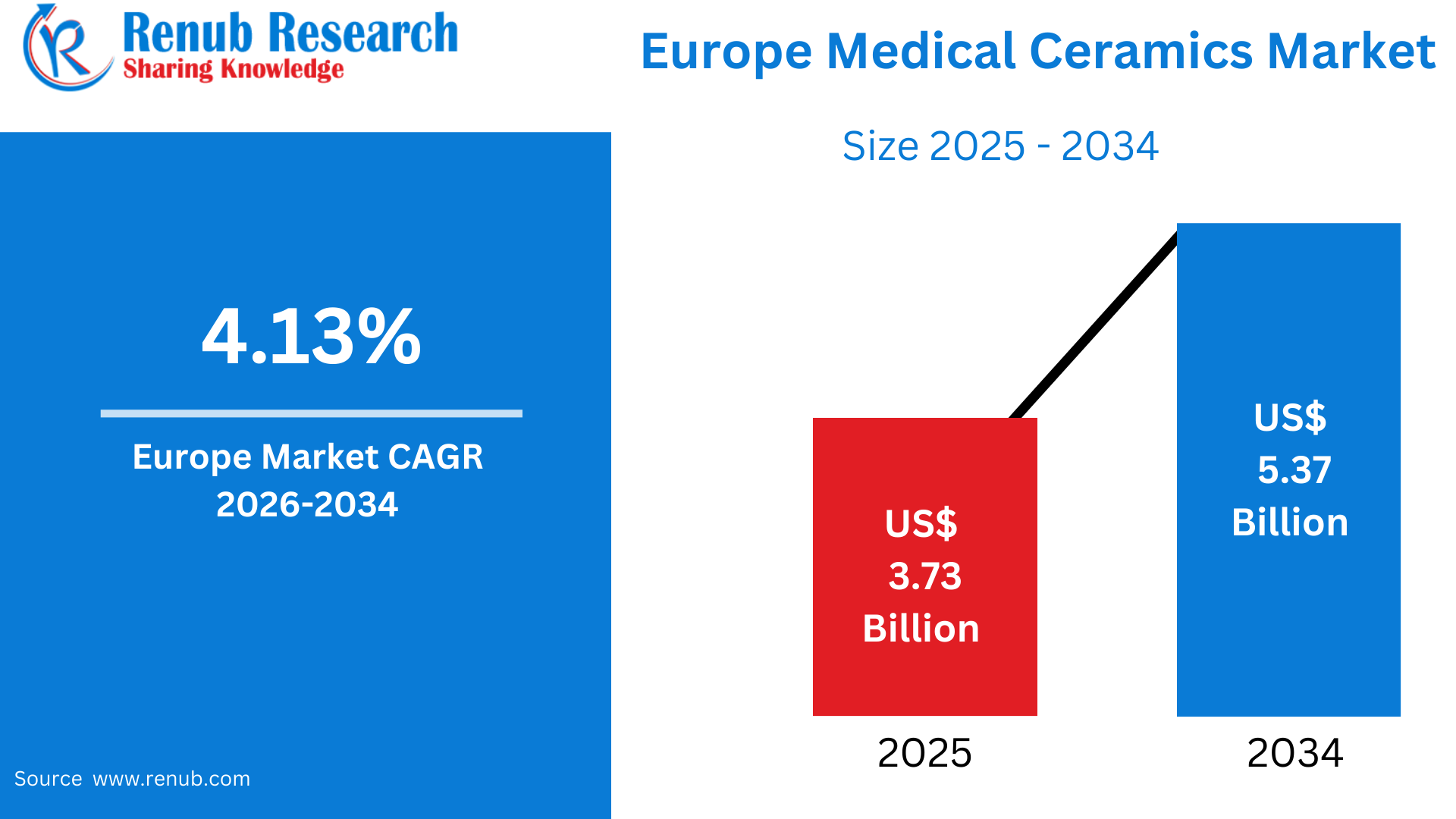
The medical ceramic sector in Europe is projected to experience consistent expansion, climbing from a value of US$ 3.73 billion in 2025 to an estimated US$ 5.37 billion by 2034. This trajectory reflects a compound annual growth rate (CAGR) of 4.13% throughout the forecast period. Primary catalyst for this upward trend is the escalating need for specialized, high-performance biomaterials across dentistry, orthopedics, and various implantable medical devices. Furthermore, the market is propelled by a combination of rising healthcare expenditures and the inherent advantages of medical-grade ceramics—namely their exceptional wear resistance, long-term durability, and superior biological compatibility.
European Medical Ceramics Sector Analysis
Medical ceramics represent a specialized class of inorganic, non-metallic materials engineered specifically for the healthcare sector due to their exceptional strength, structural stability, and biological inertness. Prominent materials like zirconia, alumina, hydroxyapatite, and bioactive glasses are critical components in modern joint replacements, dental restorations, synthetic bone grafts, and advanced surgical instruments.
The primary clinical advantage of medical-grade ceramics lies in their extreme resistance to wear and chemical corrosion, making them uniquely suited for long-term or permanent implantation inside the human body. Furthermore, because these materials are highly bio-inert, they seamlessly integrate with surrounding tissue without triggering harmful immune reactions, rejection, or localized inflammation.
The accelerating adoption of biomedical ceramics across Europe is heavily driven by a combination of a rapidly aging demographic and the region’s sophisticated healthcare infrastructure. As the population ages, the clinical need for durable, high-performance implants that minimize the risk of revision surgeries has grown substantially.
This market expansion is further reinforced by Europe’s notoriously rigorous quality standards and regulatory frameworks for medical devices. By placing a premium on long-term patient safety and lowering failure rates, regional regulatory environments naturally incentivize medical device manufacturers to favor the reliable, high-purity performance that advanced ceramics provide.
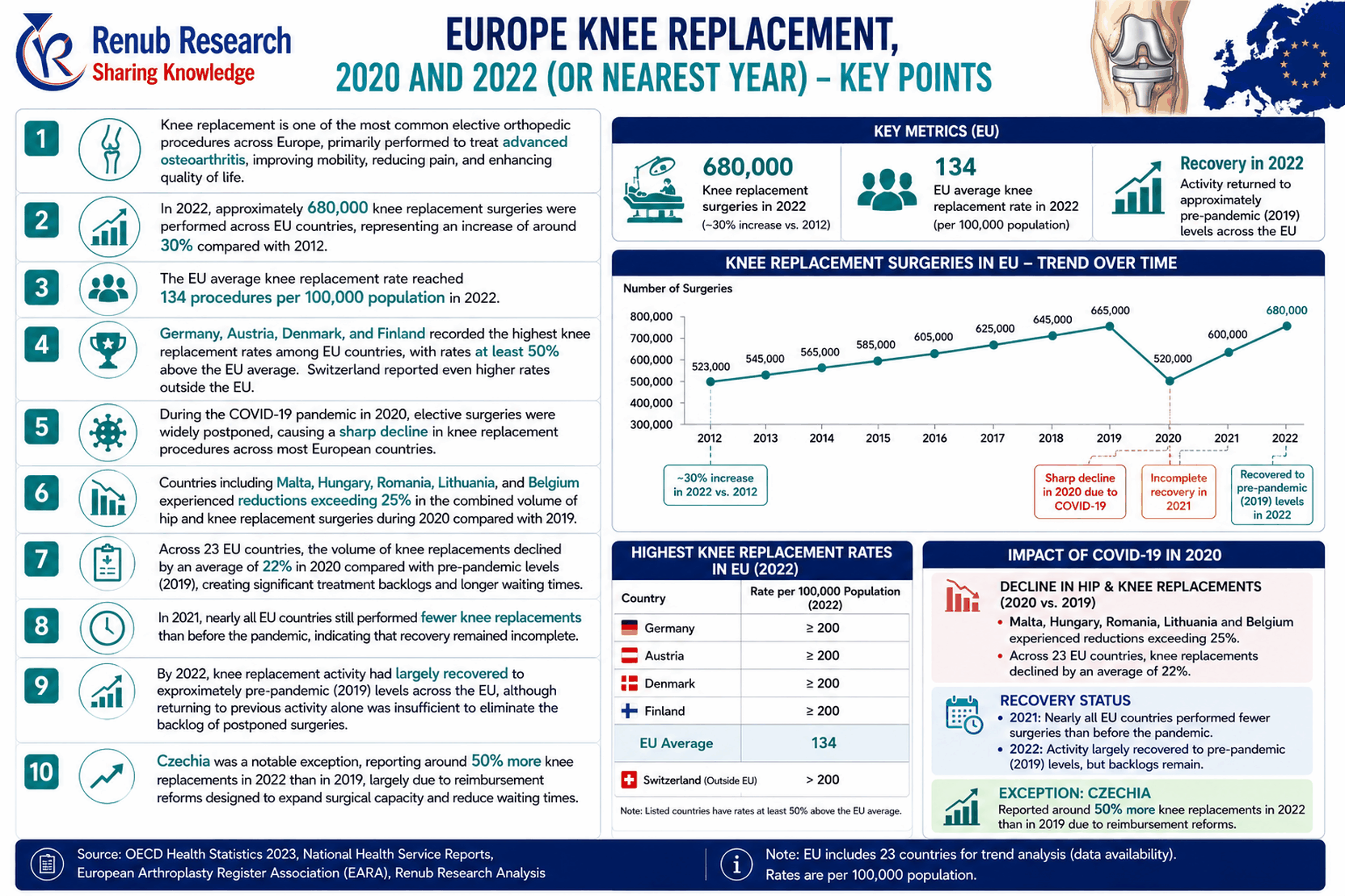
Europe Knee Replacement, 2020 and 2022 (or nearest year) – Key Points
- Knee replacement is one of the most common elective orthopedic procedures across Europe, primarily performed to treat advanced osteoarthritis, improving mobility, reducing pain, and enhancing quality of life.
- In 2022, approximately 680,000 knee replacement surgeries were performed across EU countries, representing an increase of around 30% compared with 2012.
- The EU average knee replacement rate reached 134 procedures per 100,000 population in 2022.
- Germany, Austria, Denmark, and Finland recorded the highest knee replacement rates among EU countries, with rates at least 50% above the EU average. Switzerland reported even higher rates outside the EU.
- During the COVID-19 pandemic in 2020, elective surgeries were widely postponed, causing a sharp decline in knee replacement procedures across most European countries.
- Countries including Malta, Hungary, Romania, Lithuania, and Belgium experienced reductions exceeding 25% in the combined volume of hip and knee replacement surgeries during 2020 compared with 2019.
- Across 23 EU countries, the volume of knee replacements declined by an average of 22% in 2020 compared with pre-pandemic levels (2019), creating significant treatment backlogs and longer waiting times.
- In 2021, nearly all EU countries still performed fewer knee replacements than before the pandemic, indicating that recovery remained incomplete.
- By 2022, knee replacement activity had largely recovered to approximately pre-pandemic (2019) levels across the EU, although returning to previous activity alone was insufficient to eliminate the backlog of postponed surgeries.
- Czechia was a notable exception, reporting around 50% more knee replacements in 2022 than in 2019, largely due to reimbursement reforms designed to expand surgical capacity and reduce waiting times.
Market Drivers
Escalating Demand for Orthopedic and Dental Restorations
The primary driver of the European medical ceramics market is the swelling requirement for dental and orthopedic implants, largely triggered by an rapidly aging regional population prone to osteoporosis, joint degradation, and tooth loss. For perspective, data from Versus Arthritis indicated that in 2022, roughly one-third of the UK population—exceeding 20 million citizens—suffered from a musculoskeletal condition. To address this, medical-grade ceramics such as hydroxyapatite, zirconia, and alumina have become highly favored for joint replacements, bone grafts, and dental crowns due to their unmatched durability, biological compatibility, and extended functional lifespan. Their robust mechanical strength and hypoallergenic nature make them a top priority for internal implants, especially as knee and hip revision or replacement surgeries become increasingly commonplace across Europe.
Evolution of Ceramic Processing Technologies
Advanced manufacturing breakthroughs are significantly bolstering the market’s capabilities. Structural modifications through computer-aided design and manufacturing (CAD/CAM), high-precision sintering, and innovative surface coatings have enhanced the overall strength, visual integration, and patient-specific customization of medical ceramics. It is now possible to forge structurally intricate, highly durable implants optimized for next-generation clinical needs. This environment of cutting-edge biomaterial engineering coincides with breakthroughs across broader regenerative fields. For example, in May 2025, Auxilium initiated clinical trials for its NeuroSpan Bridge, an innovative nerve regeneration implant featuring microchannel guided structures that was famously first space-bioprinted in microgravity on the International Space Station (ISS). Such sweeping technical leaps continue to propel regional interest in medical-grade material innovations.
Focus on Biocompatibility and Extended Implant Longevity
European healthcare networks are systematically prioritizing patient safety and the reduction of costly revision surgeries by favoring highly stable, durable biomaterials. Medical ceramics naturally align with these priorities because they resist chemical corrosion, show minimal wear particle accumulation over time, and offer excellent tissue compatibility. Unlike conventional metallic alternatives, high-purity ceramics eliminate the risk of releasing localized metal ions, which can trigger painful tissue inflammation or immune sensitivities. This intensifying clinical focus on safer, long-lasting options acts as a major catalyst for medical ceramic adoption in healthcare facilities throughout the continent. This shift toward advanced, highly target-specific healthcare is mirrored across the broader European medical landscape—as seen in December 2025 when major regional manufacturer Zentiva launched its first EMA-approved monoclonal antibody biosimilar targeted at treating severe bone conditions.
Market Bottlenecks and Challenges
Elevated Material and Production Expenses
A primary obstacle limiting widespread market penetration across Europe is the premium price point associated with raw bioceramics and their processing. Creating medical-grade ceramic components demands highly specialized manufacturing equipment, complex technical oversight, and stringent quality assurance frameworks. These necessities elevate final production costs, which can significantly restrict adoption in cost-sensitive medical institutions or regions with tightly capped healthcare budgets.
Structural Brittleness and Design Constraints
Despite their exceptional resilience against long-term friction and surface wear, medical ceramics are inherently brittle when compared to structural metals. This physical limitation presents a design barrier, restricting their use in high-impact or load-bearing applications that require superior shock resistance. Overcoming this structural fragility to develop implants that blend high mechanical strength with fracture toughness remains a persistent challenge for current engineering teams.
Medical Ceramic Product launches and strategic clinical rollouts occurred in the European market
Zentiva Monoclonal Bone Biosimilar Integration (December 2025): Major European supplier Zentiva marked its entry into target-specific bone therapy by launching an EMA-approved biosimilar designed to work dynamically alongside calcium phosphate and ceramic bone-graft therapies to manage advanced bone conditions.
Enovis & Mathys Joint ZTA Hip Component Initiative (September 2025): Enovis Surgical and Mathys Orthopädie GmbH launched a European-sourced project utilizing high-purity Zirconia-Toughened Alumina (ZTA) ceramics to manufacture specialized, low-friction hip joint heads.
Auxilium NeuroSpan Space-Bioprinted Bridge Clinical Trials (May 2025): Auxilium initiated clinical validation for the world’s first space-bioprinted nerve regeneration implant. Initially fabricated on the ISS, this advanced hybrid bioceramic utilizes a microchannel-guided ceramic structure to steer biological nerve regrowth.
Sagemax NexxZr+ Multi 2.0 Dental Disc (April 2024): Sagemax expanded its digital dentistry catalog by launching a multi-layered zirconia disc formulation tailored for European CAD/CAM dental labs, blending gradient optical translucency with maximum posterior fracture toughness.
BONESUPPORT CERAMENT G Advanced Antibiotic Bone Graft (June 2023): Orthobiologics leader BONESUPPORT introduced an optimized iteration of its CERAMENT G bioceramic, featuring a user-friendly configuration of its injectable, bioresorbable ceramic matrix that simultaneously elutes gentamicin to prevent bone infection.
CeramTec CeramType Monolithic Zirconia Implant (2024–2025 Rollout): Market-share leader CeramTec scaled the distribution of its monolithic, metal-free zirconia dental implant components across Western Europe (primarily Germany and Switzerland) to answer the high clinical demand for hypoallergenic dental materials.
Straumann PURE Ceramic Implant System Expansion (2024): Straumann expanded its metal-free portfolio in the EU with second-generation monolithic zirconia frameworks, leveraging automated surface-texturing to drastically improve osseointegration rates in boutique clinics.
Kyocera KGZ Structural Ceramic Machine System (June 2024): Kyocera introduced the "KGZ" clamp structure to European medical manufacturing corridors, utilizing advanced ceramics to drastically reduce vibration and chatter when high-precision milling custom zirconia and alumina orthopedic implants.
Dental Direkt Bio-Inert Monolithic Zirconia Blanks (2025): German manufacturer Dental Direkt launched a line of ultra-high translucent monolithic dental ceramic blocks specifically engineered to eliminate the risk of ceramic chipping on load-bearing bridge restorations.
Material Type Insights
Bioactive Medical Ceramics
The Europe bioactive medical ceramic market revolves around materials that interact with biological tissues to bring about a biological response, resulting in the enhancement of bone and tissue regeneration. Examples of bioactive medical ceramics include hydroxyapatite and bioactive glass. The most prominent application of bioactive medical ceramic products has been bone grafts, implantable devices, and dentistry. This market has experienced a growing need for products that have the capability to bring about osteoconduction and induce biological reactions that facilitate the implantation of the material within biological tissues. The Europe market has experienced a growing need for medical products that bring about biological reactions. This has seen an increase in the usage of bioactive medical ceramics. Their benefits include high biocompatibility and biological properties that act to stimulate osteoconduction. Such properties are important and make bioactive medical ceramics applicable in modern implantable devices. Moreover, osteoconduction and the biological properties associated with the material are important in implant surgeries, which have seen a rise in Europe.
Bioresorbable Medical Ceramic
The Europe bioresorbable medical ceramic market consists of materials with properties to break down and be resorbed by the body once their medical function has been served. These medical ceramics find widespread applications in bone repairs, fractures, and scaffolding, which require temporary support before new tissue growth. Bioresorbable medical ceramics eliminate the need for a second surgical intervention to remove implanted materials, which makes them very popular with medical professionals and patients alike. Their degradation life cycle may be synchronized with implant growth and support healing without retaining a foreign material in the body. There has been a great demand for "minimally invasive and patient-centric treatments, and medical ceramics find their usage in this domain." Bioresorbable medical ceramics for Europe will find applications in "orthopedic and craniofacial medical applications, including repairs and augmentation of bones, joints, and tissues."
Application Insights
Plastic Surgery Medical Ceramic
Medical ceramics in the plastic surgery market in Europe are applied in the reconstruction of the facial structure, bone shaping, and aesthetic implants based on their biocompatibility, mechanical stability, and ability to replicate the natural bone structure. Alumina and zirconia are some of the materials that offer appropriate and long-lasting solutions for the reconstruction of defects caused by trauma, congenital defects, and the process of aging. Their mechanical strength and wear resistance make them ideal for reconstructive surgical components for longer periods. The rising trend of aesthetic and reconstructive surgical practices in this market is creating ample opportunities for medical ceramics to find applications in plastic surgery, especially for components that are durable and inert to eliminate the likelihood of inflammation.
Orthopedic Medical Ceramic
The orthopedic medical ceramic market in the European region is one of the prominent segments in the medical ceramic market. Among the properties required for medical implants, the wear resistance offered by ceramics makes them an ideal material for joint implant applications like hips and knees. The usage of zirconia and alumina ceramics as articulating surfaces in joint implants helps in friction reduction and improving the longevity of the implant. The rising number of musculoskeletal disorders like osteoarthritis and osteoporosis among the global population, especially the aged, acts as an important factor in boosting the demand for superior implant technologies, thereby establishing the prominence of medical ceramics in orthopedic medical procedures.
Dental Medical Ceramic
The European market for dentistry-related ceramics is quite vibrant as it relates to the demand for restorative and cosmetic dentistry solutions that must exhibit adequate durability as well as a natural appearance. Ceramics like zirconia and porcelain are widely used to make crowns, bridges, veneers, and implant abutments as they have been observed to be more durable and offer a natural appearance closely resembling that of human teeth. The awareness level regarding dental health is rising among Europeans, thereby augmenting the demand within the European market. They look for high-quality solutions that provide a perfect amalgam of functionality as well as a natural appearance.
Country Insights
France
The France medical ceramic market faces challenges due to high costs compared to other biomaterials options in France and competition from emerging innovations in biomaterials. In a move that has rejuvenated Allisone Technologies in digital dentistry solutions and expanded its offerings in this field, in May 2023, Allisone Technologies acquired Spotimplant, an artificial intelligence software that identifies dental implants. Allisone Technologies specializes in dental artificial intelligence innovations. After this acquisition, Allisone has been able to provide a wider scope of services in digital dentistry solutions that relate to oral healthcare practices. This inclusion has been a big boost in digital dentistry solutions and has helped Allisone Technologies establish a solid footing in this sector.
Germany
Germany is one of the biggest and most developed markets for medical ceramics in Europe. The country’s qualitative production of medical devices and availability of engineering capabilities promote extensive adoption of ceramics in orthopedic, dental, and surgical fields. Medical ceramics are predominantly exploited for use in hip and knee joint substitution, dental crowns, and coated implants owing to their excellent wear resistance and precision. The growing senior population and growing surgical procedures in Germany stabilize market demand for medical ceramics. Furthermore, superiority in quality, innovation, and developed reimbursement systems are some factors that make this market more stable. October 2023 - Johnson & Johnson Medical Tech launched the VELYS Robotic-Assisted Solution for the European market, which is DePuy Synthes, The Orthopedics Company of Johnson & Johnson’s product. The VELYS Robotic-Assisted Solution has been utilized for the successful completion of Total Knee surgeries in Germany, Belgium, and Switzerland.
United Kingdom
The UK’s market for medical ceramics is expanding steadily, thanks to the rise in demand for orthopedic implants, dental implants, and a long-term focus on patient results. Medical ceramics continue gaining popularity due to their use in the medical world because they have the best looks and they don’t wear out. The UK’s medical perspective is on evidence-based practices, and the best aspect is that they don’t wear out. Advances in material science research and the emergence of cutting-edge technologies for implants are driving the market. November 2025, Advita Ortho celebrates the official incorporation of the entity as a worldwide medical device company, through which the firm aims to transform patients’ lives for the better through the innovation of different ortopedic products. As a firm, the entity’s mission strives to empower different ortopedic surgeons through the supply of the best quality products through a set of different ortopedic technologies.
Russia
The Russia medical ceramics market is slowly gaining momentum with the upgrading of the healthcare infrastructure. Medical ceramics are gaining popularity in the field of implants in the dental and orthopedic sectors. Demand from this sector is increasing on account of the rising need for a robust joint replacement material. Although the adoption of medical ceramics is lower in the Russian market compared to other developed countries like those inWestern Europe, the rise in investment in the upgrading of the healthcare infrastructure is having a positive effect on the market.
Market Segmentations
Material Type
- Bioinert
- Bioactive
- Bioresorbable
- Piezo Ceramics
Application
- Surgical Instruments
- Plastic Surgery
- Orthopedic application
- Dental Application
Countries
North America
- United States
- Canada
Europe
- France
- Germany
- Italy
- Spain
- United Kingdom
- Belgium
- Netherlands
- Turkey
Asia Pacific
- China
- Japan
- India
- South Korea
- Thailand
- Malaysia
- Indonesia
- Australia
- New Zealand
Latin America
- Brazil
- Mexico
- Argentina
Middle East & Africa
- Saudi Arabia
- UAE
- South Africa
All companies have been covered with 5 Viewpoints
- Overviews
- Key Person
- Recent Developments
- SWOT Analysis
- Revenue Analysis
Key Players Analysis
- CeramTec GmbH
- NGK Spark Plug Co., Ltd.
- 3M
- Kyocera Corporation
- Morgan Advanced Materials
- DSM
- Straumann
- BioMérieux SA
Report Details:
| Report Features | Details |
| Base Year |
2025 |
| Historical Period |
2022 - 2026 |
| Forecast Period |
2026 - 2034 |
| Market |
US$ Billion |
| Segment Covered |
Material Type, Application and Countries |
| Countries Covered |
|
| Companies Covered |
|
| Customization Scope |
20% Free Customization |
| Post-Sale Analyst Support |
1 Year (52 Weeks) |
| Delivery Format |
PDF and Excel through Email (We can also provide the editable version of the report in PPT/Word format on request) |
Customization Services available
- Analysis of Market Size and Its Segments
- More Company Profiles (Upto 10 without any additional cost):
- Additional Countries (Other than mentioned Countries):
- Region/Country Specific Reports:
- Market Entry Strategy:
- Region-Specific Market Dynamics:
- Regional Market Share Analysis:
- Trade Analysis:
- Production Insights:
- Others Customized Requests:
For more information contact our analysts.
Need More Assistance?
- Talk to our analysts to get more precious information on the current market trends.
- Include more countries and segments and customize the report based on the final requirement.
- Get a competitive advantage in your industry by knowing the report findings and making a positive impact on your revenues and operations.
- Our analysts are always ready to provide more help and pertinent information if you need any additional assistance.