Europe Juices Market Report by Type, Flavour, Category, Packaging type, Distribution Channel, Country and Company Analysis 2026-2034
Buy NowEurope Juices Market Size and Forecast
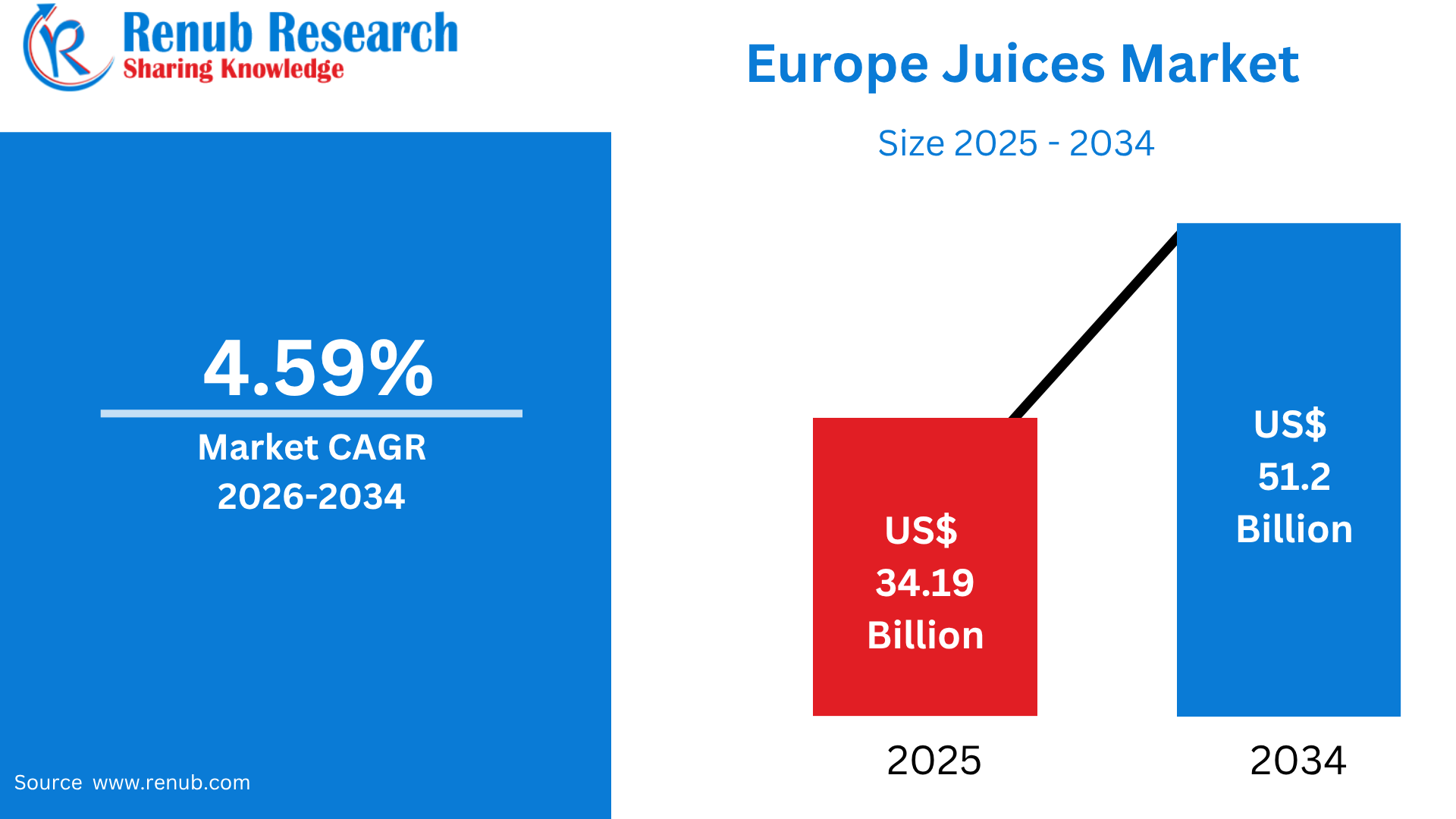
Europe Juices Market is projected to expand from US$ 34.19 billion in 2025 to US$ 51.2 billion by 2034, registering a CAGR of 4.59% during 2026–2034. Market growth is driven by rising consumer interest in healthier, naturally sourced beverages, along with greater awareness of the nutritional value of fruit and vegetable juices. Rising demand for organic, low-sugar, cold-pressed, and functional juice products is encouraging manufacturers to introduce innovative formulations.
What are Juices and Their Uses & Popularity Worldwide
Juices are beverages made by extracting liquid from fruits, vegetables, or other edible plant sources. They can be consumed as fresh, chilled, concentrated, or processed beverages and are available in varieties such as orange, apple, grape, pineapple, mango, tomato, and mixed-fruit juices. Juices provide nutrients such as vitamins, minerals, antioxidants, and naturally occurring plant compounds, depending on the ingredients and processing method. They are commonly consumed as breakfast beverages, refreshments, and ingredients in smoothies, desserts, cocktails, sauces, and other food preparations. Fortified and functional juices may also contain added vitamins, minerals, probiotics, or other nutritional ingredients.
Juices are popular worldwide because of their convenient consumption, diverse flavors, and association with fruit and vegetable nutrition. Rising consumer awareness of healthy lifestyles is increasing interest in natural, organic, low-sugar, cold-pressed, and functional beverages. Manufacturers are responding with innovative flavors, convenient packaging, premium formulations, and sustainable production practices. Supermarkets, convenience stores, restaurants, cafés, and e-commerce platforms provide broad access to juice products. Growing demand for healthier refreshments and changing dietary preferences are expected to continue supporting juice consumption across developed and emerging markets.
European Imports of Citrus and Tropical Juices from Developing Countries
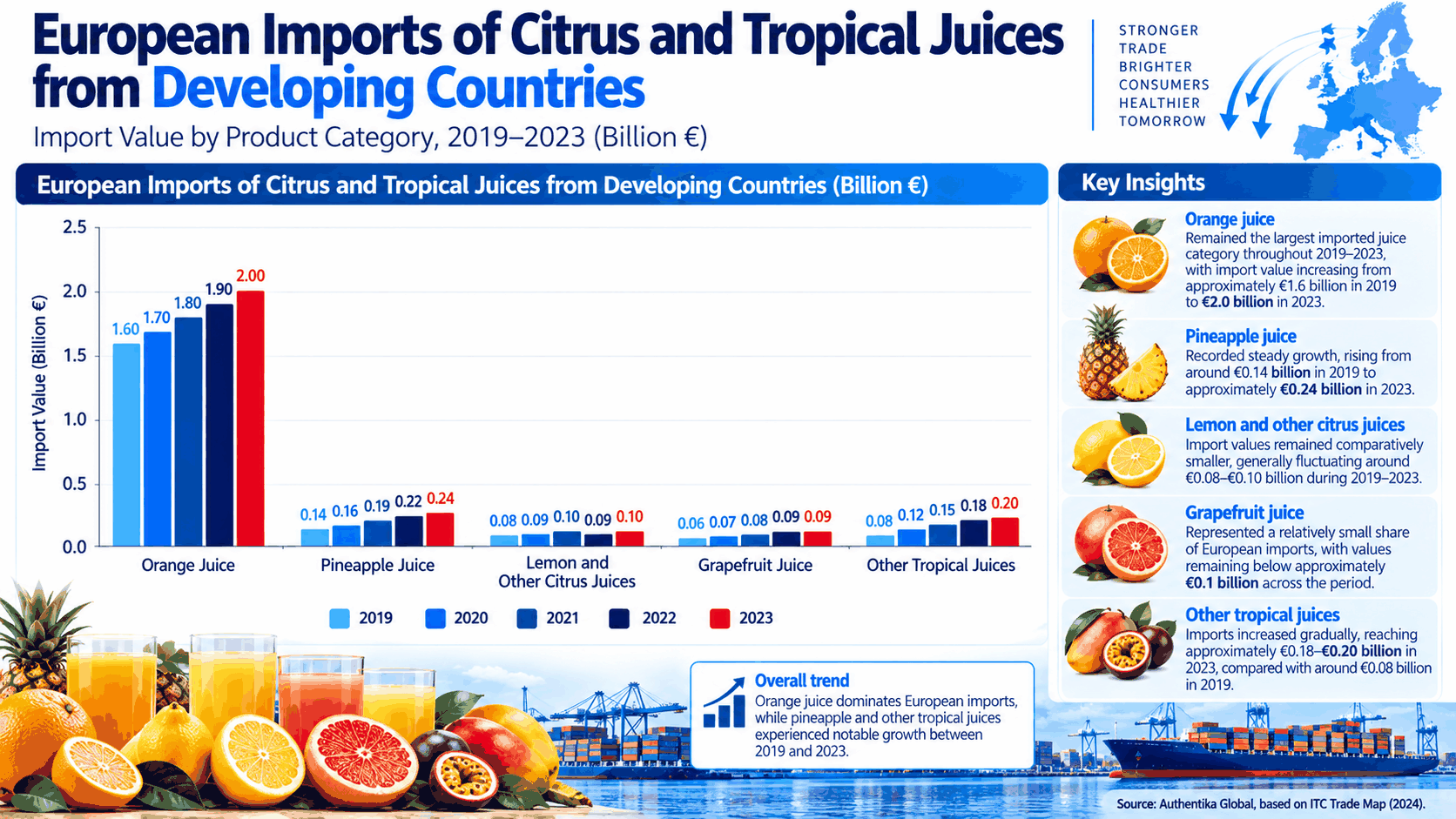
- Orange juice: Remained the largest imported juice category throughout 2019–2023, with import value increasing from approximately €1.6 billion in 2019 to €2.0 billion in 2023.
- Pineapple juice: Recorded steady growth, rising from around €0.14 billion in 2019 to approximately €0.24 billion in 2023.
- Lemon and other citrus juices: Import values remained comparatively smaller, generally fluctuating around €0.08–€0.10 billion during 2019–2023.
- Grapefruit juice: Represented a relatively small share of European imports, with values remaining below approximately €0.1 billion across the period.
- Other tropical juices: Imports increased gradually, reaching approximately €0.18–€0.20 billion in 2023, compared with around €0.08 billion in 2019.
- Overall trend: The chart shows that orange juice dominates European imports, while pineapple and other tropical juices experienced notable growth between 2019 and 2023.
Europe Juices Market – Growth Drivers
Rising Consumer Demand for Healthy and Natural Beverages
Increasing health consciousness across Europe is one of the major factors supporting the juices market. Consumers are increasingly seeking beverages perceived as natural alternatives to carbonated soft drinks, particularly products containing recognizable fruit ingredients, vitamins, antioxidants, and other nutrients. According to the European Commission, around 70% of EU consumers reported that they consider health and nutrition when purchasing food, highlighting the importance of health-related attributes in consumption decisions. This trend is encouraging manufacturers to expand portfolios of 100% fruit juices, organic juices, cold-pressed products, and reduced-sugar formulations. Growing interest in preventive health and balanced diets is also increasing demand for functional beverages containing ingredients such as vitamin C, probiotics, and botanical extracts. In addition, consumers are becoming more attentive to ingredient labels and sugar content, prompting producers to reformulate products with less added sugar. The expansion of premium and natural juice categories across supermarkets, specialty stores, cafés, and online channels is creating additional opportunities. Consequently, health-oriented consumption patterns are expected to remain an important growth engine for Europe’s juice industry.
Expansion of Organic and Premium Juice Products
The increasing popularity of organic and premium beverages is creating significant opportunities for juice manufacturers across Europe. Europe has one of the world’s largest organic food markets, with EU organic retail sales exceeding €53 billion in 2023, according to European Commission data. Consumers are increasingly interested in products associated with sustainable agriculture, clean ingredients, environmentally responsible production, and higher perceived quality. This trend is particularly beneficial for organic fruit juices, cold-pressed juices, NFC (not-from-concentrate) products, and premium juice blends. Manufacturers are introducing combinations featuring berries, tropical fruits, vegetables, herbs, and functional ingredients to differentiate their products. Premium packaging and transparent labeling are also helping brands communicate quality and provenance. Germany, France, Italy, the United Kingdom, and the Nordic countries represent important markets for health-oriented and organic beverages. Meanwhile, retailers are allocating more shelf space to plant-based, organic, and natural beverage categories. Although premium juices generally carry higher prices, consumers with stronger purchasing power are increasingly willing to pay for perceived nutritional, environmental, and quality benefits, supporting value growth across the European juices market.
Product Innovation and Sustainable Packaging Development
Continuous product innovation and packaging improvements are strengthening the European juices market by responding to changing consumer preferences and sustainability expectations. European consumers increasingly expect beverage manufacturers to reduce packaging waste and improve recyclability. The European Commission’s packaging policies are encouraging greater emphasis on recyclability, recycled content, and waste reduction, creating pressure for juice producers to redesign packaging formats. Companies are developing lightweight bottles, recyclable cartons, smaller single-serving packs, and resealable formats that improve convenience while reducing material usage. Product innovation is occurring alongside packaging development, with manufacturers introducing low-sugar juices, functional beverages, vegetable-fruit combinations, immunity-focused formulations, and exotic flavor profiles. The growing popularity of convenient formats is particularly relevant for younger consumers and urban populations seeking beverages suitable for work, travel, and on-the-go consumption. E-commerce is also encouraging durable and convenient packaging solutions. Additionally, growing consumer interest in food waste reduction is encouraging manufacturers to explore better processing and utilization of fruit ingredients. Together, innovation, convenience, and sustainability are helping juice brands differentiate themselves and maintain consumer engagement across European markets.
Europe Juices Market – Challenges
High Sugar Content and Increasing Regulatory Pressure
The relatively high natural sugar content of many fruit juices presents a major challenge for the European juices market as consumers and policymakers increasingly focus on reducing sugar consumption. The World Health Organization recommends that free sugars account for less than 10% of total daily energy intake, with additional health benefits possible when intake is reduced below 5%. Although naturally occurring sugars in whole fruit are different from added sugars, concerns about sugar content can influence consumer perceptions of juice products. European governments have consequently introduced or considered measures such as nutrition labeling requirements, sugar taxes on selected beverages, and public-health campaigns. These developments are encouraging manufacturers to reduce added sugars, introduce smaller serving sizes, and develop low-sugar formulations. However, reducing sweetness can affect taste acceptance, particularly among consumers accustomed to traditional juice flavors. Producers must therefore balance nutritional expectations with sensory quality and affordability. The challenge is particularly significant for products positioned as everyday beverages rather than occasional premium drinks. Continued consumer scrutiny of sugar levels is likely to increase reformulation costs and intensify competition among juice manufacturers.
Rising Production Costs and Supply-Chain Volatility
Fluctuating raw-material prices, energy expenses, transportation costs, and climate-related disruptions represent important challenges for Europe’s juice industry. Fruit production is highly dependent on weather conditions, and droughts, heatwaves, floods, and other extreme events can reduce yields and increase the cost of key ingredients. Europe imports substantial quantities of tropical fruits and concentrates, making the industry particularly exposed to international supply-chain disruptions and currency fluctuations. Orange, apple, grape, pineapple, and other fruit prices can change significantly depending on harvest conditions and global availability. At the same time, higher electricity, packaging, labor, and logistics costs can increase manufacturing expenses. Producers may pass some of these costs to consumers, but higher retail prices can reduce demand, especially among price-sensitive households. The European Commission has also reported that food-price pressures have remained an important concern for European consumers in recent years. Consequently, manufacturers are focusing on supply diversification, long-term sourcing contracts, efficient processing, lightweight packaging, and improved inventory management. Managing cost volatility while maintaining product quality and competitive pricing will remain a key challenge for the European juices market.
Juice Launches in Europe
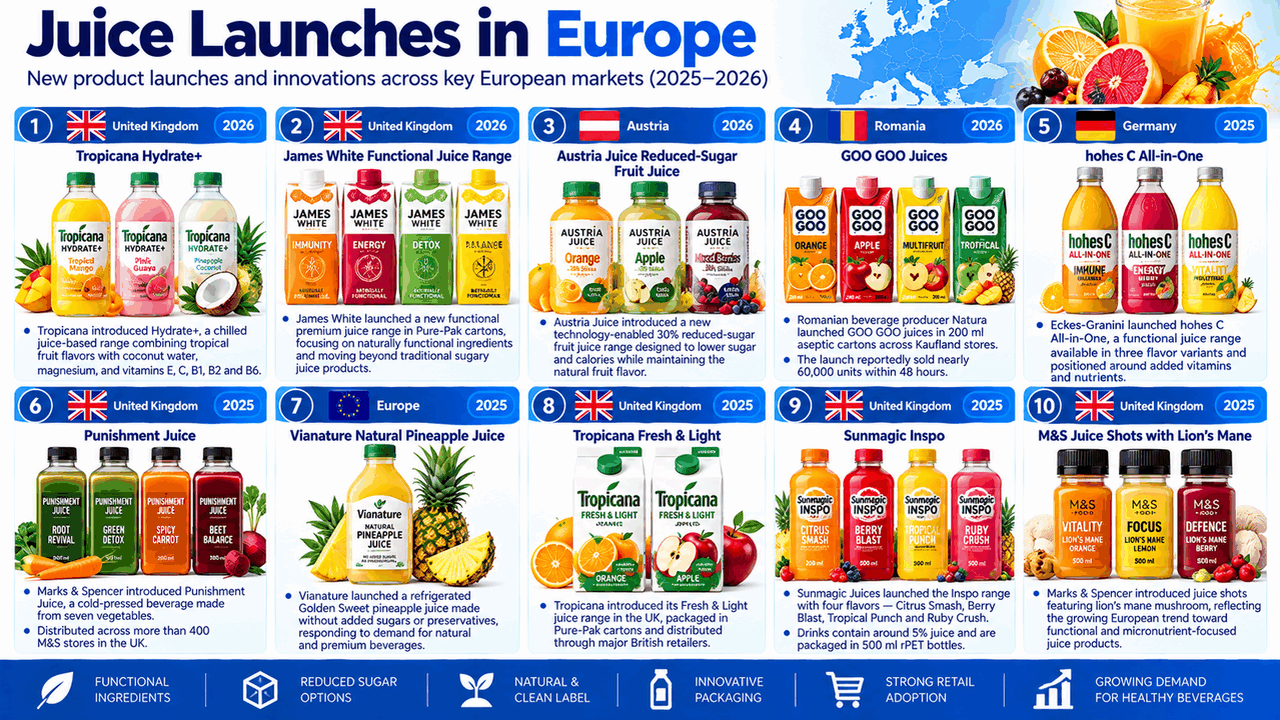
- Tropicana Hydrate+ – United Kingdom, 2026: Tropicana introduced Hydrate+, a chilled juice-based range combining tropical fruit flavors with coconut water, magnesium, and vitamins E, C, B1, B2, and B6.
- James White Functional Juice Range – United Kingdom, 2026: James White launched a new functional premium juice range in Pure-Pak cartons, focusing on naturally functional ingredients and moving beyond traditional sugary juice products.
- Austria Juice Reduced-Sugar Fruit Juice – Austria, 2026: Austria Juice introduced a new technology-enabled 30% reduced-sugar fruit juice range designed to lower sugar and calories while maintaining the natural fruit flavor.
- GOO GOO Juices – Romania, 2026: Romanian beverage producer Natura launched GOO GOO juices in 200 ml aseptic cartons across Kaufland stores. The launch reportedly sold nearly 60,000 units within 48 hours.
- hohes C All-in-One – Germany, 2025: Eckes-Granini launched hohes C All-in-One, a functional juice range available in three flavor variants and positioned around added vitamins and nutrients.
- Punishment Juice – United Kingdom, 2025: Marks & Spencer introduced Punishment Juice, a cold-pressed beverage made from seven vegetables and distributed across more than 400 M&S stores in the UK.
- Vianature Natural Pineapple Juice – Europe, 2025: Vianature launched a refrigerated Golden Sweet pineapple juice made without added sugars or preservatives, responding to demand for natural and premium beverages.
- Tropicana Fresh & Light – United Kingdom, 2025: Tropicana introduced its Fresh & Light juice range in the UK, packaged in Pure-Pak cartons and distributed through major British retailers.
- Sunmagic Inspo – United Kingdom, 2025: Sunmagic Juices launched the Inspo range with four flavors—Citrus Smash, Berry Blast, Tropical Punch, and Ruby Crush. The drinks contain around 5% juice and are packaged in 500 ml rPET bottles.
- M&S Juice Shots with Lion’s Mane – United Kingdom, 2025: Marks & Spencer introduced juice shots featuring lion’s mane mushroom, reflecting the growing European trend toward functional and micronutrient-focused juice products.
Rising Frozen Demand for Convenient and Longer-Lasting Juice Products
Europe frozen juices market is supported by consumer demand for convenient fruit beverages with longer storage potential and reduced dependence on immediate consumption. Frozen juice products can help preserve fruit characteristics while allowing households and foodservice operators to maintain inventory for longer periods. Frozen formats are particularly relevant for foodservice, hospitality, catering, and household applications where portion flexibility and storage life are important. Demand is also supported by increasing interest in fruit-based beverages and premium juice formulations. However, frozen products require cold-chain transportation and freezer storage, which can increase logistics and energy costs compared with ambient alternatives. The development of improved freezing technologies, portion-controlled formats, and fruit blends is helping producers address these requirements. As European consumers continue seeking convenient beverages with recognizable fruit ingredients, frozen juices are expected to remain a specialized but potentially expanding segment of the regional market.
Growing Focus on Nutrition and Functional Benefits
Europe health juices market is gaining momentum as consumers increasingly associate juice consumption with nutrition, wellness, and convenient access to fruit-based ingredients. The broader European market shows strong demand for higher-value products, with 100% juice of the fruit and vegetable juice market in 2025 in one recent market assessment. Consumers are increasingly interested in products featuring reduced sugar, organic ingredients, added vitamins, antioxidants, probiotics, and other functional components. Manufacturers are responding with vegetable-fruit blends, cold-pressed juices, immunity-positioned products, and premium natural formulations. At the same time, concerns regarding sugar intake are encouraging reformulation and smaller serving sizes. The EU has also introduced rules allowing reduced-sugar juice categories, reinforcing industry innovation. Health-oriented positioning therefore remains a significant opportunity for European juice producers seeking premium consumers and higher-value product categories.
Lightweight PET/Plastic Packaging and Growing Demand for Convenient Formats
Europe PET/plastic juices market benefits from the convenience, durability, portability, and lightweight characteristics of plastic bottles. PET packaging is particularly suitable for chilled and on-the-go juice products because it is easy to transport, resealable, and less susceptible to breakage than glass. Recent market estimates indicate that PET bottles represented more than 37% of the European juices market packaging segment in 2025 in the European fruit and vegetable juice category. The format is particularly attractive for single-serve products, sports-oriented beverages, chilled juices, and convenience purchases. However, sustainability regulations are increasing pressure on manufacturers to reduce virgin plastic usage and improve recyclability. The European Commission’s packaging framework is encouraging greater circularity, while recent EU packaging data estimated 5.9 million tonnes of plastic-based packaging placed on the market in 2024 across the assessed member states. Consequently, recycled PET, lightweight bottles, recyclable designs, and improved collection systems are becoming increasingly important to the future development of PET-packaged juices.
Strong Adoption of Aseptic Cartons and Extended Shelf Life
Europe Tetra Pack juices market remains a major packaging segment because beverage cartons provide efficient protection for perishable liquid products while supporting ambient distribution. Tetra Pak’s information on European liquid foods indicates that beverage cartons are used for approximately 59% of juices in the EU, demonstrating the importance of carton formats across the region. Aseptic processing and packaging can allow juice to remain safe and suitable for consumption for approximately 6–12 months without refrigeration or preservatives, supporting efficient transportation, warehousing, and retail distribution. Cartons are also attractive because they can incorporate renewable materials and reduce dependence on conventional plastic packaging. Growing sustainability expectations and EU packaging-circularity requirements are encouraging producers to improve carton recyclability and material recovery. Their combination of long shelf life, ambient storage, transportation efficiency, and consumer convenience ensures that Tetra Pack formats will remain highly important in Europe’s juice industry.
Dominant Retail Channel for Juice Purchases
Supermarkets and hypermarkets represent the leading distribution channel for juices across Europe because they provide extensive product selection, competitive pricing, promotional activity, and convenient one-stop shopping. These retailers provide consumers with access to mainstream juices, private-label products, organic beverages, premium 100% juices, chilled products, and functional formulations. Their substantial shelf space also enables manufacturers to introduce new flavors, packaging formats, and health-oriented products to a large consumer audience. Private-label juices are particularly important because European shoppers remain sensitive to household food prices, encouraging retailers to offer lower-cost alternatives alongside branded products. At the same time, premium and organic juice ranges allow supermarkets to capture consumers willing to pay more for perceived quality and nutritional benefits. Supermarkets are also increasingly integrating online grocery ordering and home delivery, helping connect traditional retail with digital purchasing. Although online channels are expanding rapidly, supermarkets and hypermarkets are expected to remain a central distribution route for Europe’s juice market because of their broad geographic reach and high consumer traffic.
Premium and Organic Products Strengthen France Market Demand
France juices market is supported by strong consumer interest in premium-quality, natural, and organic beverages. French consumers increasingly value authentic taste, recognizable ingredients, and sustainable sourcing, encouraging demand for not-from-concentrate, cold-pressed, organic, and locally sourced juices. Growing health awareness is also shifting consumption toward low-sugar, 100% fruit, and functional juice formulations. Supermarkets and hypermarkets remain important distribution channels, while specialty food retailers, cafés, restaurants, and juice bars provide additional opportunities for premium products. Manufacturers are responding by introducing innovative fruit combinations, functional ingredients, convenient single-serving formats, and environmentally conscious packaging. Sustainability is becoming particularly important as consumers pay greater attention to packaging materials and production practices. France’s strong culinary culture also supports demand for products emphasizing taste and ingredient quality rather than purely functional positioning. Although juice competes with bottled water, soft drinks, smoothies, and other functional beverages, continuous innovation and premiumization are helping producers maintain consumer interest. Overall, changing dietary preferences, organic adoption, and demand for higher-quality beverages are expected to support steady development of the French juice market.
Strong Consumption Culture and Expanding Organic Fuices Segment in Germany
Germany juices market is one of Europe’s most established markets, supported by a strong juice-consumption culture, extensive retail networks, and high consumer awareness of product quality. Germany is particularly recognized for its popularity of apple juice and fruit juice blends, while demand for orange, multivitamin, and other fruit-based beverages remains significant. Consumers increasingly prefer natural, organic, low-sugar, and sustainably produced juices, creating opportunities for premium and health-oriented products. Germany also has a highly developed supermarket and discount retail structure, with private-label products playing an important role in the beverage category. This creates strong competition on pricing while simultaneously providing manufacturers with access to large consumer groups. Sustainability is another major consideration, with recyclable packaging, reduced material usage, and responsible sourcing gaining importance. Functional juices containing vitamins, minerals, antioxidants, and other nutritional ingredients are also attracting health-conscious consumers. Producers are therefore investing in improved formulations, convenient packaging, and new flavors to differentiate their products. Despite intense competition, Germany’s large consumer base, mature distribution infrastructure, and continued interest in healthier beverages make it a major contributor to the European juices market.
Natural Ingredients and Local Fruit Preferences Drive Italy Growth
Italy juices market is supported by the country’s strong agricultural sector, abundant fruit production, and consumer preference for natural and authentic beverages. Citrus fruits, particularly oranges, lemons, and other Mediterranean varieties, play an important role in juice consumption and product development. Italian consumers generally place considerable emphasis on taste, freshness, ingredient quality, and regional authenticity, encouraging manufacturers to use locally sourced fruits and premium formulations. Increasing health awareness is also supporting demand for organic, low-sugar, 100% fruit, and functional juices. While freshly prepared beverages remain popular, changing lifestyles and greater demand for convenience are encouraging consumers to purchase packaged juices from supermarkets, hypermarkets, convenience stores, and other retail outlets. Juice bars, cafés, restaurants, and hospitality businesses also contribute to demand for fresh and premium juice products. Manufacturers are introducing innovative combinations of fruits, vegetables, and functional ingredients to appeal to younger and health-conscious consumers. Sustainable packaging and environmentally responsible sourcing are becoming additional purchasing considerations. Although juices compete with mineral water, coffee, soft drinks, and other beverages, Italy’s strong fruit culture and preference for authentic flavors provide a favorable foundation for continued market development.
Strong Citrus Production and Growing Health Awareness Support Spain Expansion
Spain juices market benefits from the country’s extensive fruit-growing industry, particularly its strong production of oranges and other citrus fruits. Spain is an important agricultural producer and exporter within Europe, providing manufacturers with access to a substantial domestic supply of fruit ingredients. Consumers traditionally show strong interest in fresh, natural, and fruit-based beverages, while growing health awareness is increasing demand for 100% juices, organic products, reduced-sugar formulations, and functional beverages. Supermarkets and hypermarkets remain major distribution channels because they provide extensive product availability and competitive pricing. Convenience stores, cafés, hotels, restaurants, and juice bars also contribute to consumption, particularly in major urban and tourist destinations. Spain’s large tourism industry creates additional demand for juices through hospitality and foodservice establishments. Manufacturers are responding to changing preferences with premium juice blends, functional formulations, new flavor combinations, and convenient packaging formats. Sustainability is also becoming more important as consumers and retailers seek recyclable and resource-efficient packaging. Despite competition from bottled water, soft drinks, smoothies, and other beverages, Spain’s strong fruit-production base, established juice industry, and growing health consciousness provide favorable conditions for continued market growth.
Recent Developments in Europe juices Market
- November 2024: Refresco Group N.V. acquired a production facility near Berlin that specializes in glass packaging, enhancing its ability to support premium juice brands emphasizing recyclability as a key value proposition. This move follows the company’s August 2024 acquisition of Berentzen-Gruppe’s Grüneberg site in Germany, further strengthening its presence in the region.
- August 2024: Refresco Group N.V. completed the acquisition of Berentzen-Gruppe’s Grüneberg production facility in Germany, adding approximately 200 million liters of annual juice and juice-drink capacity. The investment bolsters Refresco’s capabilities in Central Europe and reinforces its position as the largest contract manufacturer of juices and soft drinks in Europe.
- June 2024: Eckes-Granini Group acquired a 67% majority stake in True Fruits, a leading German smoothie brand recognized for its “no added sugar” positioning and commitment to organic fruit sourcing. This acquisition enables Eckes-Granini to capitalize on the expanding organic juice segment in Germany while supporting expansion into France and the Netherlands.
Europe Juices Market Segments
Type
- Frozen
- Chilled-ready-to-serve
- Shelf stable
- Others
Flavour
- Fruits
- Fruit Mixes
- Vegetables
Category
- Health juice
- Pre-biotic and pro-biotic
- Fruit juice (1005 juice, 25-99% juice, >25%)
- Naturally sweetened
- Organic Juices
- Carbonated juices
- Others
Packaging type
- PET/Plastic
- Metal can
- Tetra packs
- Glass
- Others
Distribution Channel
- Supermarkets/Hypermarkets
- Convenience Stores
- Specialty Food Stores
- Online Retail
- Others
Countries
- France
- Germany
- Italy
- Spain
- United Kingdom
- Belgium
- Netherlands
- Russia
- Poland
- Greece
- Norway
- Romania
- Portugal
- Rest of Europe
All companies have been covered with 5 Viewpoints
- Overviews
- Key Person
- Recent Developments
- SWOT Analysis
- Revenue Analysis
Key Players Analysis
- Britvic PLC
- Brynwood Partners
- Eckes-Granini Group GmbH
- Keurig Dr Pepper, Inc.
- Ocean Spray Cranberries, Inc.
- PepsiCo, Inc.
- Suntory Holdings Limited
- The Coca-Cola Company
- The Kraft Heinz Company
- Tropicana Brands Group
Report Details:
| Report Features | Details |
| Base Year |
2024 |
| Historical Period |
2020 - 2024 |
| Forecast Period |
2025 - 2033 |
| Market |
US$ Billion |
| Segment Covered |
By Type, By Flavour, By Category, By Packaging type, By Distribution Channel & By Country |
| Countries Covered |
|
| Companies Covered |
|
| Customization Scope |
20% Free Customization |
| Post-Sale Analyst Support |
1 Year (52 Weeks) |
| Delivery Format |
PDF and Excel through Email (We can also provide the editable version of the report in PPT/Word format on request) |
Customization Services available
- Analysis of Market Size and Its Segments
- More Company Profiles (Upto 10 without any additional cost):
- Additional Countries (Other than mentioned Countries):
- Region/Country Specific Reports:
- Market Entry Strategy:
- Region-Specific Market Dynamics:
- Regional Market Share Analysis:
- Trade Analysis:
- Production Insights:
- Others Customized Requests:
For more information contact our analysts.
aNeed More Assistance?
- Talk to our analysts to get more precious information on the current market trends.
- Include more countries and segments and customize the report based on the final requirement.
- Get a competitive advantage in your industry by knowing the report findings and making a positive impact on your revenues and operations.
- Our analysts are always ready to provide more help and pertinent information if you need any additional assistance.